by Jenny Rose | Dec 11, 2021 | A Flourishing Woman, The Journey
I subscribe to Seth Godin, who provides me with a few sentences of daily food for thought in my Inbox. This week, I read this link about the difference between accuracy and precision.
Godin’s distinction between the two is one I never thought about before, but I have been thinking about roots.

Photo by Arun Kuchibhotla on Unsplash
Deep roots. Strong roots.
Roots grow toward sustenance. They don’t grow toward, or in, barren soil. Cell by cell, rootlet by rootlet, inch by inch, they spread, seeking water, seeking the soil and mineral resource they need. Cell by cell, stem by stem, twig by twig, inch by inch, trees and plants grow aboveground in search of sunlight.
Trees and plants want to live. They seek the resources necessary to do so. Survival is their simple, accurate agenda. A seed germinates and grows toward successful reproduction, wherever it happens to be.
Exactly how the roots and crown need to grow, exactly where the best sustenance and water will be found, exactly what the quality and quantity of sunlight will be, all these precise determinations have no meaning unless the imperative to survive exists, and can’t be planned ahead. It all depends on context.
The accuracy comes first. Then the precise details.
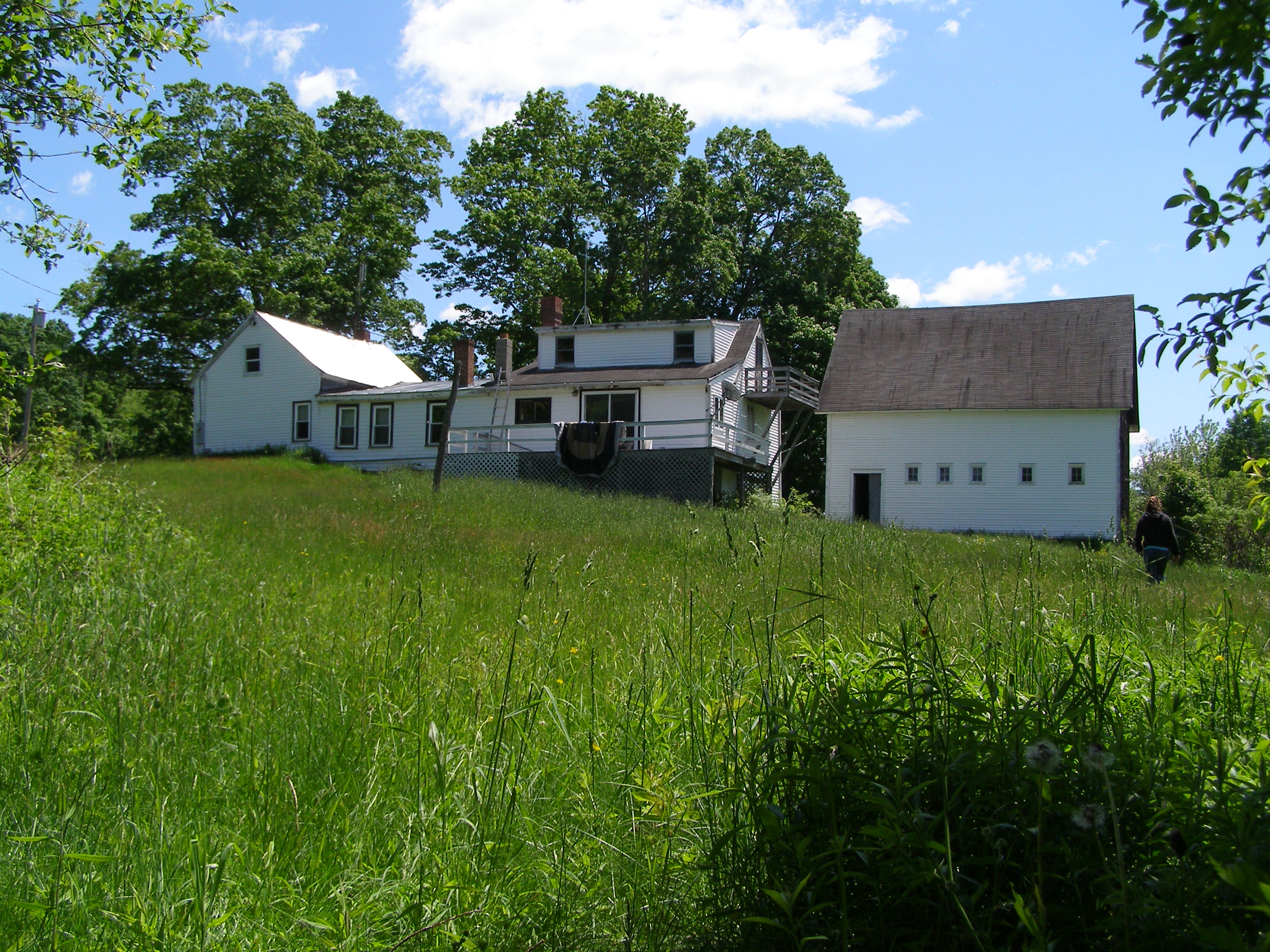
I’m thinking about this because we are relocating, not from Maine, but from this old farmhouse.
A year ago, I wrote a series of posts about holistic management, and I’ve been reviewing my holistic plan regularly ever since. My intention, my accurate intention, in Godin’s language, is to create a simpler, more sustainable life.
The precise details? Well, that’s a hairball of monstrous proportions that’s currently keeping me up nights.
Maybe it doesn’t need to. I started with an accurate intention and have taken all kinds of steps toward that, not only with my physical living situation, but also with my writing and life in general. The precise details of each of those steps were not visible to me a year ago when I created my plan and started acting. I moved forward, and identified and dealt with specifics as I came to them.
When I was younger, I had an easier time with big changes, because there was always time to adjust, to go back, to change my mind, to make another choice in the future. But now, as my partner and I age, it feels more urgent to get it exactly right and position myself perfectly for any eventuality.
This is silly, of course. The things we agonize over usually never happen, and if they do, they don’t happen in the way we predicted. The challenges we do encounter are often complete surprises we could never have foreseen or imagined.

Photo by yatharth roy vibhakar on Unsplash
Godin’s thought for the day reminded me, again, that life is a journey. It’s a process. It unfolds. Much as I’d like to know exactly where and when, who and how, those precise details are hidden in the future. It’s not time to know them yet. Right now, today, I need to live those questions and steer with my intention: a simpler, more sustainable life.
That’s the tree I planted last year. Now it’s beginning to grow. The roots are seeking nourishment. The plant aboveground is seeking sunlight. When I look back over the last twelve months, I can see how much growth there’s been, but as I lived the last year I didn’t think about growth or progress. I dealt with specifics arising out of my accurate, intentional seed and put one foot in front of the other.
Now we approach the still, dark, heart of winter, and as I take stock, look over my shoulder and raise my gaze to the horizon ahead, I realize afresh movement in the right direction is what counts. The specifics reveal themselves in their own time. Whatever my feelings of anxiety, fear, and overwhelm, I’m also flowing in the current of my accurate intention.
I’m forced to admit I have a choice. I can rest in faith in myself, in my intentions, and in life generally. I can cultivate my curiosity and sense of exploration, discovery, and fun.
Or I can make myself miserable trying to figure out every single detail yesterday and pushing this important transition to go as fast as possible so I don’t have to feel my feelings and wrestle with my panic-stricken thoughts any more.
It’s really not a choice I want to make. I don’t feel I have the energy to fight my compulsion to speed like a maniac through my life right now, obsessing about money, cleaning, and showings, collecting and packing boxes, and checking online every 10 minutes for new MLS listings. In Central Maine. In December. In our modest price range.
But even as I think that thought, I know it’s a lie. Whatever will be, will be. There’s only so much power I have in this picture. What’s really at stake is whether I enjoy the ride as much as I can or exhaust myself, risking illness and injury, just when I most need to be healthy and whole. One way or another, we are leaving this place and necessarily going somewhere else. Part of me wants to throw up my hands and spin out of control, but the wiser, saner part of me sees the choices clearly and knows which ones to make.
Sigh.
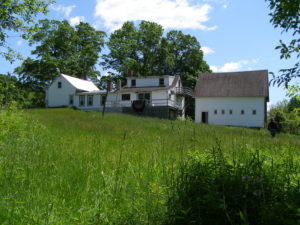
Maine Farmhouse and Barn
by Jenny Rose | Dec 4, 2021 | A Flourishing Woman, Minimalism
Asking the right question is powerful. Answering it honestly is a superpower. Good questions unlock doors and windows in our minds and hearts, and honest answers allow light into dark, dank, haunted places within us.
Photo by Craig Whitehead on Unsplash
For me, part of the magic of good questions is the challenge to think bigger and more creatively. Questions help me focus on problem-solving.
Life is all about problem-solving.
So, here are three questions. The first is from Joshua Becker on Becoming Minimalist. The others were inspired by his post:
- If I didn’t have this thing, what would I use instead?
- If I wasn’t doing this activity, what would I do instead?
- If I wasn’t investing my time, energy, and power here, where would I invest them instead?
In the first questions, the thing, whatever it is, may be something you’re not using in the first place. But if you are, or you think you are, or you have, or you think you might need to sometime in the future, ask yourself if you didn’t have it, what would you use in place of it?
If I didn’t have this apple corer, what would I use instead?
A knife.
A good kitchen knife is multipurpose. An apple corer is not.
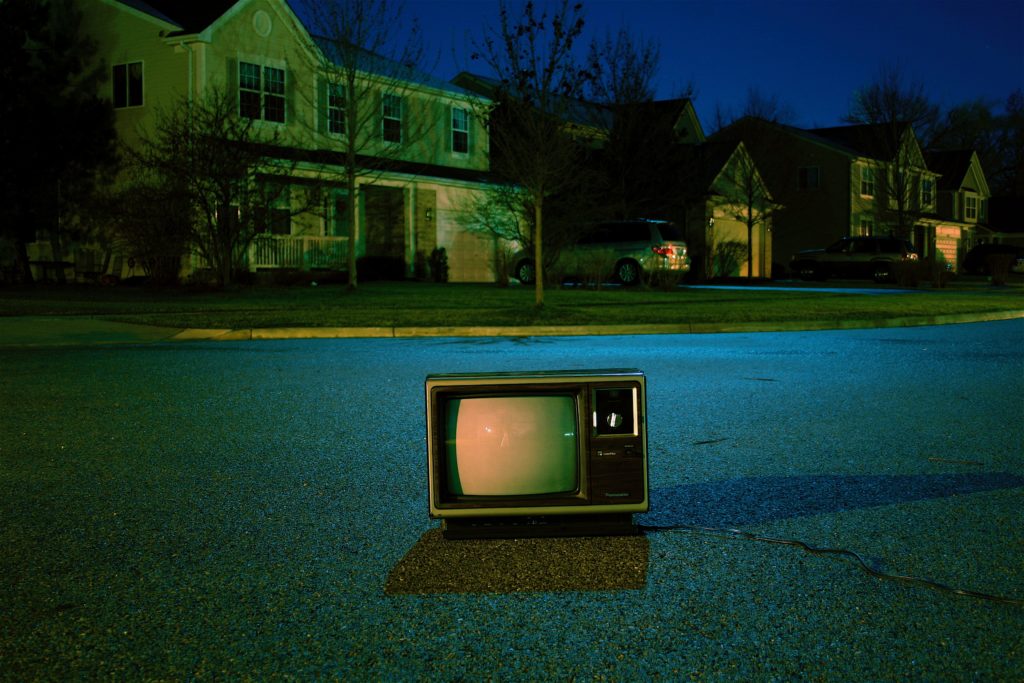
If I didn’t have a TV habit, what could I do instead?

Photo by Frank Okay on Unsplash
Spend actual face-to-face time with someone. Read a book. Take a walk. Play with pets. Exercise. Play a game. Go outside.
If I wasn’t consumed and exhausted by stress, anxiety, toxic mimics, or unhealthy relationships, what could I have energy for?
Creativity. Spirituality. Learning. Healing. Growth. Healthy connections. Rest.
I don’t suggest a ban on apple corers or TV. These questions are not weapons with which to make ourselves bad and wrong. The point is that asking the questions reminds us we are making choices and gives us a chance to consider whether or not our choices are adding value to our lives and taking us in the direction we want to go.
Do we really need a bigger kitchen to house our collection of apple corers and other gidgets and gadgets that do the work of a good knife?
Do we really need three, or six, or nine different streaming services and a steady diet of however many hours of TV a day?
If we ask and answer these questions intermittently during our day, what might we learn about which activities and objects are useful and valuable and which are not? How would our relationships look through the lens of these questions, beginning with our relationship with ourselves?
How could we engage with subtractive problem-solving?
I would rather have one multipurpose object, tool, or activity than several specialized ones. Simple is easy. Simple is clear. Simple takes less time, money, space, and energy.
Here’s the downside of good questions requiring honest answers:
We might not like the answers.
If we ask, if we answer, we may find out things we don’t want to know, which might be why we’re unconsciously busy spinning our wheels in the first place.
This is the old French story about Bluebeard. Once his young wife looked in the forbidden room and saw all his former headless brides, she couldn’t unsee it. There was no going back.
This kind of self-inquiry is a choice. We may not want to. We may not be willing to. That’s OK. Life has a way of increasing the pressure until we are forced to go in the direction of our fear and resistance. On the other hand, maybe you’re a person with no emotional, physical, or thought clutter. Maybe you have no time-wasting coping mechanisms and habits. Maybe your kitchen drawers are clean, functional, mouse free, and contain nothing but a few useful multipurpose tools you use regularly. Maybe all your relationships are perfectly healthy. Good for you! I’m jealous.
My life (and my kitchen) is messier than that. I spend too much time and energy in non-useful activities, and even more time and energy being hard on myself for it. I worry, and make up stories, and work hard to stay defended and hidden.

Photo by Angelina Litvin on Unsplash
If I didn’t spend time playing online solitaire in an effort to manage uncomfortable feelings or fatigue, what could I do? Write? Take a walk? Relax with a book? Dance? Journal? Talk to a friend? Scrub a floor?
It’s not that solitaire is necessarily bad. The question is, would another activity be better? A walk takes care of exercise; spending time outside; and spending undistracted time with myself or a friend, pet, or loved one. A walk is a multipurpose activity. Solitaire is not.
I need a good kitchen knife. I need to be outside and exercise.
Do I need an apple corer and online solitaire?
(Well, no. But maybe I want them. That apple corer is mine (this is called the endowment effect). I paid good money for it! Maybe I used it once. Maybe I’ll use it again one day. I deserve to relax and take a break now and then. Solitaire is better than TV or a social media habit. It doesn’t hurt anyone. I need some downtime in my day.)
I’m not here to argue with you. I want you to have what you need. I want what I need, too.
Just asking the questions!

Photo by Das Sasha on Unsplash
by Jenny Rose | Nov 27, 2021 | A Flourishing Woman, Creativity
As regular readers know, for several years I’ve been writing fiction. I’m now working on the third book in my series, The Webbd Wheel.

After I finished the first book, The Hanged Man, I had it professionally edited twice. I was looking for a reality check. Was it any good at all? Did I need to begin again?
Much to my surprise, my editor praised it warmly.
This was wonderful, but not at all the same as attracting an agent or publisher. The writing’s quality takes second place to the estimated commercial value of the work in the current publishing business model.
I understand this. Business is business and it’s not personal. However, writers like me have very little ability to compete with writers who are proven money-makers.
Books require paper, which comes from trees. I love books. They’re the mainstay of my existence. Yet neither I nor anyone else will survive if we kill all the trees on this planet. I’m not much of a digital reader, though many people are. I’d like to be in print, but the money required to get into print and the possibility those books will not sell are part of what’s driving the current publishing model, and I don’t want to be decimating trees for books that sit unwanted on a shelf or in boxes.
Traditional publishing, because it’s capitalist, is conservative. There are rules. Unproven writers, in particular, have to follow the conventions.
You may not have noticed, but I’m not very conventional, especially not creatively. According to print publishing conventions, my books are too long for a newbie author. They’re a synthesis of many different cultures and stories, which raises the spectre of cultural appropriation, a hot potato no publisher wants to handle. There are numerous characters and the story is complicated. (Who do I think I am? George R. R. Martin?) There’s erotica, including shapeshifting lovers. There’s paganism. There’s witchcraft and magic. There’s natural systems collapse. There are all the messy aspects of relationship with family, friends, mates, and children.
In short, I want to write without the shackles imposed by the necessity to please most people most of the time and offend no one so millions will buy my work and a publisher makes money.
The conventions are simply too small for me or my imagination to fit into.

Photo by Andrew Loke on Unsplash
This, by the way, is not a surprise. I’ve never fit into conventions. Why did I think I would be successful now?
For years I’ve been submitting my work, collecting rejections, and researching alternative ways to get my writing to readers.
Publishing, like many other things in our world, is changing rapidly. Technology has opened up new and different ways to share written material.
Success, from a traditional publisher’s point of view, is sales. Sales require good marketing and a vast audience. I’ve been told over and over again if I want to be noticed, if I want to be successful, the only path is social media.
Maybe that’s true and maybe it isn’t. I’ve read a lot of books by authors who were writing before social media. I’ve read some really terrible bestsellers that, as far as I’m concerned, should never have been published, but the authors had a big following and fan base on social media and elsewhere. They were popular. They got rich, at least by my standards!
Here’s the thing. I don’t want to write something I wouldn’t read or buy. I don’t want to be a product for the social media platforms, and I don’t want you to be, either. I’m not producing work that appeals to everyone, and that’s okay with me.
I have no ambition to be popular. Useful? Sure. Provocative, as in provoking discussions, questions, new ways to think about problems and issues? Wonderful. Validating? Great. Connecting? Absolutely.
People who rock boats are not popular, and I’m a boat rocker from way back.
I want an audience which finds value in my work. The size of that audience is not my business.
One of the options for digital publishing is an online platform called Substack, which was created especially for writers. Several well-known authors who are in print publish there, and some have started there and subsequently been “discovered” and published conventionally. Substack allows a writer to deliver serial fiction directly to readers. No middlemen. No advertising. A free or low-cost monthly subscription that can be cancelled at any time with no book to rehome, give away, or collect dust.
This platform supports authors and readers engaging in discussion and creating community. It allows writers to take readers behind the scenes of the creative writing process, not necessarily as teachers, though there are plenty of guides and teachers on Substack, but as playmates. As equals and peers who live in the same world and share the human experience.
I’ve spent the last two or three weeks creating a site on Substack called A Stone, a Web, a Story. This weekend, after I post this in Harvesting Stones on Saturday, I will publish on Substack on Sunday. The starting posts will be the first 10 pages of my first book, The Hanged Man, and a post specifically about creating The Webbd Wheel series. E-mail subscribers to Harvesting Stones will receive an e-mail from A Stone, a Web, a Story every week when I post there. You can opt out of my e-mail list for either site at any time.
I’ve added a new category to the home page on Harvesting Stones below the image links for the blog and resources. It’s titled The Webbd Wheel. A click will take you to a page that tells you a little about the books and provides a link to A Stone, a Web, a Story. You’ll also find The Webbd Wheel on the menu at the top of every page on Harvesting Stones.
If you want to check out A Stone, a Web, a Story, follow this link. Remember, the first post won’t go up until Sunday, 11/28. I’ll continue to publish here as usual.
As I write, it’s Thanksgiving. I am thankful for every single person reading this. When I began blogging in the summer of 2016, I could not have imagined the journey I was embarking upon. Now, more than 200 posts and two books later, I’ve made connections, learned, grown, laughed, cried, and been touched by your comments and questions. I’m proud to begin sharing my fiction with you and I hope you’ll join me and other readers on Substack as I add posts and features to A Stone, a Web, a Story. Thank you.

Photo by Josh Applegate on Unsplash
by Jenny Rose | Nov 20, 2021 | Connection & Community, Emotional Intelligence
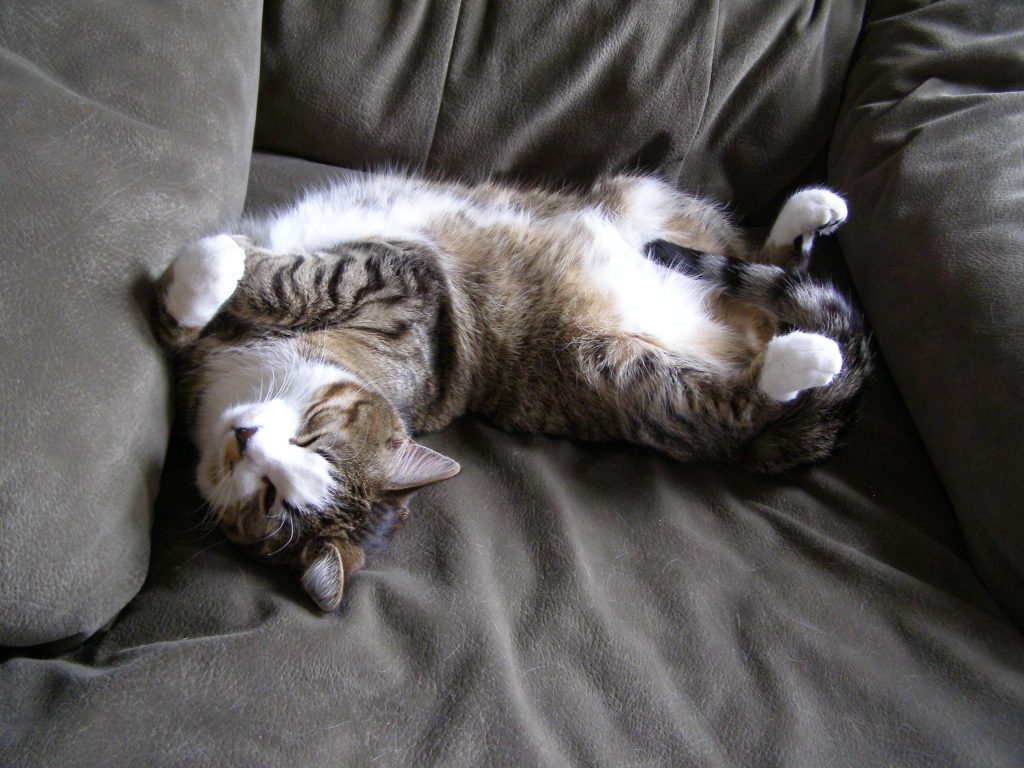
I was cleaning cat hair off our furniture a couple of days ago and thinking about the Golden Rule. I muttered about it, too. To the cats, who had no opinion but thought the whole removing-cat-hair-with-a-dish-glove business highly entertaining and a good game. They wanted the cat hair back. I wanted to get rid of it.

Ozzy 2021
Sometimes I feel I’ve spent my life cleaning.
Don’t get me wrong. Cleaning can be a sacred activity, a Baba Yaga kind of activity. Few things are as satisfying to me as making order out of chaos; sorting the unwanted and unnecessary from the useful and beautiful is something I always enjoy.
On the other hand, cleaning is emotional labor. Physical labor, too.
When I say “I love you,” part of that is a commitment to provide a clean, comfortable, healthy space. Part of my own self-respect and self-love is providing myself a clean, comfortable, healthy space.
It’s not a question of money. Paint is peeling off many surfaces in this house. That doesn’t mean those surfaces need to be dirty. Yes, the floor is pitted, stained and scarred. That doesn’t mean I don’t bother to scrub off the grime. Yes, the front door gaps and sags. The metal screen door is getting rusty. That doesn’t mean they have to be filthy.
So, cleaning. For all of us, myself, my partner, and the cats.
I know some people will say the cats don’t care. My partner has said he doesn’t notice.
But I care. I notice. And I don’t know the cats don’t care. Why should they live in unnecessary squalor?
Anyway. The Golden Rule. Do unto others, etc.
I think the Golden Rule is a good way to live. I live by it. The problem is the rule itself implies others will do unto you as you do unto them.
And that’s simply not true.
Photo by Evan Kirby on Unsplash
It’s like tolerance, or respect, or reciprocity. Treating others by those standards does not mean we’ll receive the same treatment.
I’m angry about that. Living by the Golden Rule is expensive in time, energy, and patience. I choose to do it because it’s part of my integrity as a human being, but it’s not easy, and it’s not an investment that always pays off. Which is sad. And disconnecting.
I’ve asked it before and I ask it again. When have we given enough?
Then I received a post in my Inbox from Joshua Fields Millburn titled ‘The Boundaries of Discontent’ about this very subject. Tolerance, he says “can be a magnet for neglect.”
Amen.
The Golden Rule is an effective guide for choice. I feel good about myself and the way I show up in the world when I employ it. But it’s only the first step.
The second step is observing whether it’s reciprocated in any given situation and continuing to make healthy, self-supportive choices based on that observation.
It’s wonderful to give positive things to the world and others, but we need to notice if we’re not receiving in kind. Giving out of an emotional deficit is not sustainable. We deserve more than that. We can find people who live the Golden Rule, people like us.
Millburn says we encourage what we tolerate, and he’s right. Tolerance is too heavy to carry alone in a relationship, and unbalanced tolerance is simply clutter. When we stop tolerating the absence of reciprocity, or more than a few days of cat hair on the furniture, we can move into a simpler, clearer, cleaner life.
Healthy boundaries are not intolerance.
I don’t want to be the friend who never reciprocates. In fact, I’ve voluntarily left more than one relationship because it was clear that who I am was making others unhappy or uncomfortable and I was unable to find a way forward into something healthier with them. I don’t want toxic people in my life, and I won’t be a toxic person for anyone else, either. Do unto others has sometimes meant letting go and moving on for my sake and theirs.
Tools for healthy relationship and connection like the Golden Rule work best when both parties bear their weight and use them. If that’s not happening, the tool becomes ineffective, even destructive, and the relationship falters.
Do unto others as you would have them do unto you. To a point. But don’t get too carried away. And don’t build expectations of reciprocity around it. Follow it because you believe it’s the right thing to do and let go of the rest.

Photo by Roderico Y. Díaz on Unsplash
by Jenny Rose | Nov 13, 2021 | A Flourishing Woman, Self-Love
I’ve been thinking about this post for a couple of weeks. It’s funny how a brief note to myself, frequently glanced at, suddenly grows into a vital, dynamic idea compelling me to weave a net of words and capture it.

Photo by freddie marriage on Unsplash
For most of my life I’ve been a compulsive list maker. I had lists of lists and carefully checked items off as I dealt with them. I thought of lists as tools to keep track of things and remember what I needed to do, and that may have been partly true, but an uglier aspect was how useful they were as weapons of self-hatred for not working hard enough, not being productive enough.
After I moved to Maine, I came across the idea of making reverse lists; that is, listing what I did accomplish rather than what I thought I should accomplish. This reduced my ability to schedule shame myself, but my nasty internal critic was never satisfied. No matter how much I’d done, he thought I should have, could have, done more. However, reverse listing allowed me to see more clearly that I actually accomplish quite a lot most days, and that helped me push back against the internal critic. He lost a little power.
Still, my sense of self-worth was entirely tied to production, to doing rather than being.
Over time, my reverse listing became more of a series of short, journal-like notes, part of my daily routine. Now and then I looked back at them to see what day I’d run an errand or made a phone call, but I never stopped to consider the real value of reverse listing.
A few weeks ago, I realized the purpose of reverse listing had become a way to hold myself accountable, to be sure I didn’t slack off or forget everything I have to do to justify my existence. I needed to keep an eye on myself because I’m so lazy and undisciplined. If I don’t watch myself all the time, I won’t do any work at all. The practice was a daily no-confidence vote for myself.

Photo by SHTTEFAN on Unsplash
This is so ridiculous I had to smile. I am many things, but lazy isn’t one of them. And if I do spend a lazy hour sitting in the sun with a good book, who cares? The world doesn’t stop.
I asked myself a daring question: What if I stopped making reverse list journal notes every day? What if I closed that notebook and put it away? What if I adopted an attitude of complete confidence in myself, my value, and my effectiveness, no proof required?
Hey, less clutter on my work table!
Immediately, I felt guilty and a little scared. If I didn’t write down tasks as I did them, where would the evidence justifying my existence be? How would I hold myself accountable, keep an eye on myself, make sure I’m being useful?
Honestly, sometimes the inside of my head appalls me. It’s good no one else is in there.
Along with all these thoughts and feelings was something else. A gleeful, childish feeling of getting away with something big, a sense of freedom.
Jailbreak.
So I closed the notebook and put it in a drawer. I got up the next morning, went through my morning routine, wrote, went to work, swam ¾ of a mile, came home. And the next day. And the next day. I did laundry and cleaned the bathroom. I cooked and fed myself. I swept cat litter off the floor and took the compost out. I paid bills, took walks, and ran errands.
I lived my usual life and not one single authority came knocking at the door demanding to see my reverse list in order to decide if I was allowed to go on taking up space.
Not even me.
Which brings me to the realization that finally brought this post into being.

Photo by John Salvino on Unsplash
I build myself all kinds of jails. Lists were just one. Trying to please others is a jail. Trying to meet expectations is a jail. Trying to understand others when they don’t communicate clearly and give mixed messages can be a jail. Trying itself can be a jail. Ironically, having poor boundaries is a terrible prison that shrinks a little more every day. Shame is solitary confinement. Taking on too much responsibility, arguing with what is, agonizing over things I have no power to change, trying to fix things for other people, are all prisons.
You know what? I’m really, really tired of living in jails of my own construction.
Fortunately, I have keys to all of them.
Now, I know I’ll be back in jail, at least temporarily, because it takes me a minute to realize it’s happening again. It’s such an old pattern.
But I’m not going to put sheets on a cot and live in a prison cell. It just makes everything worse. Whatever the challenges or problems I face, they’re much better dealt with from a place of freedom and power.
I’m a far from perfect woman, but I don’t deserve to be locked up for the rest of my life with the key thrown away.
No more jail. I’m outta there.