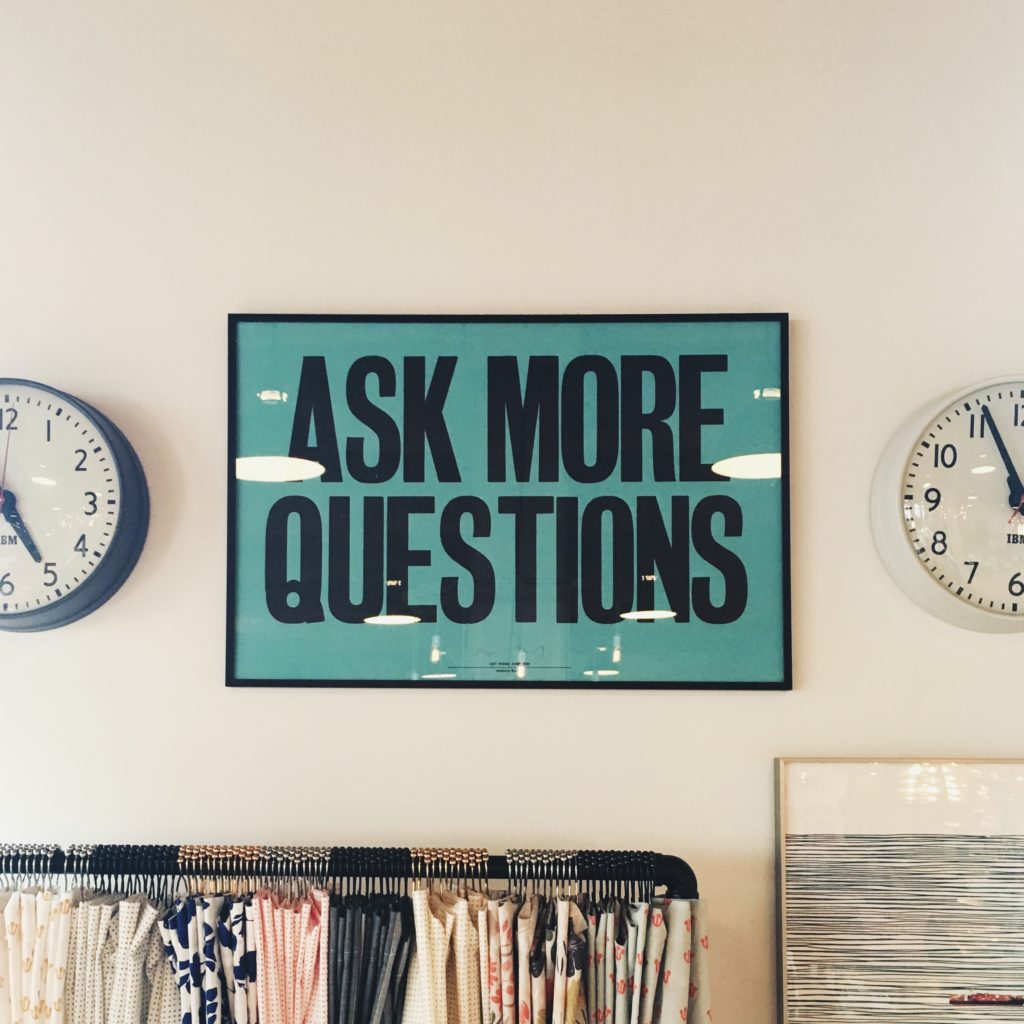
We compare ourselves to others in contests and competitions. Our capitalist culture shapes us to believe winners receive the most money and fame.
Our culture assures us money and fame equal power, and winners have to spend a lot of money in order to win. Everyone else has to spend a lot of money in order to compete with them.
The fact is, contests and competitions produce one winner and many losers. But those losers want to win, so they spend even more money to become winners.
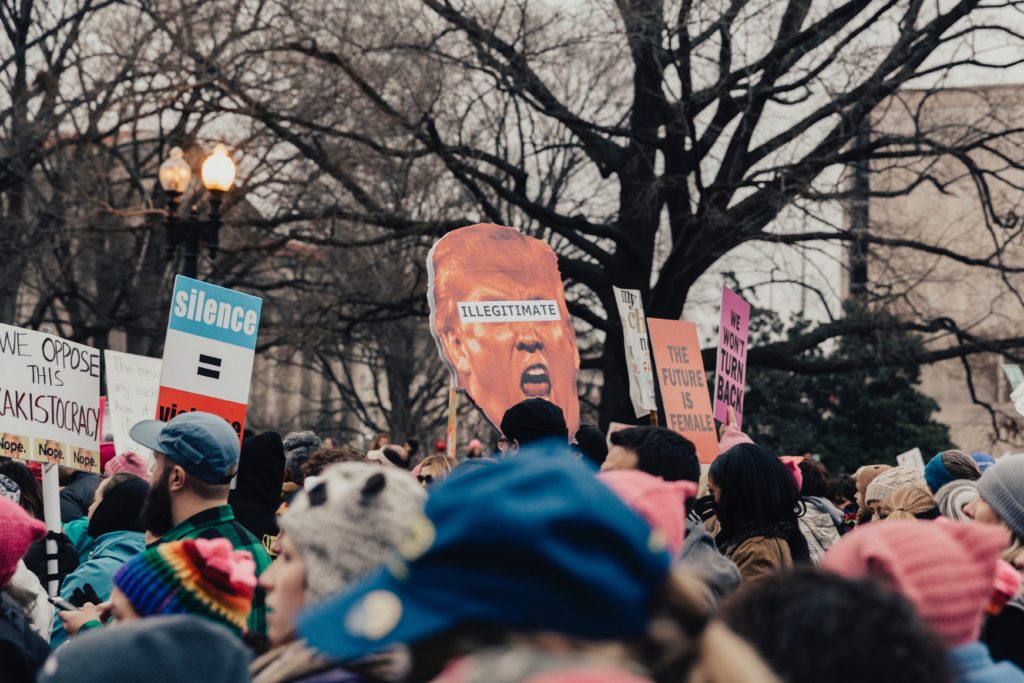
Photo by Jack Hamilton on Unsplash
Win-win for capitalism, but lose-lose for almost everyone else.
I recently heard of a question on Facebook to men: What woman do you admire?
Nearly all the answers involved women of extraordinary intelligence and talent who have made important contributions to the world but are not necessarily well known, although their male colleagues are!
Are they losers because they’re not rich and famous? Can they be winners if we’ve never heard of them?
Is our win meaningful if nobody recognizes it? Is it meaningful if it’s not part of our identity?
Is it the win we care about, or the validation, power and applause we expect to receive as a winner?
Are our wins and losses about what we think of ourselves (empowering) or about what others think of us (disempowering)?
How important is winning? More important than the truth? More important than our own integrity and dignity? More important than our health and well-being?
Is our win really about someone else losing (I’ll show them!)?
Winning, like perfectionism and people pleasing, is a moving target, not a permanent state. Winners come and go, just like losers. Money and fame come and go, just like winners.
Our personal power stays with us, win or lose, rich or poor, famous or unknown. We each hold the keys to our own success.
In this age of disinformation, misinformation, and connectivity, it’s ironic that some of the most emotionally intelligent among us are wolves in sheep’s clothing. Such people have a twisted mastery of emotional intelligence; enough to successfully manipulate and recruit others behind lies, postmodernism and ideology, but not enough to use constructively.
We are evolved to be emotional creatures, and the combination of our feelings and intellect is powerful, but we must maintain a balance of both. Feelings without the tempering effect of information will often lead us astray. Intellect without feelings abandons traits that make us human, such as intuition and compassion.
Belief is built on trust, faith, or confidence in someone or something, and once we establish a belief, we think of it as part of our identity. However, true identity is not defined by our beliefs, choices, style, or preferences. Those are merely toxic mimics for a healthy identity, which evolves, changes, and expands as we learn and grow.
When influencers encourage us to mistake our beliefs for our identities, they’re wielding a powerful social tool in order to glue together communities they can manipulate. Within such communities, to question or lose confidence in a belief results in severe social sanctions intended to stifle any such challenge. Influencers work hard to control and manage both our emotions and access to information that might threaten the belief they’re selling.
Photo by roya ann miller on Unsplash
Fear of being outcast effectively disables our willingness to objectively examine the beliefs our community espouses.
If we are low in emotional intelligence, our lives don’t work well. Happiness eludes us. Relationships are problematic and frequently unhealthy. We’re ignorant of our needs and thus neglect them. We become estranged from ourselves (our true identities) and lose our flexibility and resilience. We take everything personally, and fiercely protect our beliefs, no matter how damaging and illogical they are.
We stop growing and learning. We murder our curiosity and become afraid to ask questions or seek new information.
Worst of all, we are blind to the emotional manipulations of others. An appeal to our desire to heal the planet, be kind and compassionate, be tolerant and generous, pushes us into enabling the agendas of others before we’ve thoroughly researched and explored those agendas. We react to the views and criticisms of others reflexively, fearful of appearing in a bad light.
We cannot identify our power and thus fail to protect it, making it easy for others to take it away.
Photo by Peter Forster on Unsplash
Many well-meaning people are duped by predators who play on their fears and/or desire to make a positive contribution to the culture and conversation. If we identify as a good person, a peaceful person, we’re deeply distressed by the accusation that we’re hateful, and will accept any kind of ideological nonsense in order to maintain our social identity. We, in turn, pass on the pressure to others. If we must believe the moon is made of green cheese in order to be accepted, others must also believe it for us to accept them.
Our lack of emotional intelligence makes our current chaos of dis- and misinformation predictable. People interested in power and control have no problem lying, and our low emotional skills make us quite vulnerable to those lies, especially when they’re presented with high emotion.
We don’t have mastery of our emotions and thus become victims.
I’m reading a book titled Controlling People, by Patricia Evans. It’s an interesting look at why some people are so controlling of others. Here’s a quote I resonated with:
“What blinds people the most to controlling behavior is the belief that the person who consistently defines them truly loves them.”
We are so often manipulated by others because we believe they have something we need. Love. Wealth. A raise or promotion. Validation. Belonging. Something.
As long as we believe anyone has something we need, we’re open to manipulation. We’ve entered the ancient archetype of prostitution. We’ll make choices based on pleasing that person in order to earn what we need.
The minute we enter into that dynamic, we’ve become disempowered, and I assure you pleasing people never works. It always ends badly. Show me someone, no matter how beloved, who demands you please them in order to be rewarded, and I’ll show you a power predator incapable of love or being pleased.
Such people do not share power. Ever.
Photo by James Pond on Unsplash
When you are no longer useful, you will be discarded.
Emotional intelligence empowers us to find an effective balance between feelings and information. It allows us to discard our pseudo selves and support a dynamic identity. It helps us discern the difference between someone seeking to control and disempower us with emotional appeals and someone committed to power-with and win-win, where disagreement and curiosity are not punished and we’re encouraged to think for ourselves.
(For the beginning of this series of posts, inspired by Allan Savory’s book, Holistic Management, begin here.)
Photo by Ludde Lorentz on Unsplash
Allan Savory’s holistic decision-making process “ends” with a feedback loop of planning (assuming the plan is wrong, as in planning for failure), monitoring, controlling, and replanning.
So, having spent a couple of months working with this model and writing about it, what have I got? Where am I?
I have no idea! I feel like I’m in the middle of a hairball.
Using Savory’s template is not the problem. It’s elegant, logical, effective, and sustainable. It’s a model based on power-with and win-win.
It’s effective because learning the process has successfully excavated resistance, blocks, and unconscious beliefs that are and have always been obstacles for me in all areas of my life. Until and unless I deal with my internal landscape, neither this process nor any other will work for me.
As I think about defining my creative output and consider how to get it in front of those who would find value in my work, I’m forced into a narrow focus. I’m forced into choice and commitment.
In the beginning, starting Our Daily Crime and writing my books was an act of defiance. I had no expectations at all. My motivation was to express myself honestly in spite of what anyone thought or said.
Photo by Bryan Minear on Unsplash
Now, years later, I’ve created a body of work, grown from those first bitter seeds of defiance. I discover I’ve written a blueprint, a map for reclaiming and managing personal power through emotional intelligence. It’s not finished. It will never be finished. Not everyone wants it, or can use it.
But some people do, and can. People like me.
Who are they? Where are they? How do I find them?
Upon waking this morning, dimly hearing peepers in the pond (Spring!), a robin, and a couple of barred owls, I had this thought:
I cannot be/give/do/create anything that anyone wants.
To say that’s a belief is completely inadequate. It’s a law of nature, like gravity, immutable, everlasting, absolutely indestructible.
It’s a belief underlying my whole life.
Is it true?
Panic stations! It doesn’t matter. I refuse to answer that question right now.
OK, I said to myself. Let me ask you this: If it were not true, how would you find your audience?
Now, that’s a question I can work with!
I would have fallen on Our Daily Crime and its content with joy and relief, had I found it eight or ten years ago. It’s exactly the support and resource I needed.
I well remember how I started on the journey of emotional intelligence and power reclamation. I know where I’ve found my people – and where I haven’t. I follow several people who add value to my life and serve as teachers, guides, and examples of simplicity, honesty, and effective marketing. They have found their audience.
I can find mine, too.
If I empower the belief I have nothing to contribute that anyone wants, I’m at the end of possibility as a writer. If I acknowledge the belief and work around it anyway, I’m in a new world of unexplored, unimagined possibilities, and Savory’s model provides me with a decision-making tool that allows me to pursue my own joy and success, remain cooperative and authentic, and maintain healthy connections with others. Everybody wins.
As I work with the next piece of Allan Savory’s holistic management model from his book, Holistic Management, I’m thinking about choice.
Photo by Jon Tyson on Unsplash
When I learned emotional intelligence, I understood choice as central to our personal power. The choice to say yes. The choice to say no. Our power to choose mindfully and intentionally is constantly under attack.
I also learned, to my chagrin, how much time and energy I had spent trying to change or fix what I have no power to change or fix and overlooking the places in which I do have power. I could not effectively make decisions until I learned to let go, stop arguing with what is, step away from where the blows land, and stop taking poisoned bait.
As Joshua Fields Millburn says, “letting go is not something you do. It is something you stop doing.”
Reclaiming our ability and power to choose from our unconscious patterns and addictions is a difficult journey. Reclaiming our power of choice from those who have stolen it or seek to steal it is a journey into fear. Reclaiming our power of choice in spite of our fear is an exercise in heroism.
Once we have narrowed the whole we’re trying to manage to the dimensions in which we truly have power, we’re faced with learning how to make decisions and carrying them through.
Photo by Gemma Evans on Unsplash
The power of choice comes with responsibility. Some people don’t want to consciously choose because they don’t want to take responsibility for the outcomes they create with their choices. Another pattern I’ve often seen is the desire to have as many options as possible at all times – a recipe for noncommitment and a tactic that invariably steals power from others.
Choosing one option means we leave others behind. Choosing, and working with the consequences of our choices, requires flexibility, resilience, and the willingness to be wrong.
We will inevitably make choices resulting in unwanted, unexpected results.
However, refusing to choose is still a choice. Inaction has consequences, just as action does.
If we don’t choose, someone else or circumstances will choose for us.
Is the goal of decision-making perfection or empowerment?
Is the right choice the one giving us the outcome we want? Is the wrong choice the one resulting in an outcome we didn’t foresee or dislike?
Some choices are easy, like which shirt to wear.
Some choices tear us apart, like being forced to choose between caring for ourselves and caring for someone we love.
Most of the choices we make in a day we never even notice.
Some choices change the direction of our lives and we never forget the moment we stood at a crossroad and made a decision.
We can’t necessarily tell the important choices from the unimportant ones when we’re faced with them.
Photo by Alex Iby on Unsplash
The ability to choose is strength and power.
The ability to choose involves risk and uncertainty. No matter how well we gather information, weigh pros and cons, and try to imagine the future, choice is largely a leap in the dark. As we choose, so do those around us. Our choices impact them, and their choices impact us.
It’s absolutely impossible to predict where some choices will take us.
In Savory’s model, the holistic context directs decision-making. If we know something about where we are, and something about where we want to end up, we can build a path from here to there. Our choices are steps along the path, taking us forward. The cause and effect of choice is always uncertain and dynamic, so we can expect our path to fork, detour, double back, and otherwise confuse and confound us.
Choosing is a flow that never stops. Once we’ve decided to step into it, one choice leads to another, and another.
No one, no one can make better choices for us than we can.
Savory proposes a list of questions, called context checks, to help in decision-making:
Might this action have negative social, biological, or financial consequences?
Does this action provide the greatest return toward the goals for each unit of time or money invested?
Does this action contribute the most to covering the costs inherent in the endeavor?
Is the energy or money used in this action coming from the most appropriate source in our holistic context?
If we take this action, will it lead us toward or away from the future resource base described in our holistic context?
How do we feel about this action? Might it lead to the quality of life we defined in our holistic context? What might its adverse effects be?
These questions ask us to think beyond our immediate desires and consider the possible impact of our actions on others, now and into the future. They ask us for our best predictions, and to think carefully about our goals through the lens of sustainability.
Photo by Angelina Litvin on Unsplash
The context checks are not a one and done exercise. Savory suggests they be revisited frequently, either at set intervals or in case of unexpected outcomes and events.
There will certainly be unexpected outcomes and events, as well as new information. Each choice we make teaches us something, and we (hopefully) integrate what we’ve learned into our next step.
Learning to make choices, and discerning the places in which we have no power to make choices, are two of the most essential things we can do in life. It seems to me the act of choosing is far more meaningful than whether we or others judge our decisions and their outcomes as “good” or “bad.”
Sadly, our culture seems more concerned at present with criticizing and/or eliminating the choices of others rather than developing and supporting good decision-making skills that foster personal power for everyone. Many of us spend too much time preoccupied with things we cannot change, actively disempowering ourselves and making ourselves miserable.
I love solitaire. I find it infinitely soothing. Of course, there’s a line between soothing and numbing, just as there is with any activity. As long as I mindfully use a game or two as a tool rather than being used by it, it’s one of my favorite wait-I-need-to-think-about-this or catch-my-breath techniques.
Photo by Jack Hamilton on Unsplash
The thing about solitaire, whether we play the old-fashioned way with a deck of cards, or online, is each game is different because we shuffle the cards.
We shuffle the cards.
We make choices as we play, so we have some control, but the shuffle is random. Always the same cards, but in different positions every time.
Sometimes we win. Sometimes the cards don’t fall right, or we make mistakes, or both, and we lose.
One of the unexpected results of working with holistic decision-making is it’s forcing me to reshuffle my cards.
Each of my relationships is a card. My job-for-a-paycheck is one, and exercise, and sleeping, and eating. My Be Still Now time is a card. All the ordinary household tasks and activities of daily living have a card. My time is a card, and my energy another. Each piece of my life can be represented by a card.
When I don’t shuffle the deck, I keep laying out the cards in the same old way, in the same old order, and experiencing the same old frustrations and challenges.
Photo by frank mckenna on Unsplash
Holistic decision-making demands a fresh look at what I’m trying to manage and why, as well as an assessment of my personal deck of cards, including priorities, resources, and sustainability. In looking at my life from an unaccustomed vantage point, through the filter of Allan Savory’s model, I see previously unconscious choices and patterns that are not in line with my current intentions.
The cards haven’t quite fallen right, or I’ve made mistakes, or both. My deck is too large and I need to discard, or too small and I need to add some cards. I’ve dealt less important cards on top of essential ones.
So I’m reshuffling my cards and exploring new layouts.
I can’t do everything. I want to. I think I should. I can’t.
Everything and everyone can’t be a priority. Some of my time and energy investments have provided little or no return. In some ways my life hasn’t been reflecting the truth of my heart.
So I’m reshuffling my cards.
Photo by Geetanjal Khanna on Unsplash
I could refuse to reshuffle. Eventually, life will force a reshuffle, maybe in painful and unexpected ways. I could wait for that. On the other hand, I can face my fears, be willing to cut my losses, tell the truth (at least to myself), and let go of what’s no longer serving me.
I choose to reshuffle.
Not enough time/space/energy for what’s really important? Exhausted and overwhelmed?
Websites store cookies to enhance functionality and personalise your experience. You can manage your preferences, but blocking some cookies may impact site performance and services.
Essential cookies enable basic functions and are necessary for the proper function of the website.
Name
Description
Duration
Cookie Preferences
This cookie is used to store the user's cookie consent preferences.
30 days
These cookies are needed for adding comments on this website.
Name
Description
Duration
comment_author
Used to track the user across multiple sessions.
Session
comment_author_email
Used to track the user across multiple sessions.
Session
comment_author_url
Used to track the user across multiple sessions.
Session
Statistics cookies collect information anonymously. This information helps us understand how visitors use our website.
Google Analytics is a powerful tool that tracks and analyzes website traffic for informed marketing decisions.
ID used to identify users for 24 hours after last activity
24 hours
_gat
Used to monitor number of Google Analytics server requests when using Google Tag Manager
1 minute
_gac_
Contains information related to marketing campaigns of the user. These are shared with Google AdWords / Google Ads when the Google Ads and Google Analytics accounts are linked together.
90 days
__utma
ID used to identify users and sessions
2 years after last activity
__utmt
Used to monitor number of Google Analytics server requests
10 minutes
__utmb
Used to distinguish new sessions and visits. This cookie is set when the GA.js javascript library is loaded and there is no existing __utmb cookie. The cookie is updated every time data is sent to the Google Analytics server.
30 minutes after last activity
__utmc
Used only with old Urchin versions of Google Analytics and not with GA.js. Was used to distinguish between new sessions and visits at the end of a session.
End of session (browser)
__utmz
Contains information about the traffic source or campaign that directed user to the website. The cookie is set when the GA.js javascript is loaded and updated when data is sent to the Google Anaytics server
6 months after last activity
__utmv
Contains custom information set by the web developer via the _setCustomVar method in Google Analytics. This cookie is updated every time new data is sent to the Google Analytics server.
2 years after last activity
__utmx
Used to determine whether a user is included in an A / B or Multivariate test.
18 months
_ga
ID used to identify users
2 years
_gali
Used by Google Analytics to determine which links on a page are being clicked