by Jenny Rose | Feb 28, 2019 | Power

Photo by Chris Kristiansen on Unsplash
I think of myself as a goal-oriented, disciplined person. Most of the time I know what I want (at least I think I do). Some of the time I’m intentional and present with my choices. I like routine and can be both dogged and stubborn.
Outcomes have always been important to me. I set my sights on what I want to happen and started trying hard to achieve that desired outcome.
I don’t remember ever being taught creating certain outcomes is the way to live successfully and happily, but I structured my choices and behavior around that belief. A desired outcome was success, and therefore good. An outcome I didn’t want was failure, and therefore bad.
I didn’t consciously notice for much of my life that trying to create just the right outcome never worked well for me.
When I came to Maine and learned emotional intelligence, I started thinking about personal power and I finally really looked at how strongly desired outcomes motivated me. I was furious when I first came across the idea of letting go of outcomes. What I heard was invalidation and rejection of my ability to make long-term goals and plans and steadily, a step at a time, work toward them. I also thought I was hearing it was inappropriate to have dreams and desires. How could one navigate through life without caring about outcomes?

Photo by Jeremy Bishop on Unsplash
It took time, a lot of exposure and a couple of difficult and painful events, but eventually I understood investment in outcomes was the problematic piece, not having needs and desires or the degree to which we are disciplined and can tolerate delayed gratification.
We do not have complete power in the way things work out because our goals and plans inevitably include others.
By others I mean other people (the job, college or mate we want), whatever our conception of the Divine might be, and influences like the weather, the stock market, the tax return we counted on, the housing market, the weather, our state of health, and a thousand other variables.
Outcomes are as unpredictable as a loose cannon on a rolling deck, yet I based my happiness and sense of worth on them for most of my life.
For the most part I was unhappy, anxious and felt like a failure.
Then, somewhere I read or heard this little phrase: “However it needs to be, it’s okay with me.”
When I first came across it, I felt angry. It was a blatant lie. I was reluctant to think it, let alone say it. On the contrary, I was deeply invested in outcomes.
But I kept noticing it didn’t work well to live that way.
For some time I watched myself using all my energy in the tension of trying to create specific outcomes that eluded me.

Photo by Talles Alves on Unsplash
In my usual buttheaded fashion, I hung on grimly. If I wasn’t seeing the outcomes I intended and wanted, it was because I didn’t deserve them. Or I didn’t work hard enough. Or I was so broken and stupid nothing would ever work for me. Or the world was against me.
It was much easier to hate myself, an old habit, than consider the possibility none of us can really control outcomes. It was easier to blame others than change myself.
What we can control – the only place our personal power resides – is what we do with ourselves in terms of our beliefs, choices and behaviors.
Deciding how to think about outcomes is part of our personal power.
I formed a conscious intention of experimenting with letting go of outcomes. One of my very first explorations into that was this blog.
One of the biggest problems with attachment to outcomes for me is the outcome looms so large it overshadows the hundreds of small pleasures in life, as well as my delight and curiosity in the journey I take through each day. I’m too busy trying to get to an outcome to notice or appreciate anything else. Attachment to outcomes means there’s only one very specific way I can feel successful or happy, and in order for that to happen all the stars must align just right and everyone and everything around me must behave exactly as I want them to. Otherwise I’ll be resentful, depressed, discouraged, hurt, or some other kind of miserable.

Photo by Alex Iby on Unsplash
Attachment to outcomes is also a relationship killer. Whatever it is we want our children, parents, spouses, colleagues, bosses and friends to do or be (or not do or be), the fact is they are not pawns on our chess board. They are not paper dolls. They are not (hopefully) ours to control.
If we cannot accept our loved ones (or ourselves, for that matter) for who they are, we will lose them.
Attachment to outcomes comes with a heavy burden of fear and anxiety. As long as an outcome is “good” or “bad’ in our minds, both hope and fear attach to it. We invest energy in trying to avoid certain events and foster others. We try to figure out how to manipulate and influence the situation so it turns out the way we want.
We lose sight of the others around us very quickly. If we have our hearts set on a job, for example, even though we’re not well qualified for it, we do whatever it takes to get hired, never considering someone else might be a better fit. Someone else might be more desperate than we are for the job. The organization might need a specific set of skills and talents we do not possess. Another job opening we’re not yet aware of might be the place we’re most needed and will be most happy.
Attachment to outcomes can make us small and rigid, selfish and resentful.
So what does it look like to let go of outcomes?
Change and the unexpected are no longer fearful, but interesting. We make space for them. We have increased room for others because we’re not trying to control them. We take life less personally. We are confident and clear in our own power.
To let go of outcomes is to let go of distractions. It frees up space and energy to consider our own integrity, expression and needs. If we want to give a gift, we do it without worrying about how it will be received, if it will be reciprocated or how it will be judged. We give because it makes us happy and gives us pleasure to do so.
If we are artists, we create because it gives us joy, because it’s what we were born for. We don’t use our talent as a tool to leverage fame and riches. That doesn’t mean fame and riches won’t come or our art is not worth getting paid for, it just means that’s not an outcome that drives us.
Letting go of outcomes means letting go of feeling victimized, resentful and betrayed. We don’t take disappointment personally. Life is not all about us.

Photo by rawpixel.com on Unsplash
Letting go of outcomes makes room for cooperation and collaboration. We see others more clearly, lovingly and respectfully. We’re a more elegant team player. We enjoy working with others without the need for competition or power and control. We look for ways to share and nurture power. We give up the blame and shame game.
Letting go of outcomes means letting go of regrets. We make space instead for all outcomes, whether intended or not, comfortable or uncomfortable. We go forward with our best, most honest and heartfelt effort and have fun, letting the rest take care of itself. We use our time and energy to cultivate curiosity, wonder and gratitude for whatever happens.
Letting go of outcomes starves our anxiety, depression and insomnia. If we can position ourselves in life with confidence, surrender and acceptance, we build resilience and joy.
Let me hasten to say releasing outcomes is hard work. I find, somewhat to my chagrin, at times I’m invested in my resentment over the way things work out and my sense of betrayal. I don’t want to be soothed, comforted, or challenged to consider my experience from a different perspective. I want to be left alone to suck my thumb and pout, my version of a tantrum. Managing my expectations and attachment to outcomes is a work in progress.
I also do not deprive myself of the pleasure of making and achieving personal goals having to do with exercise, building skills, playing, relaxing or learning new habits. Those kinds of outcomes are well within my power to pursue.
When I feel frustrated and as though nothing ever works out for me, I’ve developed the habit of saying aloud to myself: “How ever this needs to be, it’s okay with me.” If it feels like a lie in my mouth, I start poking at the situation and asking myself why I’m attached to a particular outcome. I put my energy into taking a step back and reevaluating the situation until I really am okay with whatever outcome occurs. I summon my curiosity, warm up my gratitude, invite my sense of humor to awaken and go forward.
It’s the difference between rolling out of bed and telling the day how it must be in order for me to be happy or rolling out of bed wondering what the day will bring and choosing to enjoy whatever that is in advance.
It’s the difference between arguing with what is and acceptance.
It’s the difference between feeling disempowered and standing firmly in my own power.
However I need to be, however you need to be, however this day needs to be, it’s okay with me.

Photo by Dan Gold on Unsplash
All content on this site ©2019
Jennifer Rose
except where otherwise noted
by Jenny Rose | Feb 21, 2019 | A Flourishing Woman, Minimalism
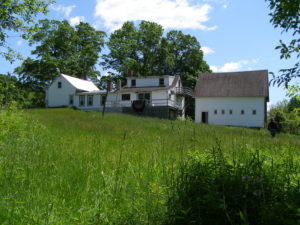
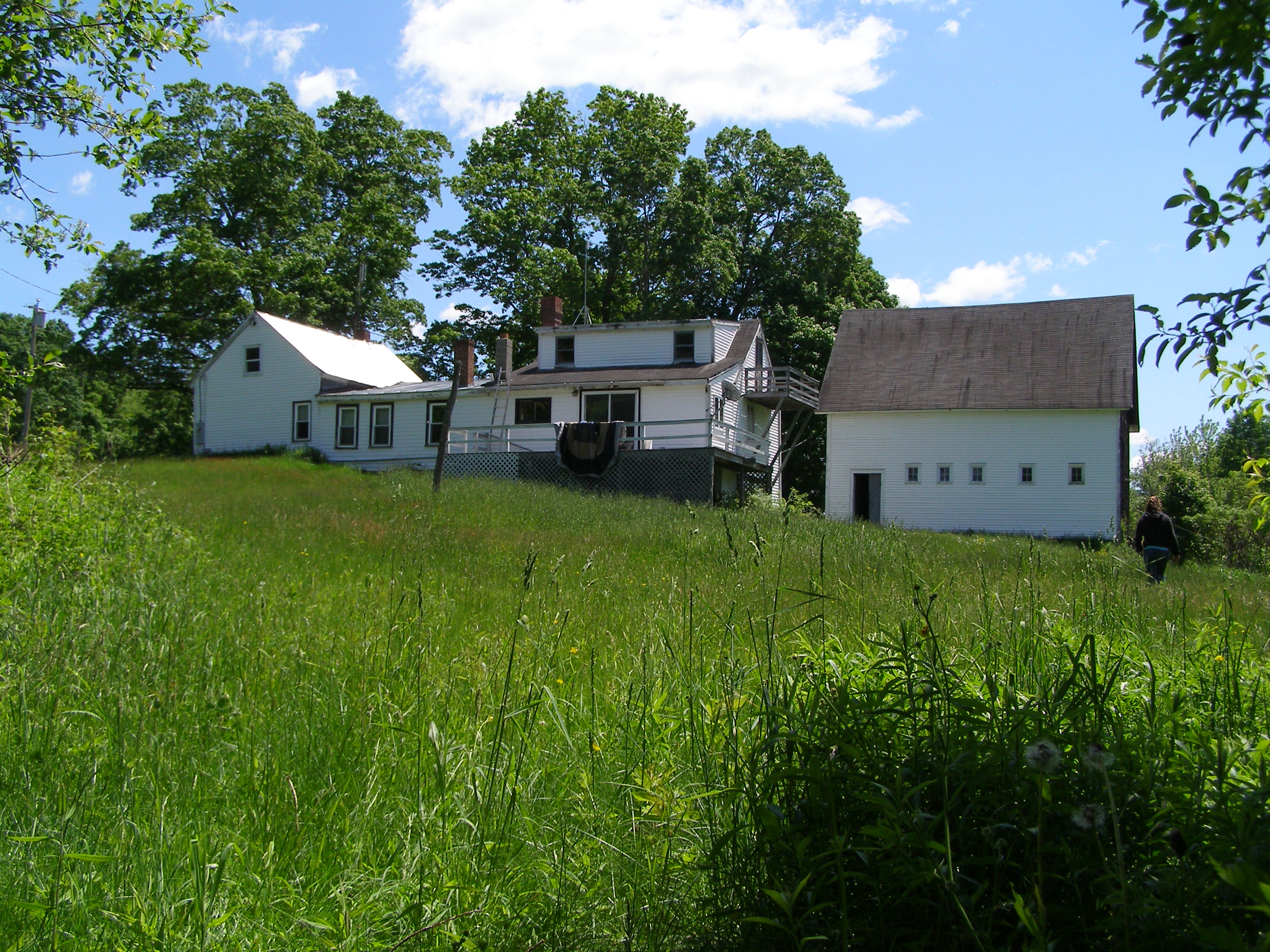
Maine Farmhouse and Barn
I moved to Maine with a U-Haul packed with things from my old life. I was moving from a small, tight, energy-efficient home where I lived alone to a slouching, leaking farmhouse with a cracked foundation and a peeling roof. I didn’t trust my cherished possessions to the dubious protection of the house or the barn, also dilapidated and leaking.
So I rented a storage unit.
Now it’s four years later and I’ve been reading and thinking about minimalism. Minimalism appeals to me because it creates space and simplicity in our lives. I’m gradually coming to understand even my most cherished possessions are not important to my quality of life. In some ways they even block my view and obscure thresholds and openings.
That’s not to say I don’t frequently miss my just-the-right-firmness double mattress and box spring in storage, or my comfy couch and matching chair. I do miss them, but they don’t fit into my life anymore and they don’t fit into the house. Literally. I don’t think we could get my modern overstuffed couch in the old front door.
 My bed and furniture, along with a few boxes, have languished in subzero temperatures in the winter, and heat and humidity in the summer, and I’ve faithfully paid the monthly rent all this time.
A couple of weeks ago we had a call from the owners/operators of the storage unit to say there was flooding on the property.
Here in Maine, we have yet to experience a snowstorm this season that wasn’t mixed with freezing rain. What this means is layers of ice have built up on the frozen ground and clogged culverts and drains. As temperatures see-saw between normal below-freezing and subzero and much warmer air that turns falling snow to rain, the rain has nowhere to go.
The storm that caused the problem at the storage unit dumped several inches of snow and then three inches of rain. Cellars and basements that had never flooded before got wet. Intersections and streets flooded in town. It was a mess. At the storage unit, all that water couldn’t drain away from the buildings, so it crept along the ground and washed through them.
When we unlocked the door and pushed it open, we found ice covering the floor of the unit. The floor slopes a little, so the ice thickness varies from half an inch to two inches or possibly more in places I couldn’t see well. Everything on the floor is absolutely frozen solid to the cement.

Photo by Tom Barrett on Unsplash
For now, there’s nothing much I can do. After the initial look, I went back with a friend for moral support on another day. As I pushed up the overhead door, I had the usual pang of nostalgia and loss at the sight of the pieces from my old life, unused and abandoned. Added to that is the bitter cold and solid ice locking everything into place as though it will never let go.
The irony is inescapable. I was trying to keep those things safe from water and fire while I waited for a life they would fit into again. Keeping them safe felt like keeping me safe, or at least parts of me. Memories. History.
It’s all an illusion, though. How safe is any object? Objects get lost, broken or stolen. They get damaged. We have to manage them, care for them, protect them, carry them from place to place.
A couple of inches of ice have forced me to confront my thoughts and feelings about my stuff. Embracing minimalism is all about de-owning and decluttering, but as I go through my possessions in the house I’m in control. I can choose what to discard and what to keep. Now an act of nature has taken away some of my choice.
My cherished bed, for example, is nothing more than a mattress and box springs leaning against the wall in the back of a storage unit that got wet and are now firmly anchored in ice. When I am able to remove them and take them to the dump, all I’ve lost is the objects themselves. I’ll still remember with pleasure my wonderful bed and using all the bedding that goes with it. I’ll still remember my cat, gone now, with love and gratitude, and treasure the happy hours we spent together on that bed.

Photo by silviannnm on Unsplash
I’ve lost nothing but the necessity to store the bed for the sake of my memories and/or future possibilities. The truth is I have no use for a double bed in the life I’m living right now.
Why do we save things? Why are our lives full of things we wouldn’t buy today for the life we live now? Why do we save things “just in case?” Just in case of what? Does just in case ever come or is it merely a scary or hopeful story we tell ourselves? Do the things around us speak of who we are right now, or of who we once were or who we wish we were? Are we frozen in the past or in our fantasies?
The poet David Whyte says that most of us are at least three to four years behind our own growth and change. That struck a chord with me. My storage unit is filled with things from a life I left four years ago, a life I couldn’t go back to even if I wanted – and I don’t. I have moved on and out and up. As precious and sweet as some aspects of my old life were, they’re gone.
Except that I’ve been holding on, which has cost money and now created a situation requiring me to cut my losses and clean up. Maybe, if we took the front door off its hinges and even removed the door frame, we could have gotten my couch into the house, replaced the broken-down one we presently use, and been enjoying it all this time.
(Except the TV is always on in the living room. I hate the TV. The couch is mine. It used to be my reading place, but I can’t read in our disaster of a living room with the TV on. I don’t want it here if I can’t ever enjoy it! It’s mine. And the cat will sharpen her claws on it. And what if the house burns down?)
There is no moral to this story, aside from having learned it really is a good idea to put pallets down in a storage unit! It will be some weeks before the ice softens enough to chip off the floor and sweep out or melt. I have gone in and salvaged what I could, discarded some things, assessed some of the damage. Everything will have to come out while I dry the floor. Then I’ll need to discard whatever is ruined, buy and transport pallets and re-pack the unit.
Or maybe not. Maybe it’s time to reconsider the number of objects I’m carrying through my life. For far less than I’ve already spent on the storage unit we could have tightened up at least two of the outbuildings right here on the property for storage. How badly do I need anything I haven’t used in four years?
I’m inclined to be grateful for the flooding of my unit. It forced me to ask some important and provocative questions. It forced me to consider what’s truly important for my happiness. It challenged me to let go of things that no longer serve me without fear or regret.
When I left Colorado, I told friends I was coming to Maine because I thought I had a life here waiting for me. It’s taken me some time to find it, but I was right about that. I chose not to remain frozen in place, and that’s still my choice. Perhaps it’s time now to free my things from that old life as well.

Photo by David Hofmann on Unsplash
All content on this site ©2019
Jennifer Rose
except where otherwise noted
by Jenny Rose | Feb 14, 2019 | A Flourishing Woman, Mind
I was recently introduced to
Havening. I’d never heard the term before, but I was intrigued by a brief explanation that Havening is a neuroscientific tool to assist in repairing emotional trauma. I looked at a couple of
links and was so interested I tried the
technique myself, just to see what would happen.
The human brain’s structure, function and capability are still a mystery to us in many ways. The brain does appear to be highly plastic; that is, we learn, we unlearn and we can develop new neural pathways and rehabilitate, to a greater or lesser degree, some kinds of physical traumatic brain injury as well as emotional trauma. We obviously treat some brain-based dysfunctions by pharmacological means, in the form of prescription drugs or self-medication via alcohol, nicotine and illicit substances.

Photo by freestocks.org on Unsplash
In our current culture of emotional illiteracy, sometimes the only way we know to mitigate our emotional pain is to numb out or distract. Relieving our symptoms, however, doesn’t address the root cause of our difficulty, it only covers it up for a time. Havening is a tool that allows us to address the source of our trauma and pain without chemical substances or the need for specialized (and expensive) treatment. It empowers us, the experts on our wounds and broken places, to become our own healers.
Nowhere on the Havening website or in the video is there mention of us giving our consent to the possibility that we can change, grow and heal. However, that is in fact the first step. I have observed, in myself and others, that sometimes we become so deeply invested in our pain and limiting beliefs we’re really not willing to heal and change. We say we are. We say we want to feel better, but when it’s time to do the work of exploration, excavation and learning to make different choices in managing our thoughts and feelings, we don’t. We’re not willing to be wrong, let go of our grievances and stories, practice forgiveness and give up the satisfaction of shaming and blaming others.

Photo by Jon Tyson on Unsplash
I suspect Havening is a waste of time for those who approach it unwillingly, just as more traditional therapies are a waste of time (and money) if we’re only going through the motions.
Assuming we consent to give Havening a chance, the technique requires us to sit with ourselves in a quiet, safe place and deliberately bring to mind a single difficult memory or event. Rather than running away from our feelings, we intentionally recreate and recall them in all their vivid intensity, and as we do so we notice how our bodies process and express our difficult feelings. When we have re-experienced, as fully as possible, the feelings around our memory or event, we begin to lightly stroke or rub our arms, self-soothing with our own touch and presence. Still stroking our arms, we close our eyes and visualize walking along a beach, counting slowly to 20. Still stroking our arms, we open our eyes and, without moving our heads, look to the left, then the right, then the left. We don’t have to do this quickly or with strain. We practice this lateral gaze, combined with stroking our arms, for a minute or two, then close our eyes and visualize walking through a summer meadow, counting slowly to 20 again. We follow that with the lateral gaze for a couple of minutes, all the while still stroking our arms. The third and last visualization is of walking down a staircase, combined with arm stroking and counting slowly to 20. We follow that with practicing the lateral gaze for a couple more minutes.

Photo by Ryan Moreno on Unsplash
At the end of this series of steps, we relax and intentionally probe the memory we started with. We notice how our bodies feel and what our feelings are compared to when we started.
I know from
emotional intelligence training experiencing our feelings fully and completely is the best way to allow them to move through us and dissipate, but I frequently feel so overwhelmed by the intensity of my emotions that I’m afraid to do that. Sometimes I think if I start crying, or expressing rage, I’ll never be able to stop; I’ll fall over some invisible edge of self-control into permanent madness and chaos. Havening is enormously useful for me because it gives me a safety net to fall into. No matter how strong my feelings are about a specific memory or event, I know I’m going to be able to successfully help myself calm down and feel better immediately. I don’t need to wince away or try to minimize my feeling experience.
I’ve spent much of my life starved for loving touch. I’m not talking about sex here. I’m talking about skin to skin touch that says “I’m here. I care about you. You’re safe with me.” In times of high stress and upset, I frequently wrap my arms around myself, the closest I can get to getting a hug. Havening provides the physical comfort of touch, which we know can calm stress and produces serotonin, a natural chemical our brains make that gives us a feeling of well-being.
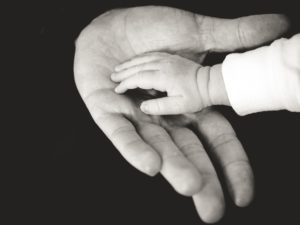
Photo by Liane Metzler on Unsplash
Anyone who
meditates or has done Lamaze breathing for childbirth knows when we focus on breathing or a mantra our minds learn to be quiet. The three visualizations used in Havening, combined with self-touch and counting, immediately distract from the intensity of our emotional pain, as does practicing the lateral gaze. We rarely use our eyes to look laterally without moving our heads, and to intentionally and repetitively do so takes focus.
The purpose of this specific set of steps is to “rewire” a neural pathway caused by emotional damage or trauma. The links in the first paragraph explain the science and neurology behind this better than I can, so I won’t reiterate. What I will say is, somewhat to my astonishment, I noticed a sharp decrease in the emotional pain surrounding a memory the very first time I tried Havening. I didn’t lose the memory, but it was no longer attached to such an intense emotional reaction. I could think of it and remain physically relaxed and centered. I could see it more objectively. I could say, “Yes, that happened. It hurt me, but now it’s over.” Overwhelming unpleasant feelings were no longer connected to the memory.
As I practice Havening, I notice a couple of interesting things. The first is that the memories that give me the most trouble are small. A single phrase that broke my heart and irrevocably changed everything. A memory of no words at all, just someone else’s strong emotion. I use Havening to address my most private mental slideshow, where each slide is a single small period of time; a single scene, rich in sensory detail; a single moment of terrible clarity and revelation. I marvel at the power of these small pieces to shape our lives so profoundly. I never think of Havening around divorce and break-ups or even deaths. Those obvious upheavals are not the events in my life that have had the most power.

Photo by Ludde Lorentz on Unsplash
The second thing I notice is how my visualizations are changing. The first time I did Havening, I followed the cues in the video exactly. I had no plan to elaborate on the three visualizations. As I’ve made a practice of the technique, though, my visualizations are becoming more and more vivid and sensual. I imagine walking hand-in-hand with someone. I imagine the feel of the sun, the sound of the sea, the grand sweep of a lovely curving staircase and a crowd of people waiting for me at the bottom. I also note that the unintended elaboration of the visualizations is all positive. I feel safe, protected, loved and joyous. There’s no lingering feeling of pain or discomfort from the memory or event I recalled just a minute before.
Havening is, above all, a flexible tool. Anyone can use it and fit it into his or her particular spiritual, religious or philosophical framework. It’s completely private and open-ended. Havening can be done once a week or three times a day. I can work with a single memory for a week if I need to, or tackle a new one each time I practice. It works equally well with old memories or new upsets.
Havening provides a kind of emotional detox. Since I’ve been doing it I feel lighter, more peaceful and as though I can think more clearly. I’m less easily triggered and hijacked and I respond more and react less. My head and heart are less cluttered. My feelings seem more like allies and less like enemies.
The biggest gift of Havening is the way it supports my intention to be authentic. It seems to me we all suffer some degree of
shame about the things that really hurt us. It’s hard to explain, even to ourselves, why a few words or a gesture hurt so much. We tell ourselves and others not to be silly or dramatic or have such a thin skin. Havening provides an open door, an invitation to honestly acknowledge our hurts and take
responsibility for soothing them. It gives us permission to feel our honest feelings without the need to minimize, explain or justify. We are fully empowered to respect and address our own pain.
Finally, Havening has become a ritual of self-care. I like essential oils, and I set out a blend from Young Living, a bottle of massage oil and a small hand towel by the chair I practice Havening in. I rubbed a white candle with the essential oil blend, and when I sit down I light the candle, mix the oils and use the mixture on my arms, hands, cuticles, etc. as I practice. Ten or fifteen minutes of deep moisturizing, aromatherapy and massage, in combination with Havening, leaves me feeling calm, strong, centered and cared for.
Havening is a new technique with a lot of promise. I’m interested to watch it evolve and be subject to scientific studies. Several practitioners are expanding Havening for other psychological applications, and I follow the blog with interest. In the meantime, it’s a powerful tool that costs nothing, does no harm, and results in significant benefits.
Photo by Ester Marie Doysabas on Unsplash
All content on this site ©2019
Jennifer Rose
except where otherwise noted
by Jenny Rose | Feb 7, 2019 | A Flourishing Woman, Creativity

Photo by Linda Xu on Unsplash
The Storm Moon’s cradle is empty; her wild daughter delivered into the grim, pale days to whirl in crystal smoke under polished bone sky.
Heedless of secrets and scars, she weaves through ice-bound shadows, the Storm Moon’s wild daughter, in and out of blanched forests of memories, sorrows and fears beneath the drumming woodpecker. She puts her mouth to the crack between window and leaning wall and takes in air breathed too many times, wan and desiccated with furnace and stove and a thousand ashy ghosts, exhaling platinum spiderwebs of frost . . . silvery sharp feathers
and flowers of frost.
She is the icy scent of eucalyptus and peppermint, knifing through the sinus-clogging cold that is reluctant to loosen its thick clutches. She is the rich taste of chicken stew made in the ponderous red Dutch oven, its chipped white interior stained with a hundred hearty meals.

Photo by Das Sasha on Unsplash
She is the stinging slap, the bitter bone ache, the ice needle under our fingernails that thrusts us out of apathetic futility. Love is not pointless. The grim, pale days pass away. The hoary sun warms again. We have tended our souls’ graveyards long enough. Our lives await an end to our grieving.
Her skirts layer the numb ground in a frozen froth of salt and snow creased with ash and sand while she cavorts and teases, naked iron and pearl, in the arms of the wind, their mingled hair crusted with silver.
Her step echoes in the sleeping roots; trees shudder at her passing caress; far below the ice, frogs stir in their cold, muddy blankets, the green sound of spring mute and patient in their chilled throats.

Photo by Aaron Burden on Unsplash
The Storm Moon feels herself age and leaves motherhood behind, looking down as ewes labor to give birth to early lambs; as her wild daughter whirls with tempest and tumult, careless and thoughtless with youth; as we struggle with chapped hands, clumsy layers of clothing, ice-muffled pipes and feeding the insatiable maws of furnace and stove.
And this, too, shall pass. The Storm Moon shall fade into crone darkness, cradle left behind as a planter for violets. The wild maiden shall learn the secrets of womanhood, her draggled skirts unraveling and sinking beneath a green mist. The blanched forests shall warm into leafy suppleness, intoxicated with clear-running sap. Glaze of ice and frost shall soften and fall away, drop by drop, and frogs wake and release their insistent song of mate and spawn. Water shall once more run effortlessly through pipes, breath effortlessly through body, and the furnace hibernate, the fire go out.
In our souls’ graveyards, grey stones lean and weather, draped with moss and lichen. There is no clash of voices, no agony, no anguish. There is a bench in the sun, a bird on a branch and a puddle of bluets where the Storm Moon’s wild daughter trod when she passed by.

Photo by Nyana Stoica on Unsplash
All content on this site ©2019
Jennifer Rose
except where otherwise noted
by Jenny Rose | Jan 25, 2019 | Connection & Community, Emotional Intelligence, Shadows
I’ve been thinking about shame. It lurks in many of my relationships. I observe it in people around me. I cannot remember a time when I was not deeply ashamed of myself. I’ve written about tribal shaming before, but I’ve never excavated the subject further until now.

Photo by Cristian Newman on Unsplash
Wikipedia has a lengthy page on shame that summarizes different ways in which it has been studied. Assessment tools exist to measure shame and its effects in our lives. Shame has been divided into categories, and distinctions between shame, guilt and embarrassment teased out.
All this information provided me with a lot of interesting context and background, but the subject is not academic for me. I have a problem with shame I want to solve. How do I go about identifying and dealing effectively with the painful feeling of humiliation or distress we call shame?
I learned in emotional intelligence training our feelings are value neutral. Some feelings are painful and others pleasurable, but that doesn’t make them “good” or “bad.” Feelings just are. We all have them, whether or not we allow ourselves to consciously feel them or admit them to others. If we allow ourselves to feel our feelings, they give us information about how we are. Feelings by themselves can empower and enlighten us, guide our choice-making and help us make strong, healthy connections with others.

Photo by John Salvino on Unsplash
Feelings come and go, like the weather, if we allow them to. Refusing to feel a feeling, however, locks it in place, and then we have forged handcuffs and chains for ourselves. The other tricky aspect of feelings is what our thoughts are about them. Thoughts are what lead us into inappropriate action and expression of our feelings.
An emotionally intelligent person recognizes a feeling like rage and takes responsibility for it. In other words, they don’t blame someone or something externally for their rage. That’s a thought. They don’t seek revenge, payback or to re-establish their power over someone they blame as the cause of their rage. They take responsibility for their feeling of rage and discharging it appropriately, knowing none of us think well or make effective choices when we’re in the grip of strong feelings. They also don’t turn the perfectly normal feeling of rage inward against themselves.

Photo by Bewakoof.com Official on Unsplash
After safely discharging rage (hard physical labor, tears, journaling, talking things over, screaming, passionate creative expression, beating up phone books or pillows), the next step is to sit down and have a talk with it. Years ago, when I lived alone, I literally began to sit down and talk with some of my feelings. I’ve written about this previously. I sit in a chair across from an empty chair and imagine myself talking things out with the feeling occupying the other chair. I say something like, “You have my attention. What’s the deal? Why are you so angry?” and then I shut up and listen to my feeling. Feelings have presence. I’ve learned to notice where I experience them in my body, what color they are, their size and shape, their density and texture, their scent and sound. Our feelings are trying to tell us things we need to know, and the more painful, difficult and overwhelming they are the more important their message is.
This is what I have been doing lately with shame. I wait and watch for it, and when it comes I notice and pause. In the middle of a conversation with my partner, I’ll feel shame rise up like a foul smell and I’ll pause and look for what is happening that triggers shame. Something I said? Something I didn’t say? Something he said to me? Something else I’d rather be doing? A subject I don’t want to talk about or don’t care about? What else am I feeling?
After doing this for a couple of weeks, I discover any honest conversation that makes visible my needs and feelings triggers shame. No wonder I feel so burdened if shame is attached to every need and feeling!
Interestingly, during the in-the-moment pauses while I explore all this, more often than not I realize I don’t in fact feel shame at all. It’s become a kind of chronic hitchhiker attached to other feelings.

Photo by Nabeel Syed on Unsplash
A good example is driving. I typically go the speed limit or 5 miles over it, and in bad weather much slower than that. I rarely run late. I hate to rush. I enjoy music and audiobooks in the car and am quite happy driving. I love my commute. The world is full of people, however, who are in a hurry, reckless, and, to my way of thinking, rude. Of course, they think I’m rude for not getting out of their way!
I rarely drive without feeling shame, but I realize now I’m not really ashamed at all of my driving. On the contrary, I think I’m a competent, courteous driver. I’ve also been a lucky driver, because accidents happen to the best drivers out there and I’ve never been involved in more than a fender bender. When someone is crawling up my backside in a snowstorm in the dark on an icy road and I’m blinded by their headlights in my rearview mirrors and have no way to move over and let them by, what I do feel is mad and scared. The shame is about feeling mad and scared, not about my driving choices in that moment. I don’t want some idiot in a big truck to have the power to intimidate me on the road. I resent living in a world where I have to worry about sudden violence and road rage, or being a woman alone at night. I’m furious with people who follow too close, even in good conditions. I hate to be pushed and pressured, and I hate even more to feel I’m in someone else’s way or making someone wait on me. That’s an old trigger for PTSD.
It turns out much of my daily shame is nothing more than a habitual default. A rueful realization, but also good news. Habits can be broken, I’ve had a lot of practice with that.
I’ve never yet successfully broken a habit without replacing a not-so-useful thought or frame with a better one. So, what’s the opposite of shame? If I want to replace shame with something more effective, what would that be?
Shame is akin to contempt. Contempt is the atomic bomb in relationships between two or more people as well as in our relationships with ourselves. Contempt withers love and destroys trust. It’s never constructive. Those who employ it seek power and control over others. Shame and contempt are merciless. Guilt, the recognition of having transgressed against another, can be addressed. We can atone for our actions and words, apologize, take steps to repair the damage we caused. Shame and contempt are without mercy or the possibility of reparation. Guilt says we’ve behaved badly. Shame and contempt say we are bad, we are unworthy, and nothing can ever make us different.
I consulted a thesaurus to look at antonyms for shame and came up with respect. Respect!
Shame: Why are you so stupid and difficult? You’re always in everyone’s way! You don’t belong on the road. Why are you such a goody-two-shoes? No wonder nobody likes you, crawling along like an old lady! Nobody else drives this way. Joe Blow (partner, brother, colleagues, the guy at work who said the roads were fine and scoffed at slow drivers) wouldn’t be driving like this. You do everything wrong. People like you cause accidents because you go too slow.
Respect: Don’t let this idiot drive your car! Go as slowly as you need to. You’ve got good judgement and a lot of experience. These are dangerous conditions and feeling fearful is an appropriate response. I trust you. Don’t let this driver intimidate you. His need to go fast is not more important than your need to stay safe. People driving the way he is cause accidents.
Quite a difference, right?
I suppose there are more elegant ways to grapple with feelings like shame and a trained psychologist or psychiatrist would laugh at me, but I’ve found helping myself is incredibly empowering. My experience of therapy is that having a good guide is invaluable, but even the best guide can’t crawl inside our heads and do the work of staying present and making different choices. That’s all on us. Ditching an ineffective habit is difficult and so is encouraging a new one, but it’s perfectly doable. If I lost my right hand, I would eventually learn to use my left. It would feel clumsy, and no doubt be frustrating, and it would take time, but I would learn to do it. Our brains are surprisingly plastic, and we’re learning more all the time about healing and adapting neurologically and emotionally.
We aren’t born with a feeling of shame. We learn to feel it. Anything we learn can be unlearned. Shame stunts our growth and our joy. Respect is like the wind beneath our wings. I’ve made my choice.

Photo by Yuan Yue on Unsplash
All content on this site ©2019
Jennifer Rose
except where otherwise noted