by Jenny Rose | Jun 22, 2017 | A Flourishing Woman, Self-Love
Recently I went back to the little mountain town in the Southern Colorado Rockies I called home for twenty years, and wrapped up the sale of my house. It was an important trip for me, one which I’ve been anticipating ever since I arrived in Maine two and a half years ago. My partner and I drove out and drove back. I didn’t try to blog or write on the road, but I made a lot of notes and I discovered a persistent theme.
Reclamation, according to a quickie internet search, means “the process of claiming something back or of reasserting a right” or “the cultivation of waste land or land formerly under water.” It strikes me there’s an interesting and subtle possibility of conflict in those two definitions. What exactly is waste land, and who has the power to define it? Also, what does cultivation mean? Big Ag? Monocropping? Pesticides and Roundup? Or cultivation by plants, animals and wind?
In any event, I’ve been carrying the word reclamation for some years now like a talisman. It’s a cord linking events and choices of the last years of my life together.

Photo by Tanja Heffner on Unsplash
I remember exactly when it started. I was sitting in a chair in the salon where a friend cut my hair for years. In the mirror, I could see my hair falling over my shoulders and down my back, thick and wavy and beginning to be streaked with grey. I was desolate because of a broken relationship, and I saw a woman who was unwanted in that mirror. I didn’t want to be her anymore. I wanted to be someone else. My friend asked me what I wanted to do and I told her to cut it all off. “Reclamation,” I said. I couldn’t say more because I didn’t want to break into sobs, but she knew exactly what I meant, and she tied a smock around my neck and started cutting.
My ex-boyfriend had loved my hair. I loved it, too. It made me feel sexy and beautiful and feminine. Cutting it was the first step I took on the road leading me to this attic space in central Maine, where I sit this summer morning (with short hair) writing with the windows open and the sound of crickets, frogs and birds flowing in.
I held onto that word, reclamation. It became a boat to sail away in, and then a lifeboat, and then a raft and then a spar of wood in a fathomless sea of floating debris that kept me alive until current and waves took me back to shore.

Photo by Edewaa Foster on Unsplash
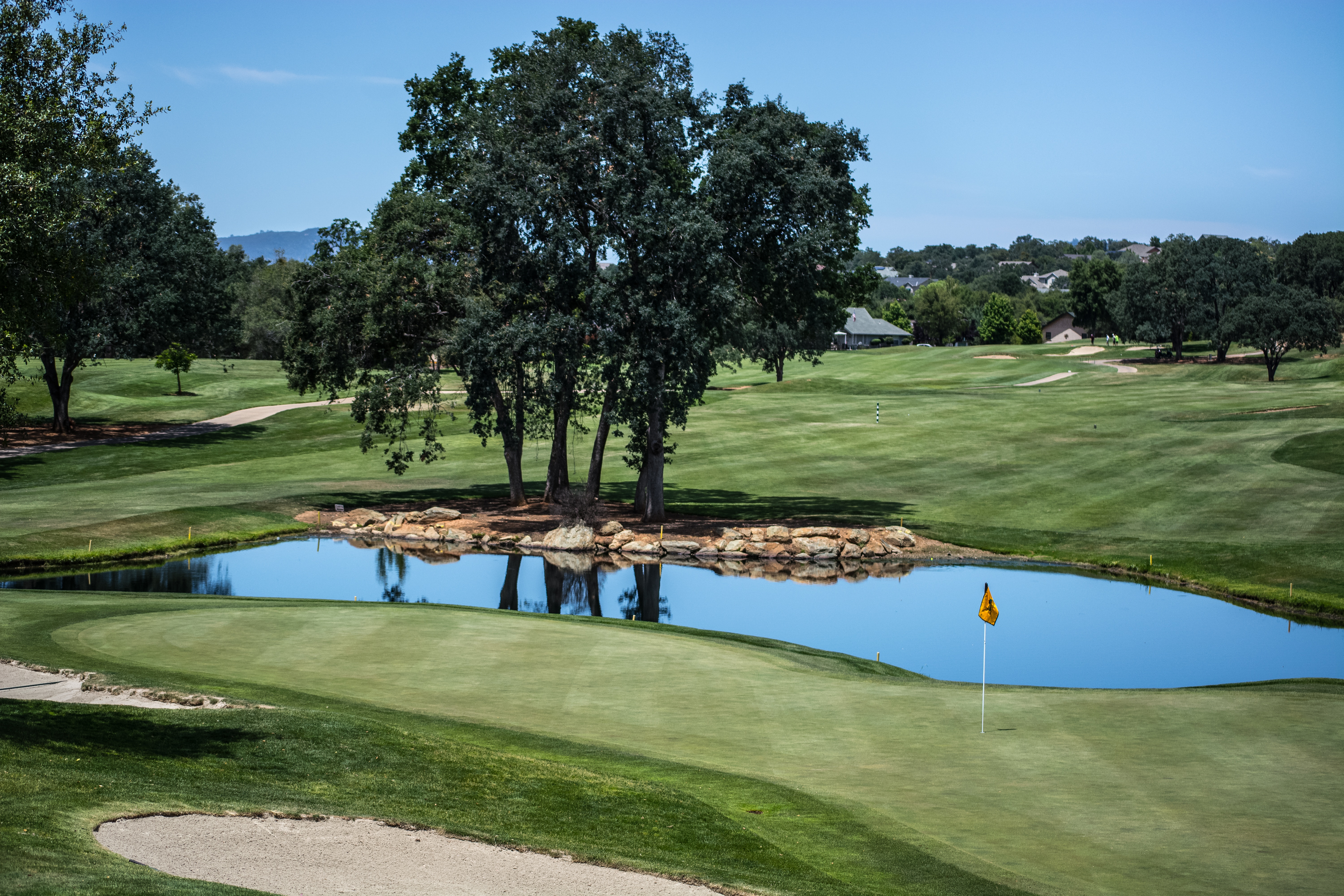
The little town I lived in had no claim to fame or big dollar tourism except for a golf course. When I moved there the course was renowned for being one of the most beautiful in the country, and visitors came from all over during the summer to play there, filling the inns and RV parks. Then drought struck that part of Colorado, the golf course was sold to an absentee owner who immediately got crosswise with the town, and gradually, due to a mixture of water problems, politics and general assholery on the part of the owner, the golf course went downhill, people lost jobs, the greens became unkempt and the tourists stopped coming. Then, just about the time I left town, the golf course closed.
I don’t play golf and my living fortunately didn’t depend on the tourist trade, but every morning, just before dawn, I walked on the golf course.
I didn’t do it for exercise or as a discipline. It was my lifeline. It was the one place where I never failed. I was guaranteed solitude and peace. Nobody knew where I was. I knew the course so well I could disappear into it, be absorbed. I had several routes, one for ordinary days, one for days of grief, one for days of rage and the longest one for days of despair. I used some of the cart paths, but mostly I followed the contours and edges of the greens and walked along the river, which was generally only a trickle, if not entirely dry. I often heard owls going to roost as meadowlarks began their morning chorus. I saw bears, foxes, skunks, deer and geese.
In the days of relative plenty, maintenance men worked as early as I was walking, but I was a familiar local figure and we ignored each other. I avoided them and they only saw me at a distance. There was an elaborate sprinkler system, of course, that worked all night every night and made the whole place fresh and green and cool, a stark contrast to my daily reality of hauling or pumping grey water out to my garden because of drought and watering restrictions. I lived a five-minute walk away.
During our recent trip we only spent one night in that little town, but I woke early, slid into my clothes and walked to the golf course. I knew it had been closed altogether for some time. This year the drought momentarily broke in the valley with record amounts of snow and rain, and the river that so often dried up flooded, both on the course and through the town. As I slipped through the gates and passed the “no trespassing” signs in the dark of early dawn, I could hear the river, an amazing, miraculous sound. The scent and chill kiss in the air of running water was very different from the mechanical chik, chik, chik of an automatic sprinkler.
The cart path was rutted, muddy and overgrown. Large tree limbs had fallen and nobody cleared them away. The river actually broke out of its banks and spread across a former green. I’d seen pictures in the local paper, but I still couldn’t believe my eyes. The town sent in machinery to make barriers out of heaped-up debris and mud. Whole trees had toppled, their root balls pathetically exposed to the sky.
Photo by Alejandro Escamilla on Unsplash
Once, I could have walked several paths on the golf course blindfolded. I often was there in the dark. Now my footing was uncertain. The grass grew up to my waist and I kept tripping over hidden windfall branches. Weeds filled the sand traps. The greens were, of course, gone. The groomed contours that once marked my route had vanished, forcing me to slow down and move more cautiously. I strained my eyes to discover familiar slopes and hollows in the dim light.
As I moved deeper into the old course, I thought of all the hundreds of mornings I’ve spent there, praying, weeping, raging, pressing myself against nature in every mood and season. I took my joy there, my hope, my dreams, and my gratitude practice. The golf course was a place of creative inspiration, a place of guidance and comfort, a place in which to staunch wounds enough to carry on another day. I was real there. I didn’t try to hide from myself.
That highly-groomed, herbicide-gagged, shaved, enslaved, money-making piece of land (a waste land) is going wild again. It was captured, bought, and pimped by a businessman in order to create a profit. Now, Mother Nature reclaims her own. The land begins to remember itself. As I walked and the light increased, showing me myriad signs of healing, I felt akin to the land. What is happening there is happening to me. I had a pimp, too — myself. I sold myself for what I thought I was worth in order to get what I needed. Now the land and I reclaim ourselves from a bleak and limited culture that relies on chemicals, profit and power-over rather than natural cycles and cooperation.
Reclamation is not a controlled, civilized process. It’s wild, sometimes catastrophic. The river made a scar where it broke its banks and uprooted trees, but it carved out a new bed for itself. The old bed will fill in. New growth will cover all that exposed earth. The downed limbs and trees will rot and feed the soil and mycelium while native plants and grasses return. Is this what we mean by waste land? Forest fire, flood and storm are acts of nature that reshape the land and environment. Life dies and renews, one act leading to the other. We often experience reclamation as terrifying and tragic. Human beings, for the most part, don’t welcome change unless we control it.
Yet we do change. The world changes. The weather changes. Those around us change. We can neither stop nor control it in any significant way, and I’m entirely grateful for that. The golf course and I are messy. Our hair is disheveled. Our trim, neat lines are blurred. The high unmown grass through which I waded brushed against the hair on my bare legs. The water feeding the land and the water of feeling that feeds me have carved a new, wider path. Bridges and trees sag and unravel, not trash but compost for the next thing. Paths and fences fall into disrepair. Grass and saplings mingle freely, each reaching toward the other at the edges.
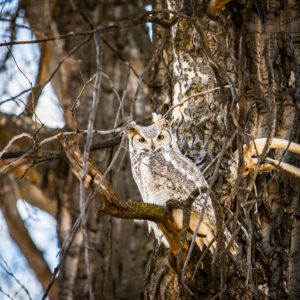
Photo by Laterjay Photography on Unsplash
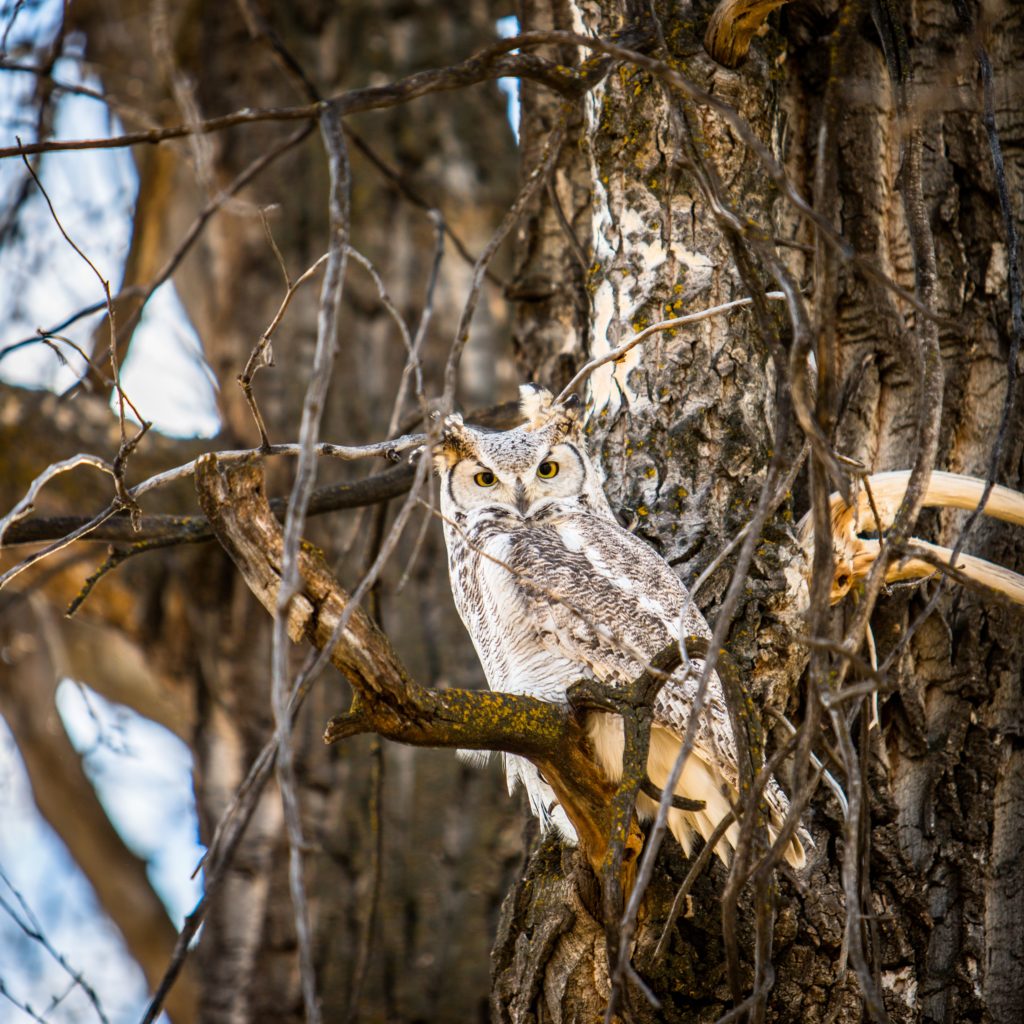
Snakes, rabbits and insects live again in the shelter of the grasses. Does can leave their fawns safely concealed while they browse, and their presence will bring the mountain lions down from the foothills. Owls will find abundant mice, voles and other rodents in what was a carpet of sterile green velvet. The beaver and raccoons will no longer be trapped or shot, lest they disturb the regulated beauty of the water features or annoy the tourists. Over all this complex, creative system, the meadowlark still sings, that king of the high fields and plains, and his song still brings tears to my eyes and an ache to my throat.
That land will always be home to the woman I was. I was glad to return for a brief hour and realize my beloved place has moved on, just as I have. The land and I were both over-civilized into waste land, but now we’re reclaiming ourselves. The golf course and I reassert our right to be what we are. We surrender to change, to mess, and to the transformative edge of chaos.
All content on this site ©2017
Jennifer Rose
except where otherwise noted
by Jenny Rose | Jun 15, 2017 | Authenticity, Emotional Intelligence, Needs
I was absent last week in order to take a trip back to Colorado and finish selling my house. On the road, I thought about my last post and the second part of coming to terms with needs. Discovering, admitting and identifying one’s needs is, alas, just the beginning of what I suspect is a lifelong journey.

Photo by Will Shirley on Unsplash
So, to recap my last post, we all have needs, and we’re all driven by our needs, whether or not we’re aware of them. If we’re not aware of our needs or those of others, great big elephants are standing in the middle of our living rooms, invisible to us until we run into them, or they step on us. Our relationships and lives don’t work well and we have no clue why.
One of the trickiest parts of thinking about needs is taking responsibility for them. If we look at the needs inventory, consent to recognize and admit our needs and make a list of them, it seems logical to begin to evaluate how well our needs are being met by others.
Here’s the thing, though. All the people around us have needs too, some identical to ours and some different. That doesn’t mean we’re responsible to meet all those needs, and they’re also not responsible for meeting our needs.
Newsflash! Having a right to get our needs met and understanding our needs are as important but not more important than everyone else’s doesn’t guarantee our needs will actually be met by … anyone.
This seems unfair to me. Excavating my own needs and acknowledging them, even to myself, was a lot of work. I was annoyed when I realized nobody much cared what my needs are. They’re too concerned with their own! What’s the point of this aspect of emotional intelligence, then?
First of all, it’s about adulting. Grownups know who they are, including understanding what they need. Those of us who aspire to adulthood are required to possess this kind of self-knowledge and accept responsibility for communicating our needs to others, not because anyone has an obligation to meet them, but because we’re willing to know ourselves and allow others to know us, too.
Needs are inextricably enmeshed with boundaries. I have a long history of ineffective boundaries, frequently resulting in me choosing the needs of whoever I was with over my own. Paired with another person with bad boundaries, this quickly becomes an unhealthy, unhappy relationship. One of the words we use to describe such a connection is codependent.
The second point about working with needs is understanding our satisfaction and enjoyment of connection with others is directly related to the degree to which our relationships help us meet our needs. This is complicated by the fact that feeling love for someone doesn’t imply our needs are well met in relationship with that person. For example, media-driven portrayals of romantic love don’t address needs at all outside the realm of sex, and sex is not enough to create sustainable, healthy long-term relationships.
Thirdly, we humans have a great propensity to self-destruct when our needs are not well met. We use strategies like substance addiction, sexual acting out, eating disorders and cutting to manage the painful dysfunction of not getting our needs met. Sadly, the culture focuses on fixing the behavior rather than the cause — the unmet need.
Fourthly, making friends with our needs connects us to our power. When we understand what’s not working in our lives and why, we’re empowered to make better choices on our own behalf and create the kind of life we want. We build boundaries. We learn to be more authentic. We learn to be responsible, which is another way of saying we learn to manage our own power.
Another aspect of needs is that they change. Our needs change as we age, as we grow, as we move through our lives. Not only do needs change, we can be wrong about what we think we need and discover, accidentally, needs we never recognized we had.
I said this was tricky, remember?
Having our needs met is not a black-and-white experience. No one person can meet all their own needs or all the needs of another, no matter how beloved. Expecting any single person to meet all our needs puts an unbearable burden on that person and the relationship. Human beings need healthy community because community helps us all meet most of our needs most of the time.
So how many of our needs must be met for a relationship or a life to be healthy and effective? I don’t think there’s a formula for this. I suspect every case is different, because we’re all unique individuals. We have several core needs in common, but we don’t all need the same things to the same degree.

Photo by Anna Dziubinska on Unsplash
For example, think about noise. I’m very sensitive to noise. Prolonged and unrelieved exposure to traffic, loud music, television, crowds, airplane and car noise or even a beeping alarm unhinges me. First I’m frantic, then I’m exhausted and then I’m ill. I have a primary need to control the noise in my environment. I hate crowds, parties, loud restaurants and cities.
Other people don’t seem to even notice noise levels. Many millions live in cities with a constant background of noise quite happily. I was struck by how many people live along the interstate system as we drove from Maine to Colorado and back again. I couldn’t live beside a freeway for a day without losing my mind. Life would literally not be worth living for me.
If my need for a low-noise environment doesn’t get met, nothing else will work for me. I can’t function in a noisy environment, period.
On the other hand, I’ve always believed order in my environment was also an essential need. I’ve lived in such a way that I’ve controlled housekeeping, cleaning, etc., except for private bedrooms and workspaces romantic partners and children have had. Before I came to Maine, I was sincerely certain I couldn’t live happily in disorder, dust and clutter.
Much to my surprise, chagrin and irritation, I’ve discovered I can, at least temporarily. The old farmhouse my partner and I are living in is falling down and loaded with (to my eyes) junk and clutter, most of it undusted for years. I often feel frustrated and resentful about this. However, our relationship is meeting my needs in ways they’ve never been met before, and getting so many needs met balances out the squalor (my interpretation) in the house.
Managing my needs has become a kind of dance. After much practice, I now maintain a friendly relationship (mostly) with my needs as they ebb and flow. I’ve learned to tell others when my needs are not met without apology or justification, as well as communicate what I need simply and directly. I’ve got some beautiful boundaries in place. I’ve learned to ask others what they need, not because their needs are my responsibility, but because I want to support them in getting their needs met. I’ve let go of expectations that anyone is obligated to meet my needs, but I treasure and nurture those relationships in which my needs are met naturally.
I also have precious people in my life whom I dearly love who don’t meet many of my needs, and that’s okay. Those connections are based on other things. I probably don’t meet many of their needs, either, but it’s not for lack of love and it doesn’t mean anyone is bad or wrong.
Managing needs takes a lot of mess and clutter out of my life. If something’s not working, I notice it right away and a little contemplation leads me quickly to the bottom line — what need is not getting met? Where and how am I feeling disempowered? What can I do to help myself and who do I need to have an honest discussion with?

Photo by Bewakoof.com Official on Unsplash
Taking action when there’s a problem, communicating carefully and authentically and taking responsibility for my own needs invites those around me to do the same. Some people will accept the invitation and some won’t. We can’t control what anyone else does or doesn’t do. However, we can choose which connections to put energy into and which to bless and release, and we can commit to managing our needs effectively and appropriately for our own sake as well as the sake of others.
All content on this site ©2017
Jennifer Rose
except where otherwise noted
by Jenny Rose | Jun 1, 2017 | Authenticity, Emotional Intelligence, Needs
Life coaching transformed my experience in several powerful ways. For me, however, there’s one central concept underlying all the new language, ideas, strategies and choice-making that has so reshaped myself and my life.
Every one of us has needs, and we’re driven by trying to get them met.
Duh, right? Written on the page like that, it seems ridiculously obvious. It’s not, though. It’s enormously complex and it affects every single choice we make. Let’s excavate a little.
In my old life, I defined needs as things like oxygen, water, food and shelter. Needs meant to me the necessities of survival. Anything else was wants, or even undeserved privilege. To need more than I have at any given moment is inconceivable to me, even now. To want more than I have is shameful. I’ve spent my life with an internalized voice that informs me I should be damn grateful for my resources, because it’s so much more than many others have, and I’ve done nothing to deserve my good fortune.

Photo by Jan Phoenix on Unsplash
It’s undeniably true that I’ve had advantages because I’m white, I’m educated, I’m able-bodied, employed and have the ability to feed myself. I have access to potable hot and cold running water. I have a roof over my head. I have access to health care.
Are these realities of my life a matter of shame? Does wanting the roof over my head to stop leaking make me a privileged elitist? Does it assist anyone who has less than I to go hungry, or stop trying to earn a few dollars?
Privilege is a hot word right now in social discourse. It’s a word that shows up in discussions around gender and sex, racial issues, economic issues and geopolitical relations. Privilege is an important discussion, but the word has been used so frequently, especially as an insult, it’s losing its meaning. Show me any two people anywhere and I’ll show you several different ways in which each one has resources and experiences not available to the other. Privilege is a word pointing to competition for power, and our definitions of power are distorted into insanity. Privilege is too often used as a meaningless black and white label expressing more about the speaker than it does the target.
Do you have a cell phone? I don’t. You’re more privileged than I am. Are you male? I’m not. You’re more privileged than I am. Are you Caucasian? I am. I’m privileged. I’m literate. Definite privilege from my point of view, but according to some, this makes me elitist (another severely overused word). I had and have access to vaccinations. I think this makes me privileged. An anti-vaxer thinks it makes me wrong and stupid.
And so it goes.
Have you noticed how quickly we’ve gone from the simple idea of human needs to politics — social, sexual, economic and geo?
An Internet search defines a need as a “necessity; a thing that is wanted or required.” As I said above, I disagree with the “wanted” part. How do we decide what’s required? Who gets to define that? Requirements take me back to the my basic list: Oxygen, food, water, shelter. I’m convinced anything else is a want.
During life coaching, I was referred to The Center For Nonviolent Communication. They have a needs inventory posted that exploded my definition of needs.
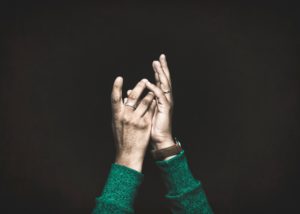
Photo by Cristian Newman on Unsplash
The first thing I noticed about the needs inventory is that my needs list occupies only a small fraction of the whole. Secondly, with the exception of food, water, shelter and sex, the inventory transcends anything that can be bought or sold. It’s not about stuff, money, biology, ethnicity, education, religion or “privilege.” In fact, it’s not a list that points out differences at all. It’s about intangible needs we all have in common. All of us. You, me and them.
The first, second, fifth and tenth time I read this list, I cried. I printed it out and stuck it between the pages of my journal. As I worked with it, I felt deeply angry, terribly sad and a kind of furtive relief. Some unknown person or persons had written an inventory expressing the deepest, most secret desires of my heart, desires I wasn’t really even conscious of. I couldn’t afford to be conscious of them.
Was it possible other people wanted what I did? Was it okay to want these things, even normal?
The first time my life coach said to me, “You have a perfect right to get your needs met,” I felt so enraged I nearly hung up on him. It was the biggest, most outrageous lie anyone had ever said right to my face. I told him to never say it to me again.
Photo by Nicole Mason on Unsplash
If I knew anything, it was that I had no needs, and if I ever did entertain such a criminal, inappropriate, shameful and downright stupid thing as a need, it would never, ever get met. My job in life was not to have needs. My job was to meet the needs of those around me. I was terrible at that job, failed it every day, had no hope of ever doing it well, but that’s what I was for in the world.
The second grenade my coach threw was this: “Your needs are as important and not more important than anyone else’s.”
In the following months and years, right up until this day, I’ve been trying to come to terms with the transfiguration of some of my most deeply-rooted and fundamental beliefs and rules. Understanding needs has hung the formerly invisible elephant in my living room with neon lights. I’ve reframed my history and my past and present relationships. Coming to terms with my needs has enriched my relationship with myself and others is astounding ways.
I realize now my needs have always been present, driving my behavior, just as the people around me have been driven by their needs, but I think few of us have access to that central information and understanding. This is ironic, because I’ve always been well aware of what other people want from me; what they expect. What I now understand is what some people want — compliance, submission, adhering to rules and expectations — is surface behavior masking the simple need for personal power.
As I said earlier, our relationship to power is so diseased and distorted we’re all affected by a kind of cultural insanity. We believe power-over will fill our need. We believe hate, projection, physical brutality and force, name-calling, labeling, gaslighting, dishonesty and manipulation will give us what we need.
Power-with is often sneered upon, or used as a Trojan Horse within which the true desire for power-over hides. Once we understand the needs inherent in all human interaction, it’s not hard to discern the difference between power-over and power-with. If it’s accepted that one party’s needs are as important, but not more important than another’s, that’s power-with. If, on the other hand, one individual, group, political movement or any other social or individual entity demonstrates persistent tactics seeking to take power away from someone else, that’s power-over.
Humans make a lot of noise. We create language, slap on labels, pick up and pass on meaningless bits of jargon and ideology. We deny, distort, and cling grimly to our beliefs. We freely use humiliation, contempt and aggression to shut each other up and try to threaten others into believing/behaving in the way we want them to. We fight fiercely to get our needs met, no matter the expense to others. Our win is based on someone else’s loss. This is the environment of power-over.
Humans are also remarkably flexible and resilient. We can be curious. We can think critically, synthesize information, study things, make observations. We can develop the great strength of learning how to be wrong. We can demonstrate heroism, compassion, kindness and generosity. We can be elegant and meaningful communicators. We can create deeply connected communities including people, animals, plant life and the environment. We can aspire to a world in which the words “privilege” and “elitist” lie down to rest because competition has been discarded in favor of cooperation. Everyone’s needs have equal importance, and no one is allowed to overrun another. Success is demonstrated by win-win. This is the environment of power-with.
I have needs. Trying to get my needs met underlies my choice making, my behavior and my motivation. It even underlies the kind of music I like. It’s a great big elephant in the center of my experience, and it requires food and water, room to roam and attention.
Skim over the needs inventory. Choose one aspect of your life: Job, relationship, what have you.
Now, in the deepest, darkest privacy of your mind, ask yourself, “Are my needs being met?” Don’t think about the answer. Feel it.
Behold the elephant!
(See the next post for more on needs.)

Photo by Graham Hunt on Unsplash
All content on this site ©2017
Jennifer Rose
except where otherwise noted
by Jenny Rose | May 25, 2017 | A Flourishing Woman, The Journey
In old stories, a crossroad is always a magical place of power and choice. You never know who you might meet at a crossroad. Perhaps a lean, handsome peddler will draw up a cart and spread his wares. Other travelers may appear. Elders may linger there with wisdom under their tongues. Crossroads are not always identified by neat, straightforward lettered signs, but portents, omens and intuitive signs abound. A dismally croaking raven, a snake in the dust or a fleeting glimpse of a fox all have a message at a crossroad.
I rarely miss posting weekly, but last week I did. I succumbed to a virulent upper respiratory virus and for a few days had no choice but to down tools and lie low. Simply breathing occupied all my attention and energy. I cancelled plans and obligations, abandoned my ‘to accomplish’ list and let go of my self-expectations.
This was frustrating, as it was the week in which I intended to transition effortlessly from my old job to new possibilities, witness the smooth closing of the sale of my property in Colorado, and generally navigate these significant endings and beginnings seamlessly, elegantly, confidently and without mess.
Instead, I emptied two boxes of Kleenex, coughed as though ready for an end-stage TB ward, achieved a spectacularly sore and chapped mouth and nose, drank liters of fluid with the inevitable day and night result of continually needing to pee, and tried to sleep in a sitting position to facilitate breathing through my clogged airway.
Instead of transitioning smoothly into new work, I canceled one opportunity and didn’t follow up on others. I worried about money instead.
The sale of my house did occur, but a day late due to unexpected last minute paperwork that needed to be signed and notarized and sent from Maine back to Colorado. My renters have been unable to find a new place, the buyer (now owner) is moving into a trailer because her old house also sold and her new house still has renters in it, and I need urgently to return to Colorado and retrieve the rest of my possessions from the property.
In short, nothing about my internal, physical or external reality has been seamless, elegant, confident or without mess. In fact, there’s been quite a bit of mess, from sodden Kleenex to tangled feelings.

Photo by Jeremy Bishop on Unsplash
None of this really surprised me. I’ve never yet been really miserably ill without a significant emotional event of some kind at the onset. I might not admit my distress intellectually, but the truth will out physically. Unacknowledged feelings eventually reach such proportions they demand my attention, one way or the other. All of my pretty plans didn’t allow for any space in which to pause, reflect, feel and be with how things are.
So, I got sick.
I resigned myself to the inevitable, did what I could for my symptoms, reread all my old Mary Stewart books (so comforting, and no brain required), dozed, and thought about intersections, endings and beginnings, suspended activity and crossroads.
I have a tendency to view my experience through a lens of metaphor and symbol, and suspended activity has been much in my mind for the last five years. The Hanged Man is a Tarot card with just that meaning, and my first book is named after it.
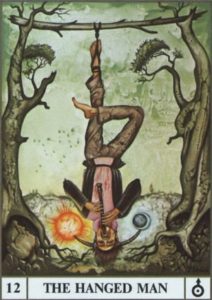
The Hanged Man is a card many people fear, although generally the figure depicted hangs upside down from one leg, apparently perfectly relaxed and comfortable and even smiling, depending on the deck. The card illustrates that place in life we’re all familiar with between one thing and another, just like the crossroad. Events converge and intersect. Meetings and partings take place. We suddenly come to the end of a road and it’s necessary to choose a new one.
I’ve never been good at pausing. I can accept change, but I expect myself to adjust and adapt instantly and effortlessly, no pause required. I don’t want to hang around (if you’ll pardon the pun) and think about what’s over or what I’d like to begin. I want to get a grip and move on. Now!
This is a shame, and all the old stories and archetypes tell us it’s counterproductive. Crossroads are sacred ground, filled with resting places, old altars and tilted gravestones. The leaves on trees growing at crossroads whisper all the prayers and petitions they’ve heard. At crossroads we lay out cards, cast runes and yarrow stalks, interpret dreams, drum, dance and call on our intuition and faith for guidance. A crossroad is a place to linger, honoring where we’ve been and considering a way forward, or sideways, or perhaps even retracing our steps for a second time before we go on.

Photo by Ryan Moreno on Unsplash
A crossroad deserves an offering of our presence and patience. It’s only in suspended activity that we access our deepest intuition and wisdom, only then when we begin to gain full understanding. Loss takes time to put to rest. Hopes and dreams need time to grow. Intuition can’t speak unless we’re quiet, and guidance can’t find us if we’re not still.
I’m writing this out on our deck in the sun. I can hear water running into the pond. The phoebe, back for another summer, is perched in her favorite spot on the barn roof, bobbing her tail and hunting for insects. Wonder of wonders, there’s not a box of Kleenex at my elbow! Not only that, but I’m breathing through my nose. Things are looking up.
Before me is a new week. I’ve sort of given up on the seamless and elegant thing. It hasn’t been fun to be sick, but I’m grateful I was forced to pause. I didn’t feel like I was doing anything except wasting time and blowing my nose, but I see now I needed to hang by one leg and just be for a little while. I needed to consider what’s ending, and how I feel about it, and what direction I want to go now. I needed to spend some time wandering in my graveyard, remembering what’s laid to rest there. It was important to revisit my hopes and dreams, check in with my intuition and take time to wonder what will happen next.
At this point I’ve decided to be content with lingering at this crossroad. When it’s time to go on from here, I’ll know. In the meantime, this is a good place. Maybe a peddler is even now on his way to meet me, or an old crone in a hooded cloak will come in the dark morning hours with an enigmatic message showing me the way forward. Who knows?
Now that this is written, perhaps I’ll go find the tree from which the Hanged Man is suspended and see what’s on his mind today.
All content on this site ©2017
Jennifer Rose
except where otherwise noted
by Jenny Rose | May 11, 2017 | Emotional Intelligence, Feelings, Happiness
For many years, I’ve been a story teller. I’ve told stories in nursing homes, schools, at seasonal events and in women’s circles. I think of stories as medicine, as guidance, as blueprints for living. Old stories from cultures around the world contain information we’ve forgotten or lost about how to live well.

Photo by Syd Wachs on Unsplash
It’s striking how often I share a familiar and oft-told story with an audience that suddenly turns out to be what I most need. Oral stories, if written on a page, look static and lifeless. They’re not. An oral story lives. It twists and turns and wriggles unexpectedly in the mouth. Every time I tell a story it’s a different telling than I’ve ever done before. Every time I tell a story I’m different than I was the last time I told it. Every audience is different.
I’ve discovered blogging is like that. As I blog, I think of the reader. I blog to make an external connection. As I create posts, though, I also discover deepened connection with myself. My writing reveals my truth to me, and shines a light on the places where I’m not living what I know is my truth.
Last week I posted about quitting. In essence, I gave permission to all of us to change, to grow, to seek happiness in our work and in our lives. Ever since I resigned from my job (last day will be Saturday) and wrote that post, I’ve noticed an internal feeling of rediscovery, freedom and fizzing joy.
I only worked 20 hours a week at that job, but the choice to force myself to do it, even though it didn’t make me happy or meet my needs, cast a shadow of apathy over the rest of my life. It dulled my response to my own distress. It fed all those powerful voices that tell us there’s no help for it. We have bills to pay. We have responsibilities, duties and obligations. The most sinister voice of all says this is the best we can hope for or deserve.
I was empowering fear, not love.
All of a sudden, I’m operating with new clarity, the kind of clarity that the right story at the right time brings. This week I’m acutely aware of what’s working well for me and what’s not. I feel my power to choose afresh. I’m not motivating out of fear. Somehow, fear is taking a vacation. I’m motivating out of curiosity, pleasure and the desire to actually be happy.
For me, this is a crime of immense proportions.
I want to be happy. It occurs to me this isn’t a childish pursuit. It’s the pursuit of real personal power.
I follow a blog by Dr. Sharon Blackie, who is a writer, psychologist and mythologist. I’m reading one of her books, The Long Delirious Burning Blue, which has a passionate delicacy I haven’t experienced in a new read for a long time.
Dr. Blackie recently returned to the place she calls home in Connemara, Ireland, and her last couple of blog posts are about taking a walk with her dogs on the land that she loves.

Photo by Takahiro Sakamoto on Unsplash
That’s all. Taking walks. She posts pictures of the lochs, a stream, the bog and the mountain. There are pictures of her dogs, and I imagined wet, muddy paws and soft black and white coats tangled with leaves and stems. I think these posts are among the most joyful and powerful things I’ve ever read, not because Dr. Blackie is an extraordinary scholar and writer, which she is, but because she writes as a woman who’s come home to the place she belongs after a long time away. Her delight and reverence for the land and the life it supports radiate from every word and picture.
That’s how I feel this week, but my homecoming is internal rather than external.
I’m familiar with some of my terrain. Over the years, I’ve learned some of what I am. Always, though, there have been caverns, edges and deep forest I haven’t explored. Perhaps I knew all of myself before my memory in this lifetime begins, but if so, I’ve forgotten.
Photo by Cameron Kirby on Unsplash
This week I’m a wanderer, an explorer, a solitary traveler in my own psyche. I leave my well-worn internal paths to roam under trees. I follow the sound of water. I read my own spoor and run my hands over moss-covered rocks. I hunt in vernal pools for singing frogs the size of my toes. I wade through bogs of memory, getting my feet muddy and losing my shoes.
I’ve found old, abandoned structures smelling of rot and damp where birds nest and bats cluster. I’ve stumbled upon shallow graves where, once upon a time, I discarded and abandoned parts of myself. I’ve tripped over fallen idols, are now covered in a lacy blanket of ferns, found forgotten altars and pulled mats of dead leaves out of fountains I haven’t seen in years so clear water can flow again.
I’ve found shed skins whispering and rustling with memory, nearly invisible overgrown paths, and ruts and scars from old burns, floods and landslides.
I suddenly remember the happy feeling of waking early in the morning and going straight outside. I release myself from the expectation that I’ll work well in the last third of the day, a thing I’ve never in my life been able to pull off. I listen to music I love. I read what interests and moves me. I write lists and journal entries, blog posts and edits for my book.
Photo by Jon Flobrant on Unsplash
Like Dr. Blackie’s dogs, I follow what catches my attention. I move along scent trails, noting the passage of all my selves, spiraling from what I’ve been to what I’ll become and back again. I dance from thought to thought, from word to word, from dream to dream. I cast myself into a wider pattern of life.
It’s not that I don’t want to do anything. On the contrary, I want to do a hundred things. I want to do much more than I did when I was structuring my time and energy around my job. I can hardly wait to get out of bed and see what the day brings. I want to play outside, take care of tasks inside, read, write, watch the birds at the feeders, stretch, dance, swim, listen to music, make a list and check things off, be present in my relationships, make new friends, pursue intriguing new connections, earn money joyfully, and see how much I can want and how gloriously I can dream.
I’ve written about leaving home before, and in that post I wrote that in some counterintuitive way leaving my old external home in Colorado allowed me to begin to finally come home to myself internally and reclaim my power. I’ll never think of home solely as a one-dimensional place in the world again. Home is not just a house, not just a beloved landscape, but the place where my dearest friend, my most passionate lover and my most loyal companion reside, along with my deepest power. Home is my own wide-flung arms, my own pulse and breath, my own joy. Home is me, myself.
Somewhere along the way, we forgot that the most important things are also the simplest. There’s great power in being happy. If happy is missing, life is muted and apathetic at best. This is when the power of boredom and the power to quit come to our aid. This is when choice becomes something we must fight to reclaim as if our lives depend on it … because they do.
Claiming the power of happy. My daily crime.

Photo by Senjuti Kundu on Unsplash
All content on this site ©2017
Jennifer Rose
except where otherwise noted