by Jenny Rose | May 4, 2017 | Choice, Power
Last Friday I resigned from my medical transcription job. Shortly after emailing my letter of resignation to my supervisor, she called me, wanting to know why.
I told her the truth. I don’t feel as though my contribution matters. I don’t like the company culture of perfectionism and high stress. I don’t feel valued as an employee, and my skills and talents are worth more than I’m receiving.

Photo by rawpixel.com on Unsplash
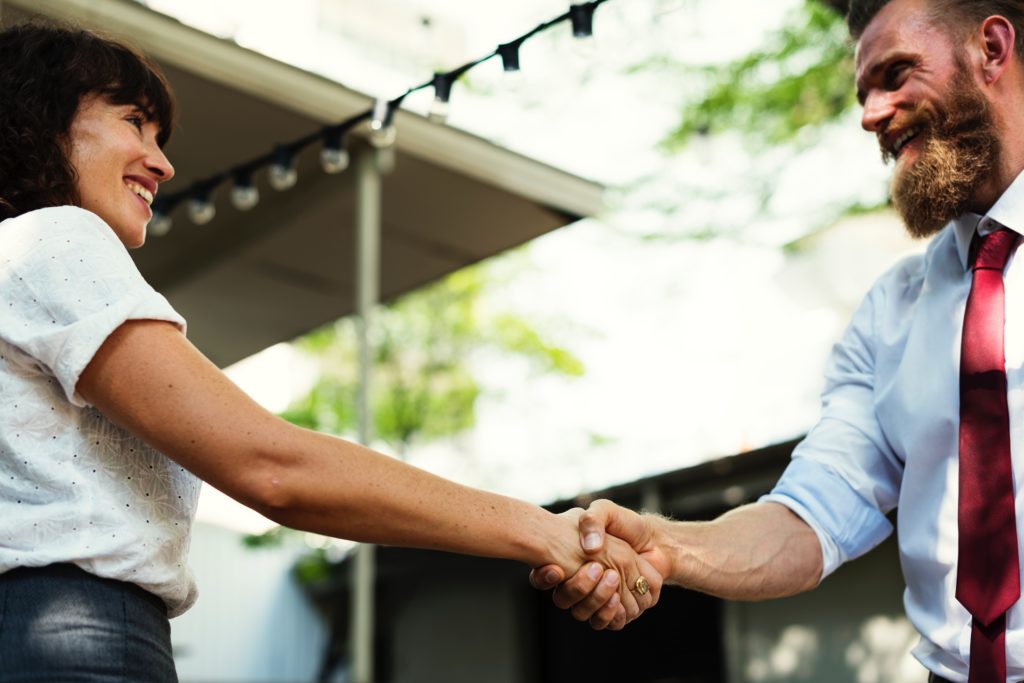
We parted in a friendly manner. She assured me I was eligible for re-hire any time and wished me well. I wished her and the rest of the team well. Cyber handshakes and smiles all around.
I’m in the middle of selling a property back in Colorado. I currently have wonderful renters in the house. They’ve been honest, cooperative, open and have done every single thing they’ve said they would do. They’ve become friends. I’m faxing paperwork, including the lease with these tenants, to Colorado and working with my Colorado real estate agent long distance. The agent expressed surprise that our rental agreement didn’t contain language about punitive consequences if the tenants suddenly decided to break the lease and leave.
It never entered my head to limit my tenants’ choice to leave if they were unhappy. Obviously, at least one property professional feels this is inappropriate business practice, but why would I want to force two people whom I respect and like to stay in a situation that wasn’t working for them?
Answer: I wouldn’t want to, I didn’t want to and I don’t want to.
Last evening I had a long conversation with one of my sons, and among the things we talked about was the idea of noticing how things are within ourselves and the choices we make about our own unhappiness and discomfort.
This morning, as I fried bacon and sausage and worked in the kitchen, I was thinking about this week’s post, trying to come up with something I wanted to write about from my current experience, and suddenly all these interactions lined up in my head (Clunk! Clunk! Clunk!) and I thought, well, there it is. I want to write about quitting.
What do you think of when you think of quitting?
Photo by Milada Vigerova on Unsplash
I think of the word “should,” as in should quit smoking, should quit drinking, should quit eating so much sugar, should quit fill-in-the-blank. These are the kind of circumstances under which quitting is supported and validated, but the “should” is an instrument of shame, guilt and fear, as well as a thoroughly ineffective motivator.
I was taught being a quitter or a dropper outer is a desperately mortifying thing. Quitting is associated with betrayal, abandonment, failure, letting others down and weakness.
Quitting is often an act of aggression. It’s what we do when we’ve hung on by our fingernails until they’ve torn out, one by one, and we have to let go or die. It’s hitting bottom. It’s burnout, breakdown and nothing left to lose, often accompanied by scenes, meltdowns and an exchange of insults.
Quitting is selfish and irresponsible. Choosing to be happy is an embarrassing thing to admit. We’re told If everyone did what made them happy, everything would unravel. Nobody would work. Important things wouldn’t get done. The economy would collapse.
There are cultural consequences for quitting. The label “quitter” impairs our ability to get hired, find stable relationships or make financial choices. A quitter is unreliable and untrustworthy at best. Someone who quits their marriage, family or children is so despicable as to be unforgiveable in some cases.
The word quit, according to a quick search, means to leave a place, resign from a job or stop or discontinue an activity. In short, it’s a word that defines a choice. Interestingly, one of its origins is Middle English, in which it means “set free.”
Set free sounds a lot more positive than quitting, doesn’t it?
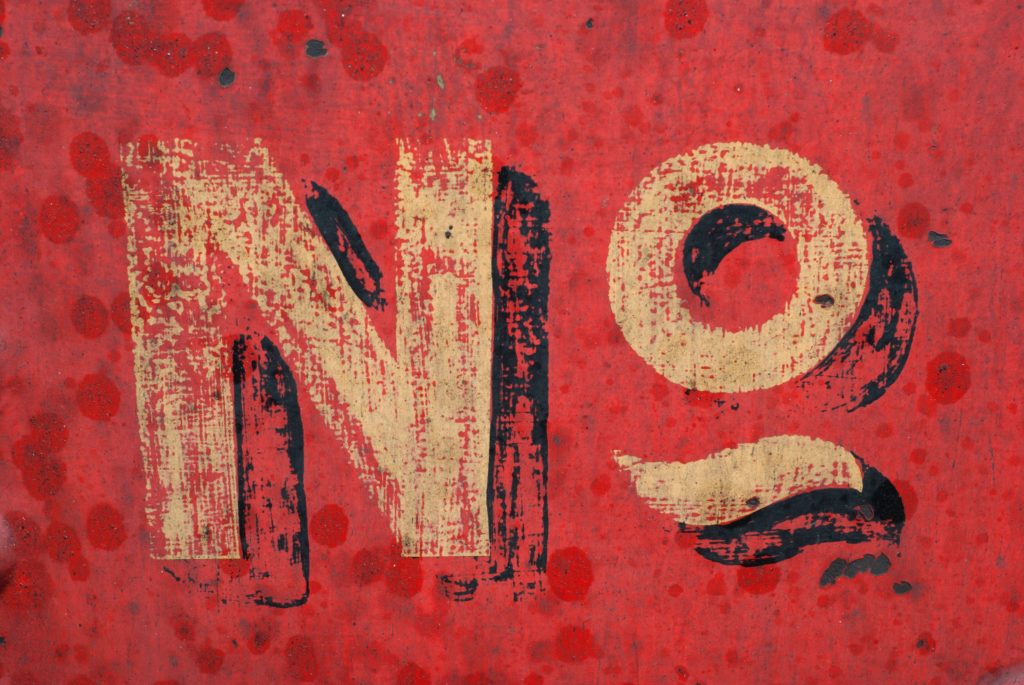
It occurs to me that the whole idea of quitting is rooted in power. To quit is to stop. How is it that the culture is so unfriendly and unsupportive, for the most part, of making a choice to stop? Why are we so consistently and pervasively discouraged from saying no, from quitting, from changing?
I’ve written before about the yes and the no. To be in our full power, both consent and dissent have to be available to us. We have to be able to make a real choice. The inability to freely choose points to a power-over situation, and it doesn’t matter if it’s work related, relationship related, addiction related or some internal limitation like fear. Something or someone is interfering with our power to freely choose if we can’t make a choice to quit.
Said a different way, the problem is not so much the addictive substance, the miserable job, the narcissistic family member or the abusive romantic relationship. The problem is we’ve been systematically amputated from our full power to choose.
Sadly, this is a consequence, at least in part, of our current educational system in the United States. It doesn’t work for a lot of kids. It didn’t work for me. It didn’t work for my kids. I told my sons the same thing I was taught when they complained. Education is important. Everyone has to go to school. It’s the law. We all have to do things we don’t want to. Being happy doesn’t matter.
Ugh. I wish I hadn’t believed that. I wish I hadn’t said it, and more than anything I wish I’d listened to their distress and taught them to respond to it appropriately by responding to it appropriately myself. At the time, all I had was what I’d been taught, and I’m absolutely certain my own mother taught me the only thing she knew as well.
Photo by Gemma Evans on Unsplash
The point is few of us learn how to respond to our discomfort or unhappiness, either by expressing it appropriately or taking action to help ourselves. Public education certainly doesn’t teach it. The way we work in this country doesn’t support it. Patriarchy in general doesn’t validate self-reflection, honest communication, or simply saying, “No more. This isn’t working for me. I’m stopping. I’m quitting.”
On the other hand, we’re great at demanding and commanding, as in “You should … You will … You must … You have to …” However, living in a cage of internalized and externalized shoulds is more power-over. When the shoulds have our power, we’re not free to choose. I know, because that’s how I’ve lived most of my life.
One of the hallmarks of power-over is its resistance to change. Change threatens the status quo. Traditional marriage vows are forever, no matter what. Many jobs reward length of service. We’re encouraged to grow up, settle down, get a stable life. Loyalty, dependability, reliability and predictability are all rooted in not changing.
But we do change. Our bodies change. Our needs and desires change. We learn new information. The things that captivate and delight us change. The best of us learn, grow, question, seek new experience, dance elegantly with challenge and tension, and develop a healthy relationship with being wrong. The best of us spend a lifetime making friends with our changing selves, investigating our motivations, our patterns, our behaviors and beliefs, our weaknesses and strengths, and doing battle with our fears and demons.
A relationship, job, priority or place may be a perfect fit at some point in our lives, and then be outgrown. A coping mechanism or response may work very well, even save our lives at one time, and cripple us at another. Life is always changing. The ability to flow with change, to welcome it and play with it, responding with free choice after free choice, defines a well-lived, powerful, elegant life
Quitting, like boredom, has a bad reputation. I suspect this is mostly due to a cultural smear campaign. My son is in his 20s, and as he shared parts of his experience with me, I realized we’ve arrived at the same place, he’s just 30 years ahead of his late-blooming mother. He’s reclaiming his power to respond to his own discomfort and distress and choose what to do, based on prior choices and how they worked out. He’s not waiting until he can no longer bear his unhappiness. He’s not quitting in a blaze of hand grenades and gunfire. He’s not self-destructing. He’s allowing himself to stop, to change, to leave. He’s setting himself free of what doesn’t work for him, and he’s doing it without guilt or shame or the need for outside validation.
Quitting is an art. I can be done with respect, gratitude and dignity. It can be a gift of love and authenticity to self and others. The right person for a job, place or activity is not someone who hates the job, place or activity. The right job, place or activity for us is not the one that makes us unhappy. Commitment, responsibility and keeping our word are all important things, but not unto death. Not unto madness and broken-down health. We are allowed to set ourselves free. We are allowed to change. We are allowed to learn. We are allowed to try and fail and move on.
I began this project of blogging with a letter of resignation. This week I sent another letter of resignation. In both cases, I hung on long after I knew I was miserable because I was afraid to make a change. I have more work to do in building trust with myself, but I’ve made a start.
I quit. My daily crime.
All content on this site ©2017
Jennifer Rose
except where otherwise noted
by Jenny Rose | Apr 27, 2017 | Connection & Community, Emotional Intelligence
I noticed last week’s post on authentic female power quickly became my most read post to date, perhaps confirming my suspicion about how hungry women are to reclaim real power.
This week, my partner shared a short video clip with me that talks about manufactured consent.
This morning, as we cooked breakfast together, My partner informed me about the new trend of buying dirty jeans at $425 a pair.

Photo by Andrew Loke on Unsplash
As usual, I feel painfully out of step with the culture. I feel angry. I feel lonely. I feel flawed in some deep, irrevocable way because of what I want. I grieve for the loss of connection with what I can touch, smell, taste, look at, hear and be held by.
Yet there was a significant response to last week’s post, which indicates to me I’m not as alone as I feel.
It seems to me we’re increasingly distanced from one another, increasingly divided. The culture says we’re more connected and have access to more information than ever, and in a manner of speaking that’s true. We’re more technologically connected than ever. We’re more connected with word and symbol than ever. In fact, our heightened connectivity is creating new languages of emojis, emoticons, like and dislike buttons, and shortcut language that accommodates the limitations of tweets and texts.
Yet we live in technological enclaves that are every bit as rigid as physical neighborhoods and districts in a city. If, like me, we don’t have a cell phone — well, we’re out of the texting conversation. We’re invisible. We don’t count. We’re silenced. Ditto if we don’t have access to Internet or aren’t on social media, or don’t have an email. If we don’t play on the technological playground, we’re depersonalized and disconnected — literally.
But words, pictures, profiles and emoticons can lie. Language includes communication that only occurs with physical presence. Without physical presence, we can’t discern lies from truth. Our power is so damaged we routinely swallow just about everything the culture, media, advertising and our “friends” tells us.
For example, professional women can’t succeed if they don’t adhere to social standards of businesslike attire, clothing and makeup. If you don’t believe me, look it up on any of your tech devices. It’s not hard to find this “fact,” both directly stated and implied. Let me just repeat that, to make sure you got it.
If we’re a woman who doesn’t buy and use makeup, we can’t succeed in the business world. Everybody says so. Everybody believes it. Everybody makes it true by enforcing it each and every day with words, buying choices, advertising, blogs and articles, all courtesy of technological connectivity and manufactured consent. In 2015, the United States was considered the most valuable beauty and personal care market in the world, with a market value of 80 billion dollars.
I’d say that’s pretty successful manufactured consent, wouldn’t you? Pat yourself on the back if you wear makeup, because your hard-earned money is somewhere in that 80 billion dollars. Well done. Do you feel successful and powerful now? Someone does.
If we’re on Facebook, we have friends, a community, a popular vote of “likes.” We don’t have to deal with morning breath, a wet spot on the mattress, different schedules and rhythms, dirty bathrooms, greasy stoves, or any of the small idiosyncrasies and habits real people have. We don’t have to reveal our physical bodies, our insecurities and our wounds. The worst rejection we risk is being blocked or unfriended. We don’t have to learn how to accept, live with and perhaps even appreciate (perish the thought!) different points of view or opinions. We don’t have to be challenged, stretched, or have our dearest beliefs threatened.
Pressing a button is so much easier than all the messy consequences of authentic connection.

Photo by Alessio Lin on Unsplash
We never have to risk being real at a technological remove. No one can blow our cover. We never have to face ourselves; take responsibility for our words, views or choices; or endure the difference between the way we wish to be and the way others actually experience us. Or, alternatively, we can come out of hiding, feel safe behind the screen, and finally allow all our hate and rage off the leash.
Our culture tells us power and success equal carefully constructed pseudo self profiles, the latest technological gadgets, social media accounts, likes, followers and “friends.”
The culture teaches that power and success are achieved by buying things and the possession of money. Now there’s a circular game of empty addiction we can never win and sellers never lose!
Power and success are ours if we participate fully in manufactured consent. Would anyone like to buy a pair of dirty jeans? Guaranteed power and success!
Yet how many of us truly feel powerful and successful? Are we there yet? If we’re not there, we will be after we buy just one more thing, right? Or perhaps we need to make just a little more money, or lose a little more weight, or finally find the “right” mate.
If we’re well connected technologically, our needs are all met, yes? We have a tribe, a community in which to laugh, cry, celebrate, mourn and share our authentic selves. We have physical reassurance and bonding. Our relationships are based on authenticity, reciprocity and respect. We feel seen, heard and known.

Photo by freddie marriage on Unsplash
I don’t think so. I don’t think tech meets all our needs for authentic connection. I think it more often swallows us up and absorbs us. It’s a toxic mimic for the real thing, more controllable and less risky, and we the sheeple have been groomed to buy every toy that’s put in front of us. We’ve forgotten to look up and notice there’s another human being in the room, in the bed or at the table. That’s the power of manufactured consent.
It doesn’t surprise me that Baba Yaga spoke to so many last week. We’ve sterilized what she represents right out of our modern culture. All her outrageous, provocative, profane, rebellious, insubordinate, irreverent, passionate, authentic attributes have been pushed underground, where her spirit lurks, watching, cackling, stirring her cauldron, sucking on bones and waiting for us to remember her and summon authentic power and connection again.
Authentic connection has a scent of living tissue and breath. It’s texture and heartbeat. It communicates with word, action, and the silent language of the body. It doesn’t allow us to shut our eyes, stop our ears or press a button and dismiss uncomfortable tension.
Authentic connection reveals us to ourselves and to others. It isn’t muffled, sterilized or distorted by keyboard or touchpad. It’s defined by visible action and choice. It demands priority and time. It requires real participation, with heart, body and presence. Authentic connection makes us weep. It makes us bleed. It makes us laugh. It awakens our rage. It heals us and makes us whole. It’s messy, unpredictable, confusing, demanding, imperfect, and reminds us at every turn of the limits of our power. It forces us to communicate and then holds us accountable for what we say — and what we don’t.
Most of all, authentic connection is not something we can buy — ever. No one and nothing can give it to us. Our only access to it is through ourselves. We’re a nation of prostitutes, viewing, clicking, scrolling, buying and surfing, but the only ones profiting are the pimps who cash in on our hunger for something real and our addiction to everything not-real.
Yet Baba Yaga is on the move, sowing seeds of divine rebellion into the cancer of manufactured consent and patriarchy, deprogramming one woman at a time. Even now she’s flying on the spring wind in her mortar, using a pestle as a rudder, searching for all those women who long for something real.
Searching for me.
My daily crime.
All content on this site ©2017
Jennifer Rose
except where otherwise noted
by Jenny Rose | Apr 20, 2017 | Power
I came across a prayer to Baba Yaga recently. I’ve spent a lot of time with Baba Yaga, who is a supernatural female figure out of Slavic European folklore. I’ve told stories about her for years, and she’s an important character in my book. She’s a powerful life-death-life-death figure and has many names, among them Storm Raiser, Primal Mother, Lady of Beasts and Mother of Witches. In spite of our long acquaintance, I’ve only lately begun to love her.
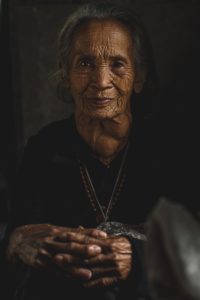
Photo by ivan Torres on Unsplash
Sometimes I think the most important thing to understand about life is power. It structures every single relationship, most of all our relationships with ourselves. Power creates wars, cults, murderers, abusers, tyrants, rebels and perhaps angels.
I believe we have a great longing for our individual mislaid power, such a longing that we’ve lost track of what it is or how to recognize it in our hunger and desperation. I don’t know how else to explain our mindless obedience to the media, to our culture, to our religions, to the almighty “they” who instruct us how to live, how to eat, what to believe, how to look, how to buy and how to be.
At this time in my life, and at this time in my country’s history, I cling to Baba Yaga, because she represents sanity in a world becoming more insane by the day. The prayer reminds me of what true female power is — and is not.
True female power wastes no time on despots and bullies who conceal their fear and impotence behind dishonesty and the willingness to use force. It’s not her business to prop them up. They have nothing she needs and they’re not worth her attention, for they shall not endure.
True female power is real. It’s authentic. It’s not bound by chains of political correctness, manners, fear or ideology. A woman in her authentic power is, according to need and whim, a child, a wild woman, a bitch, a seductive temptress, a crone, and a creature of magic. Obedience and compliance are not in her nature.
True female power seeks the hidden thing, within and without. She pares away layers, stories, masks, facades, dreams, visions, expectations, and shoulds. She’s a persistent poker, prier and meddlesome busybody in holey tennis shoes. She opens drawers, boxes and jars, looks behind forbidden doors and never stops asking questions. She refuses to shut up, close her eyes or pretend, and views everything by the stark light of a fiery skull without flinching. She doesn’t need anyone to agree with her, and she doesn’t need everyone to agree with her. She doesn’t argue with what is. The truth cannot escape her.
True female power doesn’t prostitute for love and validation. Baba Yaga eats sulfur to make her farts more momentous and fertilizes her body hair to make it grow more abundant. She’s hairy legs and iron-tipped fingers and teeth sharpened on bones. She takes a lover when she feels like it, but she kicks him out of her bed before dawn and doesn’t offer breakfast. Her body is not for sale, her hair is the color it wants to be, and she has no use for a painted mask over her face.
True female power is a teacher of magic. She teaches the sorting of one thing from another, cleansing, lighting a fire, the alchemy of cooking. She’s the power of the cauldron, the cup, the womb and the growing seed. She’s the wisdom of bone and blood, seed and water, life and death. A woman in her authentic female power learns to feed and nurture the magic of her intuition and creativity. She knows they are the most priceless jewels she will ever have.
True female power feels huge, deep feelings of rage, grief, joy and lust. When fear accosts a woman in her power, she spits in its eye and knocks it down on her way forward. An authentically powerful woman knows how to cause earthquakes with her dance, bring rain with her tears, melt rocks with her passion and sow stars with her joy. She allows no one to make her small.
True female power expresses all her fine feelings. She shrieks, curses, cackles, stomps, grumps, slams and mutters. She will not be silent. She stays up all night drumming and dancing if the mood takes her, and sleeps all day when she wants. She collects secrets, stories, marbles and insults with equal enjoyment. In fact, she says and does exactly what she wants to do and say.
(Yes, I said marbles.)
True female power is ancient and enduring. It’s coarse silver hair, aching bones, pearly stretch marks, lumpy thighs, scars and wrinkles and cracks and crevices. A woman in her power bleeds, first red and then the invisible silver blood of wisdom that arrives when the children of her body have become ghosts living only in her memory. A woman in her full authentic power smiles kindly on the young and beautiful, because they are not yet capable of her wisdom.

Photo by Cristian Newman on Unsplash
True female power knows how to live through the night alone, how to wander in the desert, how to go underground and live in a cave among the roots of life when necessary. She survives the conflagration, the invasion, the prison sentence, the betrayal, the loss, the beating, the chaos, the flood. A woman in her authentic power is rooted in the stars, in the trees, in the mountains, in the sea and in the earth. She welcomes cycles and seasons. Change is her strength. She knows how to bide her time and let die what must, because she knows her power will endure in women who come after her.
A woman in her power is not confused. She knows there’s no authentic power in money or position, youth or beauty or hairless legs. She knows her wellspring of power is internal and if she can’t find it, no one will. True feminine power defines her own success, her own goals, her own agenda, her own spiritual practice, her own beauty and her own rules.
Baba Yaga’s specialty is too-good maidens of all ages. That’s how I met her. When the Baba is finished with such a maiden, she’s either saltier and wiser or dead. Baba Yaga eats the dead ones with vinegar to cut the sweetness.
It’s a good time for prayers. Perhaps it’s always a good time for prayers. Here’s mine:
Baba Yaga, Grandmother, we offer you our sweat, tears, blood, milk and urine. Initiate us into life and death with our own blood and bone. Lead us back into love for ourselves, our bodies and our earth. Help us, your daughters, find our authentic feminine power again.
All content on this site ©2017
Jennifer Rose
except where otherwise noted
by Jenny Rose | Apr 13, 2017 | Emotional Intelligence, Fear, Feelings
Last week I came down the steep stairs from my little attic aerie, sat in a chair in the living room and cried while I asked my partner if he thought I would ever have a less effortful experience of life.
It’s not that anything was really wrong. What I was feeling was an old, familiar feeling of trying to manage my life and myself as efficiently as possible and feeling worn out and unsuccessful.
Photo by Bradley Wentzel on Unsplash
Trying. Manage. Efficiently. What am I, a machine?
I was tired that evening, and worried about diminished workflow and subsequent diminished paycheck. I wasn’t seeing a way out of my work/income situation, which is a place I’ve been in for several years.
One of the things I did last week during a work shift devoid of work was join She Writes, an online community for, obviously, women writers. I’d been procrastinating about doing so for a long time.
For years, I’ve been trying to find a writing community, both locally and online. I’ve joined a professional local organization, but their programs are rarely offered up here in Central Maine, as Portland is their headquarters. I’ve tried, unsuccessfully, to find beta readers for my first book. I put up an invitation to start a writer’s group at the local library and didn’t get a single call. I tried a give and take partnership with another writer so we could read one another’s work and provide feedback, but my partner had other priorities and needed to drop out.
And, of course, I need to work for that paycheck, so my time and energy are largely gobbled up by my financial needs rather than the joyful work of my life. This produces a chronic background tension that grinds away at my soul.
Anyway, I decided the time had come and I was ready to join She Writes and see what possibilities might open up through that community. I had to apply to join.
I knew they wouldn’t take me.
They accepted me (probably some kind of mistake) and the day after I sat in the chair and cried, I had another shift with no work and began exploring She Writes. I came across a blog post titled “The Only Reason to do Anything is Love,” by Bella Mahaya Carter, and had an epiphany.
Engaging with life from a place of love rather than fear is not a new idea for me, or probably for anyone reading this. It’s the kind of thing we hear and read all the time. I would have said I do that. It’s always my intention to show up in the world with love, which is to say kindness, compassion and respect.
The wording of Carter’s post, however, indicates motivation, an internal thing, not external action. Make choices with love, not fear. Decide what to do based on love. Do nothing for fear.
Right, I thought. I treat others and myself well. Of course.
Why?
I treat others well because I think it’s effective and I’m afraid of violence, hatefulness, rejection and just plain crazy.
I treat myself well because I’m afraid to be unhealthy, unable to earn a living and/or unable to be independent.
Photo by Milada Vigerova on Unsplash
It’s all for fear. It’s not for love.
Furthermore, treating myself well doesn’t equal loving myself. I caretake my physical form like a good property manager takes care of a rental. I exercise, eat well, brush my teeth, wash my body and take care of injuries.
What I think about myself is that I disappointed my parents, drove my brother nuts (not literally!), failed two marriages and made unforgiveable mistakes as a parent. I think I’ve never made a successful career or had a good enough job. I think I’m ridiculously hard to live with. I think I eat too much, use too much hot water in the shower, like obnoxious music, try too hard and am too sensitive. I think I’m unattractive and few people want to hug or touch me. I think I’ve spent years writing a 300,000-word book that, for all I know, has less value in the world than a roll of cheap toilet paper. On sale.
Those are some of the things I’m conscious of. When I look at my fear-based choice making, it appears I also think if I don’t hold my own feet to the fire at all times I’ll become a lazy, irresponsible, selfish slacker; demanding, mean, dishonest and greedy.
Carter’s post made me realize I could hardly think of a choice, any choice, whether important or mundane, that I haven’t made based on some kind of fear. Ever. From earliest memory.
The greatest motivator in my life is and has always been fear.
Not only that, but I’ve created a whole pantheon of idols I obsessively and ceaselessly worship in order to avoid the vengeful, punitive God I’ve made out of fear. I make daily bloody and brutal sacrifices of time, energy and life to appease them, but insatiable fear just gets more and more powerful. Here are some of the idols:
I read that post on Friday. There and then I decided to start making choices based on loving and believing in myself rather than fear of consequences and see what happened.
Without leaving the chair, I asked myself what the hell I was doing messing around with a job that wasn’t meeting my needs and I was unhappy in.
On Saturday I applied and tested for a job as an independent contractor to do transcription for an online company.
On Sunday I applied and tested for a job as an independent contractor to do transcription for a second online company and was hired on the spot. I also wrote the publisher of She Writes Press and asked for help with the next step for my book manuscript.
On Monday, when I ran out of work, I began getting qualified (via testing) to do various kinds of transcription through my new job and looked up the resignation process from my current medical transcription job.
Yesterday the second online business hired me.
This morning She Writes Press wrote me back with support, suggestions, a recommended professional who might read the manuscript, and what it would cost.
The fear is not gone. In fact, it’s louder than ever because I’m challenging it on so many fronts at once. The difference is I’m not standing nose to nose with it right now. Playing with the new toy of making choices based on what’s loving for myself gives me another option, which means now I can make a real choice.
Fear is not a bad feeling. We need it to survive. It’s just that mine has grown bloated and swollen on all the power I’ve given it over the years. The bigger it gets, the more space it takes. At this point I’ve become its thing. It thinks it can do as it likes with me.
It’s wrong.
I’ve had a belly full of life based on doing things out of fear. It’s exhausting, demoralizing, joyless and hag-ridden. It doesn’t work well and I’m sick of it. When I think about it rationally, I know I don’t need to beat myself with a stick through every day for fear I’ll become lazy, selfish, etc., etc. If I was going to turn into any of those things I would have done it long ago.
How would it be if I used regard for myself as a motivator and refused to do or not do out of fear? What might a life based on doing things out of thinking well of myself look like? What if I stopped giving anything to fear?
The funny thing is life looks much the same. The difference is largely in the outwardly invisible motivation behind my choices. Am I going to relax with music or a video and stretch because that’s the right and responsible way to treat my tiresome physical needs after a long day sitting in which I earned inadequate money, or am I going to do it because I love the way it feels after a tiring day in which I worked hard, whether I earned money or not?
Life is crazy right now. Everything feels like it’s in transition. I hardly know what to concentrate on in any given moment, there’s so much on the table. Even so, now when I run out of energy in the afternoon I spend a few minutes writhing between making a choice between demanding more from myself out of fear or doing something pleasurable and relaxing. So far, every day I’ve managed to choose rest and relaxation after another wild day.
It appears I’ve begun a new practice. I didn’t know that evening I sat in the chair and cried I was standing on an important threshold. I didn’t know by the end of the week I’d have not one but two new jobs. I didn’t know I was going to finally get serious about putting my manuscript into a professional’s hands and risk failure and rejection. I didn’t know in just a couple of days I was going to begin making a habit out of rolling out of bed and stepping into the day’s embrace with curiosity and a resolve to think well of myself as I navigate, rather than wondering fearfully what would happen next and whether I would manage it adequately.
So far, so good.
Nothing more for fear.
Photo by Stephen Leonardi on Unsplash
All content on this site ©2017
Jennifer Rose
except where otherwise noted
by Jenny Rose | Apr 6, 2017 | A Flourishing Woman, Creativity
Walking on our 26 acres, my path winds around open fields and keeps me out of heavy woods and brush, where ticks are waking. It’s grey and overcast, not raw but damp, a combination of snow and rain coming down and turning my already wild hair into a mad woman’s wig. The surface of the snow is glazed hard in most places, but when I get close to the tree line or streams that trickle down to the river, I punch through it and sink. Walking on the thick layer of leaves under and among the trees is like walking on a sopping sponge. My socks are sodden inside my winter boots.
I see thickets where the deer have slept, melting the snow with their warm bodies, lying out of the wind in the shelter of trunk and branch. I imagine them rising to their feet, squatting in their awkward way to leave pellets and a splash of urine, and then stepping away through the snow with those delicate hooves and legs. Their spoor is everywhere.

Photo by Teddy Kelley on Unsplash
The medical transcription business is wildly unpredictable. One seesaws between frantic pleas from supervisors for overtime because of a sudden flood of work and the dreaded “no jobs available” message upon logging in. As I’m paid by production, no work means no money. Since the new year, work has been slow in the company and transcriptionists and supervisors alike are feeling the stress.
I’ve been thinking about my fear of not enough these days, and how small it makes me and my experience of life. One of the reasons I like to go out and walk is because it pushes against my tendency to curl up in corners and play hours of solitaire while I make up stories about living under bridges and berate myself for NOT PULLING MY WEIGHT and WASTING TIME.
The river is still ice covered, the edges yellowish and slushy. I see animal prints in the snow over the ice, but I wouldn’t dare try to walk on it. As I lean against a tree and look down at the ice-bound river, I hear a nesting pair of barred owls calling to each other, though it’s still early afternoon.

Photo by Vincent Foret on Unsplash
The truth is my medical transcription job is nothing more than a means to an end. It’s all about the paycheck. I take some modest pride in my ability to do an accurate, fast job, but I’m just a pair of skilled hands and ears. One day, when the job and I are finished with one another, I’ll leave no remnants of myself, no track, no scent, no spoor. It irritates me that it has so much power in my life when it means so little.
Water drops tremble on bare twigs and tree branches. The pussy willows are beginning to bud. Cloudy light washes the willow buds and water drops the same silvery grey and I have to draw near to tell the difference.
We’ve lately found a local lawyer to help us update our wills and take care of end-of-life paperwork. It’s made me think about all the fragments I’ll leave behind me, the furniture I’ve loved and polished; the mirror I’ve looked in since I was a child; the books I’ve handled and read in cars, in bathtubs, at tables, in beds and chairs and waiting rooms. All these things will be sifted through, separated, sold, passed on. What money there is will be divided and wind up in other bank accounts or hidey holes or cast back into the flow somehow. Perhaps whispers of me will cling to a few objects, but for the most part no one will ever know I passed this way.
OLYMPUS DIGITAL CAMERA
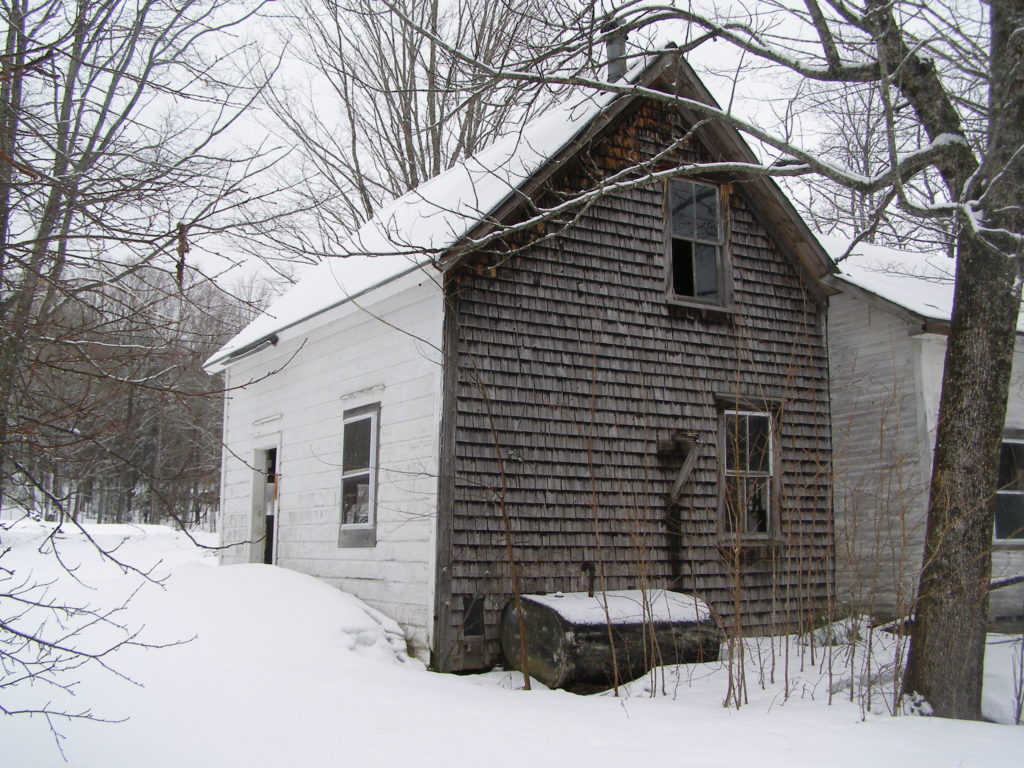
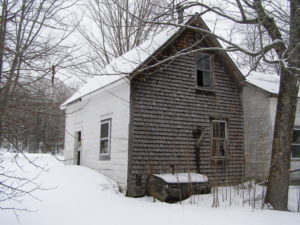
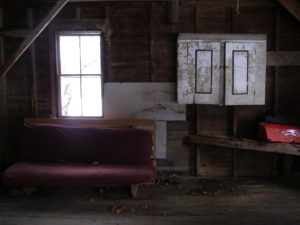
We have an old shed on the land and snow slide off the roof has blocked the door and partially pushed it open. I’m just able to squeeze in over a thick layer of ice on the threshold, formed by melting snow dripping off the roof.
We cleaned out and swept the shed last fall, but I find pages of paper blown all over the floor, pages of the first draft of my book manuscript. Last summer we had visitors who used the shed, and I’d hoped they would read and give me some feedback. They didn’t, and I’d never found the manuscript when I looked for it after they left, but the winter currents and drafts discovered its hiding place. Perhaps the wind read it as it ruffled through the pages with chill fingers.
It’s odd to see those scattered pages on the cold, splintered floor. The sight of them gives me a desolate clarity. Those written words are the most important thing I have. Working or not working, large paycheck or vanishingly small paycheck, all the objects I love and use and call mine — none of that is really who I am. None of it really matters, though it takes up space in my life. None of it contains the smell of my breath, the taste of my pain or the spoor of my love the way my words do. It’s as though it’s me lying there, discarded, damp and wind strewn, unseen, unread, unwanted. It hurts me.
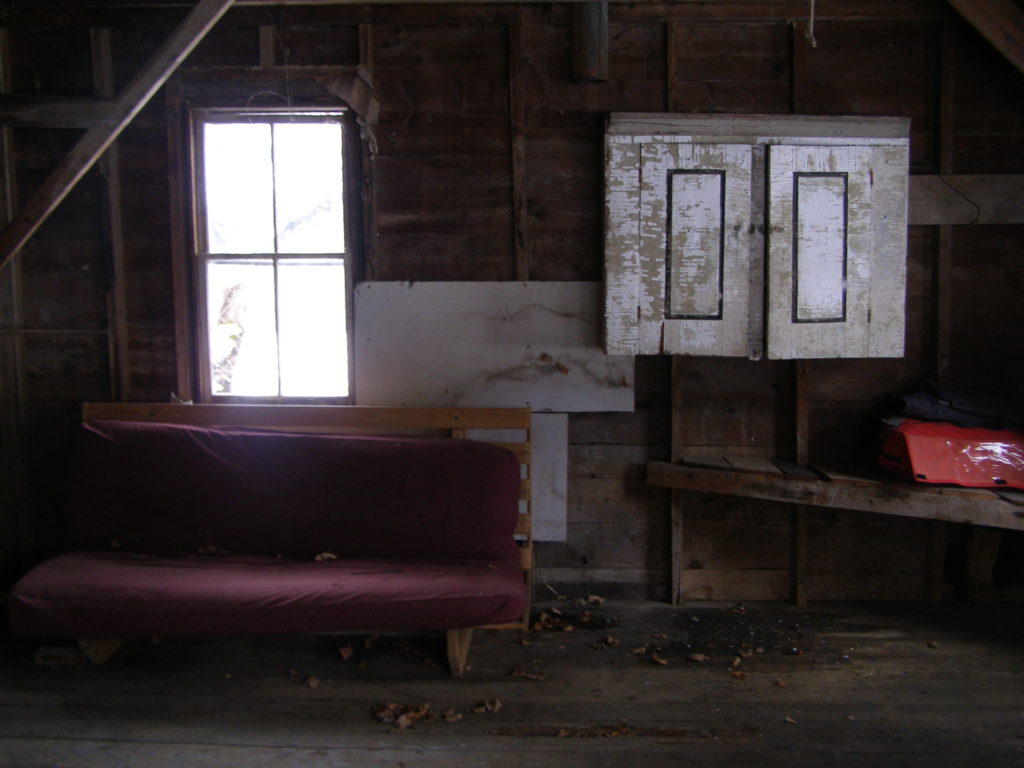
As I gather up pages, I note where the snow has drifted through gaps in corners. Wrinkled beech leaves lie on a discarded futon, whirled in through the broken window above it. I open a ramshackle cupboard and find a roll of shredded toilet paper and evidence of mice at work, making the most of an unexpected bonanza of nesting material.
I find a bottle cap and cigarette butts on a window sill. More leavings. I know who stood there, smoking, looking out the window. I stood where he’d stood and picked up the butts, knowing his lips were around them, his long-fingered hand had carried them from pack to mouth and then stubbed them out in the bottle cap, a tiny ashtray. I wish for the nose of a wild creature so I could search for the cold, lonely ghost of his scent.
He was here. I am here. Deer crisscross this land we call ours. Mice go about the business of ensuring more mice, and the barred owls carry on their early spring conversation about mating, nesting, eggs and all those mice. We are so caught up in jobs and money and things. We give them so much meaning. The days go by and we alternately struggle and dance through them. But one day we’ll be gone, and we’ll all leave spoor behind, a scent or sign or footprint uniquely and simply ours.
These words are my footprints, my scent, my lingering warmth in the places I came to rest, my spoor. They are signs of my passage and the truest things I have to leave behind when I’m gone.
All content on this site ©2017
Jennifer Rose
except where otherwise noted