by Jenny Rose | Mar 30, 2017 | Emotional Intelligence, Feelings
In the last couple of years, a lid has been gradually slipping off a container in my mind labeled ‘BOREDOM,’ and I suddenly realize the contents of the can are now moving into all the cracks and folds of my memories and experience.
I don’t have much interest in boredom. I’m never bored and I’m greatly irritated by people who are. When I expressed boredom as I child I was either given something “productive” to do or told sometimes everyone has to do things they don’t want to do.
As a parent, when my kids expressed boredom, I gave them a long list of tasks or “productive” things they could do to help me. They usually declined, but they also learned quickly to stop saying they were bored.
I’ve often been told I’m boring.
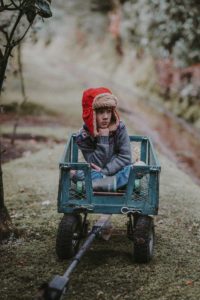
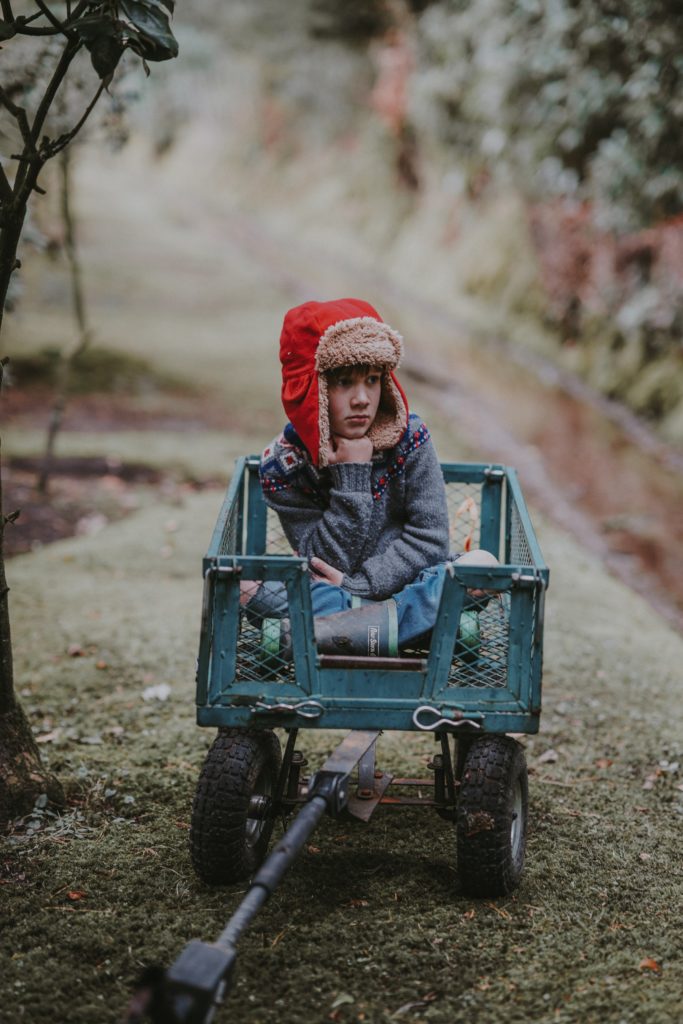
Photo by Annie Spratt on Unsplash
There. That’s all I have to say about boredom.
Life was much more cut and dried before I became educated in emotional intelligence. Now I’m suspicious of cut and dried, especially if it has to do with feelings, patterns in my life or things that keep showing up. Boredom keeps showing up. People say they’re bored and I feel disgusted. People say they do self-destructive things because they’re bored and that excuse infuriates me. I take the boredom of others personally, as though I’m not entertaining or interesting enough to keep them engaged.
If I’m not interested in boredom, I ask myself, why does it make me so mad, and why does it keep catching my attention?
Why, indeed.
A couple of days ago I decided this week’s post would be about boredom, so I really started to think about it. I tossed around the concept of boredom with my partner. I thought about all the places it’s shown up in past relationships. I sat down and Googled boredom and looked at articles, quotes, memes, images and definitions.
I can’t tell you how often I’ve come to the page, either to write or research about something out there — a behavior or pattern I observe around me in other people — and discovered it’s not out there at all, at least not exclusively. It’s in here.
Remember what I said a minute ago? “I’m never bored.”
I’m suddenly realizing that’s not true. In fact, I suspect I’ve been chronically bored my whole life. The feeling of boredom, along with so many other feelings, simply got denied. It wasn’t until I started living more authentically here in Maine and stopped being bored that I could begin to see the colossal depths of my previous boredom.
Naturally, I’ve felt enraged when others express feeling bored while I can’t.
But why can’t I express it? What’s so shameful about boredom?
Oh, baby.
Photo by Jason Rosewell on Unsplash
First of all, being bored means you’re not working hard enough. You’re not being productive. You’re wasting time. You’re useless! You’re lazy! You’re a quitter! You’re irresponsible! You’re letting others down! You’re not pulling your weight! You’re a burden! You’re a failure! (This eventually trails away into a wild-eyed, gibbering mental shriek.)
When all the arm-waving drooling hysteria stops and I can think rationally again, what I’m left with is BUSY=GOOD and BOREDOM=BAD. This has the look and feel of first-grade logic to me, and I’m skeptical. I’ve spent a lot of my life staying busy in order to please other people and a lot of that busy was dead boring. School, for example. Busy and bored are not opposites. Busy without purpose is a recipe for compulsivity. On the other hand, the condition of being undisturbed and private with a book, paper and writing or coloring pens or even just a window and a cat with nothing in particular to do is a real pleasure.

Photo by Danny Postma on Unsplash
Somehow, somewhere along the way, boredom became the enemy in our culture. It’s a whine, a complaint, a danger and a discomfort to be avoided. It’s a weakness, even a sin (if you think in such terms). Boredom is a condition that must be fixed. Bored children get into trouble. Bored adults are not productive. Boredom is an excuse to use and abuse substance. People eat out of boredom. People have affairs out of boredom. Boredom, in fact, is to blame for a lot of undesirable behavior and choices.
Really? I don’t accept this. I’ve learned feelings — all feelings — can be thought of as value-equal data. We’re human. We have feelings. Some are more uncomfortable than others, but isn’t that largely a product of the thoughts and judgements we attach to them? Feeling a feeling doesn’t mean we have to act it out in ways to hurt others or ourselves. If we make destructive choices, our feelings are not the problem. What we do with our feelings is the problem.
It follows then, if I’m bored and I can call the feeling by name and recognize it, there’s information there for me. What is my boredom telling me? Here are some things I associate with my own boredom:
- I’m not interested.
- I’m not engaged.
- I’m not authentic.
- I don’t feel a connection.
- I can’t make a contribution.
- It’s too easy; I know how to do this; I can do more.
- I don’t understand.
- I’m overstimulated.
- I’m exhausted or ill.
- I’m overwhelmed with some other painful feeling, like fear, rage or grief, I’m refusing to deal with.
- I have a boundary problem; I’m taking on something belonging to someone else.
- I’ve been here and done this — not doing it again!
- My needs are not being met.
- I feel disempowered.
- I’m not in the right place.
- I feel limited.
- I can’t be curious or creative.
- I’m not safe.
This entire list is a map informing me where I’ve been, where I am and where I might go next. The feeling of boredom is the ground I stand on to read the map. My boredom doesn’t need to be fixed. There’s nothing shameful about it. On the contrary, it holds essential information and experience for me. It defines choices and supports power. Busy can’t create this essential space and quiet, but boredom can.
So much for not expressing boredom because it’s bad and busy is good. What else stood in my way all these years?
False Gods.
You see, I’m female. (By which I mean uterus, ovaries and menses.) Good girls, nice girls aren’t bored — ever — by males, including but not limited to male teachers, male family members, male romantic/sexual partners, male classmates and colleagues, and male bosses.
Now, before anyone climbs up on their high horse, understand I don’t hate men. Not at all. I’ve historically gotten along better with men than women, in fact. Also, I know things are different now than they were in the 60s and 70s when I was being socialized — sort of. There’s a lot more awareness and discussion of feminism and sexual politics.
However, a big part of my training had to do with “respect,” (also loyalty, responsibility and duty) and just about the only person not included in those I was taught to “respect” was myself. Respect was demonstrated by things like being silent while the men spoke, obedience, and being properly grateful for and attentive to mansplaining . Respect meant adapting, adjusting, and limiting myself so as not to challenge, threaten or compete with men. My role was to learn to “act like a lady” and be compliant, sweet and attractive.
You might not have noticed, but that training wasn’t notably successful.
Boredom and respect are not a happy team, so of course I kicked boredom to the curb. Respect meant love, validation, tribe, straight A’s, husband, children, a good job and a normal life. Boredom with addiction, violence, abuse, rigid thinking, inability to grow, absent creativity and curiosity, uninspired sex, toddler-level communication skills, power and control games, mind fuckery, omnipresent TV, unending housework and financial grind was absolutely out of the question.
Until now.
As for other people calling me boring, we’ve already covered that in a previous post. It’s a projection. My feeling of boredom is not about others and their boredom is not about me. I’ve been a lot of things in my life, but boring isn’t one of them.
That empty can in my mind labeled ‘BOREDOM’ was filled with something I want and need. Who knew? Going forward, I’m reclaiming my boredom. I’m welcoming it like the wise old friend it is, naming it, honoring it, embracing it, standing hip-deep in it and reading the map of my life to chart a course for what I’d like to do next.
And I will never, ever again try to fix, discourage, stifle, diminish or deny someone else’s boredom. I will instead congratulate them for feeling such a vital, vibrant feeling and ask them my favorite question:
“What would you like to do now?”
Photo by Joshua Rawson-Harris on Unsplash
All content on this site ©2017
Jennifer Rose
except where otherwise noted
by Jenny Rose | Mar 23, 2017 | A Flourishing Woman, The Journey
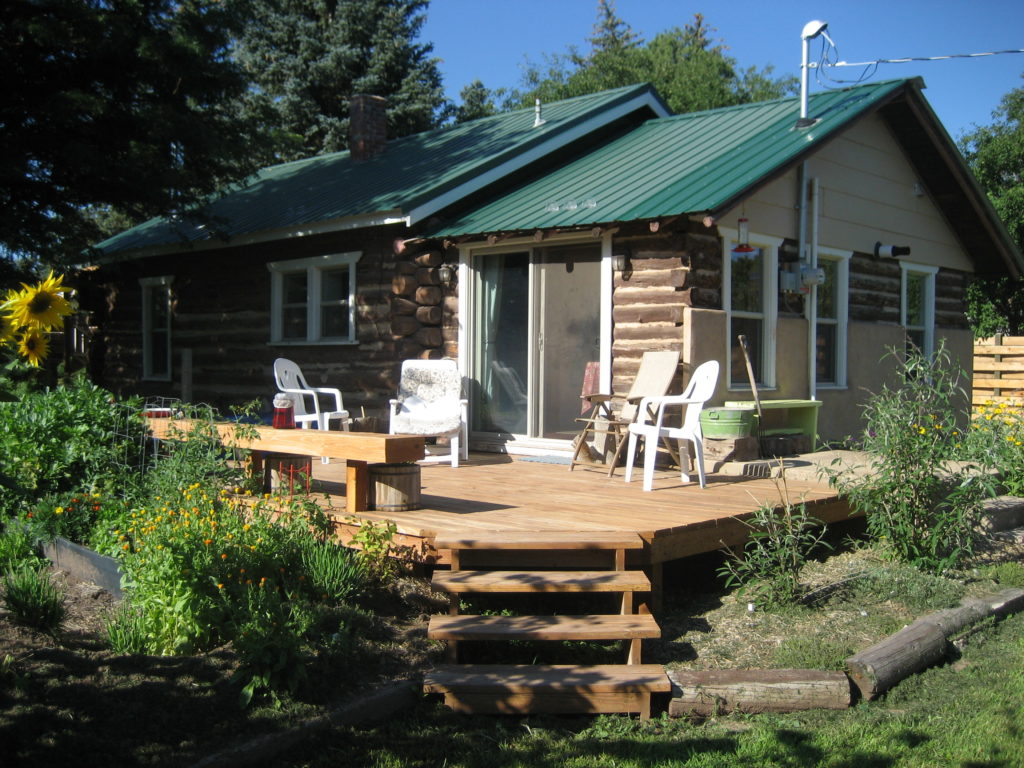
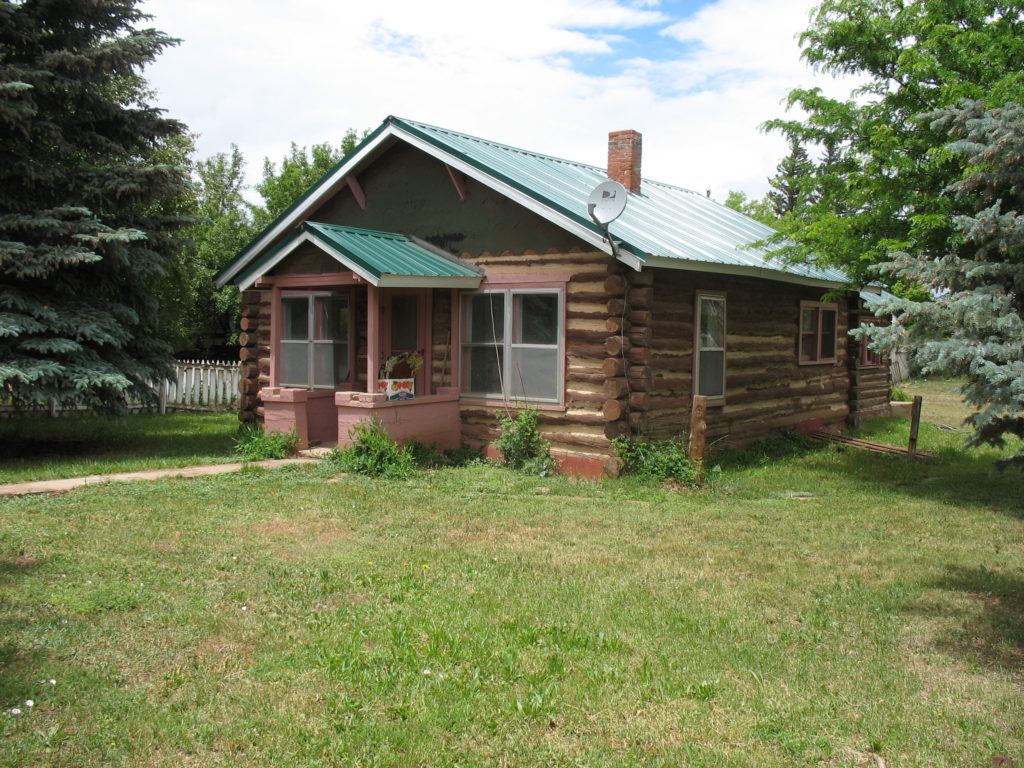
When I came to Maine from Colorado, I left behind a small log house on four lots in a mountain town of about 1,000 people. I was fortunate enough to find good renters. I’d never been a landlady before, but the prospect of renting was less overwhelming than actually trying to sell the house while making the huge transition to Maine.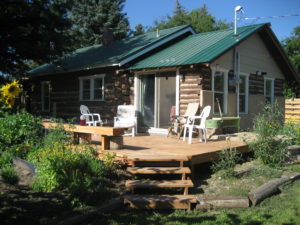
My childhood consisted of moving from here to there frequently, and the constant upheaval and insecurity was hard. I didn’t really make friends or invest in any particular place, because I never knew when we would have to pack up and go again. By the time I was a teenager, my family had settled down, but by then I was getting ready to go out into the world and make a place of my own, so there still wasn’t any security.
Then I got married and had children, and finding a home was largely driven by my husband’s wants and preferences and what our young family needed, not by my own desires. It became apparent over my years of marriage that the house that appealed to me and the house that appealed to my husband were rather different in terms of location, style and layout. We moved from place to place, and I made do wherever we were — a skill I had a lot of practice with. It was the family that mattered, I told myself, not the house.
When the boys were ready for school, though, it was important to me to settle down somewhere, as I didn’t want them to have the experience I did of always being the new kid in school. At that point we moved to the little town referred to above, where I stayed for more than 20 years. The house we bought when we moved there sheltered us, along with dogs and cats, but I never really liked it. Once again, it had been my husband’s choice.
Fifteen years passed and I found myself alone with a cat in a big house I’d never loved that hijacked me with ghosts and memories everywhere I turned.
I sold the house, discarded a lot of stuff and, after a couple years of searching, heard of a dilapidated old log house that had been rented that was about to go on the market. One of my friends was a neighbor, and one spring morning we went to walk around it.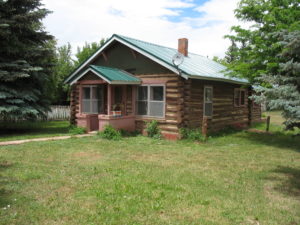
It needed a lot of work, but I was charmed. My friend went up 3 cement steps in the back, found the back door open, and we walked in.
It was outdated, tiny, inconvenient and badly neglected. Everything, inside and outside, was frayed, ragged, used up, dusty and dirty.
Falling in love is a strange thing. What is the complex, mysterious response a person, object or place calls from us? It’s got nothing to do with beauty or even suitability, that’s for sure, at least not for me.
I felt akin to the house. There it sat, and had been sitting for over 100 years, on a weedy and trash-filled patch of ground with large old trees around it, unloved, unseen and unappreciated. It was small and ugly and shabby. I myself had never noticed it in all my 15 years in that town.
Nobody loved or wanted it.
That’s what captured my heart.
Nobody loved it.
But what if somebody did? What if somebody wanted it, cleaned it up, gave it some care and attention?
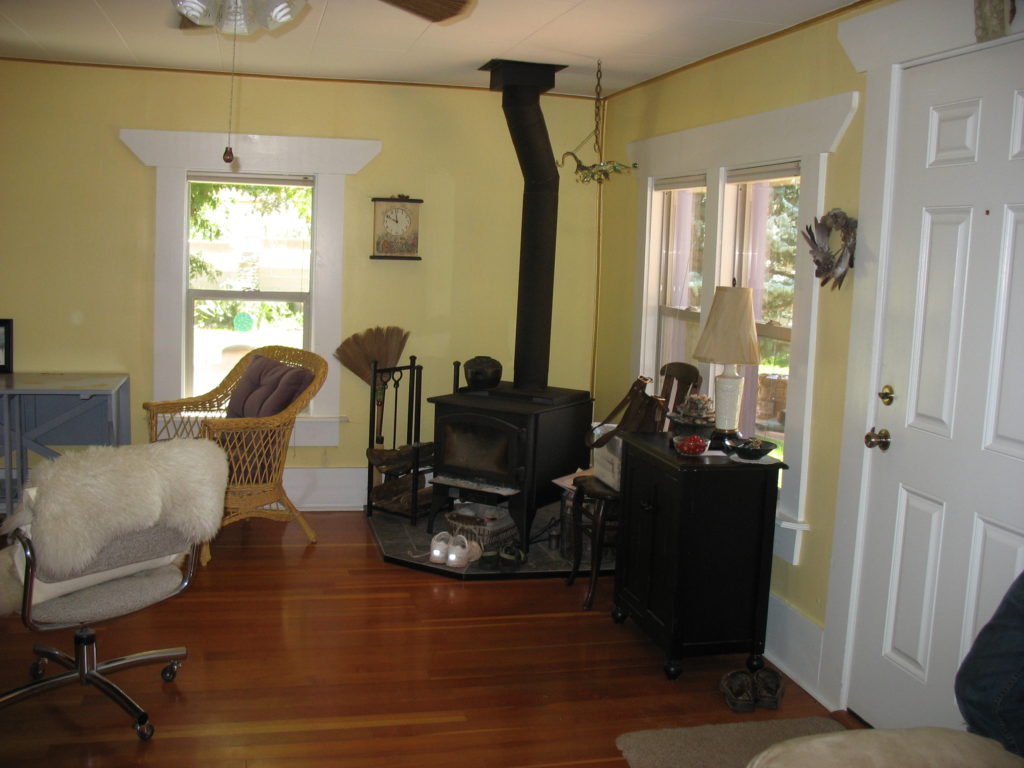
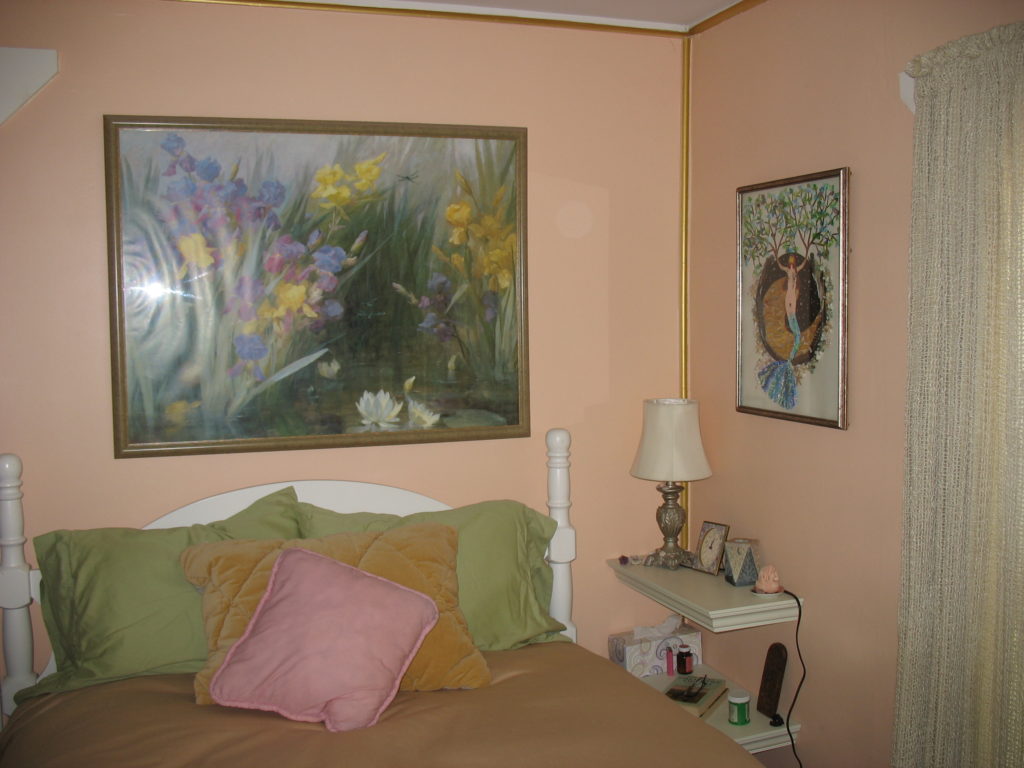
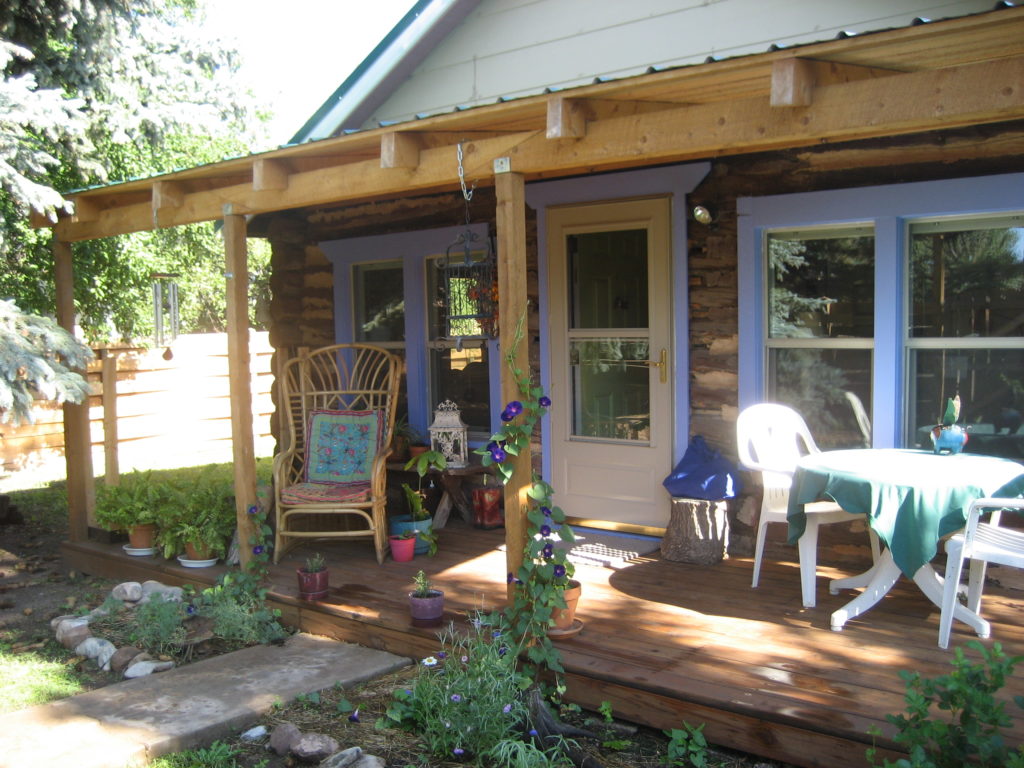
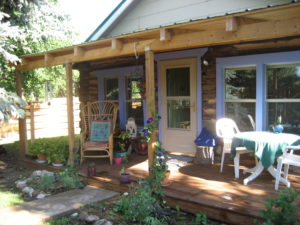
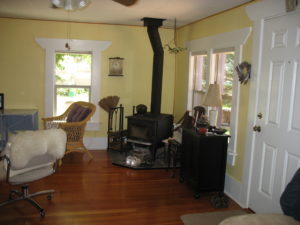 So I bought it, remodeled one end, gave it new windows and a new front door. I had the wood floors stripped, sanded and sealed. I insulated, put in a little wood stove, patched and painted. I raked up bags and bags of trash and built garden beds out of cardboard, newspaper, huge loads of manure and fill dirt, moldy straw and hay and compost. I hung birdfeeders and wind chimes in the trees.
I didn’t know it then, but in loving that house and bringing it back to life, I was taking the first steps in loving myself, and eventually leaving that little town for a bigger, wider world.
I lived in the house for five years, and I was struck, over and over again, by how the house and land responded to every bit of attention I gave them. They never shrank away from me. I never failed or disappointed. The place blossomed. It bloomed. The garden grew. The trees filled with birds. Sunlight poured in the new windows and turned the old floor to the color of honey. Indoor plants throve on the wide windowsills.
The house was like a mirror. It reflected back to me creativity, color, light, modest luxury, simplicity. As I lived my life in it I saw myself differently than I ever had before. I had made a beautiful place, peaceful and welcoming.
For the first time, I thought maybe I had something to offer the world. Maybe I was of some use after all.
In my head, it was all settled. After nearly 50 years of moving and being subject to someone else’s needs and choices, I had come home. For the first time in my life I allowed myself to put down deep, deep roots. I filled the house with my music, my books, my spiritual work, my art, my hopes, dreams, desires, fears and griefs. I joyfully lived without clutter, piles, and collections of junk that weren’t mine. I burned candles and incense and had flowers by the kitchen sink and in the bathroom.
Never again would I have to move. I was safe. I laid in bed at night and felt the house around me like sheltering wings. I had at last realized the deepest and most painful desire of my life — a real home. I would live the rest of my days in safety, serenity and security. The house and I belonged to each other and took care of one another.
Last month I put the house up for sale, and last week it went under contract.
I don’t know how to express all the thoughts and feelings that led me from that place to this. To say I emotionally outgrew it feels true. To say my old life began to feel much too small is also true. Gradually, I understood a house can’t provide me with the safety I’m always looking for, after all. I thought I’d reached the highest peak of my own desire and possibility, but when I got there and looked around, I began to see higher peaks still.
I’d created a home and called it a life.
I was also aware my love for the house exceeded my love for myself. Part of me still waited for someone to show up and do for me what I did for the house. Inside me, a sweet maiden stayed powerless and waiting for a prince on a white horse, but I wasn’t a maiden. I was a menopausal woman, expert in the art of pleasing people, with two adult children, two divorces and a history of abuse. It was too late for the prince thing, and I was bored by it anyway. What was a downy-faced idiot prince going to do with a woman like me?
I recognized the more mature (ahem!) parts of me were simply lonely for healthy, meaningful connection with other people, and no house, no matter how beautiful, comfortable or beloved, could give me that.
Then there was the anguished voice from deep inside, imprisoned somewhere behind my rib cage, that kept saying “I can do more than this! I can be more than this!”
Anyway, I chose to leave Colorado, the house and my life there, though it was like tearing myself in half. Still, I’ve never regretted that choice, and I know now that I don’t want to go back to my old life and that little town — even if I could.
The house I’m in now hardly notices me. It needs nothing from me, and nothing I can do will fix all that needs fixing and update all that needs updating. This is frustrating, at times infuriating, and oddly peaceful. All the energy and love I used to give my home is now going into my writing and into shaping myself and a new kind of life. In a strange and convoluted way, leaving the home of my dreams has at last brought me into direct, intentional and mindful relationship with…me.
I wonder if perhaps I’m the home and safety I’ve always been searching for. How ironic.
I’ve been weeping on and off as I let go of my house. I want to do it, and it hurts. I wonder if I’ll ever have that again — such a perfect home. I wonder about the new owner, who is also a single woman. I hope she feels as sheltered and nurtured there as I did. I hope she’ll touch the trees and feed the birds and glory in the iris and roses and clematis. I hope the owls will wake her in the deep winter nights, calling from the huge pine trees in front. I hope she draws close to herself as she sits in the sun where I sat, sleeps under the ceiling I had patched and painted myself, feeds the wood stove, washes dishes and relaxes in the bathtub.
I hope she and the house will love one another and be happy together.
All content on this site ©2017
Jennifer Rose
except where otherwise noted
by Jenny Rose | Mar 16, 2017 | Connection & Community, Emotional Intelligence, Shadows
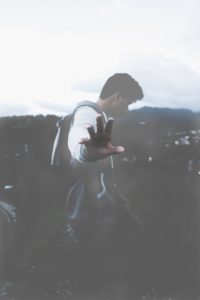
Photo by Ian Espinosa on Unsplash
Projection is a defense mechanism used to displace the responsibility of one’s negative and unacknowledged feelings, behavior, beliefs and choices by attributing them to someone else.
The goal of projection is to create a distraction that helps avoid ownership and accountability. The victim becomes the focus, and is manipulated into taking responsibility for the abuser’s behavior, beliefs and feelings.
For example, an obviously angry parent confronts and accuses their child of hating them. The child, in fact, loves the parent, feels disliked by the parent, and walks away feeling ashamed and guilty for hating their parent, even though that’s not their feeling. For the moment, the parent has successfully displaced their own self-hatred onto the child.
Another example is a friend talking to another friend about her experience of a chaotic yet transformative life event that’s picked her up and set her down in a different place. The speaker is accused of being negative and making her friend feel stressed and upset, in spite of the speaker’s attempts to be clear about the exhilaration and joy of her experience. The speaker walks away with her friend’s displaced inability to deal with change and loss of control, her own joy forgotten.
Projection is a common defense mechanism, and most of us use it to one degree or another. It’s not necessarily a Big Evil. On the other hand, projection can be a subtle and cruel blame-shifting game of power-over, and some people who employ this tactic intend to win at any cost. Their victim and the world at large are blamed for everything that’s wrong or feels bad. The projector is an innocent victim of the machinations and manipulations of others, the general unfairness of the world, and bad luck.
People who use projection as a weapon can have a devastating effect in our lives, but I’ve been even more devastated by my own use of projection, and this is a skill the culture has actively and systematically taught me to perfect.
I’ve been brainwashed since I was a child to believe all people share my desire for peace, compassion, and cooperation. I’ve been led to believe all others share my empathy, my thirst to learn and grow and my priorities for healthy connection. I’ve been taught the Golden Rule, the application of which ensures being treated with love and kindness. We treat people the way we want to be treated, and voila!
Furthermore, as a female, it’s my responsibility to be a representative of all these values. If I fail to exemplify peace, empathy, loyalty and kindness towards others, I fail to be a good daughter, wife, lover, friend, mother and woman.
It’s also my job to be the keeper and carrier of feelings the people around me don’t want to deal with. It’s what I’m for.
No one ever suggested to me how dangerous it is to project my own value system onto another person, and I only just discovered this for myself recently. As it gradually dawned on me, I struggled for a time to find an alternative way to look at the people around me. If I don’t approach others with all my naïve projections, then what? I don’t want to assume everyone is destructive and dangerous, either!

Photo by rawpixel.com on Unsplash
Then it occurred to me our approach to strangers (or even those we think we know) needn’t be either/or, friend or foe. A stranger is a stranger. An unknown. It’s not necessary or useful to project anything onto a stranger. The Golden Rule still applies and I conduct myself authentically and respectfully and pay attention as I interact with an unknown person. I’m learning not to manufacture stories, make assumptions or project. I inquire, listen, watch and take responsibility for my own feelings and behavior.
Projection is a complex technique and can be very hard to see when it’s lurking under the bed. However, in this house we’re skilled at pulling all sorts of monsters out from under the bed (metaphorically, of course) and letting the cat sniff at them. Once identified, projection is perfectly manageable.
Projection, like gaslighting and mice, leaves tell-tale signs.
- Any conversation about a challenging issue (money, parenting, fidelity, keeping one’s word, the nature of the relationship, why you got hit) winds up being about why it’s all your fault.
- You’re accused of something (a feeling, lying, cheating, stealing, being demanding, interrupting) that’s not true.
- In spite of your best efforts, communication isn’t successful. You can’t get your point of view heard and you feel chronically disempowered.
- After an interaction, you feel ashamed and guilty.
- No matter what you do, you seem to be continually hurting someone you care about.
- You don’t experience reciprocity; the more loyalty, understanding, empathy, love, gratitude and forgiveness you extend, the more drained and alone you feel.
- You feel like a disappointment, a failure and a burden.
- You’re always bleeding; you had no idea what a terrible person you are.
- You feel manipulated, used, disliked, and angry, which increases your guilt and shame.
- You feel confused, baffled and bewildered. Every time you turn around you seem to get sucker punched, literally or figuratively.
- You don’t feel safe.
- Your trust is damaged.
- Your boundaries are chronically violated.
- Your priorities, feelings and values are disregarded, if not brutalized.
- Your needs are not met.
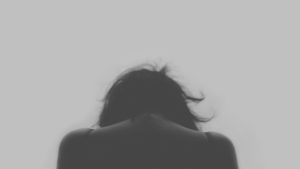
Photo by Volkan Olmez on Unsplash
Abusers and personality disordered people who employ projection invariably give themselves away, right in plain sight, because at some point they project onto others something so bizarre the victim and/or onlookers have an Aha! moment and recognize the manipulation. For example, someone with sexual boundary issues accuses someone else of an assault that never happened. A thief projects stealing onto someone with scrupulous integrity. A liar accuses an obviously honest person of lying. A rageholic accuses everyone else of being angry while they put their fist through a wall.
Another common projection is “You don’t care!” when in fact we care so much we feel terminally ill, and we still can’t make it work.
Shame and guilt have enormous isolating power. One of the best defenses against projection is to verify someone’s stated perception of you and your behavior. I had a boyfriend who accused me of “always interrupting.” I was crushed. It was a heated, angry accusation blowing up out of nowhere, and he’d never given me that feedback before. I’ve studied good communication techniques for a long time, and communication is something I care about doing well. Furthermore, I frequently had the experience that he interrupted me, but I tolerated it because I loved him.
My choice (after I stopped crying) was to ask other people in my life if they had this experience with me and get a reality check. I had a couple of close girlfriends whom I knew would tell me the truth. If it was true, I wanted to know so I could change that behavior.
They thought I was nuts. One of my best friends, who had years of experience of me in groups as well as one on one, said she appreciated the way I always held space for others to speak.
I didn’t cry anymore and I immediately dumped that projection. Not long after that the relationship also ended.
Another good defense against projection is to name the behavior and refuse the projection. There’s no need to fight, raise your voice, cry, argue, persuade, explain, justify or throw something. Those are all distractions from the fact that the abuser is employing a toxic tactic that’s about them, not you. Let them escalate — it’s their game. You’re don’t have to play.
“No. That’s not how I feel. That’s a projection.”
“No. That’s not what I did. That’s a projection.”
“No. That’s not what I said. That’s a projection.”
Stand your ground, look them in the eye and refuse to get distracted from their behavior, no matter how juicy the bait they dangle. Hang up, disconnect, block, delete, walk away, disengage. If you can’t get away from them, repeat a simple statement like the ones above as many times as you need to.
Projection can be abusive and toxic. It’s essential that we recognize it, both when we employ it and when others use it against us. Good boundaries go a long way to disabling projection, and so does the work of authenticity. We can’t control the behavior of others, but we can learn to recognize and excavate our own projections and take responsibility for our choices and feelings, which makes us far less vulnerable to this tactic.
All content on this site ©2017
Jennifer Rose
except where otherwise noted
by Jenny Rose | Mar 9, 2017 | A Flourishing Woman, Body, Food
This is a third post in a series in which I’ve questioned the relationship between American dietary standards and health and written about my own personal journey with diet. This week I’ll focus on some of the ideology embedded in diet and food production.
In my first post, I briefly mentioned vegan bullying. Because of the way we choose to eat, my partner and I spend some time in digital conversations about food. I’ve been amazed by the hostility and hatefulness directed towards people who choose to produce, harvest and/or eat meat.
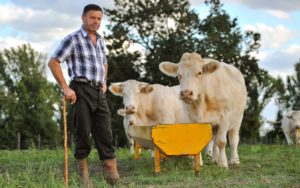
Photo by Agence Producteurs Locaux Damien Kühn on Unsplash
All people need to eat in order to live. That’s a given. I believe most individuals want to be able to feed themselves and their families with high-quality, healthy food. Sadly, because we live in a capitalist and consumer culture, this basic need is hugely impacted by financial, political, social and geographical variables. Additionally, diet is inextricably entwined in the religious and spiritual framework of many people.
Just this short list of factors make the basic necessity of putting food in our mouths complicated. Obesity and other eating disorders, as well as food-related diseases and health issues (which may be to say all diseases and health issues) reflect that.
Add to that a small but vocal group of people who take it upon themselves to judge, criticize, bully, shame and threaten others about their diet, and we’ve got a mess.
Now, there are all kinds of stated reasons why some people think they have a right to mandate what and how we all should eat. Some folks claim to be animal rights activists. Some talk about guilt, as in “What do you do about your guilt about eating the flesh of a dead animal?” Others say cows are killing the planet.
The list goes on. You get the idea.
I’m not a science teacher and this blog is not about handing out an academic education, but the cows killing the planet thing belongs under the heading of alternative facts. It simply isn’t true, and a brief survey of science-based permaculture, climate change and basic biologic history demonstrates that. Properly managed, the presence of animals is essential to healing the planet. Believe it or don’t believe it, but for me this is nonsense and I’m not interested in debating it.
The animal rights activism excuse really gets under my skin. First of all, equating eating meat with hating animals is first grade level reasoning. The world is filled with hunters who deeply respect and love the land and the animals they hunt and harvest. They show that respect by protecting the health of wildlife and wild land, doing their best to get a clean and efficient kill shot, using all of the animal they kill and supporting sustainable hunting practices. Of course, there are plenty of the other kind out there, lots of idiot trophy hunters and poachers who need a rack or a pelt in order to feel powerful. I don’t deny it. What I do say is that hunters are like everyone else — some are respectful and see themselves as part of the system we inhabit, and others operate strictly from power-over and see themselves as masters of the universe.
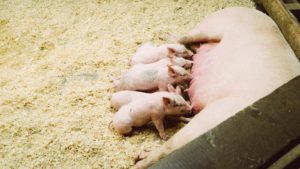
Photo by Greg Ortega on Unsplash
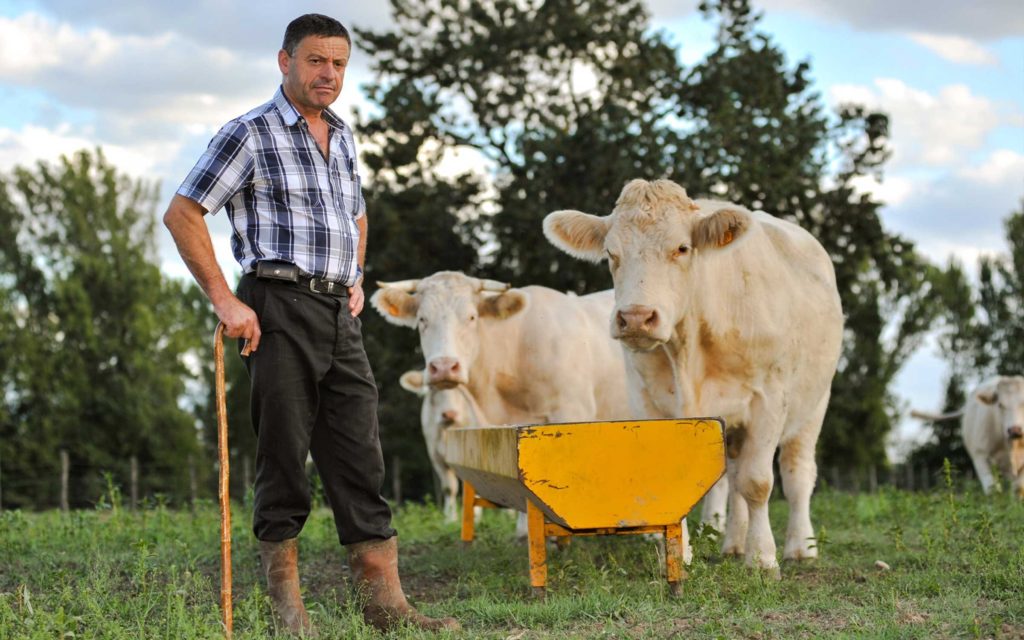
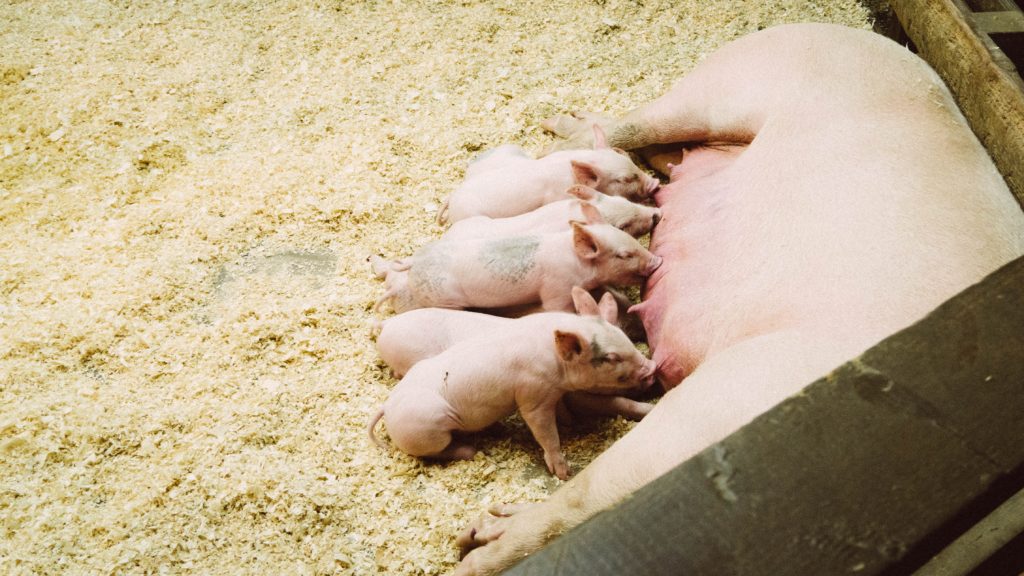
This also holds true for food producers. A small family farm hand raising meat with love, affection, attention, rotational grazing on healthy land and a good natural diet is a beautiful place. These people love their animals and the land. They also slaughter, butcher and eat their animals. They participate in, understand and respect every part of the cycle, from breeding to table.
To equate something like that with the nightmare of some modern mass meat production is simply ridiculous. If you want to see cruelty to animals, all you have to do is whisper “profit” into the ear of a corporation. Big Oil, the cosmetic industry and the fashion industry are just a short list of entities who have done plenty to destroy animals and habitat, and most people don’t care.
Incidentally, I’ve spent much of my life involved with animal rescue. I’m proud to say my mother is one of the most talented people I’ve ever met or heard of with animals and she’s largely given her life to making the world a better place for them, particularly horses and dogs, but by no means exclusively. This has all been volunteer work, done out of respect and love for the life in the world that can’t fight or speak for itself. She doesn’t see herself as better than. She sees herself as part of. The animals honor her with their presence and companionship, not the other way around.
So, yes, I eat meat with great enjoyment, AND yes, I love animals. I’m not limited by an inability to dwell in the sacred and powerful duality of life and death.
Bigger than all of this, however, is the guilt aspect, the real heart of this post. A vegan asks, “What do you do with your guilt about eating dead animals?”
For me, this question is much bigger than an issue of diet. The question reflects just how far we’ve strayed from wisdom, health and sanity in this culture.
When did we become amputated from our rightful place in the complex, miraculous web of life around us? What are the roots of the tragic and fatal arrogance that makes us believe we’re in control of life and death in our complex system? At what point did we become estranged from aging, loss, death and decay, which is to say HALF the full, powerful cycle of life?
Life is death. Death is life. Neither has meaning without the other. Both are essential. All life feeds on death. When we walk in the forest we’re walking on death. The whole natural world is based on prey and predator, eaten and eater. What does a tree do about its guilt as it feeds off and roots in the bodies of its companions? What does an eagle do with its guilt when it takes a salmon? What does a lion do with its guilt when it runs down a gazelle?
The guilt in that question is a projection. I don’t have any guilt about eating meat, and I think it’s tragic that anyone has guilt about the necessity to eat. If you pull up a carrot and eat it, you kill it. Every bite of food we put in our mouths is possible because of death. We exist as part of a vital, dynamic and inestimably beautiful and precious system that ebbs and flows, dances, fluctuates, cycles and revolves around life and death. We can choose to act as a unique and valuable part of that system by using only what we need, nurturing and learning from the life around us, and joyfully participating in all the ongoing life-death-life-death cycles around and within us, or we can choose to deny, destroy, and/or desperately try to control life and death, which is a completely fruitless (no pun intended) endeavor. We, thank God, are not that powerful.
The seasons will cycle. New life will be born in the midst of death. The green world will reseed itself, sprout, grow, bloom, fruit and die. The microscopic world and fungi will continue to break death into a rich placenta that sustains the next generation of life. Life is an incredible privilege. Death is part of that privilege. Nurturing life and allowing to die what must is part of what it means to me to be a woman.
I don’t know what’s going to happen to my country, the climate, or the planet. I’m afraid for us all, and the world we call home. What I do count on is the mighty cycle of life and death. All things change. All things move and flow. Nothing ever stays the same. All our fear and desperation, our greed and selfishness can’t change life and death.
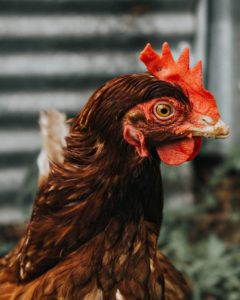
Photo by Andrea Tummons on Unsplash
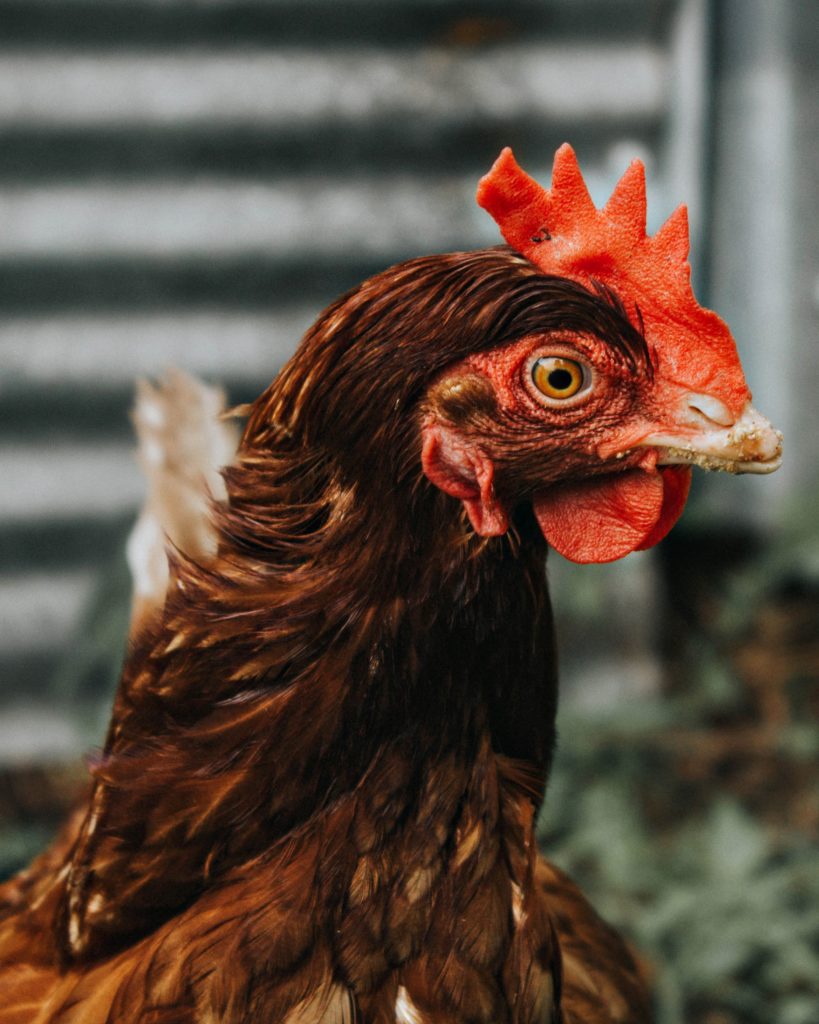
What I can do is figure out how to best support my body with food. Then, I can make choices about how I procure the food I eat — to some degree. I don’t have the means right now to grow my own meat. However, I can and do buy eggs from a neighbor farmer, driving very carefully into the yard so as not to run over her free-range chickens and ducks. I can take the time to relish and appreciate opening a many-times recycled egg carton and looking at a whole variety of shaped, sized and colored eggs, mixed with occasional bits of straw and feather fluff. I can save money so I can buy a half an animal in the fall from a local small farmer to put in the freezer. I can buy fresh local yogurt, butter, cream and cheese from the farmer’s market.
It seems to me our energy should be going into making sure everyone has adequate food and clean water, and that we treat our food sources, whether animal or plant, and the system within which they grow (you know, the planet? Earth?) with love, intelligence and respect. We all can do something about food. Those among us who are doing the hard and unprofitable (financially) work of growing food on small farms may well hold the keys to our future survival. What they know about permaculture, holistic environments, food forests, sustainability, breeding, planting, harvesting and slaughtering is truly the wisdom of life.
Which is to say the wisdom of death.
Which is to say, again, the wisdom of life.
Bon appetit.
See the fourth post in this series here. Check my Resources page for links to information about diet and nutrition.
All content on this site ©2017
Jennifer Rose
except where otherwise noted
by Jenny Rose | Mar 2, 2017 | A Flourishing Woman, Body, Food
Last week I considered several questions about the politics of food. This week I want to share a reluctant personal journey.
Before going further, I want to clarify I’m not a dietician, a nutritionist, a doctor, or qualified to give any kind of diet or medical advice, nor am I interested in doing so. I am, however, the number one expert on my life and my body.
Until the last three or four years, it never occurred to me to be baffled about why eating by all the latest advice and rules hasn’t helped me with chronic pain and some of the other issues I listed in the first post on this topic. My whole life was like that. I’ve always felt I played by all the rules and things didn’t work well in any arena. Eating well and not feeling well didn’t exactly stand out. I assumed it was because I’m broken and flawed.
On the other hand, I know from my years of medical transcription work many people out there try desperately hard to adhere to their healthcare team’s recommendations in regard to diet, exercise and medication, but they still struggle with obesity, diabetes, heart disease, pain and mental illness, to name but a few. There are cheaters, of course, but most of those patients freely confess they’re noncompliant. Are all these compliant patients, and I assume hundreds of thousands of others like them, as broken and flawed as I am?
Photo by Stefano Pollio on Unsplash
And what about the frequent headlines regarding young, fit, athletic, active people, including vegans and vegetarians, having heart attacks and/or dropping dead? This week it was the ‘Biggest Loser’ host and trainer, Bob Harper. According to all official guidelines, those folks should live to 100, right?
So, I ask again, what the hell is going on here?
I realize now I’m not broken and flawed, at least not more than anyone else. The problem has simply been my diet. It’s always been my diet. Eating the way we’re all supposed to eat has not, does not, and I’m convinced will not ever work for me.
Three years ago, I was introduced to the idea of a ketogenic diet. It’s gradually become more and more present in the popular press, but I’d never really heard about it. I didn’t think I had a problem with gluten, and my own homemade bread formed an enormous part of my daily intake, so low-carb eating had no appeal. The other half of ketogenic was even less appealing — eating meat and animal fat. I hated feeling worn out, used up and too skinny, but I didn’t want to be fat. Eating high fat is bad for you — everyone knows that. I’d never eaten a lot of meat and didn’t feel I had the money to start. I’ve never had a great appetite, though strangely, I was usually snacking, but meat wasn’t that appealing. When I wanted a snack, I wanted a thick slice of homemade toast with margarine and a cup of tea with honey.
I formed a relationship with a ketogenic eater, who I thought was frankly boring about diet. He was a converted vegetarian and believed his plant-based diet had given him a near-fatal heart attack. On the other hand, he was (is) smart and had done a lot of research, which I respected. Unwillingly, but curious in spite of myself, I began to look at some of the information he shared.
At the time, I was hypothyroid, on medication; suffered from constipation, insomnia, and my usual mild-to-moderate mix of anxiety and depression. All of that was a cake walk, though, compared to my problems with muscle spasm and back pain.
For most of my adult life I’ve had pain problems. At one time, I was diagnosed with fibromyalgia, but I refused treatment, which consisted of pharmacology. I had frequent spasm in my neck, shoulders, back and hips, at least every couple of months, lasting for several days. The spasm at times made it impossible for me to sit at my desk and work, drive, and sometimes even shower. Triggers would be things like putting my foot up on the edge of the tub to put lotion on my leg, or sneezing. I walked every day, danced when I was able, worked in my garden and generally was active, but if I did any kind of exercise routine or repetitive motion I was sure to get into trouble. I couldn’t do yoga without dire consequences.
It was truly miserable, and I’d tried every modality I could think of over the years. Nothing gave me more than short-term relief. I had no hope of ever solving the problem, or even understanding what the problem was.
I knew low-carb, high-fat couldn’t possibly be the answer, because it’s not the well-rounded, well-balanced, high-fiber healthy eating I knew we need to do to stay well. I didn’t want to give myself heart disease or cancer on top of everything else. On the other hand, my friend claimed to have cured his heart disease eating keto, and he had the blood work, strength and endurance to prove it.
Huh.
So I read. I read about the biochemistry of inflammation, the essential biochemical role of cholesterol in our bodies, and early studies on cholesterol and its supposed link to heart disease. I read about saturated fat. I read about studies of indigenous people and dentistry. I also read criticisms and counter-arguments to most of those studies. I read about cherry-picking data and bias. I read studies and data paid for by the sugar industry, the beef industry, the dairy industry, Big Pharma and Big Ag.
My conclusion is that it’s difficult and time consuming to get reliable scientific data that’s unbiased about food. There’s “evidence” for just about every diet being The Right Way To Eat.
Then I started reading blogs and articles written by real people who are trying to get and stay healthy and understand what their bodies need. They’re not selling anything. They’re not trying to tell everyone else what to do. They’re living in their bodies, just like me.
During all these months of research and reading, a few things really stood out. Eating keto has a profound effect on diabetes, inflammation and a host of other maladies, and there’s plenty of science to back it up. I found whole communities of people healing themselves, learning together and exchanging information about what works in their bodies, many of whom have literally transformed their health with a zero-carb diet.
Keto diet is not mainstream. It doesn’t incorporate the food pyramid. Most doctors don’t recommend it.
Does that make it invalid or (even more ridiculously) morally or ethically wrong?
In the meantime, I moved to Maine and started living with my low-carb, high-fat eating guy. Gradually, I began to eat more like him.
Photo by Helena Yankovska on Unsplash
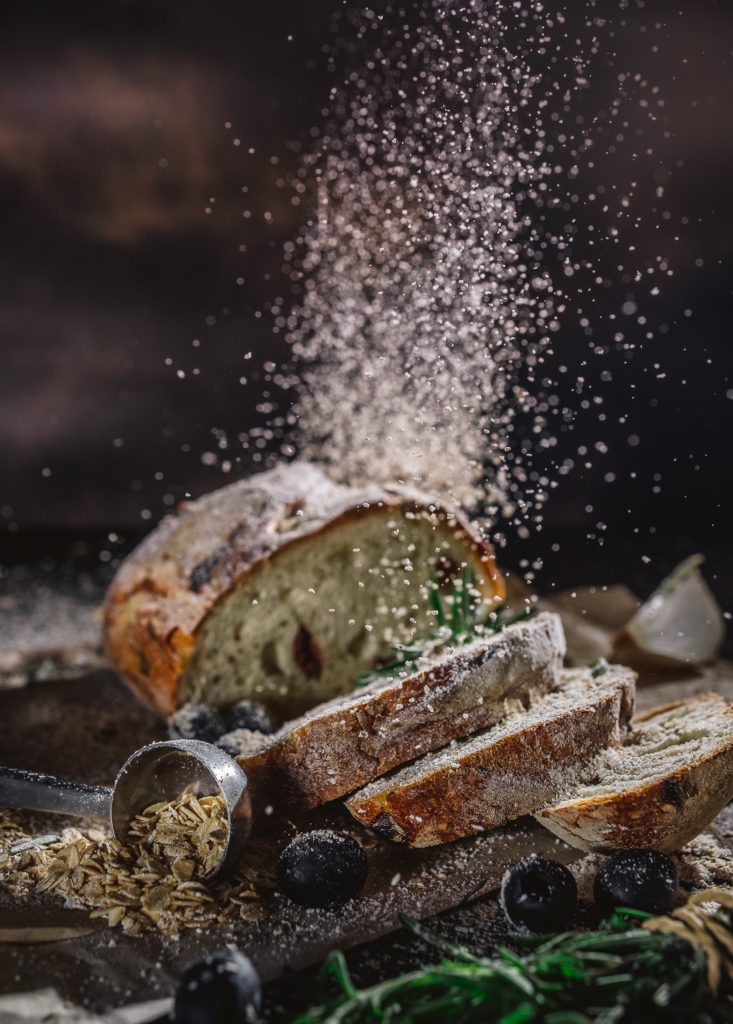
I fought it every step of the way. I was like a bag of weasels when I gave up my morning (and midmorning and afternoon) tea with honey. What was tea without honey? I craved bread, homemade oatmeal, homemade scones and homemade gingersnap cookies. I was afraid to eat real butter. I decided this nonsense about vegetables and fruit was just that — nonsense, and I retained those in my diet, but I gave up bread and all grains. No flour. No rice. Goodbye amaranth, quinoa, cornmeal. No more homemade pancakes and waffles. No more buttered popcorn. I ask you, what is life without buttered popcorn?
I was feeling better. In fact, I noted I hadn’t had a back spasm since moving to Maine, an unheard-of period of time. I was also sleeping better. I had less bloating, water retention and gas.
I was disconcerted to find that I need to eat a lot. Much more than my male partner. It’s embarrassing. I discovered I had a lot of unconscious rules about Appropriate Eating For Women. I stopped worrying about keeping weight on and waited to get fat. I was eating more than I ever had before, and most of my calories were coming from animal fat.
I continued to feel better. I didn’t get fat. I’d read that fat doesn’t make you fat; carbs make you fat. I began to believe it. I felt healthy and strong and my weight was perfect. It stopped swinging up and down. I wasn’t cold all the time any more. I had more energy. My carb cravings stopped. I didn’t snack anymore. I got up, ate four or five eggs scrambled in butter on a bed of fresh spinach for breakfast, along with several strips of bacon and some fresh fruit, and then I started my day and didn’t even think about food until sometime in the afternoon, at which point I ate a ½ plus pound burger, mixed 70/30 with fat. Just the burger, mind you. Well, maybe a piece of cheese melted on top. When we were in funds, I ate a ¾ pound ribeye with lots of delicious fat.
Usually we are not in funds, however, and one day I ran out of spinach and fresh fruit at the same time. For a few days, there were only bacon and eggs for breakfast. Then we got a paycheck and I happily went and bought spinach and tangerines again.
Guess what?
Pain.
Not spasm, but pain in all the old places — hip, low back and neck. I ached. I was stiff. I couldn’t sleep.
I was furious. I was scared. People HAVE to eat vegetables to stay healthy. They’re essential. I love fresh fruit.
Photo by Brenda Godinez on Unsplash
I was not going to give up fresh fruit!
Eventually, I gave up both vegetables and fruit.
As of this writing, I no longer take vitamin or herbal supplements, with the exception of magnesium, one a day, and a melatonin at bedtime. I take no prescription meds. I drink lots of water and unsweetened tea, mostly herbal and green. I’m no longer hypothyroid, proven by blood test. I’m almost never cold. I still struggle with eating enough, but if I eat more than a pound of meat a day (not counting eggs and butter), I don’t get faint or hypoglycemic. My migraines are less frequent. My weight is dead steady. I have no trouble at all with my digestion. My BMI is perfect. As long as I eat enough, I have loads of energy. I stretch, dance, swim, walk, shovel snow and lift weights with no problems. I’m not short of breath. I sleep like a rock but rarely need to nap during the day.
I haven’t had a muscle spasm now for more than two years. I haven’t had a cold or a sinus infection. My nails are supple and strong. My hair is curly and wild and thick. My skin is great.
I’ve never felt so good, and I’ve never been so healthy.
I’ve broken most rules of mainstream “healthy” eating.
Go figure.
This discussion of diet continues here and here. Please see my Resources page for links to diet and nutrition information.
All content on this site ©2017
Jennifer Rose
except where otherwise noted