by Jenny Rose | Jan 19, 2017 | A Flourishing Woman, Self-Love
I went to a self-defense class last weekend, and it changed everything.
I’ve been thinking about self-defense a lot lately. In the past month or two I came across a book by Kelly McCann titled Combatives For Street Survival, illustrated throughout with photographs. That book opened up a whole new world to me. Not only is McCann direct and clear, he has a no-bullshit approach to the techniques and skills of self-defense. He knows what he’s talking about, as he’s an ex-Marine and has a wide variety of experience all over the world. He’s not interested in ideology. The only thing he’s interested in is what works to discourage or disable (note I did NOT say kill) an attacker, and he makes the point, over and over again, that if you’re forced into a fight in spite of good situational awareness and avoidance tactics (preferably running like a rabbit), you’re more likely to live if you learn a small set of flexible techniques and practice them.
What struck me most forcibly about McCann’s book was it represents permission to defend oneself. No one ever gave me that before. On the contrary, it seems to me all I’ve ever learned is that self-defense is not allowed. Self-defense is disloyal, a betrayal, dramatic, hysterical, disobedient, shameful, disruptive and makes others uncomfortable. For God’s sake, don’t make a scene!
I think a lot about boundaries. Self-defense is maintenance of boundaries. So, according to what I’ve learned in the world, maintaining boundaries is inappropriate. In fact, self-defense is violence, an act of aggression.
This is complete nonsense. Self-defense is not offense. Self-defense doesn’t come first. Self-defense is a response to threat or violence. Self-defense is not entering a building with guns blazing. It’s not swaggering down the street picking fights. It’s not bullying, machismo, unprovoked hostility or aggression. Self-defense is not a power grab.
Self-defense is a willingness to protect a boundary. It’s the right to say yes or no. The point is not whether others respond to or respect our boundaries (although that would be nice). The point is not whether others come to our assistance when we’re under attack. The point is we have a right to protect ourselves.

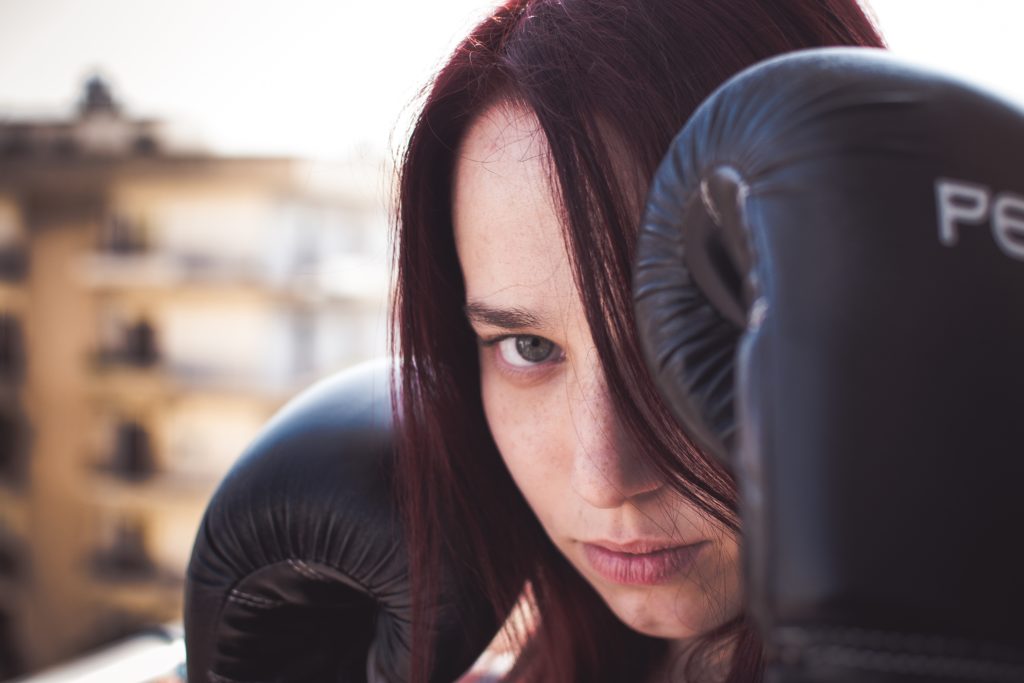
Photo by Jason Blackeye on Unsplash
So, with all these thoughts jostling around in my head, I went to a free self-defense class at the local community center.
The class consisted of about fifteen women, age range high school to 50s. The instructor was a local martial arts teacher and he had female and male students with him to assist. It was a three-hour class.
Two things happened there that I’ll never forget.
The first was learning how to punch. This is not a thing I’ve ever wanted to learn. I don’t have much upper body strength, I know it’s easy to break your hand punching people or things, and I’ve no desire to punch anyone, ever. However, it was part of the class, so I learned. Then the instructor and male assistants filtered through the class, coming to each of us and asking us to punch them in the abdomen.
A large young man, over six feet tall, solid, strong, with hair dyed strawberry red, came and stood toe to toe with me, grinned, and said, “Hit me.”
I looked up into his face. “I don’t want to do this.” (Variations of this statement could be heard all over the room.)
“Go ahead. You won’t hurt me.”
This, I reflected, was probably true. Even if I’d known how to punch, I doubt I could have really hurt him. That wasn’t the thing holding me back.
I was being asked to deliberately, in cold blood, hit a nice young man who might have been my sons’ age or even younger, a stranger, in the stomach with my fist.
In that moment, I began to see the enormity of the disempowerment of women around self-defense and boundaries.
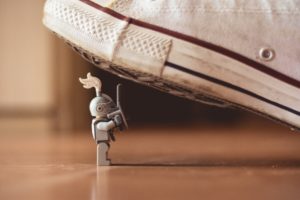
Photo by James Pond on Unsplash
I said to him, “I’ve been hit before, but I’ve never hit anyone else.”
His face darkened. “Then here’s your chance.”
“But it wasn’t you!” I said, on the edge of tears.
He stood there, waiting. I doubled up my fist and hit him.
“Again,” he said.
I did it again.
“Harder! Put your shoulder into it!”
I did it harder. Not as hard as I could, but harder.
“Good.” He stepped in front of the woman next to me.
This was happening all over the room. I saw women in tears. I saw women “hitting” with force that wouldn’t have knocked over a kitten and then apologizing abjectly. Eventually, with a lot of coaxing, most of us tried with at least moderate strength at least once. This single exercise took a large chunk of the total class time and was the hardest part of the whole class for me.
We knew, at the end of the class, there would be an opportunity to role play with one of the assistants or the instructor and demonstrate some of the techniques we’d learned. The instructor spent a lot of time talking to us about situational awareness, body language and the psychology of violent attack, and emphasized making noise in order to create an audience and discourage an attacker. He gave us language to use (WHAT DO YOU WANT?), and demonstrated. It was very clear, and the easiest part of the training — no new moves needed.
When it came time to role play, the instructor asked for volunteers. The nervousness in the room was palpable. Nobody wanted to do it, though there was an agreed upon safe word that would immediately end the role play and the situation was completely contained and controlled.
This is not the sort of thing that intimidates me, so I volunteered first and chose as my attacker the strawberry-haired gentlemen who so kindly encouraged me to hit him! Everyone laughed at this, because he was the biggest assailant I could have chosen. He was very pleased. He’d thought no one would pick him for this part of the class.
I strolled along in the middle of the classroom and he came up behind me and grabbed my shoulder. I turned around and asked him, loudly and aggressively, “WHAT DO YOU WANT?”
He grinned and transferred his grip to my upper arm.
I faced him, got my hands up and yelled into his face, “BACK OFF!”
It wasn’t him I was yelling at, though. It was a whole crowd of other faces, both male and female, people who have hurt me with fists and words, people who have shut me down, shut me up and taught me to be small and silent. I felt like a snarling wolf, a cornered tiger. With those two words, I reclaimed my willingness to self-protect and the power to do so.
I surprised him. He flinched back a little and his grip loosened. The instructor wanted the role play to continue until he felt that each woman had done something that gave her a chance to run. In less than a minute I was back against the wall with the rest of the audience.
One by one, with a lot of encouragement, every woman got up and tried the role play.
Not a single woman was able to use more than a moderately loud voice or any kind of an aggressive tone. They sounded terrified. They sounded weak. Their tone of voice was begging and pleading. The ones who did manage a puny blow or an evasive maneuver apologized to their pseudo attacker even as the attack continued. The instructor prompted, over and over again, “Louder! Shout out! Let us hear you!”
They couldn’t do it. Some even said, “I can’t!”
This assortment of ordinary women with a wide span of ages couldn’t be verbally aggressive with an attacker, even though they had full permission, were encouraged, supported, totally safe, and had my example paving the way.
Are you understanding this? These women couldn’t defend themselves, even verbally. All the guns and knives and skills in the world wouldn’t have helped them.
It boggled my mind.
Ever since that day I’ve been thinking about the power I felt when I yelled, “Back off!”
Ever since that day I’ve been thinking about a culture that silences, shames and disempowers women to the point that so many are unable to protect themselves.
Ever since that day I’ve reclaimed the right to defend myself.

Photo by Timothy Eberly on Unsplash
All content on this site ©2017
Jennifer Rose
except where otherwise noted
by Jenny Rose | Jan 12, 2017 | Authenticity, Emotional Intelligence
This week I’m thinking about labels.
I’m not a fan of labels. They say too much and too little at the same time, and they’re too easy to use imprecisely. Words and definitions matter to me. On the other hand, labels can be useful in that they symbolize a cluster of defining characteristics that have been well enough recognized and described to get labeled in the first place.
At the end of the day, I have a love/hate relationship with labels. I resist taking them on and I resist defining anyone else with them; however, in the course of exploring and reading about our human experience, certain labels have been enormously healing and helpful in my understanding of myself and patterns of behavior I’ve been involved in. I’m proud to carry some labels, even though I rarely talk about them, such as being highly sensitive, as defined by Elaine Aron, PhD. I’m deeply humiliated by other labels, and only reluctantly admit to them, but I know they belong to me whether I admit it or not.
PTSD is a label like that. PTSD is Posttraumatic Stress Disorder. As a young woman, I associated PTSD mostly with Vietnam vets who came home from the war with deep psychic and often physical injuries. Over my lifetime, PTSD has gradually been more commonly recognized and talked about, and the label has expanded to cover all kinds of experiences outside of war. I encounter it regularly, several times each work shift as a medical transcriptionist. Some people are severely affected in their daily lives, and others function very well unless they get triggered.
I grew up actively ignoring my own pain and deeply involved with everyone else’s. I had the idea I was the cause of the pain in those around me and it was up to me to fix it. My own experience wasn’t significant. I also believed it was against the rules for me to have pain in the first place; pain or distress were shameful and weak and had to be concealed and denied at all costs.
This set of beliefs has made me, for most of my adult life, numb to my own distress. I often didn’t recognize pain at all, and automatically employed various coping strategies to deal with it. Sometimes it wasn’t until days or even weeks later I realized dimly I was distressed after a particular conversation or event, and then I felt shame about my distress. This is part of the dynamic that kept me with an abuser for years. I couldn’t really feel emotionally what was happening, even when I tasted blood. There was a disconnect.
At some point it dawned on me that I have PTSD.
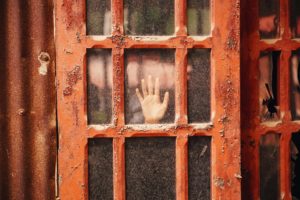
Photo by SHTTEFAN on Unsplash
I was academically injured and emotionally abused as a child in fourth grade math, which happened to be the year I was introduced to story problems. Before and after that time I successfully navigated beginning math, high school math, fractions, geometry, algebra and even a college semester of calculus and did just fine, all the while firmly convinced by the limiting belief that I couldn’t do math. I failed chemistry and physics in college, the first classes I’d ever failed in my life. Why? Story problems. I became suicidal and severely depressed and eventually dropped out of college, never to return.
I got a job, got married, and began an adult life. I dealt with a paycheck, a bank account, a checkbook, bills, budgeting, taxes, credit cards and all the rest with no problem. But I still believed I couldn’t do math, and for years I had recurring nightmares about getting on the wrong bus at school (they were identified by numbers) or forgetting my locker combination.
For me, living with PTSD is like living with hidden landmines. I go about my business feeling competent, efficient and organized, and then — WHAM!
I’ve been two years in Maine now, with a new address and phone. Six months ago, I was making an appointment to get my hair cut and was asked for my phone number (landline, not cell phone). There was a lady behind me, waiting. Another of my triggers. Terrible things happen when you make people wait. The stylist was in front of me, pencil poised, needing to get back to work and deal with other customers. What’s more basic than your phone number, for God’s sake? A 6-year-old can recite her phone number. These days, most 6-year-olds probably have their own phone numbers!
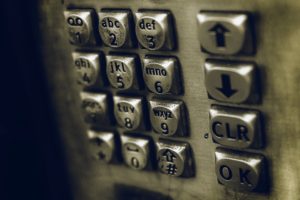
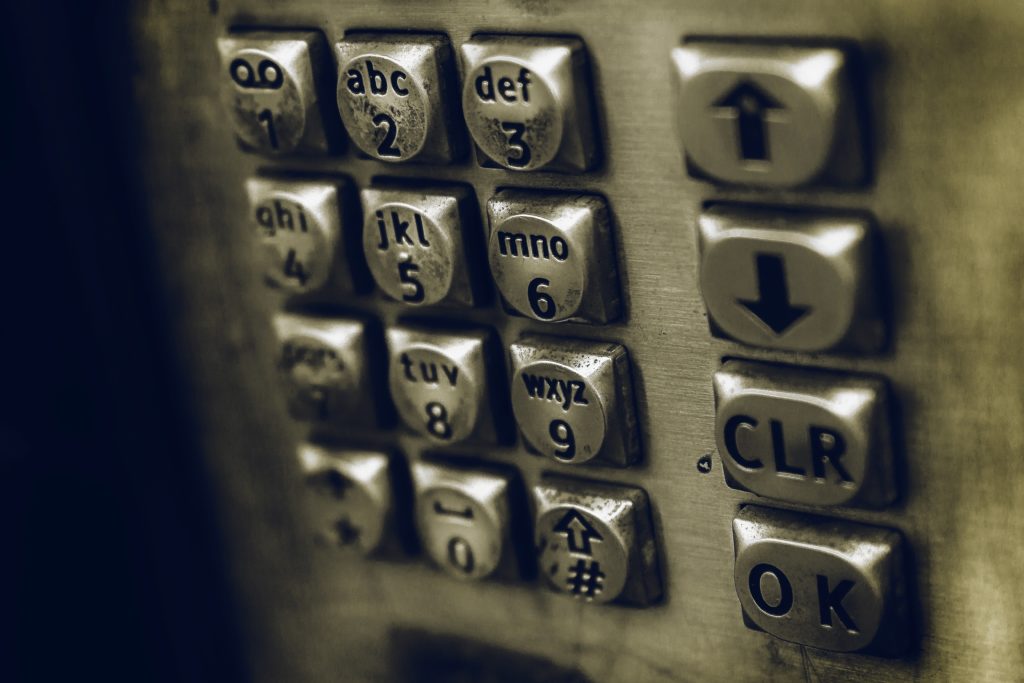
Photo by James Sutton on Unsplash
I was blank. Utterly and completely shut down. Stopped in my tracks. There was nothing in my head but static. I was freezing cold, nailed to the floor, and I don’t think I could have counted from one to ten in that moment. Somewhere deep inside I was screaming, hysterical, panic stricken, and sobbing with shame, but that was happening in another galaxy. My numbers thing had struck again.
Fortunately, I know myself, and unfortunately, this was neither the first nor the last time something like this happened. I went into my wallet and pulled out a piece of paper with my phone number, my address, my birth date, my children’s birth dates, my partner’s phone number and, in disguise, my SS number. I said something about having a new phone number, read it off and got out of there. I sat in the car, shaking, decided I didn’t have to throw up, and went home.
Sitting right here, I know my phone number as well as you know yours, but I’m not under pressure. I also have all the above information pinned onto the bulletin board in my office in the next room, because this can happen when I’m on the phone, too. Someone asks me for my birthday, and that’s it. The lights go out. Total and complete nothingness. I know the month of my birthday because that’s a word, and I love words, but no date, no year.
I’ll write a hundred checks with no problems. Then, one day in a busy store with a line behind me and a hassled cashier, I won’t know the date, not just the numbered date, but the day of the week, the month, the year. It’s just not there. I look at what I’m wearing for clues. I look at the carbon of the last check I wrote, trying to hide that I’m looking. I ask casually what the date is and get the numbered day of the month—but not the month. Somehow, I get through it, but then I’m likely to write the check for the wrong amount because I’m so upset. It doesn’t happen every time, or even most of the time, which is part of the problem. It’s only certain situations, and often I can’t tell what triggered it, so I can’t predict, either. All I can do is be ready and try to deal with my shame and humiliation when it does happen.
It’s on my mind this week because it happened again yesterday.
I work online as a medical transcriptionist and use various software programs for timesheets, recordkeeping and the actual transcription. I’ve been doing this for ten years. As in any job, there are irritating policies and procedures to follow, but I’m familiar with them and I’m extremely meticulous and detail-oriented (no, I did NOT say perfectionistic!), so it’s all in a day’s work.
Except yesterday I realized I somehow made a mistake in my time sheet, and my supervisor was understandably peeved and needed me to fix it. The mistake involved my time sheet, my pay check and my balance of yearly leave hours, all of which, naturally, are represented by numbers. It all conspired in a perfect storm of personal triggers, and I came undone.
Shaking, clammy hands. Hammering heart. Gasping for breath. Trembling legs. Hysterical sobbing. I looked frantically from Leave Request to Timesheet to Records and back again. None of it made sense. I couldn’t even properly recognize a single number. They might as well have been Chinese characters. Punch in, punch out, punch in, punch out — it was like an apocalyptic story problem.
I knew what was happening. I knew I was out of control. I knew I was helpless in the grip of it, and I also knew it would pass.
I got up and left the computer. With my partner, I was able to calm down enough to find language, and talk about it, which helped. Then I ate a big meal. Then I took some music into a quiet part of the house where I wouldn’t be disturbed and danced.
When I went back for my second shift, I looked again, and this time I saw. I knew what my mistake was. It all made sense. I see where I punched in, ran out of work, punched out again. It’s rational, it’s real, it’s verifiable. I’m not crazy. It’s all okay. I know what to do to fix it, but it’s 10:30 in the morning of the next day now and I still haven’t done so. I will. I know I can. But first I wanted to write this and go swimming. I feel a little like I got run over by a truck yesterday, and I still need some recovery time.

Photo by Jeremy Bishop on Unsplash
This is an experience of PTSD behind the label. What I’m trying to do with this week’s post is remind myself and everyone else that labels are cold, dead things that convey intellectual ideas and information. They can be useful, but they’re limited. Behind every label we use, apply or accept, there’s human experience and feelings, and they’re real, visceral, passionate, complex and sometimes painful, even though they may be invisible to an outside eye.
I know PTSD is only a small part of who I am, a mere fraction, a little hairline crack. It’s there. I’ll own it, but I don’t have to allow it to limit me.
But I still believe I can’t do math.
All content on this site ©2017
Jennifer Rose
except where otherwise noted
by Jenny Rose | Jan 5, 2017 | A Flourishing Woman, Minimalism

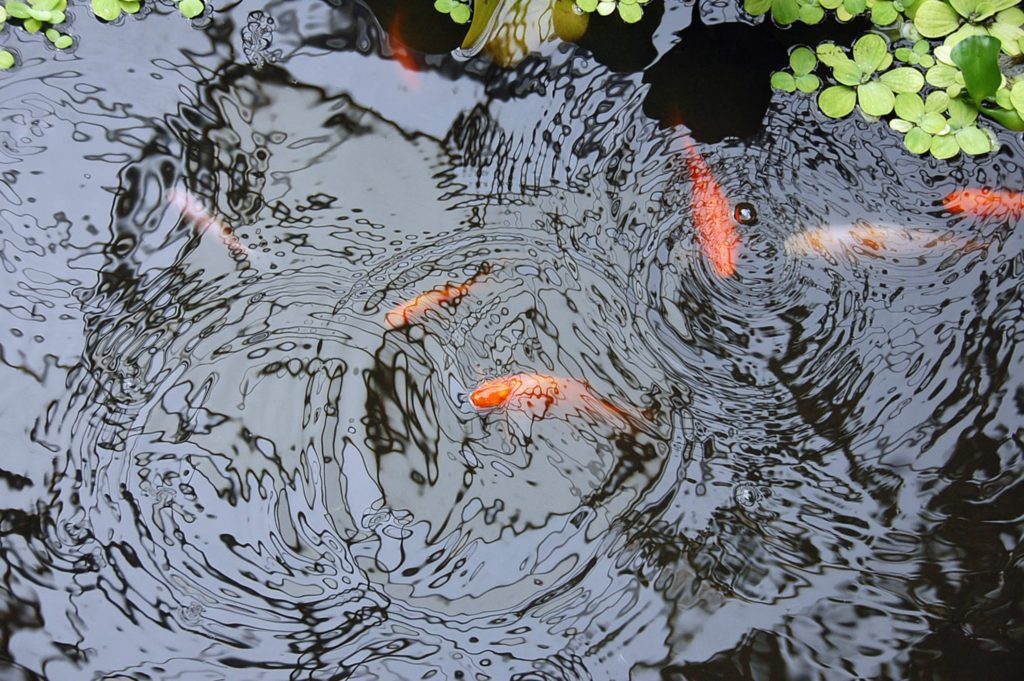
Photo by Maja R. on Unsplash
Every week I spend some time thinking about what I’ll post about. It’s a little like kneeling next to a small pond and trying to catch fish with my bare hands. It’s not that the pond is empty of fish. I have folders and favorites, a tickle file, quotes and poetry and stories enough to blog about for years, but I’ve never been able to write on command, as it were. Every week is the perfectly shaped container for…something. I can’t begin to write until I find the right something, the fish of the right size, weight and color. Each week is different. Each fish is different. As a writer, I come to each week, post and moment slightly different.
Last night I was sitting in my little attic workspace thinking about the week ahead. The holidays are over. The new year begins. Now what? What will I post about , and how will I fit it into the week’s landscape?
It was very quiet. I didn’t have music playing, and I was conscious of the clock on the wall ticking and the scrape, scrape of a snow shovel down in the driveway as my partner continued digging us out from the last snowstorm. I luxuriated in no words.
I control my exposure to the news on TV and radio as well as online, but it’s impossible to miss the typical new year chatter, a glamourized mix of juicy recap and even juicer prediction. It’s so captivating, so provocative and enticing to revisit everything that broke or was lost in 2016 and then, for dessert, to wallow in what might happen next. We can look at pictures and videos, read quotes and statistics and listen, aghast, as talking heads polish their crystal balls with words.
Then we can go onto Twitter or Facebook, or the social media of our choice, and look at more “news,” this time especially tailored to our interests and tastes, all due to the benevolent omniscience of social media algorithms, and find validation and pseudo connection with those who agree with us while bullying and scorning those who don’t.

Photo by Biel Morro on Unsplash
Meanwhile, now slips away, a moment at a time, that elusive interval between past and present, tiny as a thimble, large as the cosmos, and we never see the subtle shimmer of its passing because we’re deafened and blinded, overwhelmed and staggering in the clamor of technology, external racket and internal tumult.
Last night, as I sat, I remembered an old Zen story about an empty cup, and I thought I would look it up. How I could write a post about emptiness and the peace of wordlessness? It’s strange to be a writer and also feel occasionally hostile to the squawking of words.
The new year is a traditional fresh start, and everything I see and hear tells me in order to make a fresh start I should take more on. Ten ways to be more positive, seven foods to eat for better sex, six ways to stop smoking, twelve ways to stick to a workout routine, eight foods to eat for weight loss, twenty must-have beauty products for a new me!
There are people who write and talk about simplifying, unplugging, decluttering and just breathing, but there’s a lot of resistance. Many of us say we want our lives to work better, but when it comes down to actually making it so the sacrifices are too great.
Except on the other side of sacrifice is relief, and freedom and the peace of now. It’s just that we never get there!
So, this year perhaps we could empty our cups, just a little, and make room for sun flood and starlight, for bird trill and laughter. We could empty our cups enough for heartbeat and a deep breath, enough to grow feathers and learn to fly. We could give ourselves space for questions, curiosity and tender new shoots of growth. We could give ourselves room to kiss our own shoulders, take our own hands and listen to the whispering of our hearts.
May your cup have room in it for a joyous new year, my friends.
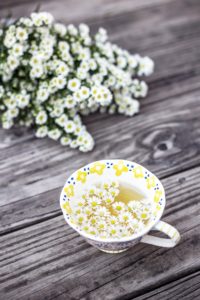
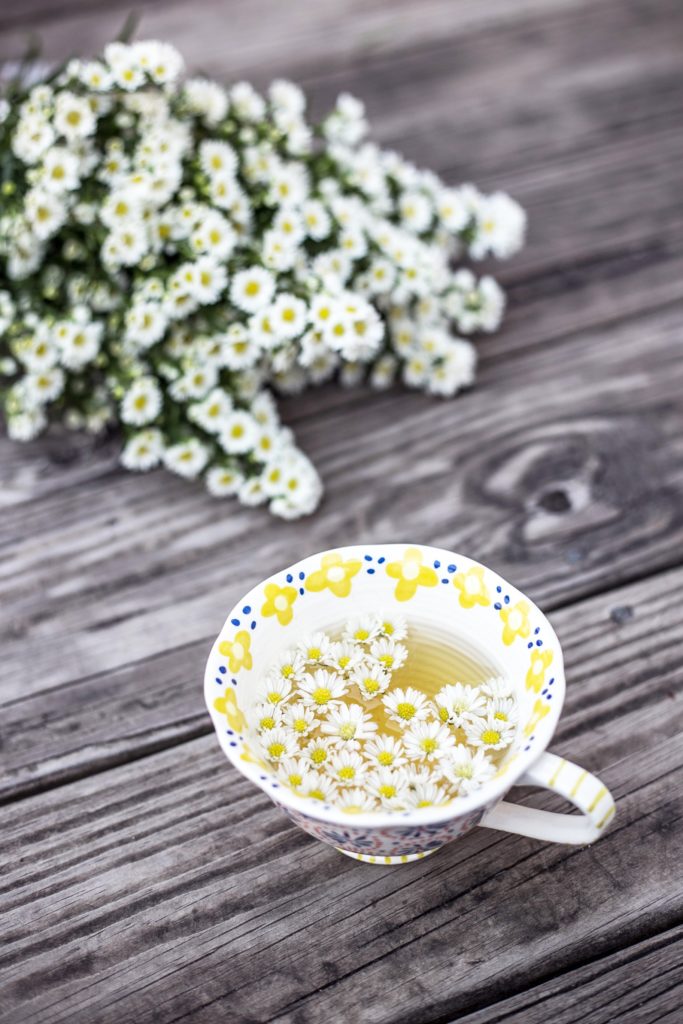
Photo by ORNELLA BINNI on Unsplash
A student came to a renowned master to inquire about Zen. The master served tea, pouring it into the student’s cup. When the cup was full he kept right on pouring, and the tea spilled down the sides of the cup onto the table and the floor.
The student watched in consternation, protesting at last. “Stop! The cup is full! No more will go in!”
“You are like this cup,” said the master. “You’re full. How can I teach you Zen unless you empty your cup?”
(This is a classic Zen story and there are hundreds of versions, both in print and on line. It’s usually titled A Cup Of Tea, or similar. The book in my hand is Zen Flesh Zen Bones, a collection compiled by Paul Reps.)
All content on this site ©2017
Jennifer Rose
except where otherwise noted
by Jenny Rose | Dec 29, 2016 | Connection & Community, Emotional Intelligence, Shadows
Glamour: Enchantment, magic (archaic)
Gaslighting is the manipulation or twisting of information. To be a victim of gaslighting is to be an audience at a magic show where the magician carefully and skillfully distracts and controls our attention and perception. Gaslighting seduces us into believing in a particular reality.

Photo by Jonathan Crews on Unsplash
It’s all fun and games until the glamour doesn’t match our experience and we try to hold two realities. Trying to hold two realities is like being torn in half. In a very short time we feel forced to choose. If we’re in a primary relationship with a gaslighter, we might choose their reality over ours, because we love them. We trust them. We have a history with them, a commitment. We’re loyal to them. We need them. They have power in our lives.
Gaslighting is abuse.
Let that sink in for a minute. To be with a gaslighter is to be with an abuser.
Gaslighting can and does kill people.
Some of us are sitting ducks for gaslighters, because we’ve already been trained to doubt our feelings, thoughts, perceptions and memories. We’ve already been shamed for expressing our experience. We’ve already been silenced. We know we’re damaged, broken, ugly and wrong.
It’s a match made in heaven for a gaslighter.
I use the word glamour because being in the power of a gaslighter is like a magic spell. It’s like a mind-numbing drug. It’s an emotional cancer that gradually saps your strength, your ability to think, your joy and your power. The more you struggle, the more exhausted you become. The harder you try to understand what’s happening, the more confused you are. You fall into a dark pit of madness.

Photo by Travis Bozeman on Unsplash
Think I’m exaggerating? Think I’m dramatic?
Well, lucky you. You’ve never been with a gaslighter, then.
Fortunately, there is a cure. There’s a way to take back our power and our lives from a gaslighter.
We have to turn on the lights. We have to twitch aside the curtains, look behind the props, get close enough to see the greasepaint, the wires, the hidden tools and tricks. We have to go through denial, humiliation, pain and loss. We have to consent to see what’s been happening, and then, just like that, it all dissolves and we realize…
It was all just an illusion, a glamour.
We’re not crazy, after all.
It wasn’t love we were getting (no wonder it didn’t feel like love!). It was gaslighting.

Photo by Nick Karvounis on Unsplash
Here’s an example of gaslighting:
Two single people, Mary and Bob, age somewhere around 45, embark on a committed, monogamous relationship that will endure for eight (long) years.
Both parties have jobs, families and friends, histories and their own homes and activities. Both are financially independent.
Mary’s all about relationship. She thinks of Bob as her primary priority in terms of time and energy and looks forward to spending time with him. She assumes, without really thinking about it, he feels the same way. In order to achieve maximum time together, she tweaks her schedule so she has as much time off as possible when Bob does and refrains from making plans during any time they might have together.
Time goes by and Mary and Bob see movies together, go out for modest meals, take walks and drives, go to art shows and concerts and generally enjoy one another’s company, including the occasional overnight.
Bob works long hours at a stressful job, so Mary is understanding of his needs for time alone on the weekends, and she gladly takes responsibility for planning some dates and time together, including sharing costs.
Very gradually, without really noticing, Mary finds she’s the one doing all the work of planning time together, and she notices what feels like resistance. Bob is late. He’s tired. He has to work on days off. He brings work home. He can’t spend a night together because he’ll be late at work. Or he’ll be going in early for work. Sometimes he doesn’t want to go through with weekend plans at all.
This is hurtful and frightening. Mary is deeply invested in the relationship. She doesn’t want to feel the hurt and disappointment that occurs when Bob breaks a date that she’s looked forward to all week. She becomes less interested in making dates, but, ever hopeful, keeps all her free time open in case Bob should suddenly decide he wants to get together.
One day Bob expresses hurt and disappointment about not getting enough attention from Mary.
Mary is devastated. She loves him, but realizes she hasn’t conveyed it properly. She’s mortified and apologetic, and tells Bob (truthfully) he’s her priority and she’d love to spend more time together. She realizes he’s very sensitive and does everything she can to express love and appreciation for him. She resolves to do better.
Strangely, in spite of what Bob says, he seems less and less available. Mary, knowing how he feels now, tries harder and harder to get it right.
A movie comes out that Mary wants to see. She knows it’s shameful and disloyal, but the idea of taking herself to a movie, sitting where she wants, being in time for the previews and just relaxing is attractive. She doesn’t think Bob would be much interested in the movie anyway, and he hasn’t said a thing about weekend plans. In fact, he hasn’t called her or been in touch all week.
Mary takes herself to the movies and has a great time.
Later, Bob says, “I didn’t say I wasn’t planning on seeing you! Why are you putting words in my mouth?” He’s deeply injured.
Mary’s ashamed. No, he hadn’t said that. She just assumed, since he hadn’t been in touch… Now she can see how hurtful and unfair it was to have assumed. Now she’s wasted an evening she could have spent with Bob. She doesn’t deserve such a good man.
Bob’s heard about that movie and he does want to see it. He insists Mary go with him, and she does, conciliatory.
It’s the least she can do.
Mary, determined to do no more assuming, now begins to ask from time to time, “Are you planning on seeing me this weekend?” She’s already learned that trying to make a date doesn’t work, and she knows if she says she wants to see him he’ll feel pressured.
For some reason, this question, like so many others, causes problems. Mary assures Bob she understands if he wants a weekend to himself, that she’s not trying to pressure him, put him on the spot, or make him responsible for the relationship. She just wants to know so she can make plans if he’ll be doing other things.
Grudgingly, Bob answers, “I’m not planning on not seeing you!”
Mary has a panicked moment of feeling crazy the first time she hears this, and every time thereafter. What does Bob mean? She can’t get it to make sense.
So it goes. Fast forward to the inevitable last day Mary sees Bob.
Mary, with the feeling of stepping off a cliff, looks Bob in the eye and says, “Will I see you sometime?”
He shrugs, grimacing.
Mary gets ready to turn on the lights.
“You’re not planning on seeing me again, and you’re not planning on not seeing me again.” She’s word perfect.
Shrug. Grimace.
“Well,” she says quietly, “I’ll make some good plans for myself, then.”
The lights go up. The curtain comes down. The dazed audience gropes for coats, purses and other belongings. The eight-year-long show is over.

Photo by Peter Lewicki on Unsplash
Mary walks out, feeling permanently maimed but free at last, and spends the next three and a half years putting herself back together. It’s the most painful breakup she’s ever had, far worse than her experience of divorce.
The glamour is broken.
All content on this site ©2016
Jennifer Rose
except where otherwise noted
by Jenny Rose | Dec 22, 2016 | A Flourishing Woman, The Journey
It’s taken me a long time to come in peace to Winter Solstice.

Photo by Aaron Burden on Unsplash
Just a week or two ago, I wrote my mother that I’ve always felt desolate during the Christmas season, but I didn’t know why. I couldn’t say what would make it perfect. Somehow, in nearly fifty Christmases in my memory, I’ve never gotten it right. In the last years, without children or significant other, I’ve always chosen to work and just pretend it wasn’t happening.
This year, quite unexpectedly, is different.
Human beings are strange creatures. We create a winter celebration around the sun’s rhythm. We do fire rituals and tell stories during the shortest day of the year in order to woo the sun back for the next cycle of life and growth.
Then we superimpose a religious festival on top of that old pagan celebration and talk about miracles, new life, humble beginnings, peace, joy, faith, hope and all the rest.
Then we agree the season is really about commercial opportunity. We develop traditions and expectations involving food, drink, parties, decorations, lights and presents. We emphasize giving to others out of our own resources, whether it be money, time or kindness, but we don’t talk about whether we have any resources to give out of.
Then we build it up big with music, movies, stories, a guaranteed ‘vacation’ and a fat man in a red suit, and we throw all these elements together while we drown in advertising that informs us what we must have, what we want and what we must buy to prove our love for others.
We mix this all up with broken and dysfunctional families, loss, poverty, depression, addiction, mental illness, homelessness, hatred, bigotry, late nights, obesity, isolation, obligation, duty, over scheduling, exhaustion, health problems, insomnia, guilt, shame, debt and (in some places) winter weather, smile at strangers and say, “Merry Christmas!” Or, if we want to be politically correct, “Happy Holidays!”
Ho ho ho!
Yikes!
There’s nothing I need from Christmas. For years, I’ve been focused on being alone because I failed in my marriage, financial limitations (another kind of failure), having adult children who are living their own lives (because I taught them to!), and my introversion, which includes being uncomfortable with crowds, noise, stimulation and drinking.
This year, I’m laughing at myself. This year, I realize it’s not that Christmas doesn’t want me. It’s that I don’t want it!
Winter Solstice, however, is a different story. Today is Winter Solstice. I’m sitting in a small two-room second floor space at the top of a steep, uneven staircase in our one almost two hundred-year-old farmhouse. The sun is coming through a pattern of frost on the window behind me and shining on my hands as I type. A crystal hanging in the window throws glinting rainbows over the walls and sloping ceiling. A clock ticks at the head of the stairs. Now and then I hear my partner putting wood in the wood stove, directly below me. These rooms are unheated, but the brick chimney rises up through them and radiates heat all winter. I’ve a garland of twined artificial ivy, red berries and gold fringe, made years ago, hanging from a shelf. I have an old candle lantern somebody gave me with a gold pillar candle in it and another garland of red glass beads and ivy wrapped around it. There’s a simple string of red lights in the other room, where my work station is, and when the early dark comes I plug it in.

Photo by Teddy Kelley on Unsplash
Outside the windows, one looking north and one looking south, are trees; the smooth snow-covered slope down to the pond, punctuated by stalks of last year’s cattails; the two-lane road, covered in a thick layer of ice, salt and sand; and the driveway, covered in a thick layer of ice, wood stove ash and cat litter for traction. Crows enliven the trees around us; the ravens grace the air outside my windows, coming to check for victims of our mouse traps, which my partner throws out on the slope for them; and jays call harshly, forcing the smaller birds away from the bird feeders by the driveway.
This week we’ve had snow, and then on top of the snow we had freezing rain and subzero temperatures. I had to run to the post office to mail a package to my mother for Christmas, and I floated gingerly over the icy road, feeling the tires slip. The patient sleeping trees were backlit by the low sun and every twig, every pine needle, every single stem and blade was coated in sparkling ice, preserved by the polar air. I don’t think I’ve ever seen anything quite so beautiful, and I’ve carried the picture in my mind ever since.
It’s Winter Solstice in central Maine. No tree, no stockings, no pile of presents, no special food or drink. It’s Winter Solstice, and I’m alive. The trees are skimmed with diamonds, the low sun is shining, I’m writing and my hands are comforted by my mug of tea. A lifetime of favorite Christmas music plays from an iTunes playlist I created. I’m quiet. I’m at peace. I’m with two people I love — myself and my partner. I know joy. Later, when I go swimming, the sun will shine in the poolside windows and I’ll swim through sunlit rippled water as I do laps. If the pipes freeze in the kitchen sink again, we can do dishes in the bathtub. If the power goes out I can read by the light of my gold candle.
Tonight, on the longest night, I’ll lie snug in bed in our unheated room. We’ll read for a bit, our hands getting colder and colder as we hold our books in the frigid atmosphere, and then we’ll turn out the light and go to sleep while the house pops and cracks around us in the cold and whoever is moving around in the roof (Squirrel? Chipmunk? Mice? Wood rat?) scratches and scrabbles over our heads.
It’s Winter Solstice, and I wish you peace, and joy, and a still pause in which to be.
The light returns.

Photo by Das Sasha on Unsplash
All content on this site ©2016
Jennifer Rose
except where otherwise noted