by Jenny Rose | Dec 21, 2017 | A Flourishing Woman, The Journey
Yule, the winter solstice, is upon us once again. This year, here in the deeps of darkness, I’m thinking about The Fool’s journey.
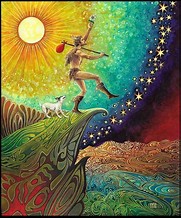
The Fool, by Emily Balivet
The Fool is an archetype, a recurrent symbol in mythology, folklore and story. Jack of Jack and the Beanstalk is a Fool. The Fool shows up as a simpleton, an innocent, one who is ignorant, inexperienced and silly. Archetypes have two sides, shadow and light. In modern culture The Fool has been reduced to its shadow, its most negative attributes, an insult, a curse and a contemptuous label.
But the old tales hint at a deeper, older meaning of the archetype. In fairy tales, The Fool is often the youngest sibling, the least able and powerful character, who nevertheless becomes the only one to successfully complete the task or quest. Often, The Fool has a good heart, or some extraordinary purity of character that allows him/her to be successful. The Fool has faith in magic, in talking birds and beasts, in the advice of old women, in objects given by peddlers at crossroads. To be a fool is to be held in a circle containing everything and nothing, to be without judgement, rules, expectations, cynicism or fear. The Fool is an archetype of youthful energy, bright, glowing and optimistic, filled with hopes and dreams.
Characters of this archetype set out, sometimes exiled or driven from their home, sometimes volunteering to go, with nothing but their shining confidence, intuition and willingness to do a task or find a solution. They rarely have external resource, but carry a great wealth of internal assets, including, interestingly, a kind of innocent cleverness that arises from authenticity and the simplicity of great integrity. The Fool has everything she or he needs in the form of untapped, chaotic potential.
It seems to me we’ve lost sight of the sacred role of The Fool. We kill foolish behavior with punishment, restriction, control, mocking and tribal shaming. We teach our children to avoid playing The Fool by making “good” choices. We avoid looking or feeling like fools. Foolishness is equated with immaturity, irresponsibility and naiveté. We resist being wrong or admitting we made a mistake. Playfulness is no longer a priority.
I see The Fool as an essential first step in The Hero’s journey. It’s where we all start as we undertake any new experience or endeavor. All Heroes start out as Fools, and perhaps all Fools are also Heroes. The Fool archetype creates space in which we learn resilience, strength, courage and creative problem solving. In the gap between The Fool’s happy hopes and dreams and reality is the place where Self is shaped, and the more fully we embrace this archetype, the more of our own potential we realize.

Photo by Dan Gold on Unsplash
That’s what I believe, when I think carefully about it, but that’s not how I show up in the world.
I hate to feel like a fool. Humiliation is one of the most uncomfortable emotions I experience. I dread appearing irresponsible or naïve. I’ve bought into the cultural definition of foolishness equaling stupidity, and I don’t want to be perceived as stupid. I’ve been warned at the beginning of every Fool’s journey I’ve embarked upon with head shaking, patronizing smiles and dire, ominous warnings: “You have no idea how hard marriage is.” “Boy, is your life going to change!” “You’re going to hate it!” “You’ll find out I was right!” “It won’t last.” “Nothing will ever be the same.”
As a parent, I shook my own head, smiled patronizingly and issued warnings. I wanted to protect my sons from “bad” choices, from danger, from illness and injury and from the pain of disillusionment and disappointment, the very things that help us figure out who we are.
The Fool is an archetype precisely because it’s so persistent and present in our lives. It’s our nature to go into the world and explore, seek, complete tasks and engage in quests. I wonder what it would be like if we all framed The Fool’s journey as sacred space, as a necessary and beautiful rite of passage, filled with potential and promise. In that case, revisiting this archetype throughout our lives at any age could be viewed as a chance to refresh our willingness, consent and curiosity about ourselves and what might be possible, a chance to apply the skills we’ve learned in our previous cycles as The Fool rather than stay frozen in bitterness, shame, regret and fear.
It’s true that every new journey is a risk. None of us could have imagined what it would be like to be an adult, to fall in love, to get married, to have children, to move across the country, to get the perfect job, to battle illness or injury, to age. Dire warnings and ominous predictions are pointless and useless as we navigate in our lives. Sincere and simple congratulations from others; faith in our own intuition, intelligence and strength and the experience of unconditional love and belief in our abilities from friends and family is what we need as we push forward in search of new horizons.
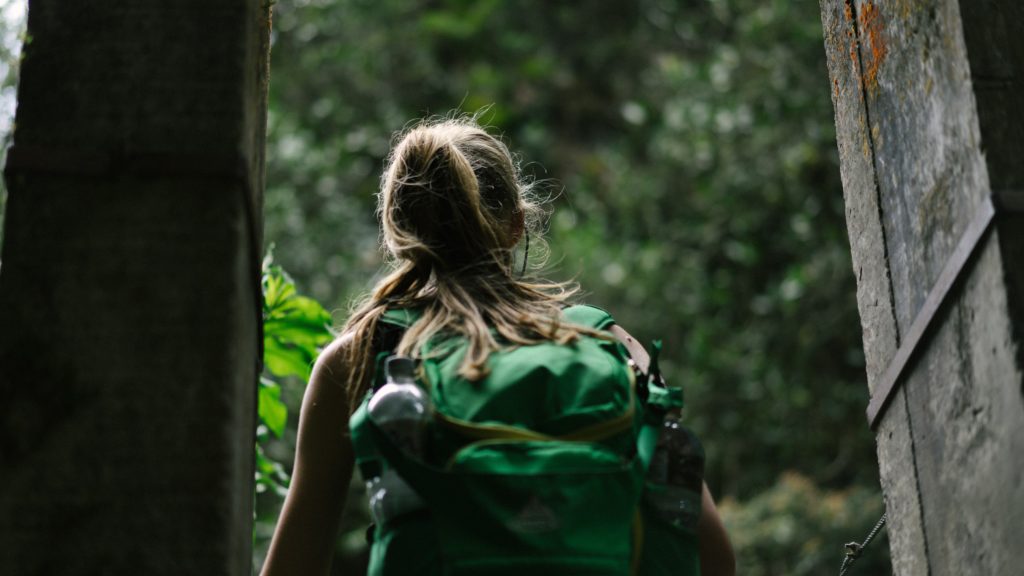
Yule signals the return of the light and new beginnings. We all embark on a new cycle, and none of us knows what it will bring. The Fool is tying together a bundle of food and setting out, following a new road into an unknown place, exploring, perhaps searching for something. Interested, curious, fearless and confident, The Fool walks into the future as the light strengthens once more.

Photo by yatharth roy vibhakar on Unsplash
All content on this site ©2017
Jennifer Rose
except where otherwise noted
by Jenny Rose | Sep 7, 2017 | Connection & Community, Emotional Intelligence
I read a blog post a few days ago titled ‘Romance Ruins Real Love’.
The post reminded me of a conversation I had with an old friend some years ago. She said her favorite part of relationship was the first weeks, when everything is romantic anticipation and excitement. I remember how violently I disagreed with that view, though I didn’t say so to my friend at the time.
I never trust romance, because I don’t equate it with love. Even as a child, I was suspicious of princes on white horses. As an adult, I want a relationship that survives the flu, a broken toilet, a week-long power outage, job loss, poverty, a car accident, a road trip, moving house and painting a room together. Anyone can dress up, buy flowers and make a reservation, given adequate time, money and motivation. Anyone can make love with words. Many can show up for a great night between the sheets. Most of life, however, consists of day-to-day challenges, tasks and unexpected stuff that no one can prepare for, and that’s when we find out what we’re made of, as well as what those around us are made of.

Photo by Jan Phoenix on Unsplash
In spite of all that, I hunger for romance in my life. I always have.
I realized this week I couldn’t come up with a succinct definition of romance. I could write lists of what I find romantic, sensual or sexy, but how do those categories overlap into a central core of what romance actually is? As I sat down to begin this post, I grabbed my Random House College Dictionary and was absolutely shocked at what I found.
Romance: A baseless, fanciful story; a love affair.
Wait, what? What about palpitating bosoms and muscled, shirtless heroes and wine and roses and diamonds? What about bikini waxes and lingerie, high heels, flowers, poetry, songs, movies and messages of love via social media? What about sex?
Is the whole world searching desperately for something that’s not even defined as real? I always thought it was real and attainable. I’ve thought of it as a rare phenomenon, a kind of shining miracle that can’t be bought or captured, coming only to certain remarkable, young, beautiful and deserving people.
I’m ashamed to want romance. It’s not for someone like me, someone flawed, broken, aging, unbeautiful and in many ways unlovable (another of my stories). To dream of romance, to yearn for it, is pitiable and pathetic, and I keep such dreams well hidden, releasing them only in my writing.
I notice all of these thoughts and feelings about romance, all the shame, futility and bitterness associated with one word that means a baseless, fanciful story. Wow.
I paused in writing this post and thought about Random House’s definition for a day. I decided the thing I find most disturbing about this definition is it’s purely subjective. Do we each have a unique baseless, fanciful ideal we’re searching for or trying to create? I’ve written about stories before. If my idea of romance is nothing but a baseless, fanciful story inside my head, it’s not about anybody else. It’s only about me. It’s not something I’ll ever discover out in the real world.
No wonder I haven’t been able to find it!
Huh.
If romance is just another of my stories, then it’s pointless to carry shame around because nobody will participate in my ideal. I’m the only one who can be responsible for my story. Nobody else even knows it, unless I tell it, and this is a private story I’m unwilling to reveal. My story of romance is part of who I am, a piece of vivid and passionate authenticity. It’s what I dance with and write with. I need it. It’s an aspect of myself to be nurtured and cherished, not ignored and denied.
Romance is not about them at all. It never has been. It’s about me.

Photo by Ryan Moreno on Unsplash
This is a place I’ve been before, although this time I’ve followed a different road to get here. When I lived alone in my own home in my old life, I became romantically self-reliant, as it were. I was lonely, but I realize now I was probably the most satisfied romantically I’ve ever been. I burned candles and incense. I bought flowers for myself. I took myself to the movies, to breakfast, out for pizza. I took long, luxurious baths with music and essential oils. I bought my favorite sexy underwear and wore it for my own enjoyment. I gave myself weekends away and night walks to watch the moonrise. I danced naked. I bought art cards I loved and mailed them to myself to mark special anniversaries and days.
Then I came to Maine and began life with my partner, and because I had a man in my life again, I gave up romancing myself. I realized my new relationship is deeper and stronger than romance. I no longer feel lonely. Many of my needs are being met now that have never been met before. Life in central Maine in a 100+-year-old falling-down and leaky farmhouse with very little money is not romantic, however, and my partner is a pragmatic Yankee. He’s about as romantic as a rock. He loves me. I don’t want him to be different, and I recognize he is not equipped to satisfy my hunger for romance.
Well, no. But given the above definition, is anyone? Has my search for romance been in vain because what I long for isn’t out there at all, it’s in here? Was it my responsibility all along?
I say again: Huh!
If I decide to be the best romantic partner I’ve ever had, is that hilarious or creepy?
One thing’s for sure. I won’t have to work very hard to be the best romantic partner I’ve ever had!
Wait, I already am the best romantic partner I ever had, I just took some time off. And now I miss me.
Photo by Roman Kraft on Unsplash
All content on this site ©2017
Jennifer Rose
except where otherwise noted
by Jenny Rose | Aug 3, 2017 | A Flourishing Woman, The Journey
I’ve been blogging now for a year.
Photo by Markus Spiske on Unsplash
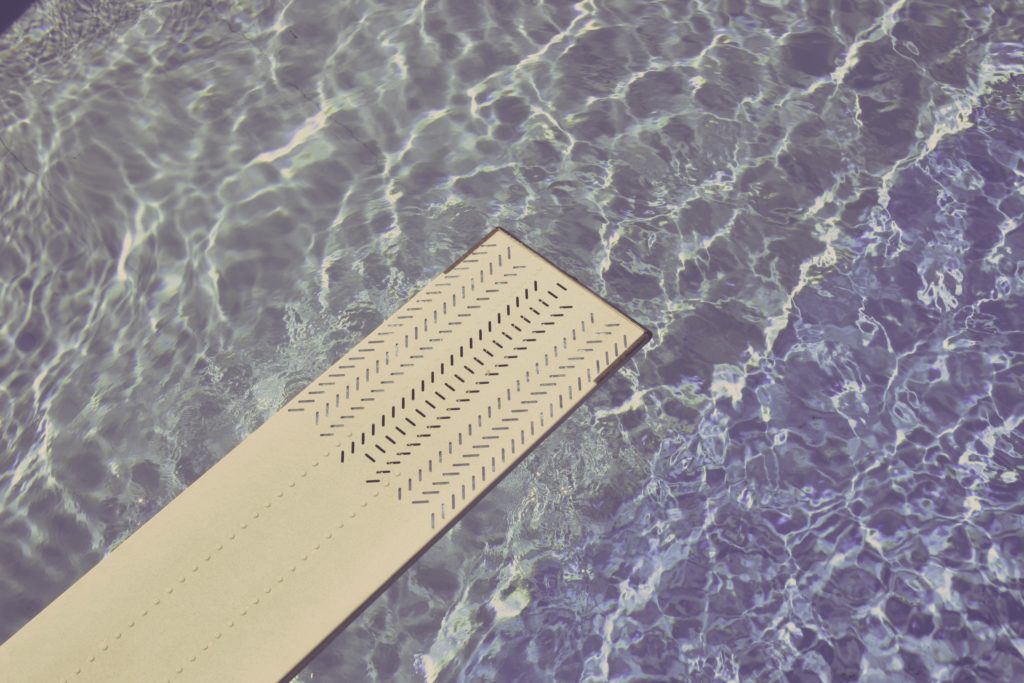
I remember the first time I stood on a high diving board as a kid. The safe haven of the water was impossibly far away. I did eventually jump, but I stood, hesitating, for a long time.
Beginning to blog was like that. Could I manage the technological learning curve? Would I have time to do a good job? Did I have anything to say? Would I have to deal with spammers, hackers, hecklers and hate mail? Would anyone read it? And, the biggest Boogeyman of all, what would people think when I revealed who I really am?
I researched. I read dozens of articles on blogging. I made lists of do’s and don’ts. I bought a book on blogging.
I hesitated. I worried. I doubted myself. I clung to limits, obstacles and fears.
Then, in the middle of a personal and emotional catastrophe, the very last time I would have chosen or planned such a risky, frightening new endeavor, I suddenly started. I suppose I felt I had nothing more to lose.
This summer I’ve been taking stock of what I’ve created, what I’ve learned, my long list of mistakes and my intentions for the future. I’ve been a member of She Writes and Medium. I follow several other bloggers. I went into my Favorites and deleted most of my Blogging folder and then started filling it up again with new articles on Intermediate blogging.
There are hundreds, if not thousands of articles about blogging on the web. What I notice is 19 out of 20 are geared to successful blogging, which is to say blogging with the most possible likes, looks, shares, clicks, referrers, subscribers, advertising and side bar businesses, all of which can translate directly into income for the blogger. The Holy Grail is to go viral with your blog. To this end, the advice is repetitive. Use sentences of five words or less. Use short paragraphs of two or three sentences. Use lots of images, video, bullet points, colors, fonts and section titles. Keep your posts short and to the point. Carefully construct a title that will result in as many clicks as possible. Convince the reader you have something of value they need. Don’t be emotional or personal. You can’t be successful unless you have several active social media accounts.
I read, saved, took a few notes, and then realized I didn’t want to do most of what these articles said I should do. I paused and thought about that for a couple of days. I looked at my stats. I talked with my partner. I groped for a bottom line.
I absolutely love blogging/writing.
Why?
Because when I do it I’m real. Every single week I write about something real. Most weeks I struggle with what other people might think, but at the end of the struggle I again choose to be seen. I stare down that fear of using my voice and speaking up. I’m taking my power back, week by week, post by post, line by line.
Blogging and writing are my way of building bridges and fostering connection, to myself, to others, and to life. It’s the medicine I can offer to aid in healing. It’s my hug, my love letter to the world, my kiss of peace. It’s my outstretched hand, regardless of whether or not others choose to clasp it, ignore it or spit on it.

Photo by Alona Kraft on Unsplash
My feeling of success about writing a book and creating a blog isn’t attached to any of the general markers of success among bloggers. We have all kinds of programs that help us gather statistics on the web, but my heart doesn’t thrill to hundreds of clicks or fall if there are only five. None of these stats tell me anything about the quality of my contribution to my readers, and that’s the only stat that interests me. I don’t have anything to sell you. I don’t assume I have anything of value to you. I never expected to make money on my blog.
I just am. Myself is all I have to give, and what I really want from you is just … you.
I’ve been honored to achieve simple connection with others through Our Daily Crime. Some I know about, because people comment. I may be making other connections that remain invisible to me. Contrary to the best advice, I don’t have social media accounts. I don’t have a Facebook page. If a reader connects with my words or finds some kind of value in the experience I share and doesn’t comment or email me, I don’t know anything about it, but I have faith. I believe there are others out there who think about relationships, empowerment, being a woman, and what it means to be alive on Earth today. I believe there are readers who can deal with sentences more complex than five words and read a paragraph of several sentences. I think a post about rules for success should be titled, clearly and honestly, Rules For Success. I’m not a click bait engineer.
I don’t regret a minute of research or reading I’ve done about writing and blogging, and I wish those writing advice the success they seek. They’ve helped, especially their content that I couldn’t use. All those rules set off a lot of feelings. I hardly ever met a rule I didn’t want to challenge, and my feelings showed me the way into my own definition of success.
I find it useful to have goals and intentions, to know what kind of outcome I want, but the fact is I don’t always know. Some things are so unknown and such a personal leap of courage or faith that to insist on exactly defined goals before beginning is to never take action. Jumping inelegantly off the high dive into blogging was all I could manage last summer. I couldn’t define an audience, a goal or an intention, except that I was damned if I would let fear stop me from trying. It’s only now, 50 posts later, that I begin to understand what I’m up to, and it’s not necessarily the same as what other bloggers are up to.
Here’s my favorite story about success. This version is from One Bird One Stone by Sean Murphy.
For 40 years, a fisherman in China used a straight needle to fish. When someone asked him, “Why don’t you use a bent hook to fish with?” he replied, “You can catch ordinary fish with a bent hook, but I will catch an extraordinary fish with my straight needle.”
Word of this came to the ear of the Emperor, and he went to see this fool of a fisherman for himself. Laughing at the sight of the fisherman’s straight pin, the Emperor asked, “What are you fishing for?”
The fisherman said, “I’m fishing for you, Emperor.”

Photo by Steinar Engeland on Unsplash
Thank you for reading my blog. You’ve helped make it a success.
All content on this site ©2017
Jennifer Rose
except where otherwise noted
by Jenny Rose | Jun 15, 2017 | Authenticity, Emotional Intelligence, Needs
I was absent last week in order to take a trip back to Colorado and finish selling my house. On the road, I thought about my last post and the second part of coming to terms with needs. Discovering, admitting and identifying one’s needs is, alas, just the beginning of what I suspect is a lifelong journey.

Photo by Will Shirley on Unsplash
So, to recap my last post, we all have needs, and we’re all driven by our needs, whether or not we’re aware of them. If we’re not aware of our needs or those of others, great big elephants are standing in the middle of our living rooms, invisible to us until we run into them, or they step on us. Our relationships and lives don’t work well and we have no clue why.
One of the trickiest parts of thinking about needs is taking responsibility for them. If we look at the needs inventory, consent to recognize and admit our needs and make a list of them, it seems logical to begin to evaluate how well our needs are being met by others.
Here’s the thing, though. All the people around us have needs too, some identical to ours and some different. That doesn’t mean we’re responsible to meet all those needs, and they’re also not responsible for meeting our needs.
Newsflash! Having a right to get our needs met and understanding our needs are as important but not more important than everyone else’s doesn’t guarantee our needs will actually be met by … anyone.
This seems unfair to me. Excavating my own needs and acknowledging them, even to myself, was a lot of work. I was annoyed when I realized nobody much cared what my needs are. They’re too concerned with their own! What’s the point of this aspect of emotional intelligence, then?
First of all, it’s about adulting. Grownups know who they are, including understanding what they need. Those of us who aspire to adulthood are required to possess this kind of self-knowledge and accept responsibility for communicating our needs to others, not because anyone has an obligation to meet them, but because we’re willing to know ourselves and allow others to know us, too.
Needs are inextricably enmeshed with boundaries. I have a long history of ineffective boundaries, frequently resulting in me choosing the needs of whoever I was with over my own. Paired with another person with bad boundaries, this quickly becomes an unhealthy, unhappy relationship. One of the words we use to describe such a connection is codependent.
The second point about working with needs is understanding our satisfaction and enjoyment of connection with others is directly related to the degree to which our relationships help us meet our needs. This is complicated by the fact that feeling love for someone doesn’t imply our needs are well met in relationship with that person. For example, media-driven portrayals of romantic love don’t address needs at all outside the realm of sex, and sex is not enough to create sustainable, healthy long-term relationships.
Thirdly, we humans have a great propensity to self-destruct when our needs are not well met. We use strategies like substance addiction, sexual acting out, eating disorders and cutting to manage the painful dysfunction of not getting our needs met. Sadly, the culture focuses on fixing the behavior rather than the cause — the unmet need.
Fourthly, making friends with our needs connects us to our power. When we understand what’s not working in our lives and why, we’re empowered to make better choices on our own behalf and create the kind of life we want. We build boundaries. We learn to be more authentic. We learn to be responsible, which is another way of saying we learn to manage our own power.
Another aspect of needs is that they change. Our needs change as we age, as we grow, as we move through our lives. Not only do needs change, we can be wrong about what we think we need and discover, accidentally, needs we never recognized we had.
I said this was tricky, remember?
Having our needs met is not a black-and-white experience. No one person can meet all their own needs or all the needs of another, no matter how beloved. Expecting any single person to meet all our needs puts an unbearable burden on that person and the relationship. Human beings need healthy community because community helps us all meet most of our needs most of the time.
So how many of our needs must be met for a relationship or a life to be healthy and effective? I don’t think there’s a formula for this. I suspect every case is different, because we’re all unique individuals. We have several core needs in common, but we don’t all need the same things to the same degree.

Photo by Anna Dziubinska on Unsplash
For example, think about noise. I’m very sensitive to noise. Prolonged and unrelieved exposure to traffic, loud music, television, crowds, airplane and car noise or even a beeping alarm unhinges me. First I’m frantic, then I’m exhausted and then I’m ill. I have a primary need to control the noise in my environment. I hate crowds, parties, loud restaurants and cities.
Other people don’t seem to even notice noise levels. Many millions live in cities with a constant background of noise quite happily. I was struck by how many people live along the interstate system as we drove from Maine to Colorado and back again. I couldn’t live beside a freeway for a day without losing my mind. Life would literally not be worth living for me.
If my need for a low-noise environment doesn’t get met, nothing else will work for me. I can’t function in a noisy environment, period.
On the other hand, I’ve always believed order in my environment was also an essential need. I’ve lived in such a way that I’ve controlled housekeeping, cleaning, etc., except for private bedrooms and workspaces romantic partners and children have had. Before I came to Maine, I was sincerely certain I couldn’t live happily in disorder, dust and clutter.
Much to my surprise, chagrin and irritation, I’ve discovered I can, at least temporarily. The old farmhouse my partner and I are living in is falling down and loaded with (to my eyes) junk and clutter, most of it undusted for years. I often feel frustrated and resentful about this. However, our relationship is meeting my needs in ways they’ve never been met before, and getting so many needs met balances out the squalor (my interpretation) in the house.
Managing my needs has become a kind of dance. After much practice, I now maintain a friendly relationship (mostly) with my needs as they ebb and flow. I’ve learned to tell others when my needs are not met without apology or justification, as well as communicate what I need simply and directly. I’ve got some beautiful boundaries in place. I’ve learned to ask others what they need, not because their needs are my responsibility, but because I want to support them in getting their needs met. I’ve let go of expectations that anyone is obligated to meet my needs, but I treasure and nurture those relationships in which my needs are met naturally.
I also have precious people in my life whom I dearly love who don’t meet many of my needs, and that’s okay. Those connections are based on other things. I probably don’t meet many of their needs, either, but it’s not for lack of love and it doesn’t mean anyone is bad or wrong.
Managing needs takes a lot of mess and clutter out of my life. If something’s not working, I notice it right away and a little contemplation leads me quickly to the bottom line — what need is not getting met? Where and how am I feeling disempowered? What can I do to help myself and who do I need to have an honest discussion with?

Photo by Bewakoof.com Official on Unsplash
Taking action when there’s a problem, communicating carefully and authentically and taking responsibility for my own needs invites those around me to do the same. Some people will accept the invitation and some won’t. We can’t control what anyone else does or doesn’t do. However, we can choose which connections to put energy into and which to bless and release, and we can commit to managing our needs effectively and appropriately for our own sake as well as the sake of others.
All content on this site ©2017
Jennifer Rose
except where otherwise noted
by Jenny Rose | Apr 27, 2017 | Connection & Community, Emotional Intelligence
I noticed last week’s post on authentic female power quickly became my most read post to date, perhaps confirming my suspicion about how hungry women are to reclaim real power.
This week, my partner shared a short video clip with me that talks about manufactured consent.
This morning, as we cooked breakfast together, My partner informed me about the new trend of buying dirty jeans at $425 a pair.

Photo by Andrew Loke on Unsplash
As usual, I feel painfully out of step with the culture. I feel angry. I feel lonely. I feel flawed in some deep, irrevocable way because of what I want. I grieve for the loss of connection with what I can touch, smell, taste, look at, hear and be held by.
Yet there was a significant response to last week’s post, which indicates to me I’m not as alone as I feel.
It seems to me we’re increasingly distanced from one another, increasingly divided. The culture says we’re more connected and have access to more information than ever, and in a manner of speaking that’s true. We’re more technologically connected than ever. We’re more connected with word and symbol than ever. In fact, our heightened connectivity is creating new languages of emojis, emoticons, like and dislike buttons, and shortcut language that accommodates the limitations of tweets and texts.
Yet we live in technological enclaves that are every bit as rigid as physical neighborhoods and districts in a city. If, like me, we don’t have a cell phone — well, we’re out of the texting conversation. We’re invisible. We don’t count. We’re silenced. Ditto if we don’t have access to Internet or aren’t on social media, or don’t have an email. If we don’t play on the technological playground, we’re depersonalized and disconnected — literally.
But words, pictures, profiles and emoticons can lie. Language includes communication that only occurs with physical presence. Without physical presence, we can’t discern lies from truth. Our power is so damaged we routinely swallow just about everything the culture, media, advertising and our “friends” tells us.
For example, professional women can’t succeed if they don’t adhere to social standards of businesslike attire, clothing and makeup. If you don’t believe me, look it up on any of your tech devices. It’s not hard to find this “fact,” both directly stated and implied. Let me just repeat that, to make sure you got it.
If we’re a woman who doesn’t buy and use makeup, we can’t succeed in the business world. Everybody says so. Everybody believes it. Everybody makes it true by enforcing it each and every day with words, buying choices, advertising, blogs and articles, all courtesy of technological connectivity and manufactured consent. In 2015, the United States was considered the most valuable beauty and personal care market in the world, with a market value of 80 billion dollars.
I’d say that’s pretty successful manufactured consent, wouldn’t you? Pat yourself on the back if you wear makeup, because your hard-earned money is somewhere in that 80 billion dollars. Well done. Do you feel successful and powerful now? Someone does.
If we’re on Facebook, we have friends, a community, a popular vote of “likes.” We don’t have to deal with morning breath, a wet spot on the mattress, different schedules and rhythms, dirty bathrooms, greasy stoves, or any of the small idiosyncrasies and habits real people have. We don’t have to reveal our physical bodies, our insecurities and our wounds. The worst rejection we risk is being blocked or unfriended. We don’t have to learn how to accept, live with and perhaps even appreciate (perish the thought!) different points of view or opinions. We don’t have to be challenged, stretched, or have our dearest beliefs threatened.
Pressing a button is so much easier than all the messy consequences of authentic connection.

Photo by Alessio Lin on Unsplash
We never have to risk being real at a technological remove. No one can blow our cover. We never have to face ourselves; take responsibility for our words, views or choices; or endure the difference between the way we wish to be and the way others actually experience us. Or, alternatively, we can come out of hiding, feel safe behind the screen, and finally allow all our hate and rage off the leash.
Our culture tells us power and success equal carefully constructed pseudo self profiles, the latest technological gadgets, social media accounts, likes, followers and “friends.”
The culture teaches that power and success are achieved by buying things and the possession of money. Now there’s a circular game of empty addiction we can never win and sellers never lose!
Power and success are ours if we participate fully in manufactured consent. Would anyone like to buy a pair of dirty jeans? Guaranteed power and success!
Yet how many of us truly feel powerful and successful? Are we there yet? If we’re not there, we will be after we buy just one more thing, right? Or perhaps we need to make just a little more money, or lose a little more weight, or finally find the “right” mate.
If we’re well connected technologically, our needs are all met, yes? We have a tribe, a community in which to laugh, cry, celebrate, mourn and share our authentic selves. We have physical reassurance and bonding. Our relationships are based on authenticity, reciprocity and respect. We feel seen, heard and known.

Photo by freddie marriage on Unsplash
I don’t think so. I don’t think tech meets all our needs for authentic connection. I think it more often swallows us up and absorbs us. It’s a toxic mimic for the real thing, more controllable and less risky, and we the sheeple have been groomed to buy every toy that’s put in front of us. We’ve forgotten to look up and notice there’s another human being in the room, in the bed or at the table. That’s the power of manufactured consent.
It doesn’t surprise me that Baba Yaga spoke to so many last week. We’ve sterilized what she represents right out of our modern culture. All her outrageous, provocative, profane, rebellious, insubordinate, irreverent, passionate, authentic attributes have been pushed underground, where her spirit lurks, watching, cackling, stirring her cauldron, sucking on bones and waiting for us to remember her and summon authentic power and connection again.
Authentic connection has a scent of living tissue and breath. It’s texture and heartbeat. It communicates with word, action, and the silent language of the body. It doesn’t allow us to shut our eyes, stop our ears or press a button and dismiss uncomfortable tension.
Authentic connection reveals us to ourselves and to others. It isn’t muffled, sterilized or distorted by keyboard or touchpad. It’s defined by visible action and choice. It demands priority and time. It requires real participation, with heart, body and presence. Authentic connection makes us weep. It makes us bleed. It makes us laugh. It awakens our rage. It heals us and makes us whole. It’s messy, unpredictable, confusing, demanding, imperfect, and reminds us at every turn of the limits of our power. It forces us to communicate and then holds us accountable for what we say — and what we don’t.
Most of all, authentic connection is not something we can buy — ever. No one and nothing can give it to us. Our only access to it is through ourselves. We’re a nation of prostitutes, viewing, clicking, scrolling, buying and surfing, but the only ones profiting are the pimps who cash in on our hunger for something real and our addiction to everything not-real.
Yet Baba Yaga is on the move, sowing seeds of divine rebellion into the cancer of manufactured consent and patriarchy, deprogramming one woman at a time. Even now she’s flying on the spring wind in her mortar, using a pestle as a rudder, searching for all those women who long for something real.
Searching for me.
My daily crime.
All content on this site ©2017
Jennifer Rose
except where otherwise noted