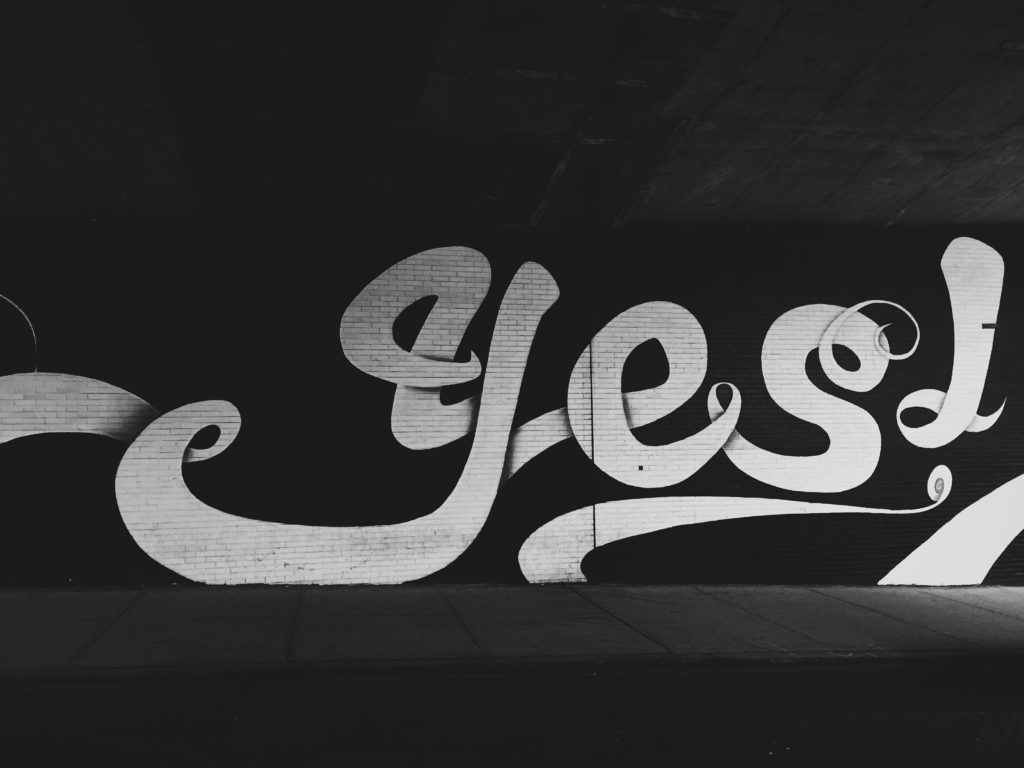
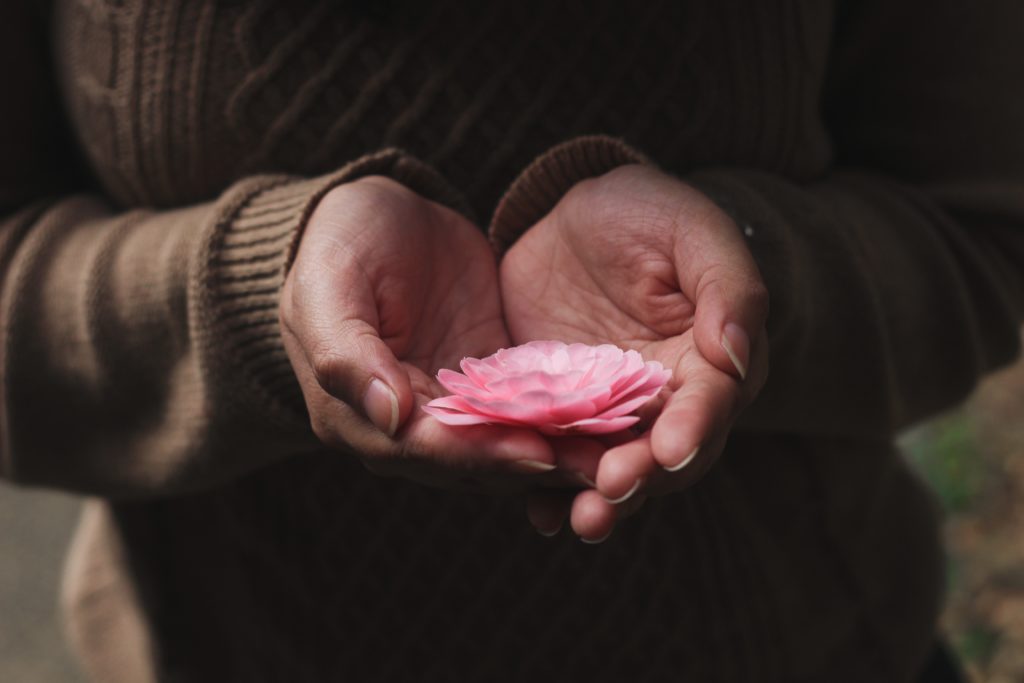
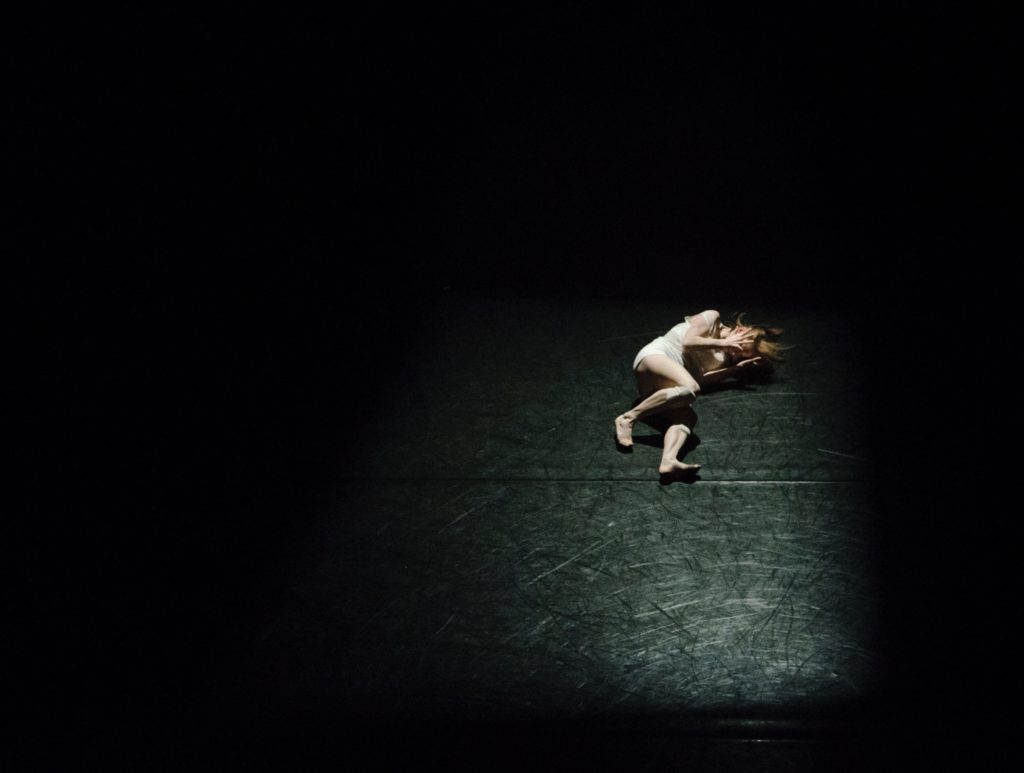
One of my favorite things about life is that changing one subtle thread in the pattern of our behavior and identity can change the whole picture in unexpected but beautiful ways. The overculture promises such a transformation if we buy the right product, but that’s a hollow promise. If we really want change, we have to work internally, which is messy, confusing work, often filled with anguish — much less sexy and fun than buying a new pair of shoes or trying a different hair color.
Photo by John Salvino on Unsplash
As I navigate through the process of submitting my first book manuscript to agents and publishers, the necessity to write a strong and appropriate query letter, synopsis, autobiography, and pitch has forced me to come further out of hiding than I ever have before.
While sitting on the lifeguard stand at work last week, it occurred to me that one word sums up the change spurred by my creative ambitions and rippling into all areas of my life.
Responsibility.
This is an amusing twist of irony because I have always been overly responsible about everyone and everything other than myself. I’ve believed myself responsible for the health and happiness of every person and animal around me since I was a child. When things become challenging or unpleasant, I’ve blamed myself. When accidents and misunderstandings occur, I’ve blamed myself. When others make self-destructive or boneheaded choices, I’ve blamed myself.
It goes without saying I’ve certainly blamed myself for all my own real and imagined flaws, weaknesses, mistakes, blue eyes, wide hips, wild hair, cellulite and countless other things.
Photo by Cristian Newman on Unsplash
Futility doesn’t begin to describe the kind of life this behavior creates.
The literary submission process was not the only catalyst prompting me to reverse my old pattern of taking on responsibility that doesn’t belong to me and ignoring that which does, but it’s certainly a big one.
I’ve been so uncomfortable with trying to present my creative work in a professional, objective, supportive, respectful manner I haven’t had the time or attention to sit back and view the last two or three weeks with any kind of objectivity, but that particular hour of lifeguarding gave me the pause I needed to see the changing pattern of several different areas in my life.
In my primary relationship I’m gradually becoming more authentic and less concerned about taking responsibility for the needs, wants and preferences of my partner. He’s a grown man, intelligent and able to speak for and take care of himself. He’s also able to adapt, adjust and take his lumps like everyone else. It’s not my job in life to see to it that he (or anyone else) is never uncomfortable. I’m uncomfortable all the time, and I manage to live through it.
Letting go of what I was never responsible for in the first place is an enormous relief, but the truth is I’ve always preferred caring for others to caring for myself. It’s not that I don’t know who I am and what I want. I’m not a bit confused about that. Since I came to Maine, I’ve learned to know and love myself.
Photo by Travis Bozeman on Unsplash
What keeps me caring for others rather than myself is the belief that I’m the only person who can love me. Choosing to be more open and real about my own needs, wants and preferences, even though they might conflict (and often do) with those around me, seems like a life-and-death risk. Even sitting here writing about It gives me a sick feeling in the pit of my stomach. I don’t want to be responsible for myself in this way.
I have a friend who frequently invites me on activities and play dates of all kinds. At least half the time I say no. I cringe when I say it. I worry. I brace myself for the end of our friendship every time. But no is the honest answer — the real me. I’m an introvert. I like nothing so much as a quiet day or evening at home. My few social needs are well met, and I have no desire to be out and about in the world more than I already am. My friend and our relationship deserve my honesty …
See? There it is again. My friend and our relationship deserve my honesty, as do I, and that means I must take responsibility for my truths: knowing them, speaking them, and accepting others will inevitably be affected by them.
I don’t want the responsibility of making anyone uncomfortable or unhappy. Ever. Under any circumstances. (Well, unless I’m really pissed off, like when the fat, white, bigoted, entitled guy at the pool announced during an exercise class that people with tattoos don’t have jobs and he wouldn’t have any such person in his house. Note: I have a tattoo on my left shoulder that’s quite obvious in my bathing suit, which is my work attire (you know, for my job), and I was present at the time. Also, two of my colleagues have tattoos, clearly visible in their bathing suits, not to mention many of our patrons are tattooed. Fortunately, I’m able to be professional and keep my obnoxious opinions to myself in public. Unlike some people I could name.)
One of the greatest gifts of my current relationships is how often I’m forced to be authentic and speak my truth. I’m getting a lot of practice in assuming those I interact with are adults who can deal with their feelings about my choices (I’m talking to you, fat, white, bigoted, entitled guy), just as I deal with my feelings about theirs. If others are not adults and refuse to take responsibility for their own feelings, well that’s not really about me at all, and those are not the kind of relationships I’m available for.
Suddenly, everywhere I look, I’m watching myself openly say yes or no, ask for what I want and/or need, state my feelings and preferences without apology or justification, and present my creative work with pride, love and belief in its value.
When I reread this, I smile. It sounds so smooth! It’s not, though. I feel a lot of anxiety as I come out from under cover. Challenging these old patterns gives me a greasy feeling of imminent doom. How can I expect anyone to love or even tolerate me if I insist on being a real person with needs and preferences? How can I admit openly what I think, feel, need and create?
No, it’s not smooth. It’s terrifying and exhausting.
It’s also exhilarating and freeing. Life is a lot easier when I give up taking care of anyone but myself. One of the great gifts of aging has been my gradual journey from a people-pleasing shell to sensual creativity, warty wisdom and vigorous connection to my own power and intuition.
This week I’ve spent hours working on finalizing a query letter for publishers and literary agents, as well as shaping a 1-2-page synopsis of my first manuscript.
Photo by Angelina Litvin on Unsplash
I approached this task in my usual methodical way. I researched writing queries and synopses.
As so often happens, I found lots of advice, much of it conflicting.
I took notes, bookmarked sites and started rough drafts. My research mode doesn’t usually last more than an hour or two. At the point when much of what I’m finding is repetitive and I feel more bored than interested I know it’s time to switch to writing, no matter how tentatively or sloppily. One can’t begin editing and refining unless there are words on the page.
Out of all the templates, formulas, critiques and examples of “successful” queries and synopses, one shining question stood out, and I didn’t find it on a search. I found it on a literary agency website. “Tell us why you were the one who had to write this book.”
I realize this question is the opposite of my usual frame, no matter what I’m doing. My conviction of my own inadequacy and that others will invariably be disappointed in me means I’m focused on all the reasons why I’m not qualified to write a book — or do almost anything else. What makes the submission task so daunting is coming up with a realistic, concise, clear evaluation and presentation of my creative work — and I’m extremely resistant to trying.
Yet the hardest work of the query has actually been going on for months, or even years, as I wrote, edited, rewrote, re-edited, and nurtured a tentative, almost shameful feeling of accomplishment, satisfaction and amazement that I actually wrote a book — a long one!
Thinking about why I had to be the one to write The Hanged Manturns me away from all the things I’m not and asks me for what I am.
I have little confidence in anyone else finding my work valuable, but the fact is I find it — and myself — valuable, so I can write about that. I can speak for myself and my vision. I cringe when I’m asked to write a short biography, but I can write about why I’m the one who had to write this book.
Photo by freddie marriage on Unsplash
As I began to answer that question, writing the query suddenly got easier. I was able to evaluate my creation more clearly, and find a comfortable balance between overconfidence and no confidence at all. I stopped worrying about never being published before, winning no contests or awards, and receiving no formal or traditional higher education for writing, and started thinking about all the reasons why I, and only I, had to write this particular piece of work.
It made a nice change.
Obviously, I want to get published, but I wonder if the submission process itself is not the biggest payoff for me, regardless of the outcome. The necessity to stand up, speak up, support and believe in myself in order to be the writer I am drives me to push myself in ways that nothing else could, because nothing else is as important to me. It would be much easier to coast along with my old paradigm: I’m no good, and neither is anything I think, say, make or do. It’s my familiar story, and I feel anxious when I think about rewriting it.
I notice this tension between believing in myself and having no confidence in myself at work, too. I watch a colleague teach a water exercise class and admire the way he structures the class and his manner with the class participants. I think about the next time I’ll be teaching that class, and how I’m so much less than my coworker. I prepare and worry, knowing I won’t measure up, knowing the class would rather have another teacher, knowing I won’t do it right.
Then I get into the water, stop thinking and anticipating, assess the participants and their physical and social needs, and off we go. I have a good time. I feel calm and competent. I stop fearing I’m not good enough and give it my best. By the time the class is over, I wonder what all my fuss was about.
Why am I the one who had to write this book? Why am I the one who has to teach a class on any given day?
Maybe simply because I’m the one who did write it, and teach it. Maybe I was engaging with those activities because I was the best one for that particular job.
“Why can’t you be like …?”
Others have asked me that question, but not as often as I’ve asked it of myself.
Photo by Ivan Jevtic on Unsplash
I can’t be like all the other wonderful, competent, gifted, beautiful people in the world because I’m not them. I can’t follow their paths. Their definition of success may not be the same as mine. I can’t look like them, teach like them, write like them or make choices the way they do.
The piece I never think about is that they can’t be like me, either. Because they’re not me.
We can learn from each other. We can support each other. We can tear each other down. At the end of the day, though, we can only be ourselves. Everyone else is taken.
I have a query letter I feel good about now. I followed traditional conventions and standards for such a letter — to a point. But I also let my own voice and style shine through. No one but me could have written the query or the manuscript accompanying it. The day I finished the query I submitted to my first agent. The next agent I want to approach requires a synopsis and a query letter.
Sigh. Back to the drawing board. This time for a synopsis only I can write.
For the most part, I love living the life I have. I don’t find myself or my writing either inadequate or disappointing. Maybe an agent and publisher out there will agree with me.
I’ll never know if I don’t try.
And I’ll find my own path through the query and submission process, a path only I can make.
One of my first posts on this blog was about saying no . As I learned emotional intelligence and began applying it to my life, I started to understand how imprisoned I’d been by my inability to say no.
Photo by John Salvino on Unsplash
In the interests of full disclosure, let me report saying no in the context of long-term relationships in which I’ve never said it before has resulted in unforeseen heartache and grief. I rejoice in reclaiming my power and authenticity, but some of my nearest and dearest are not celebrating my growth and healing, and connections I thought were unbreakable have, in fact, broken.
These days, I immediately exit any relationship in which my no is consistently ignored. At this point in my life I’m not interested in connection, intimate, workplace or social, in which no is not an acceptable answer.
In my experience, people who refuse to accept the answer no fall into two camps. The first camp is the controllers. Their goal is power. They view anyone with the ability to say no as an insult and a threat, and immediately react in the form of intimidation, emotional meltdowns, rage, manipulation and constant pressure to change the no to a yes.
The second camp is those who can’t say no themselves and are infuriated by those who can. Their goal is to undermine the power of others so they feel better about their own disempowered state. They’ve stored up years of resentment around all the times they said yes when they wanted to say no, resentment which they vomit up at once if someone says no to them. They throw around words like “duty,” “responsibility,” “loyalty” and “obligation.” No is a personal rejection, an abandonment and a cruel betrayal. They frequently have all kinds of expectations of others. They use the weapon of shame.
These camps can and do overlap, but there’s no mistaking the resistance to no.
I confess it still stuns me that long-term primary relationships have fallen down and died right in front of me because I said no. I’ve even checked out my perception, disbelieving my own experience and the words I was hearing.
“So, from your point of view, me saying no is unforgiveable?”
“Yes, it’s unforgiveable.”
So far, I am still unforgiven, because I stood by my no.
Unbelievable.
I ask myself if it’s possible I’ve never said no in the context of these relationships before. It seems unlikely. Perhaps I’ve just never said it about anything that mattered to the other party? I resolved to mindfully practice saying no, and also to observe carefully the effects of such a response.
I immediately discovered the effects of saying no on me included panic attacks, anxiety, PTSD and extreme stress. All my life interactions with others have consisted of “reading” them in order to please. Any question they might ask was answered in whatever way I thought they most wanted to hear.
Effectively, every question was a test. If I passed the test, my reward was knowing I had pleased and was temporarily safe and tolerated. If I failed, which usually meant I had forgotten myself and answered honestly, the consequence was displeasure, abuse, guilt and shame and/or (worst of all) some kind of a scene.
Photo by Joshua Fuller on Unsplash
Learning to say yes or no based on my own desires meant finding and reclaiming myself, my needs, my authenticity and my power, and trying to ignore what I knew others wanted from me. Saying yes or no became a test of my own courage and honesty, as well as a test of faith and trust in those close to me.
I could hear no from them. Could they hear it from me?
This has been some of the hardest work I’ve ever done.
I’ve been reading an important book: The Gift of Fear by Gavin de Becker. Every woman in the world would benefit from reading this lifesaving and validating book. Here, too, is a discussion of the universally important red flag of refusing to accept no.
We are shaped by our culture, and in this culture women are taught to be cooperative and accommodating. Men are taught to be persistent. These behaviors are deeply embedded and reinforced in our media, entertainment and arts.
Women are not taught to say a simple, assertive, direct no and stick to it. We weaken our no with explanation, justification, mistrust of our own instincts and the desire to not make a scene, be unkind or hurt or embarrass anyone.
The instant a woman allows her no to be negotiated, she has handed her power over and sent a clear message that she’s prepared to be a victim. Strangers, family members, friends and colleagues who decline to hear no are either seeking control or refusing to give it up.
Sadly, the willingness to say no will not protect us. We may still be murdered, raped and otherwise abused, but the ability to recognize a danger signal like not accepting no for an answer is an important survival skill that can help us avoid violence before the worst happens.
Ultimately, no is about boundaries. No matter how cherished a relationship may be, it’s not healthy if we’re not free to honestly say yes or no. Those who consistently violate our boundaries or punish us for having them in the first place are those who have benefitted the most from us having none in the past.
I value my power to say yes or no far more than any object, possession, sum of money or relationship. The complete sentences of yes or no allow me to maintain my integrity and authenticity, support appropriate boundaries and contribute everything I am.
I was recently introduced to Havening. I’d never heard the term before, but I was intrigued by a brief explanation that Havening is a neuroscientific tool to assist in repairing emotional trauma. I looked at a couple of links and was so interested I tried the technique myself, just to see what would happen.
The human brain’s structure, function and capability are still a mystery to us in many ways. The brain does appear to be highly plastic; that is, we learn, we unlearn and we can develop new neural pathways and rehabilitate, to a greater or lesser degree, some kinds of physical traumatic brain injury as well as emotional trauma. We obviously treat some brain-based dysfunctions by pharmacological means, in the form of prescription drugs or self-medication via alcohol, nicotine and illicit substances.
Photo by freestocks.org on Unsplash
In our current culture of emotional illiteracy, sometimes the only way we know to mitigate our emotional pain is to numb out or distract. Relieving our symptoms, however, doesn’t address the root cause of our difficulty, it only covers it up for a time. Havening is a tool that allows us to address the source of our trauma and pain without chemical substances or the need for specialized (and expensive) treatment. It empowers us, the experts on our wounds and broken places, to become our own healers.
Nowhere on the Havening website or in the video is there mention of us giving our consent to the possibility that we can change, grow and heal. However, that is in fact the first step. I have observed, in myself and others, that sometimes we become so deeply invested in our pain and limiting beliefs we’re really not willing to heal and change. We say we are. We say we want to feel better, but when it’s time to do the work of exploration, excavation and learning to make different choices in managing our thoughts and feelings, we don’t. We’re not willing to be wrong, let go of our grievances and stories, practice forgiveness and give up the satisfaction of shaming and blaming others.
Photo by Jon Tyson on Unsplash
I suspect Havening is a waste of time for those who approach it unwillingly, just as more traditional therapies are a waste of time (and money) if we’re only going through the motions.
Assuming we consent to give Havening a chance, the technique requires us to sit with ourselves in a quiet, safe place and deliberately bring to mind a single difficult memory or event. Rather than running away from our feelings, we intentionally recreate and recall them in all their vivid intensity, and as we do so we notice how our bodies process and express our difficult feelings. When we have re-experienced, as fully as possible, the feelings around our memory or event, we begin to lightly stroke or rub our arms, self-soothing with our own touch and presence. Still stroking our arms, we close our eyes and visualize walking along a beach, counting slowly to 20. Still stroking our arms, we open our eyes and, without moving our heads, look to the left, then the right, then the left. We don’t have to do this quickly or with strain. We practice this lateral gaze, combined with stroking our arms, for a minute or two, then close our eyes and visualize walking through a summer meadow, counting slowly to 20 again. We follow that with the lateral gaze for a couple of minutes, all the while still stroking our arms. The third and last visualization is of walking down a staircase, combined with arm stroking and counting slowly to 20. We follow that with practicing the lateral gaze for a couple more minutes.
Photo by Ryan Moreno on Unsplash
At the end of this series of steps, we relax and intentionally probe the memory we started with. We notice how our bodies feel and what our feelings are compared to when we started.
I know from emotional intelligence training experiencing our feelings fully and completely is the best way to allow them to move through us and dissipate, but I frequently feel so overwhelmed by the intensity of my emotions that I’m afraid to do that. Sometimes I think if I start crying, or expressing rage, I’ll never be able to stop; I’ll fall over some invisible edge of self-control into permanent madness and chaos. Havening is enormously useful for me because it gives me a safety net to fall into. No matter how strong my feelings are about a specific memory or event, I know I’m going to be able to successfully help myself calm down and feel better immediately. I don’t need to wince away or try to minimize my feeling experience.
I’ve spent much of my life starved for loving touch. I’m not talking about sex here. I’m talking about skin to skin touch that says “I’m here. I care about you. You’re safe with me.” In times of high stress and upset, I frequently wrap my arms around myself, the closest I can get to getting a hug. Havening provides the physical comfort of touch, which we know can calm stress and produces serotonin, a natural chemical our brains make that gives us a feeling of well-being.
Photo by Liane Metzler on Unsplash
Anyone who meditates or has done Lamaze breathing for childbirth knows when we focus on breathing or a mantra our minds learn to be quiet. The three visualizations used in Havening, combined with self-touch and counting, immediately distract from the intensity of our emotional pain, as does practicing the lateral gaze. We rarely use our eyes to look laterally without moving our heads, and to intentionally and repetitively do so takes focus.
The purpose of this specific set of steps is to “rewire” a neural pathway caused by emotional damage or trauma. The links in the first paragraph explain the science and neurology behind this better than I can, so I won’t reiterate. What I will say is, somewhat to my astonishment, I noticed a sharp decrease in the emotional pain surrounding a memory the very first time I tried Havening. I didn’t lose the memory, but it was no longer attached to such an intense emotional reaction. I could think of it and remain physically relaxed and centered. I could see it more objectively. I could say, “Yes, that happened. It hurt me, but now it’s over.” Overwhelming unpleasant feelings were no longer connected to the memory.
As I practice Havening, I notice a couple of interesting things. The first is that the memories that give me the most trouble are small. A single phrase that broke my heart and irrevocably changed everything. A memory of no words at all, just someone else’s strong emotion. I use Havening to address my most private mental slideshow, where each slide is a single small period of time; a single scene, rich in sensory detail; a single moment of terrible clarity and revelation. I marvel at the power of these small pieces to shape our lives so profoundly. I never think of Havening around divorce and break-ups or even deaths. Those obvious upheavals are not the events in my life that have had the most power.
Photo by Ludde Lorentz on Unsplash
The second thing I notice is how my visualizations are changing. The first time I did Havening, I followed the cues in the video exactly. I had no plan to elaborate on the three visualizations. As I’ve made a practice of the technique, though, my visualizations are becoming more and more vivid and sensual. I imagine walking hand-in-hand with someone. I imagine the feel of the sun, the sound of the sea, the grand sweep of a lovely curving staircase and a crowd of people waiting for me at the bottom. I also note that the unintended elaboration of the visualizations is all positive. I feel safe, protected, loved and joyous. There’s no lingering feeling of pain or discomfort from the memory or event I recalled just a minute before.
Havening is, above all, a flexible tool. Anyone can use it and fit it into his or her particular spiritual, religious or philosophical framework. It’s completely private and open-ended. Havening can be done once a week or three times a day. I can work with a single memory for a week if I need to, or tackle a new one each time I practice. It works equally well with old memories or new upsets.
Havening provides a kind of emotional detox. Since I’ve been doing it I feel lighter, more peaceful and as though I can think more clearly. I’m less easily triggered and hijacked and I respond more and react less. My head and heart are less cluttered. My feelings seem more like allies and less like enemies.
The biggest gift of Havening is the way it supports my intention to be authentic. It seems to me we all suffer some degree of shame about the things that really hurt us. It’s hard to explain, even to ourselves, why a few words or a gesture hurt so much. We tell ourselves and others not to be silly or dramatic or have such a thin skin. Havening provides an open door, an invitation to honestly acknowledge our hurts and take responsibility for soothing them. It gives us permission to feel our honest feelings without the need to minimize, explain or justify. We are fully empowered to respect and address our own pain.
Finally, Havening has become a ritual of self-care. I like essential oils, and I set out a blend from Young Living, a bottle of massage oil and a small hand towel by the chair I practice Havening in. I rubbed a white candle with the essential oil blend, and when I sit down I light the candle, mix the oils and use the mixture on my arms, hands, cuticles, etc. as I practice. Ten or fifteen minutes of deep moisturizing, aromatherapy and massage, in combination with Havening, leaves me feeling calm, strong, centered and cared for.
Havening is a new technique with a lot of promise. I’m interested to watch it evolve and be subject to scientific studies. Several practitioners are expanding Havening for other psychological applications, and I follow the blog with interest. In the meantime, it’s a powerful tool that costs nothing, does no harm, and results in significant benefits.
The pool where I work is part of a rehabilitation center, which is part of a local hospital. There are actually two pools. One is a lap pool of about 84 degrees. The other is a large therapy pool, nearly as big as the 4-lane lap pool. The therapy pool is about 94 degrees. The pool patrons are a mix of the public, hospital staff and rehab patients.
As a lifeguard, I spend hours in an elevated chair watching people in the water and moving around on the deck. It delights me to be paid for doing what I naturally do in the world, which is to people watch. In an environment with a consistent air temperature over 80 degrees with more than 50% humidity, all of us — staff, patrons and patients — are necessarily without our usual armor of clothing, make-up and jewelry. We are physically revealed to one another to an unusual degree in a public place.
I’m struck every day by the humility of flesh, the wonder and complexity of our physical being; the almost painful innocence of small children with their rounded, unselfconscious forms; the incredible and paradoxical endurance, resilience and fragility of the human body, and the inexorable truths our unconcealed bodies reveal.
I’m touched by the everyday, patient, humble courage of people whose bodies are ill, injured and aging. I watch people participate in classes: Water walking, water aerobics, arthritis and fibromyalgia in the therapy pool, and swim lessons. I watch couples and families, caregivers and their charges, school groups and special needs groups. People come to lose weight, to rehabilitate after a stroke or cardiac event, to increase their strength and endurance, to recover from surgery or injury. People also come to socialize, to play, and to be inspired and motivated by staff, classes, music and one another.
Photo by Doug Maloney on Unsplash
Some folks swim laps. Others water walk and go through exercise routines with buoys, kickboards and weights. They come out of the locker rooms with walkers, canes and wheelchairs. Some need help getting in and out of the pool, or even down to the pool from the parking lot.
For the most part, people who make use of the facility are patient, pleasant and good-natured. Watching them, I wonder at their resilience. What must it be like to be so bent one can only see the floor? How does one cope when the only ambulation possible is to creep along with a walker? The joy and laughter of a wheel-chair bound young person with contorted and twisted limbs like sticks when she’s carried into the therapy pool make me weep.
There’s really no place to hide in the world, at least from ourselves. We all live in a body, and many of us struggle with loving them, including me. We spend an amazing amount of time, money, anguish and effort in disguising our perceived physical defects from the eyes of the world. We tell ourselves nobody can see our shame. No one can see how unlovely or imperfect we really are. No one will ever know.
Photo by Hailey Kean on Unsplash
But we know, and our shame and self-loathing poison our lives.
I wonder, as I sit in the chair, what is it about the people who use the pool that enables them to risk physical authenticity? Do they love and accept themselves as they are? If so, how have they developed that ability? Are they unconcerned with what others think of them? Are they like me, and simply resigned to their physical reality, feeling the benefits of using the pool are more important than hiding their appearance, but privately ashamed and embarrassed?
In thinking about this, I realize my own relationship with my body is complicated. On the one hand, I feel affection, loyalty and gratitude. I’ve never aspired to beauty, whatever beauty is. On the other hand, I cringe every time I see a picture of myself, which is not often, as I hate having my picture taken and avoid it whenever possible. I think I cringe because I wish I could protect that vulnerable woman from the eyes and criticism of others. I cringe because my deepest and most private shame is that my physical envelope contains some hidden foulness that makes me unworthy of physical affection and contact. I’m not talking about sex. Sexual attraction and desire are a whole different conversation. I’ve been good enough for sex, but not good enough for consistent loving, nurturing touch. Not good enough to hold.
Photo by Liane Metzler on Unsplash
In fact, one of the biggest reasons why I love the water so much is that it touches me.
The shame I feel around this is corrosive and chronic. It’s my intention that it also remain entirely invisible to any onlooker. The pain of this hidden vulnerability of mine enlarges the way I observe others in their bodies. It seems to me we must all have some degree of skin hunger that’s more or less satisfied, depending on our situation. We must all feel some degree of physical isolation and alienation at some point in our lives. Surely every body I see is worthy of care, of love, of touch and nurture, in spite of skin tags, scars, cellulite, bulges and sags, hair distribution or absence, aging, injury and disability, too many or too few pounds.
As I sit on the lifeguard stand, counting heads and scanning the pools, I keep coming back to courage. Courage and humility. The willingness to be seen without the comfort and concealment of clothing. The willingness to be physically authentic and vulnerable. Not a story of courage that will ever be made into a movie, but a kind of daily, humble heroism that touches and inspires me.
Samuel Zeller on Unsplash
As an observer, it’s effortful to discard childish judgements like “ugly” and “beautiful.” It’s hard not to apply an internalized rating system. I’m tainted by Hollywood, by digitally altered images and by my own private romantic fantasies. Somewhere underneath all the limitations imposed by that conditioning and brainwashing, I glimpse a vast compassionate wisdom encompassing all of us. Life, after all, is beautiful and miraculous. Doing what we can to care for and accept the body we have is an act of courage and strength. Allowing ourselves to be seen and vulnerable takes humility and heroism.
I wonder, somewhat uneasily, if we are no longer able to grasp the beauty inherent in our physical forms. We seem determined to approach the planet’s body, our own and the bodies of others as commodities and resources to plunder, manipulate and then discard when they become boring, worn-out, ill or (at least to our eyes) ugly. Perhaps we’ve lost the ability to appreciate and value everybody in every unique, individual body. Maybe our culture is so injured all we can do now is hate, judge and criticize not only ourselves but others.
Perhaps we’re determined to tear ourselves apart and nothing will stop us.
In the meantime, however, I live in a body, just as you do, and we all have a deeply private and largely invisible relationship with our structure of flesh, blood and bone. My choice is to remain present with the wonder and complexity of the human body, yours, mine and theirs. My choice is to enlarge my compassion and observation until I touch that edge of wisdom that acknowledges beauty and worth in all of physical life, be it human, tree or creature.
Websites store cookies to enhance functionality and personalise your experience. You can manage your preferences, but blocking some cookies may impact site performance and services.
Essential cookies enable basic functions and are necessary for the proper function of the website.
Name
Description
Duration
Cookie Preferences
This cookie is used to store the user's cookie consent preferences.
30 days
These cookies are needed for adding comments on this website.
Name
Description
Duration
comment_author
Used to track the user across multiple sessions.
Session
comment_author_email
Used to track the user across multiple sessions.
Session
comment_author_url
Used to track the user across multiple sessions.
Session
Statistics cookies collect information anonymously. This information helps us understand how visitors use our website.
Google Analytics is a powerful tool that tracks and analyzes website traffic for informed marketing decisions.
ID used to identify users for 24 hours after last activity
24 hours
_gat
Used to monitor number of Google Analytics server requests when using Google Tag Manager
1 minute
_gac_
Contains information related to marketing campaigns of the user. These are shared with Google AdWords / Google Ads when the Google Ads and Google Analytics accounts are linked together.
90 days
__utma
ID used to identify users and sessions
2 years after last activity
__utmt
Used to monitor number of Google Analytics server requests
10 minutes
__utmb
Used to distinguish new sessions and visits. This cookie is set when the GA.js javascript library is loaded and there is no existing __utmb cookie. The cookie is updated every time data is sent to the Google Analytics server.
30 minutes after last activity
__utmc
Used only with old Urchin versions of Google Analytics and not with GA.js. Was used to distinguish between new sessions and visits at the end of a session.
End of session (browser)
__utmz
Contains information about the traffic source or campaign that directed user to the website. The cookie is set when the GA.js javascript is loaded and updated when data is sent to the Google Anaytics server
6 months after last activity
__utmv
Contains custom information set by the web developer via the _setCustomVar method in Google Analytics. This cookie is updated every time new data is sent to the Google Analytics server.
2 years after last activity
__utmx
Used to determine whether a user is included in an A / B or Multivariate test.
18 months
_ga
ID used to identify users
2 years
_gali
Used by Google Analytics to determine which links on a page are being clicked
30 seconds
_ga_
ID used to identify users
2 years
Marketing cookies are used to follow visitors to websites. The intention is to show ads that are relevant and engaging to the individual user.