by Jenny Rose | Aug 16, 2018 | Power
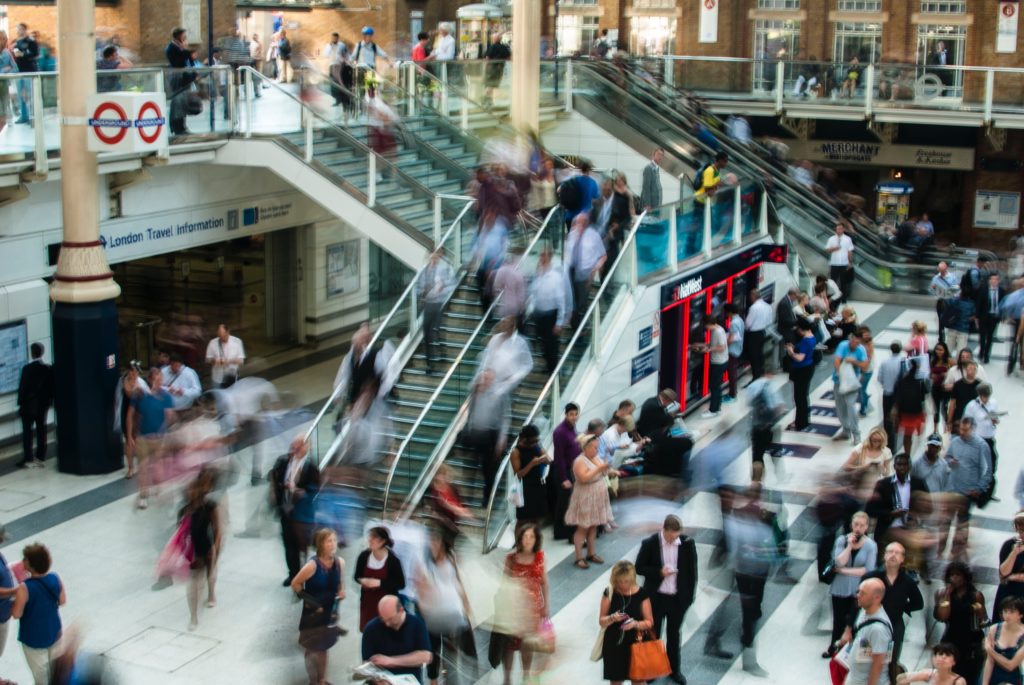
Photo by Anna Dziubinska on Unsplash
It’s easy these days to feel overwhelmed and despairing. Life is increasingly unpredictable and the future uncertain socially, economically and in terms of climate. We’ve never before been able to discuss so many issues with so many others, or been exposed to so many different sources of information and opinions. As our public education system flounders, fewer and fewer people think critically, which is daily becoming a more important tool in navigating our information overload.
I heard about a comment the other day on social media directed toward someone discussing women’s rights. The man commenting asked why we’re talking about something like feminism when climate change is so pressing. Why are we wasting energy on women’s rights while the planet is getting more and more difficult to inhabit, not in some hazy future but right now, today?
Photo by Nicole Mason on Unsplash
That question points to the reason we find ourselves in our present situation in the first place. Our social struggles reflect our approach to living on and with our planet. The thinking shaping our social behavior is the same thinking shaping our behavior as citizens on Planet Earth. If we feel we’re entitled to rape, rob or otherwise seize power and control over another human being or group of human beings, we feel equally entitled to use the planet however we want, with no thought of anyone else or the consequences of our behavior. This fertile, life-giving planet is our mother. We live on her body. The degree to which we respect and appreciate her is the degree to which we afford the same treatment to women. It’s the same discussion. It’s not a coincidence that the increasing pressure on our physical survival is happening in the middle of the current social maelstrom.
I’m not a scientist, though I endeavor to be a critical thinker. However, I’ve done quite a bit of reading on the subject of complex systems and earth systems science, including Darwin’s Unfinished Business by Simon Powell, Animate Earth by Stephan Harding, Overshoot by William Catton and Gaia’s Revenge by James Lovelock. Everything I read confirms what I intuitively recognize.
Everything matters. Everyone matters. It’s all connected.
The days are gone when we can tell ourselves what happens on the other side of the world doesn’t affect us and we need not pay attention or worry about it. We have so far exceeded the earth’s carrying capacity for our species that the actions of each individual have an effect on the whole. As human population oozes and bulges into every biome all over the globe, we also directly affect every other form of life: Animal, plant, insect, fungi and microorganism. We displace other species, poison their habitat and compete fiercely for resources. We have no sense of our own needs or the needs of others, but focus on what we want, and we want it all — right now. We deserve it. We have a right to it.
Certain groups of men have no intention of sharing power, dignity and economic resources with women, let alone sharing the planet with fungi and Monarch butterflies. Some groups would eradicate cattle from the globe before learning how to integrate them back into the healthy complex system they were part of until we threw things out of balance with our numbers and ignorance. Others work to bar immigrants, saying they’ll take our jobs, they’ll soak up social resources and they’ll poison our communities with their foreign tongues and culture, too ignorant and short-sighted to grasp we are only enriched and strengthened by the presence of other cultures.
It’s all the same discussion. It’s all connected.
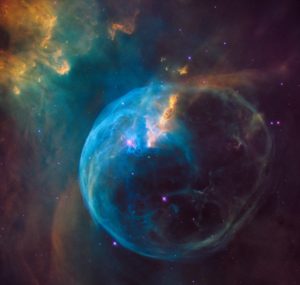
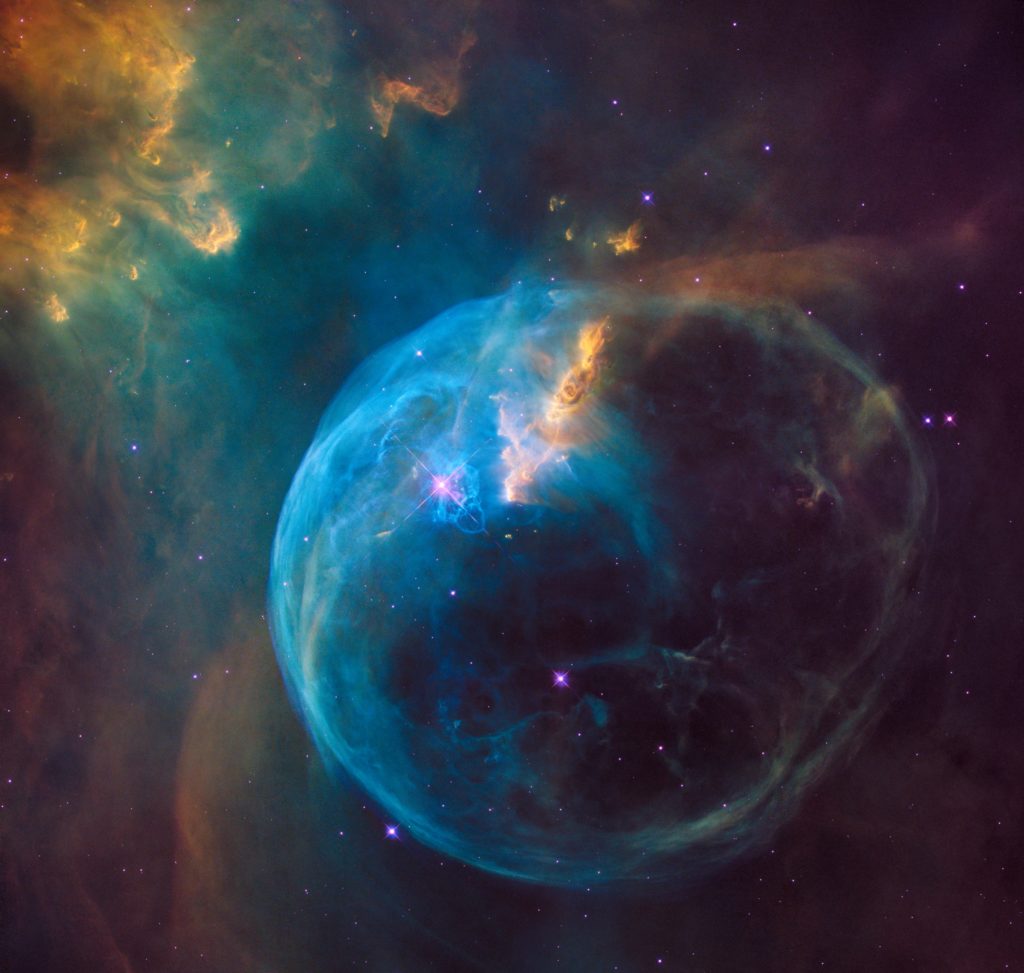
Photo by NASA on Unsplash
We are only now beginning to glimpse the miraculous web of life on Earth, only now getting a sense of Earth as a sentient complex system, self-regulating and self-sufficient, and the knowledge may have come too late. Complexity is life. Complexity is resilient and creates the ability to learn and adapt. Any behavior or ideology seeking to minimize, disrupt, or eradicate complexity is destructive. Those who work for purity, for homogenized patriotism, for the complete power of one religion, sex, diet, complexion, body type or expression of sexuality are actively tearing apart our world and our future.
Our inability to live peacefully and cooperatively with one another is our inability to respect and care for the land under our feet. Our willingness to tolerate slavery, sex trafficking and bureaucracy that destroys families, indigenous groups, human rights, reproductive choice and other natural resources is the same willingness to worship the false idol of money, buy whatever we want when we want it and discard it later with impunity. If we can’t buy what we want, we take it, or steal it. This is the definition of rape culture.
Complexity is about integration. One way to interpret the old stories is to consider each character as a separate part of the same psyche. In other words, we all have an innocent Red Riding Hood maiden inside us, and we all have an old bedridden grandparent, a parent who warns us of the dangers of leaving the path, a wily predator and a heroic figure who saves the day. A healthy adult learns to know and accept his or her shadow side, as well as more admirable characteristics. Spiritual wholeness consists of a well-balanced masculine and feminine, no matter our biological sex. If we are unable to integrate all these voices and archetypes, all these facets of personality, feelings and thoughts, and operate as a whole complex psyche, we’re crippled, and we’re certainly going to be unable to take our place as an effective, joyous and elegant part of the wider complex system of Planet Earth.
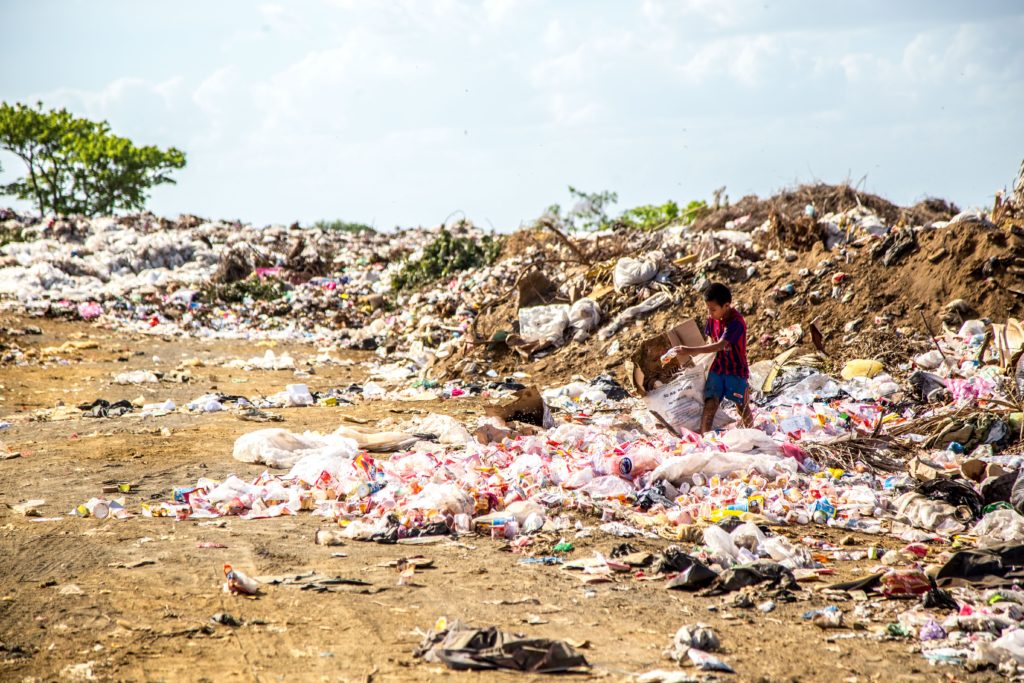
So yes, it matters. It matters if you use a plastic straw and throw it away. It matters if you toss your plastic cup out the car window. It matters if you support the tobacco industry because they’ve successfully addicted you. If you throw one less item away today, it matters. If you recycle and compost, it matters. If you stop rototilling your garden, which damages the soil, it matters. The way you treat the people and animals around you matters. We don’t have the power to stop or change the enormous transition we’re caught up in by ourselves. We may never see validation, recognition or negative consequences for the choices we make, but those choices do matter, because we’re all inextricably connected, like it or not, deny it or not.
Megastorms matter. Lead in drinking water and cancer clusters matter. Water conservation efforts in Cape Town matter. Antibiotic-resistant bacteria matter. Fires, earthquakes and volcanic activity matter.
People matter, too. Our experience, feelings and thoughts matter. I don’t matter more than you or anyone else, but, as a living creature on the planet, I matter. The way I treat myself matters. My health matters, and my creativity, and my ability to learn.
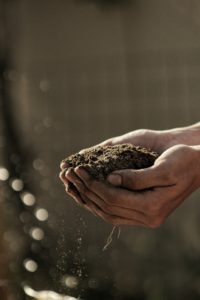
Photo by Gabriel Jimenez on Unsplash
If we can’t wrap our heads around the essential value and importance of each life, including our own, and support each individual in their personal power, we will absolutely destroy all non-human life on the planet and ourselves with it. If we’re really serious about equal rights, we need to learn to share our rapidly diminishing resources, and I don’t mean cars, technology and food delicacies grown half a world away. I don’t mean diamonds, designer clothing, private airplanes and yachts, and mansions housing a family of four. I mean basic food, clean water and habitable land. We each need to take responsibility for our addiction to instant gratification, convenience and all the latest tech, toys and trends. We need to let go of our entitlement and work together to create a sustainable standard of living for everyone.
So yes, food and water politics, sexual identity politics, human rights, healthcare, education, families and children and immigration all matter. They’re all road signs and mile markers. The question is whether we’ll travel in the direction of destruction or use these issues as opportunities to build bridges, enlarge our empathy and heal our disconnection from ourselves, from other humans, and from all other life, paving the way to managing climate change as elegantly as possible.
I know what direction I’m going in, not with hope of reaching some kind of utopia, but because it’s the only direction that makes any sense to me. Many, many people disagree with me, I know, and I’m going to have to fight the mob going in the direction of destruction. That’s okay. I never seem to be traveling in the direction of the majority, so I’m used to it, and there will be others going my way.
In the meantime, I walk the tightrope suspended over the paradox at the heart of modern life. I fight to maintain power and authority in my own life and use it for the greater good as well as my own benefit. At the same time, I acknowledge I am but one life among uncounted living beings on the planet, spinning through space with everyone else towards an uncertain future. My power is present, but limited. If I make even the smallest difference for good in my lifetime, I’ll probably never know, and no one else will ever see, and that’s okay with me.
It still matters.
Photo by Ivan Jevtic on Unsplash
All content on this site ©2018
Jennifer Rose
except where otherwise noted
by Jenny Rose | Jun 28, 2018 | A Flourishing Woman, Body
After years of interest, last autumn I finally found a Tai Chi teacher. I approached learning Tai Chi with hopes and expectations about the benefits it could provide, but I was unprepared for the power of the practice and how important it would become in my life.
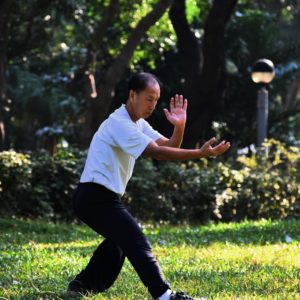
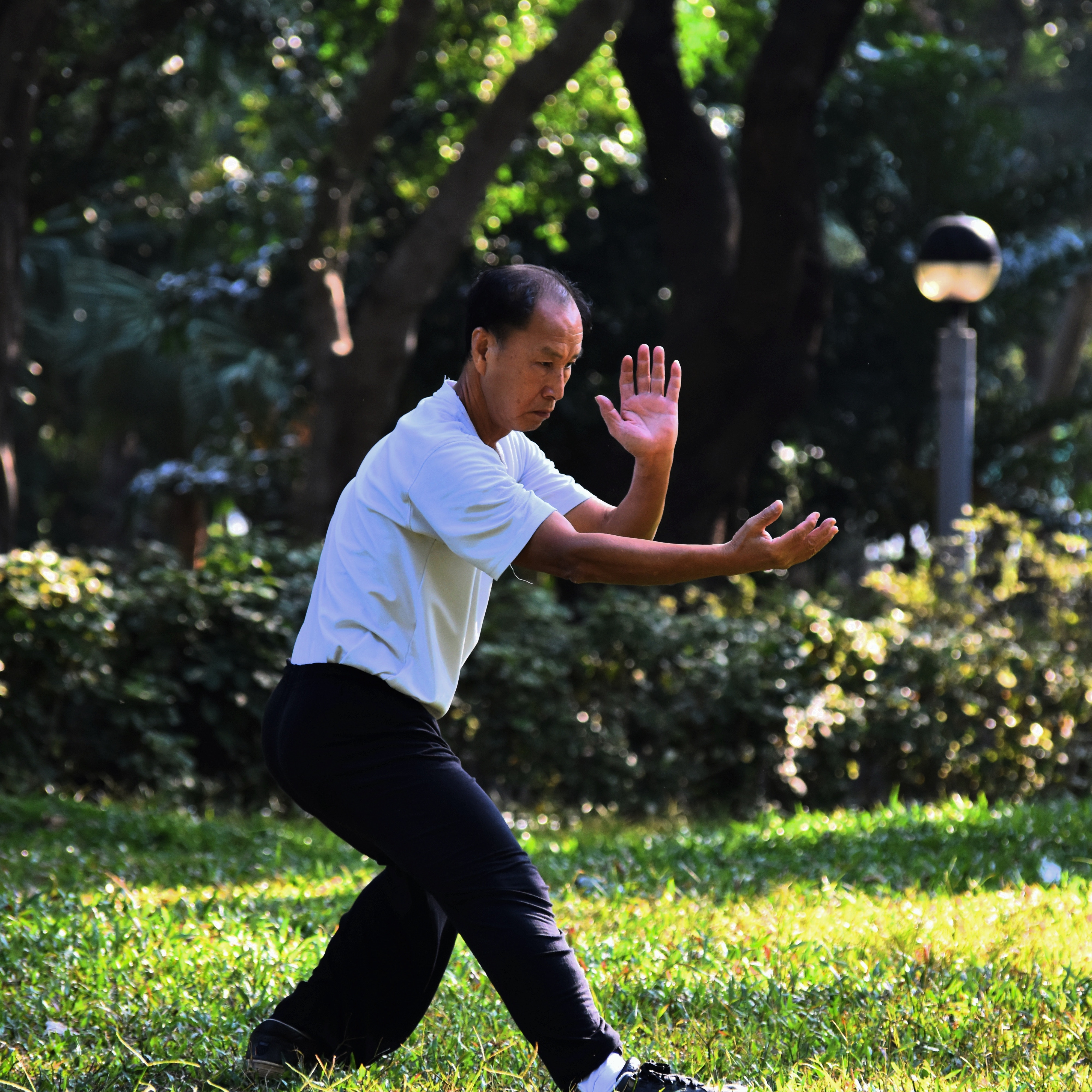
Photo by Mark So on Unsplash
Tai Chi is a form of Chinese martial art intended to teach defense and support health. It’s a multilayered practice, elegantly complex. Learning the gross motor movements is only the first baby step. One layer is connected to and leads to the next. Tai Chi is not a linear activity to learn from beginner to master, but a dynamic, fluid practice best approached with humility every time. It’s constantly challenging in new ways, depending on what my state of mind, body and spirit is on any given day.
The Tai Chi I practice is called 24 forms, all of which gradually blend into one smooth, flowing whole with practice. The forms have delightful, poetic names like The Crane, Windmills and Clouds.
Tai Chi is about finding one’s center, physically and emotionally, and building on the strength and balance residing there. In order to facilitate this, one crouches slightly with bent knees throughout the whole routine. This is obviously quite challenging, and for some people impossible. However, with proper foot position, body dynamics and a crouched stance, we can immediately feel the solid, stable center at the core of every Tai Chi form. Crouching for long periods of time immediately informs us about the strength of our ankles, knees, hips, hamstrings and quadriceps, information we might not otherwise receive as we move upright through the world.
Crouching assists with balance because it lowers the center of gravity. Many people take up Tai Chi to support balance issues, in fact. Several forms require balancing on one foot or another with the supporting knee bent. This, too, can be unexpectedly challenging. Once again, our body has a story to tell we might not otherwise hear as we move normally. I’ve always been aware I have sloppy posture, but I’ve been habitually lazy about doing much about it. Tai Chi demands I stack my bones on top of one another and tuck in my tailbone. If I don’t do that, I can’t balance. I notice I now move through the rest of my life standing tall, with more grace and confidence and better posture. I don’t slump, crowding my lungs and abdominal organs. I don’t tilt or lean. I know where my pelvis is and I stay over it. My back is happier. I feel better.
Every movement counts in this practice. Each foot is placed just so in order to support a fully centered crouched stance. Shoulders, wrists and elbows stay in line with several of the forms, which necessitates holding arms straight out from the shoulder. My arms ached for months as I built strength, and I’m a strong swimmer who works out in the pool once a week. One form requires placing toes down and heel up, and another the heel down. At times we turn on our heel, and at other times our toe. In one form we turn one foot on the heel and the other on the toe at the same time. Everything about Tai Chi leads me inward on a spiraling journey of deeper focus and mindfulness.
Photo by Ludde Lorentz on Unsplash
It’s amazing to practice over time and begin to feel the forms smoothing out into a cohesive routine with some kind of elegance and grace. Such fun and so rewarding. Then, however, the instructor started to talk to us about our eyes. It turns out every form requires a very specific eye gaze, often on our hand movements. I was doing well with balance, but when I took my gaze off the middle distance and looked at my hand in front of my face, I lost my balance. This was advanced balance. I added in the appropriate eye gaze and started all over again with balance.
Then, the teacher began to talk about breathing. Crap. I hadn’t even thought about my breathing! Breathing is connected to energy, and Tai Chi was originally a practice for working with energy as well as defense. All the forms have to do with pushing, pulling, deflecting or defending. Now that we had some mastery of the physical challenges, we began to work on feeling our field of energy and moving it with our bodies and breath. A push is an exhalation. A pull is an inhalation.
Breathing then leads to pace and rhythm. We practice Tai Chi to meditation music — very slow. Balancing on one leg is not so hard when you do it for two or three seconds. Balancing for sustained periods of time, especially with a bent knee, requires a lot more strength and, well, balance! Every movement takes far more concentration when slowed down. This is one of the few activities I’ve ever done where the goal is to slow down. We seem to be running faster all the time, overstimulated, overscheduled, multitasking, trying to earn more money, perpetually on call via technology. We’re all in pursuit of … something. What? Does anyone ever find it? Is it worth the cost of the chase?
Photo by Chris Ensey on Unsplash
Tai Chi demands we slow down. In that slowness we discover our fatigue, our aches and pains, our half-healed injuries, our distractions and our distress and unmanaged feelings. We remember our center. We recover our balance. We make time to breathe.
Some people call Tai Chi a moving meditation, and I now understand why. When I’m practicing Tai Chi, I’m not doing anything else. When I’m walking or swimming my mind goes right on with whatever it’s busy with. Those activities are good for creative inspiration, prayer and processing feelings. Tai Chi, though, takes me to a deep, restful, quiet place of no thought, focus and present mindfulness, so rich and so empty. It opens the door for awareness, too, of the degree to which I’m captive to distraction. The instant I’m distracted by a sound or a stray thought, I lose my balance and center, I lose my breath, I lose the flow and I don’t know where I am in the forms. I think of myself as fairly focused, but I’m just as susceptible to distraction as anyone else, and I don’t want my life to become an uncontrolled blur of noise and stimulation in which I forget there’s anything but distraction. Tai Chi brings a precious and necessary balance into my days.
All these layers have brought health and healing into my life, but the greatest grace Tai Chi brings me is the opportunity to be in the body. I’m saddened by the ever-more strident body politics in our culture. I don’t remember a time in my life when it seemed so many people were locked in self-hatred and hatred of others based on some kind of physical characteristic. It reflects in our suicide and addiction rates, and it touches each one of us. We no longer honor the sacred feminine and masculine, we have few invitations to fully inhabit ourselves physically, and no one encourages us to honor and respect our physical form as it is.
Just like dance, Tai Chi calls us home to ourselves. My home is not nipped, tucked, plucked, lipo-suctioned, dyed, shaved, made-up, compressed, surgically reconstructed or uplifted. My home is my oldest friend, my most loyal companion, the loyal record keeper and diary of childbirth, breast-feeding, menopause, a lifetime of Colorado sun, slipped kitchen knives and barbed wire fence. My home is lines and wrinkles, lumpy thighs, softened breasts, grey hairs and thinning skin. This amazing, adaptable, resilient, hard-working body is the shelter and haven for my spirit.
I often move a chair aside, open the windows, take up the sheepskin rugs lying on the wide plank floor in my attic space, shut the door at the bottom of the stairs, turn on music and take off my clothes to practice Tai Chi. I like to look down at my bare toes and toe ring on the sloping grey-painted floorboards. I like to glance at my strong knees and make sure they’re in line with my heavy ankles. I like the gentle slope of my belly, cross-hatched with silver stretch marks, under which two children grew into life. I like to stack my bones carefully, tuck in my tailbone and feel the subtle realignment that opens up my center and my balance. I like the clench, pull, stretch and relaxation of my muscles. I like the combination of strength and loosening skin and flesh as I move my arms. I’m grateful for the ability to breath deeply, and the ability to sweat. I relish the air coming in the windows and touching my bared breasts.
We started with a large Tai Chi class, and over the weeks and months people dropped out, one by one. I suppose for some it wasn’t a good fit. For others it wasn’t a priority. Still others were discouraged by their physical limitations, in spite of the fact that the instructor was and is eager to modify the practice to accommodate anyone. One lady had trouble with balance but was unwilling to stand next to a chair for safety and support. Others were ashamed of their weight, their muscle weakness and/or learning a new thing in public. It made me sad. I think many would have benefitted if they could have moved past their shame and self-consciousness, and if they’d been willing to work with their physical reality instead of resenting and arguing with it.
Our Tai Chi group is small now, but we’re good friends. We laugh a lot. We learn from one another. We greet and part with hugs and affection. We enjoy the music; share our distractions, worries, aches and pains and support one another in centering, grounding, calming and mindfulness.
I’m entirely grateful.
Photo by Biel Morro on Unsplash
All content on this site ©2018
Jennifer Rose
except where otherwise noted
by Jenny Rose | Jun 21, 2018 | Emotional Intelligence, Feelings, Love
Photo by Helena Yankovska on Unsplash
In the farmer’s market on Saturday morning, we stood in line to buy bread. We did not stand in line to buy a peach raspberry pie and bread, but that’s another story (with a happy ending. The pie was worth it.) Next to the baker’s display was a booth set up by a local businesswoman who specializes in unique homemade dog treats. As my mother is owned by a dear border collie and I’m always on the lookout for something they might like, I idly checked out the booth while my partner waited in line (to buy bread, not pie.)
I found rows of attractively-packaged, carefully labeled, very expensive bags of dog goodies, most of which were vegetable-based and proudly labeled as containing “no animal biproducts.”
Sometimes I feel pretty despairing about the world. I’m sure this businesswoman is a well-meaning and hard-working person trying to earn a living in central Maine who cares about dogs. However, it would be good to avoid spelling errors on her labels and dogs are not vegetarians or vegans.
There is, in fact, debate among veterinarians and scientists about whether dogs are omnivores or carnivores, but recent research based on physiology suggests dogs are indeed carnivores. Many wild canines are apex predators. Many perform the vital function of carrion eaters and scavengers. Dogs are not vegetarians.
There are a lot of dark monsters walking the streets right now. Rampant narcissists, greedy capitalists and fanatical ideologists are slowly consuming the world. There’s another ogre abroad, though, one bathed in blue light and wearing angel wings, and that is our willful ignorance and denial of the physical and biological realities we live and die with, our inability to work elegantly with complexity and shades of grey and the cult we’ve made out of love and peace.
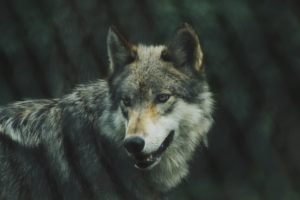
Photo by Michael LaRosa on Unsplash
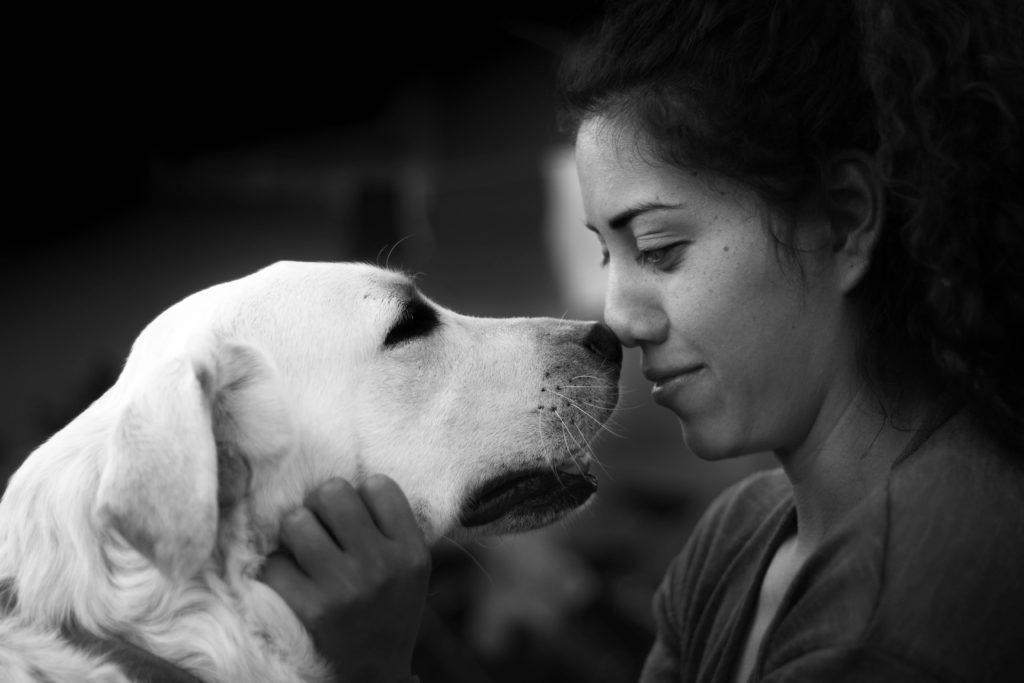
One of my favorite writers on Medium, Kay Bolden, recently wrote a piece entitled Love is a Warrior, Not a Saint. She is absolutely correct. Love is not a saint. Love sees things clearly. Restricting our dogs to a vegetarian diet is not love. It’s animal abuse. If we love our dogs, we appreciate them for the magnificent companions and colleagues they are, and dogs are not vegetarians. If we love our dogs, we give them a nice raw, bloody, meaty bone now and then and we do not force them to struggle on a grain or vegetable-based diet and handfuls of supplements in order to address their nutritional needs. Wild canines form packs and hunt. They kill birds, rodents, rabbits and even larger animals, tear them apart with their teeth and eat them raw. That’s what a dog’s ancestry is. Refusing to accept that is not love.
Dogs have evolved with humans for thousands of years and have adapted to scavenge and forage amongst people. Most dog owners know that their pets will, if able, routinely eat all kinds of rubbish and frequently suffer digestive consequences. If humans are wiped out overnight in some kind of a plague, our dogs will consume our dead bodies, form packs, and begin hunting.
I despise what human beings have done to animals. Animal testing, the terrible practices of factory farming, our idiotic greed for things like rhino and elephant horns and furs, and our irresponsibility, cruelty, stupidity and malice have done no end of harm to the entire animal kingdom. We seem bent on destroying every habitat on the planet (often so people can feel self-righteous about how peaceful and loving they are as vegans and vegetarians, never mind that Big Ag wipes out hundreds of thousands of organisms and poisons the soil in every field it monocrops, not part of the natural process of life and death) as quickly as possible, leaving nothing but sterile wastes behind us. We do this. People. Homo Sapiens.
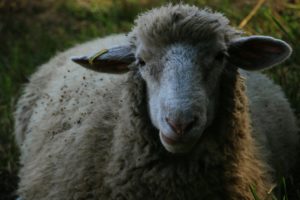
Photo by Jamie Morris on Unsplash
Bleating about love and peace and refusing to recognize carnivores, herbivores, the extraordinary complex system of Planet Earth and the necessity and function of all parts of it is just as bad as clearcutting the rainforest. Mother Nature is about prey and predator. When it’s healthy, the natural system is a complicated, dynamic dance of life and death involving countless organisms. Carnivores hunting and eating meat is not an act of violence or hate. Predators hunting prey is the natural order of things. Life on earth depends on it.
Somewhere along the way we seem to have lost our innate wisdom and connection to life. The modern age is all about arrested development. We’re like small children in sunny nurseries having a tea party with our stuffed animals and dolls. We’ve distorted love and peace into something prim and sweet, entirely artificial and entirely one-dimensional. Peace and violence are mutually exclusive. Love is entirely peaceful. Death is entirely hateful and violent. Love and peace are pretty. Love and peace are nice. They’re tolerant. They contain no animal “biproducts.”
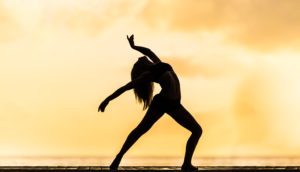
Photo by David Hofmann on Unsplash
What dangerous, infantile lies. Love is the face of the Divine, and the face of the Divine looks upon fire and flood, thunder and lightning, sand and ice and sea. The face of the Divine looks upon the musky violence of reproduction, the grinding bones and tearing tissue of birth, the vast cycles of predators and prey that encompass each layer of life from the smallest microbes to the largest animals. The face of the Divine orchestrates the checks and balances ensuring population control, which is often driven by disease, famine and drought. The Divine dances a passionate, sensual, joyful dance, knee-deep in blood, semen, bone, flesh, fat, hair, scales, feathers, rot, vomit and excrement.
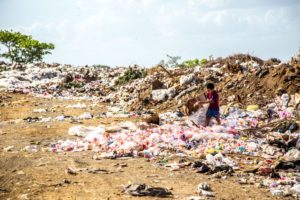
Photo by Hermes Rivera on Unsplash
In the midst of this beautiful, intricate world it’s we alone who have the fantastic hubris to refuse to participate. It’s we who deny the very ground of our being, the substance and structure of flesh and bone and biology. We rant about inclusivity and equality while we steadily eradicate life on earth, self-destruct, and allow ourselves to be divided from one another, never pausing long enough in our fatal greed and grotesque need to win and be right to understand life and death already are inclusive and equal. We all must eat and drink, successfully procreate if our genetic material is to survive, and die. We’re all part of the magnificent turning wheel of life, whether we like it or admit it or not. We’ve allowed our contemptible ideologies, our fears, our ignorance and our absurd desire for the higher moral ground to weaken us and we’ve become the most dangerous form of life on the planet, not only to ourselves but to every living thing around us. Then we project our madness onto the animals who depend upon us, reward the criminals who market vegetarian dog food and call that love. We call that being peaceful.
No. That’s not my love. My love and compassion are bigger and wider than that. I love the glorious cycle of life and death, even if it means I dip my hands in blood and endure the stench of decaying flesh. I muster the humility to learn about interconnectedness and how to participate elegantly in life and death. I love myself and others for what genetics, evolution and biology make us. I work for peace. I can wield the tool of violence if necessary. I respect and welcome death, recognizing it as a sacred consort to life.
I will give a dog a bone.
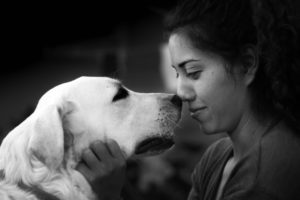
Photo by Kevin Quezada on Unsplash
All content on this site ©2018
Jennifer Rose
except where otherwise noted
by Jenny Rose | Mar 29, 2018 | Connection & Community, Emotional Intelligence, Shadows
As an oral storyteller, I’m committed to gathering old tales from all over the world and retelling them because they contain blueprints for life. Each story is a teacher, a small piece of code, a seed, a fragment of wisdom, a snippet of DNA. Stories speak to us about who we are, who we have been and who we might yet be. They speak in the voices of place, people, history and culture.
Photo by Alan Chen on Unsplash
Story does not exist without storytellers. Literacy is not necessary, as long as people remain connected enough to pass story on orally. A culture which unravels and frays in its ability to form healthy connections and bonds and at the same time stifles the acquisition and sharing of knowledge is in grave danger of losing stories, and when old stories are lost much of the collective wisdom of our ancestors is lost with them. We become crippled and impoverished. We lose our way in the world and we have to spend time and energy reinventing wheels we learned how to make hundreds of years ago.
As a storyteller, then, I come to you this fine spring week when the snow is ebbing in Maine, leaving behind rich, greasy mud, with the old story of the wolf in sheep’s clothing.
Every old story is in fact many stories. A piece of oral tradition is like a many-limbed tree. As it grows and matures it branches out over and over. Every teller who passes on the tale adds or takes away a piece of it, reshaping it according to the teller’s context in history and place. Still, the skeleton of the story remains recognizable, because the bones contain the wisdom, the old truth, the regenerative pieces reanimated over and over by those of us who share them.
The essential truth contained in the idiom “a wolf in sheep’s clothing” has appeared in many times and places. According to my research, the first time was in the Bible, in the Gospel of Matthew, as a warning against false prophets. The sermon goes on to suggest actions speak louder than words. Thereafter, the phrase was repeated in other Christian religious writing and from there entered into European vernacular. A Latin proverb arose: “Under a sheep’s skin often hides a wolfish mind.”
A 12th century Greek wrote a fable about a wolf who changed his appearance in order to get access to ample food. He put on a sheepskin and mingled with a flock of sheep, fooling the shepherd. The disguised wolf was shut up with the sheep for the night. The shepherd decided he wanted mutton for his supper, so he took his knife and killed the deceitful wolf, mistaking it for a sheep. Here is a branch in the story tree. The Gospel reference warns against deceitful teachers. The Greek fable warns evil-doing carries a penalty. The bones of the story — the consequences of a wolf disguising itself as a sheep — are the same. The story is now two-dimensional. Such pretense is dangerous for both wolf and sheep.
Another iteration occurs three centuries later in the writing of a 15th century Italian professor. A wolf dresses himself in a sheepskin and every day kills one of the flock. The shepherd catches on and hangs the wolf, still wearing the sheepskin, from a tree. When the other shepherds ask why he hung a sheep in a tree, the shepherd replies that the skin was of a sheep, but the actions were of a wolf. There it is again: Actions speak louder than words.
Aesop wrote two fables having to do with wolves gaining the trust of a shepherd and killing sheep, but the wolf is undisguised in these cases. Even so, the common theme is clear. A wolf is a wolf, and cannot be trusted with sheep.
In the 16th, 17th and 18th centuries, Italian, French and English writers adopted versions similar to the early 15th century Italian tale, in which the wolf pretends he is not a threat to the sheep.
Most of us know the tale of Little Red Riding Hood, whose origins can be traced back to 10th century European folk and fairy tales. In the familiar modern version, a wolf disguises itself as Red Riding Hood’s grandmother and the innocent too-sweet maiden is fooled and subsequently eaten.
My favorite story of wolves and, in this case, goats, comes from my own childhood, the tale of the wolf and the seven kids (young goats). The mother goat must leave the house and warns her seven children about the wily wolf who might try to gobble them up. She says they will recognize her by her sweet voice and white feet, and they mustn’t open the door to anyone else. I was mightily amused by the wolf’s machinations in trying to fool the kids: Swallowing honey to make his rough voice sweet, whitening his black feet with flour. Of course, he does fool the kids and they are eaten, but, much like Little Red Riding Hood, the kids are saved from the wolf’s stomach in the end.
As an adult, this tale doesn’t seem nearly so amusing.
Lastly, modern zoology makes use of the term “aggressive mimicry,” which describes a method of deception by an animal so it appears to either predator or prey as something else.
I’m deeply troubled by what I see going on around me in the world. It appears many millions of people are no longer able to discern the difference between wolves and sheep, and this is creating dire consequences for all life on Planet Earth.
How did this happen? Why did this happen? When did this happen? How are we producing college graduates who don’t recognize wolves in sheep’s clothing? What kind of a so-called educational system, public or private, produces such myopia? For two thousand years we’ve understood the dangers of failing to clearly see the difference between sheep and wolves. Such a failure of judgement is bad for the wolves as well as the sheep. Tracing this old tale through time (when most of the world’s population was largely illiterate and uneducated), clearly shows us this is a learned skill. Little Red Riding Hood, the seven kids and several confused shepherds, all innocent, naïve, and inexperienced, had to learn to recognize a wolf when they saw one, or starve or be eaten. Critical thinking is not an innate skill. Parents, teachers and leaders must actively teach it.
Photo by Michael LaRosa on Unsplash
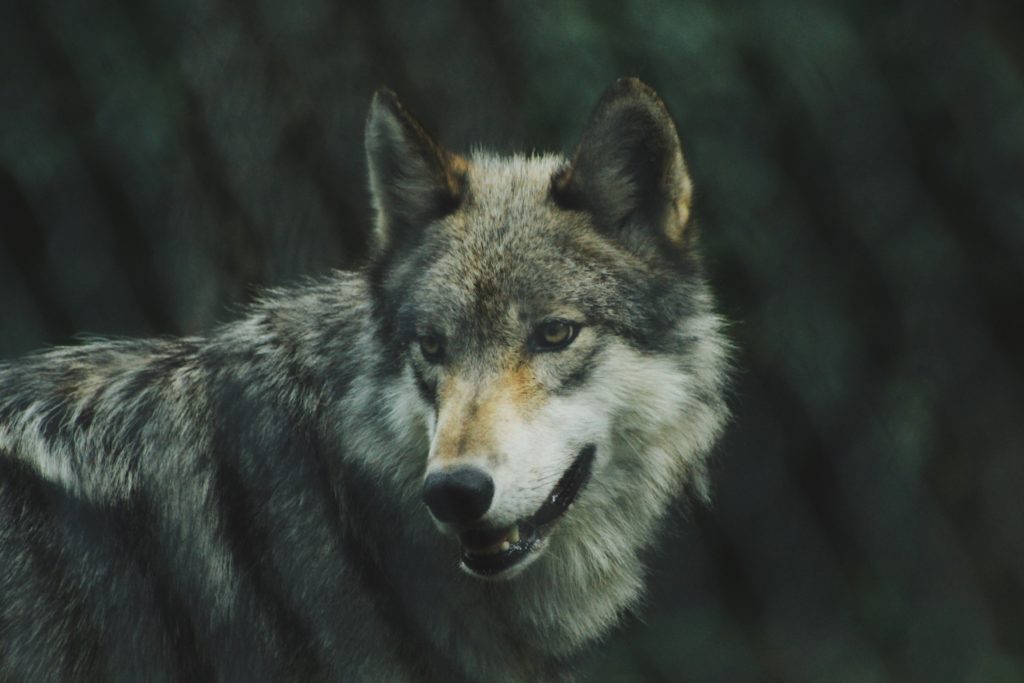
Here is a wolf. It’s an apex predator; intelligent, flexible and canny. The wolf is evolved to survive and pass on its DNA. It’s not confused about what it eats or the meaning of its life. Its job is to do whatever is necessary to survive and successfully reproduce. As a predator, wolves are an essential part of the complex system we call life. A healthy population of wolves benefits both the land and prey animals.
Photo by Jamie Morris on Unsplash
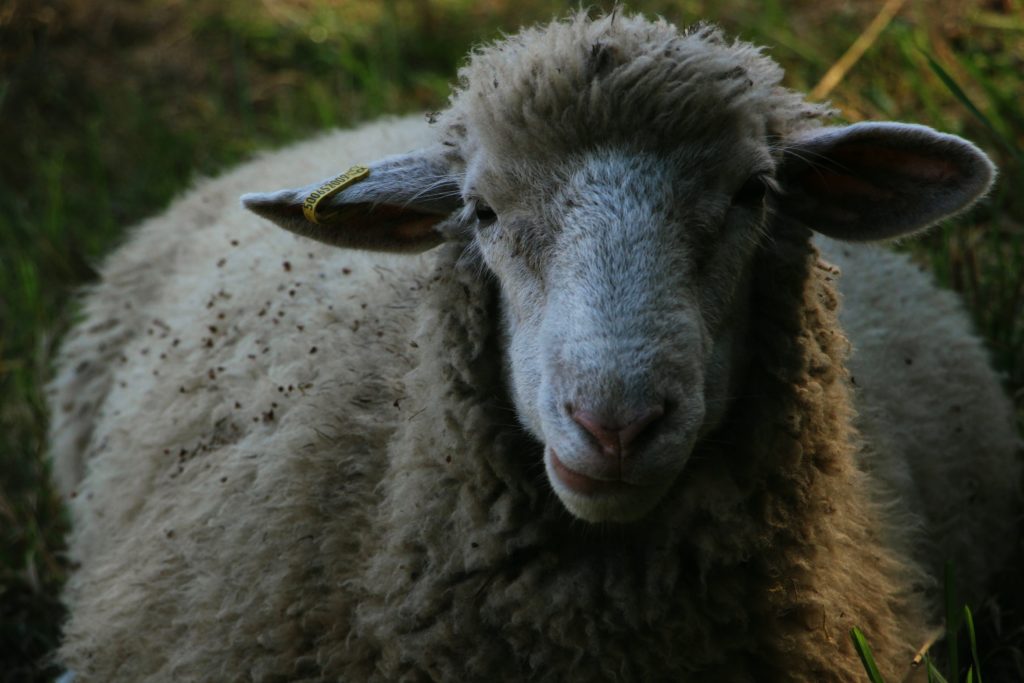
Here is a sheep. It’s an herbivore, a prey animal. It’s evolved to produce milk, meat and wool, survive and pass on its DNA. It eats grass. It too is an essential part of the web of predator (including humans), prey and plants. Its presence, properly managed, benefits the land and predators.
One can certainly throw a wolfskin over a sheep and say it’s a wolf, but that doesn’t make it so. Now we have a sheep in the throes of a nervous breakdown, but the animal is still a sheep. It still needs to eat grass. We cannot change a sheep into a wolf.
Likewise, a wolf wearing a sheepskin does not begin to crop grass. Wolves eat meat, no matter what kind of a skin they’re wearing. A simple shepherd might be fooled by a single glance in the dusk if the disguised wolf mills among the sheep, but five minutes of observation will quickly reveal the truth. Sheep do not tear out one another’s throats. A wolf cannot be changed into a sheep.
The wolves of the world, those who prey on others, naturally have a large inventory of successful speeches and manipulations. They study their prey and learn quickly how to take advantage of it. They are everywhere, in politics, religious organizations, schools and cults. They’re athletic coaches and businessmen, people of influence and power. They’re shadows behind conspiracy theories and cults like QAnon. They disguise themselves with projection and gaslighting, mingle freely with their prey and pick them off, one by one.
In the natural world, an overpopulation of wolves eventually runs out of prey animals. At that point, the wolf population goes down dramatically while prey animal populations recover. Nature seeks a balance of life, and if we create endless flocks of fat, stupid, blindfolded sheep, the grass will run out, wolves will increase, and slaughter will commence as the sheep begin to starve for want of food.
That’s a lot of destroyed land, dead sheep, fat and happy wolves and then, in the next generation, a lot of young wolves starving to death and, (one hopes) a few smarter and wiser sheep and shepherds.
People say we’re a superior species to wolves and sheep. I don’t see much evidence of that recently. We can’t seem to remember what we once knew well. We teach our children how to press buttons, look at a screen, and pass a standardized state test, but they can’t tell a wolf from a sheep, and neither can we. The wolves are not confused, but the sheep are milling around aimlessly like … well, like sheep, ripe and ready for slaughter. We’ve allowed ourselves to be brainwashed into believing our true nature is expressed by appearance, words and socioeconomics. Actions don’t count, and neither does DNA. Off we skip to the slaughterhouse, following honey-tongued wolves dusted with flour, who praise us for our compassion, compliance, inclusivity and political correctness while drooling at the prospect of all that food. Meanwhile, our planet degrades so no one else is properly fed and natural checks and balances are destroyed. Even the noncompliant, troublemaking sheep who manage to escape slaughter will starve. So will the wolves, eventually, after they’ve devoured everyone else.
Maybe then the complex system of life can begin to heal. I hope so.
In the meantime, I’ll be separating wolves from sheep and telling stories.
All content on this site ©2018
Jennifer Rose
except where otherwise noted
by Jenny Rose | Nov 23, 2017 | Choice, Power
Last week, I explored the meaning and experience of anxiety. In doing so, I realized that all my anxiety has a common root in scarcity, which gave me the subject for this week’s post. Scarcity and abundance. What could be more perfect for Thanksgiving week?
Scarcity, according to a quick Internet search, is “the state of being in short supply; especially want of provisions for the support of life; unlimited wants in a world of limited resources.”
In spite of the fact that I come from a middle-class background, I’ve always lived with the bony specter of scarcity. As a child, I constantly feared there wasn’t enough, even though there was enough. We always had a home, and food, and clothing. The house was full of books and music. We had pets. We had cars. We even took vacations, a thing I was certainly never able to do with my own children. Still, I was always afraid we’d run out of money. The worst thing I could imagine was not being able to afford to feed and care for the animals! I was continually waiting for it all to disappear.
My insecurity around physical resource was not the biggest anxiety producer. What really ensnared me was emotional scarcity. It never seemed to me there was enough love, or patience, or joy. There wasn’t enough time, enough energy, enough hope. My feeling of emotional hunger led me to conclude that the problem was me. I was greedy and selfish. I wanted too much.
Most painful of all was my belief that I wasn’t enough. Not smart enough, not strong enough, not quick enough, not wise enough, not loving enough, not adult enough. I could see no cure for my inadequacies, no hope that I could ever be fixed, and, employing the heartbreaking logic of children, my conclusion was I didn’t deserve anything but scarcity.
Unsurprisingly, my experience since I formed that belief has been of scarcity on every level.
It’s important to note that in some significant ways this frame of scarcity has been useful. I don’t have “unlimited wants,” for example. In fact, I’ll rarely admit to wanting anything at all, which is a problem on the other end of the spectrum. I’ve never enjoyed shopping. I’m a reluctant consumer. I don’t long for gems or cruises, fine wines, luxury cars or elegant homes.
Living with restricted financial resource has taught me a lot about the limited power of money. What I value and want most, as well as what I most want to contribute, can’t be bought or sold. I’ve also learned unfulfilled wanting and longing can be lived with.
On the other hand, living from a position of scarcity has not only kept my anxiety fat and happy, it’s impoverished my courage, my ability to love, and my self-confidence. My belief in scarcity has sucked away a lot of my power.
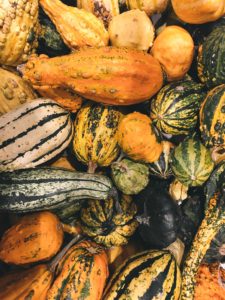
Photo by Brigitte Tohm on Unsplash
What about abundance? Abundance is “a very large quantity of something; plentifulness of the good things of life; prosperity.”
When I started thinking about anxiety in the last couple of weeks, I began to notice its presence or absence during activities of my daily life. For example, when I deal with household needs and wants, bills, the grocery list, and think about jobs, I feel anxious. When I’m out walking, gathering cones, cutting greens for holiday wreaths, collecting the beautiful little Sensitive fern pods for crafting, I feel no anxiety and have no experience of scarcity. The fields, the woods, the river, the trees, the fall bracken and naked branches and twigs all speak to me of plenty, and plenty, and plenty again. Abundance is everywhere. There is enough. I am enough.
I wrote last week about my suspicion that my anxiety is a bad habit as much as anything. I wasn’t consciously choosing to haul around such a dreadful burden, but dredging it up from my subconscious into the daylight, specifically defining it and shining a light on it, allowed me to realize I don’t have to allow anxiety to run me. I can choose to disengage with it.
What if the frames of abundance and scarcity are also choices? What if I decide scarcity is no longer a useful label for my experience or self-definition, and I choose instead to believe in enough, or even in more than enough? Imagine it. Enough resources. Enough water and silence and time. An abundance of arms strong enough to hold me through the deepest hours of the night. A river of tenderness. A roomful of dancers. A strong, resourceful, wise, creative self.
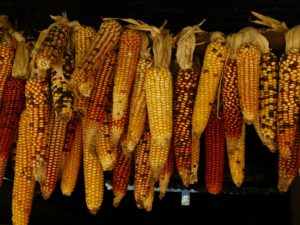
Photo by Roderico Y. Díaz on Unsplash
Abundance is everywhere I look this morning, in the glowing wood stove, in the cartons of eggs stacked in the refrigerator, in boxes of wreaths I’m loading into the car to take to my friend’s farm store. Abundance is in writing these words, and when I glance from them I see, out the window, the infinite beauty of the November landscape.
It’s also true that we’re nearly out of bacon, and I know there are other items on the current grocery list. We’re heading into winter and haven’t been able to fix the leaky roof, but I suppose one could say there’s more roof than hole, so that’s a good thing!
Isn’t it really all just a cosmic balance? We can’t possibly take in everything at once in life, so we narrow our focus, and invariably find what we’re looking for. Changing our focus changes what we see. Perhaps abundance has always been hand-in-hand with scarcity and I’ve just never looked beyond what I knew and expected. How can these two concepts be separated? They make each other possible.
My anxiety is currently sulking and on a starvation diet. Scarcity is what it thrives on, but I’m kind of bored with that tired old goblin. I’m enjoying my new focus and filter of abundance. I like the way it makes me feel. It doesn’t make all the challenges go away, but it certainly balances them with a peaceful, satisfied feeling of enough, and I’m grateful.
It’s Thanksgiving Day as I post this. I wish everyone the abundance of the season in food, loved ones and joy.
All content on this site ©2017
Jennifer Rose
except where otherwise noted