by Jenny Rose | Nov 23, 2017 | Choice, Power
Last week, I explored the meaning and experience of anxiety. In doing so, I realized that all my anxiety has a common root in scarcity, which gave me the subject for this week’s post. Scarcity and abundance. What could be more perfect for Thanksgiving week?
Scarcity, according to a quick Internet search, is “the state of being in short supply; especially want of provisions for the support of life; unlimited wants in a world of limited resources.”
In spite of the fact that I come from a middle-class background, I’ve always lived with the bony specter of scarcity. As a child, I constantly feared there wasn’t enough, even though there was enough. We always had a home, and food, and clothing. The house was full of books and music. We had pets. We had cars. We even took vacations, a thing I was certainly never able to do with my own children. Still, I was always afraid we’d run out of money. The worst thing I could imagine was not being able to afford to feed and care for the animals! I was continually waiting for it all to disappear.
My insecurity around physical resource was not the biggest anxiety producer. What really ensnared me was emotional scarcity. It never seemed to me there was enough love, or patience, or joy. There wasn’t enough time, enough energy, enough hope. My feeling of emotional hunger led me to conclude that the problem was me. I was greedy and selfish. I wanted too much.
Most painful of all was my belief that I wasn’t enough. Not smart enough, not strong enough, not quick enough, not wise enough, not loving enough, not adult enough. I could see no cure for my inadequacies, no hope that I could ever be fixed, and, employing the heartbreaking logic of children, my conclusion was I didn’t deserve anything but scarcity.
Unsurprisingly, my experience since I formed that belief has been of scarcity on every level.
It’s important to note that in some significant ways this frame of scarcity has been useful. I don’t have “unlimited wants,” for example. In fact, I’ll rarely admit to wanting anything at all, which is a problem on the other end of the spectrum. I’ve never enjoyed shopping. I’m a reluctant consumer. I don’t long for gems or cruises, fine wines, luxury cars or elegant homes.
Living with restricted financial resource has taught me a lot about the limited power of money. What I value and want most, as well as what I most want to contribute, can’t be bought or sold. I’ve also learned unfulfilled wanting and longing can be lived with.
On the other hand, living from a position of scarcity has not only kept my anxiety fat and happy, it’s impoverished my courage, my ability to love, and my self-confidence. My belief in scarcity has sucked away a lot of my power.

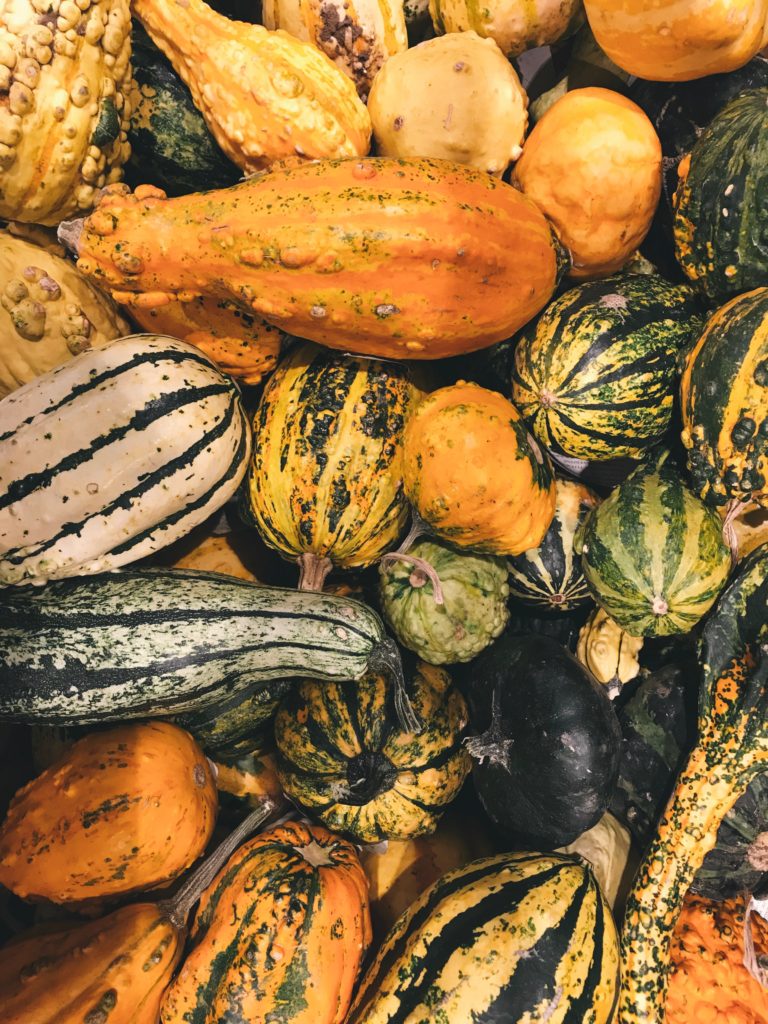
Photo by Brigitte Tohm on Unsplash
What about abundance? Abundance is “a very large quantity of something; plentifulness of the good things of life; prosperity.”
When I started thinking about anxiety in the last couple of weeks, I began to notice its presence or absence during activities of my daily life. For example, when I deal with household needs and wants, bills, the grocery list, and think about jobs, I feel anxious. When I’m out walking, gathering cones, cutting greens for holiday wreaths, collecting the beautiful little Sensitive fern pods for crafting, I feel no anxiety and have no experience of scarcity. The fields, the woods, the river, the trees, the fall bracken and naked branches and twigs all speak to me of plenty, and plenty, and plenty again. Abundance is everywhere. There is enough. I am enough.
I wrote last week about my suspicion that my anxiety is a bad habit as much as anything. I wasn’t consciously choosing to haul around such a dreadful burden, but dredging it up from my subconscious into the daylight, specifically defining it and shining a light on it, allowed me to realize I don’t have to allow anxiety to run me. I can choose to disengage with it.
What if the frames of abundance and scarcity are also choices? What if I decide scarcity is no longer a useful label for my experience or self-definition, and I choose instead to believe in enough, or even in more than enough? Imagine it. Enough resources. Enough water and silence and time. An abundance of arms strong enough to hold me through the deepest hours of the night. A river of tenderness. A roomful of dancers. A strong, resourceful, wise, creative self.

Photo by Roderico Y. Díaz on Unsplash
Abundance is everywhere I look this morning, in the glowing wood stove, in the cartons of eggs stacked in the refrigerator, in boxes of wreaths I’m loading into the car to take to my friend’s farm store. Abundance is in writing these words, and when I glance from them I see, out the window, the infinite beauty of the November landscape.
It’s also true that we’re nearly out of bacon, and I know there are other items on the current grocery list. We’re heading into winter and haven’t been able to fix the leaky roof, but I suppose one could say there’s more roof than hole, so that’s a good thing!
Isn’t it really all just a cosmic balance? We can’t possibly take in everything at once in life, so we narrow our focus, and invariably find what we’re looking for. Changing our focus changes what we see. Perhaps abundance has always been hand-in-hand with scarcity and I’ve just never looked beyond what I knew and expected. How can these two concepts be separated? They make each other possible.
My anxiety is currently sulking and on a starvation diet. Scarcity is what it thrives on, but I’m kind of bored with that tired old goblin. I’m enjoying my new focus and filter of abundance. I like the way it makes me feel. It doesn’t make all the challenges go away, but it certainly balances them with a peaceful, satisfied feeling of enough, and I’m grateful.
It’s Thanksgiving Day as I post this. I wish everyone the abundance of the season in food, loved ones and joy.
All content on this site ©2017
Jennifer Rose
except where otherwise noted
by Jenny Rose | Oct 26, 2017 | A Flourishing Woman, Mind
I went to the dentist last week. I spent the usual hour with the hygienist and then the dentist breezed in to give me four or five minutes of exam, comment, teaching and friendly conversation. Thankfully, I don’t require more than this, as my teeth are in excellent shape. In the course of those few minutes, I used the term “permaculture,” and he asked me what it was. I gave him a brief answer, and on the way out the hygienist said I had a “high dental IQ.”
“She has a high IQ, period,” he responded as he left.
I almost got out of the chair and went after him to explain that I’m the dumb one in the family, and certainly don’t have a high IQ.
As I’ve gone about life since then, I’ve thought a lot about that interaction. I’ve also been feeling massively irritated, isolated and discouraged. This morning I woke out of a dream of being in a closet groping for my gun, my knife, even my Leatherman, absolutely incandescent with rage, because a man outside of the closet was having a dramatic and violent meltdown, intimidating everyone present because of something I’d said or done that he didn’t like.
I wasn’t intimidated. I was royally pissed off.
When I had my weapons assembled, I stormed out of the closet and came face-to-face with a clearly frightened woman who was wringing her hands and making excuses for the behavior of the yelling man. I screamed into her face that he could take his (blanking) opinions and shove them up his (blanking blank) and unsheathed my knife, not because of her, because of HIM.
I woke abruptly at that point and thought, I’m not depressed, I’m MAD!

Photo by Nicole Mason on Unsplash
While I showered and cooked breakfast I sifted through IQ and conformity and cultural and family rules, economic success and failure, work, invalidation and silencing and keeping myself small. I thought of how pressured I’ve always felt to toe the line, be blindly obedient, follow the rules, ask no questions and be normal. Normal, as in compliant, and refraining from challenging the multitude of life’s standard operating procedures that “everyone knows.” Normal, as in not daring to resist, persist, poke, peel away, uncover. Normal, as in never, NEVER expressing curiosity, a thought, an experience, a feeling or an opinion that might make someone uncomfortable. Normal, as in never admitting that the way we’re supposed to do things doesn’t always work for me, and frequently doesn’t appear to work for others, either. I slammed around the kitchen, turning all this over in my mind, letting the bacon burn, and finally pounced on a keystone piece to write about.
What does it mean to be smart? Why do I feel like a lying imposter when someone makes a casual comment about my IQ? Why is IQ even a thing? Why does so much of my experience consist of “sit down and shut up!”?
Intelligence is defined on an Internet search as “the ability to acquire and apply knowledge and skills.” Please note the absence of any kind of test score in that definition. Likewise, there’s no mention of economic status, educational status or social status. Also, this definition says nothing about intelligence as a prerequisite for being a decent human being.
The definition takes me back to the playing field in which I wrote last week’s post on work. Here again we have a simple definition for a word which is positively staggering under assumptions and connotations.
Fine, then. I’ve explored what work means to me. What does intelligence mean to me?
Intelligence means the ability to learn, unlearn and relearn. Good learners do not sit down and shut up. We question, and we go on questioning until we’re satisfied with answers. We try things, make hideous mistakes, think about what went wrong and apply what we learned. We don’t do the same thing over and over and expect a different result. We exercise curiosity and imagination. We pay attention to what others say and do and how it all works out. We pay attention to how we feel and practice telling ourselves the truth about our experience. After a lot of years and scar tissue, we learn to doubt not only our own assertions, beliefs and stories, but everyone else’s as well. We practice being wrong. We become experts in flexible thinking. We adapt to new information.
We give up arguing with what is.
Intelligence endures criticism, judgement, abuse, taunts, threats, denial and contempt. It’s often punished, invalidated and invisible. Intelligence takes courage.

Photo by Cristina Gottardi on Unsplash
Intelligence is power. It does not sit at the feet of any person, ideology, rule or authority and blindly worship. It retains the right to find out for itself, feel and express its own experience, define its own success, speak its truth in its own unique voice, and it remembers each of us is limited to one and only one viewpoint in a world of billions of other people.
Intelligence is discerning the difference between the smell of my own shit and someone else’s.
For me, intelligence is a daily practice. It’s messy and disordered and fraught with feeling. It means everything is an opportunity to learn something new. Everything is something to explore in my writing.
I have no idea what my IQ is, and I don’t much care. I’m sick and tired of all the family baggage I’ve carried around about who’s smart and who isn’t and how we all compare. Honestly. What am I, 10 years old? Enough, already.
I’m also fed up with being silenced, and in fact I’ve already refused to comply with that, as evidenced by this blog. I understand a lot of people don’t want to deal with uncomfortable questions. Too bad. Those folks are not going to be my readers. It’s not my job to produce sugar-coated bullshit that can’t possibly threaten or disturb anyone.
So there it is. The practice of intelligence.
Photo by frank mckenna on Unsplash
All content on this site ©2017
Jennifer Rose
except where otherwise noted
by Jenny Rose | May 4, 2017 | Choice, Power
Last Friday I resigned from my medical transcription job. Shortly after emailing my letter of resignation to my supervisor, she called me, wanting to know why.
I told her the truth. I don’t feel as though my contribution matters. I don’t like the company culture of perfectionism and high stress. I don’t feel valued as an employee, and my skills and talents are worth more than I’m receiving.

Photo by rawpixel.com on Unsplash
We parted in a friendly manner. She assured me I was eligible for re-hire any time and wished me well. I wished her and the rest of the team well. Cyber handshakes and smiles all around.
I’m in the middle of selling a property back in Colorado. I currently have wonderful renters in the house. They’ve been honest, cooperative, open and have done every single thing they’ve said they would do. They’ve become friends. I’m faxing paperwork, including the lease with these tenants, to Colorado and working with my Colorado real estate agent long distance. The agent expressed surprise that our rental agreement didn’t contain language about punitive consequences if the tenants suddenly decided to break the lease and leave.
It never entered my head to limit my tenants’ choice to leave if they were unhappy. Obviously, at least one property professional feels this is inappropriate business practice, but why would I want to force two people whom I respect and like to stay in a situation that wasn’t working for them?
Answer: I wouldn’t want to, I didn’t want to and I don’t want to.
Last evening I had a long conversation with one of my sons, and among the things we talked about was the idea of noticing how things are within ourselves and the choices we make about our own unhappiness and discomfort.
This morning, as I fried bacon and sausage and worked in the kitchen, I was thinking about this week’s post, trying to come up with something I wanted to write about from my current experience, and suddenly all these interactions lined up in my head (Clunk! Clunk! Clunk!) and I thought, well, there it is. I want to write about quitting.
What do you think of when you think of quitting?

Photo by Milada Vigerova on Unsplash
I think of the word “should,” as in should quit smoking, should quit drinking, should quit eating so much sugar, should quit fill-in-the-blank. These are the kind of circumstances under which quitting is supported and validated, but the “should” is an instrument of shame, guilt and fear, as well as a thoroughly ineffective motivator.
I was taught being a quitter or a dropper outer is a desperately mortifying thing. Quitting is associated with betrayal, abandonment, failure, letting others down and weakness.
Quitting is often an act of aggression. It’s what we do when we’ve hung on by our fingernails until they’ve torn out, one by one, and we have to let go or die. It’s hitting bottom. It’s burnout, breakdown and nothing left to lose, often accompanied by scenes, meltdowns and an exchange of insults.
Quitting is selfish and irresponsible. Choosing to be happy is an embarrassing thing to admit. We’re told If everyone did what made them happy, everything would unravel. Nobody would work. Important things wouldn’t get done. The economy would collapse.
There are cultural consequences for quitting. The label “quitter” impairs our ability to get hired, find stable relationships or make financial choices. A quitter is unreliable and untrustworthy at best. Someone who quits their marriage, family or children is so despicable as to be unforgiveable in some cases.
The word quit, according to a quick search, means to leave a place, resign from a job or stop or discontinue an activity. In short, it’s a word that defines a choice. Interestingly, one of its origins is Middle English, in which it means “set free.”
Set free sounds a lot more positive than quitting, doesn’t it?
It occurs to me that the whole idea of quitting is rooted in power. To quit is to stop. How is it that the culture is so unfriendly and unsupportive, for the most part, of making a choice to stop? Why are we so consistently and pervasively discouraged from saying no, from quitting, from changing?
I’ve written before about the yes and the no. To be in our full power, both consent and dissent have to be available to us. We have to be able to make a real choice. The inability to freely choose points to a power-over situation, and it doesn’t matter if it’s work related, relationship related, addiction related or some internal limitation like fear. Something or someone is interfering with our power to freely choose if we can’t make a choice to quit.
Said a different way, the problem is not so much the addictive substance, the miserable job, the narcissistic family member or the abusive romantic relationship. The problem is we’ve been systematically amputated from our full power to choose.
Sadly, this is a consequence, at least in part, of our current educational system in the United States. It doesn’t work for a lot of kids. It didn’t work for me. It didn’t work for my kids. I told my sons the same thing I was taught when they complained. Education is important. Everyone has to go to school. It’s the law. We all have to do things we don’t want to. Being happy doesn’t matter.
Ugh. I wish I hadn’t believed that. I wish I hadn’t said it, and more than anything I wish I’d listened to their distress and taught them to respond to it appropriately by responding to it appropriately myself. At the time, all I had was what I’d been taught, and I’m absolutely certain my own mother taught me the only thing she knew as well.
Photo by Gemma Evans on Unsplash
The point is few of us learn how to respond to our discomfort or unhappiness, either by expressing it appropriately or taking action to help ourselves. Public education certainly doesn’t teach it. The way we work in this country doesn’t support it. Patriarchy in general doesn’t validate self-reflection, honest communication, or simply saying, “No more. This isn’t working for me. I’m stopping. I’m quitting.”
On the other hand, we’re great at demanding and commanding, as in “You should … You will … You must … You have to …” However, living in a cage of internalized and externalized shoulds is more power-over. When the shoulds have our power, we’re not free to choose. I know, because that’s how I’ve lived most of my life.
One of the hallmarks of power-over is its resistance to change. Change threatens the status quo. Traditional marriage vows are forever, no matter what. Many jobs reward length of service. We’re encouraged to grow up, settle down, get a stable life. Loyalty, dependability, reliability and predictability are all rooted in not changing.
But we do change. Our bodies change. Our needs and desires change. We learn new information. The things that captivate and delight us change. The best of us learn, grow, question, seek new experience, dance elegantly with challenge and tension, and develop a healthy relationship with being wrong. The best of us spend a lifetime making friends with our changing selves, investigating our motivations, our patterns, our behaviors and beliefs, our weaknesses and strengths, and doing battle with our fears and demons.
A relationship, job, priority or place may be a perfect fit at some point in our lives, and then be outgrown. A coping mechanism or response may work very well, even save our lives at one time, and cripple us at another. Life is always changing. The ability to flow with change, to welcome it and play with it, responding with free choice after free choice, defines a well-lived, powerful, elegant life
Quitting, like boredom, has a bad reputation. I suspect this is mostly due to a cultural smear campaign. My son is in his 20s, and as he shared parts of his experience with me, I realized we’ve arrived at the same place, he’s just 30 years ahead of his late-blooming mother. He’s reclaiming his power to respond to his own discomfort and distress and choose what to do, based on prior choices and how they worked out. He’s not waiting until he can no longer bear his unhappiness. He’s not quitting in a blaze of hand grenades and gunfire. He’s not self-destructing. He’s allowing himself to stop, to change, to leave. He’s setting himself free of what doesn’t work for him, and he’s doing it without guilt or shame or the need for outside validation.
Quitting is an art. I can be done with respect, gratitude and dignity. It can be a gift of love and authenticity to self and others. The right person for a job, place or activity is not someone who hates the job, place or activity. The right job, place or activity for us is not the one that makes us unhappy. Commitment, responsibility and keeping our word are all important things, but not unto death. Not unto madness and broken-down health. We are allowed to set ourselves free. We are allowed to change. We are allowed to learn. We are allowed to try and fail and move on.
I began this project of blogging with a letter of resignation. This week I sent another letter of resignation. In both cases, I hung on long after I knew I was miserable because I was afraid to make a change. I have more work to do in building trust with myself, but I’ve made a start.
I quit. My daily crime.
All content on this site ©2017
Jennifer Rose
except where otherwise noted
by Jenny Rose | Apr 27, 2017 | Connection & Community, Emotional Intelligence
I noticed last week’s post on authentic female power quickly became my most read post to date, perhaps confirming my suspicion about how hungry women are to reclaim real power.
This week, my partner shared a short video clip with me that talks about manufactured consent.
This morning, as we cooked breakfast together, My partner informed me about the new trend of buying dirty jeans at $425 a pair.

Photo by Andrew Loke on Unsplash
As usual, I feel painfully out of step with the culture. I feel angry. I feel lonely. I feel flawed in some deep, irrevocable way because of what I want. I grieve for the loss of connection with what I can touch, smell, taste, look at, hear and be held by.
Yet there was a significant response to last week’s post, which indicates to me I’m not as alone as I feel.
It seems to me we’re increasingly distanced from one another, increasingly divided. The culture says we’re more connected and have access to more information than ever, and in a manner of speaking that’s true. We’re more technologically connected than ever. We’re more connected with word and symbol than ever. In fact, our heightened connectivity is creating new languages of emojis, emoticons, like and dislike buttons, and shortcut language that accommodates the limitations of tweets and texts.
Yet we live in technological enclaves that are every bit as rigid as physical neighborhoods and districts in a city. If, like me, we don’t have a cell phone — well, we’re out of the texting conversation. We’re invisible. We don’t count. We’re silenced. Ditto if we don’t have access to Internet or aren’t on social media, or don’t have an email. If we don’t play on the technological playground, we’re depersonalized and disconnected — literally.
But words, pictures, profiles and emoticons can lie. Language includes communication that only occurs with physical presence. Without physical presence, we can’t discern lies from truth. Our power is so damaged we routinely swallow just about everything the culture, media, advertising and our “friends” tells us.
For example, professional women can’t succeed if they don’t adhere to social standards of businesslike attire, clothing and makeup. If you don’t believe me, look it up on any of your tech devices. It’s not hard to find this “fact,” both directly stated and implied. Let me just repeat that, to make sure you got it.
If we’re a woman who doesn’t buy and use makeup, we can’t succeed in the business world. Everybody says so. Everybody believes it. Everybody makes it true by enforcing it each and every day with words, buying choices, advertising, blogs and articles, all courtesy of technological connectivity and manufactured consent. In 2015, the United States was considered the most valuable beauty and personal care market in the world, with a market value of 80 billion dollars.
I’d say that’s pretty successful manufactured consent, wouldn’t you? Pat yourself on the back if you wear makeup, because your hard-earned money is somewhere in that 80 billion dollars. Well done. Do you feel successful and powerful now? Someone does.
If we’re on Facebook, we have friends, a community, a popular vote of “likes.” We don’t have to deal with morning breath, a wet spot on the mattress, different schedules and rhythms, dirty bathrooms, greasy stoves, or any of the small idiosyncrasies and habits real people have. We don’t have to reveal our physical bodies, our insecurities and our wounds. The worst rejection we risk is being blocked or unfriended. We don’t have to learn how to accept, live with and perhaps even appreciate (perish the thought!) different points of view or opinions. We don’t have to be challenged, stretched, or have our dearest beliefs threatened.
Pressing a button is so much easier than all the messy consequences of authentic connection.

Photo by Alessio Lin on Unsplash
We never have to risk being real at a technological remove. No one can blow our cover. We never have to face ourselves; take responsibility for our words, views or choices; or endure the difference between the way we wish to be and the way others actually experience us. Or, alternatively, we can come out of hiding, feel safe behind the screen, and finally allow all our hate and rage off the leash.
Our culture tells us power and success equal carefully constructed pseudo self profiles, the latest technological gadgets, social media accounts, likes, followers and “friends.”
The culture teaches that power and success are achieved by buying things and the possession of money. Now there’s a circular game of empty addiction we can never win and sellers never lose!
Power and success are ours if we participate fully in manufactured consent. Would anyone like to buy a pair of dirty jeans? Guaranteed power and success!
Yet how many of us truly feel powerful and successful? Are we there yet? If we’re not there, we will be after we buy just one more thing, right? Or perhaps we need to make just a little more money, or lose a little more weight, or finally find the “right” mate.
If we’re well connected technologically, our needs are all met, yes? We have a tribe, a community in which to laugh, cry, celebrate, mourn and share our authentic selves. We have physical reassurance and bonding. Our relationships are based on authenticity, reciprocity and respect. We feel seen, heard and known.

Photo by freddie marriage on Unsplash
I don’t think so. I don’t think tech meets all our needs for authentic connection. I think it more often swallows us up and absorbs us. It’s a toxic mimic for the real thing, more controllable and less risky, and we the sheeple have been groomed to buy every toy that’s put in front of us. We’ve forgotten to look up and notice there’s another human being in the room, in the bed or at the table. That’s the power of manufactured consent.
It doesn’t surprise me that Baba Yaga spoke to so many last week. We’ve sterilized what she represents right out of our modern culture. All her outrageous, provocative, profane, rebellious, insubordinate, irreverent, passionate, authentic attributes have been pushed underground, where her spirit lurks, watching, cackling, stirring her cauldron, sucking on bones and waiting for us to remember her and summon authentic power and connection again.
Authentic connection has a scent of living tissue and breath. It’s texture and heartbeat. It communicates with word, action, and the silent language of the body. It doesn’t allow us to shut our eyes, stop our ears or press a button and dismiss uncomfortable tension.
Authentic connection reveals us to ourselves and to others. It isn’t muffled, sterilized or distorted by keyboard or touchpad. It’s defined by visible action and choice. It demands priority and time. It requires real participation, with heart, body and presence. Authentic connection makes us weep. It makes us bleed. It makes us laugh. It awakens our rage. It heals us and makes us whole. It’s messy, unpredictable, confusing, demanding, imperfect, and reminds us at every turn of the limits of our power. It forces us to communicate and then holds us accountable for what we say — and what we don’t.
Most of all, authentic connection is not something we can buy — ever. No one and nothing can give it to us. Our only access to it is through ourselves. We’re a nation of prostitutes, viewing, clicking, scrolling, buying and surfing, but the only ones profiting are the pimps who cash in on our hunger for something real and our addiction to everything not-real.
Yet Baba Yaga is on the move, sowing seeds of divine rebellion into the cancer of manufactured consent and patriarchy, deprogramming one woman at a time. Even now she’s flying on the spring wind in her mortar, using a pestle as a rudder, searching for all those women who long for something real.
Searching for me.
My daily crime.
All content on this site ©2017
Jennifer Rose
except where otherwise noted
by Jenny Rose | Mar 16, 2017 | Connection & Community, Emotional Intelligence, Shadows

Photo by Ian Espinosa on Unsplash
Projection is a defense mechanism used to displace the responsibility of one’s negative and unacknowledged feelings, behavior, beliefs and choices by attributing them to someone else.
The goal of projection is to create a distraction that helps avoid ownership and accountability. The victim becomes the focus, and is manipulated into taking responsibility for the abuser’s behavior, beliefs and feelings.
For example, an obviously angry parent confronts and accuses their child of hating them. The child, in fact, loves the parent, feels disliked by the parent, and walks away feeling ashamed and guilty for hating their parent, even though that’s not their feeling. For the moment, the parent has successfully displaced their own self-hatred onto the child.
Another example is a friend talking to another friend about her experience of a chaotic yet transformative life event that’s picked her up and set her down in a different place. The speaker is accused of being negative and making her friend feel stressed and upset, in spite of the speaker’s attempts to be clear about the exhilaration and joy of her experience. The speaker walks away with her friend’s displaced inability to deal with change and loss of control, her own joy forgotten.
Projection is a common defense mechanism, and most of us use it to one degree or another. It’s not necessarily a Big Evil. On the other hand, projection can be a subtle and cruel blame-shifting game of power-over, and some people who employ this tactic intend to win at any cost. Their victim and the world at large are blamed for everything that’s wrong or feels bad. The projector is an innocent victim of the machinations and manipulations of others, the general unfairness of the world, and bad luck.
People who use projection as a weapon can have a devastating effect in our lives, but I’ve been even more devastated by my own use of projection, and this is a skill the culture has actively and systematically taught me to perfect.
I’ve been brainwashed since I was a child to believe all people share my desire for peace, compassion, and cooperation. I’ve been led to believe all others share my empathy, my thirst to learn and grow and my priorities for healthy connection. I’ve been taught the Golden Rule, the application of which ensures being treated with love and kindness. We treat people the way we want to be treated, and voila!
Furthermore, as a female, it’s my responsibility to be a representative of all these values. If I fail to exemplify peace, empathy, loyalty and kindness towards others, I fail to be a good daughter, wife, lover, friend, mother and woman.
It’s also my job to be the keeper and carrier of feelings the people around me don’t want to deal with. It’s what I’m for.
No one ever suggested to me how dangerous it is to project my own value system onto another person, and I only just discovered this for myself recently. As it gradually dawned on me, I struggled for a time to find an alternative way to look at the people around me. If I don’t approach others with all my naïve projections, then what? I don’t want to assume everyone is destructive and dangerous, either!
Photo by rawpixel.com on Unsplash
Then it occurred to me our approach to strangers (or even those we think we know) needn’t be either/or, friend or foe. A stranger is a stranger. An unknown. It’s not necessary or useful to project anything onto a stranger. The Golden Rule still applies and I conduct myself authentically and respectfully and pay attention as I interact with an unknown person. I’m learning not to manufacture stories, make assumptions or project. I inquire, listen, watch and take responsibility for my own feelings and behavior.
Projection is a complex technique and can be very hard to see when it’s lurking under the bed. However, in this house we’re skilled at pulling all sorts of monsters out from under the bed (metaphorically, of course) and letting the cat sniff at them. Once identified, projection is perfectly manageable.
Projection, like gaslighting and mice, leaves tell-tale signs.
- Any conversation about a challenging issue (money, parenting, fidelity, keeping one’s word, the nature of the relationship, why you got hit) winds up being about why it’s all your fault.
- You’re accused of something (a feeling, lying, cheating, stealing, being demanding, interrupting) that’s not true.
- In spite of your best efforts, communication isn’t successful. You can’t get your point of view heard and you feel chronically disempowered.
- After an interaction, you feel ashamed and guilty.
- No matter what you do, you seem to be continually hurting someone you care about.
- You don’t experience reciprocity; the more loyalty, understanding, empathy, love, gratitude and forgiveness you extend, the more drained and alone you feel.
- You feel like a disappointment, a failure and a burden.
- You’re always bleeding; you had no idea what a terrible person you are.
- You feel manipulated, used, disliked, and angry, which increases your guilt and shame.
- You feel confused, baffled and bewildered. Every time you turn around you seem to get sucker punched, literally or figuratively.
- You don’t feel safe.
- Your trust is damaged.
- Your boundaries are chronically violated.
- Your priorities, feelings and values are disregarded, if not brutalized.
- Your needs are not met.

Photo by Volkan Olmez on Unsplash
Abusers and personality disordered people who employ projection invariably give themselves away, right in plain sight, because at some point they project onto others something so bizarre the victim and/or onlookers have an Aha! moment and recognize the manipulation. For example, someone with sexual boundary issues accuses someone else of an assault that never happened. A thief projects stealing onto someone with scrupulous integrity. A liar accuses an obviously honest person of lying. A rageholic accuses everyone else of being angry while they put their fist through a wall.
Another common projection is “You don’t care!” when in fact we care so much we feel terminally ill, and we still can’t make it work.
Shame and guilt have enormous isolating power. One of the best defenses against projection is to verify someone’s stated perception of you and your behavior. I had a boyfriend who accused me of “always interrupting.” I was crushed. It was a heated, angry accusation blowing up out of nowhere, and he’d never given me that feedback before. I’ve studied good communication techniques for a long time, and communication is something I care about doing well. Furthermore, I frequently had the experience that he interrupted me, but I tolerated it because I loved him.
My choice (after I stopped crying) was to ask other people in my life if they had this experience with me and get a reality check. I had a couple of close girlfriends whom I knew would tell me the truth. If it was true, I wanted to know so I could change that behavior.
They thought I was nuts. One of my best friends, who had years of experience of me in groups as well as one on one, said she appreciated the way I always held space for others to speak.
I didn’t cry anymore and I immediately dumped that projection. Not long after that the relationship also ended.
Another good defense against projection is to name the behavior and refuse the projection. There’s no need to fight, raise your voice, cry, argue, persuade, explain, justify or throw something. Those are all distractions from the fact that the abuser is employing a toxic tactic that’s about them, not you. Let them escalate — it’s their game. You’re don’t have to play.
“No. That’s not how I feel. That’s a projection.”
“No. That’s not what I did. That’s a projection.”
“No. That’s not what I said. That’s a projection.”
Stand your ground, look them in the eye and refuse to get distracted from their behavior, no matter how juicy the bait they dangle. Hang up, disconnect, block, delete, walk away, disengage. If you can’t get away from them, repeat a simple statement like the ones above as many times as you need to.
Projection can be abusive and toxic. It’s essential that we recognize it, both when we employ it and when others use it against us. Good boundaries go a long way to disabling projection, and so does the work of authenticity. We can’t control the behavior of others, but we can learn to recognize and excavate our own projections and take responsibility for our choices and feelings, which makes us far less vulnerable to this tactic.
All content on this site ©2017
Jennifer Rose
except where otherwise noted