by Jenny Rose | Oct 13, 2016 | Connection & Community, Emotional Intelligence
This week I’m turning my attention to reciprocity. Again, this subject is much bigger than one post, so I’m breaking it into smaller pieces, just as I did with boundaries. For me, reciprocity describes a specific aspect of a larger subject: Balance.
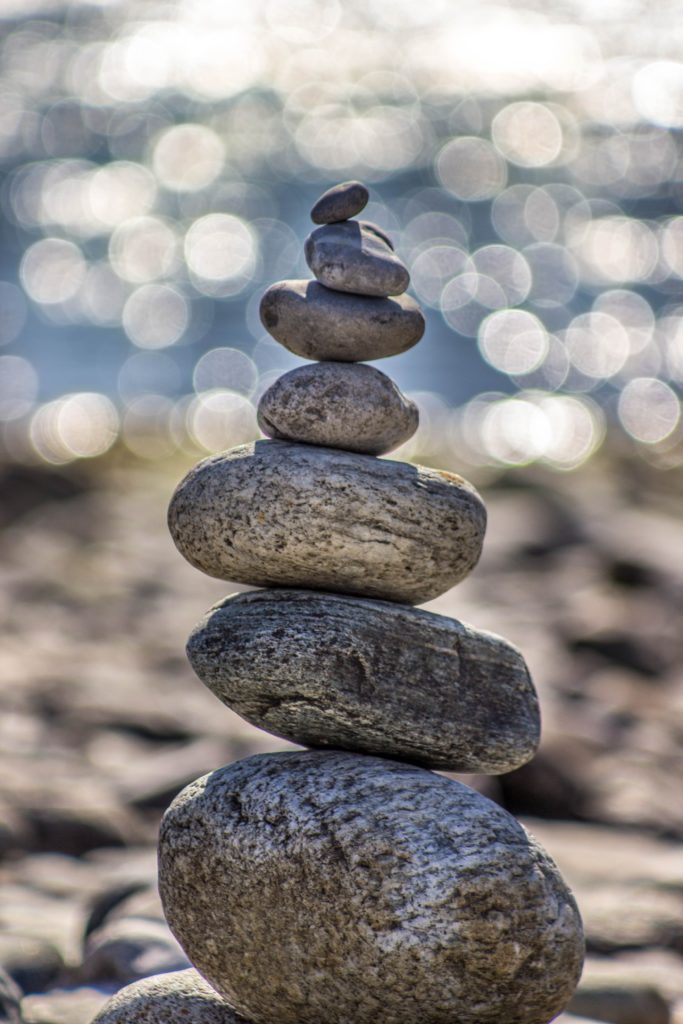
Photo by Deniz Altindas on Unsplash
Balance is, according to a quick internet search, “a condition in which different elements are equal or in the correct proportions.” I’m constantly running into articles, blogs, books, opinions and speakers who talk about balance. It’s an important concept these days: Balancing family and jobs, balancing creative life with paying-the-bills-life, balancing technology with face-to-face connection, balancing our diet (and our bathroom scales), balancing our exercise, balancing our time and our checkbooks. With so much discussion out there, I wonder why many of us are so remarkably bad at it.
I think finding balance requires two things. The first is clarity — the willingness to look honestly at our lives and our choices. The second is taking responsibility for the fact that we do make choices.
I don’t know a soul who finds either one of these easy, and I also don’t know anyone who always feels great about the balance in their lives, in spite of what they may say.
Note in the definition above the language “correct proportions.” What are the correct proportions? You tell me. Are you happy? Are you healthy? Do you find your life meaningful? Do you enjoy your home, your relationships, your work, a good night’s sleep? If the answer is no, and you want things to be different, I suggest you work with the idea of balance.
It so happens I came across a great exercise for this years ago in a book called Home Sanctuary by Nicole Marcelis. I was just out of an abusive marriage and this book became an important part of reclaiming myself, my life and my home. In it, there’s a chapter on balance.
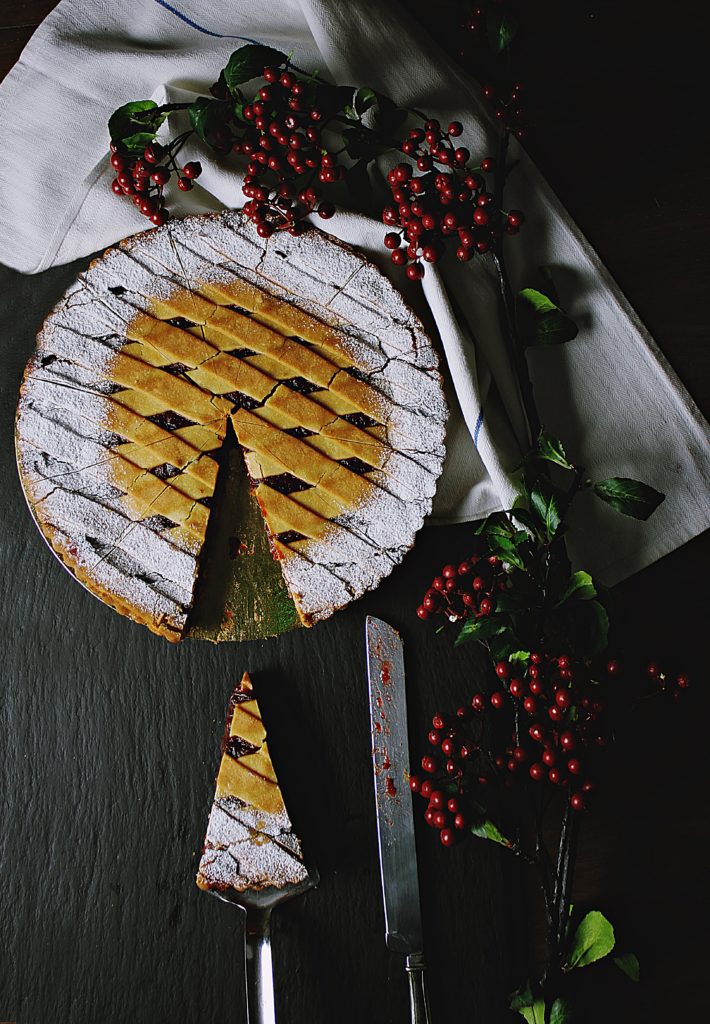
Photo by Toa Heftiba on Unsplash
The exercise asks you to make a pie chart and consider each piece of your life, calculating how much of the pie that piece takes up. Yes, you include sleep. You can make a pie chart for a day, a week, a month, or any increment of time you choose. Then, if you like, you can take each piece of that first pie chart and make another pie chart. If one of your pieces is parenting, for example, you might break parenting down into playtime, laundry time, cooking and food time, taking walks, reading aloud, visiting doctors, etc.
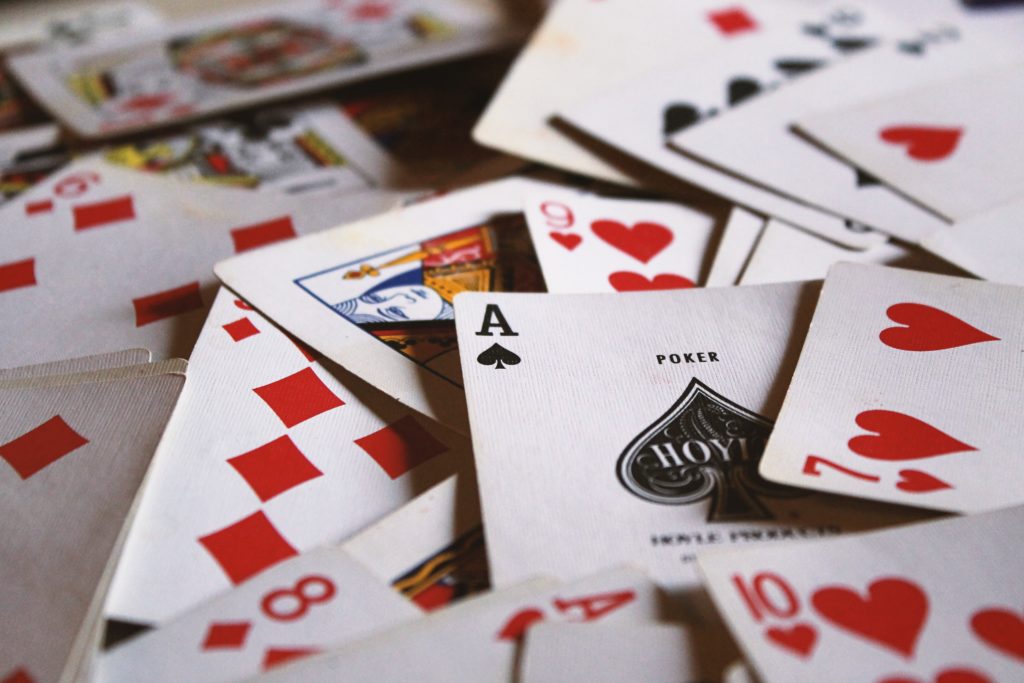
This exercise has absolutely no value (except to let you play with big pieces of paper and crayons) if you’re not willing to do it honestly. I, for example, am a solitaire junkie. I can play solitaire on this laptop for hours. Literally. Whenever I’m upset, or bored, or trying to regulate my feelings, I play solitaire. I feel like it soothes my anxiety when all the cards fall into neat little piles. I tell myself (and others) I’m planning what to write, or making a grocery list or writing an email, but that’s just bullshit. I’m playing solitaire and I’m feeling numb.

Photo by Jack Hamilton on Unsplash
A game or two of solitaire is not a problem. I don’t feel ashamed. An hour or two is getting out of control. Three or four hours and I’m hiding it from my family. I do feel ashamed. I have a partner, a blog, a job, and I’m writing a book. I live in a beautiful place and love to be outdoors. What’s up with sitting for hours playing solitaire? Something is wrong. I’m out of balance.
Don’t be a weasel with this. Watching TV with your mate does not count as quality relationship time. Watching TV with your kids is not great parenting time. Don’t lie to yourself about your relationships. Connection time has to be connecting for everyone involved. Family mealtime is nothing but a sham if someone spends it on their tech device or you’re glued to the TV. (No, news isn’t different than a sitcom!) That goes in your tech or TV slice of the pie. You have to come clean with yourself in order to make real changes.

Photo by Frank Okay on Unsplash
The thing about balance is it’s dynamic. What’s balance for this day won’t be the same for another day. As we stand upright we’re using countless muscles, nerves and our senses to maintain our balance and proprioception. Balance in our lives is the same way. It’s so easy to get off balance, but the good news is one can regain it nearly as quickly.
But only if you’re willing to be honest and claim your power to make choices.
This exercise is fascinating. What I realized was I didn’t really know what I was doing with my time. When you actually count the hours you spend doing whatever you’re doing, it can be a real eye opener. When you’re finished playing with paper and crayons and you look at your life through the lens of these pie charts, then it’s time for some hard questions. Does the way you choose to spend your time reflect your priorities? If you say your family is your priority and 80% of your pie chart is spent working (yes, commuting counts!), then you’re out of balance and you’re also not being honest. If you love the outdoors and want to be exercising more but you don’t because you’re couch locked in front of the TV, you’re out of balance. (Watching Planet Earth doesn’t count.)
The exercise is entirely flexible. It works with any resource, not just time. For example, you can do it with energy. Is there a connection or relationship in your life that demands all your energy? Are you getting as much as you’re giving? Are there other relationships that nurture and reward you that you’d rather be spending time in, but you can’t because you’ve got this vampire attached to your jugular vein?
How about money? Most of us have budgeted at one time or another. Tell me, friend, how much money do you spend on cigarettes? On drugs? On beer? On shoes? Cable TV? Can you buy food? Are your bills paid? Are you working at a job you hate because you need the money in order to support your habits — and are those habits making you happy and healthy?
We all have the same 24 hours in any given day, and we all choose what to do with those hours. This is not so much about making “right” or “wrong” choices as it is about realizing we are making choices. Nobody makes us watch four hours of TV every evening. If we’re longing to do creative work and we tell ourselves and the world we haven’t time for it, all we’re really saying is we lack the will to make it so. Why not be honest and say we’re too afraid to try, or we’ve given our power to someone else, and they say we can’t, or we’re an addict and our addiction has our power?
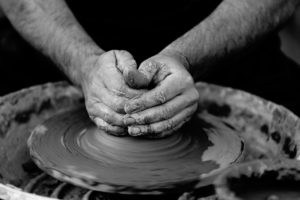
Photo by Quino Al on Unsplash
If you made a pie chart of the kind of life you want to have, with the perfect balance for your needs, how different would it be from what your life is now? What needs to happen to make changes? What can you excise from your present chart in order to free up time/energy/money/life?
Make no mistake, this exercise takes an enormous amount of courage, but the payoff is powerful. I revisit it now and then, just because I like to keep track of what I’m up to, and I want to know my choices are reflecting my priorities. I also note I’ve told people about this exercise, two of whom seemed to have no life outside of work and unhappy partners, and one who spent hours of screen time every day, both TV and computer, but talked about doing all kinds of fun things in the real world. I even loaned my book to one of them. None of them had time for clarity, change or choices.
Silly me.
Solitaire, anyone?
(This is the first post in a series of 4. See also Parts 2, 3, and 4.)
All content on this site ©2016
Jennifer Rose
except where otherwise noted
by Jenny Rose | Sep 8, 2016 | Power

Photo by Bewakoof.com Official on Unsplash
I recently had a discussion with a young friend who’s going through a hard time.
I listened and asked questions, and did my best to enter into her experience. My agenda wasn’t to rescue, fix, or advise, just to let her know I cared and help her think about options.
My intentions were good, but I walked away feeling as though I’d only irritated her and made things worse. Ever since, I’ve been questioning what I said and how I handled this interaction. Was I patronizing? Condescending? Obnoxiously optimistic? Aggressively parental? Didn’t I listen well?
Or maybe my questions were the problem, not because they were bad questions but because they were good questions. I’m reminded of people in my life who have approached my distress with the kinds of questions that made me want to hang up the phone or slap their face. Their questions challenged me to break out of the shrinking cage I was in. They challenged me to take control, take responsibility, face my fear or think outside my usual box.
I’m not sure why, but when I’m good and miserable, or at panic stations, or swept up in powerlessness, I want someone to agree with me. It’s hopeless. I’m helpless. It will never get better. I made mistakes, bad choices, stupid decisions and now I’m paying a price I deserve to pay. I’ve dug a hole so deep I can’t get out without some kind of divine intervention. I have to wait for someone to rescue me.
Sitting here writing this it sounds silly, but it’s not silly when I’m in it. We’ve all had times like this. What I know is that my best friends in crisis are the ones who metaphorically kick me in the butt. They won’t walk down the pity path with me. They won’t agree that it’s all over because I screwed up or made bad choices. They don’t admit the past was apocalyptic and the future will be catastrophic.
These people keep redirecting me back to what I can do right now to help myself, and away from everything else, and sometimes they’re not gentle about it.
This is tricky because it’s counterintuitive, at least to me. When I’m faced with a problem, I want to square right up to it, obsess, throw myself at it, beat my head against it and leave the rest of my life unoccupied. It’s either an all-out wrestling match or I eat ice cream out of the carton (a big carton!), stop taking showers, binge watch ‘Buffy the Vampire Slayer’ all night and sleep all day.
Neither of these approaches has worked for me. The only thing that has ever worked is to identify where my power is right now and let the rest go. I don’t know why that works. I don’t know how it works, but I know it does.
When I was a low-income single mom, what this meant was realizing summer was ending and the boys would need new winter coats I couldn’t afford, and we would need groceries a lot sooner than that, but I had no money. And yes, I was working. At one point I worked two jobs and attended school.

Photo by Mitchell Orr on Unsplash
Anyway, I developed a habit of shaping the day around what I could do instead of what I couldn’t do. I tried not to think about the next day, the next week, the next winter. I figured out what we’d eat that day from what we had, and I did what I could do — all the things that can be done without money. Like playing with Legos on the living room floor, or taking a walk, or reading aloud to the boys, or doing laundry, or working in the garden, or scrubbing the kitchen floor.
Some days were so hard I just lived five minutes at a time. It was all I could handle.
My kids are in their twenties now. All those five minutes, all those one-day-at-a-times passed and we weren’t homeless, we weren’t without food and we always managed winter coats, thanks to Goodwill. I have no idea how it all worked. I didn’t know then and I don’t know now.
Now, it’s true I found jobs, got trained and educated, did without things like cell phones and cable TV. I did what I could to help myself through those years, and I had a lot of outside help, too. But my point is I tried not to get stalled with my nose touching a brick wall. I tried to look in another direction — in a direction where I could make choices. Doing that didn’t make the brick wall disappear, but somehow it allowed me to move past it.
Getting back to my friend, I tried to ask questions about where she did have power, but she felt powerless in every direction and the questions only reinforced the feeling instead of helping her reconsider her situation. I left the conversation feeling upset and frustrated and decided I needed to take a step back, give my friend space and let it all unfold.
Interestingly, in the time between that conversation and this minute, my friend got what she needed from someone else, made some hard choices and now sees her way ahead, at least for a few steps.
What I’ve learned from this is that no matter how much I love and care for someone, no matter how much I want to share what I’ve learned in life, sometimes I just can’t be useful or effective. That doesn’t mean, however, that my loved one won’t get what they need from someone else. I’m trying hard to persuade myself this doesn’t make me a failure, but it’s uphill work. Additionally, I have a sneaking suspicion that part of what I feel is nothing more than injured pride. As long as I’m confessing, there might be jealousy in there, too.
I’ve also relearned the thing I wanted to teach. It was clear to me I couldn’t be an effective support to my friend, I couldn’t make her feel better, I had nothing to offer she could use. However, two cords of wood were sitting in our driveway, so my partner turned on music and we stacked it in the barn. He and I cleaned out a closet and I got my fall/winter clothes handy. I was scheduled to work on Labor Day weekend and the day after, so I showed up for work and did my best. I wrote a few pages of my current book and I wrote this post. Today I swim. It was in the middle of all this that my friend came to me with the beginnings of her own solutions to her own problems.
Maybe my love and concern were only an added pressure for my friend. Maybe the most helpful thing I did was step back and live my own life. That, after all, is where my power is.
I just wish it didn’t feel so inadequate.

Photo by Jan Phoenix on Unsplash
All content on this site ©2016
Jennifer Rose
except where otherwise noted
by Jenny Rose | Aug 25, 2016 | Power
Last month I posted about our power and ability to say both yes and no to others. This morning I’m thinking about another level of yes and no; that is the yes and no we say to life. At this level, the term ‘consent’ is useful. Consent means to “give permission for something to happen,” according to a 2-second search on Google.
Consent is a huge and complex topic and there’s a great deal of discussion about different aspects of it. For the purposes of this post, I’m using consent in the widest sense; the way in which we approach life.
Several interactions this week have made me think about the mysterious difference between people who consent to learn and grow and those who don’t. When I think about my observations, and people I’ve known, it’s clear to me the difference between these two kinds of people has nothing to do with age, sex, money, education, employment, intellect or family. It has nothing to do with the color of our skin or the god(s) we worship, or where on the planet we live, or what kind of horrors we might have endured.
I’m acquainted with a writer who sent me a piece in praise of stubbornness, a quality she admires (as do I) in herself and others because to her it means a determination to survive and do well, regardless of limitations, real and perceived. (Thank you, A!) We might mean the same thing by consent and stubbornness, or close to it. I see the ability to consent to learning and growth, over and over, no matter how many times we’re knocked down and cut off, as a kind of stubbornness — a refusal to give up, to close down, to conform to something that doesn’t work for us.
Without even trying I can identify seven people in my life, past and present, who don’t consent to the experience of life, the flow, the dance, the mystery and uncertainty, the synchronicity and the billions of invitations that arise for exploration, connection, understanding, growing and being.

Photo by Alex Iby on Unsplash
These folks are easy to spot. They resist. They argue with what is. They deny, distract, fall into various addictions. They don’t communicate effectively. They care about winning, being right and power-over. They have rigid stories and expectations. Everything that happens to them is a personal insult or a crisis. They’re victims. A good, deep question is a grave threat. To my eyes, they look miserably unhappy. They repeat the same patterns, over and over, dying a little more with each fruitless repetition. They do not consent. They refuse.
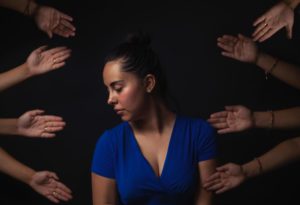
Photo by Cristian Newman on Unsplash
Every single one of the seven people I’m thinking of has had opportunities to learn, to grow, to change, to make different choices. They all had people in their lives who loved them and had information, tools and skills that might have enriched them. They all had people in their lives who valued them and wanted their contribution. They each had at least one person in their life who would have done anything to support them in learning and growing, and that person was me.
Most of those relationships are behind me now, because I have this unforgiveable quality of consent. My life now is based on the why, the what if, the whose rule is that, the help me understand. My life is about teach me, show me, share with me and what do you think? My life is about doing more of what works and letting the rest go. People who refuse and people who consent invariably have friction, because their needs are opposite. There’s just nowhere meaningful to go.
People who consent are not perfect or perfectly happy people. On the contrary, their lives have been filled with mess and miscalculations, abuse, addictions and other painful experiences, but they’ve learned from everything and everyone. People who consent don’t look at their lives with bitterness or frame things as mistakes. They see teachers, opportunities and fascinating things learned and yet to learn. People who consent are endlessly curious. They think about what they don’t know and question what they think they do know. They seek the hidden thing. They’re more likely to ask questions than proselytize or lay down the law. They’re not interested in power games or being right or winning. They seek to understand, to explore, to exercise choice, to manage their own power. They can laugh at themselves. They can and do say no, but they say it to protect their integrity and needs, not to shut out or control life.
People who consent choose happiness. That’s the most important one for me. I’m still reaching for that. I’ve always been a person who consents, but I’ve also chosen to stay limited in many important ways. As I’ve learned to discern between refusal and consent, I see that living life from a state of consent results in joy. Again, it’s got nothing to do with age, beauty, money, status or any of the things that the culture says we’re defined by. Joy, at the end of the day, is a simple thing, arising out of being at peace with this wild ride we call life. Joy is consenting to surrender, consenting to feel and experience, consenting to feeling fear and doing it anyway, consenting to give up trying to control the things we can’t control. Joy is composed of tears, blood, loss and disappointment, pain and growth. We already have it. It’s here, sitting on your shoulder as you read this and mine as I write.
All we have to do is consent.
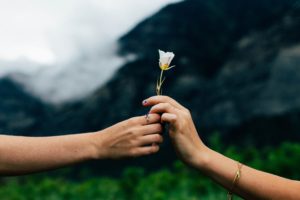
Photo by Evan Kirby on Unsplash
All content on this site ©2016
Jennifer Rose
except where otherwise noted
by Jenny Rose | Jul 28, 2016 | Emotional Intelligence
A year and a half ago I left everything I knew and traveled halfway across the continent in a U-Haul to start a new life in Maine. I’d never even bought a plane ticket for myself before. I’d never taken a road trip. I’d never lived anywhere but Colorado. I’d never been to Maine. I rented my little house, which I’d never intended to leave, and I’d never been a landlady before. I had very little money, and in fact had to borrow money to accomplish the transition (which I’ve since paid back).
I was 51 years old.
As you can probably imagine, this decision was not met with enthusiastic support from all sides.
How this impacted my relationships will be a subject for future posts. Today I want to answer the question no one quite asked, but everyone wanted to:
WTF?

Photo by SHTTEFAN on Unsplash
It’s complicated, of course. It always is. The short version is that I slowly realized I was living a life that didn’t feel like my own. Nothing fit right. It was as though I’d been wearing clothes and shoes from someone else’s closet. My life was a tiny room that got a centimeter smaller every day. I lost a relationship, the neighborhood diner and my dearest companion. I woke every morning knowing I would fail, no matter how hard I worked at…everything. I felt like a character in a play someone else had written and I began to drop my lines.
The most remarkable thing about that time wasn’t that I was having an unusual experience. I’m certain many of you reading this can relate to my experience. No, what’s remarkable is that few people knew how it really was with me, which was exactly how I wanted it.

Photo by Hailey Kean on Unsplash
I had a beautiful little house that everyone loved. I had friends. I had a garden. I lived in a lovely place that had been home for nearly twenty years. I was financially independent — as long as nothing unexpected happened. I had my music, my movies, my books, my early morning walks, my comfortable bed, my dance group, my small luxuries. I had a good life, and I wasn’t happy. I was deeply ashamed. I was also unbelievably, unbearably, terminally lonely.
I began to write more, not with any plan or hope, but because I had to. Because it was the only thing I really enjoyed. It was the only time I felt real. For various reasons I felt unable to seek support for my writing locally, so I went online and connected with other writers. One of the writers I connected with was a life coach who teaches emotional intelligence.
I decided to work with him, and that’s when it all began to change.
I’m not going to try to sell you on life coaching. You’re online right now — research for yourself. There are lots of articles and sites to look at. I’ll let the coaches sell themselves. What I want to do is give you reasons not to do it, because if you hire a well-trained, certified, experienced coach and you’re serious about the work your life is going to transform, and an exhausting, bloody, terrifying experience it is. Creating new life is damned hard work. Ask any mother.
So here we go. Don’t do life coaching if:
- You don’t want things to change, both internally and externally (good luck with not wanting things to change, by the way!).
- You’re not really willing to invest time and money in yourself.
- You’re looking for a therapist or prescription medications, or you’re struggling with serious mental illness.
- You don’t want to take responsibility for your power, life and choices.
- You don’t want to deal with your feelings.
- You’re perfectly happy with your current role of victim, martyr, addict, people pleaser, passive aggressive, etc. (But in that case you might recommend life coaching to someone you’re in relationship with. Perhaps they could use it!)
- You don’t want your creative life to blossom.
- You don’t want to be honest.
- You don’t want to learn new language, strategies, coping mechanisms and communication skills.
- You don’t want your relationships at work, in your family and with your friends to become healthier, more honest and more effective.
- You don’t want to become a more effective and loving parent.
- You don’t want to cut out of your life the habits, relationships, behaviors and beliefs that are holding you back.
And so how, you ask, has it worked out so far? The coaching, the move, the new life?
Guess what? It’s not perfect. I miss parts of my old life. But I live with meaning, learning, creativity, humor, curiosity, joy, love and companionship. I recognize myself. I like myself. I feel useful and successful. I’m learning to be more honest.
The coaching, the move, the new life?
Best thing I ever did.

Photo by Annie Spratt on Unsplash
All content on this site ©2016
Jennifer Rose
except where otherwise noted
by Jenny Rose | Jul 21, 2016 | Choice, Power
I had some feedback on last week’s post indicating I’m not the only people pleaser around! Here are some good articles about learning to say no from Lifehacker, Zen Habits, and Psychology Today.
People pleasing is connected to several other pieces of interpersonal functioning, like boundaries, power, authenticity and integrity.
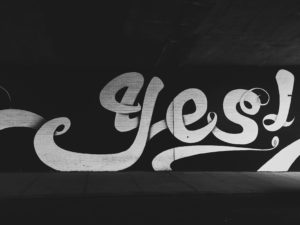
Photo by Jon Tyson on Unsplash
The inability to say yes is as problematic as the inability to say no. If you can’t say yes, your no is meaningless. If you can’t say no, your yes is meaningless. This damages relationships with others, sure, but I think the more significant damage occurs in our relationships with ourselves. How can we trust ourselves if we don’t take responsibility for making and communicating honest choices?
It doesn’t matter if the relationship we look at is professional, family, peer or romantic. If we’re too cowed to give an honest yes or no, how healthy is that relationship? Why is someone trying to take away our power and, more importantly, why are we letting them?
I know. Love. Obligation. Even fear. But wait.
Photo by Gemma Evans on Unsplash
Do you feel loved when you can’t speak an honest yes or no without receiving indifference, withdrawal, scorn, drama, rage, sarcasm, a physical blow, tears or an emotional outburst? Maybe your intention is to love and be loved, but is that really happening? How can you be loved if you’re not showing up honestly? If you’re loved for your compliance, your compliance is what’s getting loved, not you.
Do we have an obligation and a duty to be connected to people who don’t respect our yes and no? Do we owe that to someone because they’re family, or someone we have history with, or our boss, or someone we want to love or be loved by? Who says? Did you sign a contract at some point?
And then there’s fear.
At this point in my life I’m not as concerned as I once was about making the wrong choice, whatever that means. I’m more interested in being clear about the choices I am making and why.
So, just to be clear, I’m choosing to stay in relationship with (fill in the blank), even though I’m not allowed to say yes or no honestly without (fill in the blank). I’m doing that because I hope one day they’ll love me, or because I owe it to them, or because I’m afraid of them. I’m doing it, in short, because they have something I think I need.
Now, pay attention.
They have something I need.
Do they really? Are we sure? Is the job or relationship or inheritance or influence more important than our ability to live authentically and fully in our own power?
If your answer to that is yes, I understand. I was in an abusive marriage for a time because I had two young children, no job, no car, no money, no childcare and no hope. I deliberately chose that relationship because I didn’t know how to survive without the financial support my husband provided. My children and I paid a heavy price, but he did help keep us afloat during a critical time. The marriage didn’t last, of course. Even now, on a summer morning more than twenty years later, I don’t know what else I might have done. I don’t know what might have happened to us if I hadn’t made the choice I made. Maybe something much healthier. Maybe a homeless shelter.
This, my friends, is the ancient and powerful archetype of prostitution, and we all participate in it in some way at some point in our lives. It’s part of being human and is much larger than the specifics of sex. More on archetypes later.
When you look at your relationships through this filter of making and communicating honest choices, what do you see? What’s your role in this dynamic? Are you the one who can’t say yes or no, or are you the one who can’t hear them? Why are you engaged in this dynamic? How is it working for you? Are you happy with yourself, and with your connections? Are you interested in learning how to do things differently?
All content on this site ©2016
Jennifer Rose
except where otherwise noted