by Jenny Rose | Aug 3, 2017 | A Flourishing Woman, The Journey
I’ve been blogging now for a year.
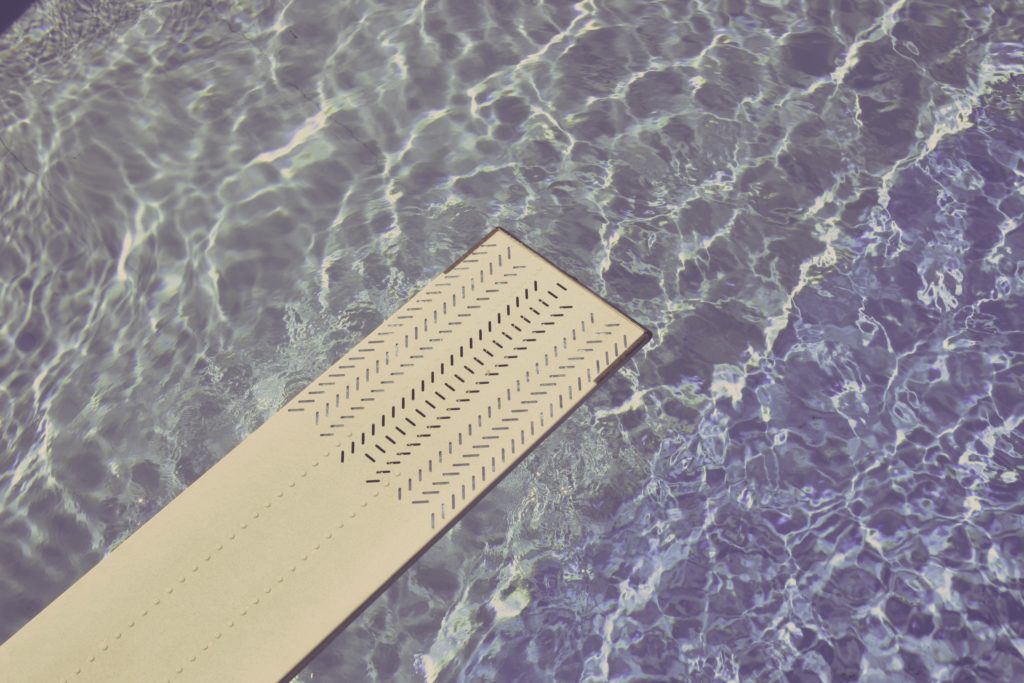
Photo by Markus Spiske on Unsplash
I remember the first time I stood on a high diving board as a kid. The safe haven of the water was impossibly far away. I did eventually jump, but I stood, hesitating, for a long time.
Beginning to blog was like that. Could I manage the technological learning curve? Would I have time to do a good job? Did I have anything to say? Would I have to deal with spammers, hackers, hecklers and hate mail? Would anyone read it? And, the biggest Boogeyman of all, what would people think when I revealed who I really am?
I researched. I read dozens of articles on blogging. I made lists of do’s and don’ts. I bought a book on blogging.
I hesitated. I worried. I doubted myself. I clung to limits, obstacles and fears.
Then, in the middle of a personal and emotional catastrophe, the very last time I would have chosen or planned such a risky, frightening new endeavor, I suddenly started. I suppose I felt I had nothing more to lose.
This summer I’ve been taking stock of what I’ve created, what I’ve learned, my long list of mistakes and my intentions for the future. I’ve been a member of She Writes and Medium. I follow several other bloggers. I went into my Favorites and deleted most of my Blogging folder and then started filling it up again with new articles on Intermediate blogging.
There are hundreds, if not thousands of articles about blogging on the web. What I notice is 19 out of 20 are geared to successful blogging, which is to say blogging with the most possible likes, looks, shares, clicks, referrers, subscribers, advertising and side bar businesses, all of which can translate directly into income for the blogger. The Holy Grail is to go viral with your blog. To this end, the advice is repetitive. Use sentences of five words or less. Use short paragraphs of two or three sentences. Use lots of images, video, bullet points, colors, fonts and section titles. Keep your posts short and to the point. Carefully construct a title that will result in as many clicks as possible. Convince the reader you have something of value they need. Don’t be emotional or personal. You can’t be successful unless you have several active social media accounts.
I read, saved, took a few notes, and then realized I didn’t want to do most of what these articles said I should do. I paused and thought about that for a couple of days. I looked at my stats. I talked with my partner. I groped for a bottom line.
I absolutely love blogging/writing.
Why?
Because when I do it I’m real. Every single week I write about something real. Most weeks I struggle with what other people might think, but at the end of the struggle I again choose to be seen. I stare down that fear of using my voice and speaking up. I’m taking my power back, week by week, post by post, line by line.
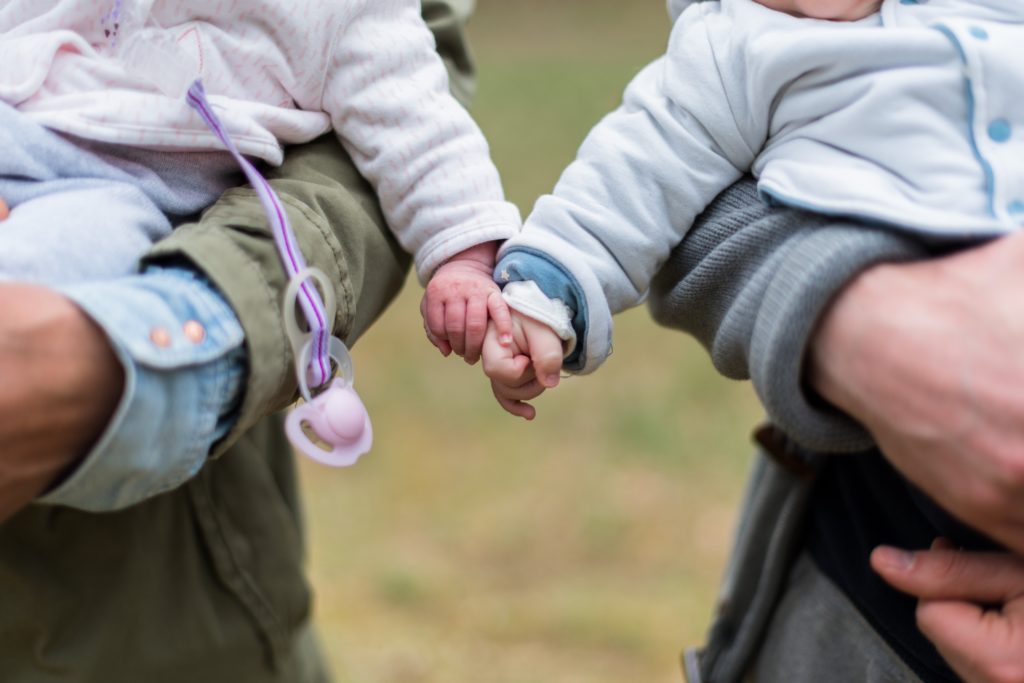
Blogging and writing are my way of building bridges and fostering connection, to myself, to others, and to life. It’s the medicine I can offer to aid in healing. It’s my hug, my love letter to the world, my kiss of peace. It’s my outstretched hand, regardless of whether or not others choose to clasp it, ignore it or spit on it.

Photo by Alona Kraft on Unsplash
My feeling of success about writing a book and creating a blog isn’t attached to any of the general markers of success among bloggers. We have all kinds of programs that help us gather statistics on the web, but my heart doesn’t thrill to hundreds of clicks or fall if there are only five. None of these stats tell me anything about the quality of my contribution to my readers, and that’s the only stat that interests me. I don’t have anything to sell you. I don’t assume I have anything of value to you. I never expected to make money on my blog.
I just am. Myself is all I have to give, and what I really want from you is just … you.
I’ve been honored to achieve simple connection with others through Our Daily Crime. Some I know about, because people comment. I may be making other connections that remain invisible to me. Contrary to the best advice, I don’t have social media accounts. I don’t have a Facebook page. If a reader connects with my words or finds some kind of value in the experience I share and doesn’t comment or email me, I don’t know anything about it, but I have faith. I believe there are others out there who think about relationships, empowerment, being a woman, and what it means to be alive on Earth today. I believe there are readers who can deal with sentences more complex than five words and read a paragraph of several sentences. I think a post about rules for success should be titled, clearly and honestly, Rules For Success. I’m not a click bait engineer.
I don’t regret a minute of research or reading I’ve done about writing and blogging, and I wish those writing advice the success they seek. They’ve helped, especially their content that I couldn’t use. All those rules set off a lot of feelings. I hardly ever met a rule I didn’t want to challenge, and my feelings showed me the way into my own definition of success.
I find it useful to have goals and intentions, to know what kind of outcome I want, but the fact is I don’t always know. Some things are so unknown and such a personal leap of courage or faith that to insist on exactly defined goals before beginning is to never take action. Jumping inelegantly off the high dive into blogging was all I could manage last summer. I couldn’t define an audience, a goal or an intention, except that I was damned if I would let fear stop me from trying. It’s only now, 50 posts later, that I begin to understand what I’m up to, and it’s not necessarily the same as what other bloggers are up to.
Here’s my favorite story about success. This version is from One Bird One Stone by Sean Murphy.
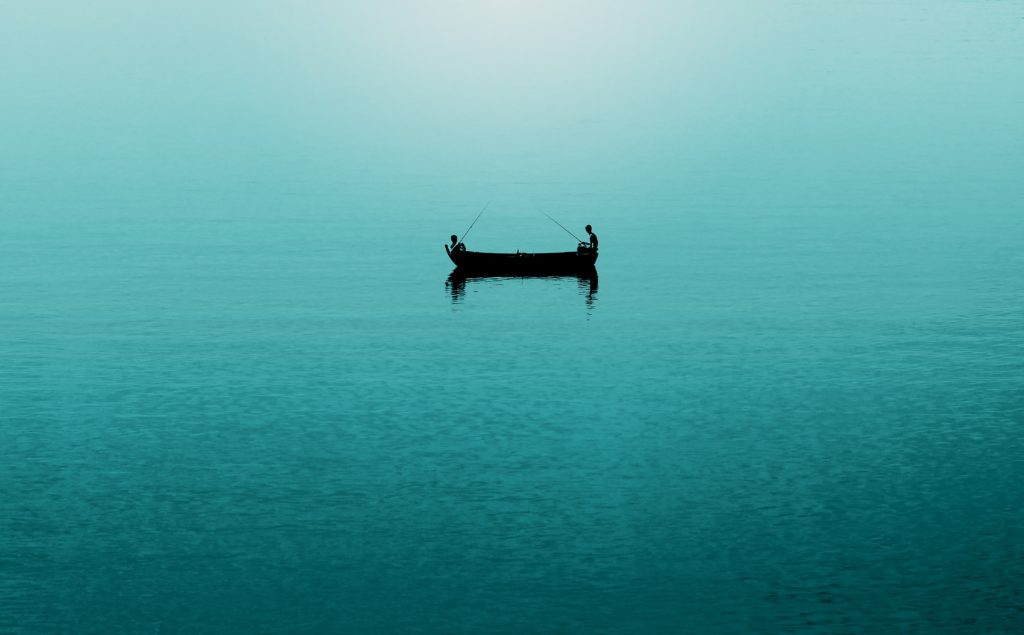
For 40 years, a fisherman in China used a straight needle to fish. When someone asked him, “Why don’t you use a bent hook to fish with?” he replied, “You can catch ordinary fish with a bent hook, but I will catch an extraordinary fish with my straight needle.”
Word of this came to the ear of the Emperor, and he went to see this fool of a fisherman for himself. Laughing at the sight of the fisherman’s straight pin, the Emperor asked, “What are you fishing for?”
The fisherman said, “I’m fishing for you, Emperor.”
Photo by Steinar Engeland on Unsplash
Thank you for reading my blog. You’ve helped make it a success.
All content on this site ©2017
Jennifer Rose
except where otherwise noted
by Jenny Rose | Jul 20, 2017 | A Flourishing Woman, Body
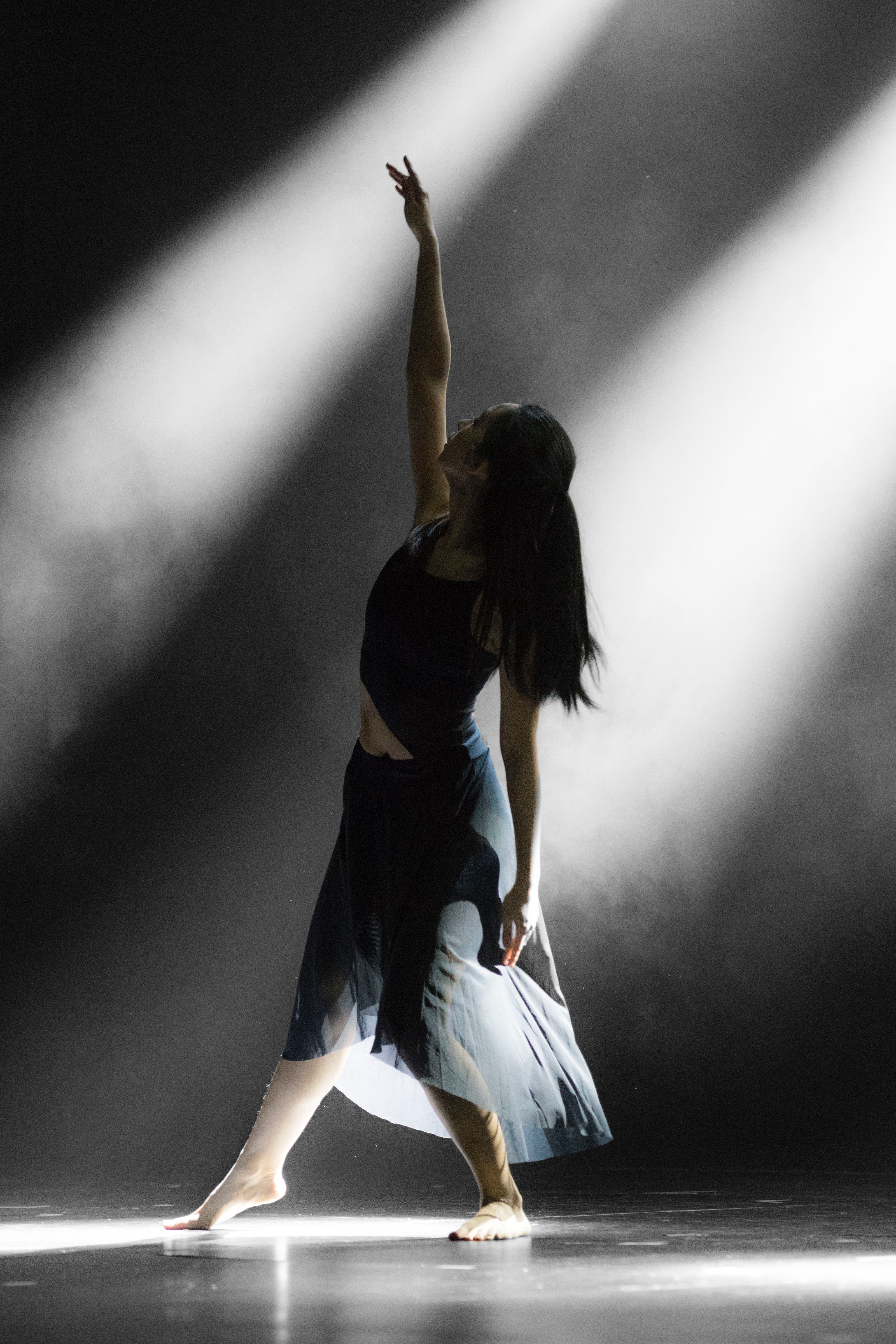
Photo by Leon Liu on Unsplash
Last night we danced. I’m patiently and persistently attempting to root a dance group into this community. It’s taking time, but I hope in the end to have a healthy core of four or five women with whom to share this sacred practice.
As I danced, I remembered an old friend with whom I danced in Colorado. She used to often say, at the end, as we sat in a circle holding hands, “It’s so good to be in the body.”
Not in the head, where family and other relationships, financial and political complexities, expectations, rules, to-do lists and all our internal voices reside, but in the body, right now.
Our bodies contain a childlike innocence and a wisdom beyond words. They communicate to us the truth about how things are with us via feeling and sensation. Patiently, they carry us through our lives, our most loyal and faithful companions. Persistently, we neglect, abandon and abuse them.
Somewhere along the way, we’ve learned to reject, be ashamed of and hate our physical being and experience. Now we’re to the point where bodily functions tied to being biologically female are a matter of political incorrectness and a hate crime. Social pressure is increasing to eradicate the very words that define female physical experience.
But dance is for everybody in every body, and the spiritual practice of dance has taught me to honor, protect and care for my physical self in new ways. There are no labels in dance, no gaslighting, no power-over that seeks to diminish or limit my physical history or expression. Dance is wordless, so there are no language police. Dance is the freedom to belch, to fart, to wiggle, to jiggle, to giggle, to cry, to shout, to play and to sweat.
Allowing my body to be and joyfully inhabiting it has been a powerful act of self-love. It means allowing my hair to grow as it will, where it will, in the color it is. It means moving with dignity and pride. It means gratitude, for my life is a journey mapped onto my flesh. Every mole, freckle, stretch mark, scar, lump, bump, line, wrinkle and vein holds part of my story, and I honor story.
Being in my body is a powerful act of surrender, not to what the culture says I must be or not be, not to what I think I should embody or not embody, but to what I am. Simply that. The unique, miraculous complex system of genetic material, living tissue, viruses, bacteria and chemical processes that I am.
Allowing my body to be is a peace treaty. My body is not for the pleasure or evaluation of others. It’s not for sale. My body and I owe nothing to anyone, not explanation, apology, conformity, obedience and especially not shame. I refuse to go to war over gender, sexuality or political correctness ideology. I decline to support or participate in self-hatred or hatred of other bodies. The power of my body transcends the judgements, criticisms and opinions of others.
The deepest language I know is of the body. Words are inadequate to my passion, to my love, to my creativity. Spoken and written language fails to convey the richness of my body’s capabilities.
The tick crawling high on the nape of my neck along my hairline, the feel of its tiny claws stirring each hair as it seeks a good place to fasten on, gives me a physical experience so vivid and visceral it cannot possibly be conveyed in words. My skin shrinks, telling me what the sensation is before I examine the cause with my eyes. Undisturbed hair around its path rises, quite automatically, in response to the small but ominous trespass. It feels solid and smooth as an apple-seed between my thumb and finger as I pinch it off. It hurries up and down a bookmark, chestnut colored, as I transport it down the stairs, almost as though it knows it’s been seen, recognized and a death sentence passed.
We come out of our favorite restaurant after a meal on a hot, humid day and find a snake clothed in brown and green, voluptuously twined around our right front tire. My partner stoops and grasps it and it curls and writhes as it dangles from his hand, twisting between the newly-laid black tar and the heavy sky, glaring with sun, humid as a steam bath. My partner takes it into a nearby field and as he comes back he holds out his hand with a rueful expression, showing me beads of bright red blood, dazzling as rubies, on his finger, and two parallel shallow cuts that sting, he says, like paper cuts.

Photo by Leon Liu on Unsplash
Last night I danced with the tick, the snake, the rasp on my knee from falling on the front cement steps, their uneveness hidden by the encroaching hostas, blooming now on thick, fleshy stems, their lavender flowers plundered all day by bumblebees.
I danced with the rattling air conditioner lodged into a window of the recreation center activity room. As usual, we traded the rise in heat and humidity in the room with the lower and quieter fan setting.
I danced with a dead fly on the wood floor, trying to avoid stepping on it with my bare foot. I danced with a living large black ant, bewildered, crawling across what must have seemed like acres of flat, featureless terrain, also not wishing to step on it, but too involved in the flow of the music to stop and take it outside.
I danced with my breasts and belly and thighs, with my feet and elbows and wild hair. I danced with trickles of sweat and a wet upper lip. I danced with my tattoo and swaying earrings and sliding silver bangles. I let myself go. I let myself be. I let myself sink into my body as though sinking into a lover’s arms, for I am my body’s lover, and it is mine.
I danced, and remembered again how good it is to be in the body.

Photo by David Hofmann on Unsplash
All content on this site ©2017
Jennifer Rose
except where otherwise noted
by Jenny Rose | Jun 29, 2017 | Connection & Community, Emotional Intelligence, Shadows
I’m getting ready to turn over the manuscript of my first book to a developmental editor. Getting ready means I’m doing one final read through and combing out overused words and phrases using the search (and destroy) feature in my word processor. Over the months and years I’ve been working with my book and mastering the mechanics of writing, I’ve learned a lot about language and my own personal tics and patterns. The biggest problem I’ve found in my writing is unconsciously using passive voice.

Photo by freddie marriage on Unsplash
On the face of it, the process of cleaning up a manuscript is straightforward and occasionally mind-numbingly tedious. Looking at 4000 plus occurrences of the word ‘was’ throughout 1000 plus pages is not filled with giggles and takes a long time. I entertain myself with battleship noises every time I eliminate ‘was’, ‘were’, ‘had’, or ‘have’. I also come up with amusing similes for the process. My favorite is that editing is like combing nits out of a child’s hair.
On the plus side, this practice opens up a lot of time in which to notice my unconscious language patterns and think about how word choice reflects my choices in every other aspect of life. Editing word by word in this way is also a great habit breaker. When I write ‘had’ or ‘have’ now I notice it.
In the past, I’ve also overused ‘gently’, ‘lightly’, ‘quietly’, ‘a little’, ‘went’ (that’s a common one), and ‘softly’. As these patterns become visible to me, I ask myself with some annoyance, why not ‘fiercely’, ‘loudly’, ‘a LOT’ or ‘strode, galloped or dashed’?
I’ll tell you why not. Because I’m female and my culture has successfully taught me to make myself small. That lesson is so central and ubiquitous I’ve only recently been able to identify it and organize resistance. The message is impossible to see until you see it, and then you can’t unsee it.
Do you know the old French fairy tale of Bluebeard? A serial wife killer instructs his latest victim to refrain from opening a door in his castle, the door a particular little key opens. Then he leaves her alone with his keys (of course). In his absence, Bluebeard’s young wife and her sisters explore the castle, opening every door, and (naturally) the wife is persuaded there’s no harm in just peeking behind that last forbidden locked door. In the room they discover a row of headless bodies and a pile of heads belonging to Bluebeard’s previous wives. They exit the room (as you might imagine) and conspire to pretend they never unlocked the door. The only problem is the little key that unlocked the door begins weeping drops of blood and nothing they can do makes it stop. Bluebeard returns, discovers the infraction, and … I won’t tell you what happens, because different versions of the story end differently. This fairy tale is embedded in my own book. The point is, once some things are understood and seen, they can’t be unseen. There is no going back.
So, consider this commandment with me: Make Yourself Small.
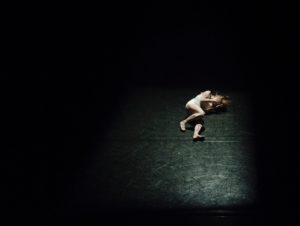
Photo by Hailey Kean on Unsplash
- Adhere to the arbitrary cultural ideal of acceptable attractiveness. If you can’t, hate your body, torture it, starve it, distort it, color it, shave it and beat it into compliance. Make yourself conform.
- Let media, social media, experts, professionals, your favorite news channel or radio host, your religious leader, your parents, or the men in your life tell you what to believe and what to think. Don’t you bother your pretty little head trying to understand anything.
- Make your sexuality, passion and lust small. In fact, make them invisible (you slut).
- Make your intelligence nonthreatening.
- Tame your creativity.
- Don’t ask questions. Don’t search for clarity and truth. Don’t do your own research. Restrain your curiosity.
- If you must have needs, make them as infinitesimal as possible. Your needs are dust in the wind compared to the convenience, habits and preferences of others.
- Be silent! You are disqualified from having an opinion. Don’t tell your truth. Others are speaking. Censor your voice. Don’t make anyone uncomfortable.
- Capture, restrain, cage, shackle, chain and abandon your dreams. Who do you think you are?
- Deny, belittle, smother and minimize your feelings. Control yourself!
- Shame on you! Cringe, cower, hide your head! You’re bad and wrong!
- Be self-contained. Be self-sufficient. Don’t take up too much space. Move lightly. Don’t spend too much money. Don’t be too dramatic. Don’t be too sensitive. Don’t order dessert. Don’t attract attention. Don’t breathe too much air. MAKE YOURSELF SMALL!
You get the idea, I’m sure. This list goes on and on. The message is everywhere, and we’re all affected. It cuts across social, racial, economic, political and gender divides. Failure to toe the line, whatever that line is, results in harsh social and professional consequences, up to and including death. Show me a headline and I’ll pick out this theme. I trip over it a dozen times a day in my own life. Spend five minutes on Facebook reading any thread on any subject and you’ll find this underlying message.
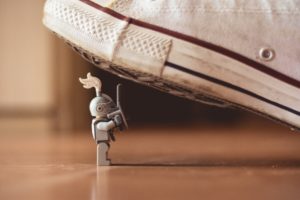
Photo by James Pond on Unsplash
The surrounding cultural mandate to make ourselves small is toxic, but it’s not the heart of the problem. The heart of the problem is our internalization of the mandate before we’re even aware of it, and then it becomes so woven into the fabric of our experience we no longer discern it.
Ironically, stubbornly pursuing my passion for writing and my determination to be bigger is what reveals to me the outlines of my own self-sabotage. My habit of making myself small has trickled all the way down to the words I choose. Editing my manuscript has become editing my thoughts and choices, and noticing the words I write and think in helps me notice my feelings.
My feelings contain a lot of fury and a lot of rebellion, far more than I was aware of when I created this blog last summer. Minor friction with my partner about planning a day or how we utilize counter space taps into a deep vein of lifelong rage and pain about allowing and participating in my own repression and oppression. I have systematically colluded in my own erasure. I’ve agreed to make myself small. I’ve agreed to abdicate my power.
No more. I opened Bluebeard’s chamber, and saw what it contained. The key that unlocked the door was writing, and I’m deleting all the blood-stained words that make my art small. If I fail as a writer, I’m not going to do it softly, gently, lightly or a little. I’m going to do it thunderously, monumentally and profoundly.
It’s time to make myself big.
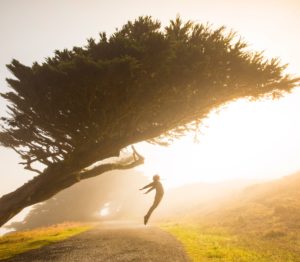
Photo by Stephen Leonardi on Unsplash
All content on this site ©2017
Jennifer Rose
except where otherwise noted
by Jenny Rose | Jun 1, 2017 | Authenticity, Emotional Intelligence, Needs
Life coaching transformed my experience in several powerful ways. For me, however, there’s one central concept underlying all the new language, ideas, strategies and choice-making that has so reshaped myself and my life.
Every one of us has needs, and we’re driven by trying to get them met.
Duh, right? Written on the page like that, it seems ridiculously obvious. It’s not, though. It’s enormously complex and it affects every single choice we make. Let’s excavate a little.
In my old life, I defined needs as things like oxygen, water, food and shelter. Needs meant to me the necessities of survival. Anything else was wants, or even undeserved privilege. To need more than I have at any given moment is inconceivable to me, even now. To want more than I have is shameful. I’ve spent my life with an internalized voice that informs me I should be damn grateful for my resources, because it’s so much more than many others have, and I’ve done nothing to deserve my good fortune.

Photo by Jan Phoenix on Unsplash
It’s undeniably true that I’ve had advantages because I’m white, I’m educated, I’m able-bodied, employed and have the ability to feed myself. I have access to potable hot and cold running water. I have a roof over my head. I have access to health care.
Are these realities of my life a matter of shame? Does wanting the roof over my head to stop leaking make me a privileged elitist? Does it assist anyone who has less than I to go hungry, or stop trying to earn a few dollars?
Privilege is a hot word right now in social discourse. It’s a word that shows up in discussions around gender and sex, racial issues, economic issues and geopolitical relations. Privilege is an important discussion, but the word has been used so frequently, especially as an insult, it’s losing its meaning. Show me any two people anywhere and I’ll show you several different ways in which each one has resources and experiences not available to the other. Privilege is a word pointing to competition for power, and our definitions of power are distorted into insanity. Privilege is too often used as a meaningless black and white label expressing more about the speaker than it does the target.
Do you have a cell phone? I don’t. You’re more privileged than I am. Are you male? I’m not. You’re more privileged than I am. Are you Caucasian? I am. I’m privileged. I’m literate. Definite privilege from my point of view, but according to some, this makes me elitist (another severely overused word). I had and have access to vaccinations. I think this makes me privileged. An anti-vaxer thinks it makes me wrong and stupid.
And so it goes.
Have you noticed how quickly we’ve gone from the simple idea of human needs to politics — social, sexual, economic and geo?
An Internet search defines a need as a “necessity; a thing that is wanted or required.” As I said above, I disagree with the “wanted” part. How do we decide what’s required? Who gets to define that? Requirements take me back to the my basic list: Oxygen, food, water, shelter. I’m convinced anything else is a want.
During life coaching, I was referred to The Center For Nonviolent Communication. They have a needs inventory posted that exploded my definition of needs.
Photo by Cristian Newman on Unsplash
The first thing I noticed about the needs inventory is that my needs list occupies only a small fraction of the whole. Secondly, with the exception of food, water, shelter and sex, the inventory transcends anything that can be bought or sold. It’s not about stuff, money, biology, ethnicity, education, religion or “privilege.” In fact, it’s not a list that points out differences at all. It’s about intangible needs we all have in common. All of us. You, me and them.
The first, second, fifth and tenth time I read this list, I cried. I printed it out and stuck it between the pages of my journal. As I worked with it, I felt deeply angry, terribly sad and a kind of furtive relief. Some unknown person or persons had written an inventory expressing the deepest, most secret desires of my heart, desires I wasn’t really even conscious of. I couldn’t afford to be conscious of them.
Was it possible other people wanted what I did? Was it okay to want these things, even normal?
The first time my life coach said to me, “You have a perfect right to get your needs met,” I felt so enraged I nearly hung up on him. It was the biggest, most outrageous lie anyone had ever said right to my face. I told him to never say it to me again.
Photo by Nicole Mason on Unsplash
If I knew anything, it was that I had no needs, and if I ever did entertain such a criminal, inappropriate, shameful and downright stupid thing as a need, it would never, ever get met. My job in life was not to have needs. My job was to meet the needs of those around me. I was terrible at that job, failed it every day, had no hope of ever doing it well, but that’s what I was for in the world.
The second grenade my coach threw was this: “Your needs are as important and not more important than anyone else’s.”
In the following months and years, right up until this day, I’ve been trying to come to terms with the transfiguration of some of my most deeply-rooted and fundamental beliefs and rules. Understanding needs has hung the formerly invisible elephant in my living room with neon lights. I’ve reframed my history and my past and present relationships. Coming to terms with my needs has enriched my relationship with myself and others is astounding ways.
I realize now my needs have always been present, driving my behavior, just as the people around me have been driven by their needs, but I think few of us have access to that central information and understanding. This is ironic, because I’ve always been well aware of what other people want from me; what they expect. What I now understand is what some people want — compliance, submission, adhering to rules and expectations — is surface behavior masking the simple need for personal power.
As I said earlier, our relationship to power is so diseased and distorted we’re all affected by a kind of cultural insanity. We believe power-over will fill our need. We believe hate, projection, physical brutality and force, name-calling, labeling, gaslighting, dishonesty and manipulation will give us what we need.
Power-with is often sneered upon, or used as a Trojan Horse within which the true desire for power-over hides. Once we understand the needs inherent in all human interaction, it’s not hard to discern the difference between power-over and power-with. If it’s accepted that one party’s needs are as important, but not more important than another’s, that’s power-with. If, on the other hand, one individual, group, political movement or any other social or individual entity demonstrates persistent tactics seeking to take power away from someone else, that’s power-over.
Humans make a lot of noise. We create language, slap on labels, pick up and pass on meaningless bits of jargon and ideology. We deny, distort, and cling grimly to our beliefs. We freely use humiliation, contempt and aggression to shut each other up and try to threaten others into believing/behaving in the way we want them to. We fight fiercely to get our needs met, no matter the expense to others. Our win is based on someone else’s loss. This is the environment of power-over.
Humans are also remarkably flexible and resilient. We can be curious. We can think critically, synthesize information, study things, make observations. We can develop the great strength of learning how to be wrong. We can demonstrate heroism, compassion, kindness and generosity. We can be elegant and meaningful communicators. We can create deeply connected communities including people, animals, plant life and the environment. We can aspire to a world in which the words “privilege” and “elitist” lie down to rest because competition has been discarded in favor of cooperation. Everyone’s needs have equal importance, and no one is allowed to overrun another. Success is demonstrated by win-win. This is the environment of power-with.
I have needs. Trying to get my needs met underlies my choice making, my behavior and my motivation. It even underlies the kind of music I like. It’s a great big elephant in the center of my experience, and it requires food and water, room to roam and attention.
Skim over the needs inventory. Choose one aspect of your life: Job, relationship, what have you.
Now, in the deepest, darkest privacy of your mind, ask yourself, “Are my needs being met?” Don’t think about the answer. Feel it.
Behold the elephant!
(See the next post for more on needs.)

Photo by Graham Hunt on Unsplash
All content on this site ©2017
Jennifer Rose
except where otherwise noted
by Jenny Rose | May 25, 2017 | A Flourishing Woman, The Journey
In old stories, a crossroad is always a magical place of power and choice. You never know who you might meet at a crossroad. Perhaps a lean, handsome peddler will draw up a cart and spread his wares. Other travelers may appear. Elders may linger there with wisdom under their tongues. Crossroads are not always identified by neat, straightforward lettered signs, but portents, omens and intuitive signs abound. A dismally croaking raven, a snake in the dust or a fleeting glimpse of a fox all have a message at a crossroad.
I rarely miss posting weekly, but last week I did. I succumbed to a virulent upper respiratory virus and for a few days had no choice but to down tools and lie low. Simply breathing occupied all my attention and energy. I cancelled plans and obligations, abandoned my ‘to accomplish’ list and let go of my self-expectations.
This was frustrating, as it was the week in which I intended to transition effortlessly from my old job to new possibilities, witness the smooth closing of the sale of my property in Colorado, and generally navigate these significant endings and beginnings seamlessly, elegantly, confidently and without mess.
Instead, I emptied two boxes of Kleenex, coughed as though ready for an end-stage TB ward, achieved a spectacularly sore and chapped mouth and nose, drank liters of fluid with the inevitable day and night result of continually needing to pee, and tried to sleep in a sitting position to facilitate breathing through my clogged airway.
Instead of transitioning smoothly into new work, I canceled one opportunity and didn’t follow up on others. I worried about money instead.
The sale of my house did occur, but a day late due to unexpected last minute paperwork that needed to be signed and notarized and sent from Maine back to Colorado. My renters have been unable to find a new place, the buyer (now owner) is moving into a trailer because her old house also sold and her new house still has renters in it, and I need urgently to return to Colorado and retrieve the rest of my possessions from the property.
In short, nothing about my internal, physical or external reality has been seamless, elegant, confident or without mess. In fact, there’s been quite a bit of mess, from sodden Kleenex to tangled feelings.

Photo by Jeremy Bishop on Unsplash
None of this really surprised me. I’ve never yet been really miserably ill without a significant emotional event of some kind at the onset. I might not admit my distress intellectually, but the truth will out physically. Unacknowledged feelings eventually reach such proportions they demand my attention, one way or the other. All of my pretty plans didn’t allow for any space in which to pause, reflect, feel and be with how things are.
So, I got sick.
I resigned myself to the inevitable, did what I could for my symptoms, reread all my old Mary Stewart books (so comforting, and no brain required), dozed, and thought about intersections, endings and beginnings, suspended activity and crossroads.
I have a tendency to view my experience through a lens of metaphor and symbol, and suspended activity has been much in my mind for the last five years. The Hanged Man is a Tarot card with just that meaning, and my first book is named after it.
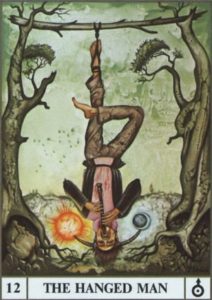
The Hanged Man is a card many people fear, although generally the figure depicted hangs upside down from one leg, apparently perfectly relaxed and comfortable and even smiling, depending on the deck. The card illustrates that place in life we’re all familiar with between one thing and another, just like the crossroad. Events converge and intersect. Meetings and partings take place. We suddenly come to the end of a road and it’s necessary to choose a new one.
I’ve never been good at pausing. I can accept change, but I expect myself to adjust and adapt instantly and effortlessly, no pause required. I don’t want to hang around (if you’ll pardon the pun) and think about what’s over or what I’d like to begin. I want to get a grip and move on. Now!
This is a shame, and all the old stories and archetypes tell us it’s counterproductive. Crossroads are sacred ground, filled with resting places, old altars and tilted gravestones. The leaves on trees growing at crossroads whisper all the prayers and petitions they’ve heard. At crossroads we lay out cards, cast runes and yarrow stalks, interpret dreams, drum, dance and call on our intuition and faith for guidance. A crossroad is a place to linger, honoring where we’ve been and considering a way forward, or sideways, or perhaps even retracing our steps for a second time before we go on.

Photo by Ryan Moreno on Unsplash
A crossroad deserves an offering of our presence and patience. It’s only in suspended activity that we access our deepest intuition and wisdom, only then when we begin to gain full understanding. Loss takes time to put to rest. Hopes and dreams need time to grow. Intuition can’t speak unless we’re quiet, and guidance can’t find us if we’re not still.
I’m writing this out on our deck in the sun. I can hear water running into the pond. The phoebe, back for another summer, is perched in her favorite spot on the barn roof, bobbing her tail and hunting for insects. Wonder of wonders, there’s not a box of Kleenex at my elbow! Not only that, but I’m breathing through my nose. Things are looking up.
Before me is a new week. I’ve sort of given up on the seamless and elegant thing. It hasn’t been fun to be sick, but I’m grateful I was forced to pause. I didn’t feel like I was doing anything except wasting time and blowing my nose, but I see now I needed to hang by one leg and just be for a little while. I needed to consider what’s ending, and how I feel about it, and what direction I want to go now. I needed to spend some time wandering in my graveyard, remembering what’s laid to rest there. It was important to revisit my hopes and dreams, check in with my intuition and take time to wonder what will happen next.
At this point I’ve decided to be content with lingering at this crossroad. When it’s time to go on from here, I’ll know. In the meantime, this is a good place. Maybe a peddler is even now on his way to meet me, or an old crone in a hooded cloak will come in the dark morning hours with an enigmatic message showing me the way forward. Who knows?
Now that this is written, perhaps I’ll go find the tree from which the Hanged Man is suspended and see what’s on his mind today.
All content on this site ©2017
Jennifer Rose
except where otherwise noted