by Jenny Rose | Dec 29, 2016 | Connection & Community, Emotional Intelligence, Shadows
Glamour: Enchantment, magic (archaic)
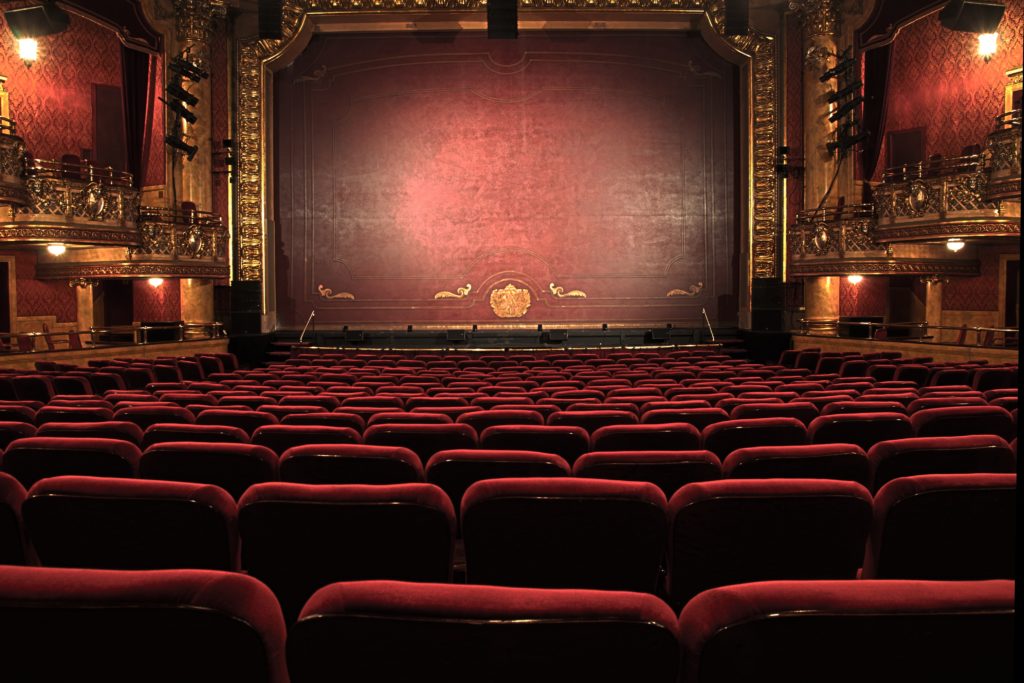
Gaslighting is the manipulation or twisting of information. To be a victim of gaslighting is to be an audience at a magic show where the magician carefully and skillfully distracts and controls our attention and perception. Gaslighting seduces us into believing in a particular reality.

Photo by Jonathan Crews on Unsplash
It’s all fun and games until the glamour doesn’t match our experience and we try to hold two realities. Trying to hold two realities is like being torn in half. In a very short time we feel forced to choose. If we’re in a primary relationship with a gaslighter, we might choose their reality over ours, because we love them. We trust them. We have a history with them, a commitment. We’re loyal to them. We need them. They have power in our lives.
Gaslighting is abuse.
Let that sink in for a minute. To be with a gaslighter is to be with an abuser.
Gaslighting can and does kill people.
Some of us are sitting ducks for gaslighters, because we’ve already been trained to doubt our feelings, thoughts, perceptions and memories. We’ve already been shamed for expressing our experience. We’ve already been silenced. We know we’re damaged, broken, ugly and wrong.
It’s a match made in heaven for a gaslighter.
I use the word glamour because being in the power of a gaslighter is like a magic spell. It’s like a mind-numbing drug. It’s an emotional cancer that gradually saps your strength, your ability to think, your joy and your power. The more you struggle, the more exhausted you become. The harder you try to understand what’s happening, the more confused you are. You fall into a dark pit of madness.

Photo by Travis Bozeman on Unsplash
Think I’m exaggerating? Think I’m dramatic?
Well, lucky you. You’ve never been with a gaslighter, then.
Fortunately, there is a cure. There’s a way to take back our power and our lives from a gaslighter.
We have to turn on the lights. We have to twitch aside the curtains, look behind the props, get close enough to see the greasepaint, the wires, the hidden tools and tricks. We have to go through denial, humiliation, pain and loss. We have to consent to see what’s been happening, and then, just like that, it all dissolves and we realize…
It was all just an illusion, a glamour.
We’re not crazy, after all.
It wasn’t love we were getting (no wonder it didn’t feel like love!). It was gaslighting.

Photo by Nick Karvounis on Unsplash
Here’s an example of gaslighting:
Two single people, Mary and Bob, age somewhere around 45, embark on a committed, monogamous relationship that will endure for eight (long) years.
Both parties have jobs, families and friends, histories and their own homes and activities. Both are financially independent.
Mary’s all about relationship. She thinks of Bob as her primary priority in terms of time and energy and looks forward to spending time with him. She assumes, without really thinking about it, he feels the same way. In order to achieve maximum time together, she tweaks her schedule so she has as much time off as possible when Bob does and refrains from making plans during any time they might have together.
Time goes by and Mary and Bob see movies together, go out for modest meals, take walks and drives, go to art shows and concerts and generally enjoy one another’s company, including the occasional overnight.
Bob works long hours at a stressful job, so Mary is understanding of his needs for time alone on the weekends, and she gladly takes responsibility for planning some dates and time together, including sharing costs.
Very gradually, without really noticing, Mary finds she’s the one doing all the work of planning time together, and she notices what feels like resistance. Bob is late. He’s tired. He has to work on days off. He brings work home. He can’t spend a night together because he’ll be late at work. Or he’ll be going in early for work. Sometimes he doesn’t want to go through with weekend plans at all.
This is hurtful and frightening. Mary is deeply invested in the relationship. She doesn’t want to feel the hurt and disappointment that occurs when Bob breaks a date that she’s looked forward to all week. She becomes less interested in making dates, but, ever hopeful, keeps all her free time open in case Bob should suddenly decide he wants to get together.
One day Bob expresses hurt and disappointment about not getting enough attention from Mary.
Mary is devastated. She loves him, but realizes she hasn’t conveyed it properly. She’s mortified and apologetic, and tells Bob (truthfully) he’s her priority and she’d love to spend more time together. She realizes he’s very sensitive and does everything she can to express love and appreciation for him. She resolves to do better.
Strangely, in spite of what Bob says, he seems less and less available. Mary, knowing how he feels now, tries harder and harder to get it right.
A movie comes out that Mary wants to see. She knows it’s shameful and disloyal, but the idea of taking herself to a movie, sitting where she wants, being in time for the previews and just relaxing is attractive. She doesn’t think Bob would be much interested in the movie anyway, and he hasn’t said a thing about weekend plans. In fact, he hasn’t called her or been in touch all week.
Mary takes herself to the movies and has a great time.
Later, Bob says, “I didn’t say I wasn’t planning on seeing you! Why are you putting words in my mouth?” He’s deeply injured.
Mary’s ashamed. No, he hadn’t said that. She just assumed, since he hadn’t been in touch… Now she can see how hurtful and unfair it was to have assumed. Now she’s wasted an evening she could have spent with Bob. She doesn’t deserve such a good man.
Bob’s heard about that movie and he does want to see it. He insists Mary go with him, and she does, conciliatory.
It’s the least she can do.
Mary, determined to do no more assuming, now begins to ask from time to time, “Are you planning on seeing me this weekend?” She’s already learned that trying to make a date doesn’t work, and she knows if she says she wants to see him he’ll feel pressured.
For some reason, this question, like so many others, causes problems. Mary assures Bob she understands if he wants a weekend to himself, that she’s not trying to pressure him, put him on the spot, or make him responsible for the relationship. She just wants to know so she can make plans if he’ll be doing other things.
Grudgingly, Bob answers, “I’m not planning on not seeing you!”
Mary has a panicked moment of feeling crazy the first time she hears this, and every time thereafter. What does Bob mean? She can’t get it to make sense.
So it goes. Fast forward to the inevitable last day Mary sees Bob.
Mary, with the feeling of stepping off a cliff, looks Bob in the eye and says, “Will I see you sometime?”
He shrugs, grimacing.
Mary gets ready to turn on the lights.
“You’re not planning on seeing me again, and you’re not planning on not seeing me again.” She’s word perfect.
Shrug. Grimace.
“Well,” she says quietly, “I’ll make some good plans for myself, then.”
The lights go up. The curtain comes down. The dazed audience gropes for coats, purses and other belongings. The eight-year-long show is over.

Photo by Peter Lewicki on Unsplash
Mary walks out, feeling permanently maimed but free at last, and spends the next three and a half years putting herself back together. It’s the most painful breakup she’s ever had, far worse than her experience of divorce.
The glamour is broken.
All content on this site ©2016
Jennifer Rose
except where otherwise noted
by Jenny Rose | Dec 15, 2016 | Connection & Community, Emotional Intelligence
Last week, my partner and I went to the movies and saw Arrival. Without giving any spoilers, I found it a stunning story about communication, among other things. It was the communication piece that really grabbed my attention, though.

Photo by Jason Rosewell on Unsplash
Ever since then, I’ve been thinking in a newly focused and intentional way about communication — what it means, how it looks, where it breaks down and how to do it well.
The truth is, I don’t want to know how to do it well. I want to know how to do it perfectly.
Another truth is I’m always thinking about communication, because I’m always working on my book, on this blog or on relationships, and they all involve communication. My partner says there is no relationship without communication, and I think he’s right.
As regular readers know I am wont to do, I pulled out my Random House Collegiate Dictionary to give myself a starting place. Anyone who’s used a dictionary knows there are often multiple meanings for any given word, so I made a list of the definitions I liked, cut and pasted a little, and came up with this (emphasis is mine):
Communication:
- To give or interchange information to/with one another.
- To express one’s true thoughts, feelings and moods easily.
- To have or form a connecting passage.
Although I’m intellectually satisfied with this definition, it feels incomplete and inadequate. In fact, it makes me mad. If only effective communication was this easy and simple! Instead, it seems to be one of the most desperately difficult things we do, and we must communicate if we are to manage life in today’s world.

Photo by Bewakoof.com Official on Unsplash
How many ways does communication break down for us in a day? Are we even aware of all the ways it breaks down? How often are we communicating something completely unintentional?
At the same time, have we ever, in the history of humankind, had so many devices and forms of communication at our disposal? Have we ever had access to so much information and so many other people?
So why aren’t we happier, more authentic, more secure and sure of our worth? Why are so many of us starving for healthy, fulfilling connection? What’s missing?
If I knew, I would fix it in my relationships, but therein lies one of the problems.
This is the part that always sneaks up and bites me in the ass.

Photo by Toa Heftiba on Unsplash
Not everyone wants the level and quality of communication I do. Generally, I don’t take this cold little fact personally, but among my nearest and dearest it does feel personal, absolutely. I feel utterly and completely rejected and shut out, in fact.
Another problem is that not everyone is capable of the level and quality of communication I am. Many people carry terrible damage or experience disability that prevents them from being able to participate in touch, in sex, in eye contact and nonverbal cues, even in conversation. I can tell you from personal experience it can be very, very difficult to sort out those who want to and are unable to from those who simply don’t want to. In the end, it doesn’t matter, it all comes to the same thing. When communication is limited, relationship is limited.
Limitation frustrates me, whether it’s my own or imposed by others. I can do more. I want to do more.
A third issue is that communication is two-edged. It’s an enormously powerful skill and ability, both constructively and destructively. We all know people who use communication as a weapon, not a tool. Sometimes, a simple, ominous clearing of the throat can be far more terrifying and damaging than a blow. Both actions are communication. Even worse are people who deploy words saying one thing and demonstrate action that says another, like the abuser who says he loves you while he hits you. This is called gaslighting, and I’ll write about it in the future. It needs a post all its own.
A fourth point is we don’t have enough silence in the world. Silence is the cup that holds communication. It takes time to write, to create, to speak, to hug, to make love, to nurse an infant. It takes time to nurture a friendship, a lover, a child. Sitting with the ill or dying takes time and quiet. Listening takes time and presence. Our slavery to technology and stimulation has all but eliminated uninterrupted time for our relationships with ourselves, let alone with others.
And that brings up a fifth aspect. If we don’t, won’t or can’t communicate effectively and honestly about who we are, what we need and want and the truth of our thoughts and feelings, we can’t form a connecting passage, to quote the above definition. We’re not even connected to ourselves.
As though all those things didn’t make communication a big enough hairball, we have to remember who we are. We’re human, which is to say each one of us carries stories, beliefs, expectations, memories, scars and bleeding wounds that get in our way every time we communicate, even with (especially with) those we care deeply about. We all have painful triggers. We all get hijacked. We make assumptions. We misunderstand, deny, obfuscate, conceal. We filter through our particular history and experience. Few of us have any training in effective communication. We can tweet or text a sentence or two, but ask us to do more and we’re at a loss. For one thing, we don’t have time to deal with it.
We also have rules about communication, individual rules, tribal rules, cultural rules. We have rules about acceptable language, rules about keeping secrets, rules about being indirect, rules about protecting others, rules about loyalty and duty, rules about privacy, rules about what we’re willing to reveal to whom, rules about who we trust and don’t.
Even the words we choose can make or break communication. Here’s an example out of my own life I’m feeling particularly resentful about at the moment.
I’m a woman, a partner, a sister, a daughter and a mother. I love wholeheartedly and I’m very clear about how important healthy relationship is to me. I know the people I love well, and I try hard to accommodate their personalities, preferences and idiosyncrasies. I’m not Miss Fixit. I’ve no investment in protecting people, and the four men in the world who I love most are unbelievably capable and intelligent adults.
When I say, “What can I do to help? “Is there anything I can do to help?” or “Is there anything I can do for you today?” I’m not implying they can’t manage their lives, dammit! I’m giving a message of love. I’m saying, “I’m here. You matter to me. I’m glad to lend you support. I’d love to collaborate/cooperate/work with you.” I’m making a connection. I’m giving what I most want. Catch me being insulted if someone asks if they can help me figure out how to run the errands, take care of work and cook a meal!
My male partner says, with great patience, that I should use the word “assist” instead of help.
Seriously???? These four idiot men, who know me better than anyone else, need me to tippy-toe with my language in order to hear a message of love and support?
Never mind. I’m over it. Figure out your own damn life, and I’ll figure out mine.
Furthermore, catch me allowing any of them to help me, even though I know that’s connecting for them. They don’t need anything from me, I don’t need anything from them.
See how that breaks down?
And half of that is about me. I’ve been taught to be indirect in my language, I’m giving others what I want myself (this never works well, because the recipient rarely understands that’s what I’m doing), I’m coming across as relentlessly mumsy-wumsy and overprotective, and I’m assuming these four men are like me and won’t ask for help if they need it, but I’m the one who can’t ask for help, and now I’ve fastened myself more firmly in that position because they won’t cooperate with me and allow me to love them, so I’m not going to give them the satisfaction of…
And so on.
My conclusion about all this is that communication among human beings is a clusterfuck. It’s confusing. It’s messy. Most of us don’t know what the hell we’re doing and many of us are not that well intentioned in the first place. We have wildly varying degrees of ability with wildly varying aspects of communication. We try to hide, we misunderstand, we make mistakes, we don’t remember accurately and we’re often terrible at listening. We want to be right, we want to be validated and agreed with, and we want others to meet our needs quickly and perfectly so life feels simple and uncluttered, emotionally, at least.
I’m never going to do it perfectly, and neither is anyone else.
But hey, let me know if I can help you in any way!

Photo by Quino Al on Unsplash
All content on this site ©2016
Jennifer Rose
except where otherwise noted