by Jenny Rose | Jul 12, 2018 | Emotional Intelligence, Feelings
I’ve been thinking about loyalty recently. Loyalty is one of my bigger rabbit holes. I most often use the term when I’m beating myself up. A nasty little internal voice frequently hisses “Disloyal!” in my ear. This happens so constantly, in fact, that I’m bored. I’ve decided to unpack the concept of loyalty, spread it out, let the cat sniff at it, and either own my own disloyalty without shame or permanently silence that particular internal accusation.
The first thing I notice is I want to be loyal. Loyalty is a virtue. Good, loving people are loyal. I certainly want to be a loyal family member, friend and partner. Loyalty has always been an important part of my identity, which is why it’s such an effective lash for me. What’s more shameful and ugly than disloyalty?
I don’t want to be shameful and ugly. If I am shameful and ugly, I certainly don’t want anyone to find out.
Loyalty, then, is something that depends on what onlookers think about my behavior and choices.
Before I’ve even crawled into the mouth of the rabbit hole I’ve moved out of my power. Interesting.

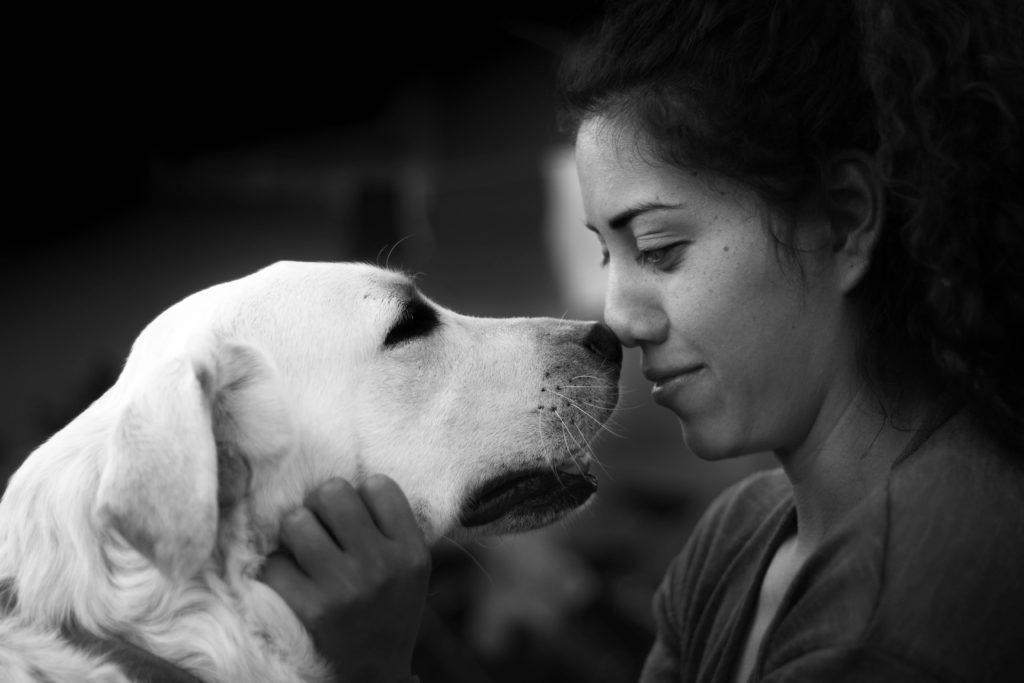
Photo by Kevin Quezada on Unsplash
Recently, I took my morning cup of tea and spent two hours with dictionary, thesaurus and my laptop looking at poetry, quotes, memes, definitions and articles. I read about families, patriotism and dogs. I discovered 80% of results returned for a search on loyalty have to do with manipulating customer and product loyalty. Of course. What a world.
At the end of that two hours, I felt no wiser. I had some notes, but I still didn’t have a clear idea of what loyalty really is, what it looks like, what it feels like to give or receive it, and how it overlaps with trust, authenticity, truth, enabling, coercion and control. I can point to people in my life I feel loyalty for, and I can point to people who I feel are loyal to me, but the truth is I don’t trust myself on this issue. Maybe my confusion means I am, in fact, shamefully disloyal. A humbling and humiliating thought.
At the same time, would I feel so torn apart by family and personal social dynamics if I was thoroughly disloyal? My sense of loyalty to others has given me much anguish over the years. Surely if it was absent in me I wouldn’t struggle so hard with it.
Simply defined, loyalty is a strong feeling of support or allegiance. That definition leaves me even more clueless than I was before. It has to be more complicated than that, doesn’t it?
Well, doesn’t it?
Is it just me, or does the cultural definition of loyalty consist of a much more convoluted hairball of expectations, assumptions and false equivalencies?
I often use back doors when I feel stuck. My two hours of research did give me some ideas about what loyalty is not, at least in my mind. But already I can see others might disagree. Still, that’s why we have dictionaries and definitions.
Loyalty cannot be slavery or prostitution. If I have to compromise my integrity in order to fulfill someone else’s expectation of loyalty, it’s no longer a virtue, but an abuse and manipulation. True loyalty must be freely and heartfully given. Authentic loyalty can’t be bought, sold, stolen or owed. It’s not demonstrated by obedience or compliance. If it’s not free and spontaneous, it’s only a sham, an empty word that sounds great but has no substance. Loyalty is not a weapon. It’s a gift.
Said another way, from a perspective of power (and you know how much I think about power!), loyalty is a tool of power-with, not a weapon of power-over.

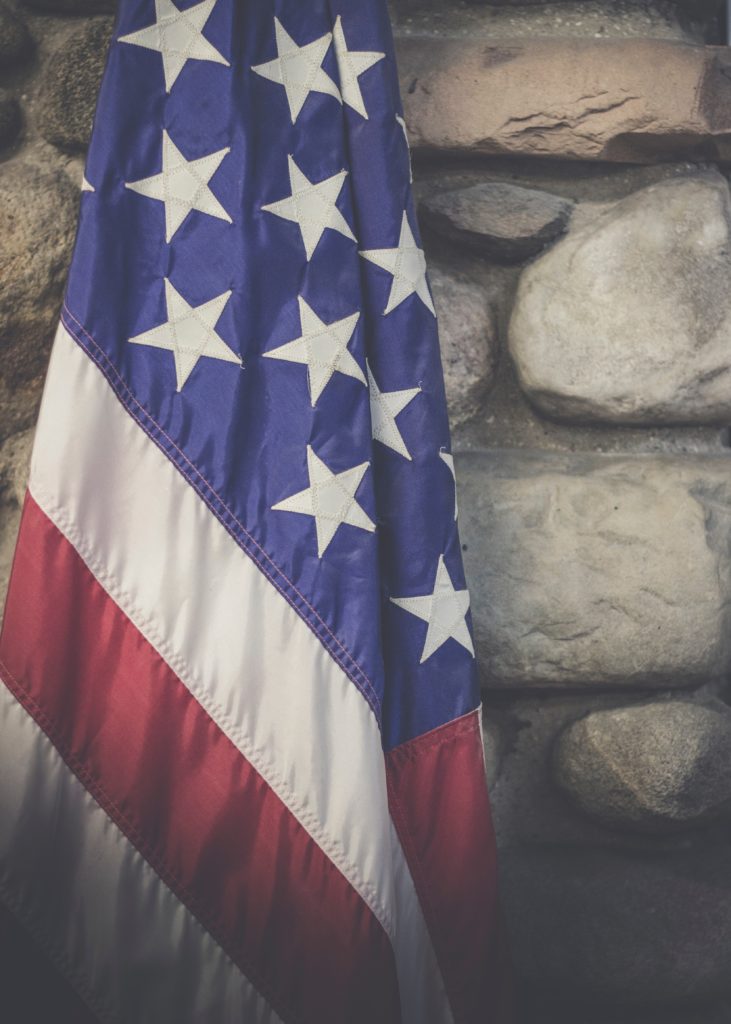
Photo by Seth Macey on Unsplash
Loyalty is not blind. Part of its value is its clarity. We prize it so highly because seeing and being seen clearly, warts and all, and demonstrating or receiving loyalty in spite of it is an act of strength and love. In that case, compassion, tolerance and respect are all involved in loyalty. It follows, then, that loyalty does not require agreement. I can feel entirely loyal to a loved one while disagreeing with some of their choices and beliefs.
Loyalty does not imply denial, arguing with what is or colluding in rewriting history in order to sanitize it. Loyalty is not a right or an obligation.
In fact, the thesaurus suggests the word “trueness” as a synonym for loyalty. Interesting. Isn’t trueness the same as authenticity? I count on those who are loyal to me to tell me the truth of their experience with me and of me. I count on them to trust me with their thoughts, feelings, concerns and observations. I count on them to ask me questions about my choices, and to forgive me when I’m less than perfect. I hold myself to the same standards. This can mean a hard conversation now and then, and uncomfortable vulnerability and risk, but real loyalty is not cheap.
The thesaurus also supplies the word “constancy” as a synonym for loyalty. Constancy is an old-fashioned word these days, but it leapt out at me because consistency is very important to me. I’ve had some experience with Jekyll-and-Hyde abuse patterns in which the goalposts and rules constantly change without notice, keeping me nicely trapped in trying to please people who have no intention of ever being pleased no matter what I do. Loyalty is present one day and absent the next, then present again, then unavailable. That kind of “loyalty” is an abuse tactic.
As always, the construct of loyalty is two-sided. There’s the loyalty that extends between me and another, and then there’s the loyalty I extend to myself. This circles back around to slavery, prostitution and silence. If I have to betray my own needs or make myself small in order to earn or retain someone’s loyalty, something’s very wrong. If I’m called disloyal for saying no, having appropriate boundaries or telling the truth of my experience, then we are not in agreement about the definition of loyalty or I’m being manipulated (again). How loyal can I be to others if I fail to be faithful to myself?
True loyalty will never require me to make a choice between myself and another. Loyalty is strong enough to compromise and collaborate.
Loyalty becomes weaponized when we demand or command absolute agreement, devotion and unquestioning support. Then the concept becomes very black and white. This is demonstrated all over social media and media in general. One unwanted question or view leads to unmerciful deplatforming, silencing and a torrent of threats and abuse. Our loyalty is questioned and tested at every turn. We allow bullies, tyrants and personality-disordered people to achieve and maintain control, terrified of tribal shaming, being unpatriotic or being cast out of our social groups and communities.
The label of disloyalty is extremely powerful, but when I strip away all my confusions and distortions around loyalty and return to the simple definition, it’s not complicated at all. I certainly feel a strong allegiance and support for many individual people, for my community, for my country, for women, for writers, for this piece of land I live on, and for myself.
I suspect many others would like me to wear the label of disloyalty, but I can’t do a thing about their distortions except hand them a dictionary. Very elitist behavior, I’m sure you will agree. Not to mention the disloyalty of refusing to collude in my own shaming.
Being called disloyal doesn’t make it so.
That voice in my head has to do better, find a new slur. I’m willing to own being disloyal if I am, but my conclusion after this investigation is mostly I’m not, and when I am, my greatest trespass is against myself. That I can do something about.
Loyalty. Setting down the weapon. Picking up the tool.

Photo by David Beale on Unsplash
All content on this site ©2018
Jennifer Rose
except where otherwise noted
by Jenny Rose | Dec 21, 2017 | A Flourishing Woman, The Journey
Yule, the winter solstice, is upon us once again. This year, here in the deeps of darkness, I’m thinking about The Fool’s journey.

The Fool, by Emily Balivet
The Fool is an archetype, a recurrent symbol in mythology, folklore and story. Jack of Jack and the Beanstalk is a Fool. The Fool shows up as a simpleton, an innocent, one who is ignorant, inexperienced and silly. Archetypes have two sides, shadow and light. In modern culture The Fool has been reduced to its shadow, its most negative attributes, an insult, a curse and a contemptuous label.
But the old tales hint at a deeper, older meaning of the archetype. In fairy tales, The Fool is often the youngest sibling, the least able and powerful character, who nevertheless becomes the only one to successfully complete the task or quest. Often, The Fool has a good heart, or some extraordinary purity of character that allows him/her to be successful. The Fool has faith in magic, in talking birds and beasts, in the advice of old women, in objects given by peddlers at crossroads. To be a fool is to be held in a circle containing everything and nothing, to be without judgement, rules, expectations, cynicism or fear. The Fool is an archetype of youthful energy, bright, glowing and optimistic, filled with hopes and dreams.
Characters of this archetype set out, sometimes exiled or driven from their home, sometimes volunteering to go, with nothing but their shining confidence, intuition and willingness to do a task or find a solution. They rarely have external resource, but carry a great wealth of internal assets, including, interestingly, a kind of innocent cleverness that arises from authenticity and the simplicity of great integrity. The Fool has everything she or he needs in the form of untapped, chaotic potential.
It seems to me we’ve lost sight of the sacred role of The Fool. We kill foolish behavior with punishment, restriction, control, mocking and tribal shaming. We teach our children to avoid playing The Fool by making “good” choices. We avoid looking or feeling like fools. Foolishness is equated with immaturity, irresponsibility and naiveté. We resist being wrong or admitting we made a mistake. Playfulness is no longer a priority.
I see The Fool as an essential first step in The Hero’s journey. It’s where we all start as we undertake any new experience or endeavor. All Heroes start out as Fools, and perhaps all Fools are also Heroes. The Fool archetype creates space in which we learn resilience, strength, courage and creative problem solving. In the gap between The Fool’s happy hopes and dreams and reality is the place where Self is shaped, and the more fully we embrace this archetype, the more of our own potential we realize.

Photo by Dan Gold on Unsplash
That’s what I believe, when I think carefully about it, but that’s not how I show up in the world.
I hate to feel like a fool. Humiliation is one of the most uncomfortable emotions I experience. I dread appearing irresponsible or naïve. I’ve bought into the cultural definition of foolishness equaling stupidity, and I don’t want to be perceived as stupid. I’ve been warned at the beginning of every Fool’s journey I’ve embarked upon with head shaking, patronizing smiles and dire, ominous warnings: “You have no idea how hard marriage is.” “Boy, is your life going to change!” “You’re going to hate it!” “You’ll find out I was right!” “It won’t last.” “Nothing will ever be the same.”
As a parent, I shook my own head, smiled patronizingly and issued warnings. I wanted to protect my sons from “bad” choices, from danger, from illness and injury and from the pain of disillusionment and disappointment, the very things that help us figure out who we are.
The Fool is an archetype precisely because it’s so persistent and present in our lives. It’s our nature to go into the world and explore, seek, complete tasks and engage in quests. I wonder what it would be like if we all framed The Fool’s journey as sacred space, as a necessary and beautiful rite of passage, filled with potential and promise. In that case, revisiting this archetype throughout our lives at any age could be viewed as a chance to refresh our willingness, consent and curiosity about ourselves and what might be possible, a chance to apply the skills we’ve learned in our previous cycles as The Fool rather than stay frozen in bitterness, shame, regret and fear.
It’s true that every new journey is a risk. None of us could have imagined what it would be like to be an adult, to fall in love, to get married, to have children, to move across the country, to get the perfect job, to battle illness or injury, to age. Dire warnings and ominous predictions are pointless and useless as we navigate in our lives. Sincere and simple congratulations from others; faith in our own intuition, intelligence and strength and the experience of unconditional love and belief in our abilities from friends and family is what we need as we push forward in search of new horizons.
Yule signals the return of the light and new beginnings. We all embark on a new cycle, and none of us knows what it will bring. The Fool is tying together a bundle of food and setting out, following a new road into an unknown place, exploring, perhaps searching for something. Interested, curious, fearless and confident, The Fool walks into the future as the light strengthens once more.

Photo by yatharth roy vibhakar on Unsplash
All content on this site ©2017
Jennifer Rose
except where otherwise noted
by Jenny Rose | Aug 17, 2017 | Connection & Community, Emotional Intelligence, Shadows
A good thing happened recently. I declined to take poisoned bait.
The bait arrived in the form of a terse email from an individual with whom I’ve recently done business. I’ve never met them in person. I approached our business transaction with a willingness to negotiate, share power, cooperate and communicate directly, thoroughly and clearly. I saved all documents, contracts and emails regarding our business, and upon successfully (in my view) concluding our interaction, I moved on with a sense of gratitude, satisfaction and relief.
More than a month later, I had an email expressing frustration and blame.
It felt like a slap in the face, unexpected and hurtful.
My immediate impulse was to strike back, followed quickly by the thought that I hadn’t communicated well and I could fix things by explaining myself (again). Obviously, I had been misunderstood.
Then I decided to pause for a day or so and think carefully about this.
The fact is, I have a longstanding deeply-rooted pattern of believing I’ve been misunderstood due to my inept communication. This belief keeps me firmly locked in escalating attempts to explain and be heard and understood. What I’ve failed to perceive, over and over again through the years, is that I’ve frequently been in relationships with people who had no interest in explanations. They were deliberately fostering misunderstanding, drama and conflict because it fed them in some way.
This, by the way, is a very common strategy of narcissists, psychopaths and borderline personality disordered people. I’ve written previously about projection and gaslighting , two tools frequently used to control others.
Deliberately keeping another in confusion and on the defensive, constantly changing the goalposts and passive aggressive tactics like the silent treatment are all baited hooks I’ve eagerly swallowed and writhed on for years. Words can’t convey the anguish and erosion of self that occurs in the context of this kind of long-term abuse. I’ve crept away from relationships like this as nothing more than a cracked shell of woman, my sexuality and femininity withered, my emotions torn to shreds, my body impoverished and barren, and firmly convinced of my own worthlessness, ugliness and inadequacy.

Photo by Hailey Kean on Unsplash
A perfect set-up to fall for it all over again.
And again.
And again.
But not this time!
This time I had hard evidence. Over and over, I checked the timing of contract and closing, emails sent and received, all the fine print. It was all right there, the date my responsibility ended and the date after that of a sudden dissatisfaction I was expected to fix.
I concluded I’d done nothing wrong. On the contrary, I’d consistently demonstrated the kind of integrity I aspire to in every interaction. I went above and beyond. I provided explanation, suggestions for resolution and alternate options, along with names and numbers of possible local resources.
That email was bait.
So, a couple of days later I took a deep breath, opened my email and replied with sincere wishes for happiness and success. One sentence. Then I signed off and hit “send.”
This happened about three weeks ago, and I’ve been thinking about it ever since. It’s a small thing, but it reveals to me how very far I’ve come in healing, growth and wisdom. I now know that I have the power to decline an invitation to struggle. I recognize poisoned bait for what it is. I know it conceals a hook, and that hook no longer tempts me. I don’t need to waste any energy in defense or repeated explanations. I don’t choose to revisit old bones of contention and chaos. I accept that people think what they think, make up and believe the stories they make up and believe, carry the assumptions they carry, and none of it has anything to do with me.
Misunderstanding certainly occurs, but it’s not that difficult to clear up, given two adults who intend to. The trick is to identify as quickly and accurately as possible if the person I’m interacting with is an adult who to intends to clear up misunderstanding. In the case of my email, that person was only peripherally in my life and we’ll probably never interact again, so I didn’t bother. However, we all have people in our lives with whom we have ongoing connection. In those cases, I use a single question to clarify “misunderstanding.”
“Is there anything I can say or do to clear this up and repair our relationship?”
This direct, simple question seems to encourage surprisingly honest answers, albeit answers I haven’t wanted to accept or believe. However, if the answer is some variation of “no,” then everything immediately becomes blessedly clear. I want to repair. They don’t. Continuing to engage is a waste of our mutual time and energy, and if any kind of a hook remains dangling, I know it’s a manipulation. They’ve made up their mind, and I have no power there.

Photo by Joshua Earle on Unsplash
The words on the screen fail to convey the annihilating heartbreak attendant on understanding that someone you care about and even love doesn’t value your relationship enough to make repairs, but arguing with what is has never worked for me, and I think we owe it to ourselves and others to pay attention when people tell us who they are, no matter how devastated we might feel or how much we want to deny what we hear.
I don’t think of this as too-sweet maiden, politically correct, starry-eyed liberal ideology. Neither is it a religious thing for me, or some kind of higher moral ground tactic. It’s not about making nice and giving others the benefit of a doubt, turning the other cheek, or making excuses for why people do the things they do. It’s also not a blanket rejection. I’m perfectly prepared to turn aside into another conversation, activity, or form of connection. I’m also perfectly prepared to walk away.
No. This is about dignity. It’s about wisdom. It’s about self-defense and self-care. Explaining oneself once, apologizing if warranted, taking responsibility if appropriate, is healthy, adult behavior. Distortions, refusing to hear or accept explanations, verbal or physical threats or violence, scenes, emotional meltdowns and shame and blame games are signs and symptoms of dangerously abusive relationships, and I’m no longer available for those.
I’ve changed my diet and I don’t take that poisoned bait anymore.
I’ve had a bellyful of it already.
My daily crime.
All content on this site ©2017
Jennifer Rose
except where otherwise noted
by Jenny Rose | Jul 6, 2017 | Connection & Community, Emotional Intelligence
This week I’m exploring the idea of cultural appropriation. In the linked article, cultural appropriation is defined as “Taking intellectual property, traditional knowledge, cultural expressions, or artifacts from someone else’s culture without permission. This can include unauthorized use of another culture’s dance, dress, music, language, folklore, cuisine, traditional medicine, religious symbols, etc.” This definition provides a useful starting point, but it begs a couple of important questions.
I approach cultural appropriation from two different directions. I begin with a story I wrote years ago for oral telling. The story was inspired by the wonderful children’s author and illustrator Eric Carle . He wrote several books, among them Draw Me a Star. As a parent and librarian, I’ve bought, recommended and read aloud his books hundreds of times. You can look at ‘Draw Me a Star’ here .
The Artist
“Sing me a star …”
And the Artist sang a star.
It was a shining star.
“Color me a sun,” said the star.
And the Artist colored a glowing sun, a golden lion, a hillside of orange poppies, a burning fire, and a feather.
It was a red feather.
“Weave me a tree,” said the feather.
And the Artist wove branches and leaves and pieces of sky into a tree, and She wove fields and forests and deep, invisible roots, and a spider’s web.
“Build me a fence,” said the spider.
And the Artist built a fence and sculpted rocks and ice and sand and snow into a world.
It was a glorious world.
“Tell me a story,” said the world.
And the Artist began, “Once upon a time …”
It was a wonderful story.
“Tell me some more!”
So the Artist made all kinds of people to share all kinds of stories.
They were strong people.
The people said, “Teach us what love is.”
And the Artist said,
“Sing me a star …”

Photo by Leon Liu on Unsplash
Now set your burdens down for an hour and dance with me. Here’s the sound track I made for our community dance last Monday evening.
“Symphony of the Forest and Mysterious Island,” by Kitaro a Japanese artist.
“Maryam,” by Hamza Shakkur, from the soundtrack to the movie Bab’ Aziz , a Tunisian foreign film.
“Aye Lon Lon Vadjro,” by Angelique Kidjo , an African artist.
“Kozuma,” by Professor Trance and the Energizers, who perform multicultural Trance Dance music.
“Stars Align,” by Lindsey Stirling, an American violinist.
“Mwari,” from the album World of Rhythm.
“Pinguli Pinguli Giuvaccinu,” by Savina Yannatou , a Greek artist.
“Barcelona Nights” by Ottmar Liebert, a German guitarist.
“Symphony of Dreams and A Drop of Silence” by Kitaro.
I wouldn’t steal a pencil or a nickel. It’s easy to make a distinction between concrete objects belonging to me and those that don’t. Trying to define intellectual and cultural property, however, is another thing. Part of my integrity as a storyteller includes rigorously reporting the origins of my material to my audience. Part of my integrity as a librarian and a researcher includes investigating roots and versions of old stories and communicating that information to my audience so they get a glimpse of the amazing historical journey of human creativity and experience. Part of my integrity as a writer is to be open to the world of human beings around me in all its rich history, language, symbol, tradition, spirituality, expression, art, ideas and feelings.
Anyone who creates art or delves into old oral traditions realizes cultures are not so easy to distinguish from one another, and the farther back we trace certain artifacts, oral material, symbols and traditions, the more blurred the boundaries between cultures become. Part of my motivation in becoming a storyteller is to become a link in a long, long chain of humanity that reanimates old stories. Oral tradition survives because it speaks to the culture of human beings. Themes of love, birth, death, war, change and power engage everyone. The repeating horrors of colonization, genocide, slavery, plague and pestilence, massacre and religious persecution are embedded in the history of every culture on every continent.

Photo by NASA on Unsplash
It would be convenient to simplify the history of mankind into good/bad, victim/oppressor and black/white literally, as well as figuratively, but that’s an intellectually lazy and ignorant point of view. Science teaches us life is a complex, nonlinear, dynamic, holistic system, and every culture changes every other culture just by existing. Every species impacts every other species. Every organism impacts every other organism. It’s inescapable.
Culture is defined geographically, ethnically, politically, by religious belief, by shared history, by language and by physical types. All these factors and many others weave cultural definition. I define some of my cultural aspects and others also define me, sometimes accurately, sometimes ridiculously. Defining culture is like trying to catch fish with your bare hands.
Who is authorized to speak for their culture, and what gives them that authority? Who controls the sharing or withholding of cultural information? At what point do we qualify for inclusion in a culture? My own ancestry is a polyglot of Irish, Norwegian and German, at least. Am I Irish enough to be allowed to tell an Irish traditional tale? Does the fact that my skin is white prohibit me from dancing to African music and introducing others to artists like Anquelique Kidjo?
We have ample evidence that cultural purity is a fast track to cultural death. It doesn’t work in breeding animals, it doesn’t work in the plant world and it doesn’t work any better with humans. Life is not about maintaining divisions and isolated islands of purity. It never has been about that. Successful life is about biodiversity, cooperation, adaptation and hybridization. The attempt to maintain cultural purity is an attempt to restrain change, which is an attempt to harness life itself. Human beings, thank all the manifestations of divinity, are not that powerful.

Photo by Lukas Budimaier on Unsplash
What human beings are is creative. We are sensual. We thrive on expression and ritual. We hunger for spiritual nourishment. At our best, we’re observers, recorders, problem solvers, explorers and synthesists. We’re curious. As in the old stories, we go out into the world and seek our fortunes, our mates, our place, our families, our passion, our destinies and ourselves. Yes, there are plenty of madmen/women, megalomaniacs, destroyers and other pitiless, power-hungry, dangerous, destructive people out there. Entire human cultures have disappeared, leaving behind nothing but artifacts and fragments of language. Many, many other kinds of life have vanished as well, and many more are at risk. Yes, there are people who steal real property as well as intellectual property. There are people who would gladly wipe out whole groups of humans and other life, given the power. It’s happened before and it will no doubt happen again.

Photo by Jazmin Quaynor on Unsplash
Have you noticed, though? Life — human, animal, plant — goes on. No one can really steal our heritage or our identity, because those things reside within us. Plagiarism and duplication are sterile things. Culture persists. It might go underground for generations in order to survive, but it persists and eventually shows itself to the world again. Stories, music, traditional arts and crafts, religious rites, dance, clothing, jewelry, language and tools are all seeds of culture. When someone with cultural seeds in their pockets reaches across boundaries to another culture, powerful, life-sustaining, magnificent collaboration happens, the kind of collaboration that allows an ordinary person like me to create a multicultural dance track and lead a small group of people (all kinds of people) in dance, which is a human cultural tradition from the dawn of man/womankind. The mingling of cultures creates new cultures, as well as sustaining the original parent cultures. If one person reading this discovers new music to add to their lives and pass on, a long history of cultural tradition goes with it and is preserved. I’ve succeeded as a link in the chain going right back to the first humans.
Eric Carle has had a hand in shaping my life, along with hundreds of other authors and illustrators. His books were read to me when I was a child, and in turn I read him to other children, including my own. He’s a unique and beautiful artist. My appreciation for his work inspired my own creativity. I was also inspired by my brother, who is a gifted musician, and I dedicate ‘The Artist’ to him, out loud, every time I tell it. I take my copy of Draw Me a Star to every telling to pass around. I’ve told ‘The Artist’ dozens and dozens of times to all kinds of audiences, children as well as adults.
Photo by Quino Al on Unsplash
The story tells my truth. The act of creation is an act of love, appreciation and respect. Creation never happens in isolation. It’s never pure. It’s always a maelstrom of conscious and unconscious influence, memory, and inspiration from things seen, heard, read, felt and experienced. Culture is not static. It adapts, adjusts, persists, learns, discards, incorporates, borrows and contributes, or it dies.
Last week I wrote about making ourselves small. Cultural eradication makes the family of man smaller. Plagiarism kills creativity. Appropriation shrivels our souls. The threat of tribal shaming limits our joy in discovery and exploration outside our cultural boundaries. Choosing rigidity, hoarding and withholding our beautiful languages, our nourishing spiritual wisdom, our rapturous music, our skills and traditions, impoverishes us. Refusing to experience, explore and appreciate other cultures and their richness also impoverishes us. Sterility and isolation in, sterility and isolation out.
The greatest honor I can give the countless musicians, authors, artists, dancers, storytellers, photographers, sculptors, weavers, gardeners, mystics, filmmakers and other creators who grace the world is to see, to listen, to be touched, to weep, to laugh, to dance, to receive, to learn from, to be inspired by, and to add my own work to the dynamic, ever-changing culture of humanity.
All content on this site ©2017
Jennifer Rose
except where otherwise noted
by Jenny Rose | Sep 29, 2016 | Power
I’ve been thinking about this week’s post for a couple of days now. There’s a lot more to say about boundaries than I’ve discussed here and here, and maybe someone else can shape the many complex pieces into separate, coherent posts, but that person isn’t me. I can sort out a few points, but the rest is chaos containing all kinds of inflammable issues, such as parenting, corporal punishment, our justice system, religion, sexuality, morals, ethics, rape culture, racism, entitlement and patriarchy.
There’s no doubt in my mind that these are important discussions and ideas for all of us, but the purpose of this blog is not to have a shouting match or explore the different ways we can criticize, judge and belittle one another.

Photo by Andrew Loke on Unsplash
I suspect most of us agree boundaries are necessary, but after that point I see potential for endless violent disagreement about how and why we create and manage them. I believe it’s safe to say our understanding of boundaries is heavily influenced by our childhood experience, our culture and family, and technology and media.
I have no answers. I notice what I call my boundaries don’t work very well at times. I notice the conflict between what works for me, what others expect, and what I’ve been taught. I notice a generation gap around boundaries. My 20-something sons see the whole issue differently than I do. I think some of this is due to differences in our relationships to technology, but I don’t know how much.
I also notice a lot of my boundaries are around fear. As a single woman, I’m uncomfortable with the idea of being hooked into GPS and map information via technology. It doesn’t feel safe to me. Likewise, I’m uncomfortable discussing my spirituality, my parenting beliefs, my political beliefs, my dietary choices and the color of my underwear. I’m not ashamed of who I am — I’m afraid of being victimized. I don’t want to deal with mean, hateful or dangerous people. I don’t want to attract the attention of a psychopath or a sociopath. I don’t want to lose connections and relationships over something like religion.

Photo by Mike Wilson on Unsplash
Then there’s the part of me that simply isn’t interested in what I call oversharing. I mind my own business — why can’t everyone else mind theirs?
On the other hand, surely we have a right to be who we really are. But where is the line — the boundary, if you will— between that right and violating someone else’s boundary?
A highly topical example of this is the debate over Native American team names in the public school system. Many Native Americans find this offensive and racist — and say so. The other side hotly denies they’re racist and cites tradition and their intention to honor the Native American people. It’s a ding-dong argument. I’m hurt and offended and this feels racist versus I am not a racist, back and forth, on and on, with both sides becoming further divided with every iteration. Broken connection, broken relationships, divided communities, hurt and rage are the result.
At bottom, it seems to me these are all boundary issues. Our boundaries don’t appear to work well. What can we do about that?
This very morning, I had an interesting discussion with one of my sons about this. We were talking about privacy in regard to technology, and he suggested that soon we may have to accept the idea of 0% privacy because of our increasing reliance on and use of technology. Everyone (at least in this country) will be equally exposed and we’ll have to figure out how to live with that exposure as a culture and move on, or we’ll simply self-destruct. I’d never considered this point of view and I’m fascinated with it, as well as slightly appalled.
Perhaps the chaos around boundaries is present because, as my son suggests, we’re in transformation. Transformation is inherently chaotic, after all. Maybe my generation’s ideas and beliefs about boundaries aren’t working because they’re outdated. Our world, our culture, our understanding of life, technology and science are dynamic, always changing, always correcting and expanding. Perhaps the world we live in today requires different boundaries and we’re struggling to shape them.
At the risk of sounding like an old granny, however, I think healthy, effective boundaries must contain elements of respect, compassion, authenticity, dignity and kindness, not only for others but for ourselves. I think it’s important to remember that boundaries are about ourselves and what works and doesn’t work for us. It’s not our job to choose boundaries for others. We may have to defend our boundaries and others will certainly try to violate them, but that’s the only place our power is.
Interestingly, I’m reading a book right now that relates to this. It’s called Being Wrong by Kathryn Schulz. It’s a great book — well written, funny, intelligent and thought-provoking. I highly recommend it. The reason I mention it is that so many of our rules, expectations and yes, boundaries, are based on our beliefs and we have a tendency to make our beliefs universal laws. We all do this, one way or another. But take one of your central beliefs, a hot one like politics or diet or religion, one you argue about on Facebook, block and unfriend people for disagreeing with. Now just imagine, if you can, for one minute, only 60 seconds, that you’re wrong.
Pretty uncomfortable, right? Now everything changes, including your rules, expectations, stories and, inevitably, your boundaries.

Photo by Alessio Lin on Unsplash
In other words, effective boundaries need to flex and change as we learn and grow. Otherwise, all we create is a jail cell for ourselves. We can’t change, we don’t admit new information and we keep ourselves small and rigid.
On the other hand, if we have inadequate boundaries our power is leaking all the time. We fall prey to dysfunctional relationships, our integrity breaks, we fail to take care of ourselves, and our lives don’t work well.
All content on this site ©2016
Jennifer Rose
except where otherwise noted