by Jenny Rose | Feb 22, 2018 | Choice, Power
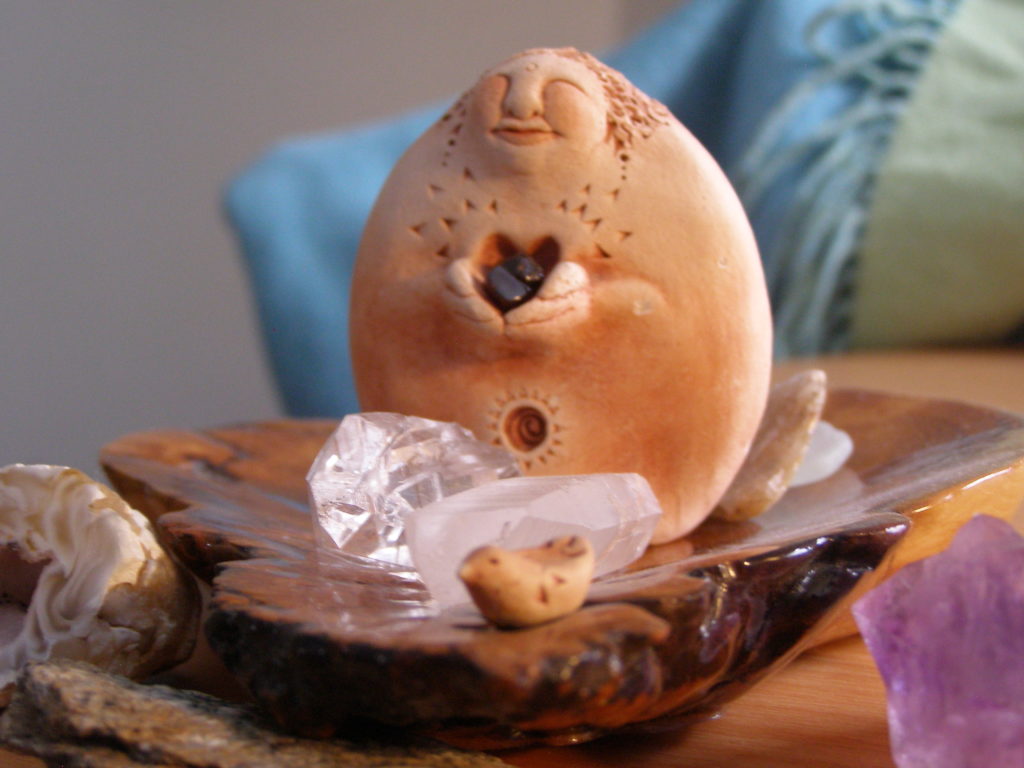
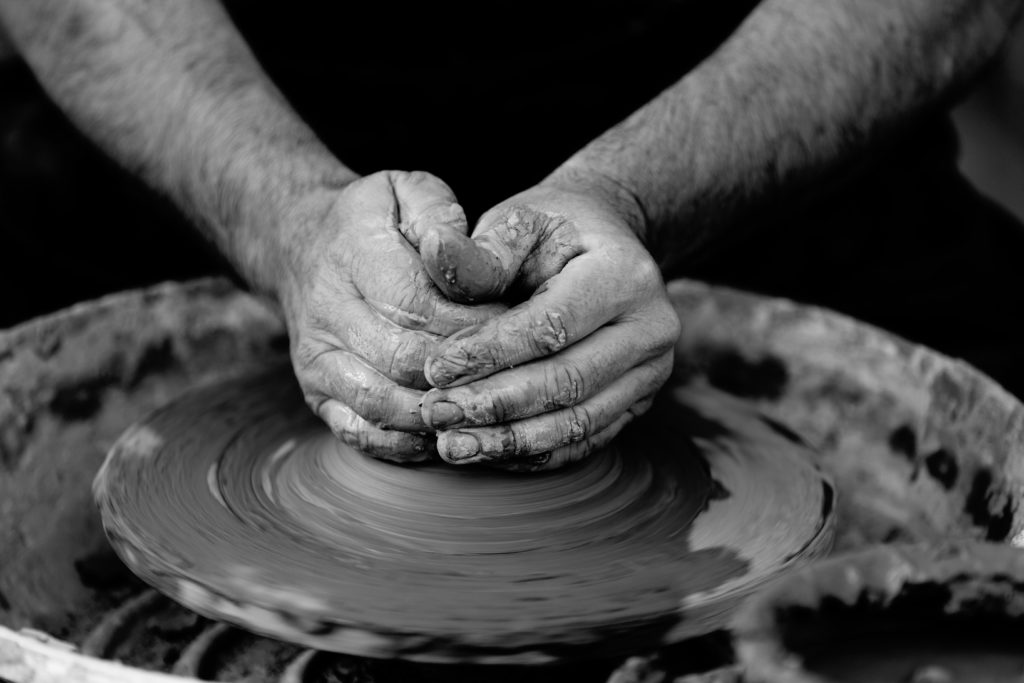
A small clay sculpture of a woman with her hands cupped in front of her chest sits on my desk. She holds a tiny clay bird and is surrounded by a couple of crystals, a piece of amethyst and a small geode. This little altar has been my daily companion for years. Wise and smiling, round and nurturing, the sculpture has comforted me through many losses, grief and rage. She’s one of my greatest treasures.
Letting Go
These days, the bird she holds is perched on the rim of the wooden dish she sits on, looking out at the room, at the world, at me. It can stay, or it can fly away. For now, it’s content to sit, watching and listening, as I live my life in these two small rooms at the top of our sagging farmhouse.
I have placed tiny polished garnets in the woman’s cupped hands where the bird once nestled.
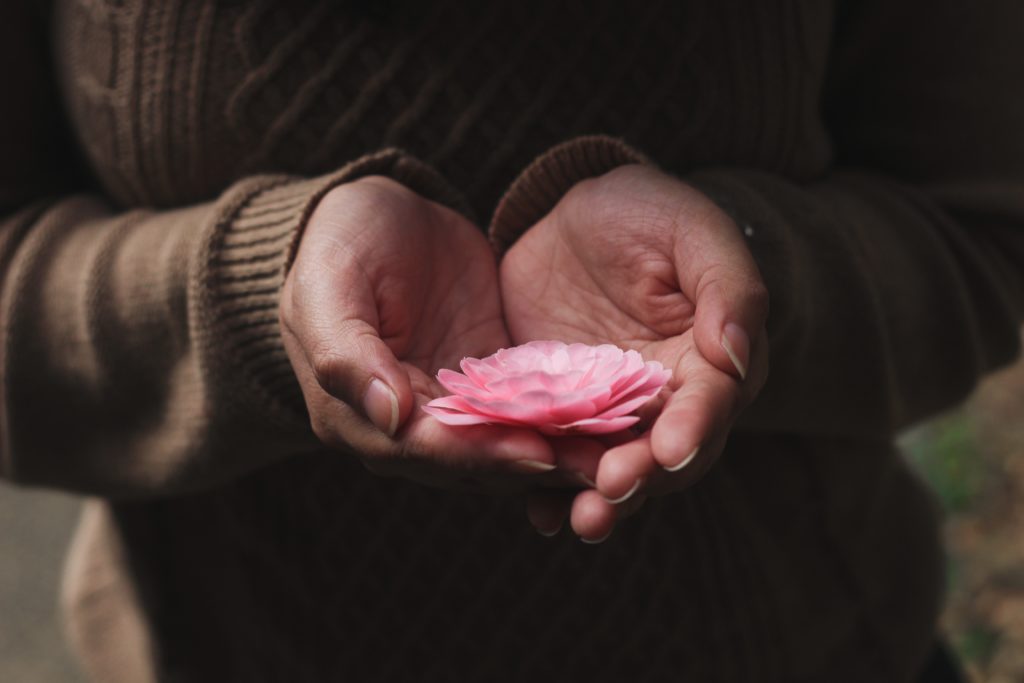
I had a friend, dear and wise, in my old place who once said to me if we open our hands and let something go, and keep our hands open, something new will come and fill them. As she spoke, I again saw the image of an open hand, generous, allowing freedom, and prepared to welcome and support the next thing, and the next.
Letting go is power. Letting go is serenity. Letting go is an authentic act of love toward self and others. The usefulness of letting go is not a secret. Almost any self-help book out there talks about it as an aspect of healthy functioning, but I think popular psychology doesn’t explore it deeply enough.
Letting go doesn’t mean we brush aside our feelings. Not at all. Unexpressed feelings cement us in place. We all know people who remain frozen in time because of a death or traumatic event. Years and decades pass, but they don’t heal. They don’t move on. Their emotional growth is arrested. This is what unfinished emotional business looks like. Unexpressed feelings can’t flow through us and dissipate so we can release them.
We know very little about appropriately expressing our feelings in this culture.
Feelings aren’t thoughts. They’re not stories, expectations, beliefs or ideology. They’re not labels or rules. Like it or not, admit it or not, we’re physiologically wired for feelings, and they give us good information about how things are with us. Our thoughts and beliefs, on the other hand, are frequently distorted, confused, misinformed, outdated or otherwise unreliable.
That’s where letting go comes in.
We’ve all had events in our life that left deep scars. We’ve all seen things we can’t unsee, heard things we can’t unhear and done things we can’t undo. We’ve all felt disempowered or victimized at one time or another. Death and disaster enter our lives with no warning and take those we love.
Some people move on from such events with more grace than others. I suspect part of that grace has to do with forgiveness. Not forgetfulness, but forgiveness of self and others. I suspect another part is the ability to fully experience and express the feelings attached to the event. That requires a certain kind of support, and many folks don’t have it. Some people simply don’t choose to move on or let go. They center their thoughts, feelings and energy in the event, whatever it was, and they hold it tight, cherishing it, feeding the fire of their pain, keeping their scars open with the razor blade of their attention and focus. It becomes part of their identity, part of their story, a grievance to cling to, a betrayal to treasure, a wound to worship.

Photo by Andrey Grinkevich on Unsplash
I have a book called Clean Sweep, by Denny Sargent. It’s filled with rituals and instructions to help us let go of what no longer serves us. The author outlines a banishing exercise in which he suggests the reader visualize holding tightly to a thorny branch. In my own version, the branch is heavy, so heavy I can hardly hold it, which drives the thorns deeply into my flesh. The branch is a person, event, memory or belief that gives us emotional pain. We can make an easy choice and cling to it, cradle it, embrace it, let it tear our skin and make us bleed. We can make a harder choice and set it down, open our hands and let it fall. We can walk away from it. We can burn it or bury it.
In order to let go, we have to be willing to surrender control and endure loss. Letting go of a core piece of identity, a long-held belief or a painful memory is difficult work, even when that core piece, belief or memory gives us great pain. Letting go will leave a hole. Then what? Then who are we? How do we fill that hole? How do we understand ourselves and our place in the world? This is scary stuff.

Photo by a-shuhani on Unsplash
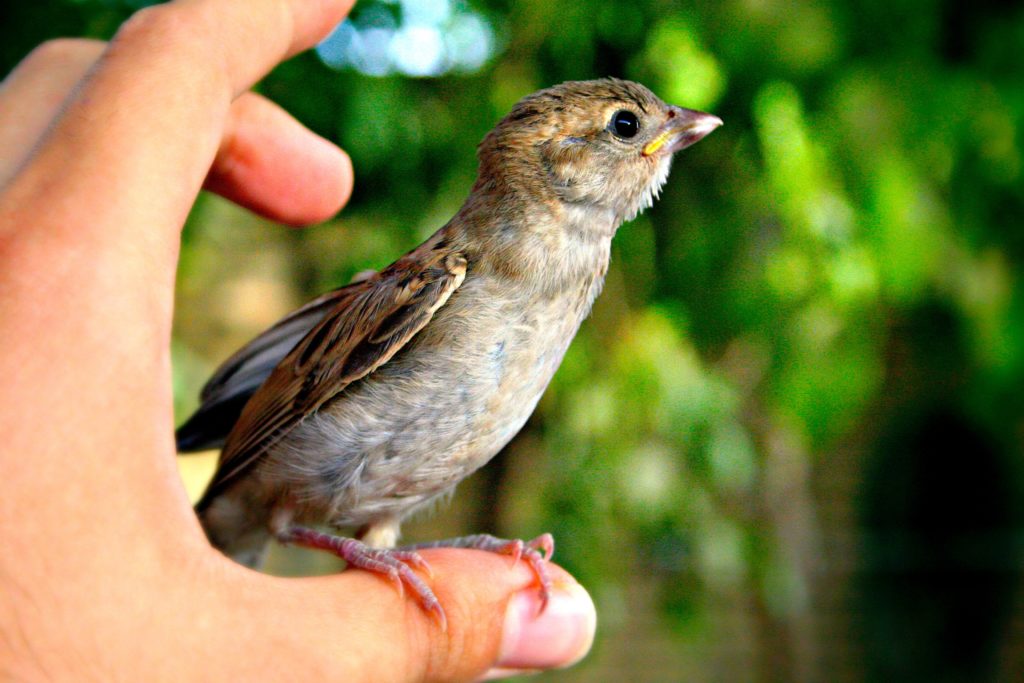
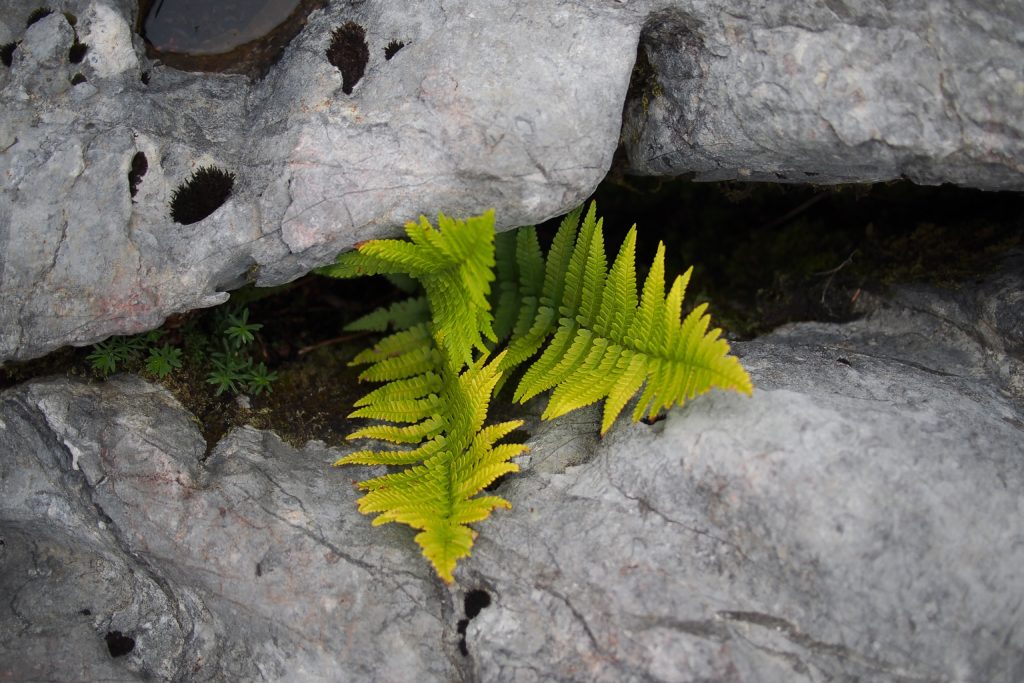
Aristotle said nature abhors a vacuum. My friend was right. If we open our hand and release what we’re holding, something else will come, though we can’t predict or control what it might be. In fact, the thing released might return to us in another form. We can’t know. We’ll never know unless we release our need to control. We’ll never find out what might perch on our open hand if we’re not willing to walk through loss in order to reach gain.
I’m having a long and involved break up with my desire to control. Some days I go all day without thinking about it, and other days I want to micromanage everyone and everything in my life. Some days I feel light and free, a confident and lovely woman, and other days I feel like a grubby three-year-old hiding under the covers sucking my thumb because nothing and no one is the way I want them to be. I sulk and pout and snarl and I feel crushed by the thorny weight of my need to control.
Then, at some point, my eye falls on my little clay wise woman and her cupped hands and wide-open heart, and I say, “Oh, yeah. That’s right. Letting go.”
I feel annoyed when people tell me to “get over it.” First of all, I have a right to my feelings, and secondly, it’s not that easy. Letting go, for me, is a practice, and I need time to engage in it. Sometimes I go back and find my leaden armful of hawthorn or bramble or locust and hold it again for a while, opening up all the old wounds, exhausting myself, hurting myself, and, finally, opening my hands and letting it fall again. Sometimes I need to design a ritual for letting go, a prayer or a dance or some kind of purification rite. Sometimes I need to make a physical resting place, like a grave or a patch of garden or a newly-planted tree in order to let something go. For me, taking time to honor whatever it is I’m trying to release is helpful. Whatever it is that no longer serves, it was once a part of my life and experience. Laying things to rest in this way helps me release them fully and finally.
When it comes right down to it, this blog has been an exercise in letting go as much as anything else.
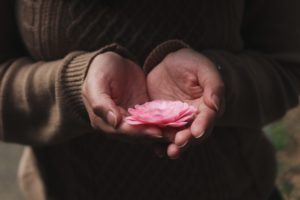
Photo by Ester Marie Doysabas on Unsplash
When we know how to let go, we increase our power, as well as the power of others. Often, what we desperately hold onto is people. This is a strong archetype in old stories; locking the beautiful maiden in the stone tower to “protect” her. Part of love, as any seasoned parent will tell you, is letting go. Imprisoning, disempowering and trying to control others isn’t love. Refusing to let go of someone isn’t love.
Releasing our grievances with others frees them as well as ourselves. Being willing to accept an apology, an explanation, and the imperfections of others allows us all to move forward with lighter loads. The stories and memories we hurt ourselves with are often ghosts, events involving people who are long dead and far in the past. We can choose to bless them and lay them to rest.
I don’t want to haul around painful memories, toxic garbage, the futility of trying to control life and ineffective behaviors and beliefs. I can’t swim with all that tied to my ankle. I can’t dance. I can’t embrace anything or anyone with an armful of brambles. I can’t create with a heart full of thorns.
I want to be free.
I open my hands.

Photo by Stephen Leonardi on Unsplash
Make a Boat
Make a boat
out of who you are
not what you have.
If you don’t know who you are
(Search for the desert between the worlds.
Find Bone Mother.
Recollect.
Reassemble.
Bathe in soul.
Birth yourself.)
That is another journey.
Your boat will be small.
You can take no one.
You can take no thing.
Shape your boat with your truth.
Shape it with the joy in your hands
and the wisdom in the soles of your feet.
Make a chisel of rage and grief.
Sand with the grit of clarity.
Stain with blood.
Oil your boat with the moisture and musk of your sex.
Stitch the rags of your life into a sail.
Weave rope from your hair.
Take your time
And remember
Fear does not float.
When you know the boat is ready,
Sit in it.
Lay the backs of your hands on your knees.
Open your hands.
Let everything go.
Let everything go.
Keep your hands open
So that new things may come.
Without fear
Ask the one who stands just behind your shoulder
The one who shelters your life in the shadow of her wing
To come forward.
She will guide the boat.
Surrender yourself to your boat,
to the water,
to your guide.
Find your breath.
Stay there.
Find your heartbeat.
Stay there.
Keep your hands open.
Rest.
Don’t stand up in the boat!
Don’t throw yourself out of the boat!
Don’t you want to see where you are going?
Look. See how the feathers on her wing
trail in the water?
All content on this site ©2018
Jennifer Rose
except where otherwise noted
by Jenny Rose | Dec 28, 2017 | Connection & Community, Emotional Intelligence
Character: The mental and moral qualities distinctive to an individual; a person in a novel, play or movie.

Photo by Nick Grappone on Unsplash
I’m fascinated with the places between. All the places between. Threshold places. Edge-of-chaos places. Here-there-be-dragons places off the edges of maps. It’s in the gaps, fissures, cracks and edges that I mine for the characters that inhabit my writing. It’s in the between places my own character is shaped, and I gain the clearest understanding of the characters around me.
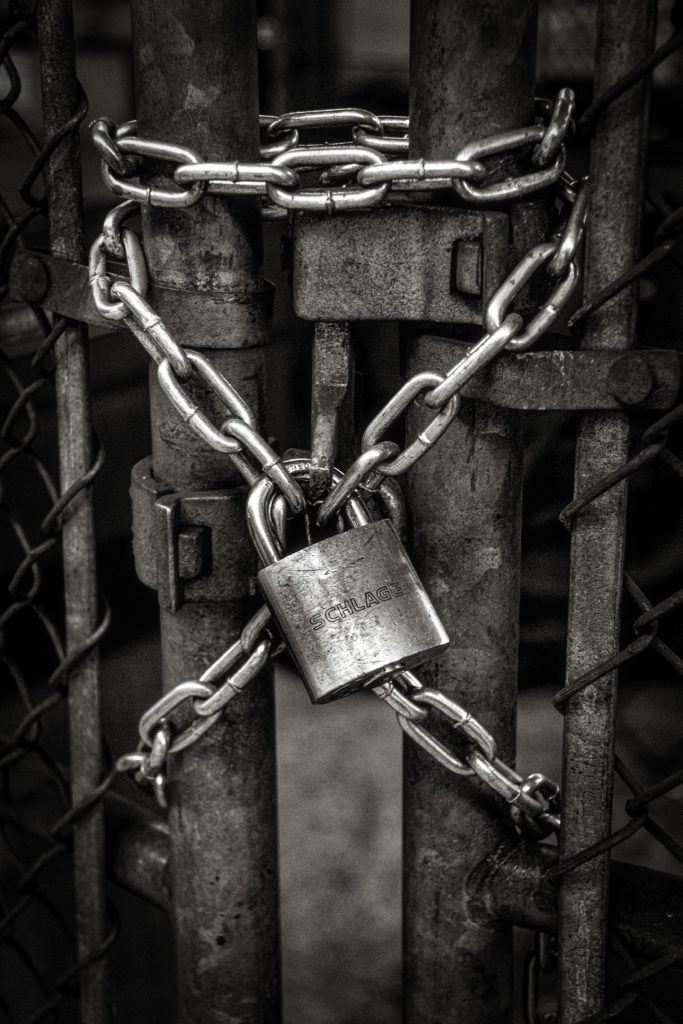
I’ve written about labels before. Discovering characters is not about labels. Labels aren’t people. We’ve had a lot of reminders recently that talent, success, money and power fail to fully define character. Ours is a culture of texts and tweets, acronyms and jargon like “neoliberal” and “postmodernism.” We’ve become skilled at reducing ourselves and others to one-dimensional paper dolls with the application of a label. It’s an all-or-nothing kind of culture. We’ve no time or interest to invest in understanding complexity.
But what lies between the enormously talented actor and his serial sexually abusive behavior? What is the untold story of the “perfect” mother who drives into a lake with her kids in an act of murder and self-destruction? How do we think about the extraordinarily gifted writer who is also homophobic, or a child abuser? Who are we in the gap between what we believe ourselves to be, what we define ourselves to be, what we want ourselves to be, what we’re afraid we are, and how we actually show up in the world in the experience of others?
In that space between lies real character. That’s where I’m at work, listening, taking notes, asking questions and observing. As a writer, I must know my characters. What are they afraid of? What’s their worst memory? What’s their ideal vacation? What motivates them? What does their sock drawer look like? What’s in their car? What’s on their desk? How do they treat a service person? How many unopened emails squat in their inbox? Where do they want to be in five years? In ten years?
Defining ourselves or others by a single characteristic, choice or ideology doesn’t build connection, understanding or empathy. We can spend hours online, commenting, facebooking, blogging and interacting with others about every issue from sexual politics to diet, but none of it defines our character as honestly as how we treat a real live co-worker who identifies as transgender, or what kind of food we actually have in our refrigerator.
Those tantalizing, fertile, often concealed places between! Interestingly, words obscure the places between. Words are capable of seductive lies, but action, especially action taken in the stress of an unexpected moment, points unfailingly to true character.
Another problem with labels is their inflexibility. We each perform hundreds and hundreds of actions a day, and some are notable for how well they don’t work out. Labels imply we don’t change, we don’t grow, we don’t adapt and adjust and learn, when in fact the opposite is true.
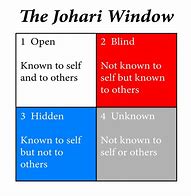 The Johari Window is a concept created by a couple of psychologists in the 1950s to help people understand their relationships with themselves and others. The window suggests that we cannot see ourselves or others entirely; there is always a space of possibility to discover. Fully defining character becomes a community project. Even so, the unknown or hidden parts of character can and do appear suddenly and overwhelmingly, often resulting in some kind of heinous act and leaving us struggling with what we missed, what we didn’t know or what we didn’t want to admit.
It’s so fatally easy to misunderstand and underestimate others, especially when we can’t observe, talk and interact face-to-face with someone and compare their actions with their words over the long term. Complexity takes time. Making judgements based on labels does not.
As a writer, I’ve learned to look at myself and others with a more interested and less judgmental eye. I’ve learned to set up camp in the places between, look and listen carefully, observe keenly and ask a lot of questions. I’ve concluded that people who toss labels around are often in too much of a hurry to achieve power over others and silence challenge or dissent to engage in thoughtful dialog or discussion. Label users reveal far more about themselves than whoever they’re labeling. It’s a diversionary tactic.
Who is that character hiding behind all the labels they’re slinging left, right and center? What’s really going on with them? What kind of fear, uncertainty, insecurity, pain or lust for power motivates them? Who taught them to use labels so carelessly and unhelpfully? What needs are they trying to meet?
Photo by Quino Al on Unsplash
An engaging character is one who defies labels, one who challenges preconceptions, one we empathize with and even care about in spite of the abhorrent choices they make. A well-written character is complex and dynamic.
This week is one of those between places. We’re swinging between Christmas and the New Year, between 2017 and 2018. The holiday season has stirred up our memories, our family situations, our grief, gratitude, and financial fears. We’ve traveled, abandoned our usual diet and routines, gotten worn out and indulged in sugar and alcohol. The flu is abroad. The package was stolen off the porch. The dog bit Santa when he came down the chimney.
Here, my friends, is the between place of authentic character. Not who we wish to be. Not who we say we are. Not who we present ourselves as on Facebook or pretend to be for our families and coworkers or resolve to become in the New Year, but who we are today, with our blind spots, our secrets, our fears, our greasy oven, our favorite coffee cup, indigestion, bills to pay, snow to shovel, our comfy sagging chair and what we choose to do with this in-between time.
Powerful characters. May we create them. May we discover, foster and celebrate them in others. May we honor our own.
All content on this site ©2017
Jennifer Rose
except where otherwise noted
by Jenny Rose | Dec 14, 2017 | Authenticity, Emotional Intelligence, Needs
It occurred to me this morning that, in general, I’m still confused about what I want.
I’ve had a tumultuous history with my own wants. At some point, very early, as I was learning to be a people pleaser, I gave up wanting anything because I thought it was bad. What I understood was that everyone else’s wants were far more important, and it was my more-than-full-time job to provide those wants rather than selfishly have my own. With rare exceptions, that’s been my modus operandi my whole life.
When I went through a life coaching and emotional intelligence program, my coach suggested I had a perfect right to get my needs met, and he defined some of my “wants” as needs, for example my longing for community and connection. I was enraged. Nobody had ever before made such an outrageous proposal. He clearly didn’t understand the terrible vulnerability of needing or wanting anything from anyone. Having the right to get needs and wants met was the most ludicrous, dangerous piece of heresy I’d ever heard.
That was four years ago, and I’m as angry about it now as I was the first time I heard it.
I also can’t leave the idea alone. I think about it all the time.

Photo by John Salvino on Unsplash
I picture my needs and wants as a snarling chained wolf with blazing eyes, nothing but matted grey hair over bones, backed into a tight corner, determined to go down fighting.
I grieve, literally, to admit I chained it there myself. I chained it without food, water or shelter, and walked away — for decades. During those years of neglect, it starved and thirsted. It suffered alone with no help, no hope, a solitary prisoner.
I’ve done a lot of animal rescue work in my time, and I know sometimes an animal is just too far gone to rehabilitate. Sometimes you can save their bodies, but the abuse and neglect they’ve suffered has damaged their will to live and their ability to trust and connect, and rescue comes too late. Sometimes, against all odds, some strength of heart or spirit survives and an animal accepts affection and care, but its body is too starved or broken to heal.
Part of what I’ve been doing since I’ve come to Maine is to try to rescue my chained wolf, this piece of self I rejected, denied and tried to destroy.
It’s a long process, filled with grief, shame and anger. It takes determination, patience, and the willingness to own my history, my pain and my choices, as well as consenting to my responsibility for my own self-healing. Overcoming internal taboos is desperately hard work, and Wanting is one of my oldest taboos.
Sometime last year I wrote a list titled “Things to Want.” It was short and consisted of necessities, mostly. After a lot of hesitation, I added two things that were not necessary but I just … wanted. It felt wrong. It felt shameful. I left the list on my desk and over the following days and weeks I looked at it as I went about my life. About eight months later I bought one of the unnecessary things, a perfumed body oil I love. It cost about $25.
It was like offering a little bit of bland food to my starving wolf, pushing it near with a stick so as to avoid getting mauled. Not so much food as to make it sick, but a place to start.

Photo by Arun Kuchibhotla on Unsplash
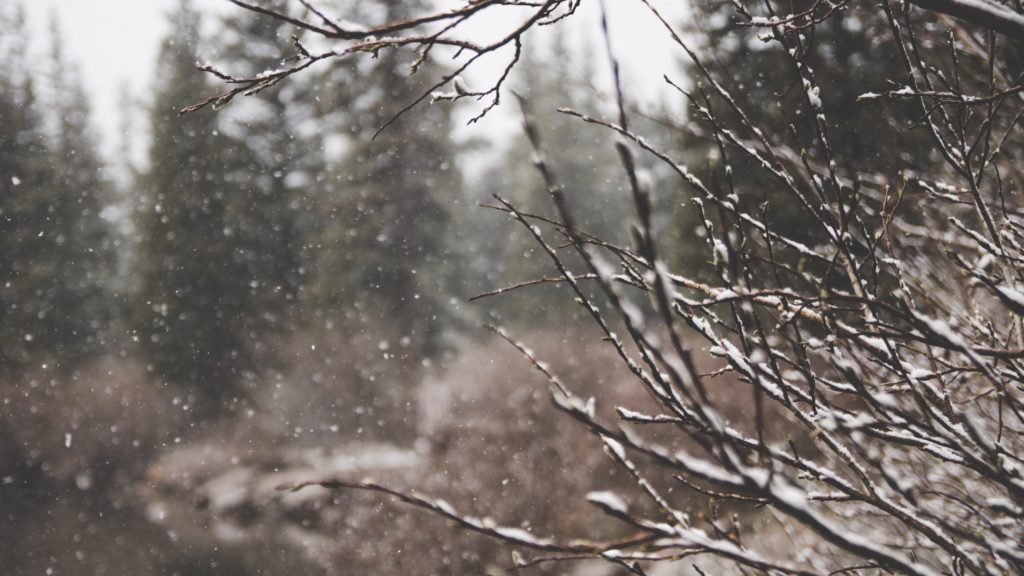
This morning, in the pause of winter and our first big snowstorm, my partner and I talked about our plans, our dreams, and our progress. Later, I went out to walk in the snow and I suddenly saw another layer to wanting, another step closer to making amends to my chained wolf.
Wanting is just the beginning. Making a Christmas list is only the top step. What’s the list under the Christmas list, and the list under that? What is it I really want, independent of anyone else? What about the dreams I hold in common with no one, that are just about and for me? If I was free — If my wolf could bound through the snowy landscape and disappear into the Yule forest — what would I want? If we could escape judgement, our own and others’; escape for a moment our stories and labels and self-definitions; escape family, social and tribal expectations; escape our ideology (most imprisoning of all) and want, honestly, nakedly, with all our hearts, what would that Christmas list look like?
In other words, it’s not about the perfumed body oil (Aphrodisian Fire, by the way, from Kate’s Magik). It’s about touch, scent and caring for my thinning skin. It’s about deliberately honoring my own feminine sensuality.
I don’t need any particular product, cosmetic, clothing, gizmo or piece of technology in order to honor my own feminine sensuality, although there are plenty of things to buy that might support that want, including Aphrodisian Fire, but I see now those are really just symbols. I have the power to honor my sensuality in the way I live — in the choices I make about who I connect with and how, and how I treat myself.

Photo by Caley Dimmock on Unsplash
Santa hasn’t got my choices in his sleigh.
I’m very attached to the dreams my partner and I hold in common. I love our vision, and I’m invested in it. It’s going to take a lot of money, and we don’t have that right now.
Maybe we won’t ever have it.
Maybe I was a damn fool (again) and I should never, never, have listened to someone who says it’s okay to have needs and want them met. Maybe I should walk away from my wolf again, and this time never come back. Let it starve to death.
But maybe our grand vision and plans are only the top layers of what I really want. Maybe the plan is the wrapping paper around the real treasures of self-reliance; living as part of a complex, self-sustaining system; building independence from the energy grid and a culture I largely can’t support; fostering community and trusting in my greatest joy … writing.
I don’t have to wait for the plan to happen to have those things. I don’t need money. I don’t need to wait for someone else. I don’t need to brutally imprison or eliminate my wants and needs. I can be learning, building and transforming my life right now, today, from the inside out. I can, day by day, draw a step closer to my wolf with food, with water, with a gentle hand and with compassion, and maybe, one day, come close enough to remove the chain and let the poor creature go free and wild into the world, wanting and needing as it will.
So, I’m making a list and checking it twice. Or three times. I’m peering underneath the items, things, objects, stuff on that list. What is it I really want? What am I really longing for? And if I look under that, what do I find? What are the deepest wants and needs?
Merry Christmas, everyone.

Photo by Galina N on Unsplash
All content on this site ©2017
Jennifer Rose
except where otherwise noted
by Jenny Rose | Jul 20, 2017 | A Flourishing Woman, Body
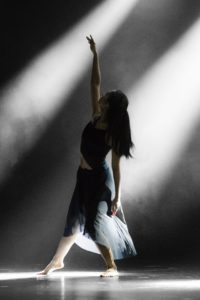
Photo by Leon Liu on Unsplash
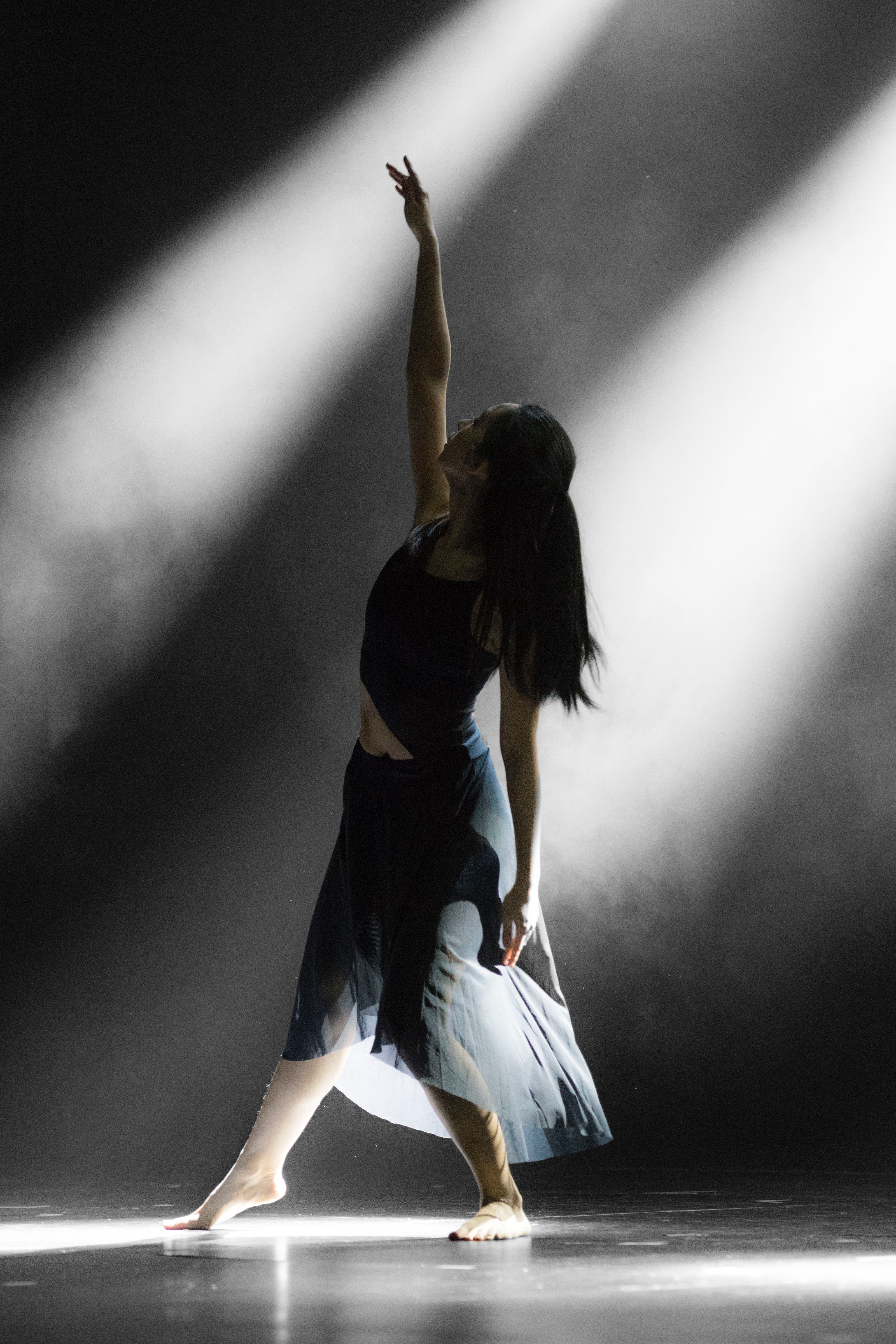
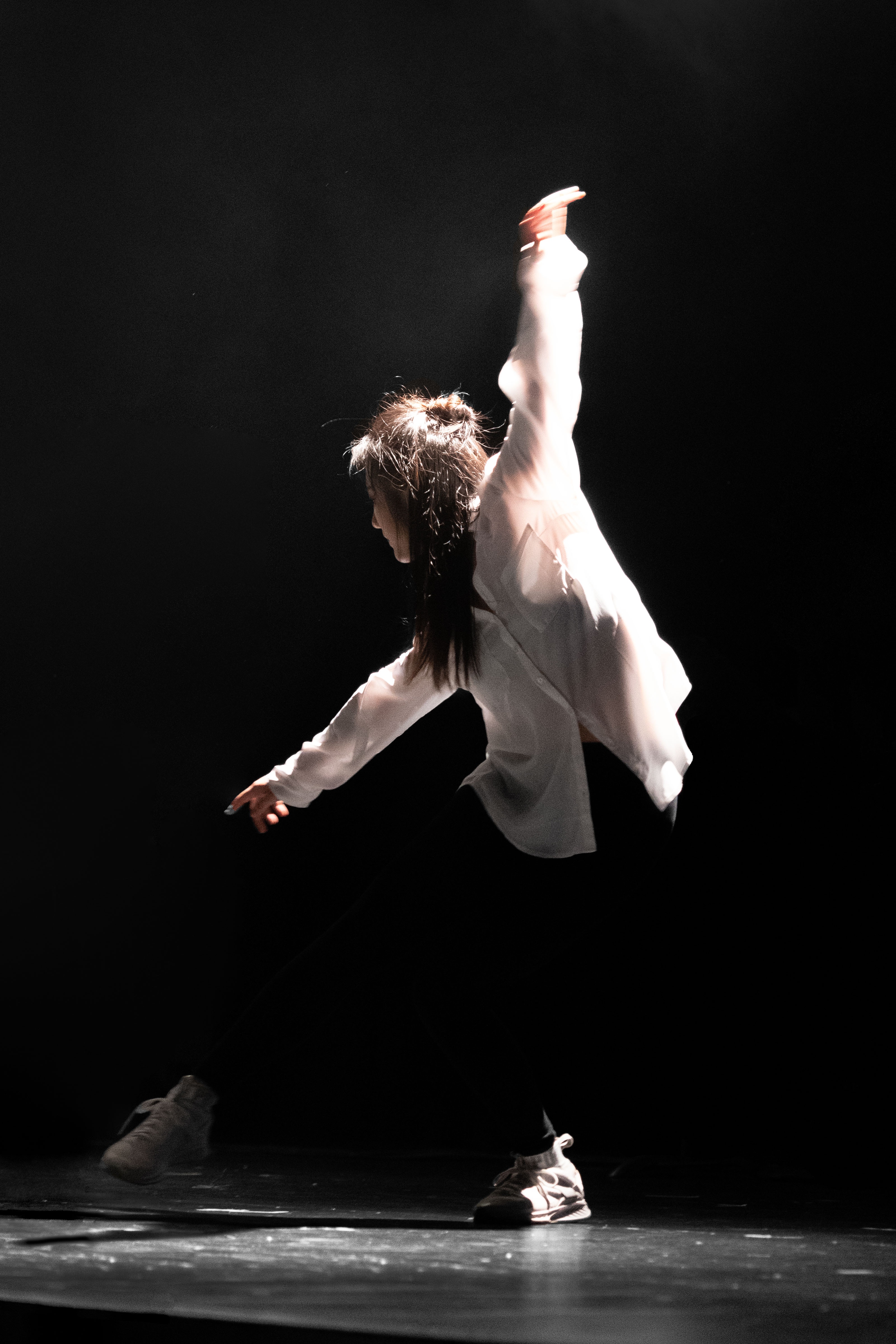
Last night we danced. I’m patiently and persistently attempting to root a dance group into this community. It’s taking time, but I hope in the end to have a healthy core of four or five women with whom to share this sacred practice.
As I danced, I remembered an old friend with whom I danced in Colorado. She used to often say, at the end, as we sat in a circle holding hands, “It’s so good to be in the body.”
Not in the head, where family and other relationships, financial and political complexities, expectations, rules, to-do lists and all our internal voices reside, but in the body, right now.
Our bodies contain a childlike innocence and a wisdom beyond words. They communicate to us the truth about how things are with us via feeling and sensation. Patiently, they carry us through our lives, our most loyal and faithful companions. Persistently, we neglect, abandon and abuse them.
Somewhere along the way, we’ve learned to reject, be ashamed of and hate our physical being and experience. Now we’re to the point where bodily functions tied to being biologically female are a matter of political incorrectness and a hate crime. Social pressure is increasing to eradicate the very words that define female physical experience.
But dance is for everybody in every body, and the spiritual practice of dance has taught me to honor, protect and care for my physical self in new ways. There are no labels in dance, no gaslighting, no power-over that seeks to diminish or limit my physical history or expression. Dance is wordless, so there are no language police. Dance is the freedom to belch, to fart, to wiggle, to jiggle, to giggle, to cry, to shout, to play and to sweat.
Allowing my body to be and joyfully inhabiting it has been a powerful act of self-love. It means allowing my hair to grow as it will, where it will, in the color it is. It means moving with dignity and pride. It means gratitude, for my life is a journey mapped onto my flesh. Every mole, freckle, stretch mark, scar, lump, bump, line, wrinkle and vein holds part of my story, and I honor story.
Being in my body is a powerful act of surrender, not to what the culture says I must be or not be, not to what I think I should embody or not embody, but to what I am. Simply that. The unique, miraculous complex system of genetic material, living tissue, viruses, bacteria and chemical processes that I am.
Allowing my body to be is a peace treaty. My body is not for the pleasure or evaluation of others. It’s not for sale. My body and I owe nothing to anyone, not explanation, apology, conformity, obedience and especially not shame. I refuse to go to war over gender, sexuality or political correctness ideology. I decline to support or participate in self-hatred or hatred of other bodies. The power of my body transcends the judgements, criticisms and opinions of others.
The deepest language I know is of the body. Words are inadequate to my passion, to my love, to my creativity. Spoken and written language fails to convey the richness of my body’s capabilities.
The tick crawling high on the nape of my neck along my hairline, the feel of its tiny claws stirring each hair as it seeks a good place to fasten on, gives me a physical experience so vivid and visceral it cannot possibly be conveyed in words. My skin shrinks, telling me what the sensation is before I examine the cause with my eyes. Undisturbed hair around its path rises, quite automatically, in response to the small but ominous trespass. It feels solid and smooth as an apple-seed between my thumb and finger as I pinch it off. It hurries up and down a bookmark, chestnut colored, as I transport it down the stairs, almost as though it knows it’s been seen, recognized and a death sentence passed.
We come out of our favorite restaurant after a meal on a hot, humid day and find a snake clothed in brown and green, voluptuously twined around our right front tire. My partner stoops and grasps it and it curls and writhes as it dangles from his hand, twisting between the newly-laid black tar and the heavy sky, glaring with sun, humid as a steam bath. My partner takes it into a nearby field and as he comes back he holds out his hand with a rueful expression, showing me beads of bright red blood, dazzling as rubies, on his finger, and two parallel shallow cuts that sting, he says, like paper cuts.

Photo by Leon Liu on Unsplash
Last night I danced with the tick, the snake, the rasp on my knee from falling on the front cement steps, their uneveness hidden by the encroaching hostas, blooming now on thick, fleshy stems, their lavender flowers plundered all day by bumblebees.
I danced with the rattling air conditioner lodged into a window of the recreation center activity room. As usual, we traded the rise in heat and humidity in the room with the lower and quieter fan setting.
I danced with a dead fly on the wood floor, trying to avoid stepping on it with my bare foot. I danced with a living large black ant, bewildered, crawling across what must have seemed like acres of flat, featureless terrain, also not wishing to step on it, but too involved in the flow of the music to stop and take it outside.
I danced with my breasts and belly and thighs, with my feet and elbows and wild hair. I danced with trickles of sweat and a wet upper lip. I danced with my tattoo and swaying earrings and sliding silver bangles. I let myself go. I let myself be. I let myself sink into my body as though sinking into a lover’s arms, for I am my body’s lover, and it is mine.
I danced, and remembered again how good it is to be in the body.

Photo by David Hofmann on Unsplash
All content on this site ©2017
Jennifer Rose
except where otherwise noted
by Jenny Rose | Jan 12, 2017 | Authenticity, Emotional Intelligence
This week I’m thinking about labels.
I’m not a fan of labels. They say too much and too little at the same time, and they’re too easy to use imprecisely. Words and definitions matter to me. On the other hand, labels can be useful in that they symbolize a cluster of defining characteristics that have been well enough recognized and described to get labeled in the first place.
At the end of the day, I have a love/hate relationship with labels. I resist taking them on and I resist defining anyone else with them; however, in the course of exploring and reading about our human experience, certain labels have been enormously healing and helpful in my understanding of myself and patterns of behavior I’ve been involved in. I’m proud to carry some labels, even though I rarely talk about them, such as being highly sensitive, as defined by Elaine Aron, PhD. I’m deeply humiliated by other labels, and only reluctantly admit to them, but I know they belong to me whether I admit it or not.
PTSD is a label like that. PTSD is Posttraumatic Stress Disorder. As a young woman, I associated PTSD mostly with Vietnam vets who came home from the war with deep psychic and often physical injuries. Over my lifetime, PTSD has gradually been more commonly recognized and talked about, and the label has expanded to cover all kinds of experiences outside of war. I encounter it regularly, several times each work shift as a medical transcriptionist. Some people are severely affected in their daily lives, and others function very well unless they get triggered.
I grew up actively ignoring my own pain and deeply involved with everyone else’s. I had the idea I was the cause of the pain in those around me and it was up to me to fix it. My own experience wasn’t significant. I also believed it was against the rules for me to have pain in the first place; pain or distress were shameful and weak and had to be concealed and denied at all costs.
This set of beliefs has made me, for most of my adult life, numb to my own distress. I often didn’t recognize pain at all, and automatically employed various coping strategies to deal with it. Sometimes it wasn’t until days or even weeks later I realized dimly I was distressed after a particular conversation or event, and then I felt shame about my distress. This is part of the dynamic that kept me with an abuser for years. I couldn’t really feel emotionally what was happening, even when I tasted blood. There was a disconnect.
At some point it dawned on me that I have PTSD.

Photo by SHTTEFAN on Unsplash
I was academically injured and emotionally abused as a child in fourth grade math, which happened to be the year I was introduced to story problems. Before and after that time I successfully navigated beginning math, high school math, fractions, geometry, algebra and even a college semester of calculus and did just fine, all the while firmly convinced by the limiting belief that I couldn’t do math. I failed chemistry and physics in college, the first classes I’d ever failed in my life. Why? Story problems. I became suicidal and severely depressed and eventually dropped out of college, never to return.
I got a job, got married, and began an adult life. I dealt with a paycheck, a bank account, a checkbook, bills, budgeting, taxes, credit cards and all the rest with no problem. But I still believed I couldn’t do math, and for years I had recurring nightmares about getting on the wrong bus at school (they were identified by numbers) or forgetting my locker combination.
For me, living with PTSD is like living with hidden landmines. I go about my business feeling competent, efficient and organized, and then — WHAM!
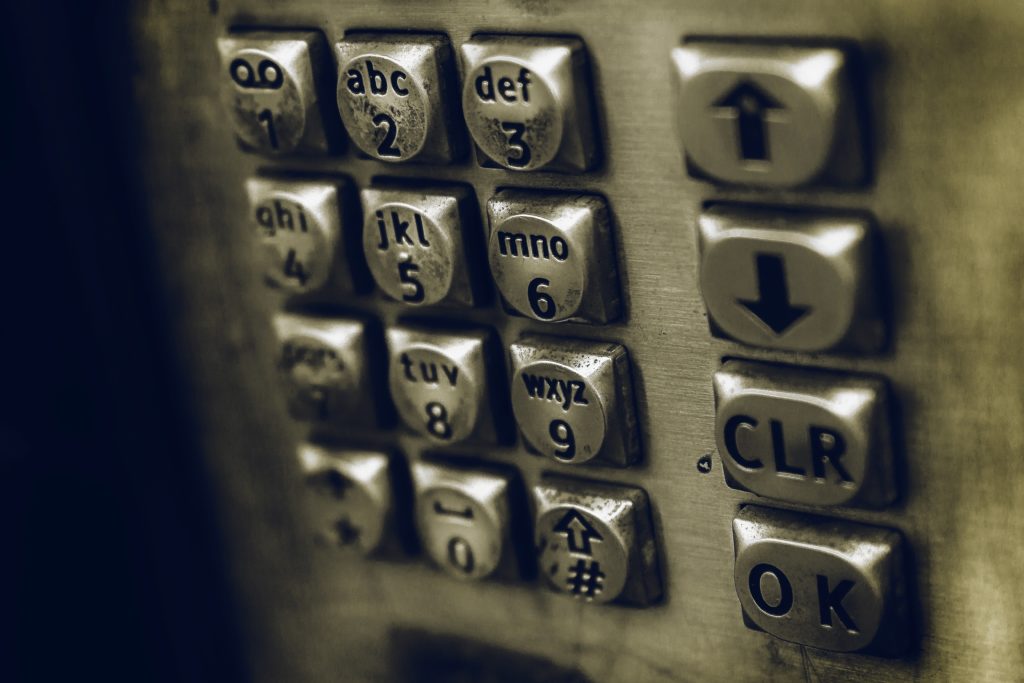
I’ve been two years in Maine now, with a new address and phone. Six months ago, I was making an appointment to get my hair cut and was asked for my phone number (landline, not cell phone). There was a lady behind me, waiting. Another of my triggers. Terrible things happen when you make people wait. The stylist was in front of me, pencil poised, needing to get back to work and deal with other customers. What’s more basic than your phone number, for God’s sake? A 6-year-old can recite her phone number. These days, most 6-year-olds probably have their own phone numbers!
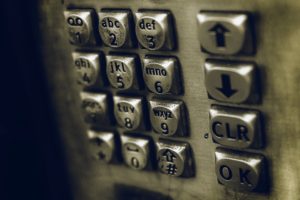
Photo by James Sutton on Unsplash
I was blank. Utterly and completely shut down. Stopped in my tracks. There was nothing in my head but static. I was freezing cold, nailed to the floor, and I don’t think I could have counted from one to ten in that moment. Somewhere deep inside I was screaming, hysterical, panic stricken, and sobbing with shame, but that was happening in another galaxy. My numbers thing had struck again.
Fortunately, I know myself, and unfortunately, this was neither the first nor the last time something like this happened. I went into my wallet and pulled out a piece of paper with my phone number, my address, my birth date, my children’s birth dates, my partner’s phone number and, in disguise, my SS number. I said something about having a new phone number, read it off and got out of there. I sat in the car, shaking, decided I didn’t have to throw up, and went home.
Sitting right here, I know my phone number as well as you know yours, but I’m not under pressure. I also have all the above information pinned onto the bulletin board in my office in the next room, because this can happen when I’m on the phone, too. Someone asks me for my birthday, and that’s it. The lights go out. Total and complete nothingness. I know the month of my birthday because that’s a word, and I love words, but no date, no year.
I’ll write a hundred checks with no problems. Then, one day in a busy store with a line behind me and a hassled cashier, I won’t know the date, not just the numbered date, but the day of the week, the month, the year. It’s just not there. I look at what I’m wearing for clues. I look at the carbon of the last check I wrote, trying to hide that I’m looking. I ask casually what the date is and get the numbered day of the month—but not the month. Somehow, I get through it, but then I’m likely to write the check for the wrong amount because I’m so upset. It doesn’t happen every time, or even most of the time, which is part of the problem. It’s only certain situations, and often I can’t tell what triggered it, so I can’t predict, either. All I can do is be ready and try to deal with my shame and humiliation when it does happen.
It’s on my mind this week because it happened again yesterday.
I work online as a medical transcriptionist and use various software programs for timesheets, recordkeeping and the actual transcription. I’ve been doing this for ten years. As in any job, there are irritating policies and procedures to follow, but I’m familiar with them and I’m extremely meticulous and detail-oriented (no, I did NOT say perfectionistic!), so it’s all in a day’s work.
Except yesterday I realized I somehow made a mistake in my time sheet, and my supervisor was understandably peeved and needed me to fix it. The mistake involved my time sheet, my pay check and my balance of yearly leave hours, all of which, naturally, are represented by numbers. It all conspired in a perfect storm of personal triggers, and I came undone.
Shaking, clammy hands. Hammering heart. Gasping for breath. Trembling legs. Hysterical sobbing. I looked frantically from Leave Request to Timesheet to Records and back again. None of it made sense. I couldn’t even properly recognize a single number. They might as well have been Chinese characters. Punch in, punch out, punch in, punch out — it was like an apocalyptic story problem.
I knew what was happening. I knew I was out of control. I knew I was helpless in the grip of it, and I also knew it would pass.
I got up and left the computer. With my partner, I was able to calm down enough to find language, and talk about it, which helped. Then I ate a big meal. Then I took some music into a quiet part of the house where I wouldn’t be disturbed and danced.
When I went back for my second shift, I looked again, and this time I saw. I knew what my mistake was. It all made sense. I see where I punched in, ran out of work, punched out again. It’s rational, it’s real, it’s verifiable. I’m not crazy. It’s all okay. I know what to do to fix it, but it’s 10:30 in the morning of the next day now and I still haven’t done so. I will. I know I can. But first I wanted to write this and go swimming. I feel a little like I got run over by a truck yesterday, and I still need some recovery time.

Photo by Jeremy Bishop on Unsplash
This is an experience of PTSD behind the label. What I’m trying to do with this week’s post is remind myself and everyone else that labels are cold, dead things that convey intellectual ideas and information. They can be useful, but they’re limited. Behind every label we use, apply or accept, there’s human experience and feelings, and they’re real, visceral, passionate, complex and sometimes painful, even though they may be invisible to an outside eye.
I know PTSD is only a small part of who I am, a mere fraction, a little hairline crack. It’s there. I’ll own it, but I don’t have to allow it to limit me.
But I still believe I can’t do math.
All content on this site ©2017
Jennifer Rose
except where otherwise noted