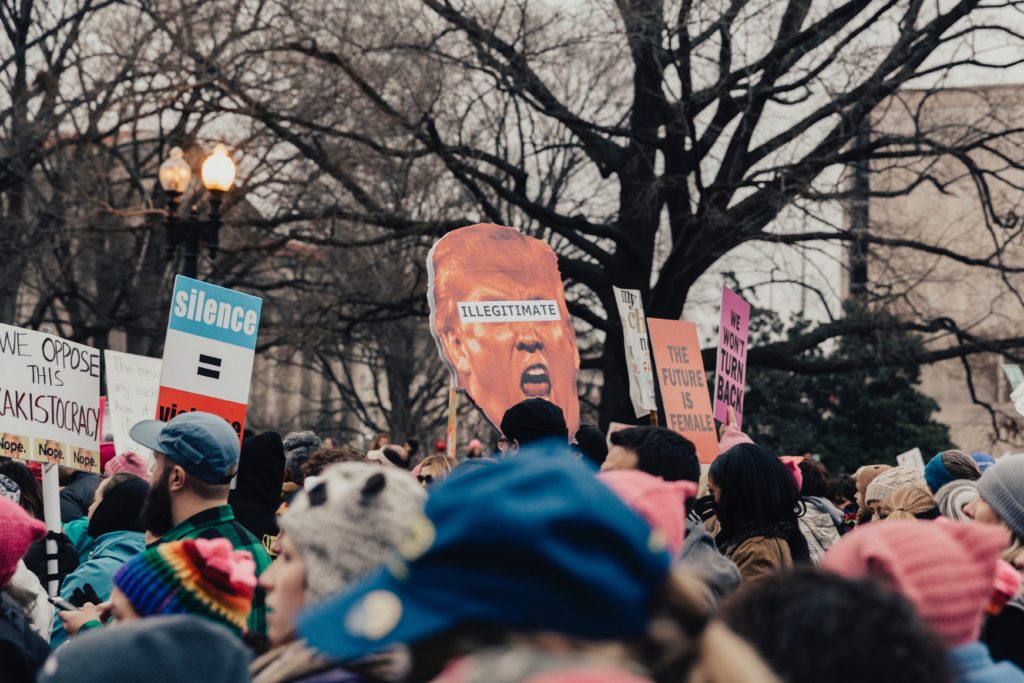
Food for thought from Seth Godin: Productivity is not measured in drama.
Photo by roya ann miller on Unsplash
Sometimes life seems to me like a giant factory. The owners are busy manufacturing fear and drama day and night, making money hand over fist. We the people sit in little cubicles, brainwashed and manipulated by the factory owners, responding to fear and drama stimuli for all we’re worth (and much more than we’re worth, monetarily speaking) and providing a gigantic, endless river of profit to the few at the top. After a few months in the factory, we’re promoted; we’ve learned to create fear and drama all by ourselves! Now we can model good business practice for the newbies.
Fear and drama. Two top money-makers. Naturally, a capitalist culture would be constructed to relentlessly promote them, and any vehicle for increasing fear and drama would have enormous lucrative potential. Hence, staggering financial power and influence in the form of social media, conspiracy theory centers and advertising.
Information (facts) and critical thinking mitigate fear, so let’s demonize them and weaken public education so such heretical things are not taught.
Breaking our addiction to stuff and stimulation, instant gratification and validation, might allow us to realize how hollow and expensive those addictions are, so let’s not give people a single second in which to be tranquil and quiet.
Changing our belief that having and doing are more important than being, that doing more faster will lead to greater productivity and thus more money (with which we can buy more) will hurt the economy. Let’s make that unpatriotic, unpopular, and offensive.
Photo by Heidi Sandstrom. on Unsplash
Let’s emphasize and support division, outrage, hatred, bigotry, procrastination, ignorance, catastrophizing, gaslighting, urgency, “alternative facts”, and disempowerment. Let’s prioritize making a profit.
Let’s train the culture to demand drama, and richly reward those who disseminate the most drama to the public. Let’s give those people power, authority, awards, and our money. Let’s give them our time and attention, our applause, loyalty, and praise. They entertain us. They tell us what we want to hear. They will be our saviors in a terrifying world. Without them, we’ll lose everything. (Starting with our guns.)
Manufactured drama. Manufactured fear. As though life doesn’t have enough organically grown drama and fear.
But one can never have enough money, right? And fear and drama are sound investments. Better than blue chip stocks, because they perform best in the worst of times.
At some point, we hitched drama onto productivity and conflated them. Godin reminds us productivity and drama are not the same or even related, unless it’s an inverse relationship.
We don’t have to choose crisis. We can build slack into our lives, quiet, unplugged time, time away from a screen. We don’t have to feed drama or get involved with it. We certainly don’t have to pass it on. We don’t have to attach to fear. We can unhook from fearful media, take our time and attention away from it.
Fear and drama don’t help us effectively manage our lives or make positive contributions. They don’t make us more humane or better problem solvers. They don’t help us find true love or good health. They’re neither creative nor connecting. Urgency is not high-quality fuel for life, and it doesn’t help us make empowered choices.
If we want to be productive, we need to disengage from fear and drama.
I noticed a social pattern last week I’ve never seen clearly before.
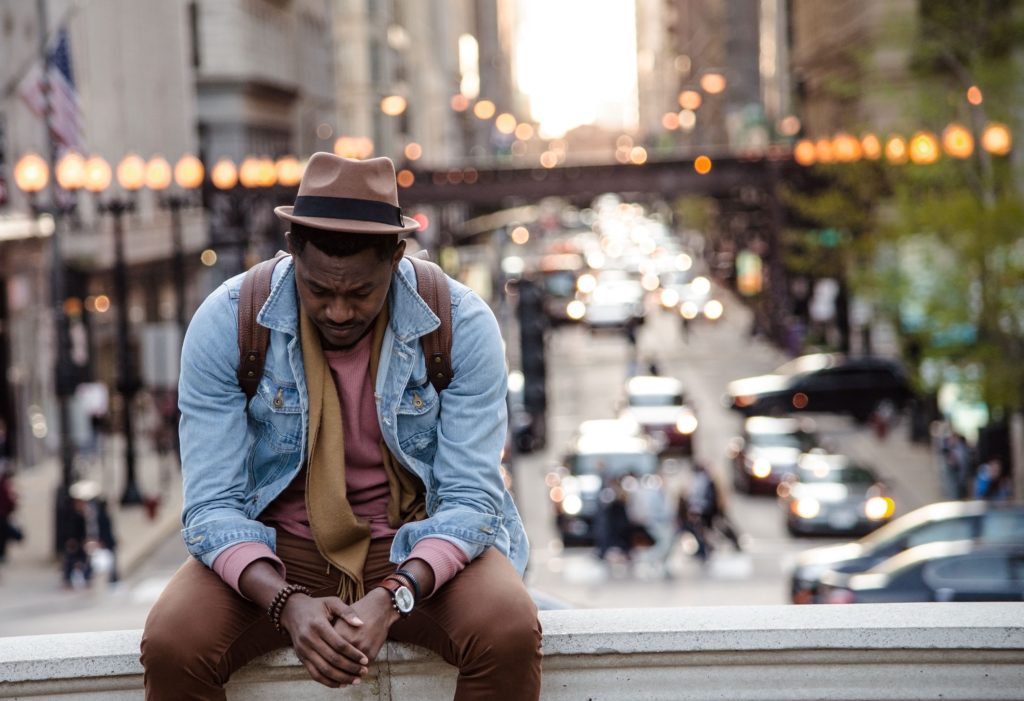
I was involved in a situation at the pool facility where I work in which a distressed person (person #1) needed support. The situation did not arise in a private place, and there were onlookers. It continued for about 30 minutes, which is a long time when someone is visibly and audibly struggling with pain and grief.
Photo by Cristian Newman on Unsplash
The situation resolved, of course. We cannot fix the challenges and difficulties others face, but we can be with them while they feel their feelings and lend our strength, compassion, and energy until they can move forward. My team and I provided the needed support.
A few minutes later, a witness to the interaction (person #2) attempted to monopolize my attention and monologed about their pain, medical history, and personal difficulties.
I had completely different reactions to these two circumstances.
I have never known the first person to engage in attention-seeking behavior. On the contrary, in spite of significant disability person #1 is generally upbeat and determined, working very hard to gain strength and independence and supporting those around them who also face physical limitations and challenges. When things fell apart it was an anomaly, my empathy arose immediately, and I stepped in without hesitation or thought. I entered into their experience as fully as I could with nothing held back, completely focused on support.
In the second case, person #2 was no better or worse than usual, and is much more able than person #1 at baseline. While other witnesses had expressed compassion for person #1 (“that could be any one of us”), person #2 did not, but launched into a harrowing personal account that felt both competitive and demanding. I was wet (I’d gone into the pool in my clothes), cold, and emotionally worn out, as well as sad about the difficult experiences some people go through. I felt I was expected to supply more emotional energy, not as a temporary support on a bad day, but as a continuing source.
I silently declined, putting my empathy behind a boundary to rest and recover, and employed my usual level of compassionate listening. After a few minutes, I politely excused myself and moved away.
We’re all familiar with the adage about the squeaky wheel getting the grease. These interactions made me consider the failing wheels that do not squeak. Years ago, when I did fire and rescue work, I learned the loudest victim of an accident is probably not the most seriously injured. The person in hysterics clearly has an airway and a pulse. It’s the quiet victims one needs to assess first. This is true of drowning victims, as well. If a drowning victim is yelling for help, they’re in less immediate danger than the one sliding silently below the surface.
Photo by whoislimos on Unsplash
I’m one of the quiet ones. Stoic, mistrustful, often blaming myself for my own distress, I conceal it as best I can for as long as I can. I’m much better about asking for what I need than I used to be, thanks to my extraordinary group of friends, but I can relate to the one who is in deep emotional trouble and needing the most support and never asking for it. Pain and grief build up in the silence of our own heads and hearts. Our wordless anguish swells until it finds some kind of an outlet, and that outlet can be messy and humiliating.
I vividly remember being a school kid in a classroom. I was frequently bored. Some teachers allowed me to read or gave me extra credit or advanced assignments when I’d finished the assigned work, but some did not. I watched the clock while students who struggled with reading read aloud. I gritted my teeth. I daydreamed. I did my homework. I refrained from raising my hand, even though I generally knew the correct answer. I ignored the whispers about being a “goody-two-shoes” and a “teacher’s pet.” I continually defended against my neighbors trying to copy my work. I watched in resignation as the “squeaky wheels” acted out, floundered academically, and otherwise consumed all the teachers’ energy and attention. If allowed, I read a book. If not allowed, I read ahead in my textbooks. Anything to make the time go by. Of course, if I read ahead I only invited more boredom in the weeks ahead. My teachers said I was a “good kid,” I was a “pleasure to have in the classroom.”
I was not and am not a squeaky wheel. I was invisible. I could have learned so much more. I wanted to learn so much more. But there was no leftover grease. The squeakers and squealers got it all. Every day.
I know people who are comfortably well-off financially (comparatively) and are always talking about money, trying to make more money, dreaming what they would do with lots of money, blatantly pinching pennies to save money, gloating over the money they have, using their money to manipulate others. I know other people who are quite financially distressed and never complain. All their energy goes into working to earn more and doing without to spend less, but they don’t talk about it. If I didn’t know, I’d never know.
Photo by Cristian Newman on Unsplash
It’s an interesting social paradox that those among us who are most in need are sometimes the quietest about it, while attention seekers fight to remain center stage under the brightest spotlight. Yet the attention seekers frequently are the least able to utilize support and validation in such a way as to build self-reliance and independence. They crave the attention, but it doesn’t satisfy. They can’t use it effectively. It only feeds their hunger.
Others can transform with a little bit of care and attention. They use every kindness and expression of support to move forward and grow. They don’t want to be dependent on external attention.
We all need support sometimes. Any wheel can develop a squeak. Some people want support all the time and some wheels squeak continually no matter how much grease they get. As we make choices about investing our time and energy in our relationships, it’s important to know the difference.
I work in a small local hospital rehab facility. Maine has recently instituted a mandatory COVID vaccination requirement for all healthcare workers.
Photo by Ashkan Forouzani on Unsplash
Here in Maine, school districts are choosing whether or not to enforce masking and social distancing as in-person school begins.
As we go into Fall, these two issues are inescapable, not only here but across the country as businesses, organizations, and individuals make choices about dealing with COVID. Or not.
It’s an unpleasant atmosphere, rife with argument, outrage, broken relationships, blame, and contempt. I frequently drive home in tears, exhausted by the effort to remain calm and professional with our patrons, patients, and some staff members.
Much of the current conversation centers around the issue of freedom of choice, and those are conversations worth having. However, I’ve noticed a key part of that conversation is nearly always missing.
We are not free from the consequences of our choices and the choices of others.We have never been and never will be free from the consequences of our choices and the choices of others.
Freedom of choice goes hand-in-hand with responsibility, and choices cannot be separated from their effects. Sometimes those effects are logical, and other times they’re unpredictable. Sometimes they’re obvious and immediate, sometimes subtle and long-term. Sometimes the right choice results in heartbreaking consequences, and sometimes the wrong choice doesn’t. None of us can fully foresee where our choices will lead us. Some people are paralyzed by this fact and resist choosing.
Photo by Cristian Newman on Unsplash
Refusing to choose is also a choice, and it creates consequences.
This inescapable part of being human is something we all share and experience. Nothing can shield us from it, not power, not money, not beliefs, not government. Sooner or later, consequences catch up to us and play out.
We are not “losing” our freedom to choose. We’ve never had unlimited choice. We are experiencing the effects of our choices, just as we’ve always done. It’s a process beyond justice or injustice or good or bad. Consequences are often teachers and opportunities.
Choices and consequences are simply what life is. Everyone’s life. Every day.
Sometimes consequences are deadly and tragic, and we never have a chance to make a different choice. Sometimes we have lots of chances to choose again. Most of us are familiar with the I’ve-been-standing-at-this-crossroad-before kind of feeling.
Choices are linked together in our lives in an endless chain. We decide who to believe. We decide what to believe. We make choices reflecting our faith in someone or a source of information. Things happen. We discover our faith was misplaced, or we discover our faith was justified, or, possibly, both.
This is the human condition.
I believe most of us are making the best choices we can in life. Inevitably, we will experience consequences we didn’t expect and don’t want, and we’ll have to manage those as best we can. Sometimes we’ll need help and support to manage the effects of our choices.
At the end of the day, our power resides in making choices for ourselves and accepting the consequences. We can’t make choices for others, and nobody is making choices for others. Rules and mandates regarding the pandemic are going into place, joining countless other rules and mandates we’ve always lived with. As individuals, we will choose whether to resist or comply, and then deal with the consequences of that choice.
Photo by NASA on Unsplash
Because the globe is so densely populated, our choices, and the effects arising from them, are bound to affect others. We can’t escape from interconnection. Even so, we can only choose for and manage ourselves. Hurling contempt at one another over the choices we make isn’t useful. It doesn’t provide resource, support, or respect. It makes unwanted consequences more difficult to experience and manage for all of us. It doesn’t persuade anyone to make the “right” choice.
It doesn’t change minds or save lives.
We are comparatively free in this country, but freedom is never absolute. None of us have unlimited choice, but all of us have some, and that means all of us will experience consequences generated by ourselves and others. Freedom does not erase the consequences of our choices.
I recently came across a Dutch word, ‘voorpret‘, in one of the minimalist blogs I follow. It means “joy or pleasure ahead or in anticipation of” an event.
I was charmed with it. I love language and the feeling described by this word has long been an important part of my life, a part I’ve been ashamed of, largely hidden, and never had a term for.
Photo by photo-nic.co.uk nic on Unsplash
Anticipating pleasure is fraught with the danger of disappointment. We learn that as children, and we keep on learning it. Our fantasies are often much cleaner, simpler, and more beautiful than real life, when it rains, people fight, someone gets sick or hurt, or events and dates get cancelled.
Many people eventually make an unconscious decision not to look forward to anything out of the bitterness of disappointed expectations and anticipation.
I’ve worked a great deal on releasing outcomes. The practice of ‘however it needs to be, it’s okay with me’, has served me well. I enjoy life more, I stay in my power and build resilience, and I’m able to navigate disappointment more comfortably and effectively.
Still, releasing outcomes doesn’t mean giving up on the pleasure I get out of looking forward to something. In fact, most of my pleasure is in the anticipation rather than in the event itself, or the memory of it. According to this article about voorpret, I’m not alone.
Some people, and I’ve lived with a couple of these, don’t plan. They don’t make dates. They talk about being spontaneous. They say they’ll “forget.” They don’t want to be pinned down or commit to something they might not feel like doing when the time comes. They don’t follow through with plans and they break dates. This hurts, as it conveys to me I’m much more eager to spend time with them than they are with me.
I’ve frequently felt I want too much when I’ve asked others to make dates with me. The idea of making dates and commitments is a boundary problem for people who want no limitations on their access to me. Other folks resent being “pinned down.” During my dating years I felt ashamed of the pleasure I took in looking forward to having a meal and seeing a movie, as though I was being ridiculous and childish.
My response to my shame (long before I knew about minimalism), has been to conceal and simplify my pleasure in anticipation.
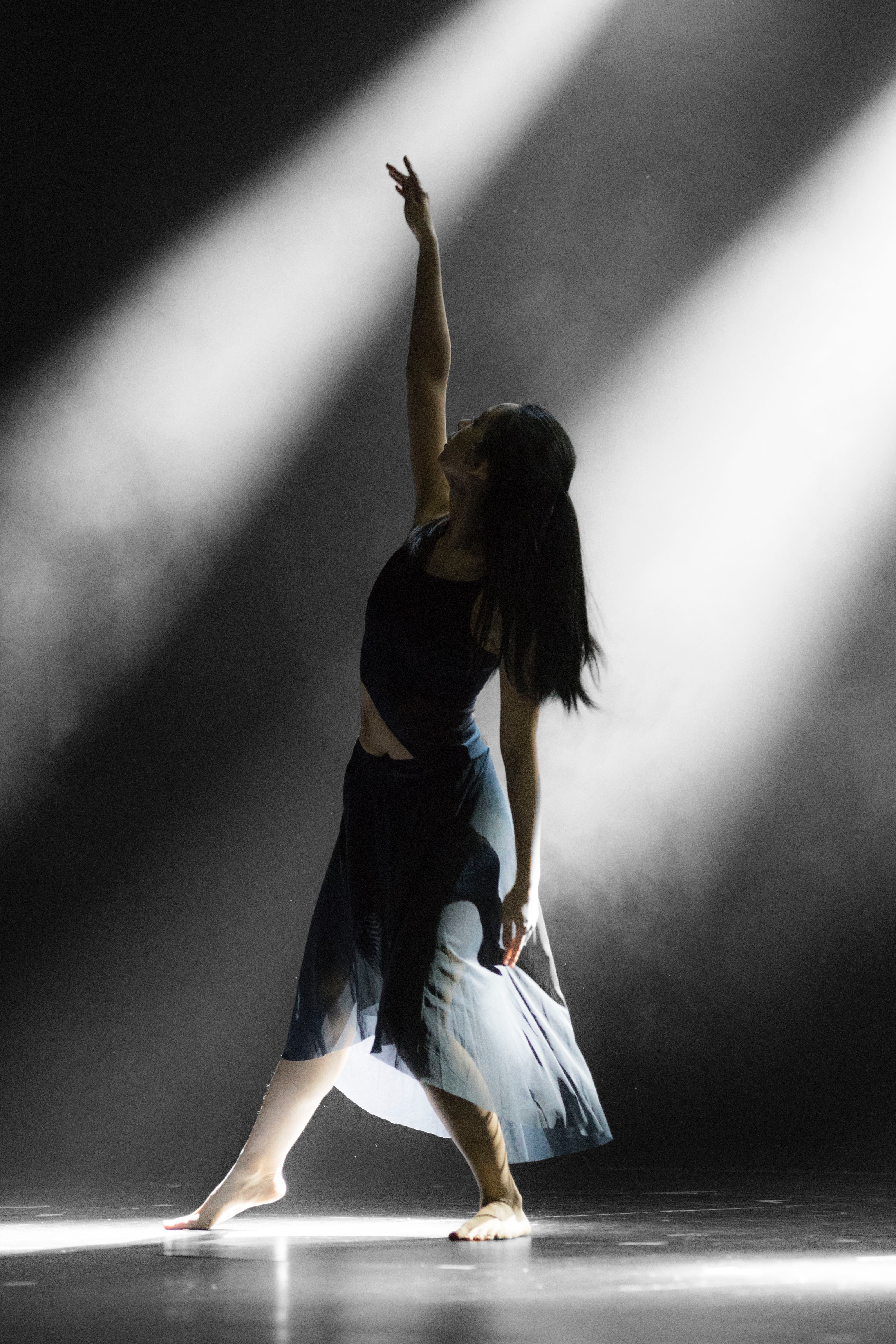
Photo by Leon Liu on Unsplash
When I began dancing, I learned to dance small. It’s easy to get carried away in the music, in the wordless, entirely physical expression of feelings, especially if our feelings are strong and pent up. Before we know it, we’re clumsy, out of breath, and have a stitch in our side. At that point, in order to stay with the dance and take care of ourselves, we must dance small , come back to our center, return to our breath, re-inhabit our body and reclaim our balance and movement.
The practice of voorpret, for me, is dancing small. It’s not about big, complicated, infrequent occasions in which the outcome is extremely important to me. It’s about life’s small, daily pleasures, the ones we can give to ourselves without anyone else’s permission or participation. We don’t need a lot of money. We don’t need time off work. We don’t need a suitcase, a new wardrobe, or a plane ticket.
Voorpret, for me, is looking forward to a cup of tea and a good book on the front porch in the morning sun.
It’s a ten-hour, noisy, stimulating, busy day at work and looking forward to my feather bed, cotton sheets, and cool, quiet attic where the night air and moonlight mingle on the slanting floor under the open windows.
It’s making a date with myself on my calendar for an early morning walk when the world is still half asleep, watching the night sky pale into dawn.
It’s a plan to take myself out to lunch after a haircut or dentist appointment.
Photo by Jan Phoenix on Unsplash
Small pleasures are everywhere in our lives, if we only look and give ourselves permission to experience them. We can offer ourselves these moments or hours every day like gifts. We can write them on our calendars or put them in our phones and look forward to them, fully enjoying and relishing our anticipation and lingering over them when they arrive. Spontaneous joyful moments arise, too, of course, unexpected moments of delight in which we can relax and rest for a moment.
Now more than ever we need to give ourselves stepping stones through and periods of respite inside the chaos and tension of the world. Many of us are suffering from ongoing stress and uncertainty about every aspect of our lives. Many of us feel overwhelmed by fear and anxiety. Voorpret can balance that out. We don’t need to wait. We can schedule a small, simple pleasure for ourselves today, write it down, and start looking forward to it.
When inspiration struck and I set out to build a new website for my blog and other writing, I assumed the process would move quickly. I could hardly wait to see the vision in my head become reality. I’m a happy and motivated independent learner and felt certain I could fumble with the design software and master it without much trouble, the way I did when I created Our Daily Crime.
Photo by freddie marriage on Unsplash
The software for Our Daily Crime is nearly ten years old now, a tech dinosaur. The new software requires a whole new level of skill.
I needed help. Scheduling a meeting with a professional took time. Then we had to reschedule due to a conflict. More time. I turned my attention to other things and practiced patience (not very successfully!).
In the meantime, we’ve hired a new team member at work to join us in lifeguarding, teaching, and working with patrons and patients in the pools. He’s older than I am, and he’s working hard on refining his swimming skills and learning new techniques. We’re giving him all the support and practice we can.
I admire adults who want to learn new skills. We’ve just begun to teach private swim lessons again after the pandemic, and I have two adult students. When I asked one of them what her goals were for her lessons, she said, “Not to drown,” which made me laugh.
I did eventually meet with my web designer using Zoom, and I spent an intense hour and a half taking notes, asking questions, and watching her use the design software. Since then, I’ve spent several hours working with it, and gradually I’m gaining mastery and shaping the website I dreamed of. I’m elated. Can’t wait to share it with you!
As a lifelong learner and teacher, I notice how varied our learning experience can be.
Photo by Alessio Lin on Unsplash
Context matters. I was wretched during my public school years. My goals were to achieve good grades to meet the expectations of my family and graduate. Any pleasure in the learning itself, for its own sake, suffocated under the long nightmare of those years. Graduation meant nothing to me, and I would have ignored it if I’d been allowed. My reward was surviving.
College was no better. I didn’t want to be there. I didn’t belong there. Once again, I went through the motions of pleasing others and living up to expectations, two hellish years of depression, social isolation, and suicidal ideation before I dropped out.
I still wince when I think of the money wasted.
Somehow the joy of learning has been distorted into competition, capitalism, and perfectionism. Everyone doesn’t have equal access to education and educational tools. Many people don’t complete high school, let alone higher education. We don’t talk about education in terms of enhancing our lives and making ourselves bigger. We talk about getting a good job, making a lot of money (or not), and school loans. Capitalism defines success.
Worst of all, if we happen to be interested in literature, writing, religion, music, theater, philosophy – liberal arts, in other words – we’re steered away from those interests because “they” say we can’t earn a living pursuing them. I’ve got news for you. You can’t make a living as a librarian or medical transcriptionist, either.
Apparently, education is not valuable unless it leads to making a certain amount of money.
Photo by Brandon Wilson on Unsplash
On the other hand, many learners in our communities are in it for the fun of learning something new. Their goals are about real life, as opposed to the construct of consumerism. They don’t want to drown. They want to do a job they’ve never done before and so learn new skills. They want to use technology as a tool to support their passion. Adult learners know learning enhances life. They’re not coerced into learning; they seek it out.
It’s a lot easier and more fun to teach someone who wants to learn than it is someone who’s having learning thrust upon them.
Adult learners have lived long enough to know how to learn. Not how to compete, how to cheat, how to work the system, how to manipulate good grades and references, and how to create their own personal perfectionistic demons, but how to learn. Adult learners also know something about how they best learn, and are able to communicate their needs and goals.
Learning requires time, patience and practice. It takes courage to seek new skills. It’s messy. We make mistakes, flounder, and fail. Good adult learners persist anyway, pursuing their creativity or passion, satisfying their curiosity and desire for mastery.
I’ve had the good fortune to know and work with wonderful teachers who have inspired, encouraged, and challenged me. I’ve also known destructive teachers who permanently damaged my trust, confidence, and sense of self-worth. The difference between them, I’m convinced, has nothing to do with their level of education or training, but rather with their power management. Good teachers seek to empower their students. Destructive teachers not only refuse to share their power, they actively disempower their students.
Healthy communities support learning and teaching, not necessarily as a formal process, but as a natural one. As a teacher, I know my students give me at least as much as I give them. Teaching and learning are collaborative, a sharing of power. To teach is to learn. To learn is to teach. Passing on my love of swimming doesn’t change the world, but it’s a contribution I can make joyfully.
Everyone succeeds when we teach and learn together.
Websites store cookies to enhance functionality and personalise your experience. You can manage your preferences, but blocking some cookies may impact site performance and services.
Essential cookies enable basic functions and are necessary for the proper function of the website.
Name
Description
Duration
Cookie Preferences
This cookie is used to store the user's cookie consent preferences.
30 days
These cookies are needed for adding comments on this website.
Name
Description
Duration
comment_author
Used to track the user across multiple sessions.
Session
comment_author_email
Used to track the user across multiple sessions.
Session
comment_author_url
Used to track the user across multiple sessions.
Session
Statistics cookies collect information anonymously. This information helps us understand how visitors use our website.
Google Analytics is a powerful tool that tracks and analyzes website traffic for informed marketing decisions.
ID used to identify users for 24 hours after last activity
24 hours
_gat
Used to monitor number of Google Analytics server requests when using Google Tag Manager
1 minute
_gac_
Contains information related to marketing campaigns of the user. These are shared with Google AdWords / Google Ads when the Google Ads and Google Analytics accounts are linked together.
90 days
__utma
ID used to identify users and sessions
2 years after last activity
__utmt
Used to monitor number of Google Analytics server requests
10 minutes
__utmb
Used to distinguish new sessions and visits. This cookie is set when the GA.js javascript library is loaded and there is no existing __utmb cookie. The cookie is updated every time data is sent to the Google Analytics server.
30 minutes after last activity
__utmc
Used only with old Urchin versions of Google Analytics and not with GA.js. Was used to distinguish between new sessions and visits at the end of a session.
End of session (browser)
__utmz
Contains information about the traffic source or campaign that directed user to the website. The cookie is set when the GA.js javascript is loaded and updated when data is sent to the Google Anaytics server
6 months after last activity
__utmv
Contains custom information set by the web developer via the _setCustomVar method in Google Analytics. This cookie is updated every time new data is sent to the Google Analytics server.
2 years after last activity
__utmx
Used to determine whether a user is included in an A / B or Multivariate test.
18 months
_ga
ID used to identify users
2 years
_gali
Used by Google Analytics to determine which links on a page are being clicked