by Jenny Rose | May 11, 2017 | Emotional Intelligence, Feelings, Happiness
For many years, I’ve been a story teller. I’ve told stories in nursing homes, schools, at seasonal events and in women’s circles. I think of stories as medicine, as guidance, as blueprints for living. Old stories from cultures around the world contain information we’ve forgotten or lost about how to live well.

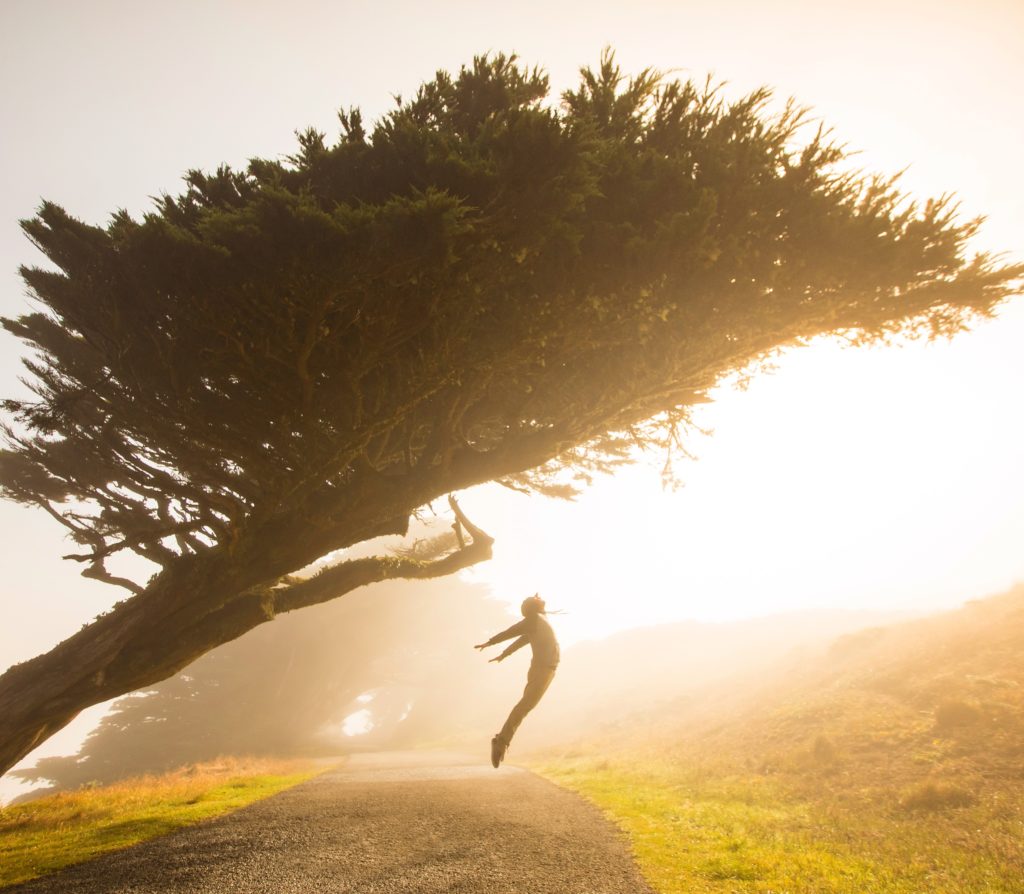
Photo by Syd Wachs on Unsplash
It’s striking how often I share a familiar and oft-told story with an audience that suddenly turns out to be what I most need. Oral stories, if written on a page, look static and lifeless. They’re not. An oral story lives. It twists and turns and wriggles unexpectedly in the mouth. Every time I tell a story it’s a different telling than I’ve ever done before. Every time I tell a story I’m different than I was the last time I told it. Every audience is different.
I’ve discovered blogging is like that. As I blog, I think of the reader. I blog to make an external connection. As I create posts, though, I also discover deepened connection with myself. My writing reveals my truth to me, and shines a light on the places where I’m not living what I know is my truth.
Last week I posted about quitting. In essence, I gave permission to all of us to change, to grow, to seek happiness in our work and in our lives. Ever since I resigned from my job (last day will be Saturday) and wrote that post, I’ve noticed an internal feeling of rediscovery, freedom and fizzing joy.
I only worked 20 hours a week at that job, but the choice to force myself to do it, even though it didn’t make me happy or meet my needs, cast a shadow of apathy over the rest of my life. It dulled my response to my own distress. It fed all those powerful voices that tell us there’s no help for it. We have bills to pay. We have responsibilities, duties and obligations. The most sinister voice of all says this is the best we can hope for or deserve.
I was empowering fear, not love.
All of a sudden, I’m operating with new clarity, the kind of clarity that the right story at the right time brings. This week I’m acutely aware of what’s working well for me and what’s not. I feel my power to choose afresh. I’m not motivating out of fear. Somehow, fear is taking a vacation. I’m motivating out of curiosity, pleasure and the desire to actually be happy.
For me, this is a crime of immense proportions.
I want to be happy. It occurs to me this isn’t a childish pursuit. It’s the pursuit of real personal power.
I follow a blog by Dr. Sharon Blackie, who is a writer, psychologist and mythologist. I’m reading one of her books, The Long Delirious Burning Blue, which has a passionate delicacy I haven’t experienced in a new read for a long time.
Dr. Blackie recently returned to the place she calls home in Connemara, Ireland, and her last couple of blog posts are about taking a walk with her dogs on the land that she loves.

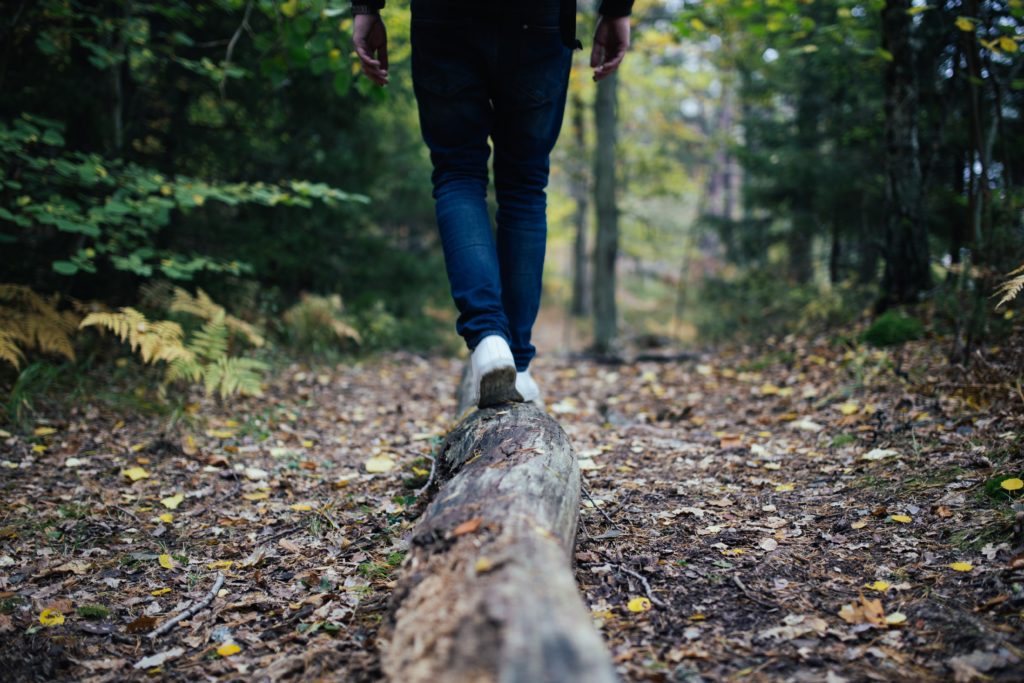
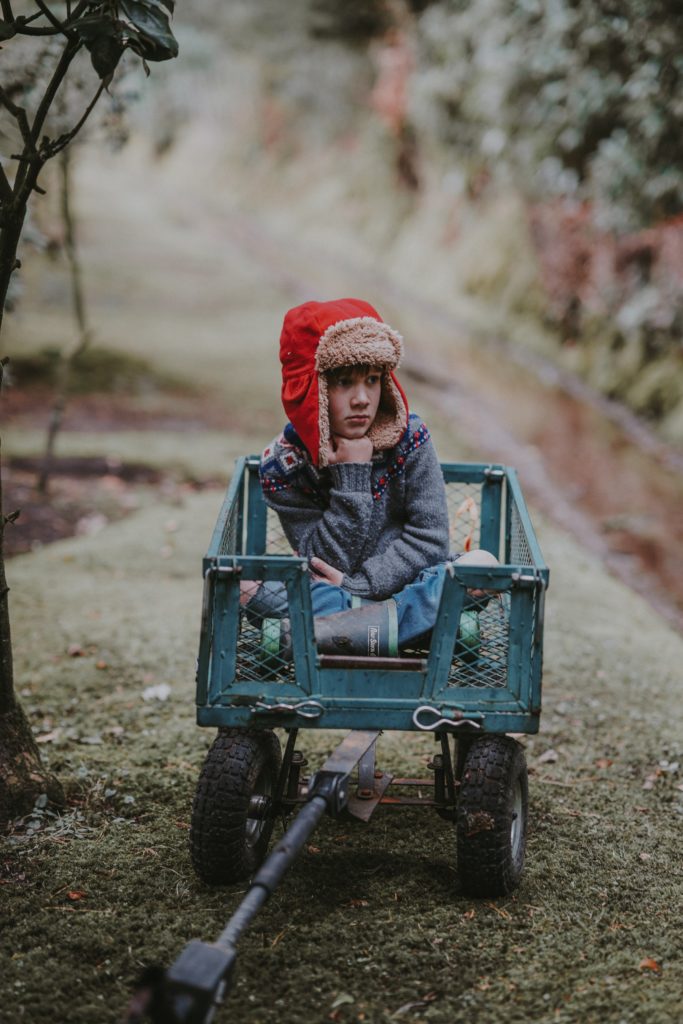
Photo by Takahiro Sakamoto on Unsplash
That’s all. Taking walks. She posts pictures of the lochs, a stream, the bog and the mountain. There are pictures of her dogs, and I imagined wet, muddy paws and soft black and white coats tangled with leaves and stems. I think these posts are among the most joyful and powerful things I’ve ever read, not because Dr. Blackie is an extraordinary scholar and writer, which she is, but because she writes as a woman who’s come home to the place she belongs after a long time away. Her delight and reverence for the land and the life it supports radiate from every word and picture.
That’s how I feel this week, but my homecoming is internal rather than external.
I’m familiar with some of my terrain. Over the years, I’ve learned some of what I am. Always, though, there have been caverns, edges and deep forest I haven’t explored. Perhaps I knew all of myself before my memory in this lifetime begins, but if so, I’ve forgotten.
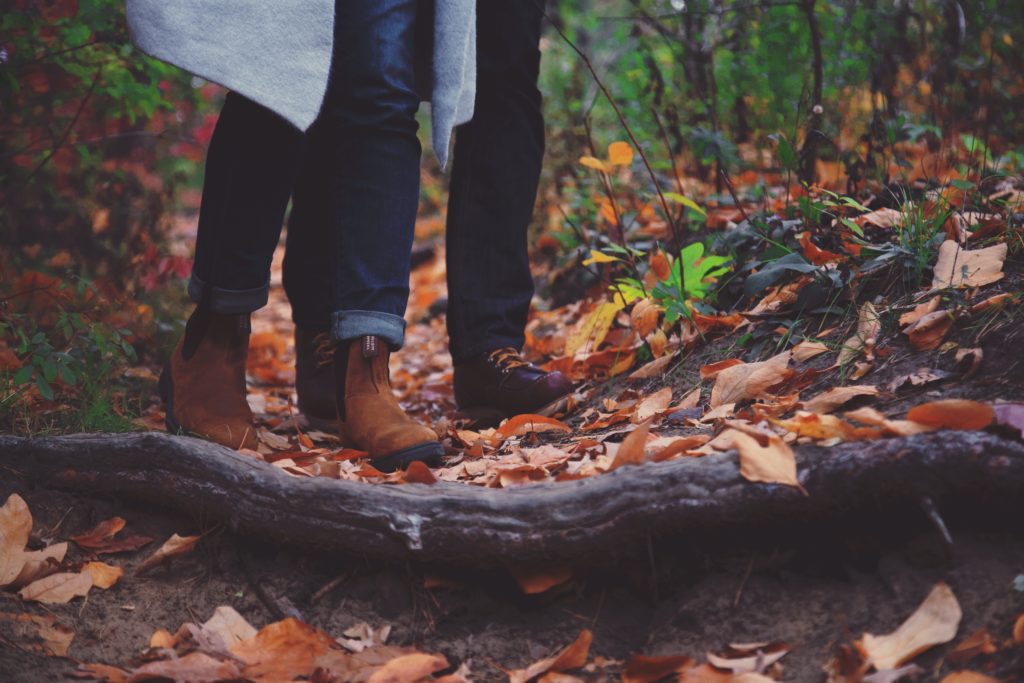
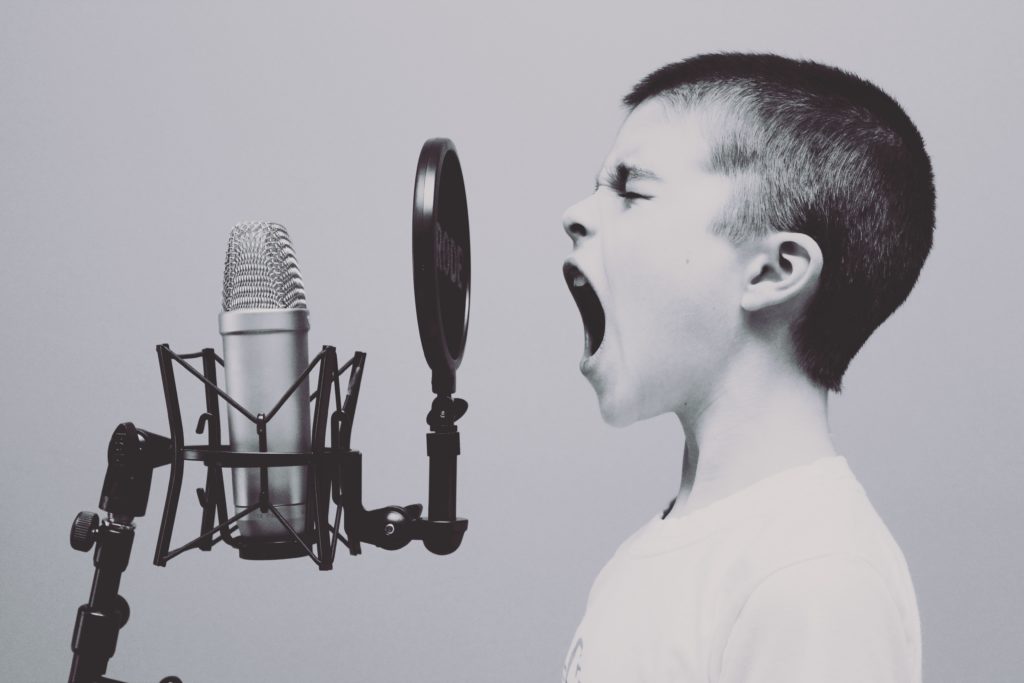
Photo by Cameron Kirby on Unsplash
This week I’m a wanderer, an explorer, a solitary traveler in my own psyche. I leave my well-worn internal paths to roam under trees. I follow the sound of water. I read my own spoor and run my hands over moss-covered rocks. I hunt in vernal pools for singing frogs the size of my toes. I wade through bogs of memory, getting my feet muddy and losing my shoes.
I’ve found old, abandoned structures smelling of rot and damp where birds nest and bats cluster. I’ve stumbled upon shallow graves where, once upon a time, I discarded and abandoned parts of myself. I’ve tripped over fallen idols, are now covered in a lacy blanket of ferns, found forgotten altars and pulled mats of dead leaves out of fountains I haven’t seen in years so clear water can flow again.
I’ve found shed skins whispering and rustling with memory, nearly invisible overgrown paths, and ruts and scars from old burns, floods and landslides.
I suddenly remember the happy feeling of waking early in the morning and going straight outside. I release myself from the expectation that I’ll work well in the last third of the day, a thing I’ve never in my life been able to pull off. I listen to music I love. I read what interests and moves me. I write lists and journal entries, blog posts and edits for my book.
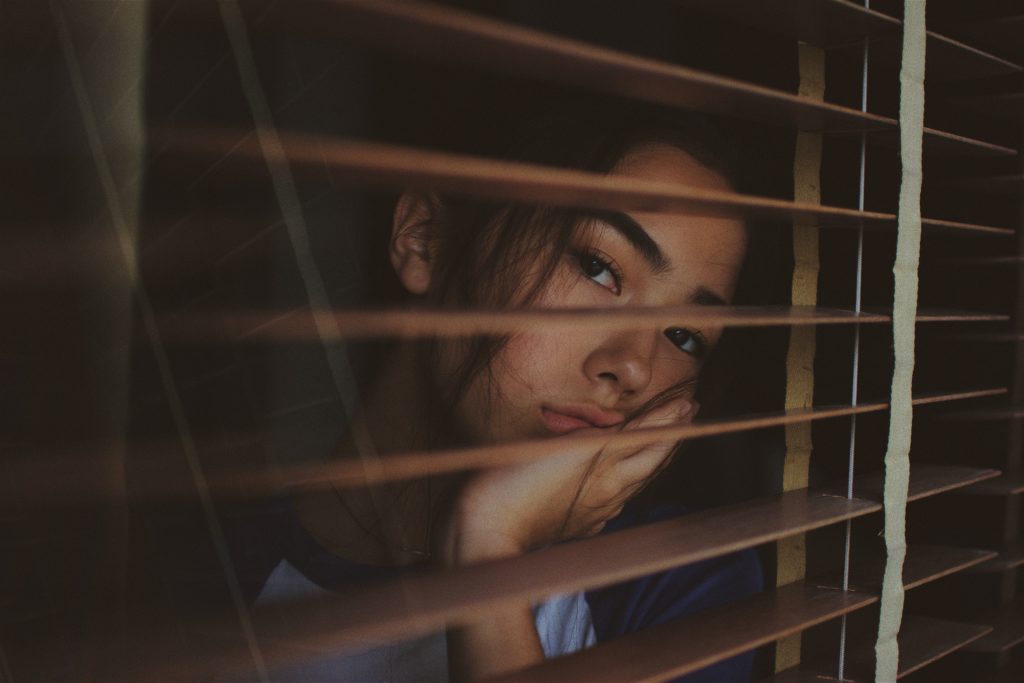
Photo by Jon Flobrant on Unsplash
Like Dr. Blackie’s dogs, I follow what catches my attention. I move along scent trails, noting the passage of all my selves, spiraling from what I’ve been to what I’ll become and back again. I dance from thought to thought, from word to word, from dream to dream. I cast myself into a wider pattern of life.
It’s not that I don’t want to do anything. On the contrary, I want to do a hundred things. I want to do much more than I did when I was structuring my time and energy around my job. I can hardly wait to get out of bed and see what the day brings. I want to play outside, take care of tasks inside, read, write, watch the birds at the feeders, stretch, dance, swim, listen to music, make a list and check things off, be present in my relationships, make new friends, pursue intriguing new connections, earn money joyfully, and see how much I can want and how gloriously I can dream.
I’ve written about leaving home before, and in that post I wrote that in some counterintuitive way leaving my old external home in Colorado allowed me to begin to finally come home to myself internally and reclaim my power. I’ll never think of home solely as a one-dimensional place in the world again. Home is not just a house, not just a beloved landscape, but the place where my dearest friend, my most passionate lover and my most loyal companion reside, along with my deepest power. Home is my own wide-flung arms, my own pulse and breath, my own joy. Home is me, myself.
Somewhere along the way, we forgot that the most important things are also the simplest. There’s great power in being happy. If happy is missing, life is muted and apathetic at best. This is when the power of boredom and the power to quit come to our aid. This is when choice becomes something we must fight to reclaim as if our lives depend on it … because they do.
Claiming the power of happy. My daily crime.

Photo by Senjuti Kundu on Unsplash
All content on this site ©2017
Jennifer Rose
except where otherwise noted
by Jenny Rose | Apr 13, 2017 | Emotional Intelligence, Fear, Feelings
Last week I came down the steep stairs from my little attic aerie, sat in a chair in the living room and cried while I asked my partner if he thought I would ever have a less effortful experience of life.
It’s not that anything was really wrong. What I was feeling was an old, familiar feeling of trying to manage my life and myself as efficiently as possible and feeling worn out and unsuccessful.

Photo by Bradley Wentzel on Unsplash
Trying. Manage. Efficiently. What am I, a machine?
I was tired that evening, and worried about diminished workflow and subsequent diminished paycheck. I wasn’t seeing a way out of my work/income situation, which is a place I’ve been in for several years.
One of the things I did last week during a work shift devoid of work was join She Writes, an online community for, obviously, women writers. I’d been procrastinating about doing so for a long time.
For years, I’ve been trying to find a writing community, both locally and online. I’ve joined a professional local organization, but their programs are rarely offered up here in Central Maine, as Portland is their headquarters. I’ve tried, unsuccessfully, to find beta readers for my first book. I put up an invitation to start a writer’s group at the local library and didn’t get a single call. I tried a give and take partnership with another writer so we could read one another’s work and provide feedback, but my partner had other priorities and needed to drop out.
And, of course, I need to work for that paycheck, so my time and energy are largely gobbled up by my financial needs rather than the joyful work of my life. This produces a chronic background tension that grinds away at my soul.
Anyway, I decided the time had come and I was ready to join She Writes and see what possibilities might open up through that community. I had to apply to join.
I knew they wouldn’t take me.
They accepted me (probably some kind of mistake) and the day after I sat in the chair and cried, I had another shift with no work and began exploring She Writes. I came across a blog post titled “The Only Reason to do Anything is Love,” by Bella Mahaya Carter, and had an epiphany.
Engaging with life from a place of love rather than fear is not a new idea for me, or probably for anyone reading this. It’s the kind of thing we hear and read all the time. I would have said I do that. It’s always my intention to show up in the world with love, which is to say kindness, compassion and respect.
The wording of Carter’s post, however, indicates motivation, an internal thing, not external action. Make choices with love, not fear. Decide what to do based on love. Do nothing for fear.
Right, I thought. I treat others and myself well. Of course.
Why?
I treat others well because I think it’s effective and I’m afraid of violence, hatefulness, rejection and just plain crazy.
I treat myself well because I’m afraid to be unhealthy, unable to earn a living and/or unable to be independent.
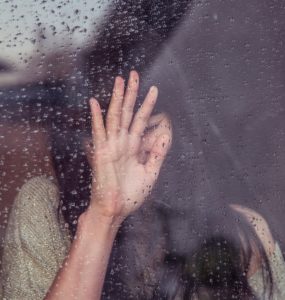
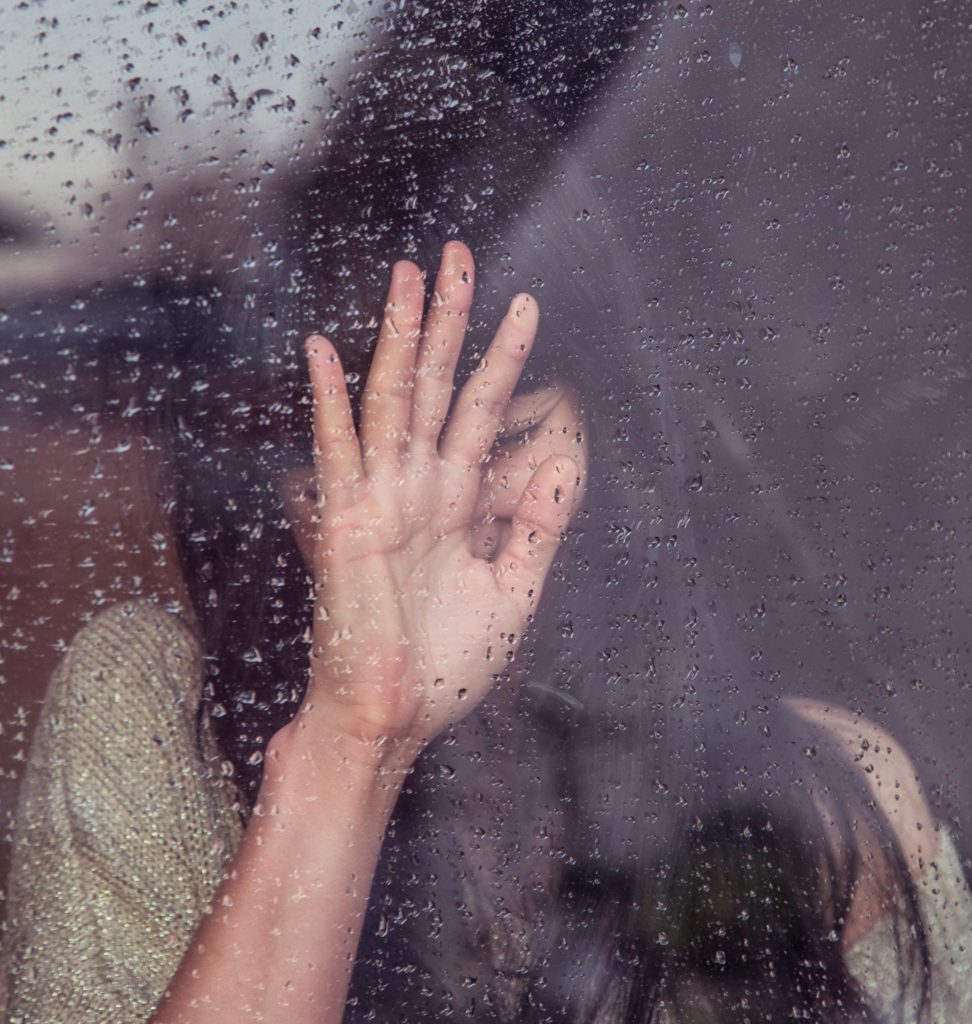
Photo by Milada Vigerova on Unsplash
It’s all for fear. It’s not for love.
Furthermore, treating myself well doesn’t equal loving myself. I caretake my physical form like a good property manager takes care of a rental. I exercise, eat well, brush my teeth, wash my body and take care of injuries.
What I think about myself is that I disappointed my parents, drove my brother nuts (not literally!), failed two marriages and made unforgiveable mistakes as a parent. I think I’ve never made a successful career or had a good enough job. I think I’m ridiculously hard to live with. I think I eat too much, use too much hot water in the shower, like obnoxious music, try too hard and am too sensitive. I think I’m unattractive and few people want to hug or touch me. I think I’ve spent years writing a 300,000-word book that, for all I know, has less value in the world than a roll of cheap toilet paper. On sale.
Those are some of the things I’m conscious of. When I look at my fear-based choice making, it appears I also think if I don’t hold my own feet to the fire at all times I’ll become a lazy, irresponsible, selfish slacker; demanding, mean, dishonest and greedy.
Carter’s post made me realize I could hardly think of a choice, any choice, whether important or mundane, that I haven’t made based on some kind of fear. Ever. From earliest memory.
The greatest motivator in my life is and has always been fear.
Not only that, but I’ve created a whole pantheon of idols I obsessively and ceaselessly worship in order to avoid the vengeful, punitive God I’ve made out of fear. I make daily bloody and brutal sacrifices of time, energy and life to appease them, but insatiable fear just gets more and more powerful. Here are some of the idols:
I read that post on Friday. There and then I decided to start making choices based on loving and believing in myself rather than fear of consequences and see what happened.
Without leaving the chair, I asked myself what the hell I was doing messing around with a job that wasn’t meeting my needs and I was unhappy in.
On Saturday I applied and tested for a job as an independent contractor to do transcription for an online company.
On Sunday I applied and tested for a job as an independent contractor to do transcription for a second online company and was hired on the spot. I also wrote the publisher of She Writes Press and asked for help with the next step for my book manuscript.
On Monday, when I ran out of work, I began getting qualified (via testing) to do various kinds of transcription through my new job and looked up the resignation process from my current medical transcription job.
Yesterday the second online business hired me.
This morning She Writes Press wrote me back with support, suggestions, a recommended professional who might read the manuscript, and what it would cost.
The fear is not gone. In fact, it’s louder than ever because I’m challenging it on so many fronts at once. The difference is I’m not standing nose to nose with it right now. Playing with the new toy of making choices based on what’s loving for myself gives me another option, which means now I can make a real choice.
Fear is not a bad feeling. We need it to survive. It’s just that mine has grown bloated and swollen on all the power I’ve given it over the years. The bigger it gets, the more space it takes. At this point I’ve become its thing. It thinks it can do as it likes with me.
It’s wrong.
I’ve had a belly full of life based on doing things out of fear. It’s exhausting, demoralizing, joyless and hag-ridden. It doesn’t work well and I’m sick of it. When I think about it rationally, I know I don’t need to beat myself with a stick through every day for fear I’ll become lazy, selfish, etc., etc. If I was going to turn into any of those things I would have done it long ago.
How would it be if I used regard for myself as a motivator and refused to do or not do out of fear? What might a life based on doing things out of thinking well of myself look like? What if I stopped giving anything to fear?
The funny thing is life looks much the same. The difference is largely in the outwardly invisible motivation behind my choices. Am I going to relax with music or a video and stretch because that’s the right and responsible way to treat my tiresome physical needs after a long day sitting in which I earned inadequate money, or am I going to do it because I love the way it feels after a tiring day in which I worked hard, whether I earned money or not?
Life is crazy right now. Everything feels like it’s in transition. I hardly know what to concentrate on in any given moment, there’s so much on the table. Even so, now when I run out of energy in the afternoon I spend a few minutes writhing between making a choice between demanding more from myself out of fear or doing something pleasurable and relaxing. So far, every day I’ve managed to choose rest and relaxation after another wild day.
It appears I’ve begun a new practice. I didn’t know that evening I sat in the chair and cried I was standing on an important threshold. I didn’t know by the end of the week I’d have not one but two new jobs. I didn’t know I was going to finally get serious about putting my manuscript into a professional’s hands and risk failure and rejection. I didn’t know in just a couple of days I was going to begin making a habit out of rolling out of bed and stepping into the day’s embrace with curiosity and a resolve to think well of myself as I navigate, rather than wondering fearfully what would happen next and whether I would manage it adequately.
So far, so good.
Nothing more for fear.
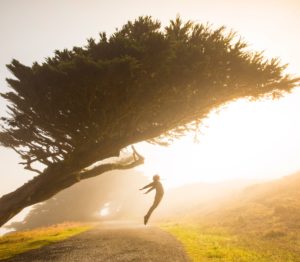
Photo by Stephen Leonardi on Unsplash
All content on this site ©2017
Jennifer Rose
except where otherwise noted
by Jenny Rose | Mar 30, 2017 | Emotional Intelligence, Feelings
In the last couple of years, a lid has been gradually slipping off a container in my mind labeled ‘BOREDOM,’ and I suddenly realize the contents of the can are now moving into all the cracks and folds of my memories and experience.
I don’t have much interest in boredom. I’m never bored and I’m greatly irritated by people who are. When I expressed boredom as I child I was either given something “productive” to do or told sometimes everyone has to do things they don’t want to do.
As a parent, when my kids expressed boredom, I gave them a long list of tasks or “productive” things they could do to help me. They usually declined, but they also learned quickly to stop saying they were bored.
I’ve often been told I’m boring.
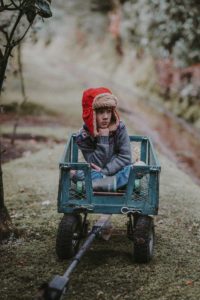
Photo by Annie Spratt on Unsplash
There. That’s all I have to say about boredom.
Life was much more cut and dried before I became educated in emotional intelligence. Now I’m suspicious of cut and dried, especially if it has to do with feelings, patterns in my life or things that keep showing up. Boredom keeps showing up. People say they’re bored and I feel disgusted. People say they do self-destructive things because they’re bored and that excuse infuriates me. I take the boredom of others personally, as though I’m not entertaining or interesting enough to keep them engaged.
If I’m not interested in boredom, I ask myself, why does it make me so mad, and why does it keep catching my attention?
Why, indeed.
A couple of days ago I decided this week’s post would be about boredom, so I really started to think about it. I tossed around the concept of boredom with my partner. I thought about all the places it’s shown up in past relationships. I sat down and Googled boredom and looked at articles, quotes, memes, images and definitions.
I can’t tell you how often I’ve come to the page, either to write or research about something out there — a behavior or pattern I observe around me in other people — and discovered it’s not out there at all, at least not exclusively. It’s in here.
Remember what I said a minute ago? “I’m never bored.”
I’m suddenly realizing that’s not true. In fact, I suspect I’ve been chronically bored my whole life. The feeling of boredom, along with so many other feelings, simply got denied. It wasn’t until I started living more authentically here in Maine and stopped being bored that I could begin to see the colossal depths of my previous boredom.
Naturally, I’ve felt enraged when others express feeling bored while I can’t.
But why can’t I express it? What’s so shameful about boredom?
Oh, baby.

Photo by Jason Rosewell on Unsplash
First of all, being bored means you’re not working hard enough. You’re not being productive. You’re wasting time. You’re useless! You’re lazy! You’re a quitter! You’re irresponsible! You’re letting others down! You’re not pulling your weight! You’re a burden! You’re a failure! (This eventually trails away into a wild-eyed, gibbering mental shriek.)
When all the arm-waving drooling hysteria stops and I can think rationally again, what I’m left with is BUSY=GOOD and BOREDOM=BAD. This has the look and feel of first-grade logic to me, and I’m skeptical. I’ve spent a lot of my life staying busy in order to please other people and a lot of that busy was dead boring. School, for example. Busy and bored are not opposites. Busy without purpose is a recipe for compulsivity. On the other hand, the condition of being undisturbed and private with a book, paper and writing or coloring pens or even just a window and a cat with nothing in particular to do is a real pleasure.

Photo by Danny Postma on Unsplash
Somehow, somewhere along the way, boredom became the enemy in our culture. It’s a whine, a complaint, a danger and a discomfort to be avoided. It’s a weakness, even a sin (if you think in such terms). Boredom is a condition that must be fixed. Bored children get into trouble. Bored adults are not productive. Boredom is an excuse to use and abuse substance. People eat out of boredom. People have affairs out of boredom. Boredom, in fact, is to blame for a lot of undesirable behavior and choices.
Really? I don’t accept this. I’ve learned feelings — all feelings — can be thought of as value-equal data. We’re human. We have feelings. Some are more uncomfortable than others, but isn’t that largely a product of the thoughts and judgements we attach to them? Feeling a feeling doesn’t mean we have to act it out in ways to hurt others or ourselves. If we make destructive choices, our feelings are not the problem. What we do with our feelings is the problem.
It follows then, if I’m bored and I can call the feeling by name and recognize it, there’s information there for me. What is my boredom telling me? Here are some things I associate with my own boredom:
- I’m not interested.
- I’m not engaged.
- I’m not authentic.
- I don’t feel a connection.
- I can’t make a contribution.
- It’s too easy; I know how to do this; I can do more.
- I don’t understand.
- I’m overstimulated.
- I’m exhausted or ill.
- I’m overwhelmed with some other painful feeling, like fear, rage or grief, I’m refusing to deal with.
- I have a boundary problem; I’m taking on something belonging to someone else.
- I’ve been here and done this — not doing it again!
- My needs are not being met.
- I feel disempowered.
- I’m not in the right place.
- I feel limited.
- I can’t be curious or creative.
- I’m not safe.
This entire list is a map informing me where I’ve been, where I am and where I might go next. The feeling of boredom is the ground I stand on to read the map. My boredom doesn’t need to be fixed. There’s nothing shameful about it. On the contrary, it holds essential information and experience for me. It defines choices and supports power. Busy can’t create this essential space and quiet, but boredom can.
So much for not expressing boredom because it’s bad and busy is good. What else stood in my way all these years?
False Gods.
You see, I’m female. (By which I mean uterus, ovaries and menses.) Good girls, nice girls aren’t bored — ever — by males, including but not limited to male teachers, male family members, male romantic/sexual partners, male classmates and colleagues, and male bosses.
Now, before anyone climbs up on their high horse, understand I don’t hate men. Not at all. I’ve historically gotten along better with men than women, in fact. Also, I know things are different now than they were in the 60s and 70s when I was being socialized — sort of. There’s a lot more awareness and discussion of feminism and sexual politics.
However, a big part of my training had to do with “respect,” (also loyalty, responsibility and duty) and just about the only person not included in those I was taught to “respect” was myself. Respect was demonstrated by things like being silent while the men spoke, obedience, and being properly grateful for and attentive to mansplaining . Respect meant adapting, adjusting, and limiting myself so as not to challenge, threaten or compete with men. My role was to learn to “act like a lady” and be compliant, sweet and attractive.
You might not have noticed, but that training wasn’t notably successful.
Boredom and respect are not a happy team, so of course I kicked boredom to the curb. Respect meant love, validation, tribe, straight A’s, husband, children, a good job and a normal life. Boredom with addiction, violence, abuse, rigid thinking, inability to grow, absent creativity and curiosity, uninspired sex, toddler-level communication skills, power and control games, mind fuckery, omnipresent TV, unending housework and financial grind was absolutely out of the question.
Until now.
As for other people calling me boring, we’ve already covered that in a previous post. It’s a projection. My feeling of boredom is not about others and their boredom is not about me. I’ve been a lot of things in my life, but boring isn’t one of them.
That empty can in my mind labeled ‘BOREDOM’ was filled with something I want and need. Who knew? Going forward, I’m reclaiming my boredom. I’m welcoming it like the wise old friend it is, naming it, honoring it, embracing it, standing hip-deep in it and reading the map of my life to chart a course for what I’d like to do next.
And I will never, ever again try to fix, discourage, stifle, diminish or deny someone else’s boredom. I will instead congratulate them for feeling such a vital, vibrant feeling and ask them my favorite question:
“What would you like to do now?”
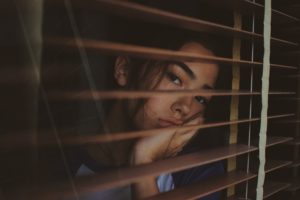
Photo by Joshua Rawson-Harris on Unsplash
All content on this site ©2017
Jennifer Rose
except where otherwise noted
by Jenny Rose | Mar 9, 2017 | A Flourishing Woman, Body, Food
This is a third post in a series in which I’ve questioned the relationship between American dietary standards and health and written about my own personal journey with diet. This week I’ll focus on some of the ideology embedded in diet and food production.
In my first post, I briefly mentioned vegan bullying. Because of the way we choose to eat, my partner and I spend some time in digital conversations about food. I’ve been amazed by the hostility and hatefulness directed towards people who choose to produce, harvest and/or eat meat.
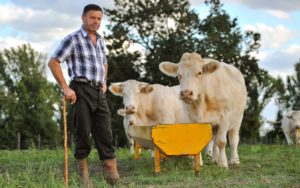
Photo by Agence Producteurs Locaux Damien Kühn on Unsplash
All people need to eat in order to live. That’s a given. I believe most individuals want to be able to feed themselves and their families with high-quality, healthy food. Sadly, because we live in a capitalist and consumer culture, this basic need is hugely impacted by financial, political, social and geographical variables. Additionally, diet is inextricably entwined in the religious and spiritual framework of many people.
Just this short list of factors make the basic necessity of putting food in our mouths complicated. Obesity and other eating disorders, as well as food-related diseases and health issues (which may be to say all diseases and health issues) reflect that.
Add to that a small but vocal group of people who take it upon themselves to judge, criticize, bully, shame and threaten others about their diet, and we’ve got a mess.
Now, there are all kinds of stated reasons why some people think they have a right to mandate what and how we all should eat. Some folks claim to be animal rights activists. Some talk about guilt, as in “What do you do about your guilt about eating the flesh of a dead animal?” Others say cows are killing the planet.
The list goes on. You get the idea.
I’m not a science teacher and this blog is not about handing out an academic education, but the cows killing the planet thing belongs under the heading of alternative facts. It simply isn’t true, and a brief survey of science-based permaculture, climate change and basic biologic history demonstrates that. Properly managed, the presence of animals is essential to healing the planet. Believe it or don’t believe it, but for me this is nonsense and I’m not interested in debating it.
The animal rights activism excuse really gets under my skin. First of all, equating eating meat with hating animals is first grade level reasoning. The world is filled with hunters who deeply respect and love the land and the animals they hunt and harvest. They show that respect by protecting the health of wildlife and wild land, doing their best to get a clean and efficient kill shot, using all of the animal they kill and supporting sustainable hunting practices. Of course, there are plenty of the other kind out there, lots of idiot trophy hunters and poachers who need a rack or a pelt in order to feel powerful. I don’t deny it. What I do say is that hunters are like everyone else — some are respectful and see themselves as part of the system we inhabit, and others operate strictly from power-over and see themselves as masters of the universe.
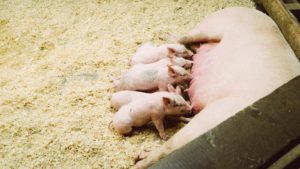
Photo by Greg Ortega on Unsplash
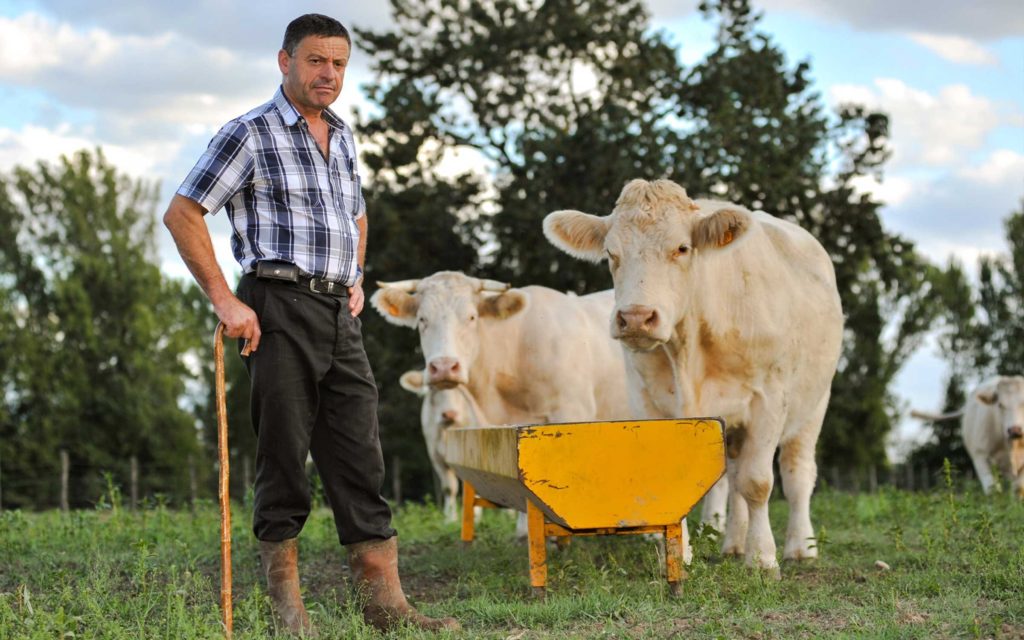
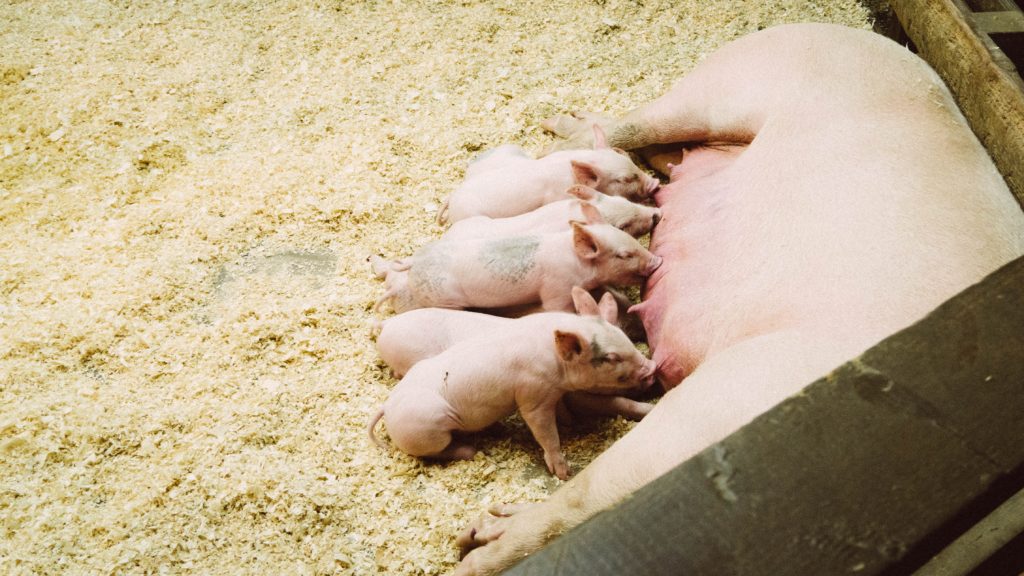
This also holds true for food producers. A small family farm hand raising meat with love, affection, attention, rotational grazing on healthy land and a good natural diet is a beautiful place. These people love their animals and the land. They also slaughter, butcher and eat their animals. They participate in, understand and respect every part of the cycle, from breeding to table.
To equate something like that with the nightmare of some modern mass meat production is simply ridiculous. If you want to see cruelty to animals, all you have to do is whisper “profit” into the ear of a corporation. Big Oil, the cosmetic industry and the fashion industry are just a short list of entities who have done plenty to destroy animals and habitat, and most people don’t care.
Incidentally, I’ve spent much of my life involved with animal rescue. I’m proud to say my mother is one of the most talented people I’ve ever met or heard of with animals and she’s largely given her life to making the world a better place for them, particularly horses and dogs, but by no means exclusively. This has all been volunteer work, done out of respect and love for the life in the world that can’t fight or speak for itself. She doesn’t see herself as better than. She sees herself as part of. The animals honor her with their presence and companionship, not the other way around.
So, yes, I eat meat with great enjoyment, AND yes, I love animals. I’m not limited by an inability to dwell in the sacred and powerful duality of life and death.
Bigger than all of this, however, is the guilt aspect, the real heart of this post. A vegan asks, “What do you do with your guilt about eating dead animals?”
For me, this question is much bigger than an issue of diet. The question reflects just how far we’ve strayed from wisdom, health and sanity in this culture.
When did we become amputated from our rightful place in the complex, miraculous web of life around us? What are the roots of the tragic and fatal arrogance that makes us believe we’re in control of life and death in our complex system? At what point did we become estranged from aging, loss, death and decay, which is to say HALF the full, powerful cycle of life?
Life is death. Death is life. Neither has meaning without the other. Both are essential. All life feeds on death. When we walk in the forest we’re walking on death. The whole natural world is based on prey and predator, eaten and eater. What does a tree do about its guilt as it feeds off and roots in the bodies of its companions? What does an eagle do with its guilt when it takes a salmon? What does a lion do with its guilt when it runs down a gazelle?
The guilt in that question is a projection. I don’t have any guilt about eating meat, and I think it’s tragic that anyone has guilt about the necessity to eat. If you pull up a carrot and eat it, you kill it. Every bite of food we put in our mouths is possible because of death. We exist as part of a vital, dynamic and inestimably beautiful and precious system that ebbs and flows, dances, fluctuates, cycles and revolves around life and death. We can choose to act as a unique and valuable part of that system by using only what we need, nurturing and learning from the life around us, and joyfully participating in all the ongoing life-death-life-death cycles around and within us, or we can choose to deny, destroy, and/or desperately try to control life and death, which is a completely fruitless (no pun intended) endeavor. We, thank God, are not that powerful.
The seasons will cycle. New life will be born in the midst of death. The green world will reseed itself, sprout, grow, bloom, fruit and die. The microscopic world and fungi will continue to break death into a rich placenta that sustains the next generation of life. Life is an incredible privilege. Death is part of that privilege. Nurturing life and allowing to die what must is part of what it means to me to be a woman.
I don’t know what’s going to happen to my country, the climate, or the planet. I’m afraid for us all, and the world we call home. What I do count on is the mighty cycle of life and death. All things change. All things move and flow. Nothing ever stays the same. All our fear and desperation, our greed and selfishness can’t change life and death.
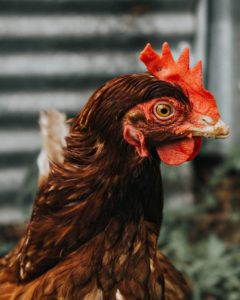
Photo by Andrea Tummons on Unsplash
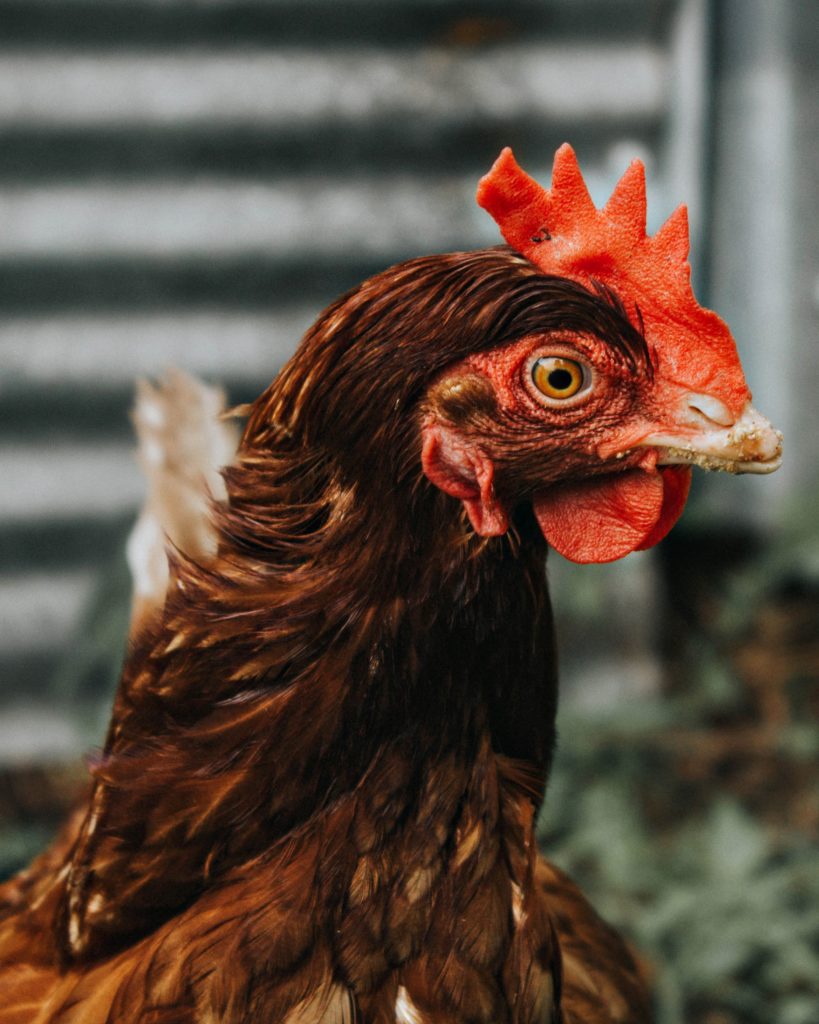
What I can do is figure out how to best support my body with food. Then, I can make choices about how I procure the food I eat — to some degree. I don’t have the means right now to grow my own meat. However, I can and do buy eggs from a neighbor farmer, driving very carefully into the yard so as not to run over her free-range chickens and ducks. I can take the time to relish and appreciate opening a many-times recycled egg carton and looking at a whole variety of shaped, sized and colored eggs, mixed with occasional bits of straw and feather fluff. I can save money so I can buy a half an animal in the fall from a local small farmer to put in the freezer. I can buy fresh local yogurt, butter, cream and cheese from the farmer’s market.
It seems to me our energy should be going into making sure everyone has adequate food and clean water, and that we treat our food sources, whether animal or plant, and the system within which they grow (you know, the planet? Earth?) with love, intelligence and respect. We all can do something about food. Those among us who are doing the hard and unprofitable (financially) work of growing food on small farms may well hold the keys to our future survival. What they know about permaculture, holistic environments, food forests, sustainability, breeding, planting, harvesting and slaughtering is truly the wisdom of life.
Which is to say the wisdom of death.
Which is to say, again, the wisdom of life.
Bon appetit.
See the fourth post in this series here. Check my Resources page for links to information about diet and nutrition.
All content on this site ©2017
Jennifer Rose
except where otherwise noted
by Jenny Rose | Feb 9, 2017 | A Flourishing Woman, Self-Love
I recently read a brilliant essay on tolerance that clarified for me why I haven’t always experienced successful outcomes while practicing it! Here’s a quote to think about from that article:
“[Tolerance] is an agreement to live in peace, not an agreement to be peaceful no matter the conduct of others. A peace treaty is not a suicide pact.” –Yonatan Zunger, ‘Tolerance is not a Moral Precept’

Photo by 小胖 车 on Unsplash
I’ve found that one of the many unpleasant effects of pleasing people, trying hard, being compliant and demonstrating unfailing compassion and kindness is that it’s stunted my emotional growth. It’s made me weak, naïve and dependent. It’s taught me to be powerless.
At this point in my life I’m making different choices, and as I do that I’m losing my fuzzy-headed, goody-two-shoes, sweet maiden aspect and becoming much clearer about who I am and what I believe in.
I’m not the only one, either. My second-hand exposure to social media through my partner, as well as my own reading of blogs, articles and essays, demonstrates loud and clear that many of us are in the process of refocusing our beliefs and values. Just yesterday I read an article about the devastating impact of the presidential election on close relationships and social media communities, as well as the way it’s opened up new connections.
As I listen, watch, read, write and think about it all, I return, again and again, to the conclusion that we’re all dealing with the same underlying ideas and issues. I know there’s a lot of heated and poisonous ideology out there about race and ethnicity, sexuality and gender politics, religion, and even what we eat, but underneath all that distracting noise are the same issues of tolerance and intolerance, power and identity, and fear.
I’ve written previously about reciprocity. When I read Zunger’s post, I immediately understood why my practice of tolerance has had, in some cases, quite devastating results. Once again, I was extending something I wasn’t receiving in return. Having been well trained (and slightly dim) it didn’t occur to me before that it’s not my responsibility to meet intolerance and disregard for my own boundaries with continuing tolerance. I’ve clung to the dangerous belief that if I just model and demonstrate well, the other party or parties will get it, and want to live in a more peaceful and effective way (my way, of course!)
After all, I don’t want to stoop to their level!
Ick.

Photo by John Salvino on Unsplash
This is a pretty effective set of shackles. Like many women, I’ve accepted them meekly for most of my life.
I’m bored with that now. It’s never worked well. It’s always left me terribly and painfully vulnerable. Turn the other cheek sounds like a lovely ideal, but in practice it sucks. In my study of combatives, I’ve found another option: Go in peace, but if a predator attacks you, be so explosively aggressive you become the predator and they become the prey. Take them out of commission as fast and effectively as possible and get away from them. Permanently.
I know, I know. Unattractive. Not nice. Being part of the problem rather than the solution. Violence solves nothing.

Photo by Jason Blackeye on Unsplash
That’s all fine, if it works for you.
It hasn’t worked for me. I’m not sure why it’s unattractive and wrong to defend myself (or others), except, of course, from the predator’s point of view.
I don’t care what the predator thinks. Predators have to take their lumps, just like the rest of us.
It seems these days going in peace means having no opinions, asking no questions, voicing no disagreement, stating no beliefs and citing no personal experience. There’s sure to be someone who will step in and try to shut us down with violence, abuse and threats if we speak up.
I love the idea of tolerance as a peace treaty. It gives me everything I need. It accommodates my intention to seek and support connection. It allows me to continue to be completely disinterested in someone’s religion, sexual preference, gender experience, physical anatomy, race, ethnicity, diet or reproductive choices as a criterion for judgement. Tolerance as a peace treaty leaves ample room for the things I do care about — authenticity, compassion, power-with rather than power-over, the desire to connect. It’s a peace treaty I can honor whole-heartedly.
Right up until someone tells me to shut up and sit down, make myself small, stop asking questions. Right up until someone tells me what to believe, what spiritual framework to use, what to think, what agenda to accept, what to do with my body and what my boundaries should be. Right up until I feel uncomfortable, in fact. Then the peace treaty is broken, and I give myself permission to exit, quietly if allowed and like a fighting tigress if hindered.
Tolerance is not an expression of weakness. It’s not permission to use and abuse. It’s not an agreement to abdicate self-defense. It’s not a suicide pact.
Nobody is entitled to tolerance.
Tolerance is a gift that must be both given and received. Let’s be worthy of it.
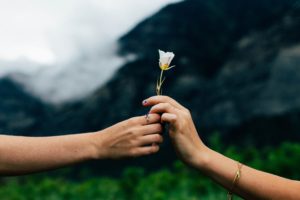
Photo by Evan Kirby on Unsplash
All content on this site ©2017
Jennifer Rose
except where otherwise noted