by Jenny Rose | Dec 7, 2017 | A Flourishing Woman, Mind
Scrying is “the practice of looking into a suitable medium in the hope of detecting significant messages or visions.” (Wikipedia)
My laptop has developed the Technical Flu and is in the shop. I’m chagrined to discover how much I depend on it. It’s the only portable device I have, as I still resist the pressure to obtain even a cell phone. Suddenly, my access to music, DVDs and the Internet is restricted. I know, it’s a first world problem, but I’m not complaining. I whined for the first few days, but as I sit down to write this post what I mostly feel is a kind of grateful wonder.
In my laptop’s absence I find a lot of quiet. Without my usual entertainment and distraction, my ears, eyes and attention are freed. As I work on the second book of my series, I’ve picked up a sketch pad and colored pencils in order to create a map of my very complex world where the myth, fairy tale and oral history of several cultures meet and interact. Without access to my one-dimensional outline on my word processor, I recognize the need for a two or even three-dimensional model to truly show all the connections and correspondences of the series. I’ve discovered new depths to my creative vision and work and considered new ways to approach it.
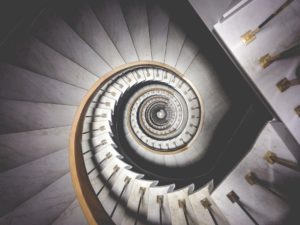
Photo by Ludde Lorentz on Unsplash
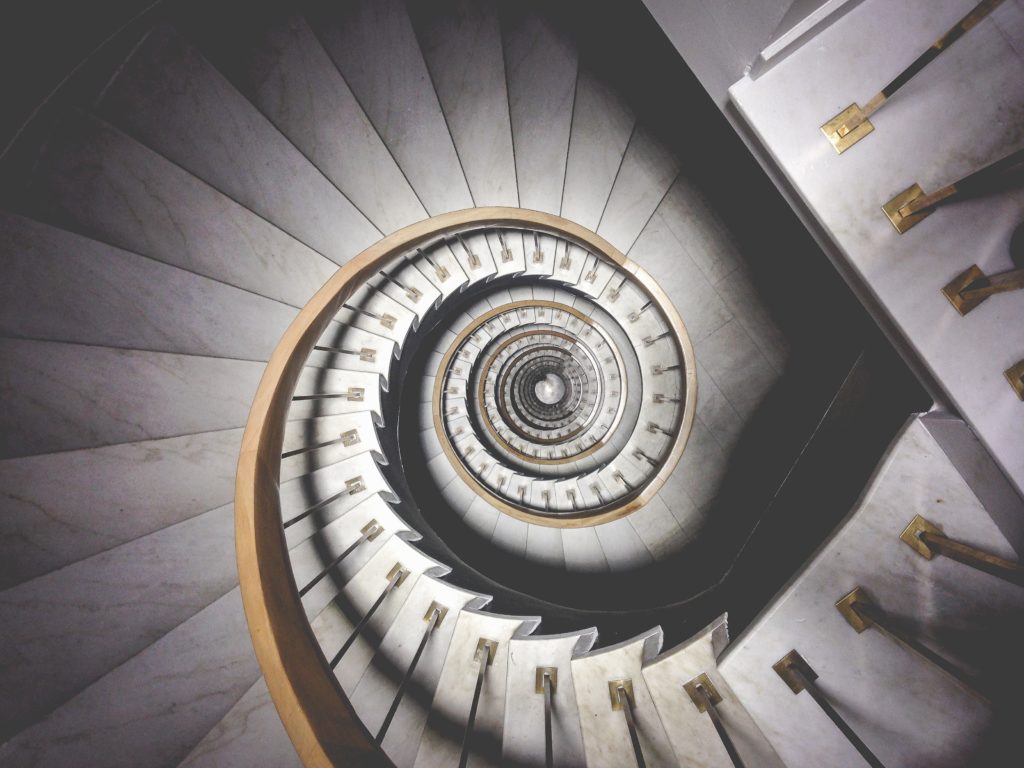
Folk and fairy tales often speak of depths. Caves, tunnels, wells and stairways descend to other places, magical underground kingdoms where evil beings lurk and flex their destructive forces and unexpected but powerful animals or crones or fairies save the hero or heroine. Gypsies, oracles, shamans and seers scry crystal balls or pools of water, smoke, fire, mirrors or stones. Runes whisper messages. Tarot cards reveal enigmatic insight.
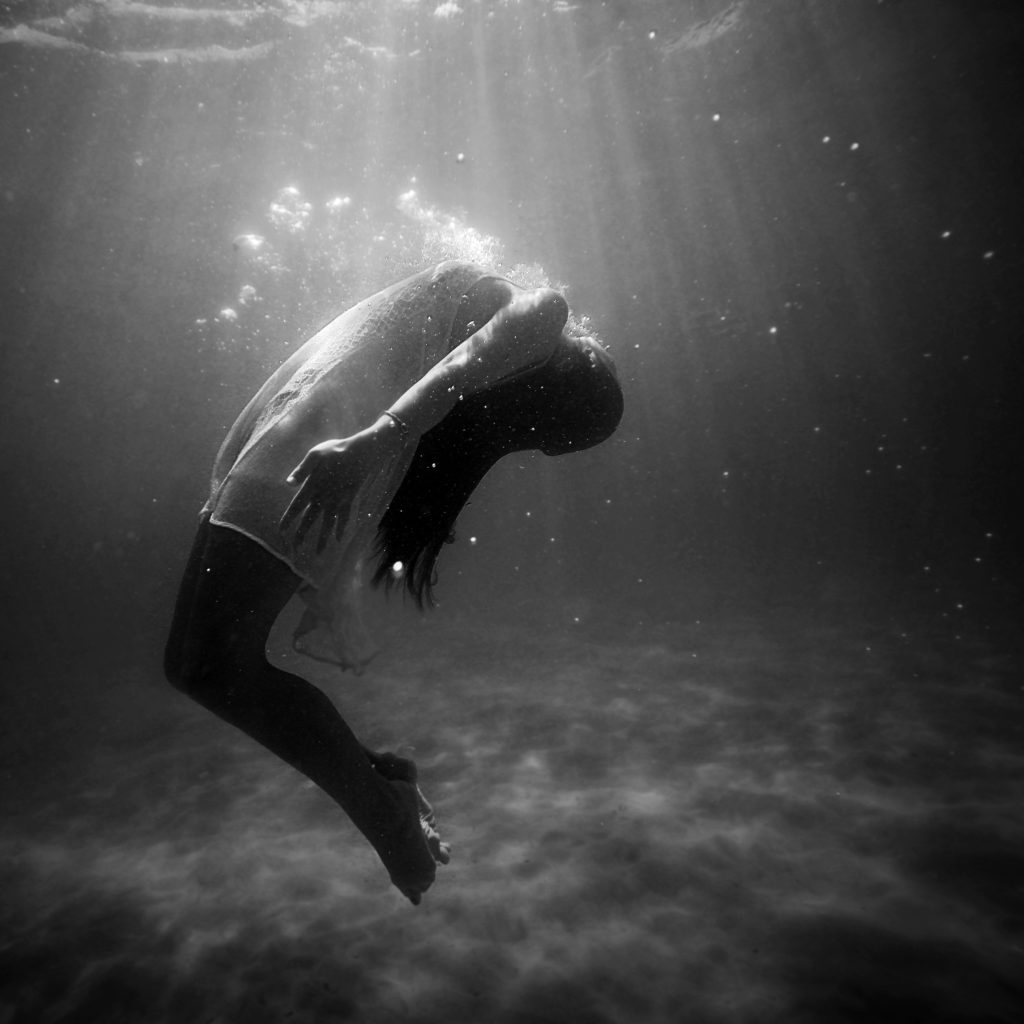
We are in the depths of seasonal darkness now. In two weeks the light begins to return. Here in Maine the day starts to fade at 3:30 in the afternoon and an hour later it’s full dark. What do the depths of darkness hold? What lies between the stars? What dreams unfold behind our eyelids during the long sleeping hours? What lives, hunts and dies in the winter-bare forests under the moon? What stirs in the dark sea’s deeps?
If we could separate ourselves and all those around us from our tech and toys, if we could all free our eyes from the screen and our ears from the noise and look, clear-eyed and undistracted, at those around us, what would we see in one another? If we were forced to sit quietly at a window with nothing but a chair for company, what might we discover in the world around us? If we stand naked and alone in front of a mirror and look into our own eyes, what looks back at us?
What lies in the depths of longing and loss? What lies denied and amputated in the deeps of a soul? What waits to be rediscovered or reclaimed, healed or released?
Some of the deepest, darkest, coldest and most fearsome depths in my life turned out to be only ankle-deep after all. Ankle deep and unpleasant, but, once challenged and understood, pathetic and sad rather than powerful and terrible. Shallows pretending to be depths. A leech or two instead of a sea monster.
Other shallows are so seductive, so enticing, so shiny, that we joyously bare our feet and run into them, gradually wading farther and farther from shore, our attention captured, our gaze fixed on their captivating surface, and there we stay until we die.
All my life I’ve been told I’m too intense. I’ve never known exactly what that means, and the criticism never fails to both hurt and irritate, especially as I can’t get more information. Asking probing questions is simply an example of my obnoxious intensity, it appears.
I wonder this morning if what people are expressing is discomfort with my love for the depths, for the dark where miracles happen, for the hidden thing, be it dreadful or dazzling. Questioning is falling out of social favor. Political correctness shackles and gags us. The shiny shallows are the place to be, where text messages, emojis and ‘likes’ glitter and frolic and algorithms and ideology teach us what to think, believe, value and buy.
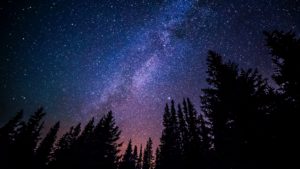
Photo by Ryan Hutton on Unsplash
I can be seduced by the shallows as well as anyone, and have several times been fooled by them, but somewhere inside me resides a wild thing, a female creature that glories in the power of the dark and deep and always returns to passion, emotion, and creativity. I want to dive into the night sky and swim naked among the stars and nebulae. I want to see and be seen, hear and be heard, know and be known. I navigate with a mouthful of questions and an insatiable curiosity. I don’t want life to be pretty and distracting and shiny. I don’t want all my dreams to be sunlit and filled with flowers and kittens.
I want life to be as it is, smelling of musk and blood and starlight, dark and powerful and magnificent beyond my puny imagination. I want the hot eroticism of life and the torn flesh of death. I want to embrace the unknowable, kiss the lips of mystery and reclaim and wield the full power of my fear.
I choose to live in the depths.
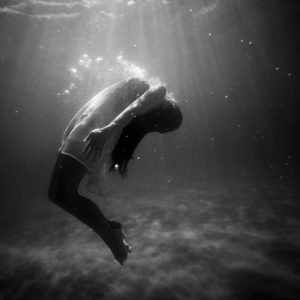
Photo by Christopher Campbell on Unsplash
All content on this site ©2017
Jennifer Rose
except where otherwise noted
by Jenny Rose | Nov 23, 2017 | Choice, Power
Last week, I explored the meaning and experience of anxiety. In doing so, I realized that all my anxiety has a common root in scarcity, which gave me the subject for this week’s post. Scarcity and abundance. What could be more perfect for Thanksgiving week?
Scarcity, according to a quick Internet search, is “the state of being in short supply; especially want of provisions for the support of life; unlimited wants in a world of limited resources.”
In spite of the fact that I come from a middle-class background, I’ve always lived with the bony specter of scarcity. As a child, I constantly feared there wasn’t enough, even though there was enough. We always had a home, and food, and clothing. The house was full of books and music. We had pets. We had cars. We even took vacations, a thing I was certainly never able to do with my own children. Still, I was always afraid we’d run out of money. The worst thing I could imagine was not being able to afford to feed and care for the animals! I was continually waiting for it all to disappear.
My insecurity around physical resource was not the biggest anxiety producer. What really ensnared me was emotional scarcity. It never seemed to me there was enough love, or patience, or joy. There wasn’t enough time, enough energy, enough hope. My feeling of emotional hunger led me to conclude that the problem was me. I was greedy and selfish. I wanted too much.
Most painful of all was my belief that I wasn’t enough. Not smart enough, not strong enough, not quick enough, not wise enough, not loving enough, not adult enough. I could see no cure for my inadequacies, no hope that I could ever be fixed, and, employing the heartbreaking logic of children, my conclusion was I didn’t deserve anything but scarcity.
Unsurprisingly, my experience since I formed that belief has been of scarcity on every level.
It’s important to note that in some significant ways this frame of scarcity has been useful. I don’t have “unlimited wants,” for example. In fact, I’ll rarely admit to wanting anything at all, which is a problem on the other end of the spectrum. I’ve never enjoyed shopping. I’m a reluctant consumer. I don’t long for gems or cruises, fine wines, luxury cars or elegant homes.
Living with restricted financial resource has taught me a lot about the limited power of money. What I value and want most, as well as what I most want to contribute, can’t be bought or sold. I’ve also learned unfulfilled wanting and longing can be lived with.
On the other hand, living from a position of scarcity has not only kept my anxiety fat and happy, it’s impoverished my courage, my ability to love, and my self-confidence. My belief in scarcity has sucked away a lot of my power.
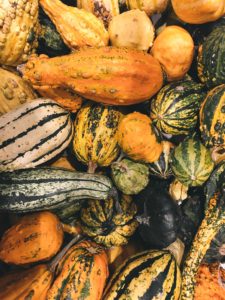
Photo by Brigitte Tohm on Unsplash
What about abundance? Abundance is “a very large quantity of something; plentifulness of the good things of life; prosperity.”
When I started thinking about anxiety in the last couple of weeks, I began to notice its presence or absence during activities of my daily life. For example, when I deal with household needs and wants, bills, the grocery list, and think about jobs, I feel anxious. When I’m out walking, gathering cones, cutting greens for holiday wreaths, collecting the beautiful little Sensitive fern pods for crafting, I feel no anxiety and have no experience of scarcity. The fields, the woods, the river, the trees, the fall bracken and naked branches and twigs all speak to me of plenty, and plenty, and plenty again. Abundance is everywhere. There is enough. I am enough.
I wrote last week about my suspicion that my anxiety is a bad habit as much as anything. I wasn’t consciously choosing to haul around such a dreadful burden, but dredging it up from my subconscious into the daylight, specifically defining it and shining a light on it, allowed me to realize I don’t have to allow anxiety to run me. I can choose to disengage with it.
What if the frames of abundance and scarcity are also choices? What if I decide scarcity is no longer a useful label for my experience or self-definition, and I choose instead to believe in enough, or even in more than enough? Imagine it. Enough resources. Enough water and silence and time. An abundance of arms strong enough to hold me through the deepest hours of the night. A river of tenderness. A roomful of dancers. A strong, resourceful, wise, creative self.
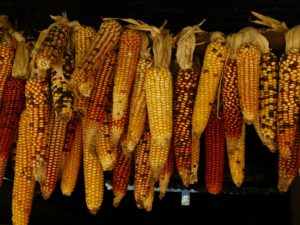
Photo by Roderico Y. Díaz on Unsplash
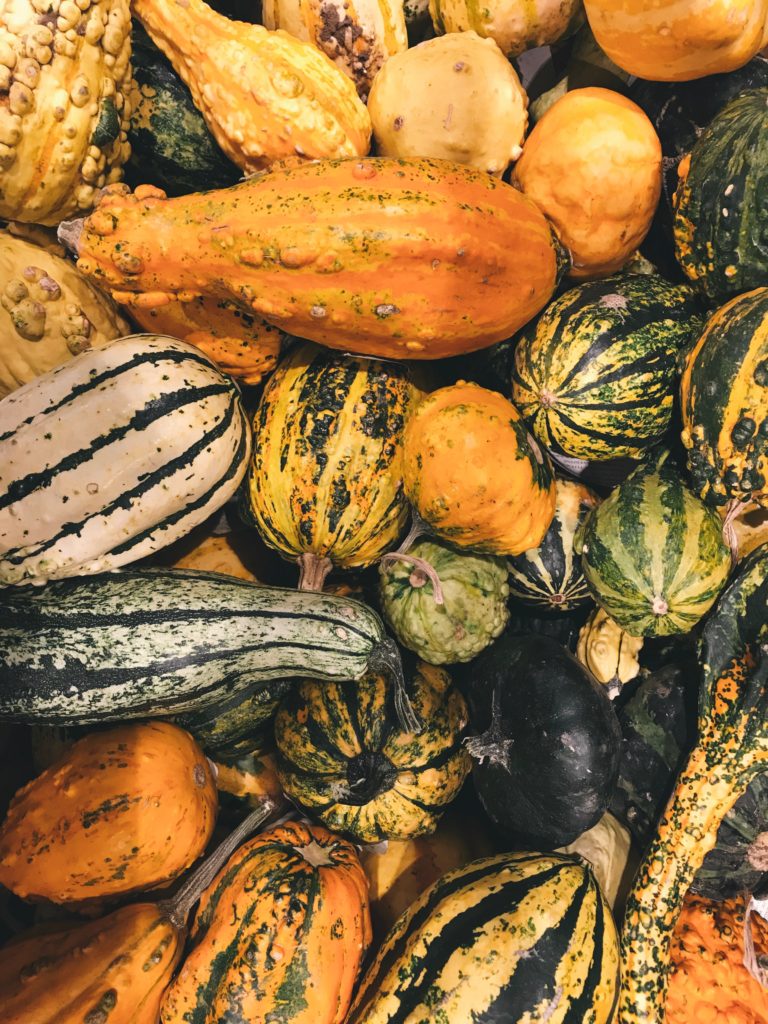
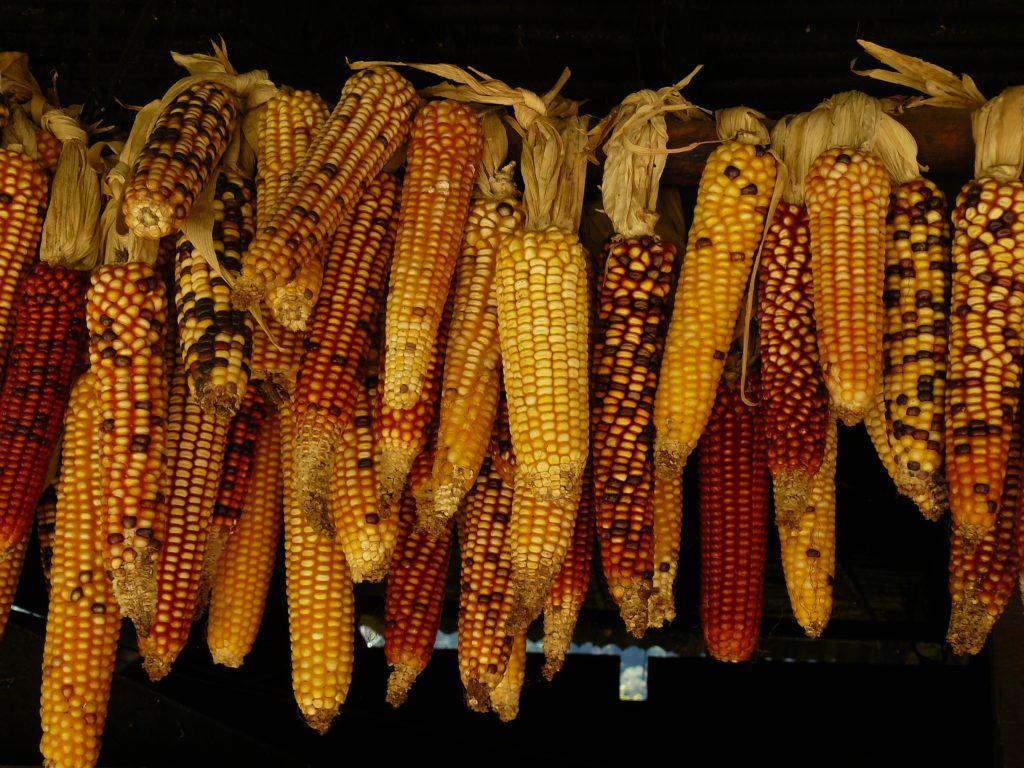
Abundance is everywhere I look this morning, in the glowing wood stove, in the cartons of eggs stacked in the refrigerator, in boxes of wreaths I’m loading into the car to take to my friend’s farm store. Abundance is in writing these words, and when I glance from them I see, out the window, the infinite beauty of the November landscape.
It’s also true that we’re nearly out of bacon, and I know there are other items on the current grocery list. We’re heading into winter and haven’t been able to fix the leaky roof, but I suppose one could say there’s more roof than hole, so that’s a good thing!
Isn’t it really all just a cosmic balance? We can’t possibly take in everything at once in life, so we narrow our focus, and invariably find what we’re looking for. Changing our focus changes what we see. Perhaps abundance has always been hand-in-hand with scarcity and I’ve just never looked beyond what I knew and expected. How can these two concepts be separated? They make each other possible.
My anxiety is currently sulking and on a starvation diet. Scarcity is what it thrives on, but I’m kind of bored with that tired old goblin. I’m enjoying my new focus and filter of abundance. I like the way it makes me feel. It doesn’t make all the challenges go away, but it certainly balances them with a peaceful, satisfied feeling of enough, and I’m grateful.
It’s Thanksgiving Day as I post this. I wish everyone the abundance of the season in food, loved ones and joy.
All content on this site ©2017
Jennifer Rose
except where otherwise noted
by Jenny Rose | Nov 16, 2017 | Connection & Community, Emotional Intelligence, Shadows
I recently had a conversation in which I learned about the degree to which my anxiety affected at least one of my now adult children.
Parenting is an ironic business. Having been a chronically anxious child myself, always feeling unsafe and afraid, I strove mightily to protect my own children from any sort of fear or insecurity. Of course, I did this by assuring them all was well, all the while fearing all was not and never would be well. Being no less intelligent than I am, they heard the words but knew the truth of my feelings, and thus their trust in me was damaged, an exact replay of what happened between me and my own mother. You know, that thing I was never going to do when I was a parent!
Well, I’m humbled. I’m also sad, because I didn’t want either of my kids to battle with the burden of anxiety. It’s a hard way to live.
However, I understand parenting, at best, is an imperfect process, and I try to hold my mother and myself with gentle arms regarding our choices as mothers. Parenting less than perfectly does not imply a lack of love. I know we both did the best we could with what we had at any particular point in time. No parent can do more.
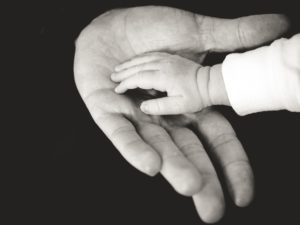
Photo by Liane Metzler on Unsplash
Still, this kind of revelation is a far cry from my hopes, dreams and intentions when I held my newborns. On the other hand, it speaks to the strength of my relationship with my adult children that they can tell me the truth about their experience and I can hear it.
After our conversation, I’ve thought a lot about fear and anxiety. I can’t go back and reparent, but I wonder if I might, even at this late stage, find a way to extricate myself from the insidious tentacles of anxiety. I’ve been thinking about my life and trying to understand exactly what the roots of my anxiety are.
According to an Internet search, fear is “an unpleasant emotion caused by the belief that someone or something is dangerous, likely to cause pain, or a threat.” Fear is considered real, in that it’s right there in front of us, and elicits an immediate response.
Anxiety is an “emotion characterized by an unpleasant state of turmoil; a feeling of worry, nervousness or unease, typically regarding an imminent event or something with uncertain outcome; a nervous disorder.” Anxiety is differentiated from fear by being more diffuse and generalized and focusing on imaginary outcomes and possibilities. Physiologically, it elicits the same response, and therein lies part of the problem.
Both are unpleasant emotions or feelings affecting us physically, intellectually and emotionally. We evolved to respond to fear in certain specific physiological ways, returning to baseline as the fear passes. Fear is a valuable feeling, helping us discern and avoid danger. I certainly don’t want to disable mine. I know the feeling of fear, but it’s not a frequent experience.
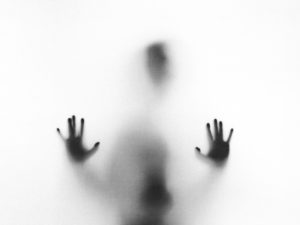
Photo by Stefano Pollio on Unsplash
Anxiety, on the other hand, is a chronic state for me. I can’t remember ever being free of it. I’ve developed a lot of coping mechanisms over the years, some more effective and appropriate than others, but I can’t imagine what life would be like without it. As far as I can tell, the feeling of anxiety provides no benefits whatsoever to me or anyone around me. It’s highly contagious and negatively impacts others in my life, to say nothing of the damage it does to me. We are not constructed to tolerate the chronic level of physiological arousal produced by anxiety.
I never before actually looked up these words, and I’ve never had the above distinctions between fear and anxiety until this week. I conclude that I have no problem with my relationship to fear, but I’m a slave to anxiety.
I find a kind of mordant humor in having a chronic unpleasant feeling regarding uncertain outcomes. Excuse me? All outcomes are uncertain for everyone until they happen! Most of us operate most of the time as though we know exactly what will happen next, but we don’t. I’ve lived long enough to know that’s all an illusion. Nobody knows what’s going to happen next on any level. For some reason, I’ve given that fact the power to make me miserable.
I have a powerful imagination, which makes me a good writer and creator. However, it also occasionally makes me captive to my own stories. I forget that my stories are just that — stories. I make them up, tell them to myself over and over, and behave as though they’re true, never really noticing when they diverge from reality. In my head, it’s all so real. I do know the difference between a story and what’s real, but I have to remind myself to keep the two separated.
Some stories are so old and deeply ingrained it takes a cataclysm to make us realize they’re not true, and then we have to deal with being wrong and all the consequences, an uncomfortable, humbling and messy process.
If my anxiety is rooted in uncertain and imaginary outcomes and possibilities, it seems obvious I can disable it with a little discipline, a dash of surrender to uncertainty, a lot of presence and the will to change. I’m chagrined by the possibility my anxiety is a lifelong bad habit as much as anything else. Could that be true? Yikes.
I wish with all my heart I’d been a better equipped and less distressed parent, but I remind myself I can’t go back. I can’t begin parenting again from ground zero. I can’t go back to the young woman I was and explain all this and give her the support and safety to actively choose to turn away from anxiety before starting a family. There’s only today, so many years later, as I sit with my laptop in my lap and the sun coming in the windows, glancing at my notes, thinking and writing.
I know all I’ve ever wanted for my own mother is health and happiness. I want the same for my kids. I suspect Mom and my sons also want that for me. Perhaps it’s time for me to shape an anxiety-free life now, not only for my own sake, but for those closest to me as well.
We build our lives on outcomes, one after another, more than we ever notice. We remember the spectacularly good and spectacularly bad outcomes, but what about the countless others? Outcomes are complex, not black and white. Outcomes can create visible and invisible ripples that last a lifetime. I can hardly think of a more fruitless endeavor than worrying about or trying to control outcomes. I’ve survived every outcome to date. What makes me think I won’t continue to do so — until I don’t, of course? But the outcome of death is largely out of my control, too. Why worry?
There are so many things I’d rather do than struggle with anxiety!
There are so many stories to imagine, share and write, rather than keep in my head and hurt myself with!
Anxiety is too expensive. I’m not interested in maintaining it anymore.
Better late than never. My daily crime.

Photo by Senjuti Kundu on Unsplash
All content on this site ©2017
Jennifer Rose
except where otherwise noted
by Jenny Rose | Nov 2, 2017 | A Flourishing Woman, The Journey
In the Neopagan Wheel of the Year, Halloween is the modern secular version of Samhain (SOW-in), the last harvest festival, a time when the veil between the spirit and corporeal world is thin and we prepare for the peace and rest of winter. It’s a time to let go of that which no longer serves us.
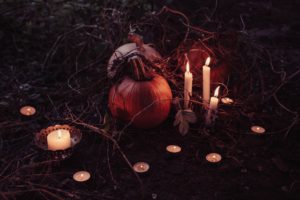
Photo by freestocks.org on Unsplash
This year Samhain was ushered in by the remains of Hurricane Phillippe, which battered Maine and other parts of the Northeast with high wind and heavy rain.
Wind is an old familiar of mine, as the place I came from in Colorado was extremely windy. There, the wind blows relentlessly for days and nights on end sometimes, a steady roar from one direction that fills the air with sand, grit, trash and other debris, frequently exceeding 60 mph and occasionally 70 mph. It’s the kind of wind nobody wants to go out in and it ground away at our nerves, making us feel housebound and irritable enough to climb the walls. It sucked all the moisture out of the ground, the plants and our skin. It tore roofs off sheds, blew down fences and trees, closed vulnerable highways and sent trampolines into the air.
The gale we had here this week was a different kind of wind. It came from all directions in gusts. It made the house groan and the trees thrash. It tore shingles off the roof and downed hundreds of trees. More than five inches of rain fell in billowing curtains. As a result, many thousands of people lost power, roads are blocked and it may be the end of the week before all the repair work is finished.
The storm hit us in the wee hours. We were awakened by an exploding power transformer somewhere close by, probably because of a fallen tree.
When I went out for my morning walk, I found change.
Several large trees have snapped off and lay or lean, the exposed raw wood pale and jagged. One less tree in a patch of thick forest is a subtle change to my eyes, but to the life surrounding it for several feet in every direction it’s a dramatic turn of events. It changes the light. It changes the nutrient demand underground. It feeds the mycelium and other organisms that will break down the wood. It gives new opportunity to young trees and other plants.
All the trees that came down on our land looked unhealthy, and several were rotting in place and collapsed rather than sheared off. Lots of dead branches tore away, too, and cones were flung far and wide.
As I walked, I reflected on change. Millions of people are experiencing unprecedented storms now. In just a few hours, whole lives are swept away by powers we cannot control. But the wind of change can also be a breeze, a zephyr we hardly notice, even if we practice daily presence with ourselves and our surroundings. Change is always with us, as inevitable as death.
More often than not, I fight with change. I don’t mind the idea of change, per se, but I want it to be on my terms. I want to control it. In my own life, though, change has often come unexpectedly and catastrophically, sometimes in the form of a seemingly insignificant moment in which I suddenly see. I suddenly assimilate a vital piece of information. A veil tears and I discern what lies behind it. In an instant, everything changes, and at the same time it doesn’t, at least not more than usual.
Yet I am changed, and I can never go back.
In a few days, things will normalize in Maine, but the landscape is altered now. It will never quite be the same again, although our experience was trivial compared to Texas, Puerto Rico and many other places.
Walking our boggy fields alongside the river, my old boots leaking at a split seam, it seemed to me the greatest gift of Samhain is the opportunity to allow wind and storm, to revel in them, to join power and energy with them, come what may in the aftermath. I stood watching the river, filled right to its brim, running muscular and turbid, crowded with tree debris and occasional trash. Several tree skeletons that had leaned on its banks were gone.
There can be a glorious sort of power in letting go, in spite of fear and resistance. I discovered that in Colorado. As I walked, it was still quite windy and wet, the landscape waterlogged and disheveled. Halfway through my walk I discovered a tick crawling on my hand, and a quick inspection of my head-to-toe canvas army supply rain cape revealed several more. I scraped off those I could see with a stick while I paused at my second river overlook to watch the water and then navigated a large old white spruce that had fallen across the mowed path and went home to do a lengthy and soggy tick check. The final count was 13, by the way.
Collaborating with a storm like this is good work for Samhain. I’m content. The forest has been culled and renewal will follow. New life will come into every space that was emptied. Our streets and roads, blocked with fallen trees and sagging power lines, look devastated rather than graceful and elegant. Thousands of people are managing without power. Yet the wind cleansed us of dead and dying life, whether or not we were ready or consented.
Now there’s no choice but to go on, to step into the diminishing light of winter, to face whatever the future brings, to replace what no longer serves with something more powerful. I want to leave you this week with a poem I wrote in October, 2012.
Wind
Come, wild wind, sweep across the sky and loosen the world!
Rise, wind, blow! I summon you with breath and breath again!
Blow, wind, roar! I command you from the center of loss!
Roar, wind, howl! Fling me open. Tear all the pretty things away.
Peel my lips from my teeth and flay me to pieces.
Lend your voice to mine and scream me into clean bones.
Scream!
Let us sever and rend together!
Strew the tatters of my dreams across stubbled fields and in dusty streets!
Rage, wind, exult!
You think you bend me to your will?
You take nothing I do not surrender.
You weaken and end before I do.
And when tumult has passed I will call myself home from wherever I am scattered.
I shall gather the rags of what has been and shape them into a sail and you shall fill it and take me onward.
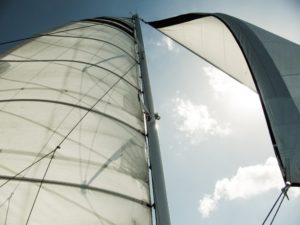
Photo by Kelly Sikkema on Unsplash
All content on this site ©2017
Jennifer Rose
except where otherwise noted
by Jenny Rose | Oct 26, 2017 | A Flourishing Woman, Mind
I went to the dentist last week. I spent the usual hour with the hygienist and then the dentist breezed in to give me four or five minutes of exam, comment, teaching and friendly conversation. Thankfully, I don’t require more than this, as my teeth are in excellent shape. In the course of those few minutes, I used the term “permaculture,” and he asked me what it was. I gave him a brief answer, and on the way out the hygienist said I had a “high dental IQ.”
“She has a high IQ, period,” he responded as he left.
I almost got out of the chair and went after him to explain that I’m the dumb one in the family, and certainly don’t have a high IQ.
As I’ve gone about life since then, I’ve thought a lot about that interaction. I’ve also been feeling massively irritated, isolated and discouraged. This morning I woke out of a dream of being in a closet groping for my gun, my knife, even my Leatherman, absolutely incandescent with rage, because a man outside of the closet was having a dramatic and violent meltdown, intimidating everyone present because of something I’d said or done that he didn’t like.
I wasn’t intimidated. I was royally pissed off.
When I had my weapons assembled, I stormed out of the closet and came face-to-face with a clearly frightened woman who was wringing her hands and making excuses for the behavior of the yelling man. I screamed into her face that he could take his (blanking) opinions and shove them up his (blanking blank) and unsheathed my knife, not because of her, because of HIM.
I woke abruptly at that point and thought, I’m not depressed, I’m MAD!
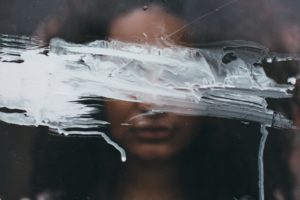
Photo by Nicole Mason on Unsplash
While I showered and cooked breakfast I sifted through IQ and conformity and cultural and family rules, economic success and failure, work, invalidation and silencing and keeping myself small. I thought of how pressured I’ve always felt to toe the line, be blindly obedient, follow the rules, ask no questions and be normal. Normal, as in compliant, and refraining from challenging the multitude of life’s standard operating procedures that “everyone knows.” Normal, as in not daring to resist, persist, poke, peel away, uncover. Normal, as in never, NEVER expressing curiosity, a thought, an experience, a feeling or an opinion that might make someone uncomfortable. Normal, as in never admitting that the way we’re supposed to do things doesn’t always work for me, and frequently doesn’t appear to work for others, either. I slammed around the kitchen, turning all this over in my mind, letting the bacon burn, and finally pounced on a keystone piece to write about.
What does it mean to be smart? Why do I feel like a lying imposter when someone makes a casual comment about my IQ? Why is IQ even a thing? Why does so much of my experience consist of “sit down and shut up!”?
Intelligence is defined on an Internet search as “the ability to acquire and apply knowledge and skills.” Please note the absence of any kind of test score in that definition. Likewise, there’s no mention of economic status, educational status or social status. Also, this definition says nothing about intelligence as a prerequisite for being a decent human being.
The definition takes me back to the playing field in which I wrote last week’s post on work. Here again we have a simple definition for a word which is positively staggering under assumptions and connotations.
Fine, then. I’ve explored what work means to me. What does intelligence mean to me?
Intelligence means the ability to learn, unlearn and relearn. Good learners do not sit down and shut up. We question, and we go on questioning until we’re satisfied with answers. We try things, make hideous mistakes, think about what went wrong and apply what we learned. We don’t do the same thing over and over and expect a different result. We exercise curiosity and imagination. We pay attention to what others say and do and how it all works out. We pay attention to how we feel and practice telling ourselves the truth about our experience. After a lot of years and scar tissue, we learn to doubt not only our own assertions, beliefs and stories, but everyone else’s as well. We practice being wrong. We become experts in flexible thinking. We adapt to new information.
We give up arguing with what is.
Intelligence endures criticism, judgement, abuse, taunts, threats, denial and contempt. It’s often punished, invalidated and invisible. Intelligence takes courage.
Photo by Cristina Gottardi on Unsplash
Intelligence is power. It does not sit at the feet of any person, ideology, rule or authority and blindly worship. It retains the right to find out for itself, feel and express its own experience, define its own success, speak its truth in its own unique voice, and it remembers each of us is limited to one and only one viewpoint in a world of billions of other people.
Intelligence is discerning the difference between the smell of my own shit and someone else’s.
For me, intelligence is a daily practice. It’s messy and disordered and fraught with feeling. It means everything is an opportunity to learn something new. Everything is something to explore in my writing.
I have no idea what my IQ is, and I don’t much care. I’m sick and tired of all the family baggage I’ve carried around about who’s smart and who isn’t and how we all compare. Honestly. What am I, 10 years old? Enough, already.
I’m also fed up with being silenced, and in fact I’ve already refused to comply with that, as evidenced by this blog. I understand a lot of people don’t want to deal with uncomfortable questions. Too bad. Those folks are not going to be my readers. It’s not my job to produce sugar-coated bullshit that can’t possibly threaten or disturb anyone.
So there it is. The practice of intelligence.
Photo by frank mckenna on Unsplash
All content on this site ©2017
Jennifer Rose
except where otherwise noted