by Jenny Rose | Oct 20, 2016 | Connection & Community, Emotional Intelligence
Last week I talked about balance as a first step to understanding reciprocity. This week I’ll refine my focus and discuss the term itself.
A few years ago I was in my car, either listening to an audio book or the radio. I was in the off phase of a painful and confusing on and off relationship. Whoever I was listening to asked the question: “Is he crying about you?”

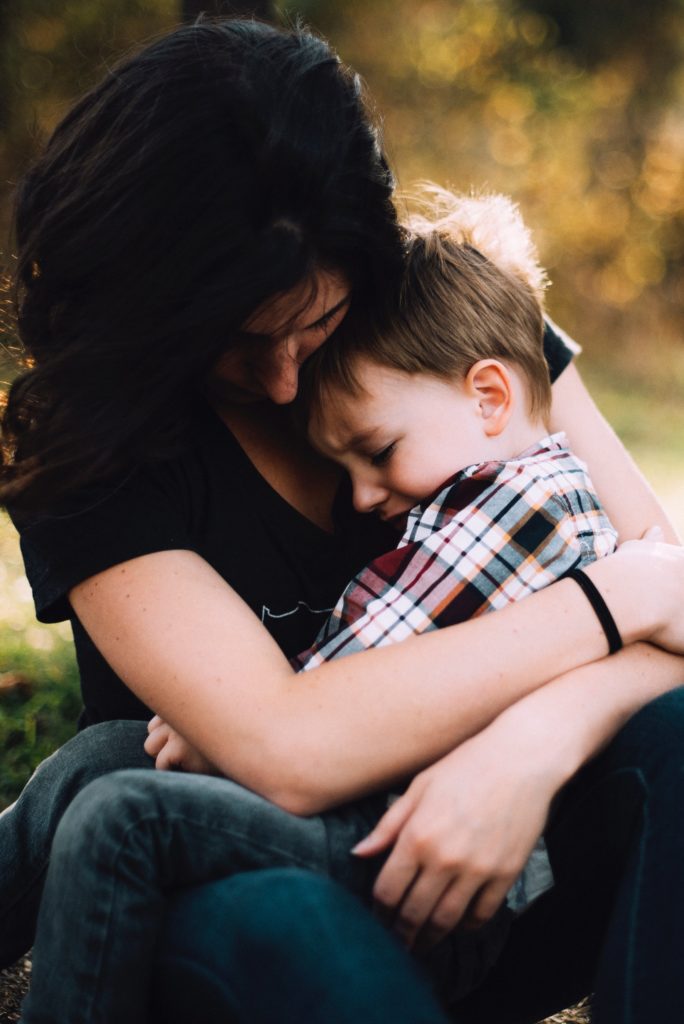
Photo by Ian Espinosa on Unsplash
This was a real Aha! moment for me, because I myself was crying all the time and the answer to the question was no. I didn’t even need to think about it. I’d given him all the power. He was calling the shots. I wanted to be with him but he didn’t want to be with me — at least for the moment.
That was my first introduction to reciprocity. It didn’t come with context, language or tools, but that question was like a piece of grit in my eye and it continues to pop up in all my relationships.
Before we discuss it further, let’s define reciprocity. A 3-second internet search yields: “Exchanging things with others for mutual benefit.” Good enough.
What I understand now is that reciprocity is at the core of healthy connection and relationship. Whether we’re conscious of it or not, it matters. I see the presence of reciprocity as an indicator of equality. No one has power over anyone else. The playing field is level. Giving and receiving happen in balance. We see the needs of others as being as important as our own. Reciprocity is the old Golden Rule in action.

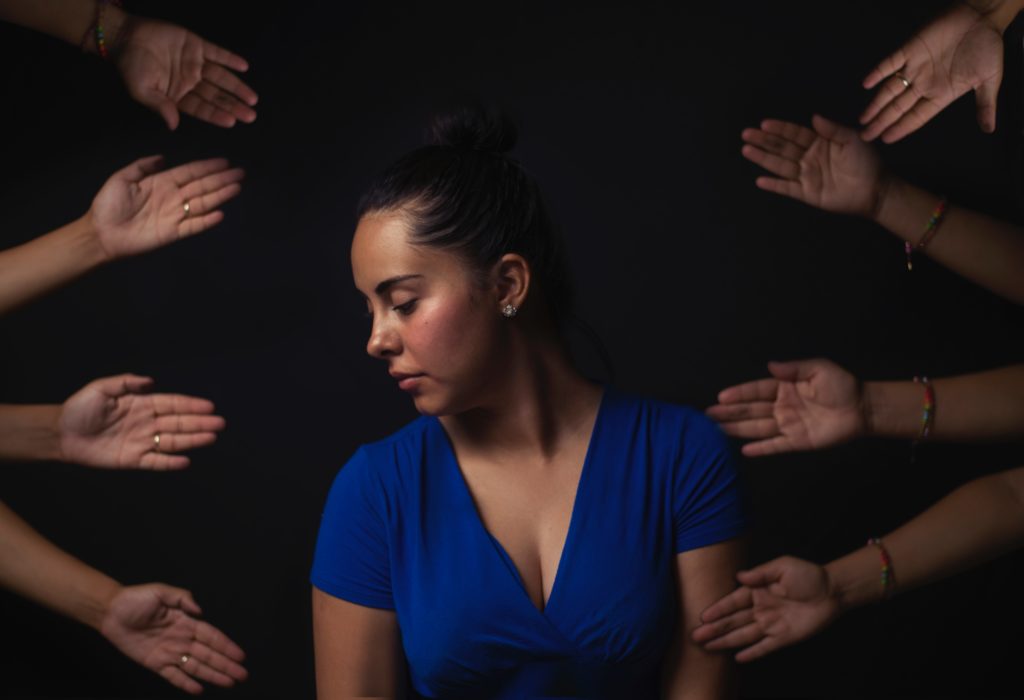
Photo by Alona Kraft on Unsplash
It sounds so easy. In fact, it is easy. A reciprocal relationship is a delight. Trust and respect are present. Drama and trauma are absent. Both parties show up with an intention to create healthy connection. Communication is loving, respectful and honest. Both parties take responsibility for their words, actions and choices. When we walk away from a reciprocal interaction we feel valued, understood, respected and connected — and so does the other party.
Reciprocity in relationships cannot be achieved if both parties are not internally balanced, which is why I started with balance last week. This is like boundaries. If we can’t manage our own boundaries within ourselves, we won’t have effective boundaries with others. If we don’t function well enough to self-care, make choices that reflect our priorities, and control our time and energy in a balanced way, we can’t create healthy, reciprocal relationships.
“Exchanging things with others” is not limited to concrete things. In fact, a commercial exchange doesn’t imply reciprocity at all. Reciprocal exchange means he heats water for my tea while I’m in the shower and I dry his socks in the dryer instead of on the line because he likes them soft. Reciprocity implies an equal but not necessarily identical contribution of time, energy, expression and caring. In many ways, it’s a subtle kind of dance. It’s a gift of ourselves to others.
Reciprocity is flexible, affectionate, creative, curious and cooperative. Reciprocity says: “What can I do? What do you need? What would be useful? What would create connection? Reciprocity requires we allow ourselves to be seen and we’re open to receiving as well as giving. It requires communication about what we want and what we can give.

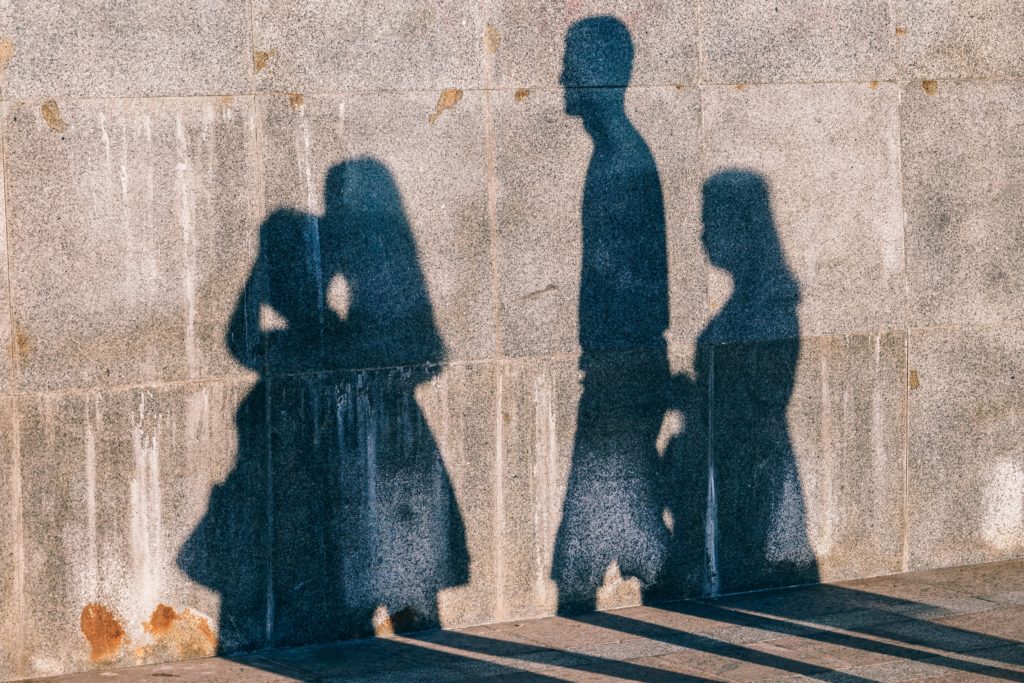
Photo by Kevin Quezada on Unsplash
Sadly, I think many people have never experienced a truly reciprocal relationship with a human being, although many of us have with animals. If that’s true of you, then there’s an important question to explore.
Is it you or is it them?
What’s been true for me is that it’s both. I’ve only lately begun to truly self-care and develop a sense of being valuable in the world. Most of my life has been defined by my sense of failure. What this means is that I’ve been a people pleaser, which is to say inauthentic and without good boundaries and balance. Naturally, that created problems, as well as attracting all kinds of people into my life who were also dysfunctional.
I have no power to change the behavior of others, but I can certainly learn and grow myself. Having language and context for aspects of relationship is enormously helpful. Being able to ask the question “Is he/she crying about me?” forces me to take a wider view and keep an eye on reciprocity. It empowers me.
It’s a great mistake to assume everyone wants reciprocity. I always forget that piece. I can’t quite get my head around the fact that some folks have no desire to be in a relationship like this, but I know it to be true. I can’t explore that effectively, having a great longing for it myself, so I’ll leave that aspect alone, except to note it’s not effective to make up stories or have expectations and assumptions about another’s desire or intention in this arena. Reciprocity doesn’t exist without mutual consent and a willingness to share power. The good news is after you run into the absence of reciprocity (for whatever reason) enough times, you stop trying to force it.
It’s also worth noting there are many different forms of relationship, and lack of reciprocity doesn’t mean there’s no value in the connection. Not at all. The quality of our relationships declare and define themselves pretty quickly, it’s just that sometimes we’re so focused on our determination that things be a certain way, we don’t pause to consider what is actually present — and what is not. Denial is a powerful thing, and we can stay stuck in it for years.
Reciprocity is a high standard. If you decide you want it, many possible relationships will be disqualified in the early stages. On the other hand, if you accept nothing less than reciprocity in close relationships, the ones you do find will be joyful and vibrant, and you won’t have to cry alone in the first place, let alone wonder if your partner is, too.
(This is the second post in a series on reciprocity. See also Parts 1, 3, and 4.)

Photo by Evan Kirby on Unsplash
All content on this site ©2016
Jennifer Rose
except where otherwise noted
by Jenny Rose | Oct 13, 2016 | Connection & Community, Emotional Intelligence
This week I’m turning my attention to reciprocity. Again, this subject is much bigger than one post, so I’m breaking it into smaller pieces, just as I did with boundaries. For me, reciprocity describes a specific aspect of a larger subject: Balance.

Photo by Deniz Altindas on Unsplash
Balance is, according to a quick internet search, “a condition in which different elements are equal or in the correct proportions.” I’m constantly running into articles, blogs, books, opinions and speakers who talk about balance. It’s an important concept these days: Balancing family and jobs, balancing creative life with paying-the-bills-life, balancing technology with face-to-face connection, balancing our diet (and our bathroom scales), balancing our exercise, balancing our time and our checkbooks. With so much discussion out there, I wonder why many of us are so remarkably bad at it.
I think finding balance requires two things. The first is clarity — the willingness to look honestly at our lives and our choices. The second is taking responsibility for the fact that we do make choices.
I don’t know a soul who finds either one of these easy, and I also don’t know anyone who always feels great about the balance in their lives, in spite of what they may say.
Note in the definition above the language “correct proportions.” What are the correct proportions? You tell me. Are you happy? Are you healthy? Do you find your life meaningful? Do you enjoy your home, your relationships, your work, a good night’s sleep? If the answer is no, and you want things to be different, I suggest you work with the idea of balance.
It so happens I came across a great exercise for this years ago in a book called Home Sanctuary by Nicole Marcelis. I was just out of an abusive marriage and this book became an important part of reclaiming myself, my life and my home. In it, there’s a chapter on balance.

Photo by Toa Heftiba on Unsplash
The exercise asks you to make a pie chart and consider each piece of your life, calculating how much of the pie that piece takes up. Yes, you include sleep. You can make a pie chart for a day, a week, a month, or any increment of time you choose. Then, if you like, you can take each piece of that first pie chart and make another pie chart. If one of your pieces is parenting, for example, you might break parenting down into playtime, laundry time, cooking and food time, taking walks, reading aloud, visiting doctors, etc.
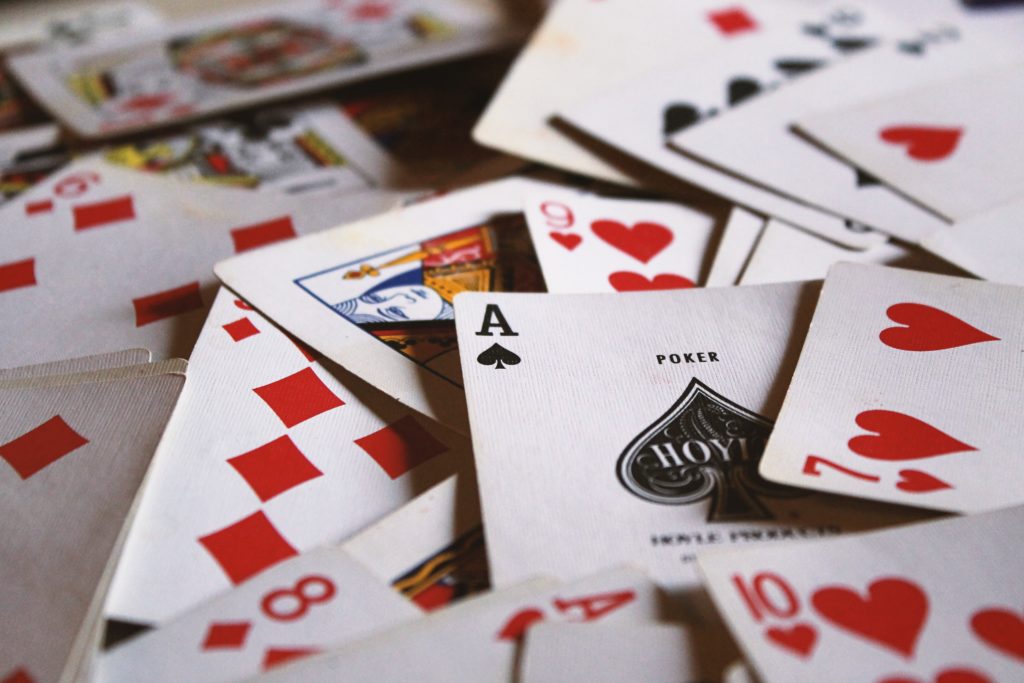
This exercise has absolutely no value (except to let you play with big pieces of paper and crayons) if you’re not willing to do it honestly. I, for example, am a solitaire junkie. I can play solitaire on this laptop for hours. Literally. Whenever I’m upset, or bored, or trying to regulate my feelings, I play solitaire. I feel like it soothes my anxiety when all the cards fall into neat little piles. I tell myself (and others) I’m planning what to write, or making a grocery list or writing an email, but that’s just bullshit. I’m playing solitaire and I’m feeling numb.

Photo by Jack Hamilton on Unsplash
A game or two of solitaire is not a problem. I don’t feel ashamed. An hour or two is getting out of control. Three or four hours and I’m hiding it from my family. I do feel ashamed. I have a partner, a blog, a job, and I’m writing a book. I live in a beautiful place and love to be outdoors. What’s up with sitting for hours playing solitaire? Something is wrong. I’m out of balance.
Don’t be a weasel with this. Watching TV with your mate does not count as quality relationship time. Watching TV with your kids is not great parenting time. Don’t lie to yourself about your relationships. Connection time has to be connecting for everyone involved. Family mealtime is nothing but a sham if someone spends it on their tech device or you’re glued to the TV. (No, news isn’t different than a sitcom!) That goes in your tech or TV slice of the pie. You have to come clean with yourself in order to make real changes.

Photo by Frank Okay on Unsplash
The thing about balance is it’s dynamic. What’s balance for this day won’t be the same for another day. As we stand upright we’re using countless muscles, nerves and our senses to maintain our balance and proprioception. Balance in our lives is the same way. It’s so easy to get off balance, but the good news is one can regain it nearly as quickly.
But only if you’re willing to be honest and claim your power to make choices.
This exercise is fascinating. What I realized was I didn’t really know what I was doing with my time. When you actually count the hours you spend doing whatever you’re doing, it can be a real eye opener. When you’re finished playing with paper and crayons and you look at your life through the lens of these pie charts, then it’s time for some hard questions. Does the way you choose to spend your time reflect your priorities? If you say your family is your priority and 80% of your pie chart is spent working (yes, commuting counts!), then you’re out of balance and you’re also not being honest. If you love the outdoors and want to be exercising more but you don’t because you’re couch locked in front of the TV, you’re out of balance. (Watching Planet Earth doesn’t count.)
The exercise is entirely flexible. It works with any resource, not just time. For example, you can do it with energy. Is there a connection or relationship in your life that demands all your energy? Are you getting as much as you’re giving? Are there other relationships that nurture and reward you that you’d rather be spending time in, but you can’t because you’ve got this vampire attached to your jugular vein?
How about money? Most of us have budgeted at one time or another. Tell me, friend, how much money do you spend on cigarettes? On drugs? On beer? On shoes? Cable TV? Can you buy food? Are your bills paid? Are you working at a job you hate because you need the money in order to support your habits — and are those habits making you happy and healthy?
We all have the same 24 hours in any given day, and we all choose what to do with those hours. This is not so much about making “right” or “wrong” choices as it is about realizing we are making choices. Nobody makes us watch four hours of TV every evening. If we’re longing to do creative work and we tell ourselves and the world we haven’t time for it, all we’re really saying is we lack the will to make it so. Why not be honest and say we’re too afraid to try, or we’ve given our power to someone else, and they say we can’t, or we’re an addict and our addiction has our power?
Photo by Quino Al on Unsplash
If you made a pie chart of the kind of life you want to have, with the perfect balance for your needs, how different would it be from what your life is now? What needs to happen to make changes? What can you excise from your present chart in order to free up time/energy/money/life?
Make no mistake, this exercise takes an enormous amount of courage, but the payoff is powerful. I revisit it now and then, just because I like to keep track of what I’m up to, and I want to know my choices are reflecting my priorities. I also note I’ve told people about this exercise, two of whom seemed to have no life outside of work and unhappy partners, and one who spent hours of screen time every day, both TV and computer, but talked about doing all kinds of fun things in the real world. I even loaned my book to one of them. None of them had time for clarity, change or choices.
Silly me.
Solitaire, anyone?
(This is the first post in a series of 4. See also Parts 2, 3, and 4.)
All content on this site ©2016
Jennifer Rose
except where otherwise noted
by Jenny Rose | Sep 22, 2016 | Power
This is the second of I’m not sure how many posts about boundaries. See last week’s post for the beginning of the discussion!
Today the aspect of boundaries I want to explore is the one I have the most trouble with. This aspect concerns managing boundaries with people we love.
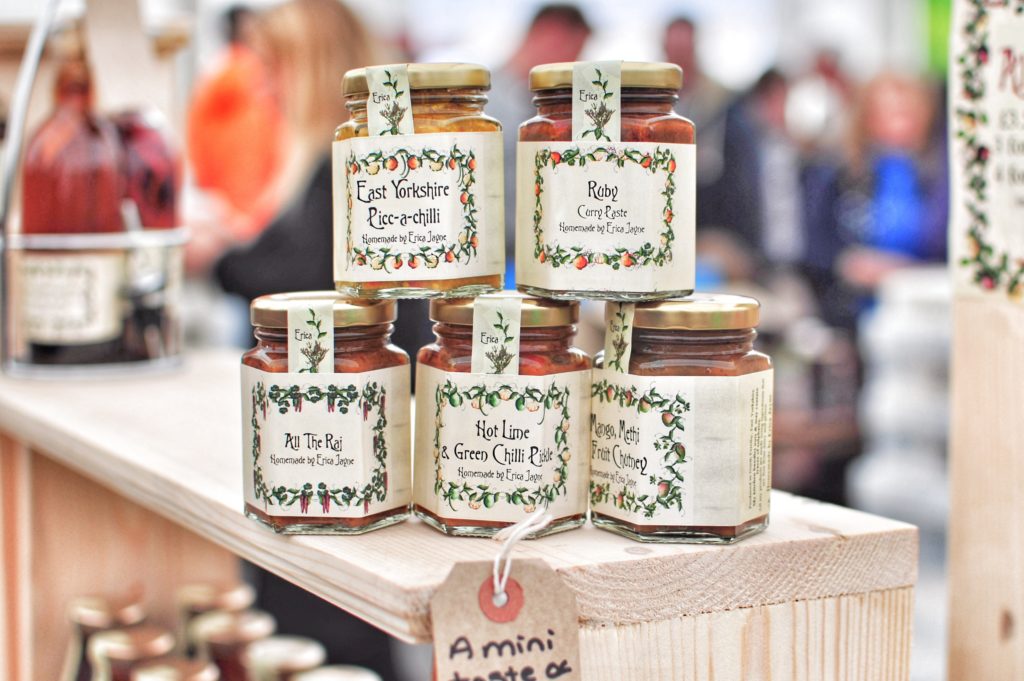
Continuing with our metaphor of food on a shelf, last week I was comfortable with my identity of strawberry jam. I know who I am, I’m in an intact container (most of the time) and I intend to be labeled accurately and effectively. That’s all INTRApersonal start-where-you-are work.
However, there’s other food on the shelf. The universe doesn’t revolve around strawberry jam, alas! In fact, next to me is a jar of dill pickles.

Photo by Viktor Forgacs on Unsplash
We’ve been together as long as I can remember, sitting side by side on the shelf. We’ve watched other food in other containers come and go. The eggs in particular have quite the turnover rate. We’re companions, friends, and in fact it’s not an exaggeration to say I love Pickles.
But one day I notice something has changed. The clear green juice in the jar with floating bits of herbs and spices is getting cloudy. And is that — could it possibly be — grey fur along one side of a pickle?
Disaster. Catastrophe. It can’t be true. My beloved Pickles is beginning to grow fur. Everybody on the shelf knows what this means. Sooner or later, the refrigerator/cupboard/shelf Gods will cull Pickles. Gone forever.
I can’t imagine my life without Pickles.
Naturally, I want to help. No kind of food could possibly want to wear grey fur. There must be something I can do.
If I love Pickles, I must be able to fix this.
If I really, truly love Pickles, and my love is real and unselfish and unconditional (and Pickles is worth that kind of love), there’s a way for my love to fix this.
If I fail to fix this, my love is at fault.
That, ladies and gentlemen, eggs and bacon, is where I lose my boundaries. It’s all very clear and self-evident when it’s laid out in black type on the page, or in this case, screen. Love can’t fix everything. Love isn’t always enough. Sometimes we can’t “help” other people. Bad things happen to good people all the time. Loss is part of love. Right?
My brain understands this. My brain functions pretty well. My brain is not the problem. It’s my heart, my emotions, my stories, my beliefs and my expectations that are unruly and stubborn.

Photo by juan pablo rodriguez on Unsplash
Perhaps I haven’t explained it well, my connection with Pickles. I know him better than anyone. I understand him. He’s the most important person in my life. He’s part of who I am. If I lose him, I’ll lose part of myself. I thought nothing could ever part us, or damage our respect and trust in one another. In fact, we’re so close we don’t need boundaries.
(Naturally, he feels the same way about me. He doesn’t say so, but one doesn’t expect pickles to emote like strawberry jam.)
Loving fully and unconditionally means no boundaries, right? Isn’t that what we learn? If we love unselfishly, completely, without reservation, then boundaries are unnecessary and we can count on getting that same kind of love in return. Loving well equals being well loved. Isn’t that the way it works? Only a selfish bitch maintains boundaries, an unloving, cold woman, a ball breaker. Only an indifferent, unfit mother maintains boundaries between herself and her children. Only a judgmental, critical, power-hungry female protects herself with boundaries. Generous, attractive, truly loving people have no need of boundaries. They don’t count the cost. They always say yes. They give freely of their resources to whoever is in need without expectations or strings attached. They never keep score. They have no needs, these lucky, healthy, beautiful, abundant people. They feed and nurture the world.

Photo by Jordan Whitt on Unsplash
Boy, does this world need people like that. That’s the kind of woman/friend/mate/mother/daughter/sister I want to be. If I want to save Pickles, that’s the kind of person I have to be.
Here’s the thing.
I can’t be that. I’m not sure anyone can be that.
I’m not talking about ideology here. I’m not qualified for or interested in religious debate. What I’m saying is I can’t be a bottomless, endless nurturer and giver with no needs, and I’m not convinced anyone else can, either. I know some who say they can, pretend they can and/or expect others to be, but I’ve never met anyone who really lives like that — at least not long term. Not successfully and not happily, anyway.
But aren’t we supposed to?
Did I learn this wrong? Did I misunderstand? I can’t point to any one person who taught me this, after all. Did I make it all up? Or, alternatively, am I not the woman I think I am and aspire to be? Am I small, mean, petty, hypocritical and selfish? Am I unable to love the right way? Am I a fraud? Am I self-deluded?
Why am I in such chronic painful confusion about something my intellect sees so clearly? Why does it seem that managing boundaries INTERpersonally carries such a negative connotation? Why can’t I reconcile loving someone with all my heart with effective, appropriate boundaries between that person and me? What is the source of this cognitive dissonance?
Which is more devastating — people who have no boundaries themselves and bitterly resent mine, or people who maintain boundaries between us when I have none?
In the first case I feel trapped, resentful and intruded upon, and in the second I feel hideously rejected, unappreciated and used. Neither feel like healthy connection, but I call both love.
So here I am, side by side with Pickles on the shelf. We look at each other through the glass sides of our boundaries. I want to climb inside his container and take him in my arms, love him back into clear green juicy health, but if I do that I’ll start growing gray fur myself, and I know I can’t fix him at the same time I believe I should be able to. I want to run away, turn away, not know what’s happening, but I can’t.
There’s nothing I can do. My love is not enough. Grey fur is creeping over Pickles and I can’t avoid it, flee it or stop it. I can only wait and watch and sit here in my container, while Pickles sits in his.
RIP, Pickles.
All content on this site ©2016
Jennifer Rose
except where otherwise noted
by Jenny Rose | Aug 25, 2016 | Power
Last month I posted about our power and ability to say both yes and no to others. This morning I’m thinking about another level of yes and no; that is the yes and no we say to life. At this level, the term ‘consent’ is useful. Consent means to “give permission for something to happen,” according to a 2-second search on Google.
Consent is a huge and complex topic and there’s a great deal of discussion about different aspects of it. For the purposes of this post, I’m using consent in the widest sense; the way in which we approach life.
Several interactions this week have made me think about the mysterious difference between people who consent to learn and grow and those who don’t. When I think about my observations, and people I’ve known, it’s clear to me the difference between these two kinds of people has nothing to do with age, sex, money, education, employment, intellect or family. It has nothing to do with the color of our skin or the god(s) we worship, or where on the planet we live, or what kind of horrors we might have endured.
I’m acquainted with a writer who sent me a piece in praise of stubbornness, a quality she admires (as do I) in herself and others because to her it means a determination to survive and do well, regardless of limitations, real and perceived. (Thank you, A!) We might mean the same thing by consent and stubbornness, or close to it. I see the ability to consent to learning and growth, over and over, no matter how many times we’re knocked down and cut off, as a kind of stubbornness — a refusal to give up, to close down, to conform to something that doesn’t work for us.
Without even trying I can identify seven people in my life, past and present, who don’t consent to the experience of life, the flow, the dance, the mystery and uncertainty, the synchronicity and the billions of invitations that arise for exploration, connection, understanding, growing and being.

Photo by Alex Iby on Unsplash
These folks are easy to spot. They resist. They argue with what is. They deny, distract, fall into various addictions. They don’t communicate effectively. They care about winning, being right and power-over. They have rigid stories and expectations. Everything that happens to them is a personal insult or a crisis. They’re victims. A good, deep question is a grave threat. To my eyes, they look miserably unhappy. They repeat the same patterns, over and over, dying a little more with each fruitless repetition. They do not consent. They refuse.

Photo by Cristian Newman on Unsplash
Every single one of the seven people I’m thinking of has had opportunities to learn, to grow, to change, to make different choices. They all had people in their lives who loved them and had information, tools and skills that might have enriched them. They all had people in their lives who valued them and wanted their contribution. They each had at least one person in their life who would have done anything to support them in learning and growing, and that person was me.
Most of those relationships are behind me now, because I have this unforgiveable quality of consent. My life now is based on the why, the what if, the whose rule is that, the help me understand. My life is about teach me, show me, share with me and what do you think? My life is about doing more of what works and letting the rest go. People who refuse and people who consent invariably have friction, because their needs are opposite. There’s just nowhere meaningful to go.
People who consent are not perfect or perfectly happy people. On the contrary, their lives have been filled with mess and miscalculations, abuse, addictions and other painful experiences, but they’ve learned from everything and everyone. People who consent don’t look at their lives with bitterness or frame things as mistakes. They see teachers, opportunities and fascinating things learned and yet to learn. People who consent are endlessly curious. They think about what they don’t know and question what they think they do know. They seek the hidden thing. They’re more likely to ask questions than proselytize or lay down the law. They’re not interested in power games or being right or winning. They seek to understand, to explore, to exercise choice, to manage their own power. They can laugh at themselves. They can and do say no, but they say it to protect their integrity and needs, not to shut out or control life.
People who consent choose happiness. That’s the most important one for me. I’m still reaching for that. I’ve always been a person who consents, but I’ve also chosen to stay limited in many important ways. As I’ve learned to discern between refusal and consent, I see that living life from a state of consent results in joy. Again, it’s got nothing to do with age, beauty, money, status or any of the things that the culture says we’re defined by. Joy, at the end of the day, is a simple thing, arising out of being at peace with this wild ride we call life. Joy is consenting to surrender, consenting to feel and experience, consenting to feeling fear and doing it anyway, consenting to give up trying to control the things we can’t control. Joy is composed of tears, blood, loss and disappointment, pain and growth. We already have it. It’s here, sitting on your shoulder as you read this and mine as I write.
All we have to do is consent.
Photo by Evan Kirby on Unsplash
All content on this site ©2016
Jennifer Rose
except where otherwise noted
by Jenny Rose | Aug 11, 2016 | Connection & Community, Emotional Intelligence, Shadows
Last week I wrote about stories. This week I want to discuss a powerful element embedded in the stories we tell ourselves — the element of expectations.
This subject is too big and complicated for me to address in a single post. It touches on parenting, every aspect of relationship, and really every aspect of our experience, unless we’re Zen masters. Here’s a sample of what other people are saying about expectations.
I don’t know any Zen masters and I’m certainly not one, so for the rest of us unenlightened beings, let’s consider the subject of expectations and how they work to limit us, others and life.

Photo by Paul Bence on Unsplash
Before I go further, a Google search of the term “expectations” will give you page after page of managing work expectations, and all the articles I looked at tell me expectations are necessary, positive and help companies, businesses and corporations be successful. Which means make money. So, for the purposes of this discussion, let’s put aside professional/work-related expectations. Let’s focus on intra and interpersonal expectations. Let’s be human beings instead of consumers and capitalists.
Expectations arise out of our past experience, our dreams, our hopes and fears, our unmet needs, our assumptions and our culture and family. They can be positive or negative. But expectations, like the stories we’ve created, are uniquely ours. We’ve usually made them up in our heads or accepted them from the overculture without question. I don’t suggest expectations are inherently wrong if we remember they’re just part of the stories we’re telling, but the problem is we don’t remember that. We cling to expectations and invest them with great certainty and power. They become our reality. This all happens internally and it doesn’t occur to us to check out what other people hope for or expect. It doesn’t occur to us to agree on terms or have a discussion. We just assume we’re all on the same page.

Photo by Igor Ovsyannykov on Unsplash
Here’s an example from my own life. My parents divorced when I was a child. In subsequent years, as I’ve married and had my own children, there have been references to “family.” What a “family” does or doesn’t do. What “family” means. The thing is, I don’t think Dad means the same thing Mom does when he talks about “family,” and I’m pretty sure neither one of them means what I do when I use the term.
I’ve never had a conversation with either of my parents about this, but I’m curious about their definitions. For each of my parents, “family” implies several expectations or rules of conduct about which I’m clearly ignorant and which I frequently have felt I’ve failed. Furthermore, I disagree with some of their expectations that I am aware of.
Life is full of words like this. Try these on: Parent, son/daughter, wife/husband, partner, friend, lover, teacher, mentor, girl/boyfriend, volunteer, etc., etc. We can define these terms pretty easily, but attached to each is a set of often invisible expectations. They’re very deep, so deep we never think about them. You know exactly what “family” means, right? No question. I know what it means to me. But other members of my family are clearly working with different definitions. So, who gets to decide? Who’s right and who’s wrong?
No one. Everyone.
And that’s not very satisfying, is it? It would be so much easier if someone could be right and someone could be wrong. Then we’d all know, and we’d all expect the same thing(s).
There’s still a problem, though, and that’s the real heart of this post.
Expectations, even if we could all agree on them, are so often limitations.

Photo by Jeremy Thomas on Unsplash
When we create and cling to expectations of ourselves or life, all our energy and attention is on something we’ve made up or inherited, and that’s so small, compared to the complex, mysterious, terrible, beautiful, enigmatic thing we call life! Our expectations are like a narrow beam of light in a dark universe. We don’t think about all the possibilities we can’t see, all the things we can’t imagine. No, we’re focused on that small beam, and if what it illuminates doesn’t live up to our expectations of self and others, then we’re angry. We break connection. We punish ourselves. We punish others. We blame and shame and try to make events, people, marriages, vacations, new homes, jobs and ourselves be what we expect them to be.
You might have noticed this doesn’t work.
Every parent has their head in their hands at this point!
Now our expectations are a real problem, because we’ve made them so big and powerful we can’t see around them. We can’t step back and consider what is. We can only think about what isn’t. We forget our sense of curiosity and joyous possibility. We only think about how disappointed we feel, how let down we are, how things never work out. We nurse our humiliation and embarrassment about what we’d hoped for, and what other people think of our choices. We make up stories about how we can’t trust people, and we can’t trust life, and we become cynical, bitter and depressed.
We make ourselves and others very, very small.
But we can choose to take the power out of our expectations, just as we can choose to take the power out of our stories. We can search out our expectations and root them up like weeds. We can take our focus away from unmet expectations and look instead at what is present, what is happening, and dream about what might be possible. We can accept our expectations are about us, not anyone or anything else. If they’re not working, we’re the ones with the power to change them.
We have enormous power in one another’s lives. If every single one of us extended to just one other person the question, “What would you like to do?” instead of “You will…” or “You should…” or “You can’t…” what would the world be like? What if you were ten times bigger than the son/daughter/parent/spouse/lover/partner/friend others expect you to be? That doesn’t mean you have super powers. It means you unchain yourself from the limitation of expectations, yours and everyone else’s.
One of the greatest gifts I ever received was this statement: “I want you to be everything you are and nothing you aren’t.” What a tender, respectful, loving way to hold another human being and life! And the best thing about it? We can say it to ourselves. We can start where we have the most power, in the place where no one can stop us or limit us. I say it to you, now, whoever you are, wherever you are. No expectations. No limits.
Live everything you are, be everything you are and nothing you aren’t.
Pass it on.

Photo by Jeremy Bishop on Unsplash
All content on this site ©2016
Jennifer Rose
except where otherwise noted