by Jenny Rose | Sep 15, 2016 | Power
Since I began this blog I’ve wanted to write about boundaries, not only because I myself am trying to develop better ones, but also because it seems to me boundaries are a large part of what’s broken in our culture.
We’re all aware of headlines from all over the world about human rights, ethnic and racial struggle, politics, sexual identity, religion and war. It seems to me boundaries are a core piece in each headline; an enormously complex piece of human function and dysfunction. How do we define, understand and effectively manage boundaries — both our own and those of others? How do we manage people who consistently violate our boundaries?
Trying to organize my thoughts about this is like trying to herd cats. That being said, I can choose a starting point, so I’m going to start there and see if the subject organizes itself as I write.
I approach most subjects with a definition and curiosity about what others are saying about it. A Google search for “boundary” tells me it’s a “dividing line.”
I’ve read two articles recently about boundaries. One is written from an emotional intelligence perspective and one is about human rights, kind of a sidewise look at boundaries through the idea of respect. Both have contributed to my mental soup on this subject.
My experience is that any piece of human function or dysfunction begins with myself. Self-reflection and self-inquiry are powerful tools for me, even though I occasionally wince at what I find!
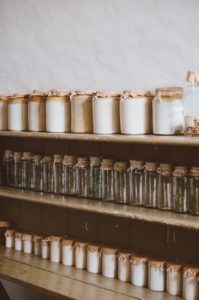
Photo by Annie Spratt on Unsplash
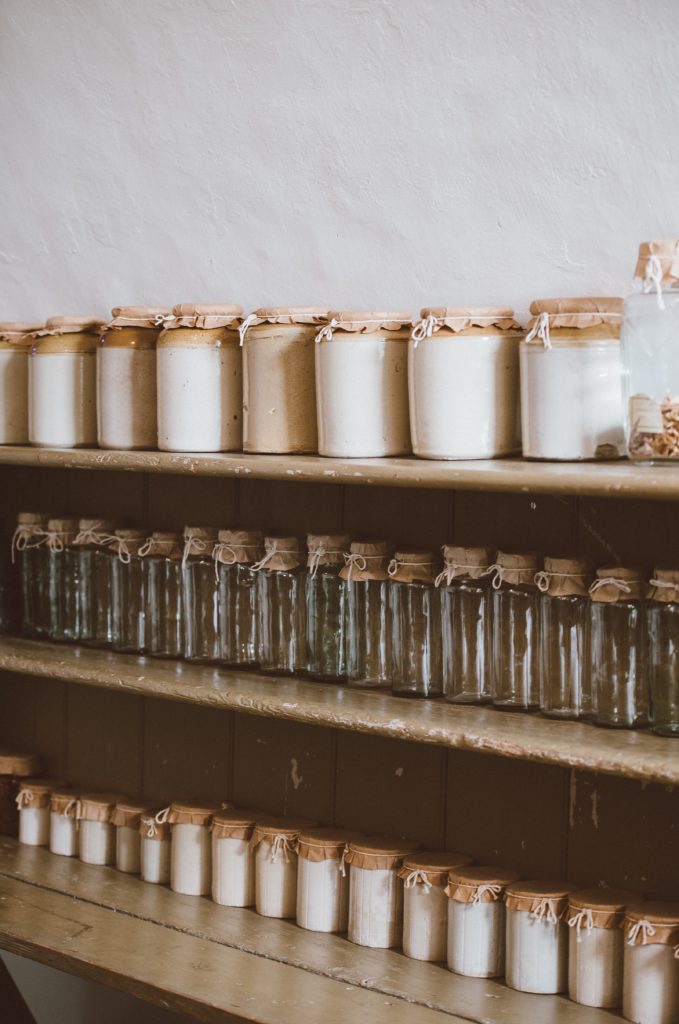
So, let’s play a game. Open your refrigerator, or your pantry, or your cupboard. Look at a shelf where you keep food. Everything is in a container. The container around the food is a boundary. If none of that food had boundaries around it — well, that would just be a mess.
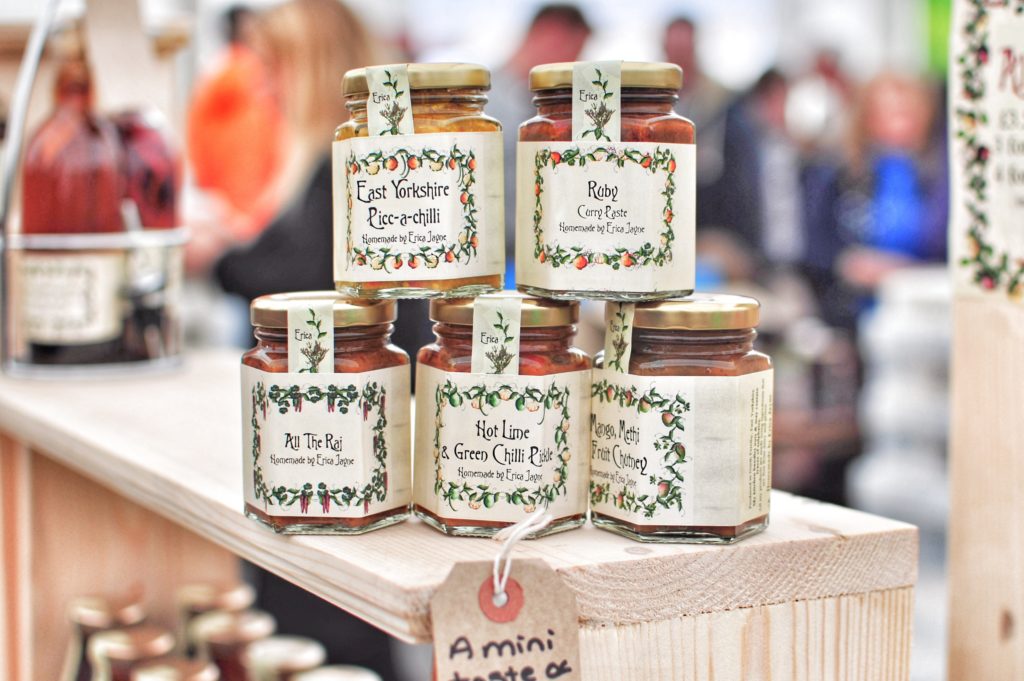
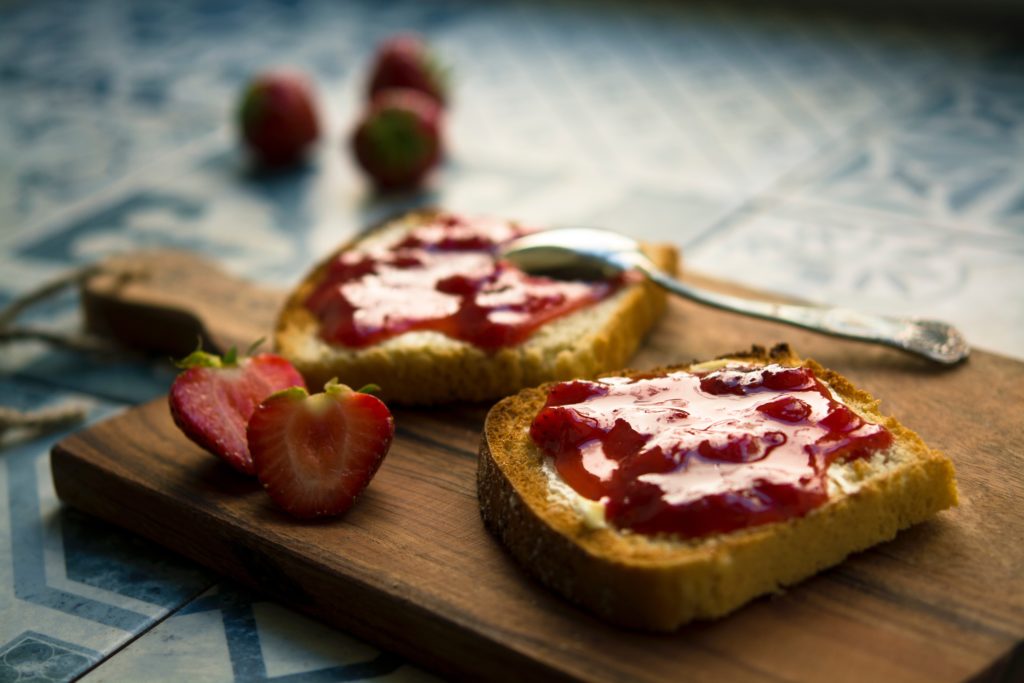
As we start thinking about boundaries from ourselves outward, let’s take a jar of strawberry jam. It’s a glass jar with a screw top lid and it’s clearly labeled strawberry jam. Effective boundaries, it seems to me, begin with a correct identification of what’s being contained. We have to know who we are before we can create healthy boundaries, because our boundaries won’t look like someone else’s. They’re not one size fits all. You can’t keep strawberry jam in an eggshell. You don’t want raw eggs in a jar labeled strawberry jam. A can with the label torn off could still be food, but it’s hard to use it effectively.
Mislabeling happens in two directions. There are those externally who tell us who we will, should or must be (or who we will, should or must NOT be), and there are our own internal expectations of who we are and what we need. If something goes wrong right here, at the first step of boundary work, we’ve got problems.
This takes us directly back to several dynamics I’ve posted about — expectations, stories, saying yes and no, and pleasing people among them. My experience in my own western middle-class culture has been painful pressure to be who I’m expected to be, not who I really am. If this can happen to me, a straight, white, average-looking, average-sized, able-bodied, unambiguous female, then I know hundreds of thousands of people out there are being systematically emotionally and spiritually maimed in ways I can’t begin to fathom.
This opposition to knowing and being ourselves is everywhere. Capitalism is based on the idea you’re not okay as you are, but you will be if you buy…whatever it is.

Photo by Viktor Forgacs on Unsplash
I’m strawberry jam. I’m not grape jelly, even though it’s more valuable. I’m not blackberry jam, even though it’s more attractive. I’m not raspberry jam, even though it’s more popular. Go ahead, glue a label on me that says “currant jelly.” I’m still going to be strawberry jam, and my true boundaries are a glass jar with a screw top lid and a label that says strawberry jam.
As cruel as it is, the external pressure we feel to be other than we are is not the most damaging thing. The most damaging piece is what we do internally to ourselves. I can spend my whole life with my fingers in my ears and my eyes squinched shut saying I’m peanut butter, but I’ll always be strawberry jam. Other people will know it. I’ll know it. Nothing will ever work for me because I’m in the world trying to be something I’m not. I won’t find my people. I won’t find my place. I won’t figure out and make my contribution. I won’t have effective boundaries. I won’t be happy.
Not only that, but my inability to manage and maintain effective boundaries affects everyone around me. If my jar is cracked or broken, strawberry jam is going to ooze out onto the shelf. It’ll make a mess. It’ll attract pests and predators. It’ll be wasted and it will impoverish the peanut butter, the toast, the butter and whatever else might have connected with me as strawberry jam.

Photo by Jonathan Pielmayer on Unsplash
In order to have healthy boundaries we have to know what we need. In order to know what we need we have to know who we are. Finding out who we are can be a terrifying prospect, especially if we’re captive to what other people, media, our culture, and most of all ourselves tell us we MUST be in order to get loved and find happiness, meaning and purpose.
I have made up my mind I will build better boundaries. I will figure this out. If anybody out there will walk beside me, I’ll be very pleased. I know I’m not the only one struggling with this. In fact, I don’t know anyone who doesn’t have trouble with some piece of it.
My starting point is right here, with myself. I’m strawberry jam and my boundaries are a glass jar and a screw top lid. My label says strawberry jam. I’ve no interest in forcing, persuading or coercing anyone else to be strawberry jam. I just know what I am. It might be that strawberry jam is outlawed, shunned, shamed, beheaded, tortured, raped, imprisoned, damned to Hell, unsaved, unenlightened, unlovable, unwanted, unworthy or lined up against a stone wall and shot under a hot sun. I’ll still be strawberry jam. I’m not confused and I’m not going to feel ashamed about it.
Peanut butter and strawberry jam sandwich, anyone?
All content on this site ©2016
Jennifer Rose
except where otherwise noted
by Jenny Rose | Aug 4, 2016 | Connection & Community, Emotional Intelligence
Stories. How many stories can you tell about your life?
Story has always been deeply embedded in the human experience. Every piece of art tells a story. We read, watch television, go to movies, listen to the news, fall in love with music. Stories, all.
Stories teach, entertain, connect, inspire and guide us.
Stories are prisons and torture chambers. They brainwash and manipulate. They can be powerfully limiting.
The paradox of story lies in the power we give it.
Think about a story from your own life. Something painful. Likely it’s a story you’ve told yourself many times. It’s important. It’s part of who you are and how you understand yourself. It’s a place from which you look at the world. It’s absolutely True. You know. You were there. It was such a crippling experience you can’t ever, ever forget.
Stories can’t happen in a void, so there’s an event of some kind, an action, a word, a relationship, other characters in your story.

Photo by Takahiro Sakamoto on Unsplash
Let’s say your story is about four people who spend an hour together on a walk. In that hour everybody sees, smells and hears, thinks and feels different things. After that walk, and maybe for years afterward, each of those four people can tell a story about that day, that walk, that experience. Every one of those stories is partly true. Every one of those stories is inadequate and incomplete. The truest story is the one all four people tell together. If one person’s story is refused, denied, disbelieved or lost, all four people have lost something important out of that hour of their lives. They’ve lost an opportunity for understanding, for compassion, for connection and for becoming just a little bit bigger.
The thing about story is that we create it. Something happens. We have an experience. We have feelings, like mad, glad, sad or scared. We have thoughts about our feelings. We make up a story. We tell it to ourselves over and over again as we try to make sense of our experience, or recover from some hurt. We believe our story to the point that we refuse to consider changing it. We behave as if our story is True.

Photo by SHTTEFAN on Unsplash
Now we have a story that imprisons us. The story has all our power. We hurt people, break relationships and viciously defend our story. We will kill people, including ourselves, to maintain our story. Not only that, others must accept our story in its entirety. They must never question it, add to it or take away from it. Our story becomes us. A threat to our story becomes a threat to our life.
We’ve made something up, chosen to believe in it and now it rules us.
A lot of people talk about truth and lies as though one is black and one is white. As a storyteller, a writer and a human being, I question that. What is truth, really? If I was walking with you on that day and I saw a beautiful grass snake and you saw a dangerous serpent, which one of us is lying? What is the truth? I was charmed, you were horrified. So, I must be a sensitive scientist type with big glasses and a mouthful of Latin. And you’re a beautiful, sexy woman with big boobs and brown eyes who needs to be taken care of in the terrifying outdoors.
There. That’s my story. I’m sticking to it. Don’t you dare try to give me a different version.
See what I mean?
Isn’t the truth that two people saw a snake and had two different experiences and sets of feelings around it? Don’t we all have histories, fears, beliefs, prejudices, expectations and filters through which we experience life? Are yours right and mine wrong? Are mine right and yours wrong?
Can’t we allow room for everyone to experience what they experience?
Some people lie, deliberately and with intent. We all know people like that. We learn quickly not to trust them.
Some people distort. They’re caught up in their story about themselves, about the world, about others. They’ve been deeply damaged and wounded, or they struggle with addiction, or they have health problems, or they take medication, or they struggle with mental illness. Am I prepared to call them liars?
No. But I recognize the danger of some of their stories.
Does investment in a distorted story mean the storyteller is not a valuable person worthy of love and compassion? I hope not. I’ve my own set of distorted stories. I think we all have.
Other, very dangerous people deliberately manipulate with story. They invalidate yours in favor of theirs. They tell you you’re wrong, you didn’t understand, you’re too sensitive, you’re too dramatic, you’re too crazy; you’re hateful, bigoted, disloyal, a liar. They tell you your story didn’t happen, that they didn’t hit you, even though there’s blood in your mouth.
So what do we do about story — ours and everyone else’s?
Maybe the most important thing is to be aware that much of what’s happening in our head is a story. It might be partly true. It might not be. It’s certainly part of something larger than our point of view. Our feelings are ours and we need to honor them, but our thoughts about our feelings can become a real problem.

Photo by Toa Heftiba on Unsplash
We could ask others about their stories. We could be open, curious, nonjudgmental, compassionate, respectful and prepared to be enriched by someone’s perceptions and experiences. We could, in short, build healthy connection.
If we’re holding tight to a story that hurts us, angers us, or is otherwise destructive, we could go to other characters in the story, tell them how we feel and ask for help understanding the situation.
We can build trust and respect with ourselves. We can claim the power and dignity to form our own opinions about others, based on our own observations and experience, and decide when to build connection and when to limit it. We can refrain from repeating destructive stories to or about others. We can take responsibility for our own rigidity and blind spots; our intolerance, injustice and poor communication skills, and own that we might make mistakes in judgement.

Photo by James Pond on Unsplash
We can be wary and watchful of people who impose their stories on us. Some people use story like a hammer and chisel, relentlessly splitting connection and relationship. In the end they hurt themselves the most, but many a relationship has been lost because of this kind of behavior.
We can pay attention to red flags such as feeling confused, feeling torn, feeling overwhelmed, feeling exhausted by drama, and feeling dragged down or being asked to keep destructive secrets. Healthy people in our lives who truly love us will never try to split us from others or force us to make a “them or me” choice. Healthy people do not share destructive personal stories about others publicly, nor do they tolerate or enable this kind of behavior. Healthy people communicate honestly, directly and clearly and recognize the ineffectiveness of black-and-white thinking.
In the end, our only power lies within the circumference of our own lives. If we want others to give us a chance to speak when someone tells a distorted story about us, we must do the same for them. If we want to be heard, understood and treated with respect and compassion, we must extend those to others. If we’re hurt and angry, we must find appropriate and effective ways to talk about that, either with a professional or with others in our story. We can’t control what others say and believe about us. We can only live the most authentic lives possible and hope that our actions and words speak for themselves. We can be responsible for our own stories.
For more on the power of story, here’s another blog you might be interested in. Same subject, different writer. It’s titled Who Are You?
Also, here’s a link to a remarkable teacher, Byron Katie, who asks, “Who are you without your story?” I highly recommend her.
Do your stories about yourself limit you? Do your stories about others limit them? Can you consider another version of one of your stories? What needs to happen for you to revise one destructive story you’ve created?
All content on this site ©2016
Jennifer Rose
except where otherwise noted
by Jenny Rose | Jul 21, 2016 | Choice, Power
I had some feedback on last week’s post indicating I’m not the only people pleaser around! Here are some good articles about learning to say no from Lifehacker, Zen Habits, and Psychology Today.
People pleasing is connected to several other pieces of interpersonal functioning, like boundaries, power, authenticity and integrity.
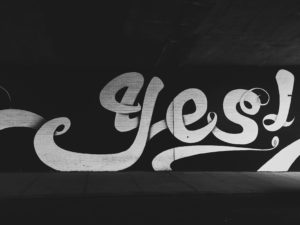
Photo by Jon Tyson on Unsplash
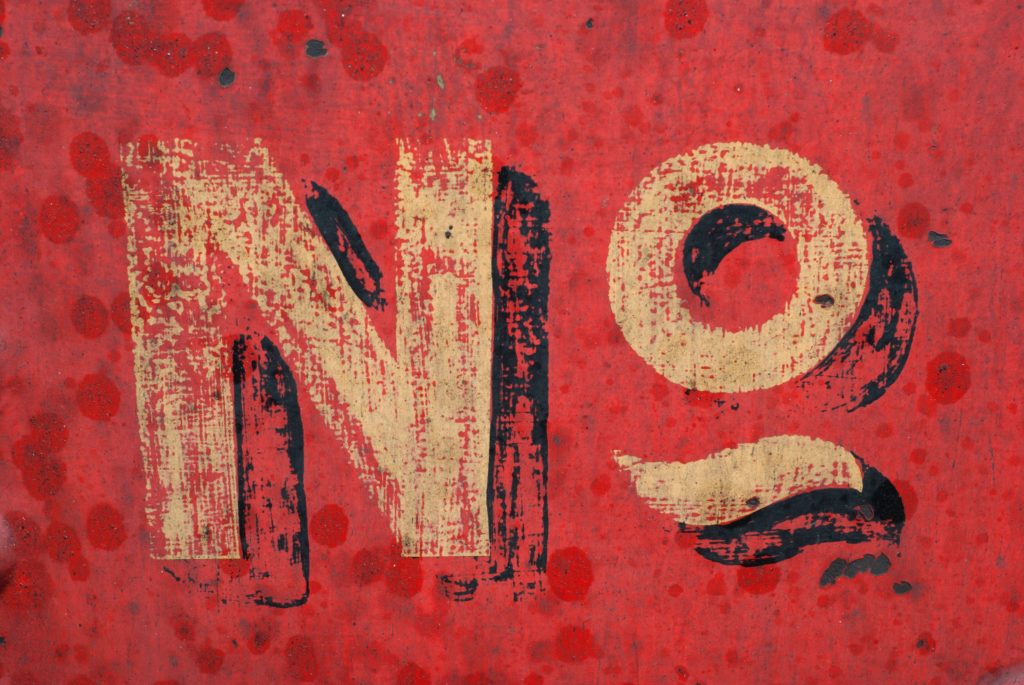
The inability to say yes is as problematic as the inability to say no. If you can’t say yes, your no is meaningless. If you can’t say no, your yes is meaningless. This damages relationships with others, sure, but I think the more significant damage occurs in our relationships with ourselves. How can we trust ourselves if we don’t take responsibility for making and communicating honest choices?
It doesn’t matter if the relationship we look at is professional, family, peer or romantic. If we’re too cowed to give an honest yes or no, how healthy is that relationship? Why is someone trying to take away our power and, more importantly, why are we letting them?
I know. Love. Obligation. Even fear. But wait.
Photo by Gemma Evans on Unsplash
Do you feel loved when you can’t speak an honest yes or no without receiving indifference, withdrawal, scorn, drama, rage, sarcasm, a physical blow, tears or an emotional outburst? Maybe your intention is to love and be loved, but is that really happening? How can you be loved if you’re not showing up honestly? If you’re loved for your compliance, your compliance is what’s getting loved, not you.
Do we have an obligation and a duty to be connected to people who don’t respect our yes and no? Do we owe that to someone because they’re family, or someone we have history with, or our boss, or someone we want to love or be loved by? Who says? Did you sign a contract at some point?
And then there’s fear.
At this point in my life I’m not as concerned as I once was about making the wrong choice, whatever that means. I’m more interested in being clear about the choices I am making and why.
So, just to be clear, I’m choosing to stay in relationship with (fill in the blank), even though I’m not allowed to say yes or no honestly without (fill in the blank). I’m doing that because I hope one day they’ll love me, or because I owe it to them, or because I’m afraid of them. I’m doing it, in short, because they have something I think I need.
Now, pay attention.
They have something I need.
Do they really? Are we sure? Is the job or relationship or inheritance or influence more important than our ability to live authentically and fully in our own power?
If your answer to that is yes, I understand. I was in an abusive marriage for a time because I had two young children, no job, no car, no money, no childcare and no hope. I deliberately chose that relationship because I didn’t know how to survive without the financial support my husband provided. My children and I paid a heavy price, but he did help keep us afloat during a critical time. The marriage didn’t last, of course. Even now, on a summer morning more than twenty years later, I don’t know what else I might have done. I don’t know what might have happened to us if I hadn’t made the choice I made. Maybe something much healthier. Maybe a homeless shelter.
This, my friends, is the ancient and powerful archetype of prostitution, and we all participate in it in some way at some point in our lives. It’s part of being human and is much larger than the specifics of sex. More on archetypes later.
When you look at your relationships through this filter of making and communicating honest choices, what do you see? What’s your role in this dynamic? Are you the one who can’t say yes or no, or are you the one who can’t hear them? Why are you engaged in this dynamic? How is it working for you? Are you happy with yourself, and with your connections? Are you interested in learning how to do things differently?
All content on this site ©2016
Jennifer Rose
except where otherwise noted