The word “respect” is jumping up and down in my life this week, hand thrust in the air, saying “me, me, me!”
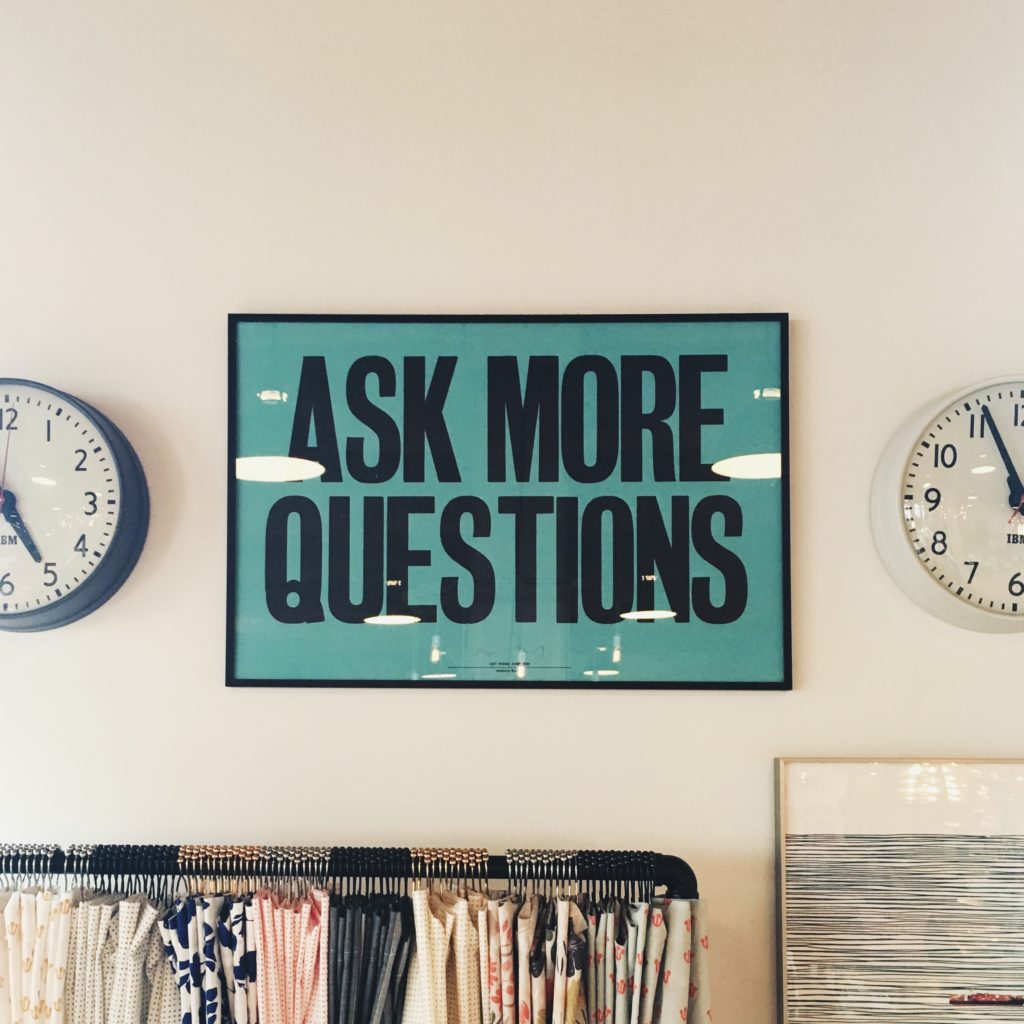
Photo by Cristina Gottardi on Unsplash
This post started with more from R. D. Laing’s book, Knots:
“A son should respect his father. He should not have to be taught to respect his father. It is something that is natural.
It is the duty of children to respect their parents. And it is the duty of parents to teach their children to respect them, by setting a good example.
Parents who do not set their children a good example don’t deserve respect.“
As usual, I have thoughts and questions. ‘Should’ is a word I shun. It implies arguing with what is. Who says a son (or any child) should respect his father? I believe this rule has its roots in the Bible and/or other spiritual traditions. Does that mean it can’t be questioned? (This is a trick question. If you say no, I will immediately start questioning it!)
Is respect ever a given? Do we (must we) “naturally” respect others? Are we born knowing how to respect others? Are we born knowing how to respect ourselves, or do we learn by watching those around us? (For more on parenting and respect, here’s the perspective of parenting expert and author of Connection Parenting, Pam Leo.)
What’s a “good example,” and who gets to define it?
What the heck does respect mean, anyway?
According to Oxford online dictionary, the meaning of respect includes “a feeling of deep admiration for someone or something elicted by their abilities, qualities, or achievements” as well as “due regard for the feelings, wishes, rights, or traditions of others.”
Aha! Two distinct meanings.
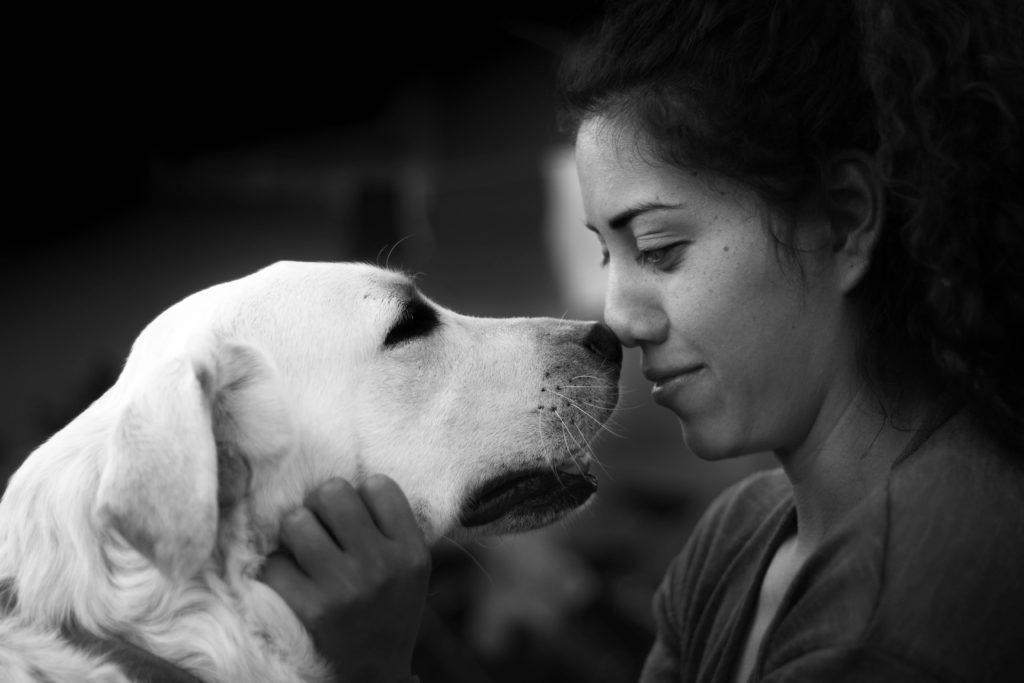
Photo by Emma Backer on Unsplash
Across both digital and face-to-face human interaction, I see a troubling pattern of boundary loss and deliberate blurring of terms such as respect. It seems suddenly we are expected to blindly respect, in the sense of deeply admire, everyone, no matter their words or actions. Worse than that, we’re supposed to agree with the ideologies and beliefs of others. Respect and agreement have come to mean the same thing. If we don’t agree with someone’s thoughts, feelings and beliefs, we’re haters and bigots. We have no respect.
Newsflash: Agreement and respect are not the same thing. They are not mutually exclusive, but they have different meanings. They may appear together. They can and do exist independent of one another.
Additionally, disagreement is not hate and is no measure of compassion, which can be fully present with either agreement or disagreement.
I found a perfect explanation of this in the Wiki entry for conflation:
“In an alternate illustrative example, respect is used both in the sense of “recognise a right” and “have high regard for”. We can recognise someone’s right to the opinion the United Nations is secretly controlled by alien lizards on the moon, without holding this idea in high regard. But conflation of these two different concepts leads to the notion that all ideological ideas should be treated with respect, rather than just the right to hold these ideas.”
I can understand the desperate search for some kind of certainty in life, some kind of code-breaking formula to help us make sense of everything from relationships to global change. I also understand many people are so busy trying to survive and cope with their day-to-day lives that discussions, explorations and distinctions of the kind I’m preoccupied with have no meaning. The world is full of people who take the attitude of TLDR (too long; didn’t read). It’s so much easier to attach to a meme or belief system along the lines of they’re for me or against me.
Photo by Cristian Newman on Unsplash
Unfortunately, reality is a lot more complicated than that and life is not black and white. Nothing is certain. People change. New information appears. We’re frequently trying to unlearn. In spite of how much we want to be right, much of the time we’re wrong. Refusing to take in any new information for fear it will threaten our safe place to stand will not keep us in control or protect us. What it will do is wither our critical thinking skills, our curiosity and our appreciation of others.
I endeavor to treat everyone respectfully, by which I mean I have space for people to believe what they believe. In general, I am successful in this intention. That being said, I view respect similarly to tolerance, as a peace treaty. Nobody likes to be attacked, and I’m no exception to that. I don’t attack others, but I will defend myself. I don’t think we’re all automatically entitled to respect, and I certainly don’t think I am. I’m also perfectly prepared for others to disagree with me on any given subject. That doesn’t mean (to me) we can’t have a respectful conversation about the issue we disagree upon, and it doesn’t mean I excise people from my life who hold different beliefs than I do.
I also recognize there are people in the world who intend to silence all disagreement and demand respect from everyone without giving it. This is cluster B behavior, and it’s about power and control over others. This population in particular seeks to conflate things like respect and agreement, using malicious and often ridiculous labels and jargon, threats, punishment and violence to silence and intimidate others. This behavior is called coercion. Some people say they want respect, but what they’re really after is agreement. Respect alone does not satisfy them.
I was once confronted by an extremely unpleasant woman who demanded to know if I am pro-choice or pro-life. It wasn’t her business, but I had no wish to escalate her drama, so I answered her truthfully and quietly: “Both.”
She immediately became both abusive and threatening, demanding I answer one way or another and telling me I couldn’t be both.
Excuse me? I can and am both. I said above I can understand why people adhere to black-and-white thinking, but I will not have it forced upon me. I don’t agree with such thinking or trust it, and I refuse to employ it. I was willing to respect her right to an either/or ideology, but I pushed back when she tried to force it on me.
Ironically, I find myself to be The Enemy, even among loved ones, because I disagree with some current ideologies, or I refuse to take a polarized stance. As I am one of the least judgmental and most respectful (in the sense of “due regard for the feelings, wishes, rights, or traditions of others,”) people I know, this is a bitter twist, and the injustice of it hurts. Reciprocity is nice, if you can get it.
Which brings me to the last aspect of respect I’ve been thinking about, which probably should be first, if I wrote this essay in order of importance.
What about self-respect?
Who teaches us to respect ourselves, or is that innate or “natural?” If it’s taught, do we learn best if the adults around us model self-respect and support us in giving it to ourselves? If it’s innate, can the adults around us damage our self-respect or force us to choose between respecting ourselves and respecting them? If we have little or no self-respect, are we greatly compelled to persuade or coerce others to support our beliefs? What brings us more satisfaction, respecting ourselves or feeling respected by others? Can the respect of others ever replace our self-respect?
As usual, I have more questions than answers, but I can say two things with confidence:
Respect and agreement are not the same thing.
I have no power to make others respect me, but I have complete power over whether I respect myself.
We have books all over this house. The majority of them are neatly alphabetized in what we refer to as the “cat room,” because that’s where the litter box lives. There are also books in our bedroom, in my workspace, in the bathroom, in the kitchen, in the room where we eat, and in my partner’s small office, which is crowded and heaped and piled with extremely valuable and meaningful things (a.k.a. junk), liberally coated in dust. Just standing in the doorway makes me feel like tearing my hair out and bursting into tears.
But hey, we all deserve our own space, right? He doesn’t invade my space, and I don’t invade his. The peace treaty of tolerance in action.
Anyway. I digress. A few weeks ago he handed me a book, unearthed from his office, and told me I should read it. This is one of our favorite games —sharing books. I took it and put it in my to-read pile.
Yesterday I picked it up and fell in love.
Knots, written by R. D. Laing, was published in 1970 and cost $3.95. At first glance it looks like poetry rather than prose.
Here’s page one:
They are playing a game. They are playing at not playing a game. If I show them I see they are, I shall break the rules and they will punish me. I must play their game, of not seeing I see the game.
That’s all.
Photo by Ben White on Unsplash
I was sitting in the sun on the front porch. I set the book down and thought about this, feeling a smile on my face. Knots, indeed. I could feel the door this little paragraph opened up in my mind, and I wanted to find words to think about it, but my first reaction was pure amusement. That’s still my reaction, as I sit and type. Maybe there’s a lot I could say, but maybe Laing has already said everything worth saying. Maybe all I have to offer are some impressions.
Games, and the people who play them. Power and control games. Blame and shame games. Drama and trauma games. Triangle games. Have you ever noticed the most manipulative and malevolent game players never, ever admit they’re playing games? I’ve always wondered if that’s because they lack insight into their own behavior and motivation or they simply lie. Maybe it’s both.
I can’t imagine a world where everyone is just straight, saying what they mean and meaning what they say. It would be a world in which we all took responsibility for our choices and had the ability and willingness to be authentic. It would be a world where each one of us had integrity.
The human game, the social game, the money game, the professional game, the health game, the marketing and consumer game, the education game, the sex game, the family and/or parenting game, the significant other game. Our days and lives are filled with games, and we take them extremely seriously. Our identity and ideology, our hopes and dreams, our very lives seem to depend on how successfully we play our various games. Are all these games fun? Are any of these games fun? When I think about my life and watch the people close to me, I see despair, rage, fear, violence, a pathological need to win and be right at all costs, and grief. Fun? Not so much.
Do you remember the vain and not-terribly-bright Emperor who wore no clothes? His courtiers seduced him into believing he had on the finest clothes ever made and no one dared to say he was naked until he went out onto the street in a magnificent promenade. A child in the crowd said, “But he’s not wearing anything!” in the manner of small children who have not yet learned to play the game. The child was instantly hushed, but it was too late. That small arrow of truth could not be retrieved and the crowd roared with laughter.
Either everybody plays the game, or nobody does. No individual is allowed to call a game a game, however. No individual is allowed to challenge, ask certain questions, investigate and research independently, or have a different opinion. Such people are punished with tribal shaming, deplatforming, doxxing, threats and violence.
So we play the game, at least enough to escape notice. We try to stay camouflaged within the herd. We keep our heads down and our mouths shut. We pretend we think the game is real.
Some of us are better at that than others.
Some of us are born troublemakers and insist on thinking for ourselves, come what may.
Some of us are curious and play what we know is a game in order to find out what will happen.
Photo by Peter Forster on Unsplash
I was once with a bad boy man. He was magnetic and attractive. He was also filled with rage; collected gold, guns and ammo in an underground storage locker; grew illegal weed and mushrooms; and the local cops had a thick file on him. He said he’d met Jesus (while high). For various good reasons (trust me on this) I was with him for a few months during a bad time in my life. Everyone around me was appalled, which only added to my sense of reckless enjoyment.
I was sick and tired of being the good girl, the reliable one, the adult, the woman with no needs who always followed the rules and pleased everyone around her. I loathed my goody-goody, compliant self beyond words.
So, for a little while, I decided to be none of those things. One day he gave me a diamond ring, which I suspected had been stolen (you shouldn’t have!) while he was in another state a few years before. He asked me to marry him.
Now, not only did I have no intention whatsoever of marrying again, I knew he would never go through with it. I also knew this was not a man I would be in a long-term relationship with. He was meeting my need to be rebellious and reassure myself that I was still attractive enough, after two divorces, to fuck. Does that sound coarse? It was. But most women will understand what I mean. I didn’t go through a bad-boy phase as a young woman. I’ve always been a late bloomer. This was it. I needed it and I don’t regret it, in spite of some pretty severe consequences that made me a better and wiser woman.
The truth is I wanted to see what would happen. He was such a fruitcake. I wore the ring.
What happened was I got bored with the alcohol, the weed, and his insistence on dumping his pipe into the bathroom sink, which clogged the drain. I had to clean it out, naturally.
Also, guys who have a heavy alcohol and weed habit are not what you might call focused lovers.
So, ick. It was one of those things. Either you totally understand or your never will!
The point is I knew it was all a game. Did he? I don’t know. I didn’t ask. I doubt he would have told me if he knew, but I also doubt he did know. Chronic use of weed doesn’t make one smart. What was the point of the game? What was, if you’ll excuse the phrase, the endgame? How far was he willing to take it? I was mildly curious, but not curious enough (or invested enough) to stick around and find out.
I don’t think anyone in my life realized I was playing a game. They were far too busy disapproving, which gave me a lot of private amusement. Nobody asked me what I was thinking or feeling. In the atmosphere of criticism and judgment, I didn’t bother to explain or defend myself. The onlookers had already made up their minds about who I was and what I was doing. I didn’t feel I owed anyone an explanation. I was, after all, 40 years old.
If one person had sat down with me and said “WTF are you up to?” I would have told them the truth. Would they have believed me? That question makes me smile. All we do is play unacknowledged games in life on every side. If someone admits they’re playing a (temporary) game with a sexy bad boy man, do we believe them?
I looked up the word “denial” to find a quick definition as a starting point for this post. Fifteen minutes later I was still reading long Wiki articles about denial and denialism. They’re both well worth reading. I realize now the subject of denial is much bigger than I first supposed, and one little blog post cannot do justice to its history and scope.
Photo by Ian Espinosa on Unsplash
I wanted to write about denial because I keep tripping over it. It seems to lurk in the background of every experience and interaction, and it’s nearly always accompanied by its best buddy, fear. I’ve lately made the observation to my partner that denial appears more powerful than love in our culture today.
I’ve written before about arguing with what is, survival and being wrong, all related to denial. I’ve also had bitter personal experience with workaholism and alcoholism, so denial is a familiar concept and I recognize it when I see it.
I see it more every day.
I was interested to be reminded that denial is a useful psychological defense mechanism. Almost everyone has had the experience of a sudden devastating psychological shock such as news of an unexpected death or catastrophic event. Our first reaction is to deny and reject what’s happening. Elisabeth Kubler-Ross identified denial as the first of five stages of psychology in a dying patient. Therein lies the distinction between denial as part of a useful and natural cycle and denial as a permanent coping mechanism. In modern psychology denial is followed by other stages as we struggle to come to terms with a difficult event. We (hopefully) move through the stages, gathering our resources to cope with what’s true and coming to terms with the subsequent changes in our lives.
Denialism, on the other hand, is a “choice to deny reality as a way to avoid a psychologically uncomfortable truth” (Wikipedia). For some, denial is an ideology.
In other words, denialsim is all about fear, fear of being wrong, fear of change, fear of painful feelings, fear of loss of power, fear of one’s cover being blown. This is why some of the most rabid and vicious homophobes are in fact homosexual. Unsurprisingly, projection and gaslighting are frequently used by those who practice denialism.
I’ve no doubt denial is an integral part of the human psyche. I never knew anyone who didn’t have a knee-jerk ability to deny. I do it. My partner does it. My friends and family do it. My partner and I have a code phrase: “I’m not a vampire,” that comes from the TV series Angel in a hilarious moment when a vampire is clearly outed by one of the other characters. He watches her put the evidence together: “… nice place… with no mirrors, and… lots of curtains… Hey! You’re a vampire!” “What?” he says. “No I’m not,” with absolutely no conviction whatsoever. It always makes us giggle. If Angel is too low-brow for you, consider William Shakespeare and “the lady doth protest too much, methinks.” Denial is not a new and unusual behavior.
Photo by NASA on Unsplash
The power of denial is ultimately false, however. Firstly and most obviously, denial does not affect the truth. We don’t have to admit it, but truth is truth, and it doesn’t care whether we accept it or not. Secondly, denial is a black hole of ever-increasing complications. Take, for example, flat-earthers. Think for a moment about how much they have to filter every day, how actively they have to guard against constant threats to their denialsim. Everything becomes a battlefield, any form of science-related news and programming; many types of print media; images, both digital and print, now more widely available than ever; and simple conversation. I can’t imagine trying to live like that, embattled and defensive on every front. It must take enormous energy. I frankly don’t understand why anyone would choose such hideous complications. It seems to me much easier to wrestle with the problem itself than deal with all the consequences of denying there is a problem.
Maybe that’s just me.
It seems our denial becomes more important than love for others or love for ourselves. It becomes more important than our integrity, our health, our friends and family, loyalty, and respect or tolerance. Our need to deny can swallow us whole, just as I’ve seen work and alcohol swallow people whole. Denial refuses collaboration, cooperation, honest communication, problem solving and, most of all, learning. Denialism is always hugely threatened by any attempt to share new information or ask questions.
Photo by Jonathan Simcoe on Unsplash
Denial is a kind of spiritual malnutrition. It makes us small. Our sense of humor and curiosity wither. Fear sucks greedily on our power. We become invested in keeping secrets and hiding things from ourselves as well as others. We allow chaos to form around us so we don’t have to see or hear anything that threatens our denial.
This is not the kind of fear that makes our heart race and our hands sweat. This is the kind of fear that feels like a slamming steel door. It’s cold. It’s certain. We say, “I will not believe that. I will not accept that.”
And we don’t. Not ever. No matter what.
A prominent pattern of folks in denial is that they work hard to pull other people into validating them. Denial works best in a club, the larger the better. The ideology of denialism demands strong social groups and communities that actively seek power to silence others or force them into agreement. Not tolerance, but agreement. This behavior speaks to me of a secret lack of strength and conviction, even impotence. If we are not confused about who we are and what we believe, there’s no need to recruit and coerce others to our particular ideology. If you believe the earth is flat, it’s fine with me. I’m not that interested, frankly. I disagree, but that’s neither here nor there, and I don’t need you to agree with my view. When I find myself recruiting others to my point of view, I know I’m distressed and unsure of my position and I’m not dealing effectively with my feelings.
I’ve written before about the OODA loop, which describes the decision cycle of observe, orient, decide and act. The ability to move quickly and effectively through the OODA loop is a survival skill. Denial is a cheat. It masquerades as a survival strategy, but in fact it disables the loop. It keeps us from adapting. It keeps us dangerously rigid rather than elegantly resilient.
Some people have a childlike belief that if something hasn’t happened, it won’t, as in this river has never flooded, or this town has never burned, or we’ve never seen a category 6 hurricane. Our belief that bad things can’t happen at all, or won’t happen again, pins us in front of the oncoming tsunami or the erupting volcano. It allows us to rebuild our homes in places where flood, fire and lava have already struck. We ignore, minimize or deny what’s happening to the planet and to ourselves. We don’t take action to save ourselves. We don’t observe and orient ourselves to change.
Some things are just too bad to be true. I get it, believe me. I’m often afraid, and I frequently walk through denial, but I’m damned if I’ll build a house there. The older I get, the more determined I am to embrace the truth. I don’t care how much pain it gives me or how much fear I feel. I want to know, to understand, to see things clearly, and then make the best choices I can. It’s the only way to stay in my power. I refuse to cower before life as it is, in all its mystery, pain and terrible beauty.
Ultimately, denial is weak. I am stronger than that.
I’ve been thinking about loyalty recently. Loyalty is one of my bigger rabbit holes. I most often use the term when I’m beating myself up. A nasty little internal voice frequently hisses “Disloyal!” in my ear. This happens so constantly, in fact, that I’m bored. I’ve decided to unpack the concept of loyalty, spread it out, let the cat sniff at it, and either own my own disloyalty without shame or permanently silence that particular internal accusation.
The first thing I notice is I want to be loyal. Loyalty is a virtue. Good, loving people are loyal. I certainly want to be a loyal family member, friend and partner. Loyalty has always been an important part of my identity, which is why it’s such an effective lash for me. What’s more shameful and ugly than disloyalty?
I don’t want to be shameful and ugly. If I am shameful and ugly, I certainly don’t want anyone to find out.
Loyalty, then, is something that depends on what onlookers think about my behavior and choices.
Before I’ve even crawled into the mouth of the rabbit hole I’ve moved out of my power. Interesting.
Photo by Kevin Quezada on Unsplash
Recently, I took my morning cup of tea and spent two hours with dictionary, thesaurus and my laptop looking at poetry, quotes, memes, definitions and articles. I read about families, patriotism and dogs. I discovered 80% of results returned for a search on loyalty have to do with manipulating customer and product loyalty. Of course. What a world.
At the end of that two hours, I felt no wiser. I had some notes, but I still didn’t have a clear idea of what loyalty really is, what it looks like, what it feels like to give or receive it, and how it overlaps with trust, authenticity, truth, enabling, coercion and control. I can point to people in my life I feel loyalty for, and I can point to people who I feel are loyal to me, but the truth is I don’t trust myself on this issue. Maybe my confusion means I am, in fact, shamefully disloyal. A humbling and humiliating thought.
At the same time, would I feel so torn apart by family and personal social dynamics if I was thoroughly disloyal? My sense of loyalty to others has given me much anguish over the years. Surely if it was absent in me I wouldn’t struggle so hard with it.
Simply defined, loyalty is a strong feeling of support or allegiance. That definition leaves me even more clueless than I was before. It has to be more complicated than that, doesn’t it?
Well, doesn’t it?
Is it just me, or does the cultural definition of loyalty consist of a much more convoluted hairball of expectations, assumptions and false equivalencies?
I often use back doors when I feel stuck. My two hours of research did give me some ideas about what loyalty is not, at least in my mind. But already I can see others might disagree. Still, that’s why we have dictionaries and definitions.
Loyalty cannot be slavery or prostitution. If I have to compromise my integrity in order to fulfill someone else’s expectation of loyalty, it’s no longer a virtue, but an abuse and manipulation. True loyalty must be freely and heartfully given. Authentic loyalty can’t be bought, sold, stolen or owed. It’s not demonstrated by obedience or compliance. If it’s not free and spontaneous, it’s only a sham, an empty word that sounds great but has no substance. Loyalty is not a weapon. It’s a gift.
Said another way, from a perspective of power (and you know how much I think about power!), loyalty is a tool of power-with, not a weapon of power-over.
Photo by Seth Macey on Unsplash
Loyalty is not blind. Part of its value is its clarity. We prize it so highly because seeing and being seen clearly, warts and all, and demonstrating or receiving loyalty in spite of it is an act of strength and love. In that case, compassion, tolerance and respect are all involved in loyalty. It follows, then, that loyalty does not require agreement. I can feel entirely loyal to a loved one while disagreeing with some of their choices and beliefs.
Loyalty does not imply denial, arguing with what is or colluding in rewriting history in order to sanitize it. Loyalty is not a right or an obligation.
In fact, the thesaurus suggests the word “trueness” as a synonym for loyalty. Interesting. Isn’t trueness the same as authenticity? I count on those who are loyal to me to tell me the truth of their experience with me and of me. I count on them to trust me with their thoughts, feelings, concerns and observations. I count on them to ask me questions about my choices, and to forgive me when I’m less than perfect. I hold myself to the same standards. This can mean a hard conversation now and then, and uncomfortable vulnerability and risk, but real loyalty is not cheap.
The thesaurus also supplies the word “constancy” as a synonym for loyalty. Constancy is an old-fashioned word these days, but it leapt out at me because consistency is very important to me. I’ve had some experience with Jekyll-and-Hyde abuse patterns in which the goalposts and rules constantly change without notice, keeping me nicely trapped in trying to please people who have no intention of ever being pleased no matter what I do. Loyalty is present one day and absent the next, then present again, then unavailable. That kind of “loyalty” is an abuse tactic.
As always, the construct of loyalty is two-sided. There’s the loyalty that extends between me and another, and then there’s the loyalty I extend to myself. This circles back around to slavery, prostitution and silence. If I have to betray my own needs or make myself small in order to earn or retain someone’s loyalty, something’s very wrong. If I’m called disloyal for saying no, having appropriate boundaries or telling the truth of my experience, then we are not in agreement about the definition of loyalty or I’m being manipulated (again). How loyal can I be to others if I fail to be faithful to myself?
True loyalty will never require me to make a choice between myself and another. Loyalty is strong enough to compromise and collaborate.
Loyalty becomes weaponized when we demand or command absolute agreement, devotion and unquestioning support. Then the concept becomes very black and white. This is demonstrated all over social media and media in general. One unwanted question or view leads to unmerciful deplatforming, silencing and a torrent of threats and abuse. Our loyalty is questioned and tested at every turn. We allow bullies, tyrants and personality-disordered people to achieve and maintain control, terrified of tribal shaming, being unpatriotic or being cast out of our social groups and communities.
The label of disloyalty is extremely powerful, but when I strip away all my confusions and distortions around loyalty and return to the simple definition, it’s not complicated at all. I certainly feel a strong allegiance and support for many individual people, for my community, for my country, for women, for writers, for this piece of land I live on, and for myself.
I suspect many others would like me to wear the label of disloyalty, but I can’t do a thing about their distortions except hand them a dictionary. Very elitist behavior, I’m sure you will agree. Not to mention the disloyalty of refusing to collude in my own shaming.
Being called disloyal doesn’t make it so.
That voice in my head has to do better, find a new slur. I’m willing to own being disloyal if I am, but my conclusion after this investigation is mostly I’m not, and when I am, my greatest trespass is against myself. That I can do something about.
Loyalty. Setting down the weapon. Picking up the tool.
“Always forgive your enemies; nothing annoys them so much.” ― Oscar Wilde
It’s been a chaotic week for me of fear, memories, fire, grief, a couple of new friends and unfinished emotional business resulting in a foul snarl of neglected feelings. Also, in common with millions of others, we are sweltering under a heavy blanket of heat and humidity and I feel about as attractive as a slime mold.
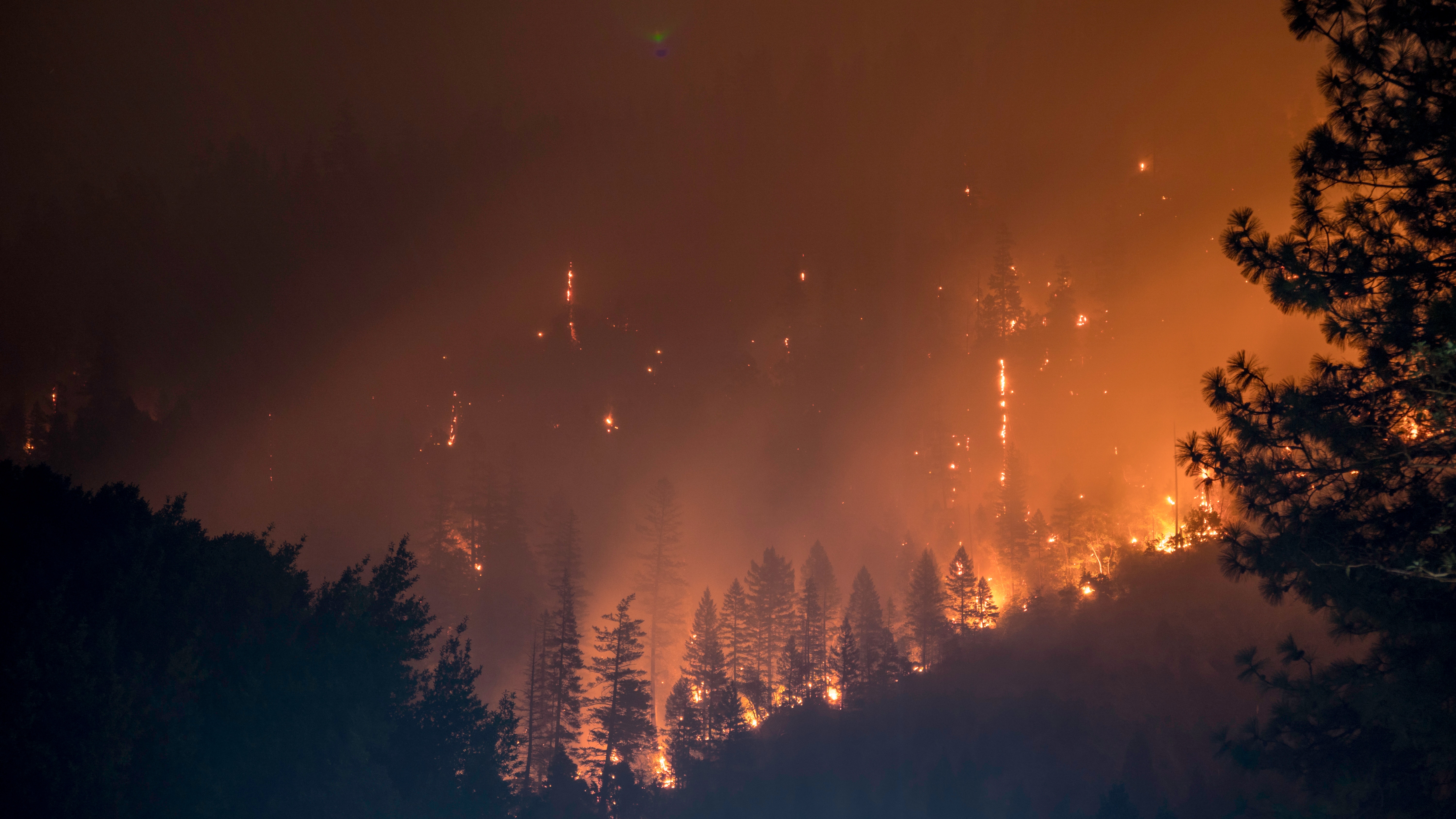
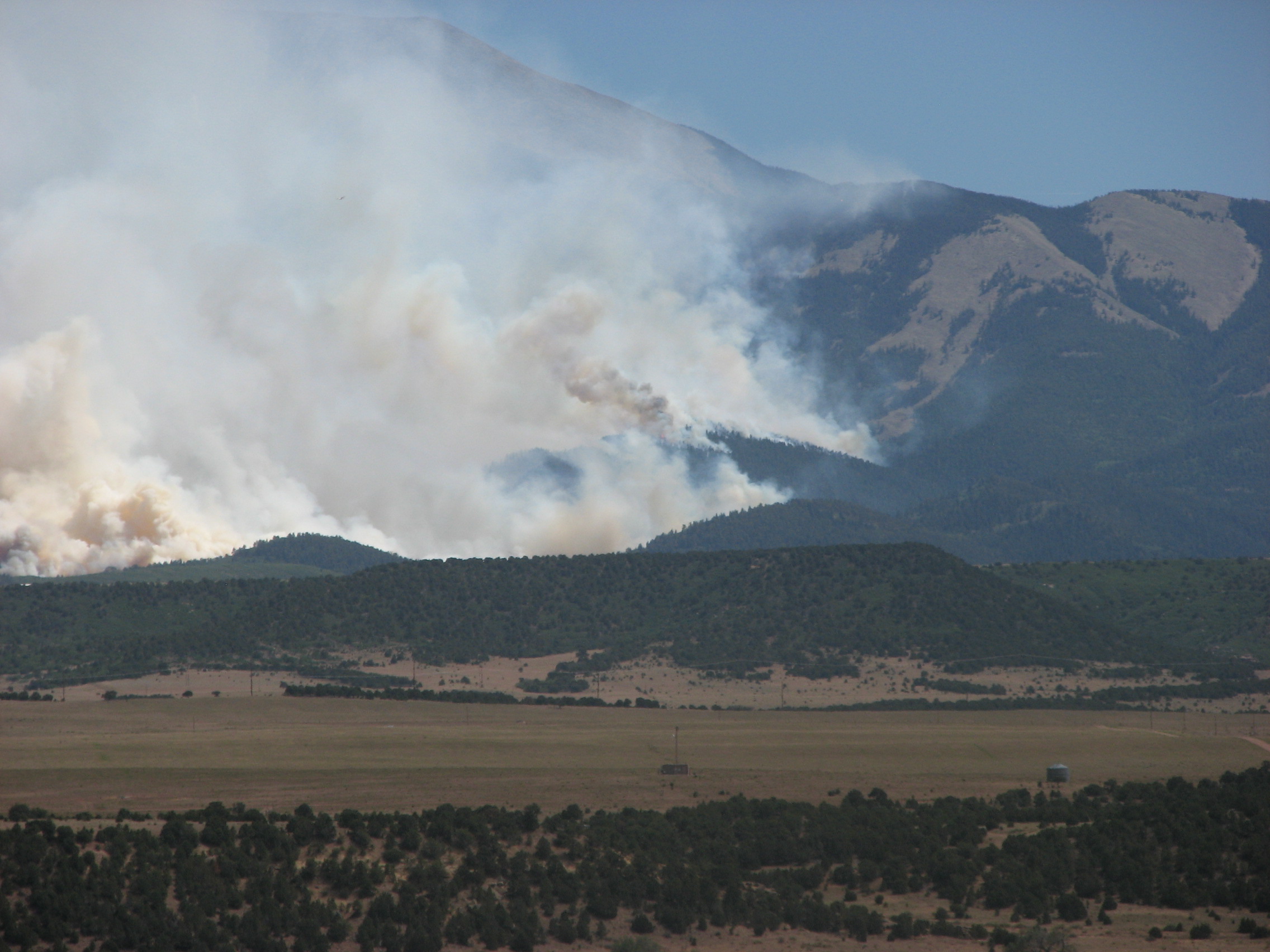
My old home place, my old community in Colorado, is burning. I’m not there. I’m glad I’m not there.
I should be there. I hate myself for not being there.
I’ve written before about blessing the ground between us. Now my mind is filled with the ground I once lived on, and all I can see are the horrifying images of flames, smoke, and the ashy remains of structures and scorched land. I spend hours every day searching the web for updates from local command and incident centers, the local papers, TV and radio and residents who post pictures and videos. I watch interviews with old friends and weep. I see video clips of my town and it’s like a ghost town, the streets empty and everything looking sere and dry because of drought. Towers of smoke loom and the air is an eerie sullen color. This should be the height of the tourist season there, the streets busy, flowers growing, and shade trees green and cool.
Photo by Matt Howard on Unsplash
Now there are tens of thousands of scorched acres between me and my memories of that place. I bless the ground between us. Given time and water, it will renew, but I think water is no longer a certainty and my lifetime will have run its course before the land recovers and the forests regrow. In a strange sort of way, the desolation of all that scorched earth echoes the desolation I feel as I watch nations, communities, and people become more divisive and competitive. It seems we’re getting more and more skilled all the time at scorching the ground between us, soaking it in blood and then sowing it with salt. We do not forgive differences. We carry hatred between peoples from one generation to the next, and many are at work in the world to increase the divisions by fanning the flames with rhetoric and disinformation, and pouring gasoline onto the fire in the form of resentment, ignorance, and fear.
We do not forgive. We are not forgiven.
Never have despair, powerlessness and fear seemed so darkly seductive to me as they do in these times. My experience is only an infinitesimal part of what’s happening now on Planet Earth, and I’m quite sure we have not yet descended as far as we’re going to. At times, it’s only by deliberately stoking my stubbornness and will and refusing to take my gaze away from where my power is that I continue to cling to faith in some kind of a cosmic balance and plan in spite of fear.
I’ve been spending a lot of time recently thinking about my family and dealing with some of the aforementioned unfinished business. I’ve written letters, both to the dead and to the living, some that have been sent and others that never will be. As I make new friends, I listen to what we talk about, watch how we get to know one another and feel the flowing give and take of compassion and support healthy female friendships create.
“I wondered if that was how forgiveness budded; not with the fanfare of epiphany, but with pain gathering its things, packing up, and slipping away unannounced in the middle of the night.” ― Khaled Hosseini, The Kite Runner
Over and over again, in all these places in my life, I stumble upon the theme forgiveness: The power of it; the terrible, helpless pain of feeling unforgiven; the weapon we make of it; the fear we will not be — cannot be — forgiven for whatever our particular stain or shame is. I have lately asked myself and others: Am I unforgivable? Can that be true? Can love be true without forgiveness? How do I continue to demonstrate love and connection in the face of obdurate unforgiveness? When others told me I was unforgivable, did they mean it, or am I still bleeding over something they have, in fact, forgiven?
It struck me this morning, as I lay in bed at 6:00 a.m. with the rattling roar of the window air conditioner in my ears and the damp sheet over my sweaty body, I’ve once again lost my way, been seduced by the false comfort of victimhood. I’ve been lost in the tangled maze of all those messy feelings and forgotten, temporarily, the point is not what anyone else does about forgiveness. The point is, and the power resides in, what I do with it. Furthermore, the biggest question of all is the one I haven’t been asking.
Can I, do I, will I forgive myself?
That’s where my power is.
East Peak Fire, Huerfano County, CO 2013
Can I forgive myself for living in this lovely green, lush, landscape where we do still have water? Can I forgive myself for reading the signs of what was to come in the long, unending drought and fires in my old place and leaving before I was forced out by climate change and fire? Can I forgive myself for the mother, daughter and sister I was and am? Can I forgive myself for loving, trusting, hoping, believing, trying, accommodating, pleasing and failing? Can I forgive myself for all the years of neglect, silencing and abuse I colluded with and perpetrated toward myself? Can I forgive myself for now recognizing and responding to my own feelings and needs first? Can I forgive myself for writing or speaking the simple truth?
Forgiveness is a slippery concept, like tolerance. I don’t think of forgiving as forgetting. I’d be foolish to forget what I’ve learned as I interact with others. I’ll cripple myself if I don’t forgive. For me, forgiveness is an integral part of loving. Forgetting is not. Nor do I equate forgiveness with trust. Trust can be lost and rebuilt, but it takes time. Trust depends on forgiveness, but forgiveness doesn’t necessarily include trust.
I’m not at all sure we can create a better world together without forgiveness. I’m quite sure we won’t forgive one another if we’re unable to forgive ourselves. As resources shrink, we’re going to be forced onto a more level playing field in terms of our standard of living. Some of us have a lot more to lose than others. The have-nots are filled with rage. The haves are filled with fear.
Photo by Evan Kirby on Unsplash
There will be a lot to learn in the years ahead. I might as well start now to work with forgiveness, to befriend it, to embrace it, and to talk about it. Forgiving and letting go are both easier for me to do externally than internally, but internal work is the one place where we all have equal power. That’s where it must begin. We’re going to need our power, and we’re going to need to manage it well in order to survive. When our houses, businesses, cars and stuff disappear in fire, storm and flood, when our arable land becomes too hot to grow food, when no water comes from the tap and when money no longer allows us to pretend it’s not all happening, then we will rediscover what true power is, and then perhaps we can begin to bless the ground between us, forgive what has come before, and find new ways to collaborate and cooperate with the living system we call Earth.
In the meantime, I think I’ll stop begging others for forgiveness and concentrate on the places where I have power. Others may think of me as unforgivable, but I needn’t agree, and no one can prevent me from forgiving another.
“The weak can never forgive. Forgiveness is the attribute of the strong.” ― Mahatma Gandhi, All Men are Brothers: Autobiographical Reflections
My road to self-forgiveness may be long. It’s hard to take back the power of forgiveness, because now I have to be responsible for granting or withholding it. In some ways, it’s easier to beg others for it. If it’s not forthcoming from others, well, it’s not my fault. The path of self-forgiveness, though, is all up to me. It will be interesting to discover what sort of shame, guilt and self-loathing lurk in my internal terrain. It will be interesting to challenge the power of what others think and navigate by my own stars and compass. It will be interesting to put out fires on my side and observe whether others are invested in keeping them smoldering or assist in quenching them so the ground between us can heal.
Here’s a poem by Wendell Berry mapping the journey of self-forgiveness. It’s a good map. I’m taking it with me.
Do Not Be Ashamed
You will be walking some night in the comfortable dark of your yard and suddenly a great light will shine round about you, and behind you will be a wall you never saw before.
It will be clear to you suddenly that you were about to escape, and that you are guilty: you misread the complex instructions, you are not a member, you lost your card or never had one. And you will know that they have been there all along, their eyes on your letters and books, their hands in your pockets, their ears wired to your bed.
Though you have done nothing shameful, they will want you to be ashamed.
They will want you to kneel and weep and say you should have been like them.
And once you say you are ashamed, reading the page they hold out to you, then such light as you have made in your history will leave you.
They will no longer need to pursue you.
You will pursue them, begging forgiveness.
They will not forgive you.
There is no power against them.
It is only candor that is aloof from them, only an inward clarity, unashamed, that they cannot reach. Be ready.
When their light has picked you out and their questions are asked, say to them: “I am not ashamed.” A sure horizon will come around you. The heron will begin his evening flight from the hilltop.
Websites store cookies to enhance functionality and personalise your experience. You can manage your preferences, but blocking some cookies may impact site performance and services.
Essential cookies enable basic functions and are necessary for the proper function of the website.
Name
Description
Duration
Cookie Preferences
This cookie is used to store the user's cookie consent preferences.
30 days
These cookies are needed for adding comments on this website.
Name
Description
Duration
comment_author
Used to track the user across multiple sessions.
Session
comment_author_email
Used to track the user across multiple sessions.
Session
comment_author_url
Used to track the user across multiple sessions.
Session
Statistics cookies collect information anonymously. This information helps us understand how visitors use our website.
Google Analytics is a powerful tool that tracks and analyzes website traffic for informed marketing decisions.
ID used to identify users for 24 hours after last activity
24 hours
_gat
Used to monitor number of Google Analytics server requests when using Google Tag Manager
1 minute
_gac_
Contains information related to marketing campaigns of the user. These are shared with Google AdWords / Google Ads when the Google Ads and Google Analytics accounts are linked together.
90 days
__utma
ID used to identify users and sessions
2 years after last activity
__utmt
Used to monitor number of Google Analytics server requests
10 minutes
__utmb
Used to distinguish new sessions and visits. This cookie is set when the GA.js javascript library is loaded and there is no existing __utmb cookie. The cookie is updated every time data is sent to the Google Analytics server.
30 minutes after last activity
__utmc
Used only with old Urchin versions of Google Analytics and not with GA.js. Was used to distinguish between new sessions and visits at the end of a session.
End of session (browser)
__utmz
Contains information about the traffic source or campaign that directed user to the website. The cookie is set when the GA.js javascript is loaded and updated when data is sent to the Google Anaytics server
6 months after last activity
__utmv
Contains custom information set by the web developer via the _setCustomVar method in Google Analytics. This cookie is updated every time new data is sent to the Google Analytics server.
2 years after last activity
__utmx
Used to determine whether a user is included in an A / B or Multivariate test.
18 months
_ga
ID used to identify users
2 years
_gali
Used by Google Analytics to determine which links on a page are being clicked