by Jenny Rose | May 28, 2022 | A Flourishing Woman, The Journey
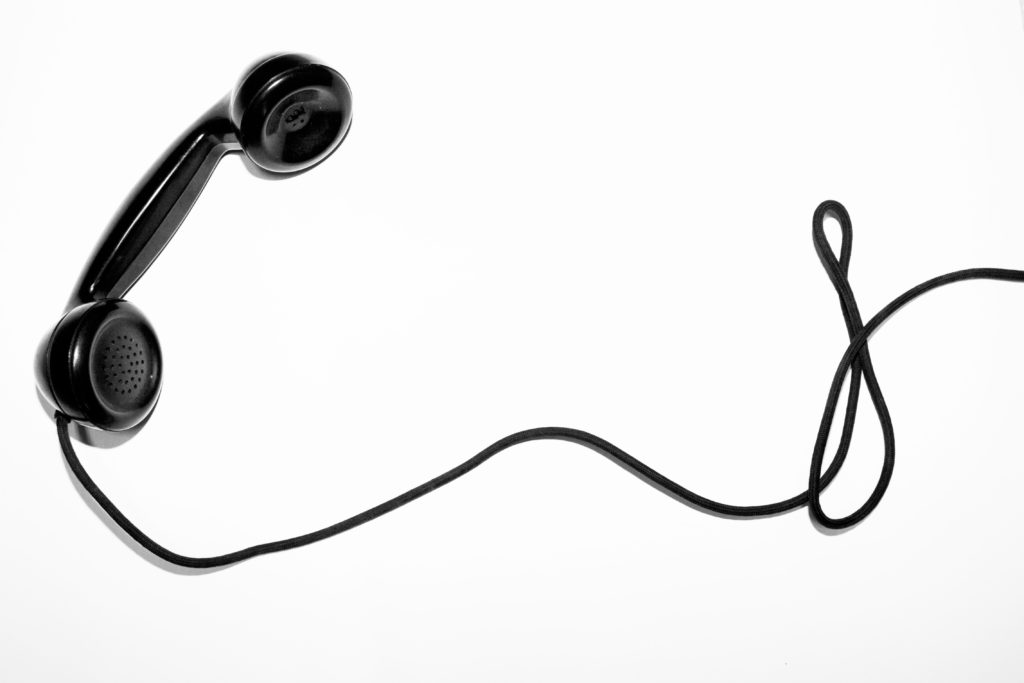
After years of hesitation, I have given up my landline and transitioned to my cell phone.
Many who read this will shake their heads in amazement at my tardiness, but I know others will understand.
Photo by Quino Al on Unsplash
When I think back about why I hesitated for so long, the simple root is I’ve always had a landline.
I’ve always had a landline, and it’s served me just fine. Why fix something that’s not broken? Why do I need some kind of new high-tech toy? (Okay, I know they’re not new new. But I grew up with rotary phones with curly cords, so in my personal context they’re pretty new.)
Another big reason was my internal protest against habits and technology which break connection. The TV is my most hated object under this heading, but when I watch people in the world bent over their screens, I feel angry, sad, and scared. Why can’t we make human, face-to-face, real connections anymore? Why can’t we actually watch our child while they’re in a swim lesson, or at a gymnastics meet, or at their horseback riding lesson? Why can’t we talk to each other without constantly being interrupted and distracted by our stupid phones? Will the world stop turning if we let the call go to voicemail, or let the text wait until we’re not engaged with the human being in front of us? Is it necessary to take the cell phone everywhere we go and never turn it off? I don’t want to be that available. Living a life, here!
Refusing to participate in cell phone usage was my resistance. They can, but I’ll never be like that! Right. And my children would never say or do that. (They did.) And I would never kill an animal for food. And I would never use a gun. Etc., etc. We all want to stand on high moral ground. Good luck with that.
It’s not as though refusing to buy and learn to use a cell phone made any difference at all to the perils of social media and screen addiction or fixed our social and cultural dynamics around connection and communication.
We just moved house, and I realized I was paying quite a bit for a landline I rarely used. My friends all use cell phones. My kids use cell phones. My workplace uses cell phones, including an app for a daily COVID check. I wondered why I was paying for a landline and a cell phone which I rarely used.
I did some research. I found landlines are on the way out, probably in the next 10 years. We were moving to a small city with good cell phone infrastructure and excellent access to WIFI and Internet.
I talked to my friends, who were supportive and kindly did not laugh at my hesitation, at least not in front of me. None of them have landlines.
As I cancelled and transitioned our utilities during the move, I let go of the landline.
Everyone knows the chaos of moving. I was uncomfortable with the cell phone at first. It was a learning curve. But boy, was it a great tool! My partner and I could stay in touch about timing, U-Haul rentals, where that important box was, scheduling the electrician, dumpster, and plumber, and who was going to have the key to the old house and the new house at any particular time. Quickly texting back and forth was a huge help. It didn’t take long to get comfortable with the device. I had to. It was all I had.
Somewhere along the learning curve I remembered the cell phone is my tool, not the other way around. If I don’t want to take it everywhere I go, I don’t have to. If I want to turn it off, I can. If I want to ignore a call or text, that’s my choice. It can’t disempower me unless I allow it to do so. I’m perfectly free to continue to prioritize my relationships and myself over answering or playing with my phone.
The whole thing has made me think about change in general. I’ll never be a person who immediately welcomes the latest gadget and technology. I’m a traditionalist, and I’m nearing 60. I want to live a simple life. I don’t want to buy or own a lot of objects. I’ll always enjoy a good book more than any kind of technology. I’ll always prefer a face-to-face interaction with my loved ones to a text or phone call.
On the other hand, new technology can be amazingly useful. I’ve discarded most of my music CDs at this point, because almost everything I want to listen to is on Spotify. Less stuff. Less storage. Less to move. All I need is – you guessed it! – my cell phone!
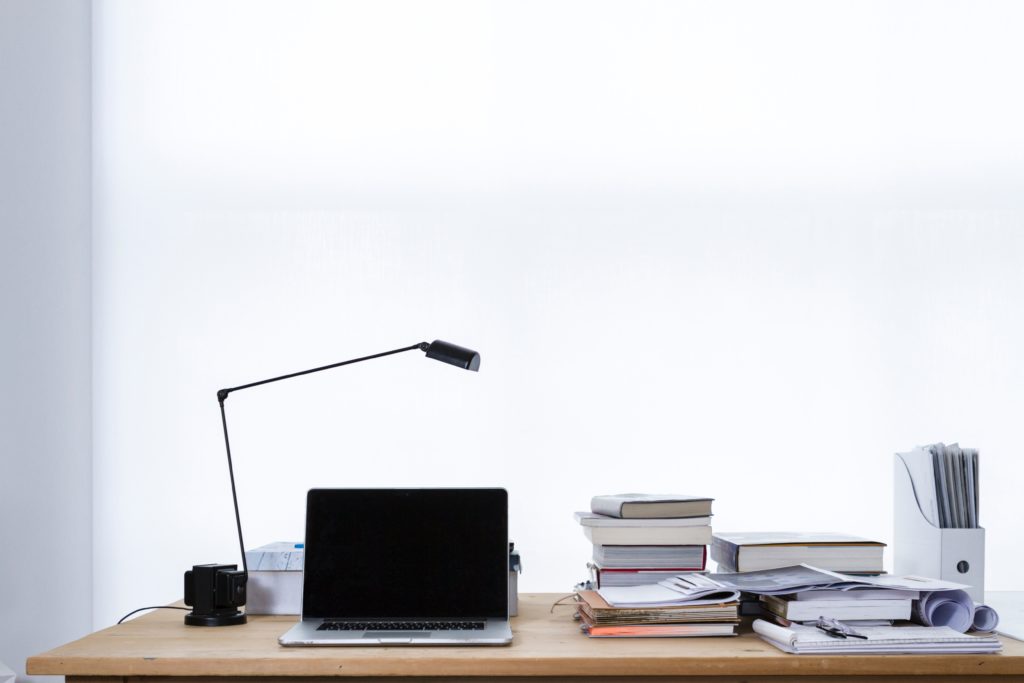
Not all change is bad. Not all change is good. I deliberated for years about getting an iPod. I never did, and then Apple discontinued them and I was glad I didn’t have one. I clung to a large computer with a tower, keyboard, and mouse (with a cord) for a long time. Then my brother talked me into getting a laptop, and it’s all I want to use now. It’s so much easier and more streamlined in every way.
Photo by freddie marriage on Unsplash
Change is always with us. The pandemic has been a notable catalyst for change in the last two or three years. Some of the changes it imposed and continues to impose were unwelcome, but we notice at work it forced us to create some more effective procedures we’ll probably retain even after the current restrictions are over.
Sometimes big problems require change, and often we’re resistant. However, on the other side of our discomfort and resistance we might find a better, safer, more equitable world. Those who don’t want a better, safer, more equitable world exploit our discomfort around change by making dramatic predictions and distorting and polarizing our choices, playing on our fear, playing on our entitlement. We’ve seen a lot of that with the pandemic, and now we’re seeing it again after the latest tragic school shooting in Texas. Red flag laws and sensible gun control do not mean everyone (including teachers) has a gun, and they don’t mean some malign alien superlizard overlord running the government will take away everyone’s guns, either. Get a grip, people!
Most change takes time. For a couple of years I had both a cell phone and a landline. Things happened, I reevaluated my phones, and I was ready to make a complete transition, so I did. Change is neither the enemy nor our One True Love. Maybe it’s just a new friend who could make our world a bit better if we allow it to. And who doesn’t want to see a better world?

Photo by Hian Oliveira on Unsplash
by Jenny Rose | May 21, 2022 | A Flourishing Woman, The Journey
As I unpack and gradually shape new routines after moving earlier in the month, I keep having a strange thought about this old colonial house we’ve bought.
This house is a grownup.
What does that mean? I ask myself.
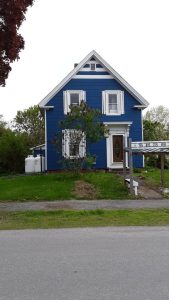
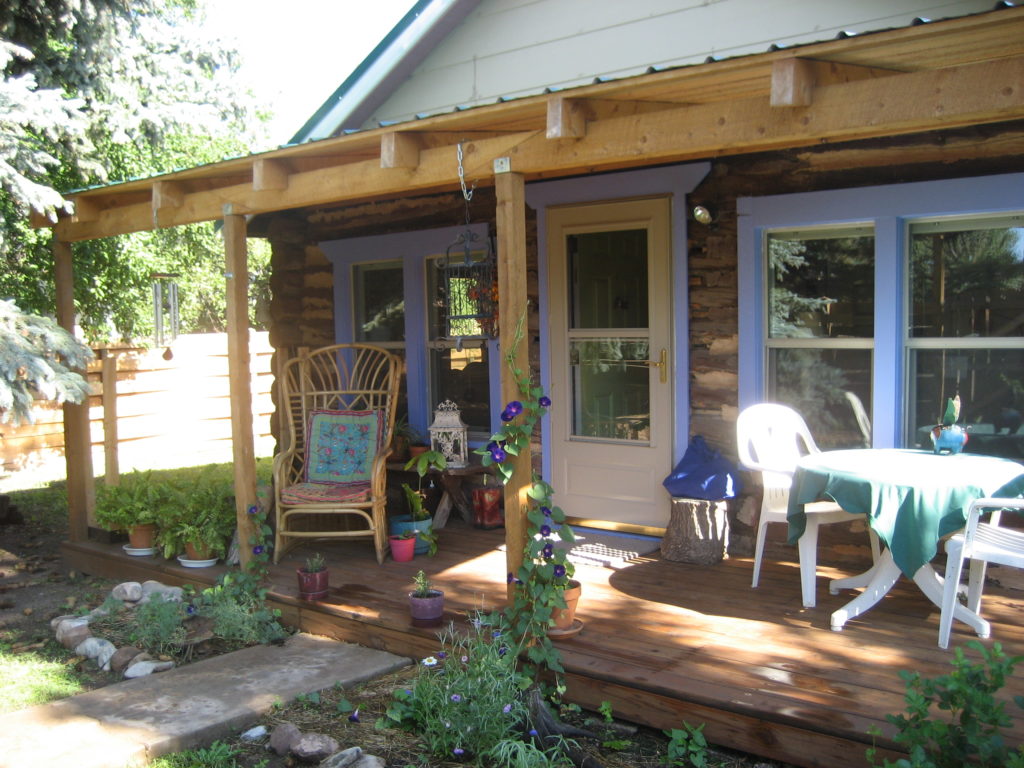
New Home, May 2022
Traditionally, colonials were built with high ceilings, wood floors, tall windows, a single staircase to the second floor just inside the front door, and a simple layout with pleasingly proportioned rooms. Colonial style includes iron, pewter, brass and copper; handmade textured fabrics; the rich, muted colors of milk paints; and dark accents and trim. Brick and exposed wood beams were common. We have a tin ceiling in the living room and kitchen.
When I sit in the living room, as I am now on a cloudy morning, I’m struck by the clean, classic lines, the elegant but unfussy trim, the cool morning light coming in the windows. The house, in spite of its condition, has dignity. It’s stately. It knows what it is. It’s not fresh and perfect and new, but it endures. The bones are clear and strong beneath some unfortunate modern décor and updates, but the house has not allowed the surface disturbances to change its essential character.
As I’ve played with this perception that the house is a grownup, I’ve thought about other places I’ve lived in the last 15 years.

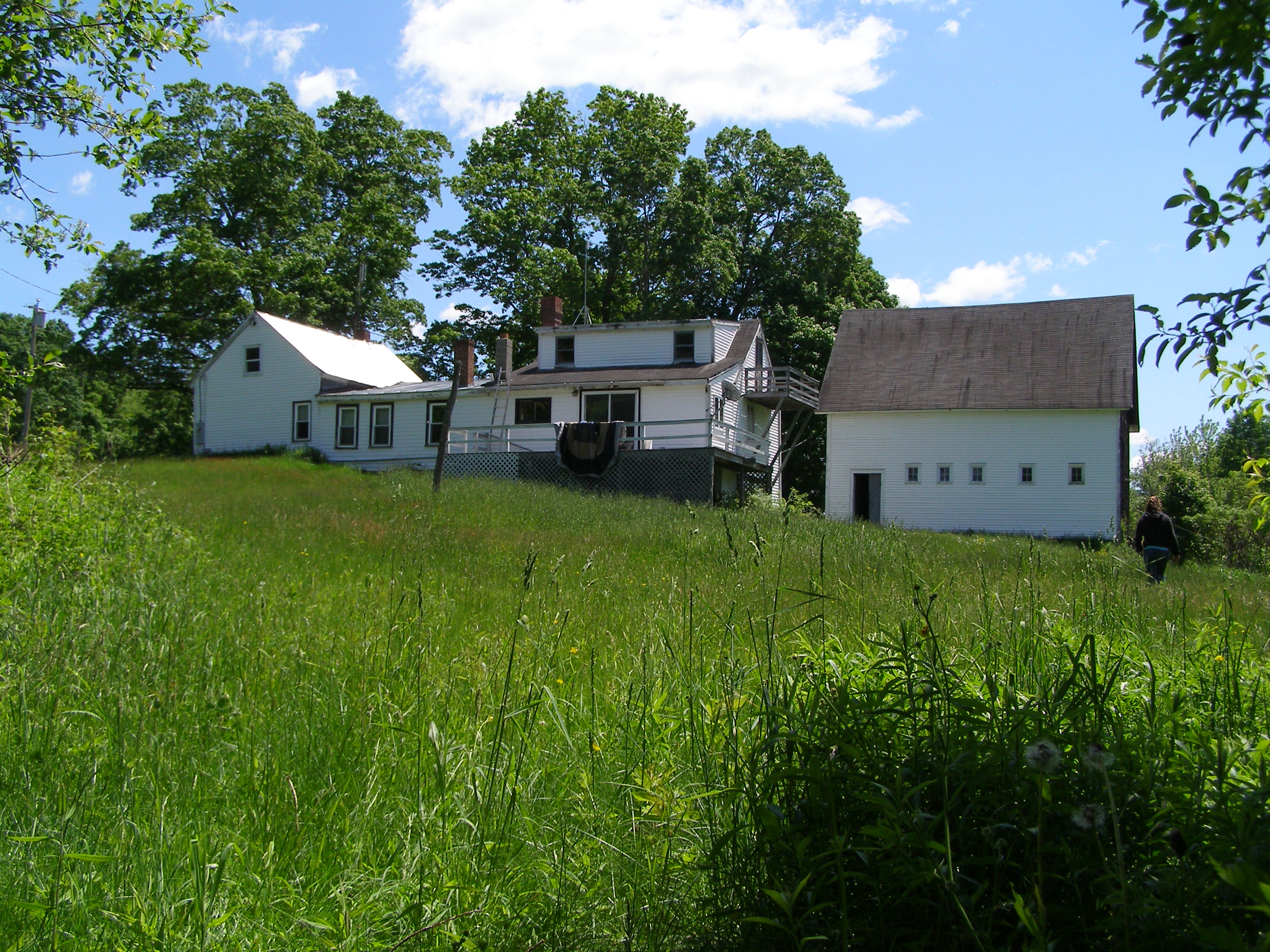
Maine Farmhouse and Barn
The old farmhouse we just moved out of had dementia. Aged, deteriorating, badly planned in terms of layout, inconvenient, disorganized, and unkempt, it rambled and wandered, sagged and groaned, leaked and creaked. It was unfocused. It didn’t make sense. There were bats in the belfry and screws loose all over the place. That house needs experienced 24/7 caregivers, which is what it has now in its new owners.
The log cabin I lived in before I came to Maine was an immature house, a teenaged house. It wasn’t nearly as old as this colonial, which is 100 years younger than the farmhouse, but it wasn’t new, either. It was the first home I ever made for just myself, though I was well into my 40s when I bought it and remodeled it. The woman I was then was still, in many ways, immature, and the choices I made in using the space reflected my immaturity.
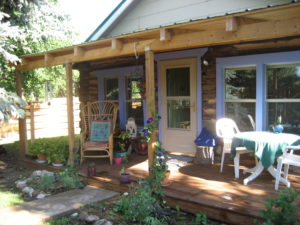
It’s popularly said we become who we hang out with. Are we also influenced by the spaces we spend our time in? Do our spaces reflect us, or do we reflect our spaces, or both, a kind of reciprocal reflection? We’ve just barely moved into this house, but from the first night I was here I was aware of the dignity of the place, and the contrast to the feel of my cabin in Colorado and the farmhouse.
Some people go through life like a piece of heavy equipment, immediately imposing themselves on their environment without ever noticing the feel and character of the place first. But history matters to me. I like to get to know places and spaces without imposing myself on them immediately. These old houses have sheltered many lives over decades, and have seen lots of changes.
Possessions and habits I used and loved in both my Colorado cabin and the farmhouse are simply not at home here. I don’t need them. I don’t even want them. Somewhere in the 15 miles between the farmhouse and this new address, I outgrew them. Strange. In those empty spaces, the new house suggests different habits and fewer possessions. I thought I would gradually rebuild my old routines, but in fact I’m shaping new ones, and the house itself influences the shaping in many ways. It suggests ways to live within its walls that align with its inherent simplicity, grace and dignity.
Our relationships to our places are complicated. Some people never leave their home place. Others of us transplant into entirely new soil under new skies. The adjustment is uncomfortable, but we discover things about ourselves and our possessions. Packing every single item we own, physically moving it, and unpacking and finding a new place for it is an opportunity to reevaluate and update our priorities and values.
I’ve always been a late bloomer. I finally seem to have grown up, and as this house and I get to know one another we’re scraping old layers of debris, trash, beliefs and habits off one another and helping each other stand tall and proud and peaceful, experienced and wise adults in an uncertain world.
And an old white lilac is blooming by the porch door.
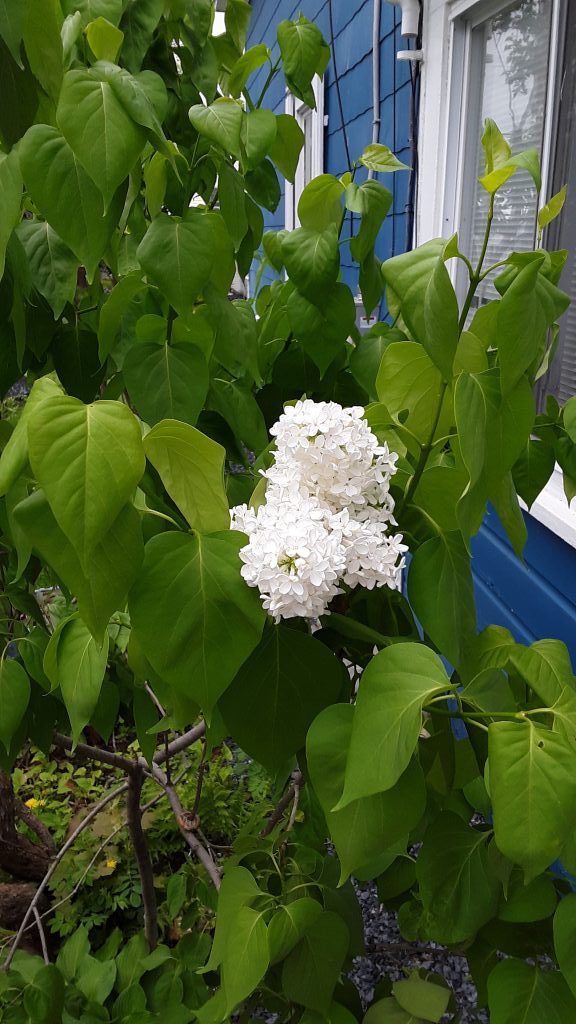
Lilac, sun porch, May 2022
by Jenny Rose | May 14, 2022 | A Flourishing Woman, The Journey
We have finally moved. It was a long time coming. This has been one of the most significant transitions of my life, and it was not easy.

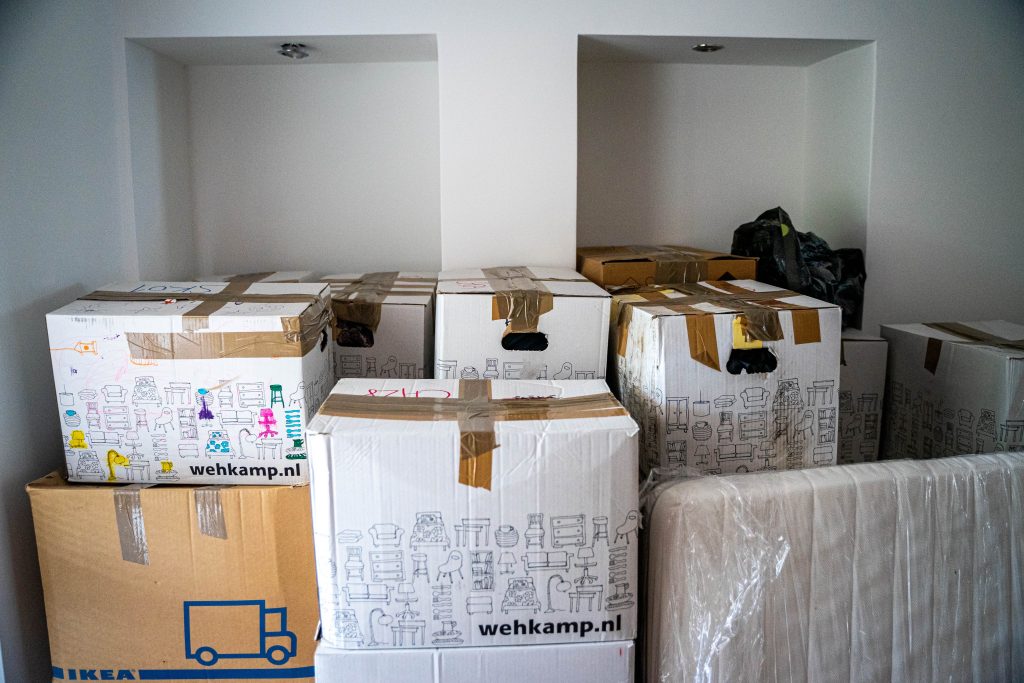
Photo by Michal Balog on Unsplash
Regular readers know the ups and downs, so I won’t reiterate the journey. What’s important is I’ve come out on the other side, and I’m sitting typing this at my new desk in front of my new window with a new view. I’ve been cleaning, unpacking, and moving things around all morning, and I didn’t want to stop, but I made myself. It’s been ten days of nonstop work.
Reducing chaos and disorder is one of my favorite activities, but it’s exhausting. My partner and I are bruised, stiff, and sore. My hands are chapped and my fingernails broken. Yesterday afternoon I finally got our teeny tiny shower clean enough to use without gagging; I’ve been showering at the pool facility where I work.
On Monday I went back to my regular work schedule after taking a couple of days off, and I walked to work! Amazing. In fact, I walked to the lower parking lot where I always park and laughed at myself. I don’t need to go there anymore. I can just walk straight to the building door.
Our new place, an old colonial, is sadly dilapidated and was very dirty, so I moved in the day we closed last week and got to work. My whole area is floored with old “punkin” pine floors, which consist of pine planks aged to a warm brown-orange with wide cracks between the boards. The floor, probably original to the house, is terribly battered and stained. It could use a sanding and refurbishing, but we had no time for that and it will have to wait until sometime in the future.
The house is heated with baseboard hot water and the old radiators are bent, broken, filthy and rusted. I’ve spent hours and hours on my hands and knees with a long-handled flat head screwdriver cleaning out the cracks in the floor and pulling debris out from under the radiators.
I excavated needles, screws, nails, other miscellaneous hardware, children’s socks, hair elastics, bobby pins, hair clips, at least $5 dollars in coins (mostly pennies), broken glass, food crumbs, dry cat food, rubber bands, paper clips, all kinds of beads and plastic toys, dental picks, a kitchen knife, small toys, pencils, pens, crayons, markers, lip balm, lint, pet hair, people hair, costume jewelry, toothpicks, lollipop sticks, candy wrappers, pieces of plastic, pieces of paper, popcorn kernels, thumbtacks, and one green jellybean.
I swept and vacuumed, swept and vacuumed, swept and vacuumed, every time finding new layers of dirt and debris. Then I damp mopped with a couple of drops of dish soap several times. Finally, I used a special wood floor cleaner, applied with a damp mop.
The plumbing and wiring need to be updated. The yard is full of trash. None of the doors shut well and all the knobs are loose. Most of the exterior doors don’t lock. Many of the windows are painted shut. At least half the blinds are broken. More than half of the electrical outlets don’t work.
And yet. This is a wonderful old house with graceful proportions, high ceilings, some of them tin. The windows are tall and generous and the sun floods in from both east and west. We’re on a corner lot and I can hardly wait to explore the garden. A magnolia tree in front is in flower. Spring bulbs are blooming.
In spite of the house’s neglected and outdated state, the structure is sound. The roof doesn’t leak. The foundation is not cracked. I think our heating and cooling costs will decrease, even with skyrocketing prices. My partner and I each have a floor to live on, so we’re not in each other’s hair, which works better for us. We’re in a small city, so groceries, appointments, our car mechanic, the laundromat, and emergency services are all right here. Have I mentioned I can walk to work?
It’s a new chapter, and I’m shaping a new kind of life. As I unpack and sort through my belongings, some of which I haven’t seen or used since I moved to Maine seven years ago, I’m asking myself who I am now, who I want to become, and what I want to do with this part of my life. Objects and habits precious to me in the house we just sold no longer seem so meaningful. Everything is different.

I am different.
One of my goals in moving was to build for myself a simpler, more sustainable life to make room for what matters most to me. I’m all too aware how frequently the people and activities most meaningful to us are squeezed out by carelessness, time and energy destroying habits, being over busy, and having too much stuff.
What matters most to me are my relationships, including being owned by cats, my work, and my writing. I’ve prioritized creating an office space with ample room where I can work, dream, and research. My oak desk sits in front of a tall east-facing window, outside of which I will plant a lovely garden and hang a couple of bird feeders. I have my file cabinets, my laptop, and, most importantly, my books.
Developing a routine in a new place is difficult, and I’m compulsive about getting everything organized and put away, but it’s the weekend. In fact, it’s Saturday morning as I write this, and I’m going to publish today, no matter what. I have promised myself this. So I pulled myself away from the work of settling in to finish this post. It’s good to be writing again. I didn’t take the first hours of my day to do it, as I always did in our old house, but it is still morning, so I give myself points for that!
After two weeks of chaos and confusion, it’s good to be back to the page. Perhaps next week I’ll have more brain as well as a newly redeveloped writing practice. I’m sure I brought my brain. It’s probably carefully packed in a box somewhere …

by Jenny Rose | Apr 23, 2022 | Emotional Intelligence, Feelings
All my life I’ve been told I overreact and I’m too dramatic, two labels which automatically invalidate my experience, feelings, and any attempt I make to communicate honestly.
Being told we’re overreacting is a sure way to shut us down, especially when we hear it regularly. It makes us question our own experience. It breaks connection and trust. It isolates us in shame.
It’s an insidious form of gaslighting.

Photo by Jonathan Crews on Unsplash
When I went through emotional intelligence coaching, I understood being told I’m dramatic is code for, “Your feelings make me uncomfortable.” It’s not a message about me at all, it’s a message about the person with whom I’m interacting.
As a child, I believed I exaggerated and I was too dramatic. I pushed my feelings down and hid them. I didn’t respond to my own distress. I didn’t ask for help. I trusted no one with my real emotions. I taught myself to become stoic and uncomplaining, to focus on the positive, to carry on no matter what.
My feelings became my enemies. I was deeply ashamed of them. They were bad and wrong and they hurt other people.
Now, decades later, I think a lot about feelings as I struggle with my re-triggered autoimmune disease. I know my current physical pain mirrors my emotional pain, which consists of passionate, intense feelings. Learning to manage those feelings more effectively is a work in progress. I do well with one at a time, but right now I’m overwhelmed with emotion. Emotional overwhelm is the trigger for physical pain. I keep right on keeping on through difficult feelings, but once the anguish is translated into back spasm, I can no longer hide or ignore my pain. Everyone else can see. Everyone else knows. I can’t hide my physical disability.
My body betrays me.
Horrors. I cringe, waiting to be told I’m too dramatic and I overreact. My feelings are wrong. They make others uncomfortable. They’re shameful, immature, crazy. I have nothing to complain about. Others have much harder lives than I do. It’s my business to support, not ask for support.
But my body tells the truth. Physically, everything hurts.
The truth beneath that truth is my heart hurts. I’m scared, I’m angry, I feel alone, I feel supported and horribly vulnerable, I’m excited about new beginnings, I feel guilty and ashamed about struggling, I feel relieved, and I don’t know how to bear my grief, both current and past. But I’m still too distant from my feeling experience to encompass all that, let alone manage it effectively.
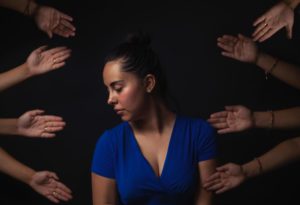
Photo by Cristian Newman on Unsplash
So, back pain.
In the middle of this experience, I read an article by Courtney Carver from Be More With Less titled “5 Thoughtful Ways to Help You Underreact.” As you can imagine, it caught my eye.
Every day I think about this list of five strategies, and the difference between overreaction and feelings.
Overreaction is defined as a more emotional response than is warranted. Who decides what kind of an emotional response is warranted? Some people feel things very strongly and vividly; others do not. Certain events and situations trigger deep emotions for all of us. Do any of us have a right to judge another person as overreacting, especially when we can’t possibly know the entirety of their private emotional experience? Certainly, some people appear to overreact frequently, but do we stop to ask ourselves, or them, for more information? What is going on? What is behind the perceived overreaction? What need is crying out to be met? What are the feelings involved in the overreaction?
Feelings are value-neutral raw data we’re all biologically wired to experience. They’re simple. Mad. Sad. Glad. Scared. Ashamed.
We’re largely not in control of the complicated neurological and chemical experience of our feelings. We are able to control how we think about, express, and act out our feelings.
Thoughts and feelings are not the same thing.
I’m familiar with some of the strategies Carver writes about in her piece, but I’ve never seen such a concise and useful list of ways to manage habits of thought leading to “overreaction.”
It’s not our business to be concerned with onlookers who attempt to shut us down because of their own discomfort with feelings. Our business is learning how to refrain from shutting ourselves down or allowing anyone else to do so. Our business is taking care we don’t hurt ourselves as we feel our feelings.
Here’s Carver’s list:
- Do what you can. Let the rest go.
- Determine if any action or reaction is useful or effective in the first place. Does this deserve my time and energy?
- Don’t take anything personally.
- Distinguish between inside and outside. We can’t control what happens outside us. Our power lies within us.
- Closely related to the last strategy, if we feel we’re overreacting, what else is going on? Are we sick, hurt, dealing with unfinished feelings or unhealed wounds, struggling with addiction, lonely, tired, hungry? We need to focus on supporting ourselves.
Some people don’t want to deal with feelings, their own or anyone else’s. I understand. Such people will always struggle with someone like me, who feels deeply and expresses vividly. To them, I will always look as though I’m overreacting.
What overreacting means to me, though, is the intensity of my feelings is negatively affecting my health, and I need to find ways to support myself. I don’t want to feel less. I want to feel better.

Photo by Ben White on Unsplash
by Jenny Rose | Apr 16, 2022 | A Flourishing Woman, The Journey
In the online Red Cross Lifeguard Course, there’s a segment titled “When Things Don’t Go As Planned.” Every time I come across it, I smile.

Photo by NeONBRAND on Unsplash
Yes, indeedy. Because things often don’t go as planned.
Learning, in a real or virtual classroom, from text or videos or slideshows or YouTube, is necessarily simplified. The situations are controlled. Even the blood looks like cherry-flavored candy.
As a blogger, I ruminate, explore, define, proceed logically, and research. I’ve touched on so many different topics over the years here on Harvesting Stones. I’ve examined needs and boundaries, reciprocity and connection, contribution and authenticity.
However, this kind of intellectual exercise, learning at a remove, is not where the real mastery is.
The mastery comes when we put it all into action in real life. And real life is unbelievably messy. Real life is a loose cannon on a rolling deck. Real life does not go as planned.
We are occasionally plunged into chaos, into complicated experiences involving a lot of feelings and requiring all our skills. Our predictable routines and schedules turn inside out. We are not able to care for ourselves or anybody else as usual. We become exhausted. Our personal demons crawl out of our subconscious attics and cellars and play with us. Our physical weaknesses take advantage of our stress. We lose track of our power. We lose track of ourselves.

Photo by Quino Al on Unsplash
I would avoid such times if I could. I believe most of us would. Few people enjoy living in a maelstrom. The thing is, the maelstrom holds gifts, insights and growth we would never realize if we always lived serene, well-controlled lives.
I’m writing this on Wednesday morning. A week ago today, less than 24 hours before closing on the house we’re selling and the house we’re buying, closing was cancelled. Well, “extended.” I’m not sure there’s a difference, but my hope is pretty frayed right now, so I’m inclined to be pessimistic.
I thought I had been living in chaos before that abrupt last-minute change of plans, but those far-off days seem like a cake walk compared to what the last seven days have been like for me.
When our lives fall apart in painful ways, part of the stress of it is the rest of the world goes right on without giving us space and time to process, remember our resilience, and get back on our feet. I still needed to figure out how to get the car in to get the studded snows changed. I still have bills to pay. I still have a job. I still need to search the stores for cat food. I still have family birthdays to remember. The bed still needs to be made, the dishes washed, the laundry done. I want to remain consistent in my writing.
Autoimmune disease is highly opportunistic. I have not had this amount of stress since I moved to Maine seven years ago, and within a few hours of the cancelled closings my back went into spasm, which means I need all the love, rest, and care I can give myself right now, in the middle of the shit show. My body would feel better if we could close and get this move over with. And I can’t possibly move with this level of pain.
Meanwhile, the world turns. I feel guilty about my struggle when I know people in Ukraine are losing their homes, lives, loved ones, and perhaps their country. I tell myself I’m being dramatic, I’m whining, I never deserved for things to work out in the first place, etc., etc.
I told you about the personal demons crawling out, right?
So what do we do during times like these? How do we get through them? How do I turn the concepts of letting go, courage, detachment from outcomes, and emotional intelligence into tools to help myself? It’s all so clear, logical, and neat on the page/screen. I believe every word I write. It’s all organized and categorized.
When things don’t go as planned, nothing is neat, organized, or categorized. We can’t think well. Our feelings sweep us from fear to fury to despair and back again.
In my old dance group, we used to say when you feel overwhelmed, dance small.
Dance. Small.
Dancing small is focusing on breathing in and out. It’s making small movements. It’s wrapping your arms around yourself, facing a wall or a corner, closing your eyes, and concentrating on the floor under your feet. It’s deliberately sinking into yourself and letting everything and everyone else go as best you can. It might be the healing release of tears.

Photo by Leon Liu on Unsplash
This strategy doesn’t make the chaos go away, but it does give us a small resting place within the chaos. It allows us to find and hold onto ourselves. It gives us a tiny bit of power. It allows a little space for rational thought, for us to remind ourselves of what’s true:
- Nothing stays the same; all things pass
- Things invariably work out somehow, some way
- There is always much to be grateful for
- We are allowed to have feelings about our experience, and they’re allowed to be messy
- We always have some choice
- None of it is personal
This week, though in many ways painful and difficult, has also provided me with valuable practical experience in using some of my newer skills. It’s given me a chance to stay in my own power, always a worthy practice. I’ve had an epiphany about a longstanding destructive pattern in my relationships which has emotionally freed me in significant ways. Paradoxically, the current chaos has brought me clarity.
I’ve also been touched and humbled by the support I’ve received from friends and other members of my community. I am not alone.
Most of all, it’s given me a chance to deal with my feelings. It occurs to me the word “stress” is misleading. I don’t need to deal with my stress. My feelings need attention. They need to be named, welcomed, fully experienced, and released, no matter if they’re in my head, heart, or back. Managing my feelings will take care of my stress and my physical discomfort.
By the time you read this, things will have changed. Perhaps we’ll have a new closing date. Perhaps I’ll have decided to make a different plan. Perhaps we’ll still be in limbo, but it will be a different day in limbo. Today, we’ve taken my car in to get the tires changed, so that’s something taken care of. At some point, the muscles in my back will unclench and I’ll move freely again and be able to resume exercise.
Meanwhile, frogs boom, chuckle, and peep in the pond. The birds are busy and the spring dawn chorus gladdens each morning. The phoebe has returned and hunts from the barn roof. Rain falls and the sun shines. The mud is gradually drying up. I will feed the cats, play with them, clean their boxes. I’ll go to work, teach swim lessons, wipe down the locker rooms, read the pool chemicals, guard lives, answer the phone. I’ll feed myself, drink cups of tea, rest, write, read, and sleep. Time will pass. Days will pass.
It will all pass, the things that go as planned, and the things that don’t.
Photo by henry fournier on Unsplash