I recently read a blog post from one of the minimalist blogs I follow about unplugging from technology for one day a week. Actually, it wasn’t that recent. It was, in fact, in August. I left the post in my Inbox and I’ve been thinking about it.
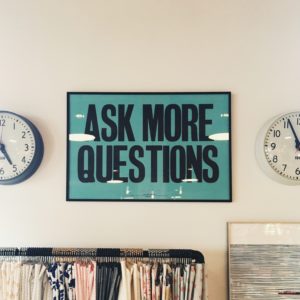
Photo by Freddie Marriage on Unsplash
All right, procrastinating about it.
You see, although it seemed like an attractive idea, I couldn’t unplug in August because I had a family situation that necessitated watching my e-mail closely.
When that was over, I thought about it again, but then I was watching … what? I can’t remember. A possible hurricane down south somewhere? I think so. Anyway, I really wanted to watch it. It was important.
I observed myself both want to unplug for a day and resist unplugging for a day. It reminded me irresistibly of giving up honey in my tea.
When I came to Maine, I changed my lifelong, mostly plant-based, low fat, low sugar (by this I meant, you know, white sugar) diet to eating keto. More about that journey here, here, here and here. I had, at that point, started every day of my adult life with a large cup of green tea sweetened with a spoonful of honey. It was an important daily ritual. I looked forward to it, counted on it, needed it. On the road, camping, or at home, I had to have my green tea and honey in the morning. I could do without sleep, hot and cold running water and food, but my morning tea was nonnegotiable.
Photo by Jonathan Pielmayer on Unsplash
Honey, that delicious golden elixir I used to buy by the gallon in spite of the cost, is a carbohydrate. Our bodies do not distinguish between plain old white sugar, honey, agave or any other kind of “natural” or “organic” sugar. For me, this means inflammation, autoimmune disease and chronic pain.
I was determined to regain my health. The daily dose of honey had to go.
I have an extremely hostile relationship with addiction, as my family of origin is affected by it and I know I’m genetically and behaviorally predisposed. I’ve stayed far, far away from any substance or behavior I thought might potentially become addictive for me. At least, that’s been my intention.
However, life is going on while we’re deciding who we will not be and what we will not do, and although I was aware of how much I depended on my morning cup of tea, green tea is good for you, right? No harm in that habit.
Except I realized, after day two or three of tea without honey, the tea was pleasure. The honey was addiction. I needed it. I craved it. I was miserable and angry and deprived without it. My body needed that first hit of carbohydrate in the morning, needed it desperately because I was basically chronically malnourished and addicted to carbs.
I was completely chagrined. Life is very humbling sometimes. Have you noticed?
Photo by Andrea Tummons on Unsplash
Me being me, all I needed was to feel how much I depended on the honey to become determined to give it up. I was building a new life, including eating a massive breakfast of animal fat, meat and eggs every morning immediately upon rising. I went right on drinking tea, but I stopped using honey. I stopped needing honey because I’d finally figured out how to feed myself appropriately. In time, the craving went away, along with the majority of carbs in my diet and chronic pain and inflammation.
Make no mistake, though. I whined and complained and bitched every step of the way. For a time, I considered giving up tea altogether. I would never enjoy it as much again. The honey enhanced the flavor, and it just wasn’t the same without it. What was the point? Getting out of bed was no fun. The morning was no fun. Never again would I have a big cup of Earl Grey tea with lemon and honey and spend an hour sipping and reading a good book on a snowy afternoon, etc., etc., etc. It was pathetic and maddening. I hated myself and everyone else, and I resented my physical need to delete carbs from my diet.
I couldn’t help noticing how similarly I felt about unplugging from technology for even one day, in spite of priding myself on not being captive to it. I have a cell phone I hardly ever use. It’s an effort to turn it on every three days or so and check for messages. I don’t use social media. Left to my own devices, I’d never watch TV. The only tech I really use is my laptop, but I use that for many hours every day. I’d love to be able to honestly say all that use is writing, but it’s just not so.
I check the headlines on MSN, even though I know it’s all click bait and I rarely believe much of what I read in the “news.” Then I check the weather forecast. I check my e-mail accounts. I read the Google news headlines, not as sexy and sensational as MSN and slightly more reliable. Maybe. I bank online. I run the blog online. I do research. I check on local movies. I play solitaire.
I play a lot of solitaire.
I loved the sound of unplugging from all this for a day. It was such a good idea I wondered why I hadn’t tried it before. As soon as I looked at my calendar with the intention of planning an unplugged day, I began to recognize resistance.
A lot of resistance.
I didn’t want to admit it. I use less tech than anyone I know. I’m smug about staying away from GPS, social media and the need to have a cell phone surgically attached to my person. The truth is, however, that I’m just as caught in the addictive net of tech as anyone else.
Shit.
My choice about all this was to leave the post about unplugging in my mailbox, where I’d see it several times a day (because I check my e-mail countless times a day), and sit with my chagrin, my resistance and my recognition of my own compulsion to remain plugged in. I’ve been doing that for weeks now, alternating between resentment and amusement.
For some reason, late Saturday I decided I was going to take the bull by the horns and stay off the Internet on Sunday. Not off the word processor, but off the Internet. No after-breakfast check on the headlines, etc. while I drank my morning green tea (unsweetened). No first solitaire game, during which I thought about where to start working. No e-mail.
I needed to know I could do it, no matter how uncomfortable it was.
Minimalism is an amazing practice. It starts externally with objects, but once I began to look at my life in terms of what really matters and all the stuff that obscures and distracts from that, the internal work took over. My small experiment with unplugging from the Internet was a perfect illustration of the dynamic of unconscious clutter.
Sunday was the most spacious day I’ve had in months. I looked at the clock twenty times in disbelief. The day seemed to have about four extra hours in it. It was a beautiful autumn day, a day off from work, a day in which I didn’t have to go anywhere or do anything. I got out the crock pot and made a keto version of spaghetti meat sauce with no pasta. I did some good writing. I read. I stripped the bed and did laundry. I put on some music and exercised. I prepared for the work week ahead.
On Monday morning, I came up the stairs to my attic workspace and opened up the Internet to see what I’d missed.
Absolutely nothing.
I had more spam than usual in my e-mail, because I hadn’t checked every hour or so and deleted it as it came in. My bank account was just as I’d left it (darn it!). The headlines were the same old headlines. The autumn weather managed to exist without me having read the forecast. I’d somehow navigated a whole day without sitting down to play a game of solitaire while I thought about the next step.
Photo by Angelina Litvin on Unsplash
It was an eye-opening experiment that will now become a weekly habit. It’s hard to think about totally unplugging and going screenless for a day, but not as hard as it was before Sunday. I am a writer, but writing is still possible the old-fashioned way, with paper and pen.
As I’ve worked on this post the last couple of days, my partner sent me a provocative article about our relationship with our smart phones. I’m not the only one rethinking my relationship with tech and clutter in general.
I’m in the middle of a conversation with a friend, who is a writer, about “good” and “bad.” Good and bad what, you ask? Good and bad writing. Good and bad singing. Good and bad cooking.
Photo by Ben White on Unsplash
The subject caught my attention because it evokes strong feelings, but I’ve been struggling for several days now to begin exploring it in writing with any kind of coherence. It seems ridiculously complicated, which is interesting and makes me even more determined to tackle it.
Sometimes the only thing I can do is start peeling the onion and see what happens, so here goes.
“Good” and “bad” are subjective descriptors. According to Oxford Online Dictionary, good is variously defined as “to be desired or approved of,” and “giving pleasure, enjoyable or satisfying.” Bad is “of poor quality or a low standard,” “not such as to be hoped for or desired; unpleasant or unwelcome.”
It seems to me “good” and “bad” are like “success.” Either we retain our power and define them for ourselves, in spite of external pressure, expectations, criticism or judgment, or we allow others to tell us what “good” and “bad” are. In the case of creative expression, like writing, singing and cooking, it’s impossible to please all the people all the time. Sometimes it’s impossible to please anyone.
Is that a goal of an artist, to please others? Certainly, up to a point. If I can’t interest an agent in my writing, it’s unlikely I’ll be published. If my writing is not deemed marketable, no agent will take me on.
Is marketable the same as “good?” Is popular the same as “good?”
Photo by Syd Wachs on Unsplash
Emphatically, no. I’ve read bestsellers I thought were trash. I’m absolutely certain great writing exists that will never be discovered by the world. Some of my favorite authors are heavily criticized as being poor writers.
It seems to me “good” and “bad” boil down to opinion or preference. It might be an educated opinion, a well-respected opinion, or just a I-know-nothing-about-art-but-I-know-what-I-like opinion, but an opinion, even a majority opinion, is not a universal law.
Creative artists work from a mix of skills and inspiration. Some artists have the resources and access to become formally trained in the use of writing skills, musical skills or culinary skills, especially if they recognize their interest and/or aptitude for a particular artistic expression early in their lives.
Photo by Senjuti Kundu on Unsplash
Many others, including myself, may lack the resources, access or interest in such formal education and training, or may come to their art later in life. These artists are frequently autodidacts (self-taught people) who simply practice their art, whatever it is, because they must. Their creations may or may not be as refined and elegant as those who obtain years of education and training, but they feel a passion or obsession for artistic expression that won’t be denied.
This mix of skill and inspiration is part of what makes the whole issue of “good” and “bad” so complicated. Skill is the ability to do something well. The definition implies someone decides what doing well means. Who decides that? Am I in charge of that, as the reader, concert-goer or diner, or are the writer, singer and chef the ones who define their artistic expression as well done?
As we create art, what are we focused on? Do we want to earn a living? Are we focused on competition — do we want to be number one? Are we determined to be famous? Rich? Successful? Influential? Professional? Validated? Perhaps, on the other hand, we have no expectation of living by our art, but artistic expression is a private joy, a sacred healing, an exercise in authenticity that keeps us rooted and grounded. Art is our prayer, our act of gratitude and hope, an expression of love for those around us, our love letter to life.
Photo by Brandon Wilson on Unsplash
As we consume art (read, listen, eat), what are we focused on? Perhaps we are collectors who are intent on investment and monetary value. Perhaps we love art because it inspires us; opens our hearts, minds and imaginations; or helps us manage our feelings. Maybe we’re avid readers, lovers of music, or lovers of fine cuisine. We may think of ourselves as “professional” or “successful” artists and thus feel qualified to judge and compare the work of others.
Calling a piece of writing, a song or a meal “good” or “bad” strictly in terms of a demonstration of skill, however, leaves out the heart and soul of creativity. Passion, inspiration and obsession cannot be taught. We might enjoy and admire the skill underpinning a technically perfect book or song or meal, but we’re not robots. Compelling art is not made from skill alone.
Photo by Quino Al on Unsplash
Art, at its best, breaks us open. It haunts us. It companions us. It provokes, challenges, explores, dares, admits, stuns, shocks, amuses, comforts, excites and enlarges us. “Good” and “bad” are far too unsophisticated and limited to describe the central power of creative expression. The skill of the artist might add to that power, but skill without the animating spirit of passion is merely a well-learned series of maneuvers.
What is art worth? What is the value of joy, of authenticity, of artistic expression reflecting a piece of our soul? Art, for me, is about an expression of human experience, inherently valuable, even sacred, in its truth and vulnerability. I’m not qualified to judge another’s expression of experience. I wouldn’t presume to do so. I wouldn’t dare.
In the end, I can only circle back around to my own power, my own intentions and integrity, and my own limitations. I’m not a formally trained writer. As a creator, I’m compelled to create. I know it’s part of what I’m here to do. It’s humbling and gratifying when others find value in my work, but even when I have no indication of that, I value it.
Writing provides me with a vehicle for managing feelings, deep healing, a bridge for connection, and an irresistible and fascinating personal challenge. How can I increase my skill? What can I learn? How can I become a better writer with every blog post and every page of my manuscript? How can I increase my confidence, courage and authenticity through writing? What’s the best I can contribute?
I don’t frame my creative work as “good” or “bad.” I do think about how to make it better. To that end, I gladly solicit and receive feedback from others, and several people in my life have made huge contributions to my skill, but at the end of the day I consider my own opinion of its value first, and I take neither praise nor criticism personally.
To create art is to be fully present. A piece of art is an invitation to be intimate with the artist and ourselves, an invitation to increase our empathy, respect and compassion, to reach out and clasp the experience of another human being.
Photo by David Hofmann on Unsplash
I’ve written before about the cultural pressure to make ourselves small in a myriad of ways. How many natural artists (every child) have been criticized, shamed, derided or otherwise amputated from their artistic expression, particularly if it’s in any way sensual? How many people walk around with soul hunger to create poetry; to dance, to make music and sing songs; to be artists, but deny themselves because they don’t think they’re good enough? How many people have made a creative offering or expression and been rejected, mocked or dismissed?
I believe if we want a better, healthier culture, those who want to play with words must play with words, those who want to play with paint must play with paint, every shower must have a singer, every piece of music a dancer, and every instrument an explorer.
Skill matters, depending on the artist’s intention and the audience’s perception. I suppose we can describe our perceptions of skills as “good” or “bad,” although I think we could come up with less subjective standards of measurement and recognize skill level as only a part of artistic expression.
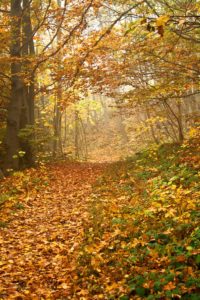
Autumn’s smoke and flame are with us again in central Maine. The land’s lush summer garments fray and fade, withering into dusty, brittle rags of leaf, flower and stem.
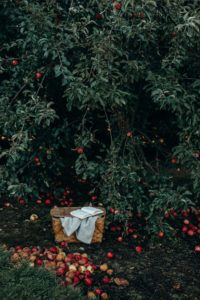
More than a dozen apple trees grow on our 26 acres, everything from small, hard green apples too sour for anything but cider to large, sweet, white-fleshed beauties, fragrant and delicious.
The first frost or two brings my favorite eating apples to the peak of perfection, and last weekend we knew it was time to harvest if we wanted any of the fruit. A friend, with three children in tow, participated in a nature walk at a nearby lake and came to sit in the sun with a picnic lunch and pick apples.
A crisp, sunny autumn day, three eager children and apple picking. I can’t think of a more perfect way to spend a gorgeous day.
Unsplash
Apple picking, as anyone knows who’s done it, is about so much more than selecting the most perfectly waxed, polished, shaped and colored specimens from a grocery store pyramid and putting them in a cart.
Apple picking is about muddy shoes and knees and floppy hats. It’s the smell of tick and mosquito spray, rotting fruit and browning ferns; the texture of twig, bark, raspberry cane, moss, and the waist-high brittle, dry aster blossoms.
Apple picking is a lesson in sharing. Many creatures enjoy autumn’s bounty. Birds peck at the fruit. The deer take bites out of windfalls. Worms leave telltale dark tunnels. Wasps burrow head first into the flesh, ecstatic and writhing.
We don’t know how old any of our trees are, but their gnarled and disheveled condition suggests they’re quite old. Many have hollow trunks and a great deal of dead wood. The one we picked from is lying almost on its side, half uprooted, the base and uncovered root ball couched in moss. Crawling under the tree, carefully avoiding wasps, nettles, poison ivy and other hazards, one finds a damp, low-ceilinged shelter, roofed by the tree’s branches and floored in muddy ground. This particular tree grows over a spring; doubtless the reason why it fell in the first place. The deer have lain in this sheltered place. Their scat is everywhere, and I see their prints in the mud and the smooth hollows where they’ve lain together on the ground.
Apples thump softly around me as the children enthusiastically wield the apple picker, an old mop handle on which is attached a cloth bag suspended from toothy jaws that pull high apples off their branches. The ripe fruit falls easily with a nudge.
Apple picking is wonderful therapy for those of us recovering from perfectionism. Each piece of fruit is uniquely shaped and blotched with color, ranging from pale green to pink. Some are patched with brown, rough areas. Some are speckled with green spots. Windfalls bruise and split, an invitation to insect plunder. Heavy with juice, sitting comfortably in the palm of one’s hand, each is a lovely, individual thing rather than a clone lined up with other clones in neat rows for display.
As the children pass the apple picker around and bag the fruit, we adults talk casually of apple pie, applesauce, apple butter and drying. I remember the ache in my right hand from processing pounds of apples when I lived in Colorado and had children to feed. In the fall, my food dehydrator was on for days, four trays stacked with plums, apples and pears I picked from trees and used for homemade granola, trail mix, fruit leather and hot cereal.
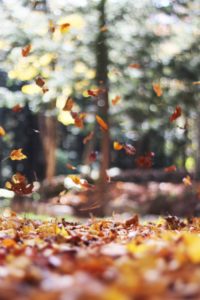
Photo by Autumn Mott on Unsplash
For days I have been watching golden leaves loosen and fall. Fall, for me, is always a meditation on loss and surrender. On my hands and knees under the tree, retrieving windfalls, the smell of damp earth, rotting fruit and drying leaves and bracken in my nostrils, the sound of the children murmuring and laughing and my friend and partner talking, I feel a pang of grief about what I have lost. My own small boys, firm-bodied, grubby, loving, hilarious, maddening and mischievous; the big-hearted, foolish yellow lab who helped me raise them, seem for a moment to be there, with me.
Then, just as quickly, they’re gone, vanished back into the past, and I feel slightly ashamed of my nostalgia and wipe away a tear before anyone sees. After all, I know children grow up and faithful, foolish dogs can’t live forever. My grief is followed then by a pang of gratitude for what has been, what is this day, and possibilities and adventures in the future.
Fall is a time to think about harvest, both the harvest that keeps our hands, tools and dehydrators busy and the harvest of our hearts and minds. The leaves that made the summer green are falling now, in a final glorious display. The nights lengthen, temperatures and humidity drop, and soon we’ll bring the outdoor furniture cushions and houseplants in from the front porch for the winter.
I do not count the blessings of my personal harvest. I feel them. The wordless embrace of friends. The weight of a child in my lap. Laughter. The exchange of support, affection, information, and a really good book. Deep sleep. A healthy, active body. The muscular rhythm of walking, swimming, dancing and exercise. A small group of children learning to swim, blowing bubbles, coughing, grinning, giggling, splashing and spluttering, like so many wriggling otters, joyful and triumphant as they master floating, kicking, and rhythmic breathing. The opportunity to be of service, to make a contribution to others, to share resource.
I’m equally grateful for what has been lost, though my gratitude mingles with grief. Every autumn, the trees guide me in the work of letting go, of surrender, of faith and trust in the natural cycle of life and season. This year, I’ve released objects, clothing, financial commitments, noise, clutter, destructive patterns of behavior, and, painfully, some illusions.
Without all this stuff, the true shape of myself and my life begins to emerge, and I’m less apologetic and more confident. A deep well of creativity bubbles in the center of my experience, cool and clear and clean, moss and stone and the scent of water.
Well Water
While the horses strain at the harrow in a darkening field, I pour red wine over lentils in an iron kettle. The full moon rising beyond the farm graveyard is as round as a well, and the cold autumn wind has the taste of distant water.
Like so many clichés, “Oh, no, not another ‘growth’ opportunity!” is obnoxious, in large part because it’s true.
Photo by Frank Mckenna on Unsplash
Opportunity, or a set of circumstances that make it possible to do something (Oxford Online Dictionary), does not guarantee a positive outcome, and is most definitely a gift with strings attached.
I would go so far as to say the greatest opportunities are likely to be hidden under paralyzing layers of fear, dread, and pain.
Opportunity demands responsibility. No wonder we so often avoid it! It takes a determined effort to excavate opportunity, an effort requiring time, honesty, and dealing with our emotions, defenses, habits and denial.
“Opportunity is missed by most people because it is dressed in overalls and looks like work.” Thomas Edison
Hence, the cliché. Growth is frequently uncomfortable and expensive.
I suspect every one of us has a secret list in our heads of events and possibilities we simply cannot face. Usually, we feel that way because we’ve already lived through them and they were so traumatic we’re determined to never go there again. In essence, we’re afraid of ghosts. We think we’ll die if we have to face another loss, another attack, another rejection or another battle, forgetting we’ve obviously survived the first time(s), and thus are older and wiser.
Photo by Talles Alves on Unsplash
What to do when we fear we’ll have to revisit some traumatic setting or situation? Freeze? Fight? Flee?
Probably all of those, in one form or another. Yet there is another choice. It’s not an easy choice, but it’s an option.
Reframe. Reframe. Reframe.
Setting aside for a moment our history, our memories, our stories and scripts about what did happen and what will surely happen again, setting aside our fear, rage and pain, wiping the blood out of our eyes, taking a deep breath and searching for opportunity is the work of heroes. Such a choice feeds our power, rather than diminishing it.
If we can catch even a glimpse, a whisper, a rumor of opportunity, the next step is to identify what we might do with the circumstances we dread most. What is that dread about? What has not healed?
What, in fact, do we need, and how do we turn the circumstances we most fear and wish to avoid into an opportunity for hope, healing, closure, forgiveness, letting go, or whatever it is we need to do?
Now, there’s a mighty question.
Some things in life are inevitable. We can kick and scream, deny and avoid, distract and pretend, but we know some things are inevitable. I’d rather figure out how to think about inevitabilities before they occur. I can’t think when I’m shaking with dread. Dread is a dead end. It fills my mind with a dull roar, it overwhelms my senses, and it hangs out with despair, depression, powerlessness, futility and a lot of other bad actors I don’t want to have anything to do with.
Dread makes me want to run like a panicked rabbit. Opportunity embraces me like a mother.
It is possible to insist our emotions, like fear and dread, sit quietly on a bench (with beer, bubble gum and baseball cards to keep them occupied) while we interview Opportunity. It takes some practice and self-discipline, but we can succeed in feeling our feelings and setting overwhelming emotion to the side unless we’re being actively hurt in real time.
Here are some interview questions for Opportunity:
Jiddu Krishnamurti said, “It is no measure of health to be well-adjusted to a profoundly sick society.”
I first heard that quote five years ago. It gave me comfort, because it allowed the possibility that my feeling of isolation and alienation at the time was a normal response. The problem, I find, with taking too much responsibility is one stops excavating interpersonal challenges. Instead, we assume it’s all our fault because we know we’re broken. This attitude effectively blocks further inquiry into what the people around us are up to. If we can be taught or manipulated into believing we’re the core of the problem in social interaction, our shame and guilt give those around us a free pass to behave however they like and treat us however they wish. No matter what happens, they can count on us to blame ourselves.
A friend of mine recently pointed out a lot of social media buzz about normalizing obesity. As I am not on social media, I did some research into memes and articles about this issue, and everything I saw made me think of the Krishnamurti quote.
Here again I see sloppy language. Almost every source agrees carrying too much weight on our frame is unhealthy. Unhealthy, as in bad for one’s health. Not ugly, stupid, lazy, lacking self-control, or a whole host of other slurs, taunts and unkind criticisms many overweight people have endured their whole lives.
Obesity is unhealthy. The fact that we have so many people struggling with obesity in this country doesn’t change unhealthy to healthy because it’s so common. A growing population of obese people signals a profoundly unhealthy society. Normal, as in usual, typical or expected, does not imply useful, healthy, functional or positive.
Is normal a goal, or is it merely a cop-out? Is normal something we aspire to because it makes us bigger, or is it something we have to make ourselves smaller in order to fit into? Who gets to decide what is usual, typical or expected? What are the consequences of choosing not to be usual, typical or expected?
Photo by whoislimos on Unsplash
I can answer that one. Consequences include tribal shaming, deplatforming, silencing and other violent, destructive and coercive responses.
Normal is one of those words we define ourselves. Normal describes something not aberrant or abnormal. Abnormal is the absence of normal. That distinction can be useful, but in a limited way. Conflating normality with Good and abnormality or different with Bad (or vice versa) is mindless, black-and-white groupthink, the kind of ideology driving genocide, religious persecution and racism.
Our culture and context help us define normal, but if our society is profoundly sick, to be well-adjusted and “normal” within it is to be profoundly sick.
This is particularly true when I look at money. I’m noticing an ever-widening gap between money and value in my own life and in the lives around me. Until recently, I thought of all resource as money, and a life without some magical amount of money I never defined and could never access would be a safe, successful life.
Photo by Evan Kirby on Unsplash
But money is only one kind of resource, and for me it’s the weakest kind. This thinking is definitely not normal by our cultural standards, but I believe it’s becoming more common. Minimalism is a growing trend, and those of us who explore and practice it are very clear about the relative value of money, time, contribution, experience, relationships, creativity, relaxation and joy. If earning money burns up all our other resources, we can’t replace them. Money won’t buy them back for us. A tree, an afternoon in the sun, a lap full of a child, the arms of a friend, the ability to lend someone a helping hand, are all beyond the power of money.
I don’t say money is bad or useless. I am dismayed, however, at what a God we’ve made out of it in this culture. During my lifetime the middle class has disappeared and the chasm between those very few who have significant financial resource and the billions of us who don’t seems likely to tear the planet apart.
A lot of sad people out there think money is power. It’s not. Our power is in our intelligence, our hearts, and our souls, not in our bank accounts. We have to make ourselves increasingly small and, ironically, impoverished, in order to adjust well to our deteriorating and unsustainable capitalist consumer culture.
In this house, we’re frequently in need of money to pay bills, buy groceries, keep up with car costs, buy a new pair of swim goggles, and buy a new fan for the furnace (our old one is beginning to sound like an airplane falling out of the sky when it kicks on). Most of the time, we don’t have money when we want it, but we manage to have what we need when it’s essential.
I used to feel terrified, ashamed, and like a failure because of my lack of financial resource. My relationship with money ruled my life. My hunger for more was never satisfied. When I had more I caught up with all my expenses and then I was broke again. It was a game I could never win.
I see now it’s a gameno one ever wins, yet we all go on compulsively playing it, chasing the lie that enough money will provide us with love, success, healing, healthy relationships, confidence, power, and a sense of purpose and meaning. We’re so busy playing the game we have no time to recognize or welcome into our lives the things that do have the power to give us what we want.
Ultimately, accumulating money for its own sake is an expression of impotence. What’s more sterile and pointless than a lot of digits sitting in an account? The tool of money is useless unless we put it to work. If (when) the economy crashes, a piece of paper with our account information on it will be of less use than toilet paper.
Photo by Gabriel Jimenez on Unsplash
What will matter is our ability to form loving, compassionate connections with others and our willingness to collaborate sustainably with Planet Earth. Our ability to both teach and learn will be important. Our skills and integrity will be important. Our laughter and creativity will be essential. If we can translate whatever financial resource we have into these things, we’ve made good use of our money. We’ve invested in sustainability and resilience, real resource for real life.
Frequent readers know how much I enjoy playing with frames. If we feel rebellious, noncompliant, alienated and crazy, perhaps the problem is not us at all. Perhaps the problem is we’re trying to fit into a profoundly sick society, and the fact that we can’t means we’re retaining some measure of health, even in the face of tremendous social pressure.
Those rebellious, noncompliant, alienated and I-feel-crazy ones are the people I’m writing for. Those are my people. Their courage, compassion and generosity are the wind beneath my wings. Our shared truths, tears, scars, love and broken places shape a womb where a healthier life for all can be nurtured.
Websites store cookies to enhance functionality and personalise your experience. You can manage your preferences, but blocking some cookies may impact site performance and services.
Essential cookies enable basic functions and are necessary for the proper function of the website.
Name
Description
Duration
Cookie Preferences
This cookie is used to store the user's cookie consent preferences.
30 days
These cookies are needed for adding comments on this website.
Name
Description
Duration
comment_author
Used to track the user across multiple sessions.
Session
comment_author_email
Used to track the user across multiple sessions.
Session
comment_author_url
Used to track the user across multiple sessions.
Session
Statistics cookies collect information anonymously. This information helps us understand how visitors use our website.
Google Analytics is a powerful tool that tracks and analyzes website traffic for informed marketing decisions.
ID used to identify users for 24 hours after last activity
24 hours
_gat
Used to monitor number of Google Analytics server requests when using Google Tag Manager
1 minute
_gac_
Contains information related to marketing campaigns of the user. These are shared with Google AdWords / Google Ads when the Google Ads and Google Analytics accounts are linked together.
90 days
__utma
ID used to identify users and sessions
2 years after last activity
__utmt
Used to monitor number of Google Analytics server requests
10 minutes
__utmb
Used to distinguish new sessions and visits. This cookie is set when the GA.js javascript library is loaded and there is no existing __utmb cookie. The cookie is updated every time data is sent to the Google Analytics server.
30 minutes after last activity
__utmc
Used only with old Urchin versions of Google Analytics and not with GA.js. Was used to distinguish between new sessions and visits at the end of a session.
End of session (browser)
__utmz
Contains information about the traffic source or campaign that directed user to the website. The cookie is set when the GA.js javascript is loaded and updated when data is sent to the Google Anaytics server
6 months after last activity
__utmv
Contains custom information set by the web developer via the _setCustomVar method in Google Analytics. This cookie is updated every time new data is sent to the Google Analytics server.
2 years after last activity
__utmx
Used to determine whether a user is included in an A / B or Multivariate test.
18 months
_ga
ID used to identify users
2 years
_gali
Used by Google Analytics to determine which links on a page are being clicked