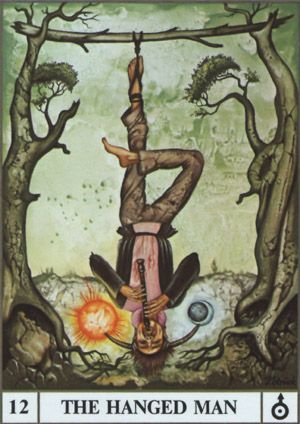
This week I’m contemplating The Hanged Man, a Major Arcana card in the Tarot deck. The traditional meaning of the card is “life in suspension.” Not coincidentally, The Hanged Man is the title of my first book.
The Hanged Man
The Tarot illustrates archetypes, and archetypes, like stories, have many rich facets and shades. The meaning of such symbols is never cut and dried, and archetypes can always be understood in layers and intuitive connections.
For many years I’ve worked with Tarot cards every six weeks, and at least half the time I pull The Hanged Man out of a deck of 78 cards, thoroughly shuffled and cut, for a 10-card spread. It’s obvious this particular card carries an important message for me.
Life in suspension. What does that mean?
First, I have to decide what “life” means.
Life: Doing, having, being.
For 50 years I believed I had to make up for the fact of my being by doing and having. It’s only recently I’ve begun to support and appreciate my need and desire to just be. Gradually, I’m changing my focus and attention from having and doing to being.
Thinking or talking about just being — feeling, playing, expressing, being in my body, following my interests and desires — seems either ridiculously shallow or criminal, I’m not sure which. Maybe both together.
On the other hand, having and doing can certainly be shallow in the long run, and provide only a brief period of comfort and pleasure, at best.
Life in suspension. Being in suspension? As in I’m too busy doing and having to be?
Photo by Ryan Moreno on Unsplash
That doesn’t sound good.
In my world, doing doesn’t count unless the doing is perfectly done. As perfection is a goal I never achieve, spending most of my time and energy doing seems like a bad investment.
As I explore and adopt minimalism, having is less and less important.
That brings us back to being.
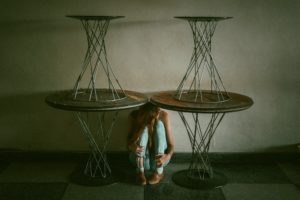
Life in suspension describes those times during which we feel stuck. We might be in a job that doesn’t challenge us, an unhealthy relationship, or an addiction. We might feel trapped in indecision, fear, grief or financial struggles. We can spend years, decades, lifetimes with pieces of our lives in suspension while we wrestle with our demons.
The entirety of our lives is generally not in suspension at the same time. We might be very pleased to have healed a health problem, yet still have struggles with money. We might be happy at work but stuck in our personal relationships, or vice versa. We might function for years with a hidden addiction, or wrestle chronically with our weight.
The thing about being stuck is it doesn’t feel competent, attractive, effective or like success.
It feels like failure.
On the heels of failure are the hounds of guilt, shame and isolation.
Photo by Elijah Hail on Unsplash
But during those messy periods when our lives are in suspension and our feelings painful, what sort of invisible, underground growth and change is happening? What is hidden in that suspended interval that is regenerative, creative and fertile?
The Hanged Man wears an enigmatic smile in many Tarot decks. He’s hanging from one leg from the branch of a tree. Why does he smile? Why isn’t he thrashing and cursing, trying to get loose? Why is he peaceful? How did he get there, and how long must he hang? What will happen to him after he’s unfettered? Who hung him there in the first place, and why?
Life in suspension sounds like nothing is happening. Everything has stopped. Yet one of the things we can say about life with complete confidence is that it’s always changing.
I realize now my book, The Hanged Man, is at heart an examination of lives in suspension, or at least partly so. What happens to a mother who has murdered her children? That’s a life not so much in suspension as shattered, but what of her grief, her shame and her pain? How does one continue after such an event? What happens to a man who flees his home, his parents and his young wife, and is not able to stop running? What happens after we die? What’s happening while we’re waiting for spring, or for the baby to be born, or for a death?
Times of despair, illness, injury, grief, exile, and failure can make us feel stuck. We can’t seem to fix, change or get away from the tree in which we’re hanging upside down. Nothing seems to be happening and our discomfort goes on and on. Others fear us, or are repelled or uncomfortable because of our trouble. Failure of any sort is contagious. Nobody wants to be infected.
Photo by Talles Alves on Unsplash
Yet suspended intervals are common to us all. We might pretend they’re not happening and hide them from others, but who hasn’t been through a time of failure, either one catastrophic event or many smaller ones? Who hasn’t spent time mired in grief, rage, addiction or indecision? Who hasn’t lost themselves in confusion or been paralyzed by fear?
That’s why The Hanged Man is such a powerful archetype.
The suspended interval doesn’t seem like rich ground for stories at first glance, but I’ve always been more attracted to the less popular and less prized side of life. I like the blood, the sweat and the wet spot. I like the harsh realities of bone and ash.
Years ago I started creatively exploring lives in suspension without ever thinking about it in those terms. It was a careless kind of play, inspired by my storytelling material. What happened to the characters from the beautiful old traditional tales I was telling after — or even before — the story I knew? When Rapunzel escaped the tower, where did she go? What did she do? What became of the prince the little mermaid loved?
Why is that rascally hanged man smiling?
In the suspended interval, decades long, of hiding my writing because I felt it was a shameful, unproductive waste of time and it earned no money, I accidentally started writing a book. Or, I should say, a series of books.
It didn’t seem like much was happening while I was living those years, though. I was just hanging on, living my life.
Now that life I was experiencing while nothing much was happening has become nearly two thousand pages of creative work.
This week I’ve spent hours working on finalizing a query letter for publishers and literary agents, as well as shaping a 1-2-page synopsis of my first manuscript.
Photo by Angelina Litvin on Unsplash
I approached this task in my usual methodical way. I researched writing queries and synopses.
As so often happens, I found lots of advice, much of it conflicting.
I took notes, bookmarked sites and started rough drafts. My research mode doesn’t usually last more than an hour or two. At the point when much of what I’m finding is repetitive and I feel more bored than interested I know it’s time to switch to writing, no matter how tentatively or sloppily. One can’t begin editing and refining unless there are words on the page.
Out of all the templates, formulas, critiques and examples of “successful” queries and synopses, one shining question stood out, and I didn’t find it on a search. I found it on a literary agency website. “Tell us why you were the one who had to write this book.”
I realize this question is the opposite of my usual frame, no matter what I’m doing. My conviction of my own inadequacy and that others will invariably be disappointed in me means I’m focused on all the reasons why I’m not qualified to write a book — or do almost anything else. What makes the submission task so daunting is coming up with a realistic, concise, clear evaluation and presentation of my creative work — and I’m extremely resistant to trying.
Yet the hardest work of the query has actually been going on for months, or even years, as I wrote, edited, rewrote, re-edited, and nurtured a tentative, almost shameful feeling of accomplishment, satisfaction and amazement that I actually wrote a book — a long one!
Thinking about why I had to be the one to write The Hanged Manturns me away from all the things I’m not and asks me for what I am.
I have little confidence in anyone else finding my work valuable, but the fact is I find it — and myself — valuable, so I can write about that. I can speak for myself and my vision. I cringe when I’m asked to write a short biography, but I can write about why I’m the one who had to write this book.
Photo by freddie marriage on Unsplash
As I began to answer that question, writing the query suddenly got easier. I was able to evaluate my creation more clearly, and find a comfortable balance between overconfidence and no confidence at all. I stopped worrying about never being published before, winning no contests or awards, and receiving no formal or traditional higher education for writing, and started thinking about all the reasons why I, and only I, had to write this particular piece of work.
It made a nice change.
Obviously, I want to get published, but I wonder if the submission process itself is not the biggest payoff for me, regardless of the outcome. The necessity to stand up, speak up, support and believe in myself in order to be the writer I am drives me to push myself in ways that nothing else could, because nothing else is as important to me. It would be much easier to coast along with my old paradigm: I’m no good, and neither is anything I think, say, make or do. It’s my familiar story, and I feel anxious when I think about rewriting it.
I notice this tension between believing in myself and having no confidence in myself at work, too. I watch a colleague teach a water exercise class and admire the way he structures the class and his manner with the class participants. I think about the next time I’ll be teaching that class, and how I’m so much less than my coworker. I prepare and worry, knowing I won’t measure up, knowing the class would rather have another teacher, knowing I won’t do it right.
Then I get into the water, stop thinking and anticipating, assess the participants and their physical and social needs, and off we go. I have a good time. I feel calm and competent. I stop fearing I’m not good enough and give it my best. By the time the class is over, I wonder what all my fuss was about.
Why am I the one who had to write this book? Why am I the one who has to teach a class on any given day?
Maybe simply because I’m the one who did write it, and teach it. Maybe I was engaging with those activities because I was the best one for that particular job.
“Why can’t you be like …?”
Others have asked me that question, but not as often as I’ve asked it of myself.
Photo by Ivan Jevtic on Unsplash
I can’t be like all the other wonderful, competent, gifted, beautiful people in the world because I’m not them. I can’t follow their paths. Their definition of success may not be the same as mine. I can’t look like them, teach like them, write like them or make choices the way they do.
The piece I never think about is that they can’t be like me, either. Because they’re not me.
We can learn from each other. We can support each other. We can tear each other down. At the end of the day, though, we can only be ourselves. Everyone else is taken.
I have a query letter I feel good about now. I followed traditional conventions and standards for such a letter — to a point. But I also let my own voice and style shine through. No one but me could have written the query or the manuscript accompanying it. The day I finished the query I submitted to my first agent. The next agent I want to approach requires a synopsis and a query letter.
Sigh. Back to the drawing board. This time for a synopsis only I can write.
For the most part, I love living the life I have. I don’t find myself or my writing either inadequate or disappointing. Maybe an agent and publisher out there will agree with me.
I’ll never know if I don’t try.
And I’ll find my own path through the query and submission process, a path only I can make.
This summer is about resource. I’ve never picked a one-word summer intention before, but today I realize it’s been thrust upon me, willy-nilly. The Summer of Resource.
Photo by Landon Martin on Unsplash
I’ve been working with the idea of minimalism, which forces one to take stock of resource in the wide sense. What is resource? Oxford online dictionary defines resource as “a stock or supply of … assets that can be drawn on by a person … in order to function effectively.”
When I think about resource, it’s a jigsaw puzzle, and like a jigsaw puzzle, every piece counts if one wants to end up with the whole picture. When I hear the word “assets,” money is the first thing that comes to mind. Then there are external natural resources, which are also closely tied to money and more finite every minute.
In a capitalist economy, that’s as far as most people explore resource. What’s the bottom financial line? What’s the cost versus benefit projection? What’s the tax picture? How expensive is firewood, oil, electricity and food? What is the interest rate? How affordable is housing?
Photo by Senjuti Kundu on Unsplash
Sadly, this is a short-sighted and nonsustainable view of resource. It’s also incomplete, because it doesn’t include intangibles that can’t be quantified in terms of monetary value, and so become invisible. These include space, time, creativity, soulfulness, heartfulness, love and compassion. Also, more subtly, faith, patience, playfulness, innocence and integrity, some of which qualities are targets of active contempt in this culture.
How do we quantify the resource of a life, any kind of a life?
Pick a closet in your house. Open the door. What’s the square footage of that space resource? What’s in the closet? Any item you don’t want and/or don’t use is not a resource. It’s just junk clogging up you space. “It’s mine,” “I’ve had it all my life,” “I paid a lot of money for this,” “my favorite aunt gave it to me” and “some day I might need it” are not indicators of resource. A resource helps us function effectively, remember? Any item we don’t use but hang onto anyway isn’t helping us function effectively. Our shoe collection, baseball card collection or belly button lint collection might temporarily give us pleasure, bolster our self-esteem, distract us or even be a financial investment (probably not the belly button lint, but remember Pet Rocks?), but our collections frequently cost money to acquire and demand space, time and management. They own us as much as we own them.
Even money, inappropriately managed, becomes an ineffective resource.
We are constantly assaulted by sophisticated marketing persuading us to buy products that will make our lives better. Most of us know intellectually we’re being manipulated, but the lure is irresistible. We’re so hungry for love, for healthy relationships, for comfort, for distraction, for beauty. It’s an empty promise, though. We buy, but we’re still hungry, so we buy more, like the good little brainwashed consumers we’ve become.
Many folks here in Maine harvest wood off their land in exchange for financial resource. Some harvest sustainably, but most clear cut. People sell what resource they can in order to stay afloat financially. I understand. I’ve done it, too. That destroyed forest, however, is — was — a natural resource of unimaginable complexity on a finite and increasingly depleted planet. Systems scientists are only now beginning to glimpse the intricate interconnections between life on Earth — all life on Earth, not just human life.
Photo by Gary Bendig on Unsplash
Life is resource.
Clear cutting a few acres of wood might help us face the immediate necessity to buy firewood this summer and heating oil over the winter. We can quantify those costs. We can’t quantify what the loss of those few acres are in terms of healthy land, water, air, and the innumerable forms of life destroyed with the trees. We don’t know exactly how the destruction of a few acres here in central Maine contributes to cumulative global breakdown and change, because we’re not aware of all the complexities of our dynamic living global system. It’s too big to think about, too far away. Many of us are simply trying to survive another day or week or month in the long spaces between paychecks. We’re far too overwhelmed and desperate to try to grapple with the whole picture. After all, if we can’t get through today there is no tomorrow.
What will the last tree be worth in dollars? In possibility? In beauty?
I can’t think about resource without thinking about sustainability. Working 60-hour weeks might provide comfortable financial resource, but it’s not sustainable. Using up money, time, space, patience, and even things like hope faster than we create or save them means we’ll run out, and when we run out of resource our lives stop functioning effectively — fast. Then we’re forced to shape a new life, whether we’re prepared to or not.
Renewable resources need time to renew. Few of us feel as though we have enough time, and what time we do have is sucked up in earning money, dealing with the consequences of how we manage it, and relationships. It’s possible to set aside time for self-care and creativity, but it requires discipline and boundaries. It’s possible to grow food and harvest natural resources sustainably, but not as long as we value money over all other resource and our population continues to be in overshoot.
Photo by Quino Al on Unsplash
Like everyone else, I have needs and limited resource available to help meet them, but if my life is too cluttered, noisy and/or busy, I lose track of both my needs and my resource. I forget I’m more than my ability to pay the bills, more than the numbers in my bank accounts. The practice of minimizing helps me remember to appreciate and protect all my resource, and make clear choices about sustaining and strengthening what I have so it supports who I am.
Minimalism encourages a kind of inside-out thinking. Not “I need a bigger house,” but “I need less stuff in this house.” Not “I need more money,” but “I want to spend less money.” Not “I need more time,” but “I want to do less with the time I have.”
Less, not more. The goal is to have what we need, but not more than we need.
What investments will truly increase my resource, financial, emotional, creative and intellectual? Only I can say. I’m the only expert on my own needs. I’m the only one who can identify the unrecognized or poorly managed resource in my life and implement different choices. No advertisement, expert, tweet, social media post or self-help book knows more about me than I do myself, and none can make choices for me. It’s all on me.
Rats.
It will be an interesting summer. I’m letting go of objects, some in exchange for money. I’m liquidating a financial asset to pay debts and invest in my ability to spend less. I’m investing time, energy, faith and hope in my creative work.
I think about effective living all the time. What, exactly, do I need to have and do to live effectively, and what do I have and do that are not helping me achieve that goal? What does “effective” mean to me? What does my particular expression of being require to thrive? What are my total resources, and how renewable or sustainable are they? How can they best be invested in order to create more?
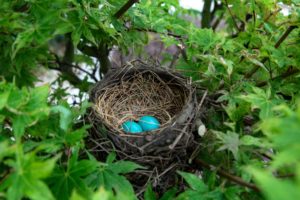
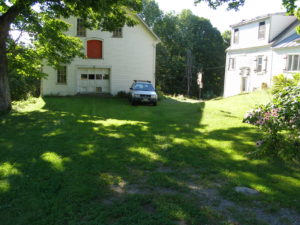
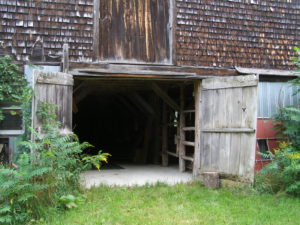
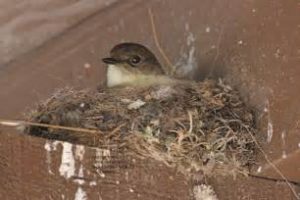
One of my favorite things about this land we live on is the old barn. Circa 1832 in the original part, it dwarfs the house and consists of four stories topped by an attic space under the roof. The cellar contains several rough animal stalls and is the occasional residence of a skunk, raccoon, woodchuck or grumpy porcupine. Phoebes nest every year in the cellar and first floor rafters. We store wood on the first floor. The second and third floors were an old hay mow and now are a repository for discarded furniture, miscellaneous remnants of wood, and old windows and doors. This is New England. These Yankees keep everything!
The barn is a tenement for rodents, bats, insects and birds, along with creatures like the aforesaid porcupine, who wander into the cellar in search of shelter.
Barn Cellar
When I moved to Maine, I stored some of my things in the barn; things I didn’t have room for in the house but wanted more accessible than the storage unit. Now that I’ve moved out of the storage unit and everything is here on the property, I’m determined to go through each box and discard what is no longer useful.
I work in the second story of the barn. The south wall contains a row of windows, several of which are broken. The west wall also has a broken window, and plentiful bat guano on the floor under it tells us this is their favored access point.
My hours in that space are strange, almost otherworldly. I sit on an old round lidded metal bucket that once contained popcorn. My table is the lid of a large plastic storage bin. I unpack the boxes I taped and labeled more than four years ago in Colorado, in a different life and half a world away. The barn is alive with stirrings and fugitive drafts. The wood floor dips and sways, creaking underfoot and showing cracks between the planks. The scent of apple blossoms floats in through the windows, along with the sounds of insects and the sweet calls of the phoebes as they hunt those insects. Once I’ve settled down quietly to work, squirrels, mice and chipmunks forget my presence and begin to scurry overhead and in the walls around me. I know bats are clustered under the roof, a floor and a half above me. Light comes in through countless cracks and crevices in the walls. The roof leaks in many places.
The body of the barn is loosening and thinning, much like my own skin; as it does so it’s becoming rewoven into nature.
I’ve gone through boxes and boxes of beading material, sewing supplies, wreathmaking tools and elements, camping gear, seasonal decorations and kitchen items. The quiet barn fills with my memories as I review where I’ve been and recognize the steps bringing me to this place and this moment.
Photo by Anna Dziubinska on Unsplash
We love increase in this culture. The journey of childhood to adulthood. Increasing income in order to increase spending power. Upscaling, upgrading, updating, trading in. Increased choice, increased technological power and speed, increased likes and friends, increased access to “information” and entertainment. Bigger, better, newer, faster, more.
Now, suddenly I find myself strangely captured by the beauty of decrease. Perhaps what I’m feeling is a kind of surrender, a letting go. The barn lets go of its glass window panes, its nails, its roof shingles, the mortar in its foundations. As the fabric of its structure thins, life pours into it. The world inhabits it. The boundaries between the building and its setting are softening.
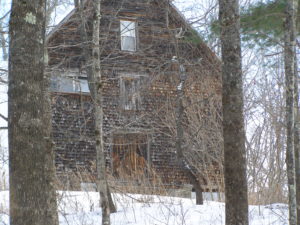
Winter barn
Observing this process of gradually increasing boundary ecstasy is breathtakingly, almost piercingly beautiful. My appreciation of its magic mingles with tears, memories and nostalgia as I unwrap and handle my things, once so beloved and important in my life, now boxed and stored.
As I load up the car and donate to our local charities, sell or give away what I no longer need, the storage space in the barn gradually empties. Sunlight fingers the floor where a stack of boxes stood. An errant breeze swirls dust into a brief glittering cloud.
Is empty space, or an empty moment, ever really empty? Can it be? Is a quiet afternoon without distraction or entertainment sterile and boring, or filled with peace and possibility we no longer recognize or welcome but starve for nonetheless?
Watching the reflection of moving leaves or water and sunlight on a bare wall feeds my creativity and joy in a way the finest piece of manmade art never could.
As I empty my life of so many objects, it becomes like the barn. I allow the cracks of long use, weathering and aging to show. I allow my memories and experience to mingle with the light, the moving air and the life outside my boundaries and barriers. I feel less isolated and more grateful, less anxious and more peaceful.
What is a life defined by the spaces between objects and tasks rather than the objects and tasks themselves? What is life in the spaces between our debts, bank balance and paychecks? What are the gifts hidden in decrease, in the slow passage of time, in loosening skin and softening bone? How much creativity and wisdom fill the spaces between our obligations, habits and addictions?
What hidden infinities lie in the spaces between each tick of the clock, each heartbeat and each breath? How much light can come into me as I widen the cracks in my physical envelope? More importantly, how much of my light can shine out into the darkness around me?
May was a tough month. I had a heavy work schedule and a certification and training class over 2 subsequent weekends that entailed classroom work as well as long, cold hours in a YMCA pool. My schedule left me with little time to write and no time to relax and catch up to myself.
Photo by Chris Kristiansen on Unsplash
I successfully passed the class and am now recertified to teach Red Cross swimming lessons, and I earned a couple of very helpful paychecks, but I’m exhausted and dissatisfied because I haven’t been writing much.
Work is an excellent distraction from my life. It always has been. I like to work. I like having concrete and specific expectations in a work setting. I like making a contribution to others. I like the social aspect of work, and I love being part of a team.
I also like the paychecks.
I could increase my hours to full time and enjoy the benefits and increased income. I could continue adding to my education and certifications and take on teaching more classes and aquatic programs. I’d enjoy it and I’m confident I’d do well.
I tell myself that’s what a normal, responsible, adult person would do.
I tell myself I should be grateful for work opportunities and take full advantage of them.
I tell myself I need the money.
But all the while there’s a voice in my head saying, “But what about writing?”
Photo by Angelina Litvin on Unsplash
What about the blog, the books, that query letter I need to write and that submission process I promised myself I would tackle this year? What about that activity guaranteeing no income, demanding all my passion and creativity, requiring long stretches of quiet solitude and combining my greatest joy with my most vivid hopes and fears?
Oh. That.
It’s time to fish or cut bait, shit or get off the pot. It’s time to reassess my time, energy and priorities and make conscious choices. It’s time for recommitment.
All my life I’ve worn efficiency and effectiveness like a suit of armor. People remark on my poise, my strength, my confidence and competence. All my life I’ve felt like a fraud and an imposter.
Photo by Chris Barbalis on Unsplash
I’m not motivated by the desire to compete or win applause. All I’m trying to do is stay safe. I hide my vulnerability behind my ability to be organized and willingness to take on responsibility.
A job is something I can do well and the world calls me successful.
A writer is something I am, and I must define my own success.
A job is a description, a list of competencies met and skills demonstrated, a time card, a schedule, policies and procedures.
Writing is intuitive, illogical, timeless, messy, infuriating, captivating and uncertain. It’s risky and vulnerable.
My job requires professionalism.
Writing requires absolute authenticity, sloppy, smelly and sticky.
I master a job.
Writing masters me.
I’d like to make an easy black-and-white decision here — live like a normal working person or find an old cabin in the woods and do nothing but write, but that’s ridiculous. Life consists of many threads woven together: Family, friends, home, our own self-care, community and work.
I can work and write too. I can’t take advantage of every opportunity at work, have a perfectly organized private life and be a perfect friend, family member and partner, all the while crouching behind my projections of competence, control and strength, and step into my full power as a writer.
Perfectionism will smother my life if I allow it to.
I may need to settle for being good enough, or even (God help us) average at work, at home and in my relationships. Maybe I don’t need to take advantage of every opportunity coming my way, whether at work or in the course of daily life. Maybe staying safe is not such a life-or-death matter as I’ve always thought.
In the midst of all this rumination, Memorial Day weekend arrived. Saturday was the day we cleared out my storage unit after it flooded over the winter. We recruited some generous friends with a truck and trailer and made a date. At breakfast I wrote a short list of what to take. Then, instead of loading up the car, checking the list several times and getting ready hours in advance, I sat down and wrote a query letter and subscribed to an online site for locating publishers and agents who are currently accepting submissions.
Delighted and satisfied with my morning, my partner and I got in the car at the appointed time and headed to the storage facility.
I forgot to take the key to the padlock on the unit door. I also forgot the broom and the tape measure. I hadn’t taken time to check my list as we left.
Shit. Shit. Shit.
I left my partner there to wait for our friends and came back home.
For the first five minutes of the 20-minute drive I berated myself. Wasting gas, mileage and time. Worse — wasting my friends’ time! Rude, tardy, irresponsible, disorganized, incompetent …
Wait, I said to myself, hang on.
Isn’t this the choice I made, to settle for being less perfect in favor of writing? I failed to be properly organized in order to empty the storage unit, but I wrote a query letter, a project that’s been pending for seven months!
I had to smile at myself.
I slowed down and started enjoying the spring day. I stopped yelling at myself. I had been imperfect in front of God and everybody. My cover was blown and I felt uncomfortably exposed. I didn’t like it.
(My partner, as he reads this for the first time, informs me nobody else noticed or cared.)
So be it. The writing requires my unconditional best. The rest of my life can have whatever is left.
Normal, perfectionism and maybe even safety are overrated.
We got the storage unit emptied out and swept.
Then I came home and wrote this post.
(See poem below)
“Leave the dishes. Let the celery rot in the bottom drawer of the refrigerator and an earthen scum harden on the kitchen floor. Leave the black crumbs in the bottom of the toaster. Throw the cracked bowl out and don’t patch the cup. Don’t patch anything. Don’t mend. Buy safety pins. Don’t even sew on a button. Let the wind have its way, then the earth that invades as dust and then the dead foaming up in gray rolls underneath the couch. Talk to them. Tell them they are welcome. Don’t keep all the pieces of the puzzles or the doll’s tiny shoes in pairs, don’t worry who uses whose toothbrush or if anything matches, at all. Except one word to another. Or a thought. Pursue the authentic-decide first what is authentic, then go after it with all your heart. Your heart, that place you don’t even think of cleaning out. That closet stuffed with savage mementos. Don’t sort the paper clips from screws from saved baby teeth or worry if we’re all eating cereal for dinner again. Don’t answer the telephone, ever, or weep over anything at all that breaks. Pink molds will grow within those sealed cartons in the refrigerator. Accept new forms of life and talk to the dead who drift in through the screened windows, who collect patiently on the tops of food jars and books. Recycle the mail, don’t read it, don’t read anything except what destroys the insulation between yourself and your experience or what pulls down or what strikes at or what shatters this ruse you call necessity.”
Websites store cookies to enhance functionality and personalise your experience. You can manage your preferences, but blocking some cookies may impact site performance and services.
Essential cookies enable basic functions and are necessary for the proper function of the website.
Name
Description
Duration
Cookie Preferences
This cookie is used to store the user's cookie consent preferences.
30 days
These cookies are needed for adding comments on this website.
Name
Description
Duration
comment_author
Used to track the user across multiple sessions.
Session
comment_author_email
Used to track the user across multiple sessions.
Session
comment_author_url
Used to track the user across multiple sessions.
Session
Statistics cookies collect information anonymously. This information helps us understand how visitors use our website.
Google Analytics is a powerful tool that tracks and analyzes website traffic for informed marketing decisions.
ID used to identify users for 24 hours after last activity
24 hours
_gat
Used to monitor number of Google Analytics server requests when using Google Tag Manager
1 minute
_gac_
Contains information related to marketing campaigns of the user. These are shared with Google AdWords / Google Ads when the Google Ads and Google Analytics accounts are linked together.
90 days
__utma
ID used to identify users and sessions
2 years after last activity
__utmt
Used to monitor number of Google Analytics server requests
10 minutes
__utmb
Used to distinguish new sessions and visits. This cookie is set when the GA.js javascript library is loaded and there is no existing __utmb cookie. The cookie is updated every time data is sent to the Google Analytics server.
30 minutes after last activity
__utmc
Used only with old Urchin versions of Google Analytics and not with GA.js. Was used to distinguish between new sessions and visits at the end of a session.
End of session (browser)
__utmz
Contains information about the traffic source or campaign that directed user to the website. The cookie is set when the GA.js javascript is loaded and updated when data is sent to the Google Anaytics server
6 months after last activity
__utmv
Contains custom information set by the web developer via the _setCustomVar method in Google Analytics. This cookie is updated every time new data is sent to the Google Analytics server.
2 years after last activity
__utmx
Used to determine whether a user is included in an A / B or Multivariate test.
18 months
_ga
ID used to identify users
2 years
_gali
Used by Google Analytics to determine which links on a page are being clicked