I’m currently reading The Intuitive Way by Penney Peirce. Various notes and bookmarks remind me I’ve started it before, but I didn’t finish it. I picked it up again because I’m also reading The Gift of Fear by Gavin de Becker (for the second time), and he talks about how important intuition is in our ability to avoid danger.
I’ve always been interested in intuition. What is it? How does it work? I know from personal experience it’s a real kind of perception or knowing, but I also know many people view it as “woo” and scientifically unprovable. I’ve frequently been met with fury and denial when I voiced an intuition about someone’s state of mind or behavior. Certainly I might be wrong, but then why all the fuss?
As I began writing this post I explored Peirce’s website for a few minutes. I listened to an interview and read a couple of her posts. Yes, it looks rather New Age and “woo” to me.
On the other hand, that doesn’t mean she’s wrong!
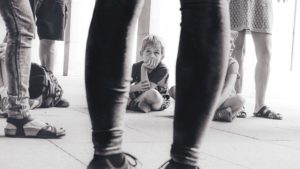
As a matter of fact, science is catching up to what we call intuition. Scientists and researchers like Paul Ekman, who recognized how important fleeting micro expressions and body language are, have begun to assemble the neurological pieces of the process of intuition. Experts in their own fields like de Becker are revisiting the importance of intuition to our resilience and survival.
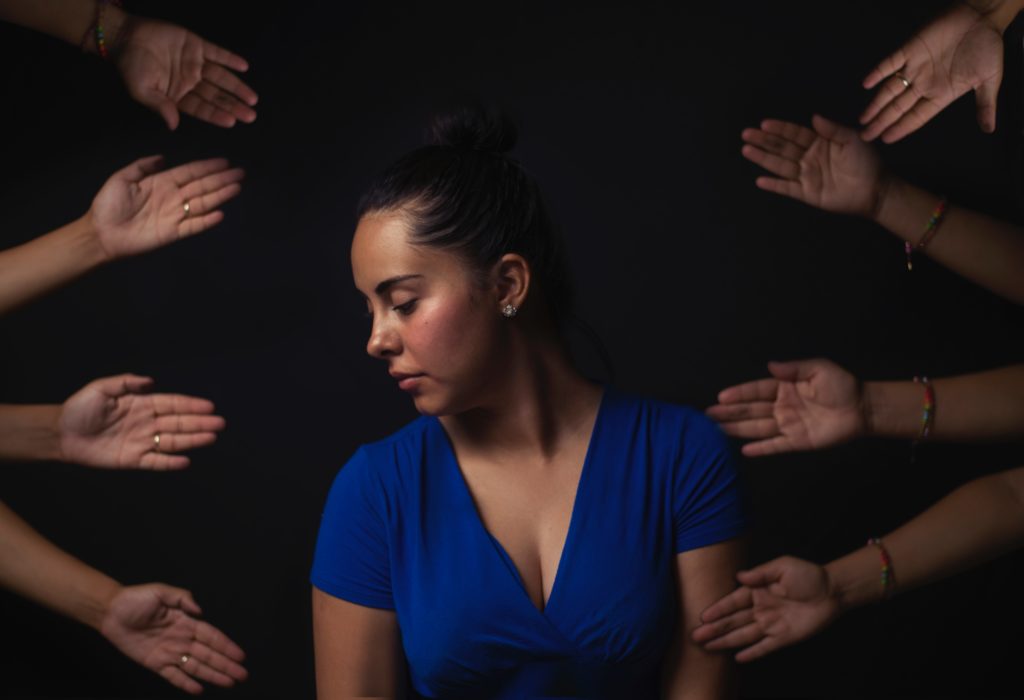
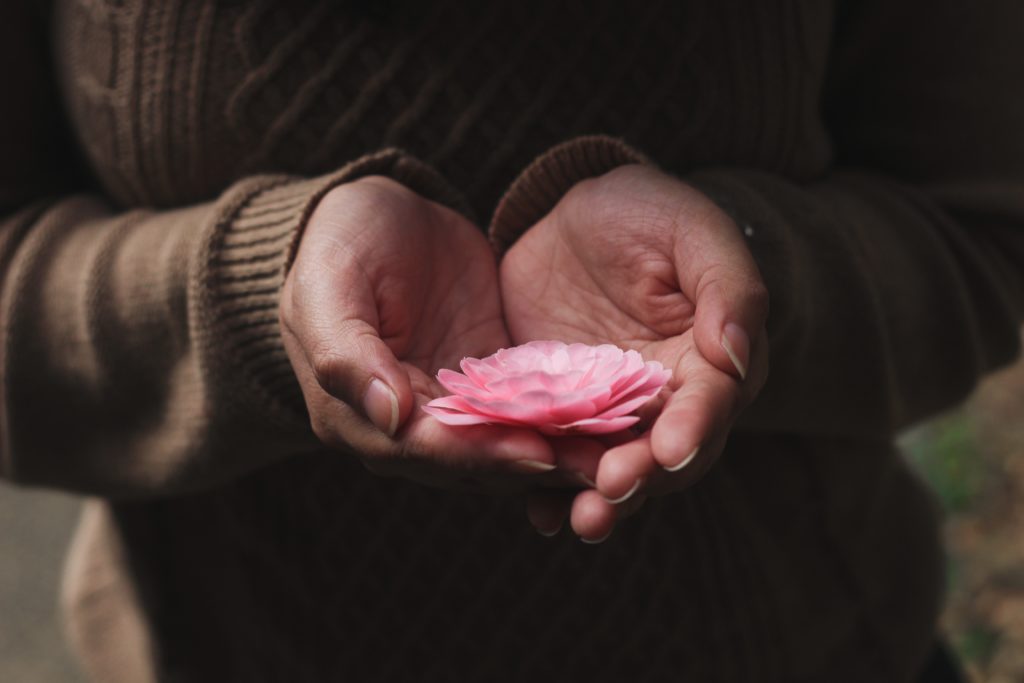
Photo by João Silas on Unsplash
In any event, I picked up The Intuitive Way again to see if it was something I wanted to work with and explore or pass on to the library for donation. I’m glad I did. I’m uninterested in debating whether intuition is real or a worthy subject for study, but I’m very much interested in any tools which might assist me in healing and living a more joyful life and/or shaping my creativity. The book is filled with provocative writing exercises. I remember now it takes me ten minutes to read a chapter and ten days to play with all the exercises.
When I learned emotional intelligence I was introduced to the work of Byron Katie. Her great question is: Who are you without your story? Peirce’s book asks the same question in a slightly different way, providing exercises challenging the reader to replace fearful, limiting beliefs with those that are loving and life-enhancing.
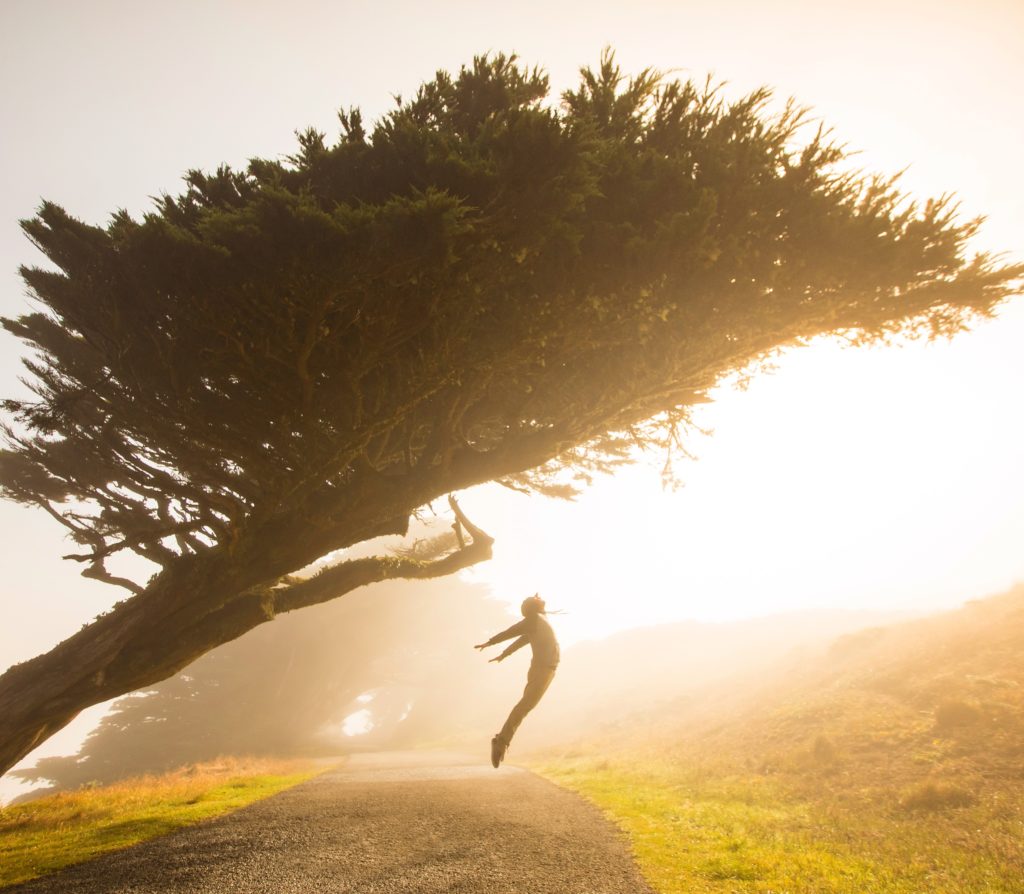
Photo by Stefano Pollio on Unsplash
Who am I without my story? What a wonderful, important question. What a game changer. It’s like asking ourselves who we are if we stand bodiless in some infinite but undefined space with no memories, no objects around us, and no other context. If we’re not a name; an age; a family member; a job; an ethnicity and tribe; a set of beliefs, experiences, memories and stories, then who the hell are we?
My mind boggles, and the artist in me salivates. So much of my self-identity is bound up with stories about my life and experience, and many of those stories are small, hard, stony things about breaking, severing, smashing, exile and futility.
I have fantasies about who I’d like to be and how I’d like to feel, of course. They’re fantasies, though, not the real story. I know the difference.
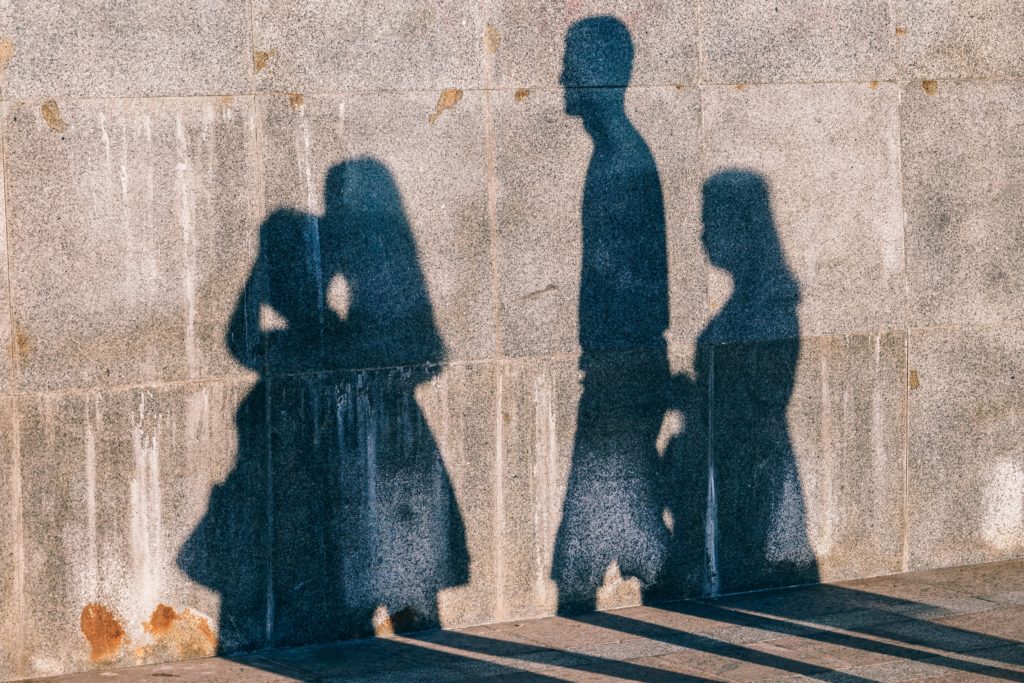
Photo by Nyana Stoica on Unsplash
But do I?
We write our stories from our feelings and experiences, many of which occurred in childhood. Do children necessarily see a wide picture? Are they able to understand all the behavior and choices of the adults around them? Are they able to process their feelings and separate them from their thoughts about their feelings?
I doubt it. I certainly wasn’t able to.
As we grow up, we have opportunities to compare our stories with those of our siblings, or others who inhabited our childish world, and we notice our stories aren’t the only ones in the mix. Everyone has a story, and they aren’t the same one. A word or event burned in my brain might be something no one else even remembers.
Photo by Cristina Gottardi on Unsplash
Stories are slippery things, powerful as an anaconda and just as hard to pin down.
All that being so, how would it be to simply erase the limiting parts of my story ,to find the file, open it, hit “delete” and then empty the trash of all the feelings, conclusions and thoughts my story carried? No more story. Just a clean space …
… In which to write a new story!
As a storyteller, I’m fascinated by all the creation stories from around the globe. As a writer, I’ve even written a couple of my own. I’ve never considered writing a story about my own creation before, though. After all, I already know all about the story of my first ten years. I’ve been telling it to myself for decades. It’s shaped me profoundly.
But would a different story have shaped me differently?
Would a different story shape me differently now?
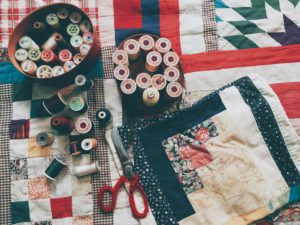
I don’t suggest we deny or bury our feelings and memories. I’ve never found that particularly useful. I think of my story as an old-fashioned quilt, carefully pieced together out of all kinds of scraps of feelings, memories and experiences from which I formed conclusions and beliefs over my lifetime.
Photo by Dinh Pham on Unsplash
I can lift that quilt out of the cedar chest of my psyche, unfold it, hang it on a clothesline in the sun and spring breeze and examine it. Which pieces make me feel stained, frayed, torn or damaged? Which pieces are vibrant, vivid, gorgeously colored and textured?
After the quilt has aired, I can unpick stitches and remove the pieces that hurt, distort or limit me, replacing them with scraps that make me feel happy, confident and loving. I can rewrite some of those childhood monsters and villains, understanding now people are complex and we don’t always know their motives or secrets. I can consider painful pieces of my story from the view of another character in it instead of from my own narrow perspective. As I unpick stitches and loosen up my old story quilt, I can think about forgiveness, gratitude and being wrong, and revel in stitching new patterns and colors into it.
Rewriting our story, like reworking a quilt, takes time. Writing our original story took time. Events happened in our lives. We had feelings and experiences. We had thoughts about our feelings and experiences. We came to certain conclusions about who we are, who others are and how life works. We wove a story and told it to ourselves over and over again, until we believed it completely and it became unconscious. We carry our story with us into the world and it influences every choice and action.
The thing about story is it’s limited and limiting. It can never catch all of reality, even in a single moment. If we understand this and work to bring our personal stories back into consciousness, we become aware of all the ways our stories hurt and/or help us. They can limit and paralyze us or inspire us with courage and confidence. It’s all up to us, because we are the authors of our own stories. We have the power to rewrite.
Many cling to their stories as though they were a matter of life and death, not to mention identity. I’ve noticed some people with miserable stories cling the hardest. I can only conclude for some, even the most wretched and harrowing story provides some kind of a payoff for the one holding it. Such a person doesn’t want to rewrite their story, in spite of how ineffective or painful it may seem to be.
I choose not to be run by my story. I can do, be and contribute more than parts of my old story say I can. I don’t want to validate and reinforce outdated conclusions that made me fearful and small. I don’t want to continually irritate and open up old wounds.
I refuse to be a victim, especially not a victim of myself!
So I’m rewriting and revising my own creation story from before the beginning, when two cells joined and created the miracle of my life. From those two cells came the complex human being I am, and a complex human being contains and creates many different kinds of stories with many different feelings, experiences and thoughts.
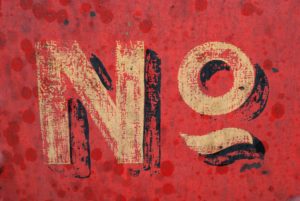
One of my first posts on this blog was about saying no . As I learned emotional intelligence and began applying it to my life, I started to understand how imprisoned I’d been by my inability to say no.
Photo by John Salvino on Unsplash
In the interests of full disclosure, let me report saying no in the context of long-term relationships in which I’ve never said it before has resulted in unforeseen heartache and grief. I rejoice in reclaiming my power and authenticity, but some of my nearest and dearest are not celebrating my growth and healing, and connections I thought were unbreakable have, in fact, broken.
These days, I immediately exit any relationship in which my no is consistently ignored. At this point in my life I’m not interested in connection, intimate, workplace or social, in which no is not an acceptable answer.
In my experience, people who refuse to accept the answer no fall into two camps. The first camp is the controllers. Their goal is power. They view anyone with the ability to say no as an insult and a threat, and immediately react in the form of intimidation, emotional meltdowns, rage, manipulation and constant pressure to change the no to a yes.
The second camp is those who can’t say no themselves and are infuriated by those who can. Their goal is to undermine the power of others so they feel better about their own disempowered state. They’ve stored up years of resentment around all the times they said yes when they wanted to say no, resentment which they vomit up at once if someone says no to them. They throw around words like “duty,” “responsibility,” “loyalty” and “obligation.” No is a personal rejection, an abandonment and a cruel betrayal. They frequently have all kinds of expectations of others. They use the weapon of shame.
These camps can and do overlap, but there’s no mistaking the resistance to no.
I confess it still stuns me that long-term primary relationships have fallen down and died right in front of me because I said no. I’ve even checked out my perception, disbelieving my own experience and the words I was hearing.
“So, from your point of view, me saying no is unforgiveable?”
“Yes, it’s unforgiveable.”
So far, I am still unforgiven, because I stood by my no.
Unbelievable.
I ask myself if it’s possible I’ve never said no in the context of these relationships before. It seems unlikely. Perhaps I’ve just never said it about anything that mattered to the other party? I resolved to mindfully practice saying no, and also to observe carefully the effects of such a response.
I immediately discovered the effects of saying no on me included panic attacks, anxiety, PTSD and extreme stress. All my life interactions with others have consisted of “reading” them in order to please. Any question they might ask was answered in whatever way I thought they most wanted to hear.
Effectively, every question was a test. If I passed the test, my reward was knowing I had pleased and was temporarily safe and tolerated. If I failed, which usually meant I had forgotten myself and answered honestly, the consequence was displeasure, abuse, guilt and shame and/or (worst of all) some kind of a scene.
Photo by Joshua Fuller on Unsplash
Learning to say yes or no based on my own desires meant finding and reclaiming myself, my needs, my authenticity and my power, and trying to ignore what I knew others wanted from me. Saying yes or no became a test of my own courage and honesty, as well as a test of faith and trust in those close to me.
I could hear no from them. Could they hear it from me?
This has been some of the hardest work I’ve ever done.
I’ve been reading an important book: The Gift of Fear by Gavin de Becker. Every woman in the world would benefit from reading this lifesaving and validating book. Here, too, is a discussion of the universally important red flag of refusing to accept no.
We are shaped by our culture, and in this culture women are taught to be cooperative and accommodating. Men are taught to be persistent. These behaviors are deeply embedded and reinforced in our media, entertainment and arts.
Women are not taught to say a simple, assertive, direct no and stick to it. We weaken our no with explanation, justification, mistrust of our own instincts and the desire to not make a scene, be unkind or hurt or embarrass anyone.
The instant a woman allows her no to be negotiated, she has handed her power over and sent a clear message that she’s prepared to be a victim. Strangers, family members, friends and colleagues who decline to hear no are either seeking control or refusing to give it up.
Sadly, the willingness to say no will not protect us. We may still be murdered, raped and otherwise abused, but the ability to recognize a danger signal like not accepting no for an answer is an important survival skill that can help us avoid violence before the worst happens.
Ultimately, no is about boundaries. No matter how cherished a relationship may be, it’s not healthy if we’re not free to honestly say yes or no. Those who consistently violate our boundaries or punish us for having them in the first place are those who have benefitted the most from us having none in the past.
I value my power to say yes or no far more than any object, possession, sum of money or relationship. The complete sentences of yes or no allow me to maintain my integrity and authenticity, support appropriate boundaries and contribute everything I am.
As I sit in my attic space this afternoon, the wind roars in the bare trees. Last night it rained. This morning on the way to our weekly breakfast date at a neighborhood diner there were snowflakes in the air as we navigated the crumpled, buckling, pot-holed roads.
Photo by Ludde Lorentz on Unsplash
I’m still listening to David Whyte, and he’s still inspiring me. Listening to him speak is similar to reading his poetry. Each repetition unfolds new layers and depths in my heart and mind.
Today I’ve been reading, sorting, paying bills, and taking care of the oddments we all accumulate on our work surfaces and in our technological tools while we’re out in the world working or doing other things.
Outside the wind rocks the trees, which are just beginning to swell with buds, and David Whyte talks to me of friendship with life, with others and with ourselves. He suggests healthy relationships are a continuous contest of necessary generosity in which we develop a discipline of forgiveness and allowing others to forgive us.
It occurs to me the more I forgive myself, the less I need the forgiveness of others. If I love my choices and decisions, I don’t need anyone else to do so.
Do we need forgiveness for who we are? Sometimes we need forgiveness for the boneheaded choices we make, but do we need forgiveness for who we are?
It seems to me the only reasonable answer is no, yet I’ve spent my life apologizing (and in latter years trying not to apologize) for who I am, what I need, and what works and doesn’t work for me in my life.
I have a friend who frequently apologizes for the way she expresses herself and interacts. I understand. We have that self-judgement in common. When she apologizes anxiously for something she said or wrote, or didn’t say or write, I smile to myself. It sounds like she’s apologizing for who she is, but I love her because she is who she is. I have more space for her than she does for herself.
Photo by Jenelle Ball on Unsplash
She has more space for me than I do for myself as well. I hope, with time, our friendship will help us both be less critical of ourselves.
I’m great at giving other people space to be who they are. It’s always been one of my strengths in relationship.
I’m so good at it, in fact, several people with whom I’ve been closely connected quickly took it for granted I would accommodate whatever they needed and/or wanted. Rather than a contest of generosity, such a relationship becomes an endless exercise in trying to please (on my part) and demand (on the part of the other).
The bad news is the only way I can see out of this loop is to learn to say no and enforce boundaries, two things guaranteed to send any person who expects to control my behavior and choices into meltdown.
I hate scenes.
Photo by Cristian Newman on Unsplash
Naturally, my history of allowing others to take control in any given situation positioned me to attract into my life people who insisted their own needs and desires trumped mine. They had no interest in the thoughts and feelings behind the choices I made and did everything they could to manipulate my compliance with their expectations.
The wind blows because that’s its nature. Does it ask forgiveness from the trees? As I gaze out the window, looking for nothing and trying to see everything, I glimpse the possibility of living in such a way that I give myself the space I’ve always given others. Wind blows. Water flows. Mice nibble holes in cushions. Woodchucks dig up the Echinacea roots and eat them. None of it is personal. All act according to their nature, and there’s a kind of inexorable beauty about that.
I want to be beautiful like that.
Yet I have often sought to limit and even hurt myself. The twin disciplines of self-forgiveness and giving myself space have been exceedingly difficult to undertake and maintain, especially in the context of relationships with loved ones. My generosity has been for others, not for myself.
When people come into our lives and force us to make a choice between their expectations and our needs, they’re playing to win at any price, and the only way for them to win is for us to lose.
Not a contest of generosity, but a competition for power.
I have no interest in playing power games, and even less interest in “winning,” particularly if it means someone else has to lose. I’ve never been competitive. On the other hand, I’m finally committed to extending generosity to myself, and I love the gentle persistence in David Whyte’s language: “a continuous contest of generosity.”
Can I enjoy my own thoughts, feelings and expressions as generously as I enjoy the boisterous spring wind, or my friend? Can I honor myself even when people around me tell me I’m bad and wrong? I fought as hard as I could to protect my children and give them a good start. Now, can I surround myself with that same fierce loyalty and generous love? Will I?
Once I lived with an avid outdoorsman who fished and hunted. He frequently spent his weekends camping during spring, summer and fall. I knew how much pleasure he took in this time away from the rest of his life, and always saw him off with some variation of “Have a great time.”
It never failed to make him mad.
He said it “put pressure” on him when people wished him well.
I felt both dumbfounded and amused by his attitude. I couldn’t imagine feeling insulted because someone who loves you wishes you a great time.
I’ve been remembering that man this week because I’ve been thinking about giving and receiving blessings.
Photo by Chris Ensey on Unsplash
Traditionally a blessing was an important social exchange. If one was lucky enough to meet an incognito god or goddess on the flanks of Mount Olympus or in some other lonely place and received their blessing, they were broken open to receive it fully, their deepest and most private hopes, fears and pain exposed. It took courage, strength and humility to receive such a gift.
The poet David Whyte suggests we must make ourselves large for the exchange of blessings. To give such a favor is an act of generosity. To receive it is an act of growth. In the last several days I’ve thought a lot about making oneself big enough for blessings. I’ve remembered specific words and ways in which I’ve blessed others, including the simple blessing of my love.
Sometimes I’ve felt the love I gave another in words and actions was recognized, appreciated and fully received. Other times I have not, and I’ve always made that about me. My love was unwelcome and had no value. Now I wonder, though. Perhaps it wasn’t me at all. Perhaps they were not big enough in that moment to accept my blessing.
That thought leads me inexorably to wondering how many times I have not been big enough to receive a blessing from someone else. I’m forced to admit there have been plenty of times; probably many more than I’m aware of.
Am I big enough to be loved hugely, or receive a large sum of money or have my creative hopes realized?
Photo by Joshua Earle on Unsplash
I’m not sure I am. I’m big enough to be loved moderately, but hugely? No, that feels like too much. I can feel myself tensing, rounding, drawing my knees up and wrapping my arms around my body as I imagine someone trying to give me huge love. I’m not worth that. I’ll be sure to disappoint. They’ve mistaken me for someone else.
I’m too small for such abundance. I choose to be too small. I’m afraid to stand up straight, open my arms and heart wide, and accept huge love. I choose to limit what comes in. I’m afraid of the pain of being broken open. I can make myself bigger in spite of my fear, but I usually don’t in order to accommodate a blessing.
Therefore, I impoverish myself. I have people around me who love me. Perhaps they love me as deeply as I love, and they long for me to receive it as I long for my love to be received, but my own inability to be large enough to allow their blessing into my life makes the energy of their love impotent and weakens our connection. My fear and choice to be small, hard and rigid, like a rolled-up porcupine, not only limit me; they limit others as well.
My most frequent prayer on behalf of others is that they might experience the greatest good. I use that specific language because I know I don’t know what the greatest good is for any of us. Sometimes what we want the most in life is not in our best interests. Sometimes the hardest experiences are the most useful to us. Sometimes what we long for is what we most need. I don’t know. I’m not big enough to know. I can’t see far enough down the road to judge the value in any experience. All I can say, along with everyone else, is what feels pleasant and what feels uncomfortable to me in the moment.
Oxford online dictionary defines blessing as “a beneficial thing for which one is grateful; something that brings well-being; a person’s sanction or support.” We all can make a list of crises in our lives that later turned out to be blessings in disguise. Maybe it’s all a blessing – each breath, each heartbeat, each tear, each drop of blood and sweat, each moment, each life and death. Gratitude is a practice encompassing all our experience.
Photo by Ester Marie Doysabas on Unsplash
To receive a blessing is to allow an expression of support, affection and maybe even love touch us. It’s an act of trust in the intention of the one who blesses us, as well as faith in our own worth. We need one another in this life, and healthy reciprocity makes connections stronger. It’s not enough to be the strong one who maintains safety by extending love and support while accepting none; we must also be willing to be down and out, to be lost and confused, and to receive help and encouragement in our turn.
Last weekend two friends and my partner helped me empty out my flooded storage unit, chip ice, sweep water, put down pallets (transported in my friends’ truck), and put everything back again. We were ankle-deep in mud, slipped and slid on ice and splashed around in water as we worked. It needed to be done and I wanted to do it. I know I needed help. Yet from the beginning I was blocking the support and caring around me. I fussed about my friends using their Saturday to undertake such a messy job. I felt bad about using their truck. I was worried somebody would hurt their back heaving my wet mattress and box springs around. At the same time, I was deeply touched and uncomfortable because I could feel their caring and concern and I didn’t know how to take it gracefully. I wanted to be big enough to accept friendship and love from these dear ones, but it was really hard. I know, however, I’m not good at receiving and I want to be better. I also know, had our positions been reversed, I would have greatly enjoyed helping out a friend on a windy spring Saturday morning.
I endured my discomfort. Now that it’s done, what I will remember is not what was damaged and lost, or even the mess. What I’ll remember is the four of us tackled a necessary job, worked together and had a good time doing it.
Photo by Juan Pablo Rodriguez on Unsplash
It was a blessing. I stretched as wide as I could to receive it.
I need more practice.
When I tell someone I love them, or wish them a great day, or the greatest good, I mean it. It’s not just words. My heart is in it. When I light a candle and reach out with all I am to a loved one who is far away, I’m offering the best I am as a blessing, a candle in dark times, a comfort in distress. I want the gift of my love and support to be received and used.
Probably the best place to start is to learn to receive with more grace myself, to expand, and to humbly accept whatever blessings come my way, whether plainly visible or in disguise.
Have a great day, readers. Greatest good to you. Blessings.
Lately I’ve been thinking about how much living a life resembles writing a story.
Photo by Josh Applegate on Unsplash
We love our stories, whether they be in the form of songs, film, books (digital or tangible) or spoken language. We love the nonfiction of history and science, memoirs, and fiction. Story has anchored me to life since before I learned to read.
During my writing hours I’m engrossed in creating characters and weaving them together. One scene gives rise to another. There must be action and movement. There must be some kind of story logic. Every word must help drive the story forward. Characters need to be believable and recognizable in their behavior and growth. As an audience, we want to see characters change and learn. We want to commiserate with and applaud our favorite characters. We want them to do well.
Photo by Igor Ovsyannykov on Unsplash
As a writer, I don’t have total control or knowledge of my story. I create a rough outline, create characters, choose a setting, and start writing. If I’ve done well with my characters, the act of writing animates them into becoming collaborators rather than pawns. I’ve learned the characters who remain passive and one-dimensional are weak and need to be reworked. I may have a direction I want my characters to go in, but strong ones frequently refuse to comply with my outline and notes and we wind up sitting glaring at one another with our arms folded, my character looking out from the laptop screen at me at the keyboard. The flow of the writing stops then, until I set aside my rigidity and work with other possibilities.
This is exactly like life. How often have we gone down a blind alley and wound up with our noses against a brick wall but been too stubborn or exhausted or despairing to retrace our steps and choose another direction? How often have we taken a well-worn path of anxiety and wound up in a trackless desert or marsh, floundering, miserable and lost?
Photo by Joshua Earle on Unsplash
As we journey through the story of our own lives, however, our view is from the bottom of the valley rather than from a high mountain from which we can see the whole thing. We live our stories one moment at a time, losing sight of the beginning and never knowing the end until we reach it. Our lives are filled with things like visits to the bathroom, brushing our teeth, lost car keys, bills, errands, flat tires and dead car batteries, and colds.
But these details, so ubiquitous in what we call “real life” add nothing to a great film or book. They’re not sexy and entertaining. Nobody wants to watch Wonder Woman floss her teeth or cut her toenails. We don’t see our favorite heroes spending hours hunched over their phones, tablets and games.
We can’t tell the sweeping story of our lives while we’re living them. We know when things feel good or bad, but we don’t look beyond that most of the time. We’re more concerned with our discomfort and disappointment than we are with the inherent ebb and flow of life.
We don’t think about what our story requires. We don’t see our most difficult times as turning points essential to our story.
Photo by Andrew Spencer on Unsplash
As a writer, however, I know tension, conflict and obstacles are necessary. They create movement and growth. They create change. They force characters to reveal weaknesses and summon strengths. They teach resilience and test faith.
What would it be like if we could watch our own lives as though watching the next big superhero movie? What if we could revel in the setting we find ourselves in, even if we decide to escape it and find a new one? What if we chose to feel inspired by the unpredictability of our unfolding lives and heartened by the way obstacles shape us?
What if every experience was an essential, beautiful part of our story?
Websites store cookies to enhance functionality and personalise your experience. You can manage your preferences, but blocking some cookies may impact site performance and services.
Essential cookies enable basic functions and are necessary for the proper function of the website.
Name
Description
Duration
Cookie Preferences
This cookie is used to store the user's cookie consent preferences.
30 days
These cookies are needed for adding comments on this website.
Name
Description
Duration
comment_author
Used to track the user across multiple sessions.
Session
comment_author_email
Used to track the user across multiple sessions.
Session
comment_author_url
Used to track the user across multiple sessions.
Session
Statistics cookies collect information anonymously. This information helps us understand how visitors use our website.
Google Analytics is a powerful tool that tracks and analyzes website traffic for informed marketing decisions.
ID used to identify users for 24 hours after last activity
24 hours
_gat
Used to monitor number of Google Analytics server requests when using Google Tag Manager
1 minute
_gac_
Contains information related to marketing campaigns of the user. These are shared with Google AdWords / Google Ads when the Google Ads and Google Analytics accounts are linked together.
90 days
__utma
ID used to identify users and sessions
2 years after last activity
__utmt
Used to monitor number of Google Analytics server requests
10 minutes
__utmb
Used to distinguish new sessions and visits. This cookie is set when the GA.js javascript library is loaded and there is no existing __utmb cookie. The cookie is updated every time data is sent to the Google Analytics server.
30 minutes after last activity
__utmc
Used only with old Urchin versions of Google Analytics and not with GA.js. Was used to distinguish between new sessions and visits at the end of a session.
End of session (browser)
__utmz
Contains information about the traffic source or campaign that directed user to the website. The cookie is set when the GA.js javascript is loaded and updated when data is sent to the Google Anaytics server
6 months after last activity
__utmv
Contains custom information set by the web developer via the _setCustomVar method in Google Analytics. This cookie is updated every time new data is sent to the Google Analytics server.
2 years after last activity
__utmx
Used to determine whether a user is included in an A / B or Multivariate test.
18 months
_ga
ID used to identify users
2 years
_gali
Used by Google Analytics to determine which links on a page are being clicked