by Jenny Rose | Nov 9, 2017 | Connection & Community, Emotional Intelligence, Shadows
It’s hunting season in Maine. Several days ago a woman was accidentally shot and killed on her own property at 10:30 in the morning by a hunter. We frequently hear shots in the neighborhood, and although we don’t allow hunting on our land, there’s nothing to prevent a hunter wandering in, attracted by the deer, game birds and waterfowl on our 26 acres.
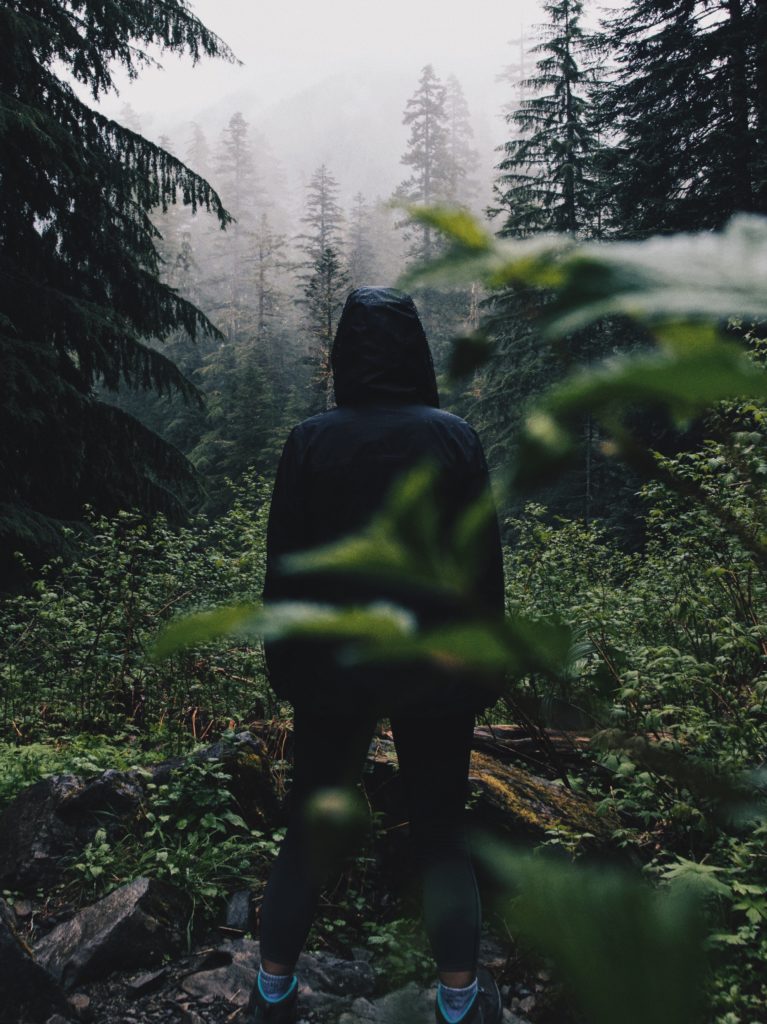
I bought a cheap orange vest I can wear over my coat for my morning walks.
Wearing orange during hunting season is such a simple and obvious safety tactic that I didn’t think twice about doing it, but the first morning I went out with the vest on I discovered a lot of complex feelings about being so visible in the world.
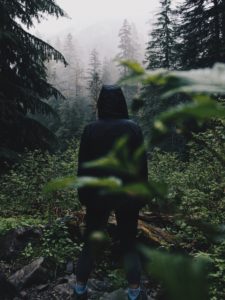
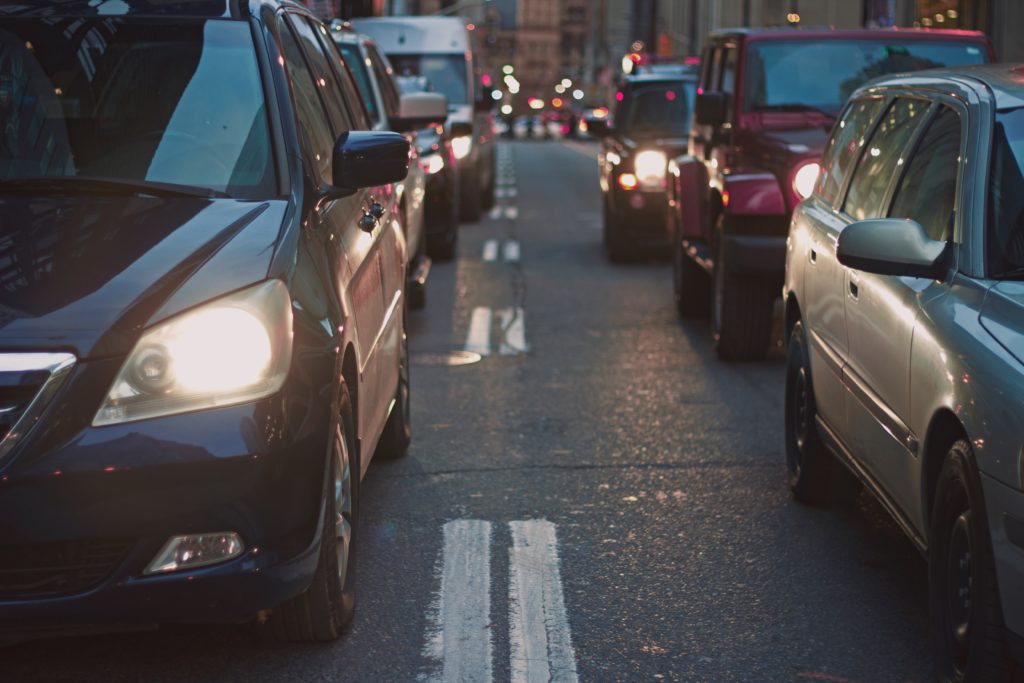
Photo by Andrew Spencer on Unsplash
The first thing I noted was how dangerously exposed I felt. I do not want to be seen by human eyes. I don’t mind if the wildlife sees me, but if they do I’m less likely to see them, so I do my best to move quietly and unobtrusively through the landscape, wearing neutral, natural colors. I stop and sit or lean against a tree for long stretches, hardly moving, watching the river and listening to the woods around me.
The orange vest shrieks, “Look at me! I’m here!” and I hate it. It’s more than just my preference to blend in to backgrounds and maintain protective camouflage. It seems a life-and-death necessity to avoid being seen.
I’ve been aware of my hypervigilance for some time now. I’ve never been comfortable in crowds. If I’m not able to position myself in a corner or with my back to something solid and watch, listen and evaluate, anxiety quickly disables me. I need to know where the exits are in any indoor space.
This is interesting, as I’m fascinated by people, and people watching is one of my favorite activities. I’ve frequently longed to be invisible, to watch and listen freely and leave no trace of my presence. If I could be invisible, I imagine I’d still get overstimulated by noise, activity and technologically-generated energy, but I’d feel safer.
The strength of my feelings as I donned the orange vest begged the question: What happens if somebody sees me? What’s so terrible?
That’s easy. Criticism happens. Judgement, abuse (verbal, emotional, physical), negative feedback happen. If I’m seen doing anything, I’m sure to be doing it wrong (according to the observer, anyway). I’m sure to disappoint. I’m sure to be inadequate or inappropriate. My clothes are wrong. I’m clearly behaving like a slut, going out on my own land in my men’s Carhartt jeans and old boots. My hair is wrong. My choices are wrong. If I’m heading for the northern boundary of our land, I should be walking the southern border. I’m too noisy. I’m in someone’s way. I’m too slow. I’m wasting my time and should be doing something more productive. I’m irresponsible. I’m lazy. I’m selfish. I’m scaring the fish. I’m scaring the birds. I’m scaring the animals. I should be ashamed of myself.
Wow. No wonder I don’t want to be seen. Who knew the perils?
I didn’t know, until my ugly orange vest dredged all this up from my swampy subconscious.
On subsequent mornings, as I’ve walked in my orange vest, I’ve thought about the tension between being seen and avoiding being seen. How can anyone be in the world without being seen, even the most self-effacing of us? Refusing to be seen is refusing any healthy human connection. How do we get hired without being seen, or accepted for college? How do we follow our creativity or passion if we’re afraid to be seen? How do we engage in face-to-face conversation or discussion, or participate in politics or as a volunteer?
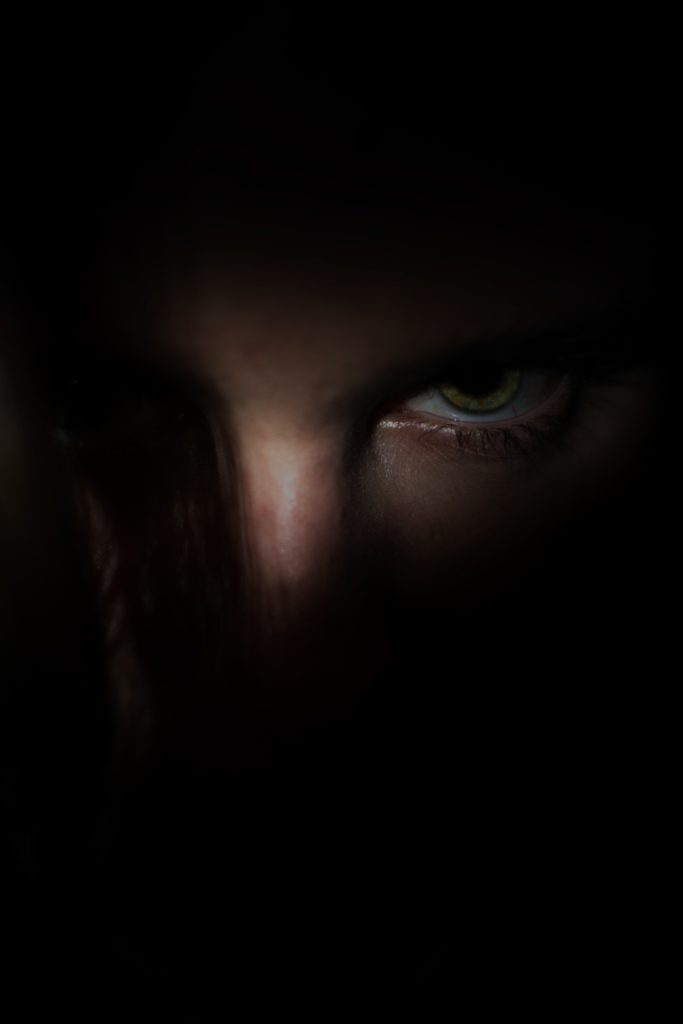
Photo by Peter Forster on Unsplash
On the other hand, how much exposure is too much? How can we avoid being seen by the shooter at the concert, in church or in the movie theater? We seem to be gradually becoming more and more captive to the Matrix, which makes us increasingly vulnerable to identity theft, technological sabotage and cyber-based terrorism.
I sometimes feel I carry protecting my privacy too far. I can’t say I regret not being on Facebook and other social media, as I’ve yet to hear about anything there that I need. On the other hand, not having a cell phone in today’s world creates a lot of problems for me. My personal issues with being seen are in the context of much wider social issues about exposure and safety. I don’t have any answers for the wider social problems. I wish I did.
For myself, though, it’s clear I need to address some of my subconscious beliefs about what will inevitably happen if I am seen. I’ve also developed a thicker skin about being criticized and judged. At this point in my life I’m really not much interested in the criticism and judgement of others. What interests me is how I feel about myself. My list of terrors about what happens if I’m seen is decades out of date, and I’ve already survived those consequences many times over. More of the same is boring rather than terrifying.
I’m stuck with my orange vest for several more weeks, and that’s OK. I’ve come to terms with it. In fact, I’m grateful to it, because it exposed some old wounds that needed attention. I’m stepping into plain sight In many ways in my life, this blog being one of the most prominent and challenging. Now I’ll practice walking this land in plain sight as well.
All content on this site ©2017
Jennifer Rose
except where otherwise noted
by Jenny Rose | Nov 2, 2017 | A Flourishing Woman, The Journey
In the Neopagan Wheel of the Year, Halloween is the modern secular version of Samhain (SOW-in), the last harvest festival, a time when the veil between the spirit and corporeal world is thin and we prepare for the peace and rest of winter. It’s a time to let go of that which no longer serves us.
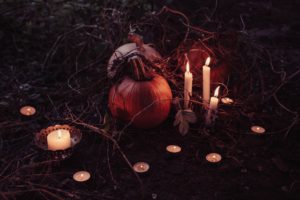
Photo by freestocks.org on Unsplash
This year Samhain was ushered in by the remains of Hurricane Phillippe, which battered Maine and other parts of the Northeast with high wind and heavy rain.
Wind is an old familiar of mine, as the place I came from in Colorado was extremely windy. There, the wind blows relentlessly for days and nights on end sometimes, a steady roar from one direction that fills the air with sand, grit, trash and other debris, frequently exceeding 60 mph and occasionally 70 mph. It’s the kind of wind nobody wants to go out in and it ground away at our nerves, making us feel housebound and irritable enough to climb the walls. It sucked all the moisture out of the ground, the plants and our skin. It tore roofs off sheds, blew down fences and trees, closed vulnerable highways and sent trampolines into the air.
The gale we had here this week was a different kind of wind. It came from all directions in gusts. It made the house groan and the trees thrash. It tore shingles off the roof and downed hundreds of trees. More than five inches of rain fell in billowing curtains. As a result, many thousands of people lost power, roads are blocked and it may be the end of the week before all the repair work is finished.
The storm hit us in the wee hours. We were awakened by an exploding power transformer somewhere close by, probably because of a fallen tree.
When I went out for my morning walk, I found change.
Several large trees have snapped off and lay or lean, the exposed raw wood pale and jagged. One less tree in a patch of thick forest is a subtle change to my eyes, but to the life surrounding it for several feet in every direction it’s a dramatic turn of events. It changes the light. It changes the nutrient demand underground. It feeds the mycelium and other organisms that will break down the wood. It gives new opportunity to young trees and other plants.
All the trees that came down on our land looked unhealthy, and several were rotting in place and collapsed rather than sheared off. Lots of dead branches tore away, too, and cones were flung far and wide.
As I walked, I reflected on change. Millions of people are experiencing unprecedented storms now. In just a few hours, whole lives are swept away by powers we cannot control. But the wind of change can also be a breeze, a zephyr we hardly notice, even if we practice daily presence with ourselves and our surroundings. Change is always with us, as inevitable as death.
More often than not, I fight with change. I don’t mind the idea of change, per se, but I want it to be on my terms. I want to control it. In my own life, though, change has often come unexpectedly and catastrophically, sometimes in the form of a seemingly insignificant moment in which I suddenly see. I suddenly assimilate a vital piece of information. A veil tears and I discern what lies behind it. In an instant, everything changes, and at the same time it doesn’t, at least not more than usual.
Yet I am changed, and I can never go back.
In a few days, things will normalize in Maine, but the landscape is altered now. It will never quite be the same again, although our experience was trivial compared to Texas, Puerto Rico and many other places.
Walking our boggy fields alongside the river, my old boots leaking at a split seam, it seemed to me the greatest gift of Samhain is the opportunity to allow wind and storm, to revel in them, to join power and energy with them, come what may in the aftermath. I stood watching the river, filled right to its brim, running muscular and turbid, crowded with tree debris and occasional trash. Several tree skeletons that had leaned on its banks were gone.
There can be a glorious sort of power in letting go, in spite of fear and resistance. I discovered that in Colorado. As I walked, it was still quite windy and wet, the landscape waterlogged and disheveled. Halfway through my walk I discovered a tick crawling on my hand, and a quick inspection of my head-to-toe canvas army supply rain cape revealed several more. I scraped off those I could see with a stick while I paused at my second river overlook to watch the water and then navigated a large old white spruce that had fallen across the mowed path and went home to do a lengthy and soggy tick check. The final count was 13, by the way.
Collaborating with a storm like this is good work for Samhain. I’m content. The forest has been culled and renewal will follow. New life will come into every space that was emptied. Our streets and roads, blocked with fallen trees and sagging power lines, look devastated rather than graceful and elegant. Thousands of people are managing without power. Yet the wind cleansed us of dead and dying life, whether or not we were ready or consented.
Now there’s no choice but to go on, to step into the diminishing light of winter, to face whatever the future brings, to replace what no longer serves with something more powerful. I want to leave you this week with a poem I wrote in October, 2012.
Wind
Come, wild wind, sweep across the sky and loosen the world!
Rise, wind, blow! I summon you with breath and breath again!
Blow, wind, roar! I command you from the center of loss!
Roar, wind, howl! Fling me open. Tear all the pretty things away.
Peel my lips from my teeth and flay me to pieces.
Lend your voice to mine and scream me into clean bones.
Scream!
Let us sever and rend together!
Strew the tatters of my dreams across stubbled fields and in dusty streets!
Rage, wind, exult!
You think you bend me to your will?
You take nothing I do not surrender.
You weaken and end before I do.
And when tumult has passed I will call myself home from wherever I am scattered.
I shall gather the rags of what has been and shape them into a sail and you shall fill it and take me onward.
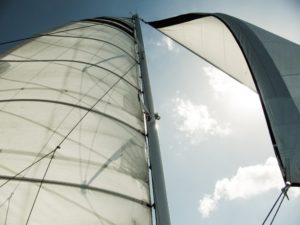
Photo by Kelly Sikkema on Unsplash
All content on this site ©2017
Jennifer Rose
except where otherwise noted
by Jenny Rose | Oct 26, 2017 | A Flourishing Woman, Mind
I went to the dentist last week. I spent the usual hour with the hygienist and then the dentist breezed in to give me four or five minutes of exam, comment, teaching and friendly conversation. Thankfully, I don’t require more than this, as my teeth are in excellent shape. In the course of those few minutes, I used the term “permaculture,” and he asked me what it was. I gave him a brief answer, and on the way out the hygienist said I had a “high dental IQ.”
“She has a high IQ, period,” he responded as he left.
I almost got out of the chair and went after him to explain that I’m the dumb one in the family, and certainly don’t have a high IQ.
As I’ve gone about life since then, I’ve thought a lot about that interaction. I’ve also been feeling massively irritated, isolated and discouraged. This morning I woke out of a dream of being in a closet groping for my gun, my knife, even my Leatherman, absolutely incandescent with rage, because a man outside of the closet was having a dramatic and violent meltdown, intimidating everyone present because of something I’d said or done that he didn’t like.
I wasn’t intimidated. I was royally pissed off.
When I had my weapons assembled, I stormed out of the closet and came face-to-face with a clearly frightened woman who was wringing her hands and making excuses for the behavior of the yelling man. I screamed into her face that he could take his (blanking) opinions and shove them up his (blanking blank) and unsheathed my knife, not because of her, because of HIM.
I woke abruptly at that point and thought, I’m not depressed, I’m MAD!
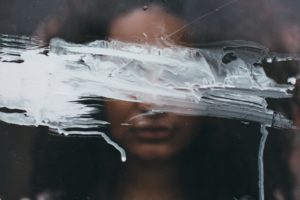
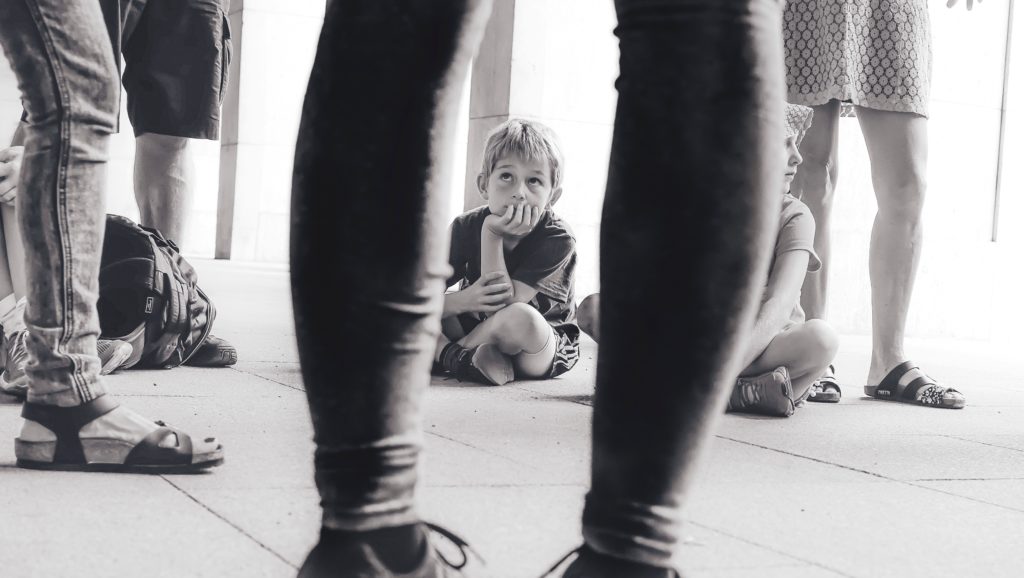
Photo by Nicole Mason on Unsplash
While I showered and cooked breakfast I sifted through IQ and conformity and cultural and family rules, economic success and failure, work, invalidation and silencing and keeping myself small. I thought of how pressured I’ve always felt to toe the line, be blindly obedient, follow the rules, ask no questions and be normal. Normal, as in compliant, and refraining from challenging the multitude of life’s standard operating procedures that “everyone knows.” Normal, as in not daring to resist, persist, poke, peel away, uncover. Normal, as in never, NEVER expressing curiosity, a thought, an experience, a feeling or an opinion that might make someone uncomfortable. Normal, as in never admitting that the way we’re supposed to do things doesn’t always work for me, and frequently doesn’t appear to work for others, either. I slammed around the kitchen, turning all this over in my mind, letting the bacon burn, and finally pounced on a keystone piece to write about.
What does it mean to be smart? Why do I feel like a lying imposter when someone makes a casual comment about my IQ? Why is IQ even a thing? Why does so much of my experience consist of “sit down and shut up!”?
Intelligence is defined on an Internet search as “the ability to acquire and apply knowledge and skills.” Please note the absence of any kind of test score in that definition. Likewise, there’s no mention of economic status, educational status or social status. Also, this definition says nothing about intelligence as a prerequisite for being a decent human being.
The definition takes me back to the playing field in which I wrote last week’s post on work. Here again we have a simple definition for a word which is positively staggering under assumptions and connotations.
Fine, then. I’ve explored what work means to me. What does intelligence mean to me?
Intelligence means the ability to learn, unlearn and relearn. Good learners do not sit down and shut up. We question, and we go on questioning until we’re satisfied with answers. We try things, make hideous mistakes, think about what went wrong and apply what we learned. We don’t do the same thing over and over and expect a different result. We exercise curiosity and imagination. We pay attention to what others say and do and how it all works out. We pay attention to how we feel and practice telling ourselves the truth about our experience. After a lot of years and scar tissue, we learn to doubt not only our own assertions, beliefs and stories, but everyone else’s as well. We practice being wrong. We become experts in flexible thinking. We adapt to new information.
We give up arguing with what is.
Intelligence endures criticism, judgement, abuse, taunts, threats, denial and contempt. It’s often punished, invalidated and invisible. Intelligence takes courage.
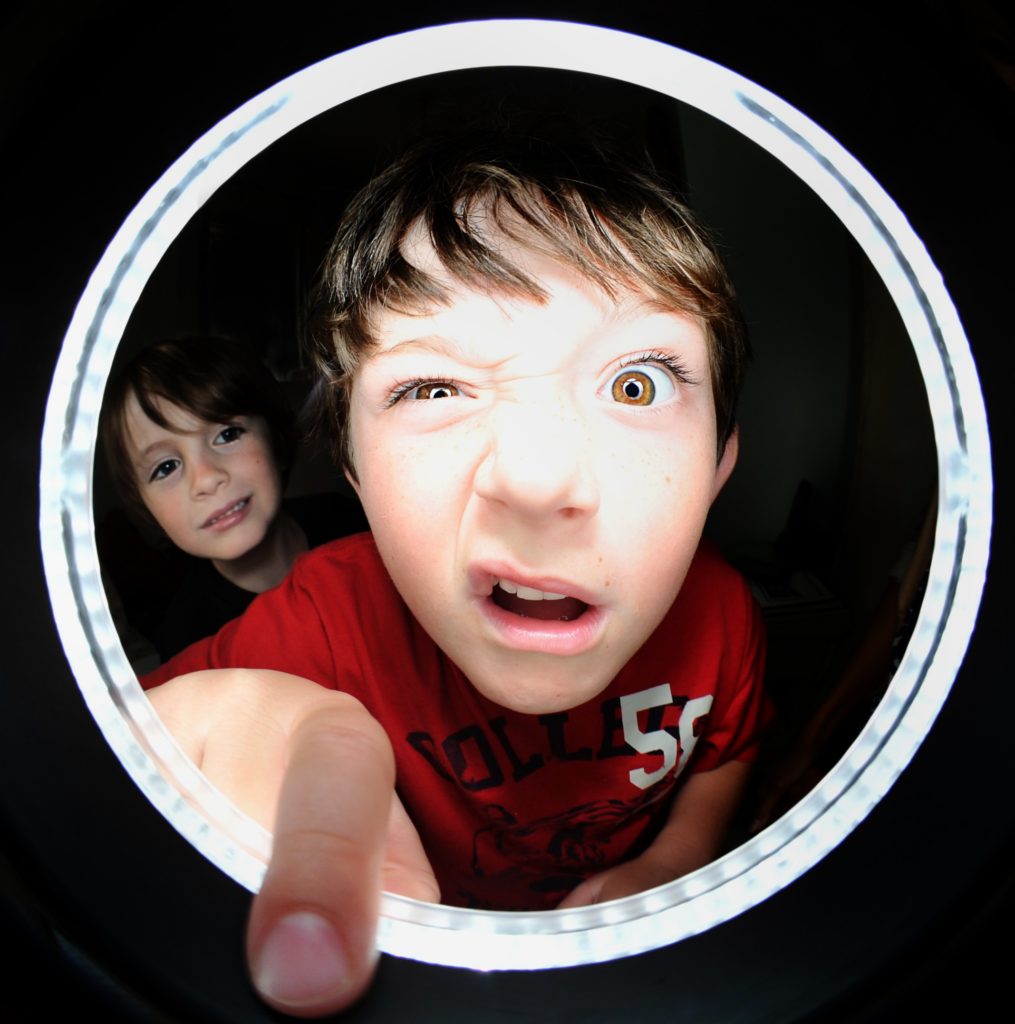
Photo by Cristina Gottardi on Unsplash
Intelligence is power. It does not sit at the feet of any person, ideology, rule or authority and blindly worship. It retains the right to find out for itself, feel and express its own experience, define its own success, speak its truth in its own unique voice, and it remembers each of us is limited to one and only one viewpoint in a world of billions of other people.
Intelligence is discerning the difference between the smell of my own shit and someone else’s.
For me, intelligence is a daily practice. It’s messy and disordered and fraught with feeling. It means everything is an opportunity to learn something new. Everything is something to explore in my writing.
I have no idea what my IQ is, and I don’t much care. I’m sick and tired of all the family baggage I’ve carried around about who’s smart and who isn’t and how we all compare. Honestly. What am I, 10 years old? Enough, already.
I’m also fed up with being silenced, and in fact I’ve already refused to comply with that, as evidenced by this blog. I understand a lot of people don’t want to deal with uncomfortable questions. Too bad. Those folks are not going to be my readers. It’s not my job to produce sugar-coated bullshit that can’t possibly threaten or disturb anyone.
So there it is. The practice of intelligence.
Photo by frank mckenna on Unsplash
All content on this site ©2017
Jennifer Rose
except where otherwise noted
by Jenny Rose | Oct 19, 2017 | A Flourishing Woman, Mind
Make yourself useful!
Can’t you find something productive to do?
Do those words sound familiar? Yeah. Me, too.
I was raised with a strong work ethic and a strong volunteer ethic. Both have been solid foundations in my life, except for one thing:
Our cultural definition of work.
Work: That activity that imprisons so many of us into a schedule, into a car, into rush hour. That large piece of our life in which we must perform certain tasks in certain ways according to certain policies and procedures and do nothing else. That arena in which we compete and prostitute our power to an (all too often) toxic authority.

Photo by Nabeel Syed on Unsplash
Work as defined by someone else and enforced through our fear of losing a paycheck. Usefulness as defined by someone else. Productivity as defined by someone else.
Then there’s workaholism. I’ve been closely connected to more than one workaholic. I used to think workaholism was a meaningless riff on alcoholism, but one day I explored it more closely because it was destroying a relationship. I bought a book (I know you’re shocked), Chained to the Desk, by Bryan E. Robinson, Ph.D., and I read it and wept. I recognized a pattern I’d lived with my whole life: A pattern of unavailability.
Workaholism describes a dynamic in which we become entirely consumed by one idea or activity. Most commonly, it’s a job, but it can also manifest with volunteer work, hobbies and interests, recreational activities or ideologies like religion. Oh, and let’s not forget addiction. During active addiction as well as recovery, some lives remain centered on whatever the addiction is or was. There’s no room for anything else.
The workaholic has a primary relationship, just like an addict, and that primary relationship is all-consuming of his/her time and energy, although most of them will never, ever admit it. Workaholics are compulsively driven, self-destructive, unable to make choices, usually in denial, and they destroy relationships. They view themselves as frantically and endlessly trying to keep all the balls in the air: Family, partner, household, friends and work. Those of us connected to them experience chronic unavailability and abandonment from them and helplessly watch as they become steadily more overwhelmed, exhausted, disconnected, ill and miserable. Trying to talk about it only makes it worse.
Workaholism often begins because we are captivated by an activity we love. We have a sense of mastery and competence, or a sense of contribution. The activity seems to give us a connection to our own power. Sometimes we earn money, or recognition, or develop social bonds, or experience some other payoff that we can’t get enough of and can’t do without. Whatever it is we’re engaged with is familiar. It’s not uncomfortable, uncertain or uncontrollable. We understand what we’re doing. We can succeed at it. It doesn’t frighten or threaten us. When we’re engaged with it we’re not doing anything else. It’s the perfect distraction. We can’t be expected to do anything else. We’re not supposed to be doing anything else. We have no time for anything else. We’re working!
Meanwhile, the rest of the workaholic’s life, all the complicated, messy stuff, becomes a smoking crater. The larger the crater grows, the harder the workaholic works in order to avoid managing or facing it.
It’s a dreadful, destructive cycle.
Some people on the other end of the spectrum from the old 9-to-5, 40-hour-a-week paradigm are talking about unjobbing. Unjobbing challenges the traditional Calvinist work ethic so many of us were raised with. It explores the territory between a 40-hour-a-week job and chronic unemployment supported by foodstamps and other social subsidies. I’ve read a lot about it over the last two or three years.
Unjobbing does not imply that one doesn’t work, just that we define it more precisely, or maybe less precisely. Maybe we should stick with the classic meaning of work as an activity involving effort done in order to achieve a purpose or result, and let any reference to jobs go.
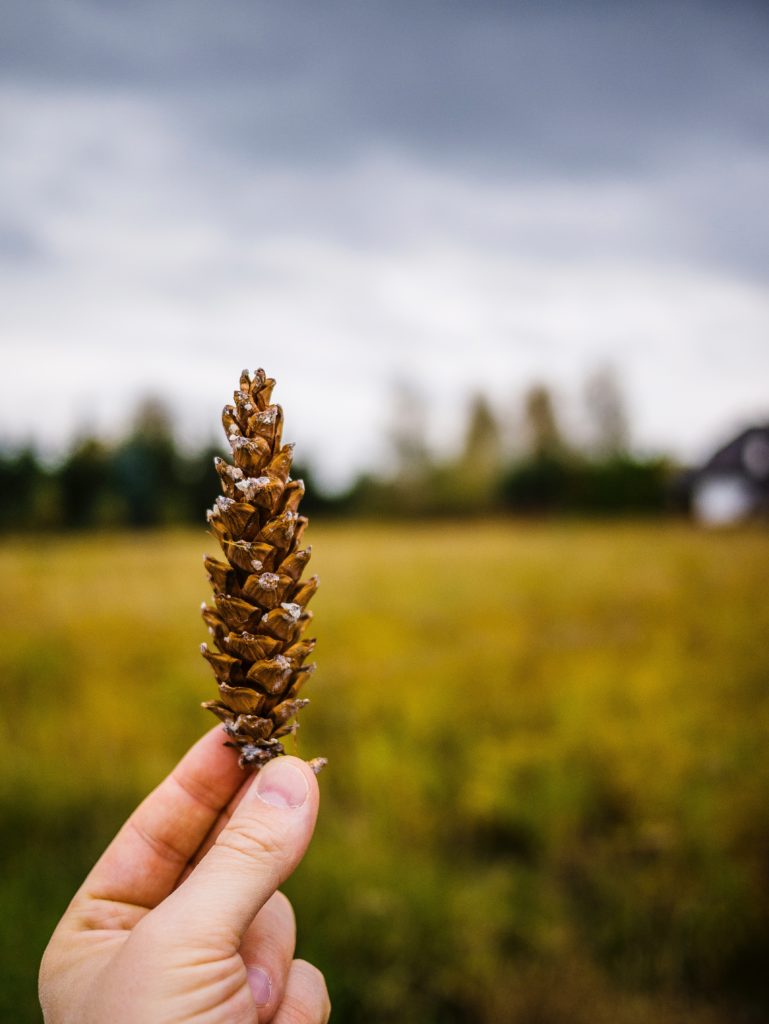
This morning, as usual, I took a walk. I took a bucket with me, because the trees are dropping their cones and I make handcrafted wreaths and other art with them. (When I lived in Colorado, I bought all these cones. Now I take a bucket on my walk and pick them up! I love it.)
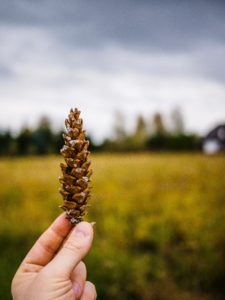
Photo by Michał Grosicki on Unsplash
Eastern White Pine
Anyway, as I walked I thought about all this: Work, unjobbing, workaholism, income sources. I groped around in the terminology, in my guilt and shame about not wanting to work in the way I’ve done all my life, and poked at my deeply-rooted belief that everyone must work! I thought about how expensive it can be to work, in education, in time, in energy, in clothing and equipment, in gas and transportation, in child care, in taxes and “benefits,” in self-respect and power and joy. I thought about work as a limitation, perhaps one of the biggest limiting factors in our lives.
It occurred to me that what I really want is a seamless life. I don’t want my life to look like: Work For Pay. Relationship. Creativity. Housework. Errands. Relaxation. Exercise. Volunteerism. Play. I can do more than live in a series of small boxes, much, much more. I can be more.
I want my life to be like my morning walk. I don’t set an alarm or adhere to any other kind of schedule in order to do it. It’s not a chore; I do it because I want to. It starts my day with exercise. It’s meditative, grounding and centering. It refuels my creativity. It reconnects me to my spiritual source. It provides free resource with which I can earn money and do something I love to do.
All this in a 45-minute walk. Useful. Productive. Joyful. Simple. Free. Seamless.
A seamless life. I don’t know if I can create such a life. I only just this morning identified what I really want. I’m not going to discuss with the voices in my head whether my desire is appropriate, allowed, shameful or possible. Such a discussion isn’t useful. I’ve worked all my life, for a paycheck, as a volunteer, in a household and as a parent. If I have to go back to a traditional job, I will.
But I’m going to try damned hard to find a better way.
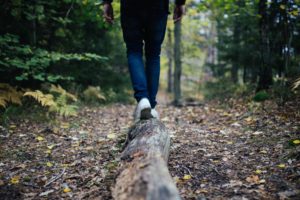
Photo by Jon Flobrant on Unsplash
All content on this site ©2017
Jennifer Rose
except where otherwise noted
by Jenny Rose | Oct 12, 2017 | A Flourishing Woman, The Journey
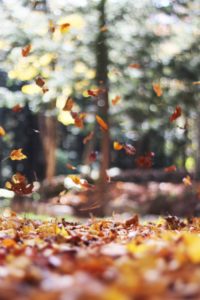
Photo by Autumn Mott on Unsplash
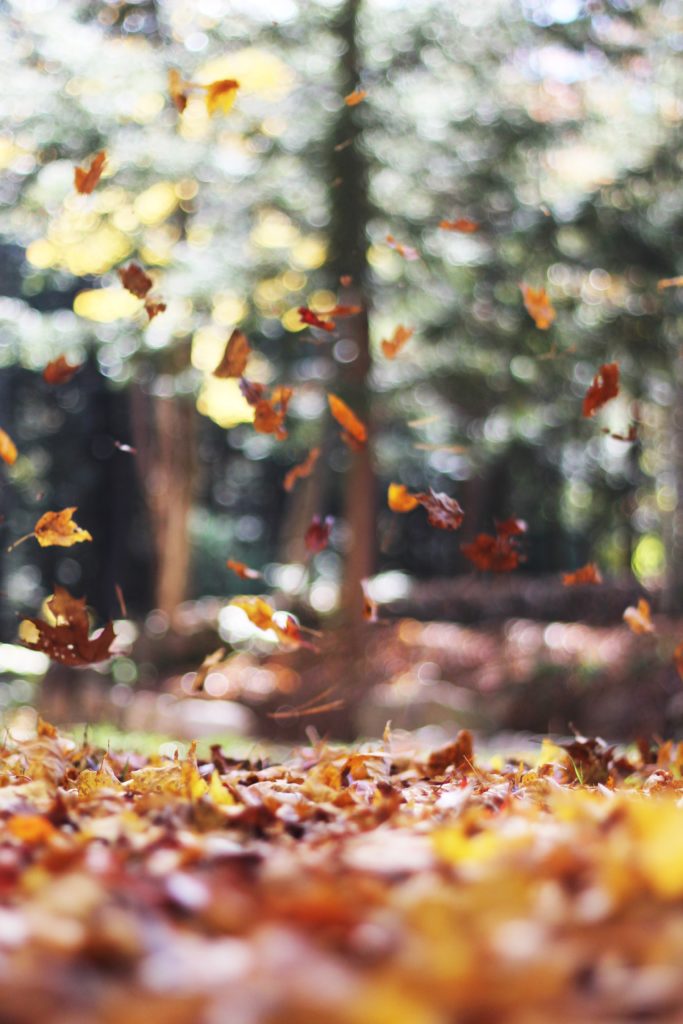
I love autumn, and autumn in New England is particularly poignantly beautiful. The leaves, oh the leaves! It’s as though the trees release their passion in one final gasp of ecstasy before their long sleep. The colors stun the senses with their beauty; it’s almost too much to absorb. Yet the trees’ splendor is fleeting. Inexorably, the leaves fall like golden tears, like blazing sparks, and as they fall the greatest power of all is revealed: The true shape of things.
The green and fiery sea of the forest and fields recedes. Lichen-covered rocks bare themselves. Trees stand or lean in bony beauty, gnarled and hollow, smooth and upright, each species clad in its own color and texture, but now the colors are russet and ivory, shades of brown and grey touched with black. Thorns and stems become semi-transparent cover for winter-colored birds and animals.
The bare forest is everything it is and nothing it is not.
I, too, am becoming reduced to my essential self. Confusion, guilt and shame are loosening their hold on me and drifting away, and I make a resting place for them in my writing. I look back in my memory and, for the first time, begin to see the true shape of things. All the words that weighed me down and kept me small, all the gaslighting and controlling, all the lies and distortions, are responding to some miraculous internal seasonal shift and slant of light. I am bursting into triumphant understanding, and then letting go, letting all that does not serve me fall away. My true shape emerges, and it’s strong and clear-seeing and wise. It always was.
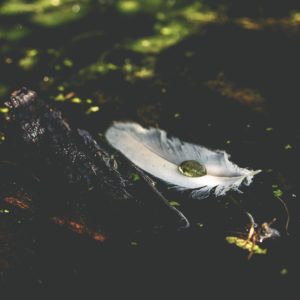
Photo by Erik Stine on Unsplash
Now I begin to see the true shape of things. Now begins a season without pretense, unencumbered by expectations. Now the lineaments of my feelings lie bare. The landscape of my life becomes stark and uncomplicated, a walk through winter woods where a feather is a feather, a quill a quill and a swatch of fur on a thorn exactly what it is, not more, not less, not something else entirely. I reclaim the dignity of my own perception, intuition and experience.
It does not surprise me that traditionally this is the time of year when the veil between the worlds thins, ghosts walk, legends come to life, ancestors are honored, and we acknowledge that which haunts us. I do not fear my ghosts. Indeed, they’re old friends and companions. My bogeymen were flesh and blood concealed beneath dazzling costumes of false power, fearful only as long as their true shape was hidden from me.
Some fear the fading light, endings and truth. Some prefer the riot of distraction and confusion. Some refuse to see or know the true shape of things. My own courage is not strengthened by distraction, no matter how beautiful or seductive. My courage is a thing of unadorned simplicity, spare and clean as bone.
The leaves fall, ravishing, rapturous. At last, the true shape of things emerges from the blaze, pure and indestructible, and I embrace it like a lover.
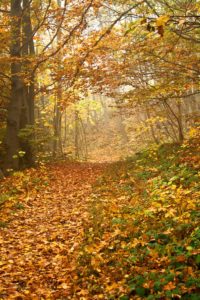
Photo by Vanessa von Wieding on Unsplash
All content on this site ©2017
Jennifer Rose
except where otherwise noted