Last evening, I was part of a remarkable conversation about hugs.
Yes, hugs.
I’ve written before about my hunger for touch and the shame that goes with it. A longing for touch is always with me to some degree, ebbing and flowing with my social context, but I hide it and rarely speak of my need. Keeping it secret is, of course, self-protective. I’m ashamed of my need and what others will think of it, but we also live in a culture that distorts much of our rightful and healthy sexuality and sensual expression. A woman who craves physical affection and reassurance is exceedingly vulnerable and very likely to be misunderstood.
I’m also respectful of the boundaries of others; unfortunately, many people are badly wounded around unwanted and/or inappropriate touch. I myself am confused about the interaction of abuse, touch and sex, and I know many others are as well.
Yet I maintain touch is one of the core needs we all have, and I know touch deprivation is a condition that has been extensively studied. As human beings, we don’t develop normally if we’re touch deprived or otherwise dislocated from our neurobiological need for skin-to-skin contact.
This is an issue I deal largely with inside my own head, although I have mentioned it in writing. I haven’t discussed it among friends. If we reveal how ugly and pathetic we are, we won’t have friends, right?
Sigh. No. Not right. We all have secrets like this, and true friends don’t turn away from our warts and scars. Also, I get bored by my own fear and the tension between being real and being accepted. To hell with it.
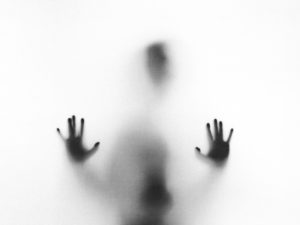
Last night, I found myself standing outside in the early winter evening with two others talking about, of all things, hugs. The harsh light at the apex of the barn roof fell on us, making strange, stark shadows on our faces,
Photo by Erika Giraud on Unsplash
I was stunned (first) and amused (later) to discover a hug meant something entirely different to each of us. I’m constantly poking at the different meanings we have for words and concepts, and I’m acutely aware of the confusion and conflation of things like respect and agreement. Why should the experience and interpretation of either giving or receiving a hug be any different?
I suppose it’s such a deep, painful and private issue I’ve simply never given it enough airtime to realize touch, too, has many different meanings. The only meaning I’ve been able to see is my own, and I realize now my meaning is very unsophisticated and black and white:
Touch means love. If there is no touch, there is no love. If my touch is rejected, my love is rejected, which I take personally and make into a rejection of me, naturally!
So there we stood in the icy driveway, having just disembarked from the car. I said (and realized as I said it how true it is, though I never expressed it this way before) a hug is the best “I love you,” I can express. I’ve always been able to say (and hear!) far more physically than I can with words.
Photo by Nicole Mason on Unsplash
My friend (another woman) said she learned to think of hugs as a sign of weakness.
Another friend (a man) said to him a hug, or most other kinds of physical contact, are a threat of pain, violence or abuse.
Wow. The three of us stood there, looking at each other. I was reminded of how little we know or guess about what goes on below the surface of others, even others we know and care about. I was humbled by their honesty, touched by their vulnerability, grateful for the reminder we all carry around pain and confusion over something in our heads and hearts. I wanted (of course!) to take them both in my arms, but refrained (also of course).
It’s amazing to understand the best, most compassionate and loving gift I can give another might feel to the recipient like a threat, or endanger their sense of strength and independence. My intention may be completely lost in translation.
Photo by Ian Espinosa on Unsplash
When I think about the times I’ve felt rejected or rebuffed as I interact with people who aren’t comfortable with touch, I suddenly realize their discomfort is likely not about me at all. I no longer get to be the star in my soap opera (nobody loves me, I’m old, I’m ugly, I’m untouchable). Maybe, in fact, others don’t want to make me feel weak, or threatened, or who knows what else!
I can’t help but giggle about this.
I can’t say more about my personal thoughts and feelings right now. It was one of those brief but amazing conversations I can’t stop thinking about. It didn’t lead me to a grand and glorious conclusion, it just revealed aspects of touch I hadn’t been aware of before.
Social touch is extremely complicated and essential to healthy human functioning. I discover, as I research, the discipline of psychotherapy is beginning to look at the importance of touch as a tool for connection and emotional healing. We know touch can play a role in physiological healing. Touch is an essential part of nonverbal communication. Different cultures have different social rules about touch. A couple of generations of American parents were taught to avoid holding or cuddling infants and children (don’t spoil your child); thankfully, we are changing our beliefs about that now, but that doesn’t help the generations of disbonded and attachment-disordered children who are now adults and struggling. Skin hunger and touch deprivation are a huge problem for elderly populations.
Photo by Stefano Pollio on Unsplash
We also live in a #MeToo atmosphere in which the previously hidden pain of thousands of victims of inappropriate touch is becoming visible. As healing and validating as our recognition and outrage over this kind of abuse is, it leaves many people nervous about giving or receiving any kind of touch from anyone unless it’s sexual (as in consensual between two adults), making us ever more isolated, ashamed, and skin hungry.
I wish I had answers for myself and others, but I don’t. Somehow, we have to find a way forward with healthy boundaries, consent, communication and respect as we honor our deep physical, emotional and neurological need for nonsexual touch.
Crystal Casket by Rowan Wilding
Innocent, yet somehow run afoul of a jealous queen A sly drop of poison introduced A taint that can never be erased. So polluted, then, they built me a crystal casket, Protecting the world from my touch. I rise and clothe my outcast body, day by day Concealing shameful curse But at night I return naked to my crystal casket. The moon bathes me in her cool silver milk Ebbing and flowing like a slow heartbeat in the ravishing night. I lie with my hands folded on my chest (Their small warm weight comforts my empty heart) And watch the sky storm with stars Galaxies in my eyes. Neither shroud of rain nor quilt of snow can touch me, shut away But I love them from within my crystal casket. No faithful guardian watches over me, a lighted lantern at his feet. No prince arrives, seeking a poisoned kiss. I was never black as ebony, red as blood and white as snow. Now I’m spiderwebbed with age and moon-milk Cool inside my crystal casket while midnight passions wheel around me Dark flowers and fruits, musk and nectar, texture and taste and scent
I stumbled across a parenting advice column in the online publication Slate recently. It caught my eye because the columnist responds to the parent’s question with another question: Whose needs are we talking about here, yours (the parent’s) or the child’s?
Photo by Jordan Whitt on Unsplash
The columnist describes this question as one of the best pieces of parenting advice she ever received. I’ll go further and say it’s one the best pieces of relationship advice I’ve come across.
I’m a parent, a sister and a daughter. All are difficult roles I feel I’ve failed to play adequately, although I consistently ignored my own needs in favor of what I understood as my family’s needs and expectations.
Ironically, I recognize now my greatest failure by far in life has been a failure to honor myself and my own needs. Whether or not we can please others in any consistent way is debatable, but I discover accepting responsibility for pleasing myself, though it feels odd and unaccustomed, fills me with joy and gratitude. My wants and needs are simple and few, and honoring them has been enormously healing.
This new behavior is also a source of anguish beyond words.
The anguish arises from a conflict many of us face at one time or another — a conflict of values. I value connection and being of service to others, which involves compassion, respect, tolerance and unconditional love. I also, for the first time, value myself. I’m stunned at the destruction that occurs when these values collide with the values of others.
Photo by Edu Lauton on Unsplash
Is it necessary to choose between meeting our own needs and meeting the needs of others? I suspect part of the answer to that question lies in the specific needs themselves and how we view them as a culture. Perhaps it’s just my bad luck that I’m a misfit. My need to not be tied to social media and a cellphone, for example, is just as important to me as the needs of others to be firmly embedded in social media and keep their cellphones in hand, but my need is not culturally supported. Fair enough. The fact that I’m slightly out of step from most other people in my culture is not a newsflash, nor is it something that requires fixing or changing. I view diversity and deviance from the social norm as strengths, not weaknesses.
As I’ve begun to stand up for my own needs, I’ve been told I’m cowardly, selfish, destructive and hurtful to those I love best, disappointing, stubborn and inadequate. I’ll own stubborn. I don’t take responsibility for being disappointing; it’s not my job to meet the expectations of others. As for the rest of those characterizations, they’re so far off the mark of who I am that I can’t take them seriously, although they cut me to the heart.
I don’t view managing needs as an exercise in all or nothing. I can usually come up with several ways to meet my own needs and support others in theirs. More often than not, however, I’m forced into an all-or-nothing framework, which feels like manipulation or intimidation, or both. That’s why the accusation of cowardice makes me shake my head. Refusing to give in to such tactics is not the act of a coward.
Why do we tolerate and support behavior that demands others be responsible for meeting our needs, but attack those who take responsibility for meeting their own? Talk about a sick society!
The hardest thing about being unsupported in meeting one’s needs is the lack of recourse. Trying to explain to those who aren’t interested or are committed to misunderstanding or taking our choices personally is a waste of time and energy. Our only power lies in the choice between bowing to external pressure and abandoning ourselves or living with authenticity and integrity and accepting the consequences. I know what my choice is, but sometimes I don’t know how to survive the pain of it.
Photo by Hailey Kean on Unsplash
I wonder how many people are in exactly this spot; how many people move through their days and nights trying desperately to manage a balance between their own needs and everyone else’s, or agonizing over the tension between caring for others and caring for themselves when needs are not in harmony.
As human beings, we lead complex emotional lives. Needs are not the only variable. Boundaries can be very difficult to negotiate. We’re frequently unaware of how important reciprocity is in our various relationships. Ideals such as unconditional love and always being present for someone, no matter what, are lovely in theory, but do we owe unconditional love and support to those who don’t give it to us? Is it our job, in any role, to consistently put the other’s needs first in order to prove our love or justify being alive, or an employee, or a family member?
As a woman, I can’t think about needs without considering emotional labor. In any given relationship, who is doing the emotional labor of listening, practicing authenticity, organizing, scheduling, thinking ahead, staying in touch, practicing absolute loyalty, providing unconditional love or other kinds of support and nurture, managing feelings, and balancing needs? If that work is not shared or reciprocal, relationships wither and die, or the one burdened with the emotional labor does. There it is again — that choice, that terrible choice. Do we take action to save ourselves, even from our most beloved, in such a case, or do we ignore our needs and keep going until there’s nothing left of us because we are women who love?
Needs are not wrong, or a matter of shame. We all have them; we have a perfect right to get them well and truly met AND our needs are as important and not more important than the needs of others. We’re not all honest about our needs, however, especially needs to control and maintain power over others. Too often, we assume others have the same needs we do. Those of us who want to live and let live and assume others are after the same outcome are frequent targets for personality-disordered people looking for prey, power, fuel or other benefits.
Whose need is this? Answered honestly, the question opens a door to better parenting and better relationships in general. The question is an invitation to intimacy, respect, power-with, problem solving, tolerance and unconditional love. It also shines the bright and sometimes terrible light of clarity on our agendas for others and theirs for us, and the true quality and health of our relationships. If we can’t or won’t identify, respect and support our own needs alongwith the needs of others, we’ll surely extinguish ourselves as a species.
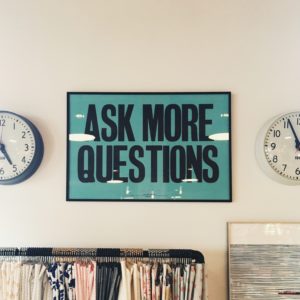
My partner and I have been watching back episodes of Nova for several weeks now on PBS. Last evening, as we watched “What’s Living In You?” and “Can We Make Life?” I realized that part of why I like the show so much is that it’s filled with people from all over the world who know they don’t know … and they want to know.
Photo by Frank Okay on Unsplash
This is a direct contrast to some interactions I had this week with people who know … everything. They know what happened; they know everyone’s motivations and secrets; they know exactly what everyone else should think, do and say. They have no interest in anyone else’s point of view or experience. They ask no questions seeking understanding or more information. They don’t have to. They already know, and any information that doesn’t fit their story is an attack, a lie, or a threat.
In these posts I’ve referenced Kathryn Schultz’s book, Being Wrong, a fascinating and funny look at the myriad ways in which we’re all wrong, every day, though some folks seem to feel their lives depend upon winning and being right. Even when forced to admit we’ve been wrong about something, we avoid thinking or talking about it, concentrating instead on all the ways we were, are, and will be right!
We live in a world in which knowing is highly valued. Uncertainty or even, God forbid, admitting or contemplating the vast cosmos of what we don’t know, is seen by some as weakness. I suspect, however, that what’s really going on is simply fear. It makes us uncomfortable to think about how much we don’t know. If we discover things, we might have to make different choices, and most of us don’t want to do that. It’s too much work.
Photo by Jonathan Simcoe on Unsplash
Fear doesn’t empower me, and neither does being right or wrong, or knowing or not knowing, Power is in the inquiry, in the questions, in the curiosity about ourselves, each other and our world. Power is in our ability to learn, unlearn and relearn — also called resilience — as we navigate our lives. We’re all both right and wrong, ignorant and knowledgeable, whether we admit it or not, but not everyone can ask a good question. Not everyone is able to propose an hypothesis and see it through to becoming a theory.
One of my greatest frustrations in life is with people who don’t want to know. What is that? How can anyone choose to be willfully ignorant? I don’t mean we all need to be interested in everything, as though life is one unending mechanistic reductionist set of classes. I mean we all need to be interested … period. In ourselves and the quality of our lives and experience. In others and the qualities of their lives and experiences. In our home, Planet Earth, and how to take care of it. In problem solving and innovation. In relationships and connection. In choices and consequences. In patterns, history and creativity.
Photo by Bryan Minear on Unsplash
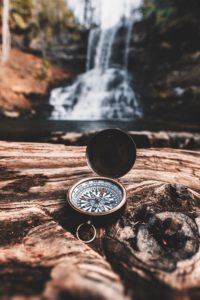
The old map-makers drew maps of the discovered world, labeling the undiscovered areas “Terra incognita” or “Here be dragons.” What is the difference between someone who stays strictly within the confines of what the majority accepts as known and those of us who poke and pry; open forbidden doors, jars and boxes; look through microscopes and telescopes; and sail, ride, walk, stumble or crawl in search of dragons?
It boggles my mind to imagine some people find safety in not knowing, in not understanding. How can we make effective choices if we’re missing information? How can we heal, or learn to do better? How can we break dysfunctional patterns in our behavior? How can we have healthy, authentic relationships with ourselves or anyone else?
The hardest part of this issue for me is how disconnected I feel from people who say they don’t want to know. I think of life as an adventure, and I want playmates. I want to share what I’ve learned and learn more. I want to live the questions. I want to explore, reframe, turn beliefs and ideas inside out and upside down. I want to master new tools and skills. I feel sad when people in my life can’t — or won’t — play with me. It’s hard to feel my curiosity and questions are threatening to others. It silences me, and when I have to be silent, or less than I am, I’m bored.
Photo by frank mckenna on Unsplash
The older I get, the less I realize I know. The older I get, the more willing I am to be wrong. The older I get, the more comfortable and confident I am with my ability to research, read, synthesize, understand, experiment, challenge and learn. I notice how angry that makes some people, and how intolerant some folks are of questions, especially uncomfortable questions.
Terra incognita. What a wonderful phrase. Anything could be there, anything at all. I’ll send you a postcard with a footprint of a dragon.
On the heels of last week’s post about unplugging, I had a conversation with friends about social media and what, exactly, it means to be social. What is a healthy balance of social and solitary? How do we determine if our social lives are appropriate?
Photo by Bewakoof.com Official on Unsplash
Predictably, I want to start this exploration with definitions, all provided by Oxford Online Dictionary:
Social: Relating to society or its organization; needing companionship and therefore best suited to living in communities.
Society: The aggregate of people living together in a more or less ordered community; the situation of being in the company of other people.
The root of social and society is Latin, and it means companionship.
Companionship: A feeling of fellowship or friendship.
We are not normally taught to identify our needs, beyond the obvious survival needs of air, food, water and shelter. Most people believe what we need is money. If we had enough money, everything would be happy ever after. We believe that because our capitalist culture depends on our believing it and continuing to fuel the economy with our spending.
Almost none of our true needs can be bought, however. Here’s a link to the best resource I’ve found online for thinking about needs.
Photo by Juan Pablo Rodriguez on Unsplash
Being social creatures, we also depend on those around us to demonstrate or tell us what we should need, what’s normal to need, or what’s appropriate to need. We’re neurobiologically wired to blend in with the herd, which probably helped us survive another day in the beginning. Individuals who could not or would not adhere to the collective lost the power and protection of the community. That’s why tribal shaming continues to be such a powerful and annihilating weapon.
I observe around me a vast continuum of social abilities and needs. Some people are quite extroverted and social. Others are positively hermits, and most of us fall somewhere in between. We also know some people have differently wired brains than the majority, and struggle with social cues and skills. Still others of us are more sensitive than the norm (whatever that is) and are easily overstimulated and overwhelmed in social situations.
So what does it mean to be appropriately, healthily, normally social?
The answer depends on the individual asking the question. The happiest and healthiest balance between connection, authenticity and contribution for each individual is as unique as our fingerprint, and it changes. What we need at 20 may not be what we need at 40, or 60. Life changes, we change, and our needs change.
it’s fascinating to remember Facebook was created by a brilliant young college man who struggled with social skills; specifically, finding sexual partners. In the beginning, Facebook was, in essence, a prehistoric dating app, and just about as sensitive and romantic! Of course, most college men aren’t looking for sensitivity or romance. They’re looking for sex.
In 15 years (isn’t that amazing?) our social intercourse has been entirely transformed. Some say our amazing connectivity is an enormous step forward. Others are beginning to ask important questions about the effectiveness and/or appropriateness of social media. Is it a useful tool we can master and control, or is at weapon that steals our power? Is it a positive advance that enlightens, informs and connects, demonstrably creating a happier, healthier, more compassionate society, or is it manipulative, divisive, addictive, and destructive?
It seems to me social media is exactly like a gun. It’s a neutral entity that can be used for either good or ill, depending on who is wielding it and why.
Social media is huge. I doubt anyone would disagree with that. However, people still form societies or communities around shared values, activities and belief systems in the real world. Social media, however, has changed face-to-face interaction as well; we’ve all observed people inhabiting the same room or even the same couch, each engrossed in the small screen and keypad in their hand or on their lap. Families do it. Married people do it. People do it on dates. Friends do it. Parents do it while ostensibly watching and supporting their children during swim lessons (a particular pet peeve of mine), or other activities. Is social media making these relationships healthier?
One of my problems with social media is the emphasis on external validation. This circles the conversation back around to authenticity and pseudo self. If we rely on external validation to tell us we’re okay (whatever that means to us), we’re not in our power. We’re focused on what others think of us rather than what we think of us. We’re wound up in external expectations of what our needs should be rather than what they actually are and figuring out how to meet them.
I wrote recently about normalizing obesity. Giving our power to social media is normal. That doesn’t mean it’s healthy or effective. Popularity does not mean valuable, desirable or useful.
Photo by Freddie Marriage on Unsplash
Technology in general and social media in particular are deliberately designed to be addictive, because our participation fuels marketing and consumerism via the data we provide with everything we do on social media platforms and the Internet. As so many people are now realizing, including me, the constant compulsion to check our social media accounts, dating apps, e-mail accounts, etc. means we are no longer making conscious choices. We’re driven by addiction.
Let’s go back to companionship, defined above as a feeling of fellowship or friendship. Consider Facebook. Remember, the creator of the platform struggled socially. He developed, as part of the platform, the ability to form a group of “friends.”
What did he mean? Was he describing a group of people who shared and reciprocated feelings of companionship and fellowship? Or was he describing a group of college men, not necessarily having ever met one another, joining together to figure out how to get laid more effectively and efficiently?
Facebook “friends” redefined friendship, and I’m not sure anyone really noticed or questioned it.
A friend is a person whom one knows. What does it mean to know another person?
When we look someone up on Facebook and scroll through their posts, pictures and conversations, can we conclude we “know” them? The obvious answer is no, of course not. The beauty of social media of all types is we get to present to the world the person we wish to be, or at least the person we wish others to believe we are. Our pseudo self, in other words.
Authenticity and intimacy require honesty. Honesty requires risk and trust. Honesty and trust build healthy friendships. Healthy friendships demand we have the ability to befriend ourselves first. Our real selves, not our pseudo selves.
Photo by Alex Iby on Unsplash
When was the last time you saw a photo of a party on Facebook in which everyone is posed and smiling and it looks like a great time, but the post says the party was a waste of time, somebody got drunk and threw up behind the couch, Bob and Sue had a screaming match, Debbie brought her loathsome homemade snack mix, and the dog peed on someone’s coat? Even the people who were there, know what happened and didn’t enjoy themselves are gratified to see the picture posted so everyone else can see what a great party they went to on Friday night.
After all, if they had spent a quiet evening at home in saggy sweat pants with a glass of wine and a book, everyone would think they were pathetic. Or lonely. Or boring. Or not social enough. What’s the point of a selfie depicting that? And if our activity (or lack thereof) is not worth a selfie, then it must not be worth anything at all, because no one can give us a heart or a thumbs up or a like. No one can see how okay, happy, healthy and popular we are.
If no one can see and validate us, we must not be real. If we want or need something we can’t post about, take a picture of or share with the world (something like privacy, for example!), we must be bad and wrong. Shamefully broken. Facing a lonely, embittered, loveless and friendless future.
I’m not necessarily saying either pseudo self or social media are inherently bad. I don’t think they are, unless we believe they represent authenticity.
Can we form healthy societies and relationships, including with ourselves, if we are unwilling or unable to be authentic? Can intimacy (I’m not talking about sex. Forget about sex.) exist without honesty?
I can’t see how. If you think the answer is yes, convince me!
Photo by Toa Heftiba on Unsplash
Is interacting with others via social media actually social at all, or is it a toxic mimic for friendship and companionship? Again, I think this depends on the user and his or her intentions and needs. I know people who are active, to one degree or another, on social media and also have authentic, satisfying and supportive relationships and connections in the real world. I reiterate I don’t think social media is some kind of a demon. We don’t have to give it our power. We don’t have to buy the infrastructure that supports it, and we don’t have to use the platforms on which it takes place. We don’t have to allow it to control us.
What we do need to do is to wrest ourselves from the hypnotic, mindless influence and compulsion it holds over us and be present with the way we use it. Are we numbing out, scrolling through Facebook, because we’re bored, hungry, tired, worried, having a pity party, depressed, lonely, or anxious? Are we taking selfies and posting them feverishly in order to hide behind our pseudo self? Are we needing the validation of others, and if so, why?
Here are some good questions we can ask ourselves as we consider our social/emotional needs:
What energizes me?
What am I grateful for?
What’s not working for me, and why?
If we can’t answer these questions, we’ve lost track of our authentic selves. We can find ourselves again, but we need to be quiet and undistracted in order to do it. Calling ourselves home is not a selfie activity. That’s only the beginning, though. We need to answer these questions honestly, even if we never admit the answers to another living soul. Well, maybe a cat or a dog. Or a goldfish. We need to consent to know our own truth. Then, we have to build strength and trust in ourselves, in our needs and desires, in our scars and mistakes, in our resilience and wisdom. Only then can we dwell in our own power, which allows us the presence to notice when we’re stepping out of it.
Photo by Leon Liu on Unsplash
This is a good time to review and explore our social needs and lives. Winter is coming. Whose fire do we want to sit around, and who do we want to invite to our hearths? Which of our social interactions leave us renewed, enlarged, comforted, and feeling loved and supported? Which leave us drained, diminished and doubting ourselves? Is our time with social media truly social time, or is it something else in disguise?
You’re the only one who knows the answers to these questions.
I’m in the middle of a conversation with a friend, who is a writer, about “good” and “bad.” Good and bad what, you ask? Good and bad writing. Good and bad singing. Good and bad cooking.
Photo by Ben White on Unsplash
The subject caught my attention because it evokes strong feelings, but I’ve been struggling for several days now to begin exploring it in writing with any kind of coherence. It seems ridiculously complicated, which is interesting and makes me even more determined to tackle it.
Sometimes the only thing I can do is start peeling the onion and see what happens, so here goes.
“Good” and “bad” are subjective descriptors. According to Oxford Online Dictionary, good is variously defined as “to be desired or approved of,” and “giving pleasure, enjoyable or satisfying.” Bad is “of poor quality or a low standard,” “not such as to be hoped for or desired; unpleasant or unwelcome.”
It seems to me “good” and “bad” are like “success.” Either we retain our power and define them for ourselves, in spite of external pressure, expectations, criticism or judgment, or we allow others to tell us what “good” and “bad” are. In the case of creative expression, like writing, singing and cooking, it’s impossible to please all the people all the time. Sometimes it’s impossible to please anyone.
Is that a goal of an artist, to please others? Certainly, up to a point. If I can’t interest an agent in my writing, it’s unlikely I’ll be published. If my writing is not deemed marketable, no agent will take me on.
Is marketable the same as “good?” Is popular the same as “good?”
Photo by Syd Wachs on Unsplash
Emphatically, no. I’ve read bestsellers I thought were trash. I’m absolutely certain great writing exists that will never be discovered by the world. Some of my favorite authors are heavily criticized as being poor writers.
It seems to me “good” and “bad” boil down to opinion or preference. It might be an educated opinion, a well-respected opinion, or just a I-know-nothing-about-art-but-I-know-what-I-like opinion, but an opinion, even a majority opinion, is not a universal law.
Creative artists work from a mix of skills and inspiration. Some artists have the resources and access to become formally trained in the use of writing skills, musical skills or culinary skills, especially if they recognize their interest and/or aptitude for a particular artistic expression early in their lives.
Photo by Senjuti Kundu on Unsplash
Many others, including myself, may lack the resources, access or interest in such formal education and training, or may come to their art later in life. These artists are frequently autodidacts (self-taught people) who simply practice their art, whatever it is, because they must. Their creations may or may not be as refined and elegant as those who obtain years of education and training, but they feel a passion or obsession for artistic expression that won’t be denied.
This mix of skill and inspiration is part of what makes the whole issue of “good” and “bad” so complicated. Skill is the ability to do something well. The definition implies someone decides what doing well means. Who decides that? Am I in charge of that, as the reader, concert-goer or diner, or are the writer, singer and chef the ones who define their artistic expression as well done?
As we create art, what are we focused on? Do we want to earn a living? Are we focused on competition — do we want to be number one? Are we determined to be famous? Rich? Successful? Influential? Professional? Validated? Perhaps, on the other hand, we have no expectation of living by our art, but artistic expression is a private joy, a sacred healing, an exercise in authenticity that keeps us rooted and grounded. Art is our prayer, our act of gratitude and hope, an expression of love for those around us, our love letter to life.
Photo by Brandon Wilson on Unsplash
As we consume art (read, listen, eat), what are we focused on? Perhaps we are collectors who are intent on investment and monetary value. Perhaps we love art because it inspires us; opens our hearts, minds and imaginations; or helps us manage our feelings. Maybe we’re avid readers, lovers of music, or lovers of fine cuisine. We may think of ourselves as “professional” or “successful” artists and thus feel qualified to judge and compare the work of others.
Calling a piece of writing, a song or a meal “good” or “bad” strictly in terms of a demonstration of skill, however, leaves out the heart and soul of creativity. Passion, inspiration and obsession cannot be taught. We might enjoy and admire the skill underpinning a technically perfect book or song or meal, but we’re not robots. Compelling art is not made from skill alone.
Photo by Quino Al on Unsplash
Art, at its best, breaks us open. It haunts us. It companions us. It provokes, challenges, explores, dares, admits, stuns, shocks, amuses, comforts, excites and enlarges us. “Good” and “bad” are far too unsophisticated and limited to describe the central power of creative expression. The skill of the artist might add to that power, but skill without the animating spirit of passion is merely a well-learned series of maneuvers.
What is art worth? What is the value of joy, of authenticity, of artistic expression reflecting a piece of our soul? Art, for me, is about an expression of human experience, inherently valuable, even sacred, in its truth and vulnerability. I’m not qualified to judge another’s expression of experience. I wouldn’t presume to do so. I wouldn’t dare.
In the end, I can only circle back around to my own power, my own intentions and integrity, and my own limitations. I’m not a formally trained writer. As a creator, I’m compelled to create. I know it’s part of what I’m here to do. It’s humbling and gratifying when others find value in my work, but even when I have no indication of that, I value it.
Writing provides me with a vehicle for managing feelings, deep healing, a bridge for connection, and an irresistible and fascinating personal challenge. How can I increase my skill? What can I learn? How can I become a better writer with every blog post and every page of my manuscript? How can I increase my confidence, courage and authenticity through writing? What’s the best I can contribute?
I don’t frame my creative work as “good” or “bad.” I do think about how to make it better. To that end, I gladly solicit and receive feedback from others, and several people in my life have made huge contributions to my skill, but at the end of the day I consider my own opinion of its value first, and I take neither praise nor criticism personally.
To create art is to be fully present. A piece of art is an invitation to be intimate with the artist and ourselves, an invitation to increase our empathy, respect and compassion, to reach out and clasp the experience of another human being.
Photo by David Hofmann on Unsplash
I’ve written before about the cultural pressure to make ourselves small in a myriad of ways. How many natural artists (every child) have been criticized, shamed, derided or otherwise amputated from their artistic expression, particularly if it’s in any way sensual? How many people walk around with soul hunger to create poetry; to dance, to make music and sing songs; to be artists, but deny themselves because they don’t think they’re good enough? How many people have made a creative offering or expression and been rejected, mocked or dismissed?
I believe if we want a better, healthier culture, those who want to play with words must play with words, those who want to play with paint must play with paint, every shower must have a singer, every piece of music a dancer, and every instrument an explorer.
Skill matters, depending on the artist’s intention and the audience’s perception. I suppose we can describe our perceptions of skills as “good” or “bad,” although I think we could come up with less subjective standards of measurement and recognize skill level as only a part of artistic expression.
Websites store cookies to enhance functionality and personalise your experience. You can manage your preferences, but blocking some cookies may impact site performance and services.
Essential cookies enable basic functions and are necessary for the proper function of the website.
Name
Description
Duration
Cookie Preferences
This cookie is used to store the user's cookie consent preferences.
30 days
These cookies are needed for adding comments on this website.
Name
Description
Duration
comment_author
Used to track the user across multiple sessions.
Session
comment_author_email
Used to track the user across multiple sessions.
Session
comment_author_url
Used to track the user across multiple sessions.
Session
Statistics cookies collect information anonymously. This information helps us understand how visitors use our website.
Google Analytics is a powerful tool that tracks and analyzes website traffic for informed marketing decisions.
ID used to identify users for 24 hours after last activity
24 hours
_gat
Used to monitor number of Google Analytics server requests when using Google Tag Manager
1 minute
_gac_
Contains information related to marketing campaigns of the user. These are shared with Google AdWords / Google Ads when the Google Ads and Google Analytics accounts are linked together.
90 days
__utma
ID used to identify users and sessions
2 years after last activity
__utmt
Used to monitor number of Google Analytics server requests
10 minutes
__utmb
Used to distinguish new sessions and visits. This cookie is set when the GA.js javascript library is loaded and there is no existing __utmb cookie. The cookie is updated every time data is sent to the Google Analytics server.
30 minutes after last activity
__utmc
Used only with old Urchin versions of Google Analytics and not with GA.js. Was used to distinguish between new sessions and visits at the end of a session.
End of session (browser)
__utmz
Contains information about the traffic source or campaign that directed user to the website. The cookie is set when the GA.js javascript is loaded and updated when data is sent to the Google Anaytics server
6 months after last activity
__utmv
Contains custom information set by the web developer via the _setCustomVar method in Google Analytics. This cookie is updated every time new data is sent to the Google Analytics server.
2 years after last activity
__utmx
Used to determine whether a user is included in an A / B or Multivariate test.
18 months
_ga
ID used to identify users
2 years
_gali
Used by Google Analytics to determine which links on a page are being clicked