by Jenny Rose | Oct 5, 2017 | Emotional Intelligence, Feelings, Love
A few weeks ago I wrote about romance and in that post I confessed that at this point in my life I’m not sure what love actually is. A strange admission from a reasonably intelligent, well-educated, middle-aged broad with two marriages and two children in her history.
Writing that post enabled me to clearly separate romance from love; though I suppose love might include a little romance from time to time. I’m convinced romance is not synonymous with love, however. I began to make a mental list of what love is not, as I often approach things from the back door first. Love is not a synonym for:
- Romance
- Sex
- Slavery
- Control
- Possession
- Obsession
- A suicide pact
- Abuse
- Fear
- Duty
- Obligation
- Enabling
- Obedience
All right. So what is love? My Randall House Collegiate Dictionary says it’s “a profoundly tender, passionate affection for a person” or “a feeling of warm personal attachment or deep affection.” This definition doesn’t satisfy me at all. My rewrite is that love is a feeling of warm, tender connection and deep affection. I don’t think love is always passionate and I don’t like the word attachment. If anything, love implies to me an attitude of nonattachment.
But what about unrequited love? What about failed love or withdrawn love or love as a weapon or a tool? What about the inability to accept love, or feeling unloved though being told we are? What about those who make us feel our love is ugly, twisted, shameful or inadequate?
I’m always playing with words in my head. This week it’s “What is love?” and “What is a crone? and “What are the differences between compassion, empathy and sympathy?” I lie down with those inquiries and wake up with them. I turn them over while I shower, cook bacon, wash dishes, take my morning walk, practice Tai Chi and drive to town. I’m constantly scribbling notes.
I gave a neighbor a lift this morning and asked him to talk to me about compassion, sympathy and empathy. Poor man. He didn’t know what to make of me.
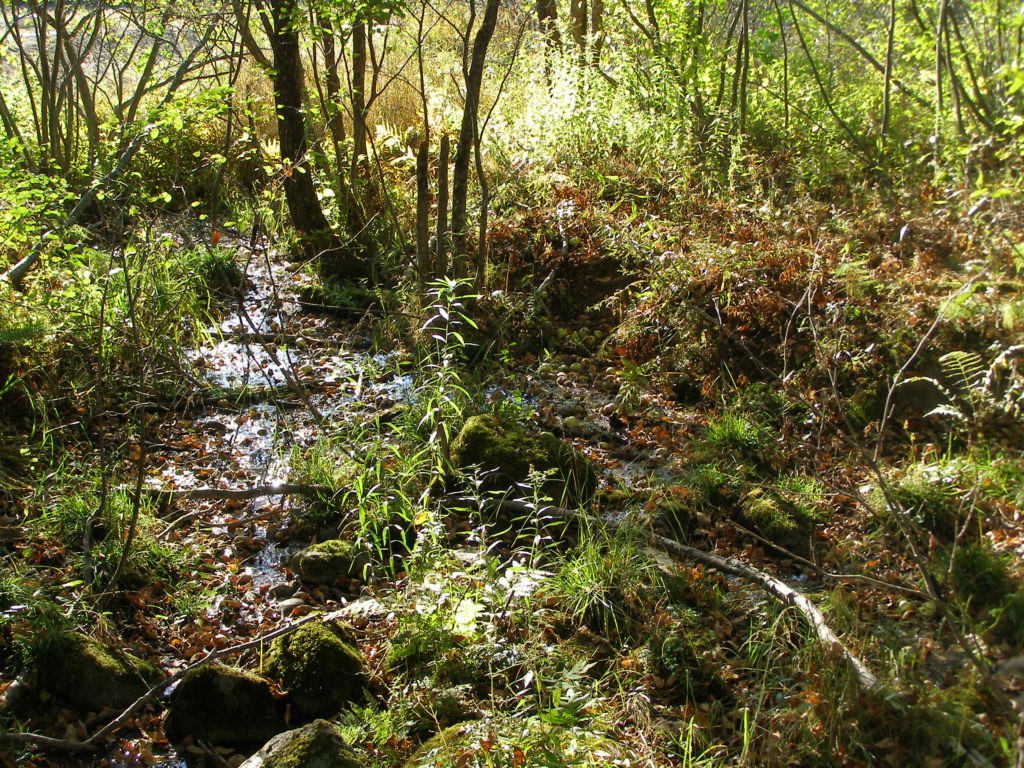
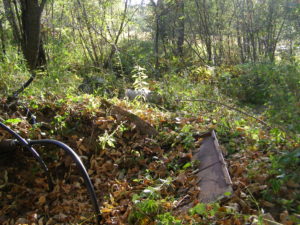
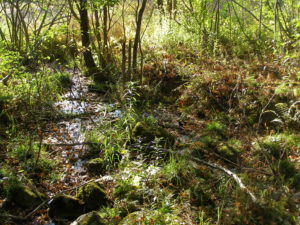
Yesterday, during my frosty morning walk, I dove into a stand of staghorn sumac below the barn and went to visit the spring. This is a daylight spring seeping out of the hill on which the barn and house stand. A long time ago, someone dug a well there, and at one time a pump and tank were installed, along with a system of black plastic outdoor lines to carry water to and from the barn, the garden, and down through the woods to, presumably, crops in the fields below. All the equipment is many decades old now, fallen over and covered with leaves and moss. The well is protected by a round cement cap, much too heavy for me to lift alone (drat!).
Spring
This spot is hidden in a thick tangle of vine, briar and trees. We rarely go in there, though it’s in close proximity to the barn.
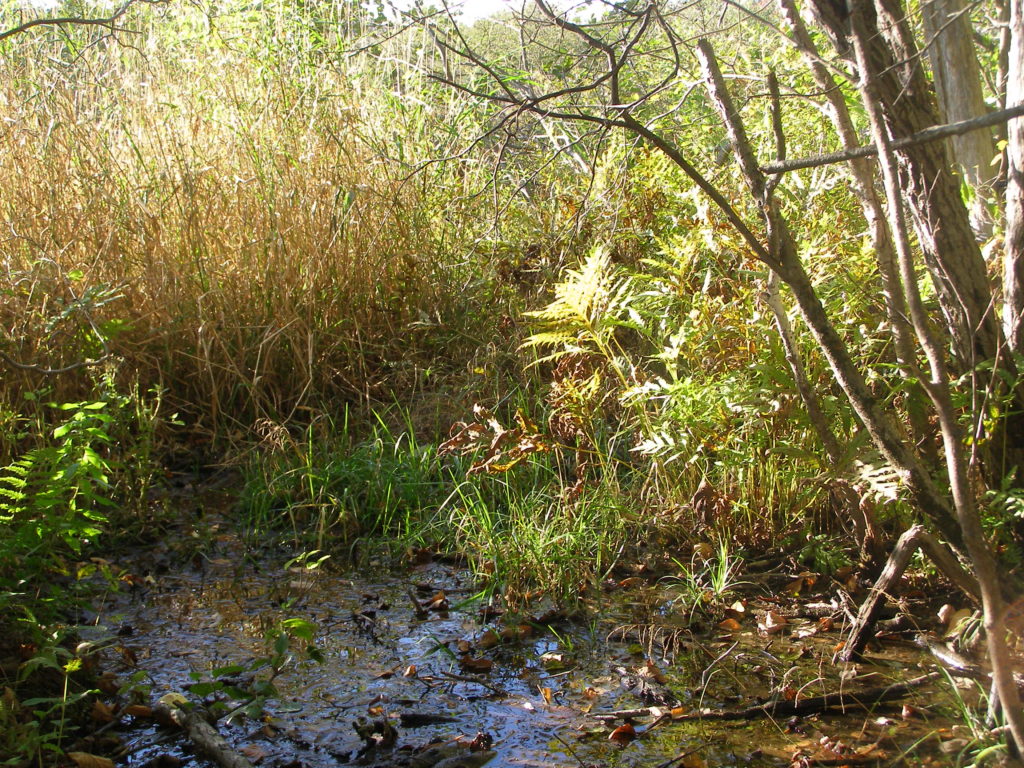
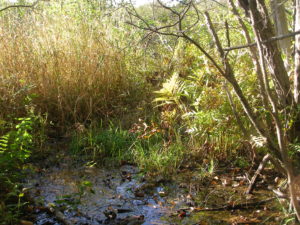
It’s fall and it’s been dry, but the drainage where the spring emerges is clearly marked by rocks and moss. The ground underfoot felt soft, and when I brushed away the leaves I found moist earth. A yard or two below that is mud, and then a trickle of water and then, at the bottom of the hill, a quiet film of water, barely moving, reflecting the tree-laced sky. Right now It’s full of apples dropped from an apple tree that grows alongside it.
As I slipped and slid, tripping over vines and getting scratched by hawthorn and raspberry bushes, feeling the velvety moss coating the rocks and stepping cautiously on rotting wood, it occurred to me that love is like this spring.
I’ve always thought of love as an action verb, something I do to another in exchange for receiving the same. I thought I knew what I meant when I used the word, though I was never challenged to define it exactly. For me it’s been a catch-all term, synonymous with dozens of other, more specific actions: Want, need, desire, honor, trust, respect, care about, listen to, defend, make excuses for, enable, protect, support, believe in, etc., etc.
But what if love is just being? What if it has no object, but just is?
Spring
This little spring is absolutely true to itself. Water drains off the hillside above us and carves a path through the earth and rock until it emerges and runs down the surface at the foot of the hill. We pay no attention to it whatsoever. It’s reliable, predictable and faithful, but not because anyone is looking. Its unobtrusive, quiet presence has created a lush pocket of life, a complex system of plants, fungi, animals and insects, but ten yards away on the open hillside it’s invisible.
What if I make a choice to allow my feeling of love to run through my life in the same way the spring runs through and over the ground? What if I carry within me a wellspring, a hidden cleft, moist, fertile, filled with life, rich in sensuality, simply because it’s an expression of self? If others find their way to it, sit a while, bathe, drink, and allow it to nourish and refresh them, they’re welcome. If others can’t see it, or don’t value it, or dislike the perfume of rotting wood and leaves or the feel of plush moss under their bare foot, it’s nothing to do with me. Not everyone chooses to make their way through raspberry and hawthorn bushes, after all.
What if I don’t need anything in return because I’m giving nothing away? Perhaps the act of love can be a simple state of being, not a totality, not a hurricane of passion and lust, not a romantic fairytale, not a prison and torture chamber, but a spring, a waterway, a shining thread I can share without depletion. Can I allow it to seep quietly up through the roots of my experience, even if no one else ever finds it, wants it, returns it or deems it acceptable?
Our spring is part of a landscape of field and forest, river, pond and stream, rocky hillside and bog. The landscape contains many forms and embraces many systems of life. Birth and death happen on this land. Disease, erosion and flood happen on this land. Prey and predators carry out their sacred dance of balance here. Blood, bone, fur, feather, antler, musk, urine and feces are all here.
I, too, am a complex system of history, memory, belief, thought and feeling. I do not feel love for everyone and everything. My experience of love is that it’s a wild thing; it seeps up where it will and trickles away without warning, taking no account of rules and expectations. I can’t command it and I don’t choose to hold it back. My love doesn’t need anyone’s reception, appreciation, validation or praise.
Love is. I reserve the right to love as I will. I am the keeper of my own wellspring.
Spring 10/2017
All content on this site ©2017
Jennifer Rose
except where otherwise noted
by Jenny Rose | Aug 24, 2017 | A Flourishing Woman, Self-Love
My partner has trained in Aikido, and he relates hearing the above advice years ago from his teacher. Ever since he repeated it to me, I’ve been turning it over in my mind.
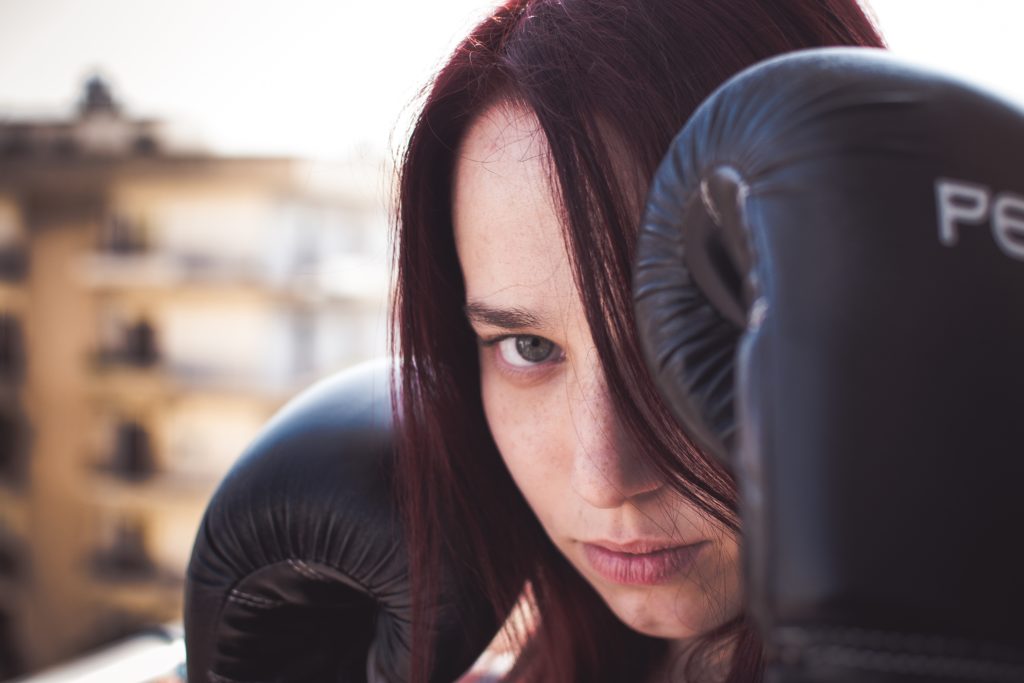
We lately found a Tai Chi teacher and joined a class. I’ve wanted to do Tai Chi for a long time, and it’s every bit as much fun as I always imagined it would be. I practice every day, and part of my practice is meditating on that wonderful piece of subtle Eastern wisdom: Don’t be where the blow lands.

Photo by Jason Blackeye on Unsplash
Tai Chi is a Chinese martial art focusing on energy manipulation, practiced for defense and health. Many of the people in the class we joined are there to address balance and strength. I’m happy to support both my balance and my strength, but I’m learning Tai Chi primarily as a grounding and centering tool.
We’re learning a series of specific slow, repetitive movements that flow into one another. Each movement is called a form, and each form has its own, often poetic name: The bow, the crane, windmills, the lute. Tai Chi emphasizes locating and moving from one’s center, and it’s interesting how difficult I find that.
Learning the forms and stringing them together is no problem for me. It takes a lot of repetition to get arms and legs coordinated and figure out proper positioning, but I like repetition and want to practice. What I notice, though, is how easily I lose my center. I reach or step too far. I find myself up on one toe or another when I’m not supposed to be. I put one foot directly in front of another, like a model on a catwalk, instead of maintaining a more stable, wider-based stance. My ankles are weak and unsteady. If I’m doing one form at a time in isolation, I can tighten my core and be solid, but Tai Chi is flowing movement, albeit slow, and after a few different forms my center is gone.
Losing my balance in this way is a perfect metaphor for the way I’ve lived my life until recently. My energy and attention were always directed outward. I had very little ability to support myself; I relied on external support and I didn’t distinguish toxic inputs from healthy ones. I was too hungry and had too many unmet needs; I took a lot of poisoned bait. Not only did I stand where blows landed and bullets sped, I made a camp there and called it home. I believed I needed those blows and bullets, that they meant love, that it was my responsibility to endure them, and that I deserved them.
We can’t avoid life. Harsh words, verbal attacks, physical violence and unexpected events like fire, flood, riots and sudden public violence are going to happen. Even so, there are ways in which to meet life’s blows with all the grace and elegance of Tai Chi, and as I practice the forms and movements, I think about the skills that allow me to absorb the blow, to flow with it, and to step away from where it landed before it can be repeated.
I’m a big proponent of self-defense and I always carry a knife. I’m not afraid to fight. One day soon I’m going to learn to shoot and buy myself a gun, which I will carry. That kind of self-defense is a separate thing from my practice of Tai Chi. Tai Chi is not about any kind of an aggressor lurking in an alley or a parking lot; it’s about emotional and energetic safety.
Photo by Deniz Altindas on Unsplash
Tai Chi, along with swimming, dancing, ritual work, walking and writing, is a way to call myself home, back to the center, back to my bones and the source of myself. Maintaining my center absolutely requires my undivided presence. I can’t center properly if I refuse to know all of who I am. I can’t maintain balance if I refuse to love all of who I am. The minute I try to amputate bits and pieces of myself, deny my thoughts and feelings or start tearing myself down in any way, I’m standing (again) where blows are guaranteed to land. When I catch myself justifying; pleading; waiting for external validation; trying to please; choice-making out of fear, denial and self-doubt, I know I’m standing on the shooting range with a target pasted over my heart and head.
I’ve spent too much of my life staggering under loads of other people’s shit, carrying vampires and dragging chains. Confusion, fear, perfectionism, disempowerment and constipated unacknowledged feelings have all kept me standing where the blows land. Arguing with what is has cemented me in the path of bullets. Clarity, self-confidence, making friends with my feelings and reclaiming my power allow me to deflect, block or better absorb the blows that come my way.
I’m intentional about living with the wisdom of choosing not to be where the blow lands. Reclaiming my center and moving mindfully from danger, not only physically but creatively and emotionally, all but eliminates my fear and anxiety. Concentrating on grounding leaves no room for anything but strength and rootedness. The meaning of my life is not out there, in the noise and chaos of what others think, say and do. The meaning of my life is in here, centered within the container of my body, expressed by what I think, say and do.
Photo by Amy Humphries on Unsplash
Now, if you’ll excuse me, I have to go see if I can remember the windmills and the lute from yesterday’s class.
All content on this site ©2017
Jennifer Rose
except where otherwise noted
by Jenny Rose | Aug 10, 2017 | A Flourishing Woman, The Journey
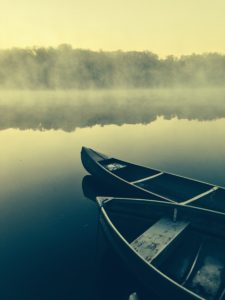
Photo by Andrew Montgomery on Unsplash
I often imagine life as a river and myself in a boat of my own making, floating on it. I don’t picture a sailboat, having no experience of one, but a small boat that glides with the current and can be paddled. I don’t imagine a single river, but a vast network, far more than I could ever explore in this lifetime. Sometimes it’s a river of water, sometimes a river of stars. Sometimes it’s a river of green moss carving a path through thick forest. Sometimes it’s an air-borne river of leaves and feathers and pieces of sky.
Sometimes it’s a river of stone.
The thing about rivers is they take me where they take me. I can paddle and steer, but whatever river I’m on at any given moment is a living thing in itself. I’m not its master and it doesn’t ask me where I want to go.
Of course, I don’t have to surrender to this kind of movement. I can refuse to make a boat in the first place, refuse to learn how, refuse to try. I can take a short cut and buy a premade boat or jump in someone else’s boat. If I do manage to create a boat, I can still make my way to the shore at any point and stop.
I can always throw myself out of the boat, too … but then I’ll never find out where the river is taking me.
I can also fight with the current.
I know a lot about this.
In the last few days, I’ve been floating on a river of stone.

Photo by Paul Van Cotthem on Unsplash
Stone is very, very, v…e…r…y slow. Oh, it moves, in the deep foundations of life. It shifts and compresses, slips, breaks down, heats and cools. It tells an old, old story, whole volumes of which are faded and weathered into illegibility, or hidden so well I know I’ll never read them. Now and then, though, a period of grace arrives in which I inadvertently enter a river of stone and have an opportunity, which I reject, avoid and try to escape, to hear whispers of stone stories.
During these times, others on the river are out of sight and out of hearing. My calls echo back to
Photo by Milada Vigerova on Unsplash
me off stone canyons and cliffs. I reach out for another in my sleep and wake with bloody knuckles. On the river of stone others do not respond. They don’t follow through. They don’t keep their word. My password doesn’t work. I can’t log on. There is no clarification or confirmation. I’m alone, in my little boat, and I feel adrift and forgotten, unseen and unheard, left behind.
The river of stone tells me a story of foundations, of beginnings, of layers of time and events, of family and tribe. My agenda, my insistence on movement and progress, my puny frustration with things not done, make less impression than a fragile-winged dragonfly that flung itself into the stone’s embrace uncounted aeons ago and flies now forever in the river of stone.
The river of stone is inexorable. It forces me to slow down. It provides me with no distraction and no easy entertainment. Creativity falls into sleep from which I cannot wake it. Those tasks and activities I call “productive” cease. Frantically, I paddle my boat, one side, then the other, until my hands are bloody blistered and my shoulders are a block of pain. All the old demons in my head leap into life, jeering and heckling, joining hands in gleeful celebration, and they have their way with me because I’m trapped in a river of stone.
I accomplish nothing on a list. I write no pages. Plans fall through. I wait too long to walk, and then it rains. Dirty dishes sit on the counter. All I want to do is get lost in an old familiar book — if only I could stay awake long enough!
Then, gradually, frustration, panic and fear exhaust themselves and lie down to rest. I rediscover the beauty of emptiness. I begin to see veins and gems and stardust in the stone around me. I remember the difference between doing and being, and the delicate balance they must maintain. The stone speaks to me of strength, of endurance, of centering and grounding. I give myself to the pause in communication and creative work. I put down the paddle, the oar, stretch out in the boat and rest, dreaming of stone-lipped wells refilling with spring water, dreaming of a spray of words leaping off waves or trailing behind stars in a river ahead, dreaming of friends whose faces I haven’t yet seen and broken connection repaired.
I doze, rocked in a cradle of stone. I rest, floating on a river of rock. I sink into the slow, deep, stony heartbeat in the center of all things, imagine inhalations and exhalations, each lasting 100,000 years.
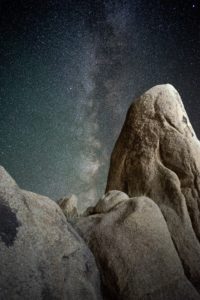
Photo by Brent Cox on Unsplash
I surrender to the river of stone, and in doing so I float out of it.
All content on this site ©2017
Jennifer Rose
except where otherwise noted
by Jenny Rose | Oct 20, 2016 | Connection & Community, Emotional Intelligence
Last week I talked about balance as a first step to understanding reciprocity. This week I’ll refine my focus and discuss the term itself.
A few years ago I was in my car, either listening to an audio book or the radio. I was in the off phase of a painful and confusing on and off relationship. Whoever I was listening to asked the question: “Is he crying about you?”
Photo by Ian Espinosa on Unsplash
This was a real Aha! moment for me, because I myself was crying all the time and the answer to the question was no. I didn’t even need to think about it. I’d given him all the power. He was calling the shots. I wanted to be with him but he didn’t want to be with me — at least for the moment.
That was my first introduction to reciprocity. It didn’t come with context, language or tools, but that question was like a piece of grit in my eye and it continues to pop up in all my relationships.
Before we discuss it further, let’s define reciprocity. A 3-second internet search yields: “Exchanging things with others for mutual benefit.” Good enough.
What I understand now is that reciprocity is at the core of healthy connection and relationship. Whether we’re conscious of it or not, it matters. I see the presence of reciprocity as an indicator of equality. No one has power over anyone else. The playing field is level. Giving and receiving happen in balance. We see the needs of others as being as important as our own. Reciprocity is the old Golden Rule in action.

Photo by Alona Kraft on Unsplash
It sounds so easy. In fact, it is easy. A reciprocal relationship is a delight. Trust and respect are present. Drama and trauma are absent. Both parties show up with an intention to create healthy connection. Communication is loving, respectful and honest. Both parties take responsibility for their words, actions and choices. When we walk away from a reciprocal interaction we feel valued, understood, respected and connected — and so does the other party.
Reciprocity in relationships cannot be achieved if both parties are not internally balanced, which is why I started with balance last week. This is like boundaries. If we can’t manage our own boundaries within ourselves, we won’t have effective boundaries with others. If we don’t function well enough to self-care, make choices that reflect our priorities, and control our time and energy in a balanced way, we can’t create healthy, reciprocal relationships.
“Exchanging things with others” is not limited to concrete things. In fact, a commercial exchange doesn’t imply reciprocity at all. Reciprocal exchange means he heats water for my tea while I’m in the shower and I dry his socks in the dryer instead of on the line because he likes them soft. Reciprocity implies an equal but not necessarily identical contribution of time, energy, expression and caring. In many ways, it’s a subtle kind of dance. It’s a gift of ourselves to others.
Reciprocity is flexible, affectionate, creative, curious and cooperative. Reciprocity says: “What can I do? What do you need? What would be useful? What would create connection? Reciprocity requires we allow ourselves to be seen and we’re open to receiving as well as giving. It requires communication about what we want and what we can give.
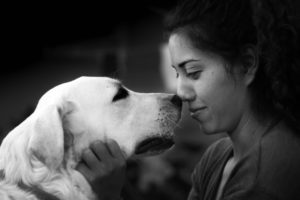
Photo by Kevin Quezada on Unsplash
Sadly, I think many people have never experienced a truly reciprocal relationship with a human being, although many of us have with animals. If that’s true of you, then there’s an important question to explore.
Is it you or is it them?
What’s been true for me is that it’s both. I’ve only lately begun to truly self-care and develop a sense of being valuable in the world. Most of my life has been defined by my sense of failure. What this means is that I’ve been a people pleaser, which is to say inauthentic and without good boundaries and balance. Naturally, that created problems, as well as attracting all kinds of people into my life who were also dysfunctional.
I have no power to change the behavior of others, but I can certainly learn and grow myself. Having language and context for aspects of relationship is enormously helpful. Being able to ask the question “Is he/she crying about me?” forces me to take a wider view and keep an eye on reciprocity. It empowers me.
It’s a great mistake to assume everyone wants reciprocity. I always forget that piece. I can’t quite get my head around the fact that some folks have no desire to be in a relationship like this, but I know it to be true. I can’t explore that effectively, having a great longing for it myself, so I’ll leave that aspect alone, except to note it’s not effective to make up stories or have expectations and assumptions about another’s desire or intention in this arena. Reciprocity doesn’t exist without mutual consent and a willingness to share power. The good news is after you run into the absence of reciprocity (for whatever reason) enough times, you stop trying to force it.
It’s also worth noting there are many different forms of relationship, and lack of reciprocity doesn’t mean there’s no value in the connection. Not at all. The quality of our relationships declare and define themselves pretty quickly, it’s just that sometimes we’re so focused on our determination that things be a certain way, we don’t pause to consider what is actually present — and what is not. Denial is a powerful thing, and we can stay stuck in it for years.
Reciprocity is a high standard. If you decide you want it, many possible relationships will be disqualified in the early stages. On the other hand, if you accept nothing less than reciprocity in close relationships, the ones you do find will be joyful and vibrant, and you won’t have to cry alone in the first place, let alone wonder if your partner is, too.
(This is the second post in a series on reciprocity. See also Parts 1, 3, and 4.)
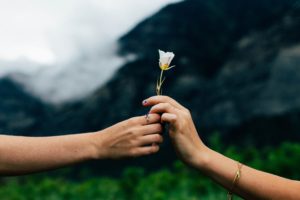
Photo by Evan Kirby on Unsplash
All content on this site ©2016
Jennifer Rose
except where otherwise noted
by Jenny Rose | Oct 13, 2016 | Connection & Community, Emotional Intelligence
This week I’m turning my attention to reciprocity. Again, this subject is much bigger than one post, so I’m breaking it into smaller pieces, just as I did with boundaries. For me, reciprocity describes a specific aspect of a larger subject: Balance.
Photo by Deniz Altindas on Unsplash
Balance is, according to a quick internet search, “a condition in which different elements are equal or in the correct proportions.” I’m constantly running into articles, blogs, books, opinions and speakers who talk about balance. It’s an important concept these days: Balancing family and jobs, balancing creative life with paying-the-bills-life, balancing technology with face-to-face connection, balancing our diet (and our bathroom scales), balancing our exercise, balancing our time and our checkbooks. With so much discussion out there, I wonder why many of us are so remarkably bad at it.
I think finding balance requires two things. The first is clarity — the willingness to look honestly at our lives and our choices. The second is taking responsibility for the fact that we do make choices.
I don’t know a soul who finds either one of these easy, and I also don’t know anyone who always feels great about the balance in their lives, in spite of what they may say.
Note in the definition above the language “correct proportions.” What are the correct proportions? You tell me. Are you happy? Are you healthy? Do you find your life meaningful? Do you enjoy your home, your relationships, your work, a good night’s sleep? If the answer is no, and you want things to be different, I suggest you work with the idea of balance.
It so happens I came across a great exercise for this years ago in a book called Home Sanctuary by Nicole Marcelis. I was just out of an abusive marriage and this book became an important part of reclaiming myself, my life and my home. In it, there’s a chapter on balance.
Photo by Toa Heftiba on Unsplash
The exercise asks you to make a pie chart and consider each piece of your life, calculating how much of the pie that piece takes up. Yes, you include sleep. You can make a pie chart for a day, a week, a month, or any increment of time you choose. Then, if you like, you can take each piece of that first pie chart and make another pie chart. If one of your pieces is parenting, for example, you might break parenting down into playtime, laundry time, cooking and food time, taking walks, reading aloud, visiting doctors, etc.
This exercise has absolutely no value (except to let you play with big pieces of paper and crayons) if you’re not willing to do it honestly. I, for example, am a solitaire junkie. I can play solitaire on this laptop for hours. Literally. Whenever I’m upset, or bored, or trying to regulate my feelings, I play solitaire. I feel like it soothes my anxiety when all the cards fall into neat little piles. I tell myself (and others) I’m planning what to write, or making a grocery list or writing an email, but that’s just bullshit. I’m playing solitaire and I’m feeling numb.
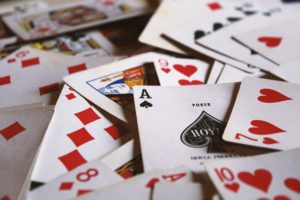
Photo by Jack Hamilton on Unsplash
A game or two of solitaire is not a problem. I don’t feel ashamed. An hour or two is getting out of control. Three or four hours and I’m hiding it from my family. I do feel ashamed. I have a partner, a blog, a job, and I’m writing a book. I live in a beautiful place and love to be outdoors. What’s up with sitting for hours playing solitaire? Something is wrong. I’m out of balance.
Don’t be a weasel with this. Watching TV with your mate does not count as quality relationship time. Watching TV with your kids is not great parenting time. Don’t lie to yourself about your relationships. Connection time has to be connecting for everyone involved. Family mealtime is nothing but a sham if someone spends it on their tech device or you’re glued to the TV. (No, news isn’t different than a sitcom!) That goes in your tech or TV slice of the pie. You have to come clean with yourself in order to make real changes.
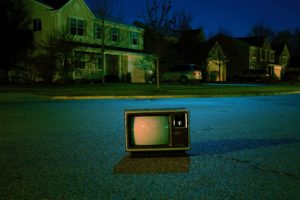
Photo by Frank Okay on Unsplash
The thing about balance is it’s dynamic. What’s balance for this day won’t be the same for another day. As we stand upright we’re using countless muscles, nerves and our senses to maintain our balance and proprioception. Balance in our lives is the same way. It’s so easy to get off balance, but the good news is one can regain it nearly as quickly.
But only if you’re willing to be honest and claim your power to make choices.
This exercise is fascinating. What I realized was I didn’t really know what I was doing with my time. When you actually count the hours you spend doing whatever you’re doing, it can be a real eye opener. When you’re finished playing with paper and crayons and you look at your life through the lens of these pie charts, then it’s time for some hard questions. Does the way you choose to spend your time reflect your priorities? If you say your family is your priority and 80% of your pie chart is spent working (yes, commuting counts!), then you’re out of balance and you’re also not being honest. If you love the outdoors and want to be exercising more but you don’t because you’re couch locked in front of the TV, you’re out of balance. (Watching Planet Earth doesn’t count.)
The exercise is entirely flexible. It works with any resource, not just time. For example, you can do it with energy. Is there a connection or relationship in your life that demands all your energy? Are you getting as much as you’re giving? Are there other relationships that nurture and reward you that you’d rather be spending time in, but you can’t because you’ve got this vampire attached to your jugular vein?
How about money? Most of us have budgeted at one time or another. Tell me, friend, how much money do you spend on cigarettes? On drugs? On beer? On shoes? Cable TV? Can you buy food? Are your bills paid? Are you working at a job you hate because you need the money in order to support your habits — and are those habits making you happy and healthy?
We all have the same 24 hours in any given day, and we all choose what to do with those hours. This is not so much about making “right” or “wrong” choices as it is about realizing we are making choices. Nobody makes us watch four hours of TV every evening. If we’re longing to do creative work and we tell ourselves and the world we haven’t time for it, all we’re really saying is we lack the will to make it so. Why not be honest and say we’re too afraid to try, or we’ve given our power to someone else, and they say we can’t, or we’re an addict and our addiction has our power?
Photo by Quino Al on Unsplash
If you made a pie chart of the kind of life you want to have, with the perfect balance for your needs, how different would it be from what your life is now? What needs to happen to make changes? What can you excise from your present chart in order to free up time/energy/money/life?
Make no mistake, this exercise takes an enormous amount of courage, but the payoff is powerful. I revisit it now and then, just because I like to keep track of what I’m up to, and I want to know my choices are reflecting my priorities. I also note I’ve told people about this exercise, two of whom seemed to have no life outside of work and unhappy partners, and one who spent hours of screen time every day, both TV and computer, but talked about doing all kinds of fun things in the real world. I even loaned my book to one of them. None of them had time for clarity, change or choices.
Silly me.
Solitaire, anyone?
(This is the first post in a series of 4. See also Parts 2, 3, and 4.)
All content on this site ©2016
Jennifer Rose
except where otherwise noted