by Jenny Rose | Oct 4, 2018 | A Flourishing Woman, The Journey
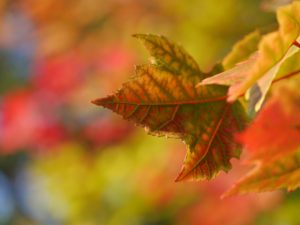
Photo by Aaron Burden on Unsplash
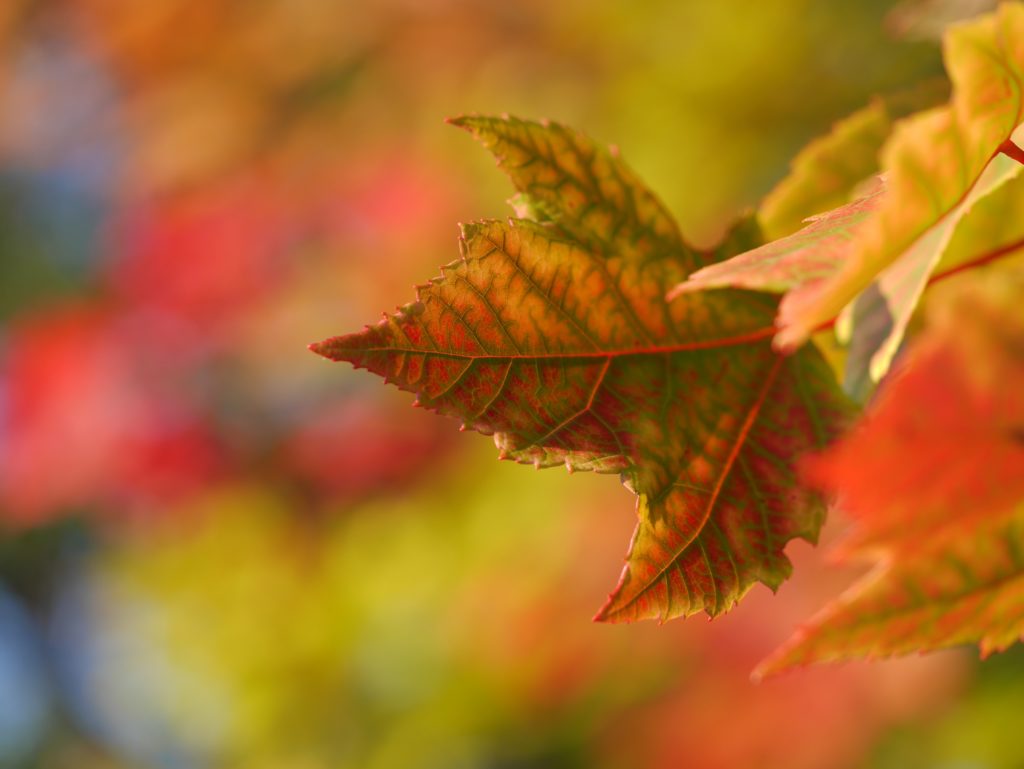
It’s autumn in central Maine, and the leaves are falling. Sometimes they flutter in the arms of a sly little wind under a crisp blue sky, skittering across the road in front of the car, turning me into a more cautious driver than usual because they look so much like a squirrel or chipmunk. Other days they’re torn from the trees by rain and heavy, tropical air under low grey clouds, misty at their trailing hems.
So many leaves in so many shades of copper, bronze, orange, red and yellow. A sodden chaos of leaves underfoot in the rain and an airy whirlwind of them on dry, bright days. It’s as though the trees have been holding their breath all summer and now they relax and exhale, releasing the tension of production, growth and photosynthesis, easing themselves from yesterday’s clothing and burdens, shaking and stretching in naked freedom and settling down with a sleepy grunt for winter.
Bits of the world, leaves, songs
scatter in painted light.
The days
break. –Carol Frost
The past hours, days, weeks and months litter the ground, trodden, damp and fading. Their stories, whispered to the wind, of nest and hollow; bird, insect and animal; stars and rain and dew and the secret underground life of root, soil and mycelium, are lost. From their bodies new stories for the next cycle and generation of life will green and grow.
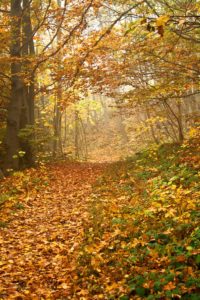
Photo by Vanessa von Wieding on Unsplash
I envy the trees their grace and patience. They know how to let go. They turn change into glory. They understand surrender to the fading light and changing tilt of the planet.
I, on the other hand, am not so graceful. Starting a part-time job, even doing something I love and am familiar with, has me wild-eyed and overwhelmed. My carefully constructed and comfortable routine is in pieces. I can’t turn the calendar page and fill in my accustomed schedule. Horrors! Now the days ahead are as naked as the bared trees, allowing me time to reconsider the true shape of things. I think of periods of change as bone time. I can’t see the bones of my life when the calendar is predictable and lists guide me through the day. Habit and routine are powerful, and after a time I stop noticing if I’m staying in balance, managing my time and taking care of my needs well. It’s only in these periods when all my schedules, lists and calendar pages are so many leaves of paper tossed onto the floor that I see the bones again.
To inventory our bones is to let go of possessions, distractions, noise, activity, thoughts, beliefs, habits and behaviors and ask ourselves what our true shape is. What are the deepest pieces of our body and soul? What is necessary in order to express our highest purpose? What destroys our time, energy and joy, and what liberates them?
Can we let go of what’s no longer useful? Can we give it to the wind, to the air, to the frost and rain and snow? Can we give it willingly, freely, with grace and beauty?
Yes, I can let things go.
But grace and beauty are noticeably absent just now!
Still, the trees in this season comfort me and show me the way. They’re not worried about next month, next week or tomorrow. They don’t seem to mind change. They release yesterday’s leaves with careless abandon and show their bones proudly to the sky. They know who they are and they take what they need without apology or shame. They rest in the security of the endlessly turning cycles and seasons.
I don’t think I’ll ever achieve their wisdom or serenity.
On the other hand, I know something about my own bones because life gives most of us more than one chance to begin again, and I’ve had lots of practice. I know shortly I’ll be back in a steady, effective, predictable routine that accommodates my new job as well as my current needs and priorities.
wind tugs leaves away
my hat begs to follow
guide me wind the way
you’re lost i’ll be lost — Kim Robert Stafford
Life is change, and change is life. Old conditions give way to new conditions, and the process is always happening, no matter how stuck or helpless we feel. Chaos comes, picks us up by the scruff of the neck, gives us a good shake, and we find ourselves flung into something new, which will in turn gradually fade away.
Leaves fall. Light wanes. We are lost, torn away from what’s familiar, and then the way ahead opens before us and we’re found again.
Photo by Brigitte Tohm on Unsplash
All content on this site ©2018
Jennifer Rose
except where otherwise noted
by Jenny Rose | Sep 13, 2018 | A Flourishing Woman, The Journey
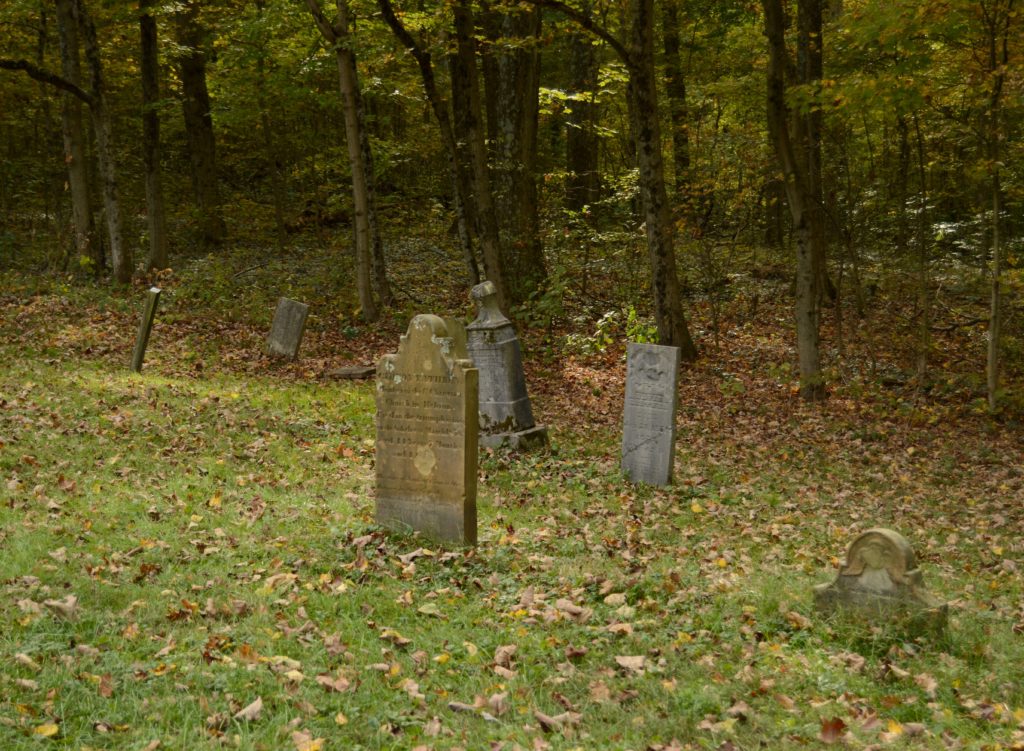
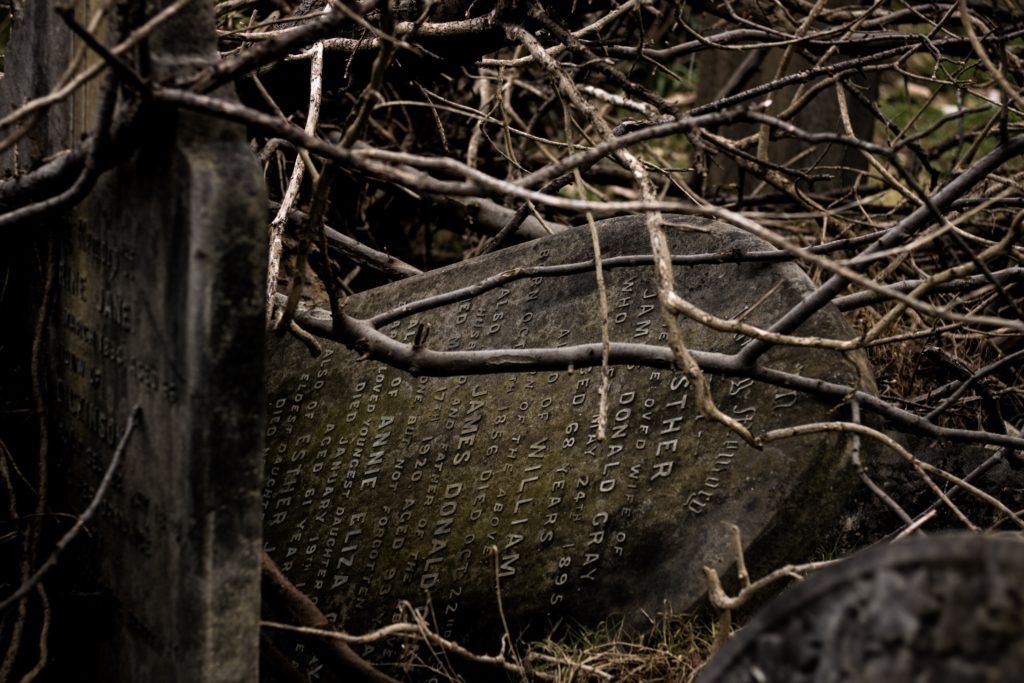
Clarissa Pinkola Estes introduced me, years ago, to the idea of descansos in Women Who Run With the Wolves, one of the most important books I’ve ever read. Descansos is a Spanish word meaning resting places. A descanso might be a grave in an ordinary graveyard, but Estes suggests creating descansos as a spiritual practice; a method for letting go and/or acknowledging a loss; a place to put rage, fear and other feelings or destructive thoughts to rest so we don’t walk forward burdened by unresolved pain and experience.
We know grief has its own timetable. The Celts set aside a year and a day for the proper discharge of grief. Many other cultures have formal mourning periods and practices, during which people are not expected to fully participate in social responsibilities and activities. Many of us try to move away from the anguish of grief as quickly as possible, but there is no shortcut for the grieving process. Sooner or later, we must feel it and walk through it if we are to heal.
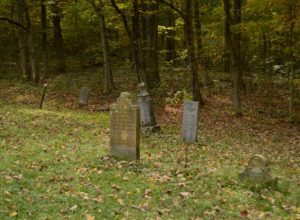
Photo by Madison Grooms on Unsplash
Loss is not just about the death of a loved one. As we journey through life we encounter many losses, including the loss of our innocence, which might take many forms; the loss of dreams; the loss of health; the loss of a job, a home, a relationship or some piece of identity. For all of these, we might make a descanso, a place where we have knelt and prayed, wept, planted flowers or a tree and marked with a cairn, a stone, a cross, or some other symbol that has meaning for us. A descanso is a quiet, private place apart from the rest of our lives, a place we can visit when autumn leaves begin to fall and the cooling air crisps with the scent of windfall apples, damp leaves and browning ferns. We pay homage to what has been, to that which we’ve blessed, released and laid to rest. We invite memory and take time to empty our cup of rage, pain or tears again.
I recently wrote about identity. This fall, it occurs to me to spread out all the pieces of my identity, past and present, try them on, one at a time, and notice how they feel. I will make descansos for those aspects of identity that no longer fit me or serve my intention going forward. I want an identity update; to replace the old versions with an identity compatible with my present life and experience, much like going through a clothes closet and culling.
In fact, that is a task I’m undertaking right now as well; going through my clothes. Perhaps that’s why I feel nostalgic and am thinking about descansos. Autumn awakens in me the desire to clean out and lighten up, literally and metaphorically. I discover my difficulty in letting go of clothing I haven’t worn in years and which no longer fits is about the memories of who I was and what I was doing while wearing it rather than the clothing itself.

Photo by eddie howell on Unsplash
Memories can be a heavy burden. Some are precious and we never want to lose them. Other memories haunt us and keep our wounds fresh and bleeding. The remedy for all those imprisoning beliefs, pieces of negative identity, unresolved feelings and painful memories is the practice of descansos, which is to say the practice of grieving and then moving on. That order is essential. We must grieve fully and willingly, and then move on. A graveyard is not a place to pitch a tent and live the rest of our lives. It’s a place to create, visit, honor, care for and meet ourselves when old parts and pieces of our lives enter our dreams and tug at our hearts.
Making descansos is a gentle practice. It is not denial, avoidance or rejection, but rather an open-armed welcome to all our experience, followed by honest assessment and choice-making. Like clothing, identity and memories wear out, no longer fit or become too uncomfortable and outdated to be useful. Making a resting place is an intentional practice, without violence, frenzy or horror. We are not tearing ourselves apart with self-hatred, but allowing change and growth, the same way the trees are beginning to let go of their leaves and a snake sheds its skin. The practice of descansos allows us to clean up, clean out, and create space for new growth and experience. It’s an opportunity to create a place of sacred memory so we do not have to stagger under a jumbled-up load of the past.
Creating descansos is uniquely individual. Some might draw a map of their life’s journey, marking descansos along the way. Artists might paint, make music, write, create, sculpt or dance. Others might seek out a sacred place in nature for ritual, prayer and making a grave or graves.
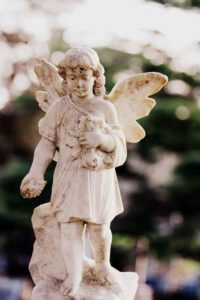
Photo by Sandy Millar on Unsplash
When I make descansos, I think of putting a baby to bed in a dim nursery, bathed and fed, sleepy and smelling of milk, with a clean blanket and a stuffed toy. Perhaps our most brutal memories and experiences are the ones needing the tenderest descansos we can create. As we would nurture, reassure and protect an infant, we nurture, reassure and protect ourselves with the practice of descansos. We allow ourselves to suffer, release our suffering and move on, honoring the way our experience shapes and enriches us.
It’s autumn in central Maine, a good time to make new descansos and visit old ones. A good time to remember. A good time to walk under the trees and absorb the wisdom of cycles and seasons, growth and change, life and death.
A good time to allow ourselves to rest in peace.
All content on this site ©2018
Jennifer Rose
except where otherwise noted
by Jenny Rose | Jul 26, 2018 | Connection & Community, Emotional Intelligence, Shadows
I looked up the word “denial” to find a quick definition as a starting point for this post. Fifteen minutes later I was still reading long Wiki articles about denial and denialism. They’re both well worth reading. I realize now the subject of denial is much bigger than I first supposed, and one little blog post cannot do justice to its history and scope.
Photo by Ian Espinosa on Unsplash
I wanted to write about denial because I keep tripping over it. It seems to lurk in the background of every experience and interaction, and it’s nearly always accompanied by its best buddy, fear. I’ve lately made the observation to my partner that denial appears more powerful than love in our culture today.
I’ve written before about arguing with what is, survival and being wrong, all related to denial. I’ve also had bitter personal experience with workaholism and alcoholism, so denial is a familiar concept and I recognize it when I see it.
I see it more every day.
I was interested to be reminded that denial is a useful psychological defense mechanism. Almost everyone has had the experience of a sudden devastating psychological shock such as news of an unexpected death or catastrophic event. Our first reaction is to deny and reject what’s happening. Elisabeth Kubler-Ross identified denial as the first of five stages of psychology in a dying patient. Therein lies the distinction between denial as part of a useful and natural cycle and denial as a permanent coping mechanism. In modern psychology denial is followed by other stages as we struggle to come to terms with a difficult event. We (hopefully) move through the stages, gathering our resources to cope with what’s true and coming to terms with the subsequent changes in our lives.
Denialism, on the other hand, is a “choice to deny reality as a way to avoid a psychologically uncomfortable truth” (Wikipedia). For some, denial is an ideology.
In other words, denialsim is all about fear, fear of being wrong, fear of change, fear of painful feelings, fear of loss of power, fear of one’s cover being blown. This is why some of the most rabid and vicious homophobes are in fact homosexual. Unsurprisingly, projection and gaslighting are frequently used by those who practice denialism.
I’ve no doubt denial is an integral part of the human psyche. I never knew anyone who didn’t have a knee-jerk ability to deny. I do it. My partner does it. My friends and family do it. My partner and I have a code phrase: “I’m not a vampire,” that comes from the TV series Angel in a hilarious moment when a vampire is clearly outed by one of the other characters. He watches her put the evidence together: “… nice place… with no mirrors, and… lots of curtains… Hey! You’re a vampire!” “What?” he says. “No I’m not,” with absolutely no conviction whatsoever. It always makes us giggle. If Angel is too low-brow for you, consider William Shakespeare and “the lady doth protest too much, methinks.” Denial is not a new and unusual behavior.

Photo by NASA on Unsplash
The power of denial is ultimately false, however. Firstly and most obviously, denial does not affect the truth. We don’t have to admit it, but truth is truth, and it doesn’t care whether we accept it or not. Secondly, denial is a black hole of ever-increasing complications. Take, for example, flat-earthers. Think for a moment about how much they have to filter every day, how actively they have to guard against constant threats to their denialsim. Everything becomes a battlefield, any form of science-related news and programming; many types of print media; images, both digital and print, now more widely available than ever; and simple conversation. I can’t imagine trying to live like that, embattled and defensive on every front. It must take enormous energy. I frankly don’t understand why anyone would choose such hideous complications. It seems to me much easier to wrestle with the problem itself than deal with all the consequences of denying there is a problem.
Maybe that’s just me.
It seems our denial becomes more important than love for others or love for ourselves. It becomes more important than our integrity, our health, our friends and family, loyalty, and respect or tolerance. Our need to deny can swallow us whole, just as I’ve seen work and alcohol swallow people whole. Denial refuses collaboration, cooperation, honest communication, problem solving and, most of all, learning. Denialism is always hugely threatened by any attempt to share new information or ask questions.
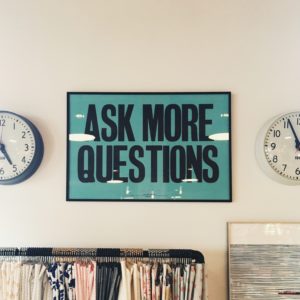
Photo by Jonathan Simcoe on Unsplash
Denial is a kind of spiritual malnutrition. It makes us small. Our sense of humor and curiosity wither. Fear sucks greedily on our power. We become invested in keeping secrets and hiding things from ourselves as well as others. We allow chaos to form around us so we don’t have to see or hear anything that threatens our denial.
This is not the kind of fear that makes our heart race and our hands sweat. This is the kind of fear that feels like a slamming steel door. It’s cold. It’s certain. We say, “I will not believe that. I will not accept that.”
And we don’t. Not ever. No matter what.
A prominent pattern of folks in denial is that they work hard to pull other people into validating them. Denial works best in a club, the larger the better. The ideology of denialism demands strong social groups and communities that actively seek power to silence others or force them into agreement. Not tolerance, but agreement. This behavior speaks to me of a secret lack of strength and conviction, even impotence. If we are not confused about who we are and what we believe, there’s no need to recruit and coerce others to our particular ideology. If you believe the earth is flat, it’s fine with me. I’m not that interested, frankly. I disagree, but that’s neither here nor there, and I don’t need you to agree with my view. When I find myself recruiting others to my point of view, I know I’m distressed and unsure of my position and I’m not dealing effectively with my feelings.
I’ve written before about the OODA loop, which describes the decision cycle of observe, orient, decide and act. The ability to move quickly and effectively through the OODA loop is a survival skill. Denial is a cheat. It masquerades as a survival strategy, but in fact it disables the loop. It keeps us from adapting. It keeps us dangerously rigid rather than elegantly resilient.
Some people have a childlike belief that if something hasn’t happened, it won’t, as in this river has never flooded, or this town has never burned, or we’ve never seen a category 6 hurricane. Our belief that bad things can’t happen at all, or won’t happen again, pins us in front of the oncoming tsunami or the erupting volcano. It allows us to rebuild our homes in places where flood, fire and lava have already struck. We ignore, minimize or deny what’s happening to the planet and to ourselves. We don’t take action to save ourselves. We don’t observe and orient ourselves to change.
Some things are just too bad to be true. I get it, believe me. I’m often afraid, and I frequently walk through denial, but I’m damned if I’ll build a house there. The older I get, the more determined I am to embrace the truth. I don’t care how much pain it gives me or how much fear I feel. I want to know, to understand, to see things clearly, and then make the best choices I can. It’s the only way to stay in my power. I refuse to cower before life as it is, in all its mystery, pain and terrible beauty.
Ultimately, denial is weak. I am stronger than that.
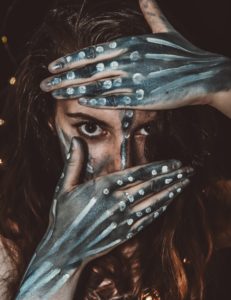
Photo by Joshua Fuller on Unsplash
All content on this site ©2018
Jennifer Rose
except where otherwise noted
by Jenny Rose | Apr 19, 2018 | Aging, Connection & Community, Emotional Intelligence
It’s strange to be aging, isn’t it? It doesn’t matter if you’re in your 20s or 60s, getting older is a remarkable experience. As I move through my 50s, I see more and more of my life when I look over my shoulder and I no longer have the feeling of limitless horizons in front of me. Whatever is ahead, it’s not limitless.
I have a friend who looks at a tape measure and finds the number of inches corresponding to his age. He takes in the distance between the end of the tape and his place at 70 something. Then he puts his finger at another 10 years, another 15 years. The visual on this exercise is startling. What happened to all those years of our life, and when did we move so close to our last day?
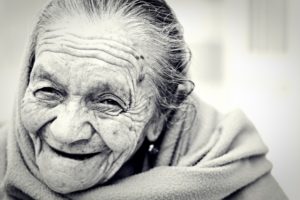
Photo by Cristian Newman on Unsplash
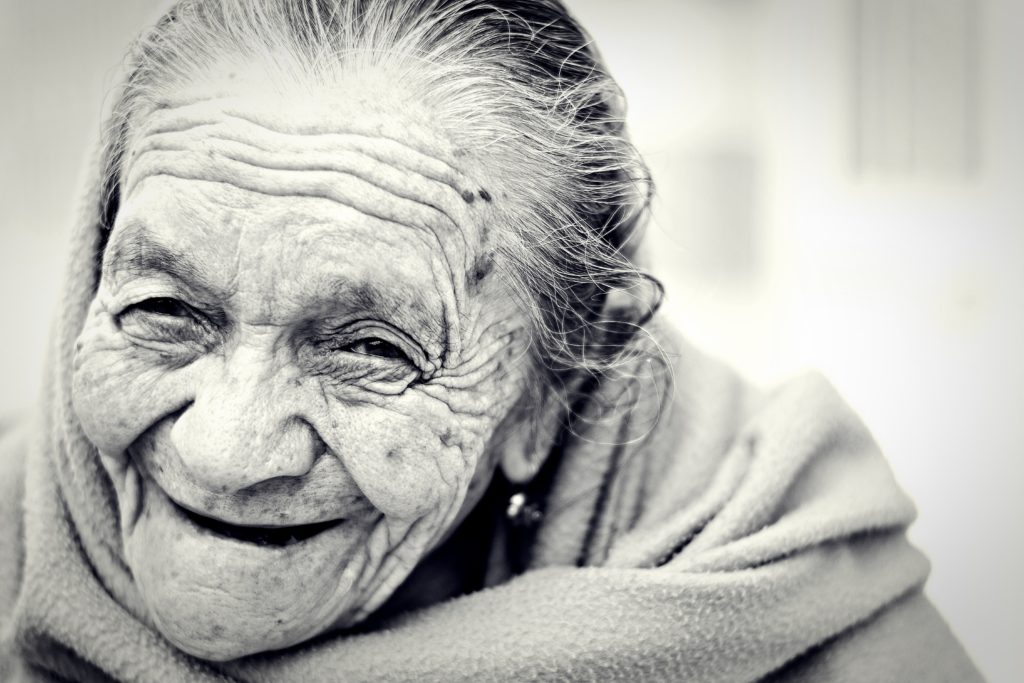
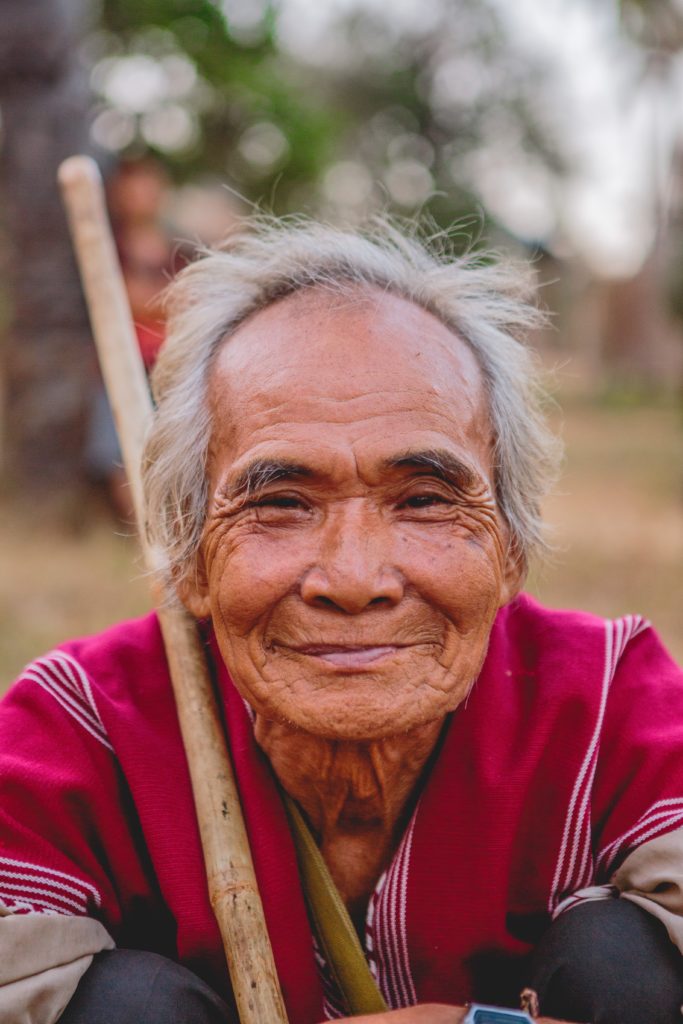
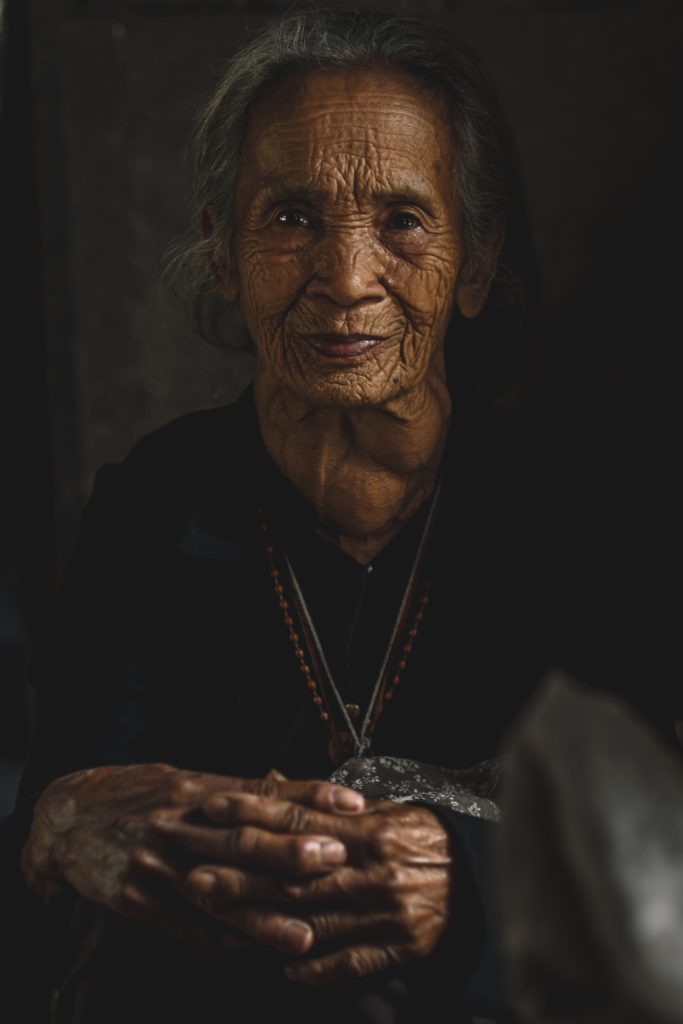
For at least a decade now I’ve been watching my elders and trying to figure out how to age gracefully. Every now and then I meet a remarkable elder. They have a twinkle in their eye, they laugh a lot, they’re curious and interested and they’re wonderfully authentic. I want to grow up to be just like that.
I’m convinced the great keys to aging gracefully are staying in intimate connection with ourselves every single day, no matter how old we are, and embracing change like a lover. Without consent and resilience, aging becomes a bitter battle to the end.
So many of us, as we age, live increasingly in the past. It’s understandable. We’ve been, done and seen a lot. The problem is as the years roll over us we don’t update our software. We hang on to what we were, what our bodies could do, how it all was during a time we remember as the best time (or at least a better time than now). We continue to define ourselves by outdated habits and routines. I’m not sure if this is a function of nostalgia or weariness or just plain laziness, but somewhere along the way we cross some invisible finish line, stop paying attention to embracing how things are right now and start waiting to die.
As our software gets more and more out of date, incompatibilities arise between how we show up in the world and our stories and memories. We lose credibility and effectiveness.
It seems to me the day we stop being curious about what we might learn, do or be next is the day our lives really end. People who age gracefully still have plans. They still dream. Their thinking remains flexible, even if their bodies don’t. They find some magical balance between letting go and moving forward. Change becomes a beloved friend rather than a feared enemy.
It’s not hard to see this in small external ways. We hang on to clothing, for example, that no longer fits, or was fashionable for a fleeting moment fifteen years ago. We hang on to books or movies or music we once loved and couldn’t do without, but now have outgrown. I don’t suggest there’s anything wrong with such nostalgia, but I do think all that stuff can pile up around us and block a clear view of what is now, or what might be ahead. Too often, the externals mirror our internal habits.
I notice many people my age still describe themselves by a job or position they no longer have. Some folks seem almost apologetic about being retired, as though they’ve lost personhood in the world, have become nobody. Others tell you all about some beloved skill or activity, how they practiced it, the ways it enhanced their life, their mastery, but never mention it was all long ago and right now, today, that activity is no longer part of their lives. Their lives have changed, but they haven’t updated their sense of identity. They’re stuck in their past and missing their present. They dangle in the empty gap between who they were and the stranger they are now.
I think some people feel angry about aging. We want our bodies to look, feel and perform the way they used to. We refuse to adjust to our present physical realities because they don’t match what we used to be able to do. We’re ashamed of our changing bodies rather than comfortable in them. We fear the changes the years bring and try to hide them or resist them.
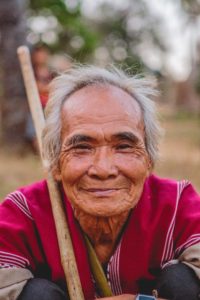
Photo by Capturing the human heart. on Unsplash
Then there are people, amazing people, who know the trick of beginning over and over again throughout their lives. They spend their professional years as a lawyer and then retire and become an artist. A woman marries, works, raises a family and then, divorced and in her 60s, begins traveling all over the world. People in their 50s and 60s go back to school and acquire a new skill or a degree. They live in the day they’re in, in right now, and they’re focused on the present and future rather than the past. They accommodate their physical needs, feel at home in their skin and are constantly updating their identity, intentions, connections and contributions.
Defining ourselves by our pasts is a sad business. I know aging can feel limiting, but I think the real limiting factor in aging is refusing to participate in it! Defining ourselves by what we can’t do, don’t do or once did (but no longer) is a terrible way to live at any age, but in old age it becomes a pernicious habit indeed. After all, anyone may have physical limitations at any age. Those limitations needn’t define us unless we invite them to.
Considering what is possible, what we can do, what we’d like to do and what we’ve always wanted to do — now, there’s a set of questions for living a full, rich life, today and tomorrow. An elder who draws wisdom from years of experience and has a well-exercised sense of humor, curiosity and the ability to learn is indomitable, irrepressible and irresistible.
Life brings many things, including devastating loss, injury and illness. Every day we live we’re aging, and every day is a new gift we might choose to receive, or we might turn away and look only at the old gifts, the old days, all that came before when we were younger, better looking, stronger, more hopeful, more innocent.
I know what’s behind me. Some of it was grand and some very painful indeed, but it’s all over, good and bad. Many of the clothes I wore, the thoughts and beliefs I held firmly onto, the meaningful routines and rituals in my life, are like so many dropped leaves, fluttering in the wind of my passing. I have no idea how much time I have left or what’s in front of me, but there’s so much I still want to do! Still, I cling to the past in some ways. I tell myself such-and-such (a lovely, longed-for thing) will never happen again. I say I can’t do XYZ instead of I’ve never done it before and will you teach me how? I feel frustrated and old when I wrestle with a 40-lb bag of bird seed and my back hurts for three days. I can be just as lazy, sulky, resistant and weary as anyone else.
Yet I’m convinced enormous grace lies in aging, if we can find it. I believe aging is full of invisible gifts, insight and strength. I want that grace. I don’t want to miss the last part of my life because I’m refusing to be present with it. I want to take the time to close all my programs and apps and let my psyche and body update and reboot regularly.
Aging with grace is a work in progress. Some days are more graceful than others.
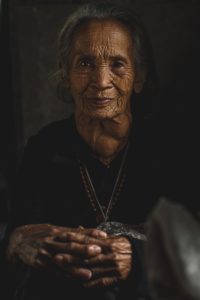
Photo by ivan Torres on Unsplash
All content on this site ©2018
Jennifer Rose
except where otherwise noted
by Jenny Rose | Nov 16, 2017 | Connection & Community, Emotional Intelligence, Shadows
I recently had a conversation in which I learned about the degree to which my anxiety affected at least one of my now adult children.
Parenting is an ironic business. Having been a chronically anxious child myself, always feeling unsafe and afraid, I strove mightily to protect my own children from any sort of fear or insecurity. Of course, I did this by assuring them all was well, all the while fearing all was not and never would be well. Being no less intelligent than I am, they heard the words but knew the truth of my feelings, and thus their trust in me was damaged, an exact replay of what happened between me and my own mother. You know, that thing I was never going to do when I was a parent!
Well, I’m humbled. I’m also sad, because I didn’t want either of my kids to battle with the burden of anxiety. It’s a hard way to live.
However, I understand parenting, at best, is an imperfect process, and I try to hold my mother and myself with gentle arms regarding our choices as mothers. Parenting less than perfectly does not imply a lack of love. I know we both did the best we could with what we had at any particular point in time. No parent can do more.
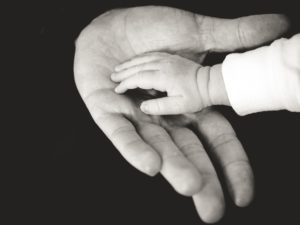
Photo by Liane Metzler on Unsplash
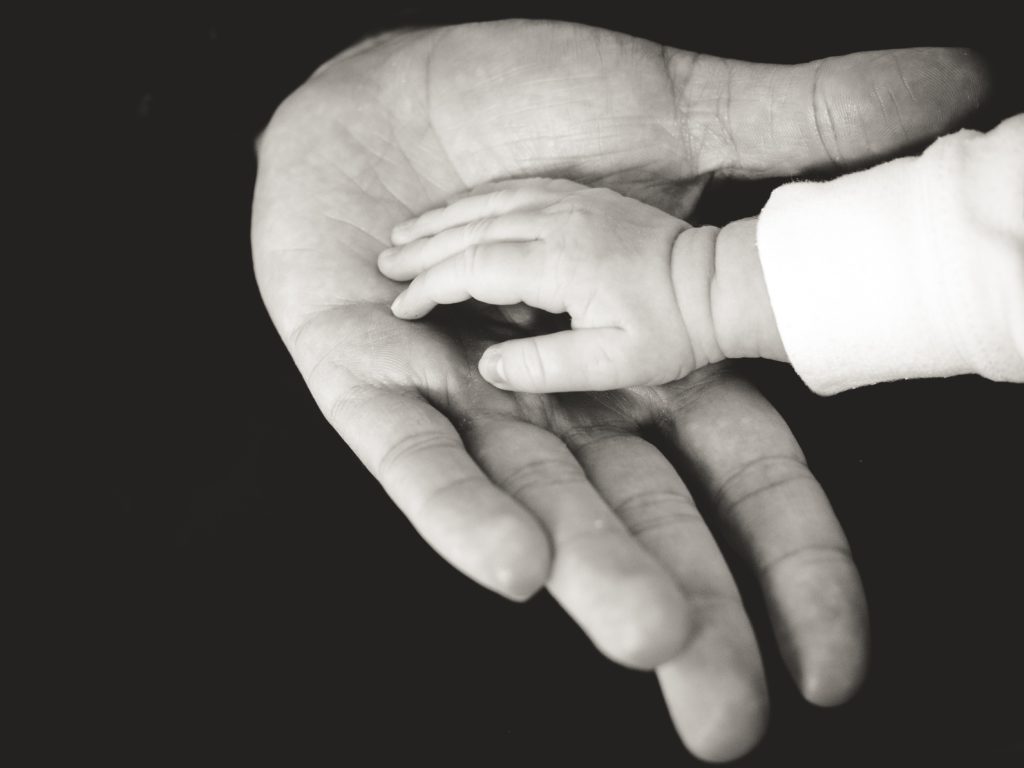
Still, this kind of revelation is a far cry from my hopes, dreams and intentions when I held my newborns. On the other hand, it speaks to the strength of my relationship with my adult children that they can tell me the truth about their experience and I can hear it.
After our conversation, I’ve thought a lot about fear and anxiety. I can’t go back and reparent, but I wonder if I might, even at this late stage, find a way to extricate myself from the insidious tentacles of anxiety. I’ve been thinking about my life and trying to understand exactly what the roots of my anxiety are.
According to an Internet search, fear is “an unpleasant emotion caused by the belief that someone or something is dangerous, likely to cause pain, or a threat.” Fear is considered real, in that it’s right there in front of us, and elicits an immediate response.
Anxiety is an “emotion characterized by an unpleasant state of turmoil; a feeling of worry, nervousness or unease, typically regarding an imminent event or something with uncertain outcome; a nervous disorder.” Anxiety is differentiated from fear by being more diffuse and generalized and focusing on imaginary outcomes and possibilities. Physiologically, it elicits the same response, and therein lies part of the problem.
Both are unpleasant emotions or feelings affecting us physically, intellectually and emotionally. We evolved to respond to fear in certain specific physiological ways, returning to baseline as the fear passes. Fear is a valuable feeling, helping us discern and avoid danger. I certainly don’t want to disable mine. I know the feeling of fear, but it’s not a frequent experience.
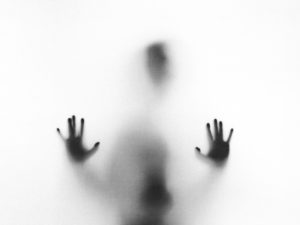
Photo by Stefano Pollio on Unsplash
Anxiety, on the other hand, is a chronic state for me. I can’t remember ever being free of it. I’ve developed a lot of coping mechanisms over the years, some more effective and appropriate than others, but I can’t imagine what life would be like without it. As far as I can tell, the feeling of anxiety provides no benefits whatsoever to me or anyone around me. It’s highly contagious and negatively impacts others in my life, to say nothing of the damage it does to me. We are not constructed to tolerate the chronic level of physiological arousal produced by anxiety.
I never before actually looked up these words, and I’ve never had the above distinctions between fear and anxiety until this week. I conclude that I have no problem with my relationship to fear, but I’m a slave to anxiety.
I find a kind of mordant humor in having a chronic unpleasant feeling regarding uncertain outcomes. Excuse me? All outcomes are uncertain for everyone until they happen! Most of us operate most of the time as though we know exactly what will happen next, but we don’t. I’ve lived long enough to know that’s all an illusion. Nobody knows what’s going to happen next on any level. For some reason, I’ve given that fact the power to make me miserable.
I have a powerful imagination, which makes me a good writer and creator. However, it also occasionally makes me captive to my own stories. I forget that my stories are just that — stories. I make them up, tell them to myself over and over, and behave as though they’re true, never really noticing when they diverge from reality. In my head, it’s all so real. I do know the difference between a story and what’s real, but I have to remind myself to keep the two separated.
Some stories are so old and deeply ingrained it takes a cataclysm to make us realize they’re not true, and then we have to deal with being wrong and all the consequences, an uncomfortable, humbling and messy process.
If my anxiety is rooted in uncertain and imaginary outcomes and possibilities, it seems obvious I can disable it with a little discipline, a dash of surrender to uncertainty, a lot of presence and the will to change. I’m chagrined by the possibility my anxiety is a lifelong bad habit as much as anything else. Could that be true? Yikes.
I wish with all my heart I’d been a better equipped and less distressed parent, but I remind myself I can’t go back. I can’t begin parenting again from ground zero. I can’t go back to the young woman I was and explain all this and give her the support and safety to actively choose to turn away from anxiety before starting a family. There’s only today, so many years later, as I sit with my laptop in my lap and the sun coming in the windows, glancing at my notes, thinking and writing.
I know all I’ve ever wanted for my own mother is health and happiness. I want the same for my kids. I suspect Mom and my sons also want that for me. Perhaps it’s time for me to shape an anxiety-free life now, not only for my own sake, but for those closest to me as well.
We build our lives on outcomes, one after another, more than we ever notice. We remember the spectacularly good and spectacularly bad outcomes, but what about the countless others? Outcomes are complex, not black and white. Outcomes can create visible and invisible ripples that last a lifetime. I can hardly think of a more fruitless endeavor than worrying about or trying to control outcomes. I’ve survived every outcome to date. What makes me think I won’t continue to do so — until I don’t, of course? But the outcome of death is largely out of my control, too. Why worry?
There are so many things I’d rather do than struggle with anxiety!
There are so many stories to imagine, share and write, rather than keep in my head and hurt myself with!
Anxiety is too expensive. I’m not interested in maintaining it anymore.
Better late than never. My daily crime.

Photo by Senjuti Kundu on Unsplash
All content on this site ©2017
Jennifer Rose
except where otherwise noted