As I work with the next piece of Allan Savory’s holistic management model from his book, Holistic Management, I’m thinking about choice.
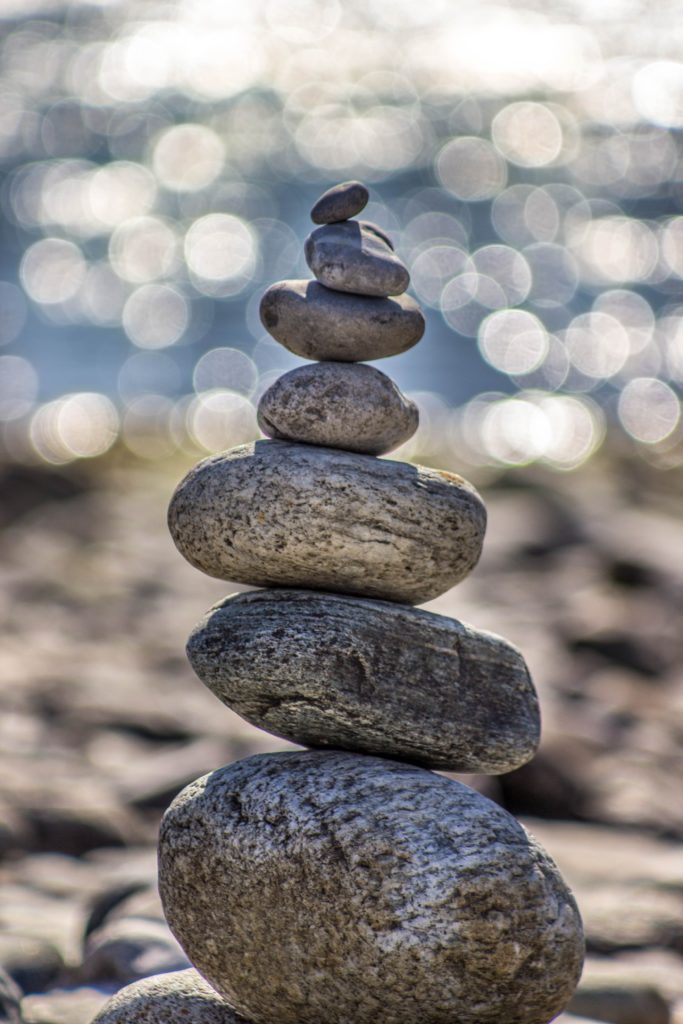
Photo by Jon Tyson on Unsplash
When I learned emotional intelligence, I understood choice as central to our personal power. The choice to say yes. The choice to say no. Our power to choose mindfully and intentionally is constantly under attack.
I also learned, to my chagrin, how much time and energy I had spent trying to change or fix what I have no power to change or fix and overlooking the places in which I do have power. I could not effectively make decisions until I learned to let go, stop arguing with what is, step away from where the blows land, and stop taking poisoned bait.
As Joshua Fields Millburn says, “letting go is not something you do. It is something you stop doing.”
Reclaiming our ability and power to choose from our unconscious patterns and addictions is a difficult journey. Reclaiming our power of choice from those who have stolen it or seek to steal it is a journey into fear. Reclaiming our power of choice in spite of our fear is an exercise in heroism.
Once we have narrowed the whole we’re trying to manage to the dimensions in which we truly have power, we’re faced with learning how to make decisions and carrying them through.
Photo by Gemma Evans on Unsplash
The power of choice comes with responsibility. Some people don’t want to consciously choose because they don’t want to take responsibility for the outcomes they create with their choices. Another pattern I’ve often seen is the desire to have as many options as possible at all times – a recipe for noncommitment and a tactic that invariably steals power from others.
Choosing one option means we leave others behind. Choosing, and working with the consequences of our choices, requires flexibility, resilience, and the willingness to be wrong.
We will inevitably make choices resulting in unwanted, unexpected results.
However, refusing to choose is still a choice. Inaction has consequences, just as action does.
If we don’t choose, someone else or circumstances will choose for us.
Is the goal of decision-making perfection or empowerment?
Is the right choice the one giving us the outcome we want? Is the wrong choice the one resulting in an outcome we didn’t foresee or dislike?
Some choices are easy, like which shirt to wear.
Some choices tear us apart, like being forced to choose between caring for ourselves and caring for someone we love.
Most of the choices we make in a day we never even notice.
Some choices change the direction of our lives and we never forget the moment we stood at a crossroad and made a decision.
We can’t necessarily tell the important choices from the unimportant ones when we’re faced with them.
Photo by Alex Iby on Unsplash
The ability to choose is strength and power.
The ability to choose involves risk and uncertainty. No matter how well we gather information, weigh pros and cons, and try to imagine the future, choice is largely a leap in the dark. As we choose, so do those around us. Our choices impact them, and their choices impact us.
It’s absolutely impossible to predict where some choices will take us.
In Savory’s model, the holistic context directs decision-making. If we know something about where we are, and something about where we want to end up, we can build a path from here to there. Our choices are steps along the path, taking us forward. The cause and effect of choice is always uncertain and dynamic, so we can expect our path to fork, detour, double back, and otherwise confuse and confound us.
Choosing is a flow that never stops. Once we’ve decided to step into it, one choice leads to another, and another.
No one, no one can make better choices for us than we can.
Savory proposes a list of questions, called context checks, to help in decision-making:
Might this action have negative social, biological, or financial consequences?
Does this action provide the greatest return toward the goals for each unit of time or money invested?
Does this action contribute the most to covering the costs inherent in the endeavor?
Is the energy or money used in this action coming from the most appropriate source in our holistic context?
If we take this action, will it lead us toward or away from the future resource base described in our holistic context?
How do we feel about this action? Might it lead to the quality of life we defined in our holistic context? What might its adverse effects be?
These questions ask us to think beyond our immediate desires and consider the possible impact of our actions on others, now and into the future. They ask us for our best predictions, and to think carefully about our goals through the lens of sustainability.
Photo by Angelina Litvin on Unsplash
The context checks are not a one and done exercise. Savory suggests they be revisited frequently, either at set intervals or in case of unexpected outcomes and events.
There will certainly be unexpected outcomes and events, as well as new information. Each choice we make teaches us something, and we (hopefully) integrate what we’ve learned into our next step.
Learning to make choices, and discerning the places in which we have no power to make choices, are two of the most essential things we can do in life. It seems to me the act of choosing is far more meaningful than whether we or others judge our decisions and their outcomes as “good” or “bad.”
Sadly, our culture seems more concerned at present with criticizing and/or eliminating the choices of others rather than developing and supporting good decision-making skills that foster personal power for everyone. Many of us spend too much time preoccupied with things we cannot change, actively disempowering ourselves and making ourselves miserable.
This week I’m moving on with a holistic business writing plan, based on Allan Savory’s Holistic Management. See the first posts here and here.
Photo by Bryan Minear on Unsplash
Whatever our situation, if we want to change it, we need a map from the place we are now to where we want to be at some future point in time. What this means is we have to move beyond our unhappiness with the way things are now and think about how we’d like them to become.
This point in the process requires a further commitment. We’ve all spent time spinning our wheels and feeling stuck. When I do that, I’m sucking the juice out of my grievances and resentments instead of letting go of the rind and moving forward. Eventually, I get bored with myself, stop focusing on the fact that I don’t like how my life is working, and think about what would work better.
It seems easy, but getting unstuck requires more effort and courage than staying stuck. Stuck is familiar. Getting unstuck means … who knows? Maybe we’ll fail. Maybe things will be required of us we don’t think we can deliver. Maybe we’ll wind up in an even deeper, muddier, icier ditch than we’re in now. Maybe we resist dreaming (my hand is raised). Maybe we’re quite sure we were born to be stuck, and we’ll betray our family or tribe if we dare to do better than they told us we could.
I have all kinds of reasons for staying stuck. Some I’m conscious of, and some I probably haven’t identified yet. They’re still lurking under the bed somewhere.
Photo by Viktor Forgacs on Unsplash
We might decide we don’t want to change things, after all, at least not using this model. It’s too much work. It’s too overwhelming. We can’t see the point in all these “holistic” complications. Taking on life in neat little reductionistic pieces is a lot easier. We don’t want to think about this stuff or ask ourselves hard questions.
I, however, am determined to continue, so my next step is to think about defining my holistic context with a statement of purpose, what quality of life I want, and how I intend my future resource base to look.
A statement of purpose is just that, one statement exactly describing our goal. Obviously, this requires some forward thinking, as opposed to sulking about our present undesirable circumstances.
(I’m reminded of a saying I once heard: If you’re in hell, don’t stop!)
It’s easy to obsess over what’s not working. We’ve probably been doing it for a long time. Thinking about what would work better is kind of a refreshing change, for me, anyway. Coming up with a one-sentence statement of purpose sounds easy, but that’s deceptive. I began with one word: security. I want to build some security for my future.
Great, but what does that mean, exactly? Security is pretty vague. I thought about it, journaled, made notes and lists, and gradually shaped a statement of purpose that felt true.
With that out of the way, I turned to thinking about what quality of life means to me. It means security, to begin with. This feels like a good sign – harmony between my statement of purpose and the quality of life I want to achieve.
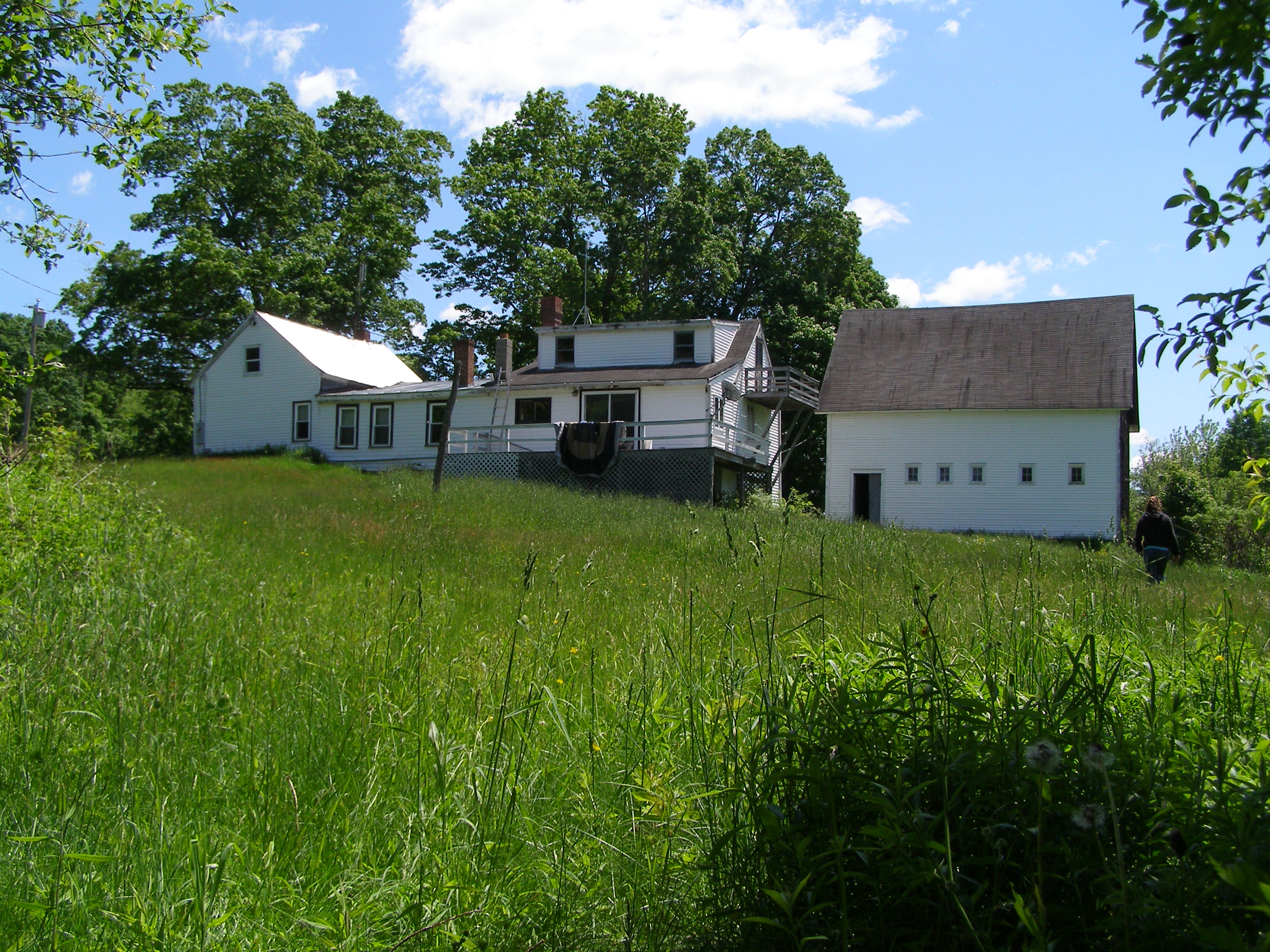
Maine Farmhouse and Barn
At this point, I can mine my grievances for information. I’d like a roof that doesn’t leak. Check. I’d like a house that isn’t slowly tilting on its cracked foundation, mouseless cupboards, a better floorplan, a lot less stuff. Check, check, check and check.
Of course, I want to be able to afford a more secure place to live. Financial security. I also want to shape a sustainable life, which means investing in less gas and oil (heating fuel) dependency and having a more energy-efficient home, among other things.
Quality of life, however, depends on more than our housing situation. This is a holistic plan; we must look at a wider picture than we’re used to. I need healthy relationships for quality of life. I need to be able to make a meaningful (to me) contribution to others. I need to be creative. I want to be physically, emotionally, and mentally healthy. I need privacy and quiet in which to recharge and write.
I made lots of lists, allowing myself to fantasize without worrying about what I deserve, what I can afford, and all the rest. The result is a final list of what quality of life means to me, and what I mean by a sustainable life.
Lastly, and this is one of the unique aspects of this framework, is defining what we want our future resource base to look like. We must consider possible present actions through the filter of the future.
For example, if we want to clear land of unwanted plants (called weeds) in order to make a garden, one option is to douse it with weed killer. That might or might not destroy all the weeds in the short term, but it certainly degrades the soil, which will need intensive rehab and reclamation to become healthy and productive again. We’ve just killed our garden.
I’m not managing a ranch or farm, but thinking about the future still applies to me. If I want a future financial resource base that’s healthy and gives me financial security, taking out a big loan to fix our roof is a foolish choice. Not only does it further destabilize my present inadequate financial resources, it locks me into future debt. Fixing the roof would keep the water out, but the rest of the house is no longer sustainable in the long term. Much better to find another way to achieve and invest in a more sustainable housing situation.
Thinking about how the decisions we make now affect the future is one of the biggest weaknesses in how we plan, individually and as businesses. We’re impulsive, we’re impatient, and we’re more concerned with our present challenges and problems and our bottom line than we are with whatever might happen in the future. We clear cut part of our land to pay bills. We poison our dandelions because the neighbors object to them. We pick up leaves in the fall so our yards look neater. All those actions ripple into the future in destructive and unexpected ways, but we rarely stop to weigh the possible or probable consequences.
We’re in permanent reactive mode rather than being proactive and taking time to plan holistically. We set ourselves up for one unexpected problem after another, one unforeseen consequence after another. Our plans and policies fail, and we’re not sure why and don’t know how to fix them.
Photo by Deniz Altindas on Unsplash
These two first steps, defining the whole we want to manage and defining the holistic context, present and future, force us to clarify and focus not only on the problem, but on the tapestry into which the problem is woven. We are not leaping to a solution for a problem we’ve only glimpsed from the corner of our eye.
In other words, we allow ourselves time to correctly define our problem.
This process also gives us a chance to make observations, identify resources, and gather information, which can redefine or erase perceived problems. If we have the good fortune to be responsible for a piece of land, raking, digging, tilling, removing rotting wood, using herbicides and fertilizers, and limiting diversity of plants and insects are not only unnecessarily expensive, they’re actions that will impoverish and degrade our future resource base.
This is what I learned as I struggled with my health. My problem wasn’t autoimmune disease. My problem was my diet. When I fixed that, the autoimmune symptoms disappeared.
Working to define a holistic context as part of management doesn’t satisfy my desire to find and implement a solution NOW. Even as I resent the time I’m giving this process, though, I’m conscious this is a more complete way to problem solve, a more thoughtful way, a more intelligent way. So I’m holding my horses and taking a step at a time, fascinated, in spite of my impatience, by the elegance of managing my life and goals with this new tool.
In the concluding chapter of his book, Seligman poses a fascinating question. Is it possible that negative emotions such as fear, anxiety and sadness evolved in us in order to help us identify win-loss, or power-over games? These feeling reactions set us up to fight, flee, freeze, or grovel. If so, he speculates, might it be that positive emotions such as happiness evolved to help us identify win-win, or power-with situations?
Photo by Helena Lopes on Unsplash
If this is so, and I know of no data that either confirms or denies it at this point, the stakes for understanding and pursuing happiness are even higher than I first realized. If we as a species can cooperate in such a way that everyone has an equal share of peace, joy, contentment, and happiness as we form communities and families, raise children, create and invent, work and learn together, we are actively creating a culture based on win-win, or power-with.
As I watched a violent mob storm the United States Capitol this week, and have absorbed what people are writing and saying about democracy and our Constitution, I recognize an epic struggle for power.
It occurs to me to wonder if democracy is not a destination, but a practice. The United States self-identifies as a democratic republic, but we are far from perfect in upholding democratic ideals, as the Black Lives Matter movement reminds us. The ideal foundation of a healthy democracy is equal power, which is to say equal voice. Some of us in this country may aspire to that, but we’re not there yet.
However, we’re closer to democratic ideals than many other areas of the world where people are engaged in bitter ongoing struggles for individual power and rights, as in Hong Kong.
Photo by David Beale on Unsplash
The thing about a democracy is it depends on the consent to share power. This means individuals won’t get everything they want, all views will not be validated, all beliefs may not be supported, and each individual is subject to the power of the majority. It doesn’t mean we have no voice. It means our voice is not more important than anyone else’s.
Many millions of Americans were heartsick and fearful after the 2016 election. Many millions are clearly devastated by the 2020 results. This is democracy in action. We are each given a vote, but there’s no guarantee our hopes and desires will be supported by the majority.
I am struck, over and over, by the clarity of using power as a lens to view current events. Any individual who seeks power-over or win-lose dynamics is not fighting for freedom, justice, or democracy. They’re fighting for power for themselves and disempowerment for others. They may call their actions strength, courage, or patriotism, but that gaslighting doesn’t hide the bottom line.
A peaceful protest demanding equal rights is not the same as a violent mob intent on having what they want at any price, including human lives, regardless of the democratic rights of others.
If it’s true we humans are at our best and happiest in win-win and power-with dynamics, our imperfect and battered practice of democracy is worth fighting for and strengthening. However, it’s a grave mistake to assume that’s the goal of everyone in this country. Individuals currently in power, as well as some others, do not want to see equal rights. They do not want a true democracy, in which everyone has an equal measure of freedom and personal preferences are subject to the will of the majority. They want absolute freedom and power, no matter the cost to others.
I have yet to see anyone who believes they have absolute power look happy. Arrogant, maybe. Boastful and triumphant, yes. But not happy. On the contrary, people I have personally known who force power-over dynamics have been weak, fearful, miserable, and emotionally isolated. I have not seen a happy face in all the footage from the day of the riot. Rage, contempt, stupidity and weakness, gloating, attention-seeking theater, mindless violence and a desire for destruction were all present, but I saw no peace, no contentment, and no happiness in that mob.
Photo by tom coe on Unsplash
Is a largely unhappy and unhealthy culture sustainable over the long term? Do we value control of others through fear, disinformation, and violence more than strength, courage, respect, cooperation, and happiness?
Democracy isn’t a free ride or an entitlement. A healthy democracy requires individuals take responsibility for participation in sustaining it. If we want our constitutional rights to be protected, it’s up to us to protect the rights of others. Our personal freedom is not more important than the freedom of others.
Democracy is like tolerance; it’s a peace treaty acknowledging and even honoring differences within a framework of checks and balances so one group cannot take absolute power. This protects all of us from authoritarianism.
Our constitutional rights do not include the right to incite or commit violence, the right to disempower or injure those we disagree with or don’t like, the right to destroy property, or the right to deliberately put others at risk during a public health crisis. They do not include the right to spread disinformation. Free speech excludes the incitement of violence.
Happiness builds social capital and resilience. It encourages broad-mindedness and cooperation. It’s self-sustaining, constructive, and creative. Supporting happiness in ourselves and others takes patience, courage, self-discipline, and strength.
Manipulating others through fear, rhetoric and disinformation is easy, and weak personalities employ those methods because they possess no other tools. Destruction and blood lust are brutishly simple and direct, giving an entirely false sense of power and control.
If we stood shoulder to shoulder and stripped away all our labels and identities until we were just people of skin, flesh, and bone, all living on the same exhausted planet, all with the same basic needs for connection, food, clean water, and shelter, what would we want for ourselves and our children? Would we choose to live in an atmosphere of violence, hate, and power-over, ruled by a mindless mob, or would we choose to create a more equal system in which everyone has certain freedoms but no one has absolute freedom or power, and in which everyone has a chance to participate, both through voting and service?
Do we want to concentrate on losing or winning?
Do we aspire to lasting happiness, peace and contentment, or chronic fear, anxiety, and despair?
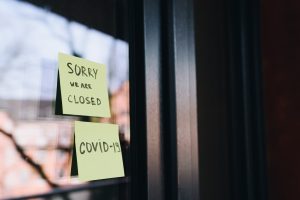
It’s no secret that many small businesses are feeling devastating impacts from coronavirus. There’s a general push to support local small businesses, which are the lifeblood of neighborhoods and communities. In rural areas, many of us are also doing our best to support local farmers.
Before the pandemic, my partner and I had a weekly breakfast date at a local diner. We enjoyed the food. We enjoyed the people, both employees and other patrons, and we often met friends there for a leisurely, friendly, old-fashioned diner breakfast. The diner is a small, family-run place, and was an important part of my community and routine.
As the pandemic swept over the country, the diner closed, and we stopped eating out altogether. We did get take-out from them a few times, but we found the food alone did not satisfy our desire for connection and community, and it seemed a chore to make the rather lengthy round trip when we could more easily, cheaply and safely cook for ourselves at home.
As the summer wanes, conspiracy theories abound, and as the election approaches, fear, frustration, hostility and division are everywhere. I heard the diner has reopened, but I’m not comfortable eating in a restaurant right now, although I do frequently support a local sandwich shop which provides take-out, has CDC recommendations posted, and is staffed by employees with masks.
Yesterday I heard the diner is heavily advertising the owners’ political allegiance and the employees are not wearing masks.
Photo by Ashkan Forouzani on Unsplash
I felt upset by this and chewed on it yesterday and last night. My initial reaction was loss and sadness, followed quickly by the feeling I’m being intolerant and unsupportive of my community. I took a walk at dawn this morning, listening to a couple of owls carrying on a lengthy conversation at the same time the birds were waking, and it occurred to me community support is a two-way street.
I’ve written about reciprocity before on this blog. At the time of that writing it was a fairly new concept to me. This was no surprise, as I realized most of my relationships, past and present, were remarkable for the absence of reciprocity. It was a relief to be given language and concept for my recurring feeling of giving every bit I had to give to a relationship and getting nothing in return.
Now I recognize the lack of reciprocity in interpersonal relationships much more quickly and take steps to limit or exit from those connections.
This idea of community support, however, is a new angle on reciprocity, and it took me a while to see it.
Small businesses are valuable and it’s hard work to make a success out of them, mostly because giants like Amazon and Wal-Mart undercut them so easily. One of the things I love about living in rural communities is getting to know the artisans, farmers, and others engaged in unique and high-quality arts, crafts and food production. I’ve never owned a small business, but it seems to me if I did I’d work hard to provide my customers with the best product and experience possible. In return, I’d be grateful for those who patronized me and told others about me, as I’d want to attract all the customers I possibly could.
Photo by Sven Scheuermeier on Unsplash
This is reciprocity.
As a customer, it doesn’t occur to me to wonder about the political views or underwear color of a small business owner. My interest is in the business’s product or service, not the owner’s personal choices.
I have no need or desire to control whether or not people wear masks or social distance, unless I’m at work and it’s my responsibility to do so. If I’m uncomfortable with lack of masking and social distancing out in the world, I leave rather than making a scene. I also feel no need to lead in any situation with my politics or ideology. Neither are the most important things about me.
I still patronize most of the places I visited and bought from before the coronavirus, although I go a little further out of my way now, even if it does take extra time or an extra dollar or two, to support small businesses. I have encountered some hostility and glares in various local businesses that I assume are about me masking, but nobody has said anything to me about it, and (being an adult) I know how to ignore dirty looks.
However, the diner is a different proposition. Plastering a small business with political signs and posters feels to me like a Keep Out, as their presidential pick is not mine. It feels hostile and hurtful. As I said, we aren’t in a hurry to eat in anywhere just now, but it was my intention to return to the diner and resume our weekly habit one day.
Photo by Joseph Gonzalez on Unsplash
Except now I don’t feel welcome.
I also don’t feel safe. I can only assume people who refuse to mask in their business feel no need to take other precautions, and I don’t want eat food prepared and served by those who don’t follow CDC guidelines, both at work and in their private lives.
I’m sad about this. It’s hard to feel like a part of a community and then suddenly feel I don’t belong, after all. My affection for the diner, the people there, and the food is real, and I wish them all well. I thought we were friendly acquaintances and it never occurred to me differing political views would disconnect us.
But I wasn’t responsible for the disconnection. I’ve missed the diner all these long weeks, and looked forward to the day we could resume going. I want to support this particular small business, and I feel unable to. I won’t go out into the community and bad mouth them, but I won’t be giving them my business, either, or recommending them to others.
Maybe they don’t want support from people with my politics and coronavirus concerns. Maybe their choice is to support the false equivalency of the two. Maybe we as a culture are deciding divisiveness and politics are more important than good will and community, but that’s not and never will be my choice.
During these times and all times, we need to support one another. The best support is mutual, reciprocal. Communities need small businesses, and small local businesses need communities. I want to be a part of that, but I need some support as a customer in order to show up and buy.
My conclusion about all this is breakfast at the diner is yet another sad loss. I’m not going to compound that by distorting my efforts to stay as healthy and safe as possible into intolerance and lack of support. Neither are true of me. Both might be true of others, but I can’t do anything about that.
Supporting businesses that support me. My daily crime.
(This is the fourth post in a series on reciprocity. See also Parts 1, 2, and 3.)
Oxford Online Dictionary defines courage as “the ability to do something that frightens one.”
As I explore definitions, articles, memes, and quotes about courage online, much of what I read seems superficial and uninspiring – nothing I want to write about.
Standing up for what is right. (Understanding that we’ll never all agree on what is right.)
Expanding horizons – letting go of the familiar.
Facing suffering with dignity and faith.
Forbes published an article entitled “10 Traits of Courageous Leaders” that also caught my eye. As far as I’m concerned, these courageous traits are not specific to leaders. Again, my comments are in parentheses.
Confront reality head-on. (Reality has become subjective. ‘Alternative facts’, anyone? I think of this as the willingness to see things clearly and accept the world (and others) as it is.)
Seek feedback and listen. (Refusing to answer questions or hear feedback is a red flag. So is the inability to shut up and listen.)
Say what needs to be said. (Authenticity)
Encourage push-back.
Take action on performance issues. (Ooda loop: Observe, orient, decide, act.)
Communicate openly and frequently. (Authenticity)
Lead change.
Make decisions and move forward. (Ooda loop again.)
Give credit to others. (Gratitude, appreciation, acknowledgment.)
Hold people (and yourself) accountable. (Integrity)
Most will agree courage is a good thing, an attribute we want to have, an attractive quality we’d like others to see in us. The hardest part of courage, it appears at first look, is simply overcoming our fear and taking action anyway. Then everyone will admire, like, and respect us.
Photo by Joshua Earle on Unsplash
From the bottom of my scarred heart, I wish that was so. Maybe it is so for others, but my experience with courage is the people closest to me, whose opinion I’ve most cared about, have called some of the most courageous choices I’ve ever made cowardice, and I’ve paid a steep and ongoing price for those choices, even though from my perspective they were the right things to do.
Perhaps the most powerful way to think about the traits and aspects of courage listed above is to consider whether they are present or not in our own relationships, groups and communities. Most of us will pay lip service to the idea of courage, but when it comes to taking courageous action, we are severely discouraged from doing so, and we often do all we can to prevent others from doing so as well.
Let’s face it. Courage is damned inconvenient and uncomfortable. In fact, for many, it’s a frank threat.
This is a shadowy aspect of courage few talk about directly, with one major exception.
Artists.
For example, John Steinbeck wrote, in East of Eden: “An unbelieved truth can hurt a man much more than a lie.” To tell the truth, make courageous choices out of that truth, and be invalidated and/or disbelieved by those close to us is a terrible kind of pain. When others call our courage selfishness, cowardice, malevolence, irresponsibility or hysteria, relationships shatter.
Then I found this poem by Mary Oliver, one of my favorite writers:
The Journey
One day you finally knew what you had to do, and began, though the voices around you Kept shouting their bad advice— though the whole house began to tremble and you felt the old tug at your ankles. “Mend my life!” each voice cried. But you didn’t stop. You knew what you had to do, though the wind pried with its stiff fingers at the very foundations, though their melancholy was terrible. It was already late enough, and a wild night, and the road full of fallen branches and stones. But little by little, as you left their voices behind, the stars began to burn through the sheets of clouds, and there was a new voice which you slowly recognized as your own, that kept you company as you strode deeper and deeper into the world, determined to do the only thing you could do— determined to save the only life you could save.
Photo by John Salvino on Unsplash
It’s one thing to be a member of an in-group that provides support as we make choices. It’s a whole other thing to be cast out, scapegoated, or tribally shamed because others do not accept or believe in our fears, dreams, and authenticity, and thus cannot appreciate our courage.
Courage, I find, takes enormous courage.
As I contemplate courage, my relationship to it, and these points, two aspects stand out: The terrible loneliness of courage, and how subjective it is.
Fear is, of course, subjective, too. This came home to me particularly this week as I had a conversation with a young student about concerns and plans for schools reopening. I realized afresh, during our brief interaction, we all fear things in the coming months. Some are afraid they’ll be forced to take a vaccine for coronavirus in order to attend school, or forced to wear a mask all day. Others fear equally there will be no vaccine, at least not a safe and effective one, and students won’t wear masks.
To be human is to know fear. We all have that in common. I wish we could stay rooted in that commonality and work together, but instead most people take it one step farther and fight about which fear is real and legitimate; not a successful strategy for problem-solving.
There’s an old proverb: “Fear and courage are brothers.” Most of us understand courage can’t exist without fear. This aspect of courage is heavily underlined as I research. It doesn’t help us much now, though, when we fear so many different, if not opposite, things.
If fear is subjective, then courage must be, too. Right now we see a mad scramble as different groups work to legitimize their fears and invalidate those of others. Contempt, violence and broken relationships are the result, and we wind up more thoroughly divided than we started.
Courage, then, becomes something we each define for ourselves, rather than a concept we all agree on.
Because our culture has such low emotional intelligence, and fear is a loaded thing to talk about honestly, the idea of courage becomes equally difficult to address and remains nebulous and elusive, a thing in the shadows.
Who would have thought how complicated courage is?
I have no grand conclusions. What I will say is thinking about courage has softened some of my certainty that I can recognize and appreciate it in those around me. What do I know of what lies in the hidden places of others? I’m also reminded, at the end of the day, the best friend and support we have is ourselves. Nobody can walk in our shoes but us, and that means nobody has access to the full truth of our experience, our fear, or the fullness of our courage. Our own love and approval may be all we get, and that needs to be enough.
Websites store cookies to enhance functionality and personalise your experience. You can manage your preferences, but blocking some cookies may impact site performance and services.
Essential cookies enable basic functions and are necessary for the proper function of the website.
Name
Description
Duration
Cookie Preferences
This cookie is used to store the user's cookie consent preferences.
30 days
These cookies are needed for adding comments on this website.
Name
Description
Duration
comment_author
Used to track the user across multiple sessions.
Session
comment_author_email
Used to track the user across multiple sessions.
Session
comment_author_url
Used to track the user across multiple sessions.
Session
Statistics cookies collect information anonymously. This information helps us understand how visitors use our website.
Google Analytics is a powerful tool that tracks and analyzes website traffic for informed marketing decisions.
ID used to identify users for 24 hours after last activity
24 hours
_gat
Used to monitor number of Google Analytics server requests when using Google Tag Manager
1 minute
_gac_
Contains information related to marketing campaigns of the user. These are shared with Google AdWords / Google Ads when the Google Ads and Google Analytics accounts are linked together.
90 days
__utma
ID used to identify users and sessions
2 years after last activity
__utmt
Used to monitor number of Google Analytics server requests
10 minutes
__utmb
Used to distinguish new sessions and visits. This cookie is set when the GA.js javascript library is loaded and there is no existing __utmb cookie. The cookie is updated every time data is sent to the Google Analytics server.
30 minutes after last activity
__utmc
Used only with old Urchin versions of Google Analytics and not with GA.js. Was used to distinguish between new sessions and visits at the end of a session.
End of session (browser)
__utmz
Contains information about the traffic source or campaign that directed user to the website. The cookie is set when the GA.js javascript is loaded and updated when data is sent to the Google Anaytics server
6 months after last activity
__utmv
Contains custom information set by the web developer via the _setCustomVar method in Google Analytics. This cookie is updated every time new data is sent to the Google Analytics server.
2 years after last activity
__utmx
Used to determine whether a user is included in an A / B or Multivariate test.
18 months
_ga
ID used to identify users
2 years
_gali
Used by Google Analytics to determine which links on a page are being clicked