by Jenny Rose | Jun 7, 2018 | Aging, Connection & Community, Emotional Intelligence
Have you ever had a dream of finding an undiscovered room in a familiar house? I have, several times. I like those dreams. A large piece of furniture moves aside, or I walk into a room I know well and find a new door in it.
Last weekend, my partner and I went to our small local theater and I saw Book Club while he went happily off to Deadpool. (Honestly, I’m so tired of comics, superheroes, space adventures, special effects and unending battles and chases. Whew. It felt good to say that.)
The movie was a relief. I didn’t have to spend most of it with my eyes shut trying to filter out the entirely overstimulating and, at the same time, boring hyperactivity, and it wasn’t excellent. It didn’t require anything from me except to sit back and relax.
No spoilers and this is not a movie review, but Jane Fonda tries way too hard. Instead of marveling at her artificial youthfulness, I felt rather sorry for her. There was also a lot of unnecessary drinking. It didn’t add anything to the story. Some of the humor was more of a wince than a chuckle, but there were some truly funny moments. The writing was a little inconsistent. It’s a movie about connection and being an aging woman.
Overall, I could relate to these four women and I found the movie oddly touching in an unexpected way. I’ve been thinking about it ever since, in fact, trying to understand why it made me feel so bittersweet.
It has to do with giving up. Well, not really. Not giving up, exactly, but settling. No, that’s not quite right, either.
It has to do with gradually forgetting to entertain possibility.
That’s better.
Photo by Joshua Rawson-Harris on Unsplash
We inhabit our lives like a house. It’s a finite space, and we’re intimately familiar with the floorplan, the closets, the windows and the doors. Our house is defined by ourselves and the way we live, and it’s also defined by the external world and people around us. Outside our house is a world where all kinds of potential physical and emotional harm crouches, waiting for us to take a risk and leave our shelter. Outside our house is a wilderness of Unknown.
When we’re young the house of our life is new and exciting. We experiment using the space in different ways. We begin to figure out what we like and don’t like, what works well in our lives and what doesn’t, who we can live with and who we can’t live with. We gradually accumulate furniture in the forms of memories, scar tissue, hand-me-downs, beliefs, and new stuff we find all by ourselves.
The years go by and we learn a lot (hopefully) about the way the world works and who we are. We notice an ever-enlarging population of people younger than we are.
Then, one day, we’re in our fifties. Then our sixties. Then our parents are old. Not older. Old. How did that happen? Then our kids are as old as we were when we had them. It’s entirely disconcerting. We begin to think of ourselves as middle-aged and secretly feel older than that a lot of the time. Then, if you’re a woman, comes menopause, which, just as the onset of menstruation changed everything in the beginning of our lives, remodels our house.
For one thing, we need to tear out the heating system and replace it with cooling and fans.
Photo by Ian Espinosa on Unsplash
By this point in my own life, I’ve made a lot of choices and taken notes on how they worked out. I’ve made decisions about what I will and won’t do, and about what I am and am not interested in. I’ve decided what dreams to discard and interests to drop, because I’m out of time, energy or both. I’ve decided I know exactly who I am, what I’m capable of and what I need and want. I have an entirely private (because it’s shameful) list of things I’ve given up on.
Book Club speaks to the ways in which we begin to limit possibility as we age. In my case, it has nothing to do with age, though. I’ve been slamming doors behind me my whole life. When I was 18, I turned my back on high school. When I was 20, I left residential college, never to return. When I was 21 and got married, I gave up on dating or looking for love. When I was 27 and had my first child, I stopped dreaming of freedom and adventure.
And so on.
Of course deciding we’re never going to do something ever again practically guarantees the Gods will throw it back to us sooner or later, giggling. Now when I hear myself say, “Never again…” I can smile.
An even darker aspect of refusing possibility has to do with the dreams and desires we’ve never fulfilled. I’ve always struggled with financial scarcity. I tell myself nearly every day I’ll never be financially successful, and it doesn’t matter, because I have a good life, I have what I need, I’d rather have my self-respect and integrity than be rich (note the belief one can’t have both), and it’s not a big deal. I say all those things to myself because I don’t see any possibility of financial security. If I haven’t found it following all the rules and working so hard, then maybe I don’t deserve it, or it’s just not something I can earn or have. I don’t want to live the rest of my life hoping for something that never happens.
The story I tell myself is I’d love to find a great job where I could contribute my talents, do meaningful work, be part of a team and get adequately paid. I’m always watching and listening for that job. But I know I’m too old, the things I love to do will never pay well, the kind of thing I’m looking for wouldn’t be here in rural Maine, and I’ll struggle to maintain adequate housing and feed myself forever.
If there’s no possibility, I can work on accepting what is and try to be peaceful.

Photo by Nathan Dumlao on Unsplash
Book Club was redemptive. It reminded me possibility still exists for me. I’ve done things in the last five years I never imagined doing in my wildest dreams. Why do I think it’s all over now? Why do I make so many iron-clad assumptions about the size and shape of my house? Why am I deliberately trying to ditch my dreams? Why do I think of myself as a food item on the pantry shelf with an expired sell-by date?
Am I too old and jaded to invite miracles? Am I too worn out to move a piece of furniture (a bookcase, what else?) and discover a door behind it I never saw before? I know I’ve yet to discover my highest potential.
Maybe I’m just not very brave. I don’t want to fail anymore. I don’t want to be disappointed or feel I’m a disappointment, ever again. I don’t want to be let down, or hurt, or stood up or rejected. I don’t want to look like a fool. (I don’t mind being a fool, but I don’t want to look like one.) I don’t want to be scared.
I don’t want to play power games with people.
Perhaps this is the crust of old age, this gradual accumulation of weariness, scar tissue, limiting beliefs, and physical changes that keeps us sitting in our familiar, safe house, where the edges and boundaries are well-defined and unchanging and we control the dangers of possibility.
Some people successfully shut out life, or shut themselves away from it. I’m never (there I go again) going to be able to pull that off, though. I’m too curious and too interested. An overheard remark, a movie, a conversation, a book or even a song lyric invariably comes along and kicks me back into motion when I’m threatening to lock myself permanently in the predictability and safety of my house. Then I begin to write, and the walls waver and shimmer, new doors and windows appear, a corner of the roof peels away to show me the sky, and I remember I’m still alive, still kicking, still wanting and needing and still, in spite of my best efforts, dreaming of possibilities.
Photo by frank mckenna on Unsplash
All content on this site ©2018
Jennifer Rose
except where otherwise noted
by Jenny Rose | May 31, 2018 | Connection & Community, Emotional Intelligence
A couple of years ago my adult son and I had a heated exchange during which I asked him exactly what he wanted from me. It was a useful question. For a moment we stopped being adversaries while he thought about it. “Umm, I don’t know. What I’ve always had, unconditional love, I guess.”
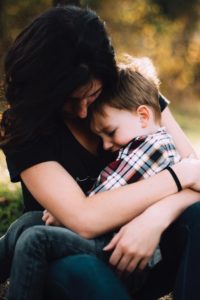
Photo by Jordan Whitt on Unsplash
That moment has stayed with me, because as I asked the question I realized I really didn’t know, and I was both curious and interested. What does a fully emancipated twenty-something-year-old man honestly want from his mother? It was the first time it ever occurred to me to ask either of my sons what they wanted from me at any age or stage.
I never thought of anything except what I wanted to give them.
I’ve been reading about emotional labor recently, which leads me irresistibly to the concept of benign neglect.
Emotional labor is the often invisible process of managing feelings and their expressions as part of a job or relationship. The idea often comes up as part of the ongoing discussion about gender roles and equality, but I’m thinking about it in a slightly different context.
Benign neglect is a term that originated out of city planning politics and now also describes an attitude of inaction regarding an unproductive situation one is commonly held to be responsible for.
I’ve written before about pleasing people, boundaries and reciprocity. Emotional labor is embedded in all of these, and it’s been a primary dysfunction in my relationships over the years, though I haven’t had any language or distinction about my experience of it until recently.
If you Google emotional labor you find definitions, descriptions, assertions about the disproportionate burden of emotional labor on women, and the powerful but invisible expectations regarding who is responsible for emotional labor in any given situation. What you don’t find is discussion about how to make visible and support the vital aspect of emotional labor in community, jobs and families. The discussion stops at equal rights.
Equal rights is an important discussion to have, but in the meantime we’re dealing with families, friends and jobs today and emotional labor is an inescapable need right now.
I think of emotional labor as glue. You don’t see it, but if it’s missing everything falls apart. If it’s applied carefully it holds things together. If we don’t keep a calendar and glance at a clock now and then, we can’t manage our lives. Either we learn to cope with appointments, deadlines, commitments, grocery lists and feelings ourselves or we rely on someone else to do it for us. Part of adulting is learning emotional labor.

Photo by freddie marriage on Unsplash
I’m a button sorter by nature, and I take a lot of pleasure in being organized. My life works better when I take the trouble to be effective and efficient, and it gives me pleasure to share with my loved ones the benefits of thinking and planning ahead and taking care of business. Remembering special dates, buying tickets, planning for bake sales and decorating for the holidays have all been offerings symbolizing my love and willingness to provide support to my family, along with the daily activity of simply showing up in my relationships.
I said that recently to my partner — “this is me showing up in the relationship.” He had no idea what I meant.
I was staggered. What do you mean, what do I mean? You know, asking if you slept well because you didn’t the night before. Or inquiring about the status of that headache you complained about yesterday. Or asking you what’s in your attention and what you’d like to do today. Listening. Sharing. Showing concern. Demonstrating I appreciate you enough to be present. Reminding you that we’re almost out of cat litter. Thanking you for patching the mousehole in the cupboard. Showing up in the relationship!
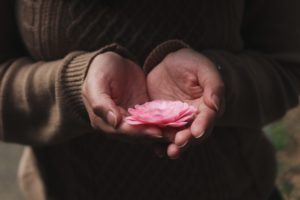
Photo by Ester Marie Doysabas on Unsplash
Yeah. Aka emotional labor.
He listened and shrugged. I didn’t describe anything he could relate to. He lives his life with me without showing up or not showing up. He just does what he does, says what he says, is interested in what he’s interested in. He doesn’t check in with himself every day to be sure he “showed up” in a way that reassures me of his ongoing affection and caring.
I do.
I’ve thought a lot about this since that conversation. I’ve been conscious of a huge annoyance and, underneath that, amusement.
All my emotional labor is completely unneeded. He never asked me to do it. It’s not useful. It’s invisible to him.
This made me wonder if that’s been true in all my other relationships as well, including with my kids, historically and presently.
That’s not right, though, because I’ve been with some real man-babies. My husband once called me at work because the baby had a soiled diaper. (Okay, it was a real blow-out, but still!) Then there was the guy who wanted a dog to fish with, but didn’t want to walk it, poop scoop after it or stay up all night on July Fourth holding its paw because it was terrified of firecrackers and invariably went into seizures (it had epilepsy).
And then there were the kids. There’s no question at all that raising kids takes a lot of emotional labor. It’s both needed and required.
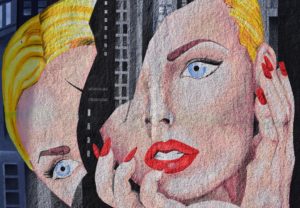
Photo by Chris Barbalis on Unsplash
I guess I just got into the habit. Emotional labor has been my offering, my contribution, in every relationship. I’m good at it. Until very lately, I never considered reciprocity and I had no definition for emotional labor. I just thought of it as being a good woman.
When my son said he wanted what I’d always given, unconditional love, I had a moment of real satisfaction. I made so many mistakes, but at least I did that right. On the other hand, can those two simple words ever encompass the totality of heart, pain, frustration, energy, loyalty and years they represent? Unconditional love. That’s all.
Right.
I was with a man for a long time who had no interest in emotional labor. Once he had me hooked, he was never decisive, confident or clear again. He initiated no physical contact. He resisted making any plans. He made no effort to develop rituals, routines or regular check-ins. His job was stressful, he had some sleep and health issues, and his favorite excuse was “I forgot.” I gave and he withheld.
Eight years later (slow learner) burned-out, anguished and desperate, it occurred to me to wonder what would happen if I. Just. Stopped.
So I did. I stopped e-mailing. I stopped calling. I made plans without him. I let go of all my expectations and started trying to glue myself back together. I worked, took care of my own responsibilities, enjoyed time with friends and family and went on with my life. I set down all that emotional labor and walked away from it.
Guess what happened?
He floated away.
I’d essentially had an eight-year relationship with myself.
He did eventually (weeks) notice I wasn’t around any more and got in touch, mildly puzzled and reproachful. I was casual and said I’d been busy.
He told me he didn’t feel like he was getting the attention he needed from me. We were sitting in his car at the time. I’ll never forget it.
Until now, I’ve never put that experience in context with all my other relationships. After my recent conversation with my partner about showing up in the relationship, I changed my behavior. I stopped worrying about “showing up” every day. I’ve engaged with my own needs, daily tasks and schedule. I enjoy our time together, but I’ve stopped trying to make it happen. I switched my focus to making sure I show up for myself every day.
What I’ve learned from all this is emotional labor is real and largely unconscious. Many of us give our lives to it. I’ve also learned it’s a choice. When it remains invisible and undefined and we’re operating out of unspoken cultural expectations, we become unconscious of much of our decision-making and motivation. Our desire to be a “good” wife, mother, daughter, lover, sister, whatever, becomes all-powerful and we throw ourselves into it without ever thinking about whether that’s what others want and/or need from us. We don’t consider asking for help or professional support if we’re caregivers. In fact, we feel hurt when our emotional labor of worrying, for example, is not received with gratitude and appreciation! If whoever we’re connected with does want our emotional labor and provides none themselves, we don’t notice. We just work harder.
This is where benign neglect comes in. Benign neglect is an attitude of inaction regarding an unproductive situation one is commonly held to be responsible for, remember? The culture may hold us to be responsible for a lot of things, but that doesn’t make it true.
What if we challenged the “commonly held” belief that all emotional labor is our job in any given relationship? What if we decided it’s not our responsibility, in addition to not being useful, to worry, fuss, organize or manage the feelings of the people around us? What if we took back our power to choose?
Photo by Bruno Nascimento on Unsplash
If I had stopped worrying about doing laundry for my teenagers, or insisting on family mealtimes, or keeping track of their schedules, what then? The sad truth is I was afraid people would think I was a bad mother. I knew I would think I was a bad mother. The kids didn’t do those things for themselves, so I had to do it in order to demonstrate my love, commitment and competence. What kind of a mother lets her kids wear dirty socks?
I didn’t consider the difference between organizing schedules for toddlers and organizing two big, smart, capable boys who saw no reason to bother themselves with boring things like schedules, grocery lists and clean socks. I was so busy demonstrating my feelings, especially my love for them, I never stopped to wonder if they were learning to express their feelings. I didn’t ask.
It annoys me that only now am I seeing ways in which I could have been a much more effective parent, partner, daughter and sister.
At bottom, I don’t think emotional labor is about equal gender rights at all. I think it’s about choice, and choice is about power. We can’t choose if we don’t recognize there is a choice, we can only stumble forward blindly, doing our best with what we think the rules and expectations are, external and internal, until, overburdened, overwhelmed and exhausted, we fall down and don’t get up again. Meanwhile, the people we love, the ones we’re doing all this labor for, are not saved by our labor. Kids grow up, have car accidents and bad relationships, choose crappy diets, fall into addiction, catch an STD. Parents grow old, have health problems, and become dependent. Siblings, friends, lovers and mates are not assisted by our worry, our ability to manage their feelings or our “showing up” in the relationship. All our loved ones might be a great deal better off if we hadn’t taken on all the emotional labor ourselves, because when life happens, as it inevitably does, they lack the skills we never let them learn because we were so busy being good women.
Also, when was the last time you were thanked for all your emotional labor? (What do you mean, “showing up” in the relationship?)
You gotta love the irony of the whole thing.
What would my relationships look like if I kept my emotional labor in balance with the labor of those I’m connected to? What if I could be more like my partner and trust that my affection and love for him (and others) are communicated and understood without such deliberate emotional labor? He just naturally demonstrates his feelings for me in our day-to-day life without all this effort and trying. What if I relaxed and redefined what being a “good woman” means?
I’m going to find out.

Photo by Ryan Moreno on Unsplash
All content on this site ©2018
Jennifer Rose
except where otherwise noted
by Jenny Rose | May 24, 2018 | Emotional Intelligence, Feelings
Sometimes being a writer is a pain in the ass.
I had several ideas for this week’s post, but when it came down to it all I produced was something I didn’t want to think about, remember or write about at all. I tried to stop and go back to one of my original ideas, but no matter where I went I ended up in the same place.
I’m old enough to know it’s much easier to ride the horse in the direction it’s going, so I’m writing the damn thing, but I want you to know I’m resentful about it.
Two seeds contributed to this piece. The first is that my partner will be attending his fiftieth high school reunion this summer, and deciding whether or not to accompany him has been a thing for me.
The second seed is the latest (as of this writing) school shooting in Santa Fe, Texas, and the story about the girl (who was killed) who allegedly rejected the shooter and how that may or may not have been part of the motive.
I don’t know what happened between these two young people, of course. I certainly don’t believe everything I read. Perhaps the shooter was bullied. Perhaps he wasn’t. Maybe the girl simply said no, and some people interpret that as bullying. Maybe he refused to take no for an answer and the girl was trying to get the message across with ever-increasing force. I’ve been in a position like that myself. I don’t know, and for the purposes of this post it doesn’t matter.
I think we all can agree we have a problem with school shootings in this country, even if we don’t agree on causes and solutions. I also believe the data gathering, debate and problem solving around this issue is extremely important. Along with everybody else, I have my own opinions about how we got here and what we might do about it, but my opinion isn’t part of this post, either.
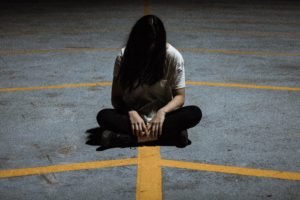
Photo by Alex Iby on Unsplash
The reason I’m writing about it (the shooting, one of the alleged triggers for the shooting, and the entire problem of school violence) at all is because of the way it makes me feel.
Sick. Sad. Scared. Angry.
These are the same feelings I’ve had about the entirely trivial decision about whether or not to attend my partner’s high school reunion.
My days in high school were a black time I’ve worked hard to forget. I led a strangely reversed life then, like a photographic negative. My real life was the volunteer fire and rescue work I was doing, my family (including many animals) and reading, the frame around the central core of school. The fire and rescue work often took place at night, of course, and I well remember the fellowship, the macabre hilarity, the practical jokes, and the heartbreak, terror and death we saw on the highway. There were impromptu middle-of-the-night meals at Denny’s after delivering a patient to the hospital, when we were stinking of gasoline and had glass splinters in the knees of our jeans. I was the baby, the youngest, but I was trained and certified and did everything I could to pull my weight.
It was the first time I ever felt I belonged anywhere, or was of any use to the world.
School days, by contrast, were endless bleak hours of clocks, bells, the metallic slam of lockers, figuring out what was necessary in order to maintain straight A’s (which thankfully did not involve much attendance in most cases), and fatigue.
I can’t remember eating a single school lunch in either junior high or high school. Isn’t that strange? I must have, but I have no memory of doing so, or of the cafeterias. What I do remember is the high school library, where there were rows of study carrels — remember those? They were 3-sided square boxes on the desks so that each student was cut off and private, in his or her own little undistracted and unobserved space. I had one particular favorite, the farthest away from the librarian and activity, out of sight, out of mind. It was where I slept. I wore an old hand-me-down men’s quilted navy blue coat that I cherished, and I wadded part of it up as a pillow, pulled the rest over my head and slept for long stretches through lunch and classes.
I was (and am) very organized. I knew what my teachers expected. I always showed up for tests and did all my homework. Papers and projects were planned and completed well before they were due. I did all the reading, homework and classwork. If extra credit work was available, I did that. When I could take AP classes, I did. I never ditched AP English, which I loved. I also went to Latin, another favorite. German was fun, too. I was never any kind of a problem, in class or out of it. Most of the time, I was numb with boredom.
I wished only to remain invisible and maintain a 4.0 grade average. The invisibility was for myself. The grade average was because it was expected of me, and it was easier to just do it than to rebel. Also, I wanted to be finished with school as soon as possible, and the quickest way out was to pass all my classes.
Most of the teachers and all of the students were alien species. I moved among them like a ghost, a wisp of fog. I hardly opened my mouth. I occasionally raised my hand in class for the teachers who required participation for an A, but I’d learned in grade school not to volunteer too many answers, even if I did know them. I dawdled over my tests so as not to be the first one finished. I took pains to keep most of the teachers at a distance so as not to be identified as a “teacher’s pet,” another lesson from grade school.
I was never bullied, though I saw and heard bullying every day. I was adept at blending in and attracting no attention, positive or negative. I didn’t hate the other kids. I didn’t think much about them at all. I didn’t hate the teachers. I even respected a couple of them. I was angry all the time, but it wasn’t focused on anyone in particular, and I only recognize it in retrospect. I didn’t blame the teachers, the kids or my parents for the hell I was in. It never occurred to me there was any other option. Everyone had to go to school, period. My parents were busy people with lives of their own. There wasn’t anything they could have done and I saw no point in whining and complaining.
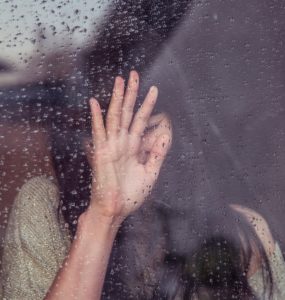
Photo by Milada Vigerova on Unsplash
The school day was bracketed by a 40-minute bus ride morning and evening, and I did my homework on the bus, which effectively shut out the noisy horseplay, teasing and other socialization happening on it. I always chose a window seat somewhere in the middle and immediately set to work, never looking up from my notebook and books even if someone sat down next to me. If I had no homework, I read.
When I was a senior I finally learned to drive, somewhat unwillingly. I’d seen too much trauma on the highway by then to be enamored of driving. In the end, though, I learned and sometimes I drove our old Chevy truck to and from school, a battered tank of a thing that could cope with any kind of weather and wouldn’t crumple like a tin can at the slightest bump or ding. It was a faded brick red. If I had the truck, I abandoned the library and stretched out on the seat to sleep after parking on a quiet side street, cracking the windows and locking the doors. It felt very safe.
I do remember, as a great treat to myself, buying lunch in town when I had the truck, either at McDonald’s or a little health food store that made wonderful egg salad sandwiches.
Sick. Sad. Scared. Angry.
I remember one student I graduated with. One. I think I remember him because he was also a friend of my brother’s, who was a year behind me, and he was on the summer swim team with me. He was in my AP classes and became a scientist. He wasn’t a friend. He’s just the only one I remember.
On the other hand, I remember the fire station very well, and the rescue barn. I remember the smell of exhaust from the ambulances and big trucks. I remember the little offices where the phone and radio sat on the counter. I remember the meetings, the folding chairs, the scarred tables and the pancake breakfasts. I remember the battered coffee urns and the stained sinks, the water fights, the endless and hilarious practical jokes, the laughter, the weekly meals at the local diner, the parties, the trainings and the people. I later married two of the men I volunteered with in those days (not at the same time, of course!) I remember running up and down ladders for training, the impossible weight of portable water pumps (we called them Indian pumps) for fighting brush fires, the eerie sight of burning trees crowning in a blossom of flame against a dark sky and watching a house burn to the ground. I remember the sour smell of cooling “hot spots” after a brush fire. I remember the live feeling and weight of a charged firehose, enough to knock me over, and the way it peeled the shirt off you during a water fight.
For this treasured, meaningful part of my life, though, there was no acknowledgment. Rather the reverse. It wasn’t quite nice, a teenage girl running around with a bunch of older boys and rowdy, often bawdy volunteers, never mind that I took First Aid, CPR, EMT and IV training and loved it all. It also meant I occasionally showed up in the company of the police at wild parties where someone got hurt or overdosed, which did not endear me to my high school peers. Not to mention that the first dead body I ever saw happened to be one of my schoolmates. I’ll never forget the broken-doll look of him as he lay on the highway, broken glass glittering in his hair under the emergency lights. The only reason it was possible for me to do that work was that my mother did it too. She was quite a good paramedic, in fact.
My experience with high school took place in the late 70s and early 80s. We had a completely open campus. Certainly, things are different now in terms of security, at least. I wonder, though, how many kids are sitting in public schools across the country this very minute who are largely unseen, unheard and simply trying to survive.
Every time a shooting happens we get hours and hours of interviews, social media posts and videos of parents, teachers and students and their perceptions of the perpetrators, and I always wonder — did anyone, does anyone, can anyone really know their student, brother, son, teammate or classmate? How well does a high-school-age kid know him or herself? How much perspective can they have, how much experience in the amazing ways life can change over time? What has been their experience of connection with themselves and others? What is the level of their willingness and ability to communicate? Have they ever, in their whole lives, been given a reason to believe asking for help or telling the truth is useful, rather than making everything much, much worse?
My family cared about me. I remember going to counseling once or twice, both in school and out of it. Do you know what happens to kids who get in-school counseling? They get pulled out of class, right in front of God and everyone. Every single student and teacher in that class knows where they’re going. Not exactly a help when you’re trying to remain invisible. Also, the counselors are just as worn-out and frayed as all the other adults in a school, with an endless array of troubled kids, emergencies, difficult or distraught parents, and they’re trying to support the teachers as well. I was ashamed to be part of their burden and take up any of their time.

Photo by John Salvino on Unsplash
We say some of these at-risk kids who become shooters are identified and “in the system,” and I think many components of “the system” have an honest desire to make a positive difference and work usefully with young people. That doesn’t mean the young person is able to avail him or herself of the support, though. I trusted no one at that point in my life. I wouldn’t have ever told the truth about my private thoughts and feelings. I’d already learned the danger of rocking boats, and I also knew I was privileged because I was smart, we were comparatively wealthy and I had a family that loved me. I had nothing to complain about, and I didn’t. Nothing would have induced me to shame my parents and my extremely intelligent, talented and much more normal and attractive younger brother.
Now, thirty years later, kids are dying, and teachers, and school staff, as well as an occasional parent. We’re trying to understand. Some are trying to find someone to blame, as though that fixes things. But the parents of the shooters aren’t killing these kids. Neither are teachers or security personnel. Bullies and peers aren’t killing these kids. “The system” isn’t killing them, either, or the NRA. The one who pulls the trigger is the killer. I think it’s important to be clear about who’s ultimately responsible. The question is, what came before the trigger was pulled? What are all the intricacies and complexities leading to that moment of choice, and how do we begin to explore that terrain without the input of the shooter, who might or might not survive, and if alive, might or might not tell? If we can ever fully understand, how do we make changes in the roots of parenting, emotional intelligence (or lack thereof), public education (so-called), and our culture’s broken sense of connection and ability to be authentic?
If my school records could be magically produced, what would they show? Straight A’s. Honors student. Maybe a counseling note or two: Isolated, frequent absences, no behavior problems, no sign of abuse or cutting, not a danger to self or others,
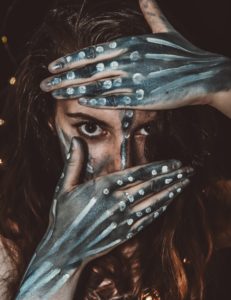
Photo by Joshua Fuller on Unsplash
People, that’s a paper doll, not a person. I’m smarter than most people I know. If I’d been a danger to self or others (and I was a certainly actively suicidal), do you think I’d have told anyone? Come on. I know we have social media now, but how much of what shows up on a teen’s social media is Truth? Teens compete, exaggerate, dramatize and make stuff up, just like the rest of us. Often there are clues, but they’re a lot easier to see after the fact, and that’s not much help, is it? It takes years to develop self-knowledge and insight, even if we’re willing to.
Sick. Sad. Scared. Angry.
I’m a parent. When my two sons were teenagers, I worked at the same school they attended. It was a small school and I knew every student, every staff member and most of the parents. I had a whole reality in my head about who my kids were and how they were doing. I loved them with my whole heart. I absolutely trusted them. I frequently knew when they were ditching school, smoking weed or leaving the house in the middle of the night. I didn’t bail them out of consequences or micromanage them. I was a single mom, working desperately hard to keep us afloat and trying to deal with my own experience.
I knew I wasn’t okay, but I wanted to believe they were. I was doing the best I could, loving them as hard as I could and making sure they knew it.
They did know it, just like they knew I wasn’t okay. They weren’t okay, either, but they knew I was doing my best, they didn’t want to burden me and they didn’t really know what they needed for things to get better anyway. Exactly the same position I’d been in two decades earlier.
The truth is, given the right circumstances, either of my boys could have been victims — or shooters. So, in fact, could I. That’s a hard thing to believe and a harder thing to write, but it’s true. Every single one of us has a snapping point, whether we admit it or not. High school can be a place of prison and torture, a place of no hope, an infinite incarceration, a daily experience of humiliation or fear. It can be a nihilistic experience, a daily exercise in powerlessness, in making oneself small, in concealment, in survival.
Sick. Sad. Scared. Angry.
And then there’s the other side of high school. Some amazing people in every class go to endless work and trouble to keep track of their classmates and plan and organize class reunions. For someone like me, this is both astounding and appalling. When my partner told me about his reunion this summer and asked me to come with him, it took me a minute to understand he was serious. Sure, and then can we go get our legs chopped off with a dull blade? Please, oh please?
But I know many people have great memories of clubs and sports teams, teachers and classes, proms and homecomings. My partner has lifelong friendships from high school. Imagine it, 50-year-old friendships! I met my closest friend when I was 30. What would it be like to have that kind of history with another person, that kind of intimacy? What would it be like to know someone liked you enough to be friends with you for 50 years?
Sick. Sad. Scared. Angry.
High school. Guns and reunions. Looking for quick, inexpensive, politically attractive fixes. Heated debates. Demonstrations and walk-outs. Active shooter drills for schools and law enforcement and mass trauma drills for hospitals. Blameshifting, fear, mistrust, profiling. Blood, vigils, funerals and graves. Bullying, mental illness and lasting trauma. Lost kids. Disconnected kids. Dead kids.
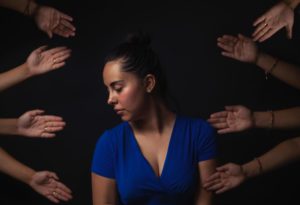
Photo by Cristian Newman on Unsplash
The cacophony of debate, press conferences, social media, opinions, interviews, political maneuvering, nonstop news feeds and raw videos goes on and on, and somewhere in the center of the maelstrom is the core of the problem — the young people who shoot, who die and who witness. Some of them have been swept into the hurricane, but I wonder how many are simply sheltering in place, trying to survive another bewildering, hopeless, pointless day of tech, teachers, rules, grades and peers. I know they’re there, because I was one. They could tell us a lot about futility, despair and disconnection. They’re keeping painful secrets. Are we willing to hear their truth? Do we deserve their trust? Do we have time or energy for them? Can we change anything for the better? Or would we tell them to get over it, that everyone has to do things they don’t want to do, that high school will be over one day? Do we paste a neat label on them and write a prescription? Do we insert them into a “system,” because that’s the best we have, and turn away to deal with our own jobs, responsibilities, stresses, scar tissue, labels and prescriptions?
I’m back where I started.
Sick. Sad. Scared. Angry.
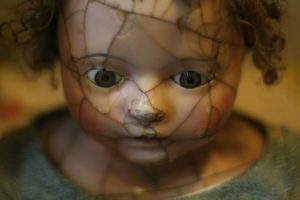
Photo by Aimee Vogelsang on Unsplash
All content on this site ©2018
Jennifer Rose
except where otherwise noted
by Jenny Rose | May 10, 2018 | Connection & Community, Emotional Intelligence, Shadows
Slowly, I’m finding online communities of writers. As I’ve shaped Our Daily Crime, I’ve connected with other bloggers. These connections mean I spend at least an hour a day reading the work of others. I’m inspired, touched, tickled and provoked, and I feel at home in these digital communities because we all share the need to write and be read. We also share self-doubt, confusion, vulnerability, loneliness, the need for connection and the problem of earning a living.

Photo by Volkan Olmez on Unsplash
Over and over again, I read about personal struggles with depression, fear and anxiety. Many a writer sits down to their daily writing practice with goals and intentions and finds him or herself unable to do anything but express the here and now of their experience of ambivalence, avoidance, distraction or block. To be a writer is to occasionally live with shame and guilt about what we meant to write, what we should have written and the quality and subject of what we actually did come up with. We all doubt our ability, our value, and whether anyone will care enough to read our words. Creative expression is a daily leap of faith.
I’ve struggled all my life with depression. In more recent years, I’ve come to understand anxiety and fear are also large parts of the feeling I recognize as depression. Over the years I’ve tried to manage depression in many ways. Some worked, at least temporarily, and some didn’t.
It hasn’t been until the last decade that I’ve finally found a way to effectively manage and even largely banish depression. It doesn’t play with me anymore. Fear and anxiety still show up regularly, but the same method works to manage them, and I no longer worry one day I’ll just give up, step over some unseen edge, and disappear into crazy, a fugue state, or death.
One day, for no reason in particular except I felt exhausted, despairing, and bored with both, I said to Depression, “You win. I give up. Why not come out of the shadows and show yourself?”
Fat and happy, secure in its power, it did just that.
The first thing that I realized was Depression is an experience, not an integral piece of me. It’s something draped around me. It can be separated from me.
The second thing I noticed was my depression is male. He walked with an arrogant male strut and swagger and he spoke in a male voice.
I didn’t name him because he wasn’t a pet, he wasn’t a friend, and he most definitely wasn’t invited to be a roommate. He was merely someone who showed up at more or less regular intervals and made a nuisance of himself. He didn’t have the manners to knock on the door, wait to be invited or give any notice of his arrival. He just appeared.
I wondered what it would take to discourage him from visiting. What made me so attractive?
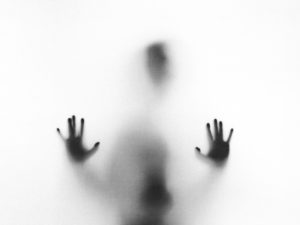
Photo by Stefano Pollio on Unsplash
Clinical depression is like a grey cave filled with fog. It numbs the senses and fills head and heart with cold, sticky, lumpy oatmeal. One is entirely alone with no hope. The simplest action, like opening one’s eyes, takes enormous effort. Depression envelopes and consumes every spark of power.
The only reason I’m in the world today is because I’m an unbelievably stubborn butthead. I’m also very nice. One does not cancel out the other, but nearly everyone persists in missing that second important point, with the result that I’m constantly being underestimated. This is a wonderful advantage in life.
Depression was no exception to the rule. When invited, he disentangled himself from me, parked his butt in a chair I pulled out for him, and began to tell me how things were going to be from now on.
On that particular day, I hadn’t showered (or the day before that, or the day before that). Annoyed by his high-handedness, I interrupted to say I was going to shower. He told me not to. Who would care? What was the point? I wouldn’t see anyone. No one would see me.
That was all I needed. I went and took a long shower. Washed my hair. Shaved my legs. Put on clean clothes and some jewelry. Depression sat in the bathroom and muttered at me. I ignored him.
I felt better then, and my irrepressible creativity began to stir, along with a childlike streak of playfulness I usually keep well-hidden. One small act of rebellion had helped me regain a tiny sense of power.
One of the things that used to happen when depression struck was that I stopped eating. I’d go all day with nothing but a salad and a piece of toast. I hadn’t eaten a solid meal for several days on this occasion. I wasn’t the slightest bit hungry (this is common), but I knew I needed to eat.
Depression didn’t like it. He threatened and complained and trotted out all the usual points. I was too fat. I hadn’t been doing anything useful and didn’t need to eat. I didn’t make enough money to deserve to eat.
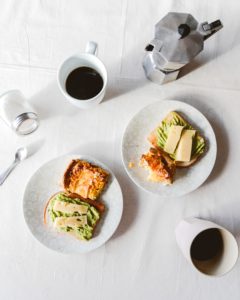
Photo by Florencia Potter on Unsplash
I put a chair at the table for Depression (I lived alone at the time), invited him to sit, set the table for two with complete place settings, right down to two glasses of water, made myself a meal, and ate. I offered him some food, but he refused. I read while I ate and ignored Depression, who sat and sulked.
Well, you have the idea. The more he protested when I wanted to take a walk, sit in the sun or work in the garden, the more stubborn I became. I politely invited him to join me in my activities, but he refused, which meant the more I got out in the world and did things the less time I spent with him. He hated my movies and my audio books. He thought walking to Main Street for an ice cream cone was a criminal waste of money, along with feeding the birds. The only activity he approved of was my work, which involved sitting for hours in front of my computer with headphones on doing medical transcription as fast and accurately as possible for only slightly more than minimum wage.
He absolutely hated my music. I quickly developed the habit of turning on Pandora first thing every morning and listening to it most of the day.
We also conflicted over sleep. Depression said there was no point in getting up in the morning because no one would notice. No one would care. In fact, the only things really worth doing in life were working and sleeping. This attitude ensured I set the alarm for 5:30 a.m. and walked every day at dawn.
I didn’t ask him to leave. I didn’t fight or struggle. I made sure he had plenty of space and a good pillow in my bed. I gave him a spot at the table and a seat in front of the TV. I took out a clean towel for him and invited him to browse in my personal library.
Every single time he told me not to do something I did it, no matter how much I didn’t want to. I was pleasant, noncompliant, resistant and stubborn as a mule.
You know what?
He went away.
One day, he was just gone.
I knew I’d found the key.
Externalized, Depression suddenly became more pathetic than terrifying. He was so predictable, and so limited. All he had to say were the same things he’d been saying all my life. He was boring. He was like a batty old uncle who must be invited to every family gathering and tells the same interminable stories year in and year out.
He came back, of course, but for shorter and shorter visits at wider and wider intervals.
“Back again, I see,” I’d say. I’d set a place at the table, take out a clean towel, make space in the bed and on the couch. I’d realize I was sliding again and concentrate on eating more regularly, exercising, playing music, putting flowers on the table or maybe scheduling a massage.
I tried to have conversations with him, but Depression had no conversation, just the same tired monologue, mumbling and whining. He was really quite sad. He stopped spending the night and then gradually stopped visiting altogether.
I guess he was no longer getting what he needed from me.
Fear and anxiety are still regular visitors. Things are different here in Maine. I don’t live alone, for one thing. I still play imaginary games, but only in my head. Still, when either fear or anxiety show up, I recognize them. (Anxiety bites her fingernails; I always recognize her hands.) I don’t try to keep them away and I don’t try to hide from them.
I focus on giving them no power. I don’t buy into their catastrophizing. I appreciate they’re trying to keep me safe, poor things. All they can do is make up terrible stories about what might happen and then sit, paralyzed by their imaginings. I know they’re wretched. I wish I could help. I try to be kind — at a distance. They usually don’t stay long.
This experience is the sort of thing I used to hide, but I realize now my struggles are not unique. I’m inspired by the creativity, honesty and vulnerability of other writers. Coping with depression, anxiety and fear is like figuring out how to eat. Every body is different. Everybody needs to find their own path to healing, health and sanity. At times, it’s difficult to break through social expectations and shoulds and make a complete left turn into something creative, intuitive or outside the current norms.
Still, nothing succeeds like success. Turning Depression into an externalized character helped me see I didn’t have to define myself by it. I could choose to set aside that label and all it implies. Once I truly believed I had the power to choose, everything changed.
Sometimes, running away from sudden or passing danger is appropriate. However, running from these chronic spectres dogging my heels has not worked. I can’t get away from them. I can’t avoid or evade. Being chased by anything is fearful. The moment when I stop running, turn around and deliberately go toward whatever threatens me is the moment in which I begin to regain power. Monsters suddenly become mice. My own fear and abdication of power are what made them monstrous. I don’t need to hide. I don’t need to defend. I only need to consistently and patiently demonstrate I will give them nothing they want so they choose to leave me.
It helps when they tell me what to do.
Don’t tell me what to do!

Photo by Senjuti Kundu on Unsplash
All content on this site ©2018
Jennifer Rose
except where otherwise noted
by Jenny Rose | Mar 15, 2018 | Power

Photo by Vladislav M on Unsplash
I’ve always been fascinated by the psychology of survival. I observe that we as a culture are obsessed with heroes and rebels and the endless struggle between archetypal good and evil. Survival kits are becoming a thing in marketing. Preppers write blogs and have TV shows.
Interestingly, our social and cultural world actively inhibits our ability to survive in all kinds of ways. Public school education might be said to be a long indoctrination in anti-survival. We spend hours with our mouths open in front of screens in dark rooms, enchanted by movies and games. Congregations of fans share reverence for comic book characters and the happenings in galaxies far, far away. We debate, criticize and celebrate the way these carefully constructed heroes dress, speak, look, act and collaborate with special effects. We have high expectations of our heroes. We imbue them with nostalgia. We expect our heroes to be just, compassionate, intelligent, interesting, attractive, moral, humorous, strong and poised.
Meanwhile, dangerous events take place in our families; in our workplaces, subways, airports and schools; in our world.
We wait for someone to neutralize the danger, clean it all up, drain the swamp, and make it all fair. We wait for rescue. We turn a blind eye. We do whatever it takes to distract ourselves from uncertainty, fear and our own powerlessness. We watch the beast lumber toward us and deny its presence, deny its existence until we find ourselves in its belly, and then we still refuse to believe.
I’ve been reading author Laurence Gonzales. He’s written several books (see my Bookshelves page). We have Deep Survival and Everyday Survival in our personal collection. Gonzales has made the subject of survival his life’s work. He’s traveled extensively, synthesized studies and research and spent hundreds of hours interviewing people involved with all kinds of catastrophes, both natural and man-made. His books are thoughtful, well-written, extraordinarily well researched and utterly absorbing.
Gonzales uncovers the astounding complexity of human psychology and physiology as he explores why we survive, and why we don’t. He’s discovered some profound and surprising truths.
The best trained, most experienced, best equipped people frequently do not survive things like avalanches, climbing accidents, accidents at sea and being lost in the wilderness. Sometimes the youngest, weakest female has been the sole survivor in scenarios like this. It turns out some of the most important keys to survival appear to be intrinsic to our personalities and functioning, not extrinsic.
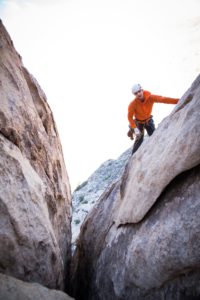
Photo by Tommy Lisbin on Unsplash
Gonzales does not suggest, and nor do I, that training, equipment and experience don’t count, just that they’re not a guarantee. In some cases, our experience and training work against us in a survival situation, because we assume a predictable and familiar outcome in whatever our activity is. We’ve made the climb, hike, journey before, and we did just fine. We’ve mastered the terrain and the necessary skills.
Mt. Saint Helen’s had never erupted before. Therefore, all those people who stood on its flanks and watched in wonder failed to grasp that something new and unprecedented was happening. Their inability to respond appropriately to a rapidly changing context killed them. The same thing happens during tsunamis. People are awed and transfixed. They have no direct experience of a tsunami bearing down on them as the water rolls back to expose the sea bed. They don’t react in time.
There’s a model called the OODA loop. The acronym stands for Observe, Orient, Decide, Act. Our ability to move quickly through the OODA loop is directly linked to our ability to survive.
Observation, the ability to be here now, the ability to recognize what is, is something everybody can practice all the time. No special equipment or training needed. What is needed, though, is the emotional and cognitive willingness (consent, if you will) to set aside our distractions, addictions, rigid preconceptions and expectations (often invisible to us, making them even more deadly) and dependence on stimulation. It also requires a mind set of self-responsibility. It turns out movie theatres, schools, concert venues and many other places are not safe. We can debate, deny and argue; protest and rally; scapegoat and write new laws. We are and we will. In the meantime, the reality is we are increasingly unsafe in many public places, and no one has the power to wave a wand and take care of that for us.
It’s up to us to take care of ourselves. That starts with observation.
In my post on self-defense I mentioned situational awareness. Our instructor emphasized that skill as being more important than any other move or weapon. If we see or sense something dangerous in our vicinity, it’s up to us to orient and move to a safer location.
That brings up another very important survival skill: instinct. At this point science cannot measure instinct, but Gonzales’s instinct about getting on a certain plane saved his life once, and many of us have similar stories. As far as I’m concerned, instinct is part of observation. What do we observe? How do we feel about what we observe?
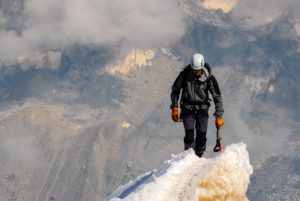
Photo by Wynand van Poortvliet on Unsplash
Our instinct is blunted in all kinds of ways. It’s mixed up with political correctness, including racial profiling. Few of us want to demonstrate discomfort around others for any reason these days. I invariably feel guilty when I react to someone negatively, even if my reaction is entirely private. It’s bad and wrong to judge, to cross the street to avoid somebody. It’s ugly and hateful.
Additionally, I’m a woman and I’m highly sensitive, which makes me particularly attuned to body language, voice inflection and all the clanging (to me) subtext of communication beneath whatever words are spoken. I can’t prove my intuition. I can’t demonstrate it logically. I have no wish to diminish or disempower others. I’m not a bigot. All people have energy and sometimes it’s foul. I reserve the right to move away from it. If that makes me hateful, woo, dramatic or hysterical, so be it. I’m accomplished in the art of noncompliance, but many are not.
If we only see what we expect to see, we aren’t observing. If we fail to see what we’re looking at, we’re not observing. If we can’t take in the whole picture, we’re not observing. If we look for something instead of at everything, we’re not observing. We’ve already broken the OODA loop.
Observing and orienting mean coming to terms with what we see. The plane is down. Our ankle is broken. We’re lost in a whiteout blizzard off the trail. We can’t decide how we’re going to survive if we’re unable to accept and orient to what is.
As a young woman, I did fire and rescue work. I was an IV-certified EMT, and I learned in those days that panic, fear and despair are killers. They’re also highly contagious. People who survive lock those feelings away to deal with after they’re safe again. Gonzales found, amazingly, some people will sit down and die, though they have a tent, food and water in the pack on their back. They just give up.
I also learned that the hysterical victims are not the ones most likely to die in a multiple trauma event. They demand the most attention, certainly, but it’s the quiet ones who are more likely to have life-threatening injury and slip away into death. The screamers and the drunks, the ones blaming, excusing and justifying, are frequently the cause of the accident and retard rather than assist in the survival of themselves and those around them.
On the other hand, strength, determination and calm are also contagious. If just one or two people in a group keep their heads and take the lead, chances for survival begin to increase for everyone.
When I was trained as a lifeguard and swimming teacher, I learned something that’s always stayed with me.
You can’t save some people. It’s possible to find yourself in a situation where, in spite of your training and best efforts, the victim is so combative or uncooperative, or the circumstances so impossible that the choice is between one death or two. This fact touches on my greatest impediment to survival, which, ironically, is also one of my greatest strengths.
My compassion and empathy mean I frequently put the needs of others before my own. I do it willingly, gladly, generously and out of love. It’s one of my favorite things about myself, and it’s also one of my most dangerous behaviors.
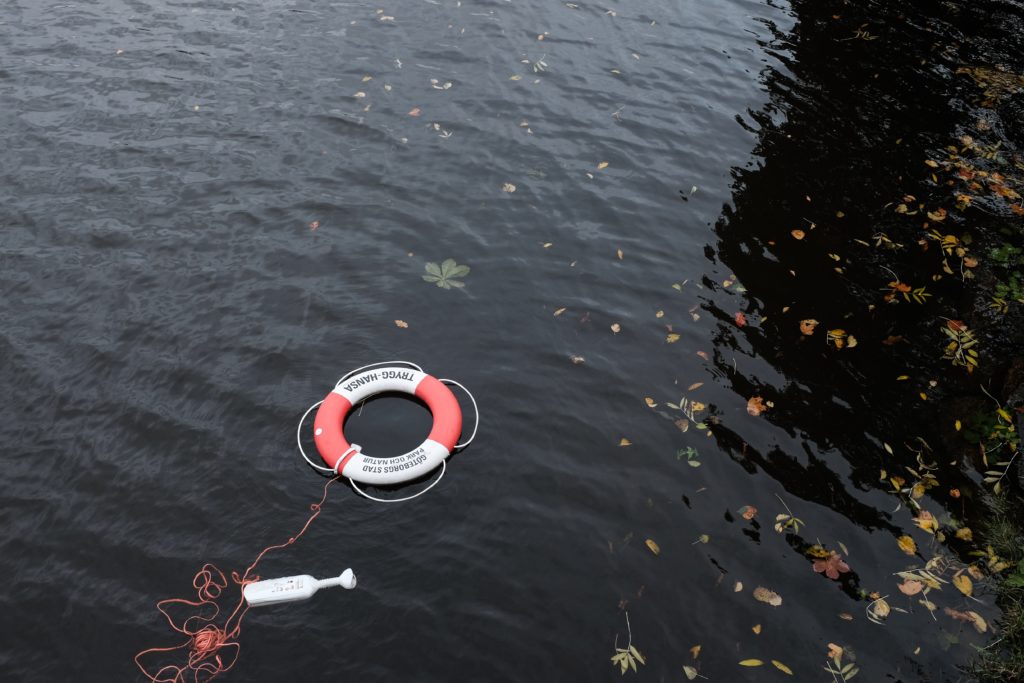
Consider a scene many of us are metaphorically familiar with. Someone nearby is drowning. They’re screaming and thrashing, weeping, begging to be saved. We throw them a rope so we can pull them out. They push it away and go on drowning because the rope is the wrong color. Okay, we say, anxious to get it right and stop this terrible tragedy (not to mention the stress-inducing howling). We throw another rope, but this one is the wrong thickness. It, too, is rejected, and the victim, who is remarkably vocal for a drowning victim, continues to scream for help.
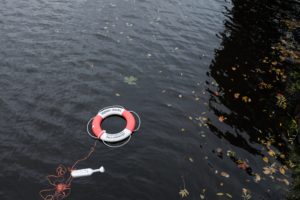
Photo by Lukas Juhas on Unsplash
On it goes, until the rescuer is exhausted, desperate, deafened and feeling more and more like a failure. Meanwhile, the “victim” goes on drowning, loudly, surrounded by various ropes and other lifesaving tools. We, as rescuer, are doing every single thing we can think of, and none of it is acceptable or adequate. In our frantic desire to effect a rescue at the cost of even our own lives, we’ve ceased to observe and orient. We’re not thinking coolly and calmly. We’re completely overwhelmed by our emotional response to someone who claims to want help.
The survivor in this picture, my friends, is not the rescuer. The so-called victim is the one who will survive. If they do grudgingly accept a rope and are successfully pulled out of the water, they immediately jump back in.
The will to survive is an intrinsic thing, and I can’t give or lend mine to someone else. People who can’t contribute to their own survival, and we all know people like that, are certainly not going to contribute to mine, and some will actively and intentionally pull me down with them, just because they can.
I don’t have to let that happen, but in order to avoid it I need to be willing to see clearly, accept what I see, cut my losses and act in my own behalf. Real life is not Hollywood, a comic book or virtual reality. It’s not my responsibility to be a savior, financially, emotionally, sexually or in any other way. The word survivor does not and cannot apply to everyone.
It’s a harsh reality that doesn’t have much to do with being politically correct or approval and popularity, and most people have trouble facing it, which will inhibit their survival if they ever find themselves in an emergency situation.
Gonzales covers this at some length in Deep Survival, and he rightfully points out that compassion and cool or even cold logic are not mutually exclusive. People in extreme situations sometimes have to make dreadful decisions in order to live, and they do. A compassionate nature that does what must be done may buy survival at the cost of life-long trauma. Ask any combat veteran. This is the side of the story the Marvel Universe doesn’t talk about. Survival can be primitive, dirty and gut wrenching. Sending blue light and thoughts and prayers are not the stuff of survival.
Clear orientation leads to options and choices. Evaluating available resources and concentrating on the basics of survival: water, food, shelter, warmth, rest and first aid are essential. Thinking coolly and logically about what must be done and breaking the task into small steps can save people against all odds.
Sometimes, death comes. Eventually, we all reach our last day. In that case, there’s no more to be said. Yet the mysterious terrain on the threshold between life and death is remarkably defining. I wonder if perhaps it’s the place where we learn the most about ourselves.
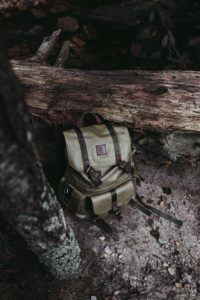
Photo by Andrew Neel on Unsplash
I’ve known people who stockpile weapons and ammo, bury gold in bunkers, build off-grid compounds and obsess about survival equipment and bug-out bags. Many wilderness schools teach basic and advanced survival techniques. Some folks put all their financial resources into prepping for catastrophe and collapse. I’m nervous about the state of the world on many levels myself, so I understand, but I can’t help thinking that investing in a story about living in a guarded, fully-equipped compound is not much better than investing in a story that water will continue to run from faucets, a wall socket will deliver electricity and grocery shelves will hold food, forever and ever, amen.
After reading Gonzales, I’m considering maybe simply living life is the best preparation for survival. Trusting my instinct; learning to manage my power and feelings; being aware of the limitations of my experience, expectations and beliefs are all investments in survival. Simply practicing observation is a powerful advantage. I don’t have money to spend on gear and goodies I might or might not be able to save, salvage or retain if things fall apart. The kind of investment that will keep me alive is learning new skills, staying flexible and adaptive, developing emotional intelligence and nurturing my creativity. No one can take those tools away from me and I can use them in any scenario.
We’re born with nothing but our physical envelope. Ultimately, perhaps the greatest survival tool of all is simply ourselves, our wits and our will.
All content on this site ©2018
Jennifer Rose
except where otherwise noted