by Jenny Rose | Nov 9, 2017 | Connection & Community, Emotional Intelligence, Shadows
It’s hunting season in Maine. Several days ago a woman was accidentally shot and killed on her own property at 10:30 in the morning by a hunter. We frequently hear shots in the neighborhood, and although we don’t allow hunting on our land, there’s nothing to prevent a hunter wandering in, attracted by the deer, game birds and waterfowl on our 26 acres.
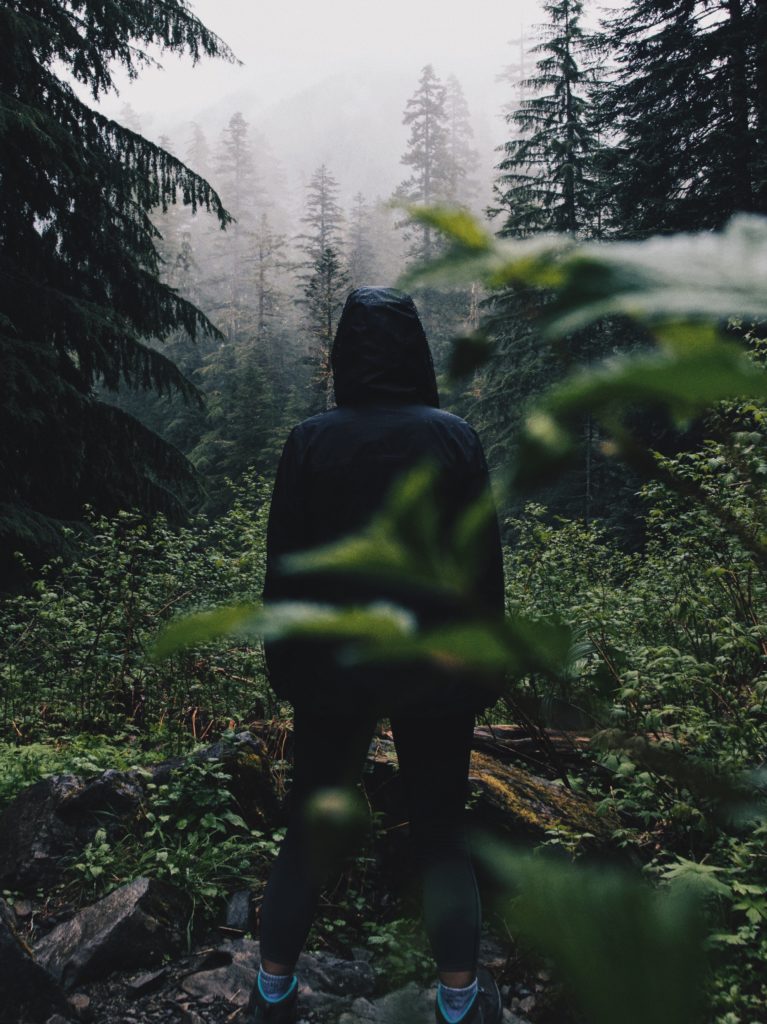
I bought a cheap orange vest I can wear over my coat for my morning walks.
Wearing orange during hunting season is such a simple and obvious safety tactic that I didn’t think twice about doing it, but the first morning I went out with the vest on I discovered a lot of complex feelings about being so visible in the world.
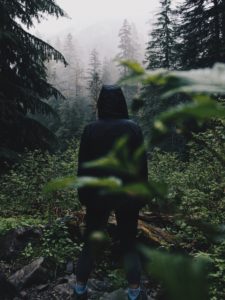
Photo by Andrew Spencer on Unsplash
The first thing I noted was how dangerously exposed I felt. I do not want to be seen by human eyes. I don’t mind if the wildlife sees me, but if they do I’m less likely to see them, so I do my best to move quietly and unobtrusively through the landscape, wearing neutral, natural colors. I stop and sit or lean against a tree for long stretches, hardly moving, watching the river and listening to the woods around me.
The orange vest shrieks, “Look at me! I’m here!” and I hate it. It’s more than just my preference to blend in to backgrounds and maintain protective camouflage. It seems a life-and-death necessity to avoid being seen.
I’ve been aware of my hypervigilance for some time now. I’ve never been comfortable in crowds. If I’m not able to position myself in a corner or with my back to something solid and watch, listen and evaluate, anxiety quickly disables me. I need to know where the exits are in any indoor space.
This is interesting, as I’m fascinated by people, and people watching is one of my favorite activities. I’ve frequently longed to be invisible, to watch and listen freely and leave no trace of my presence. If I could be invisible, I imagine I’d still get overstimulated by noise, activity and technologically-generated energy, but I’d feel safer.
The strength of my feelings as I donned the orange vest begged the question: What happens if somebody sees me? What’s so terrible?
That’s easy. Criticism happens. Judgement, abuse (verbal, emotional, physical), negative feedback happen. If I’m seen doing anything, I’m sure to be doing it wrong (according to the observer, anyway). I’m sure to disappoint. I’m sure to be inadequate or inappropriate. My clothes are wrong. I’m clearly behaving like a slut, going out on my own land in my men’s Carhartt jeans and old boots. My hair is wrong. My choices are wrong. If I’m heading for the northern boundary of our land, I should be walking the southern border. I’m too noisy. I’m in someone’s way. I’m too slow. I’m wasting my time and should be doing something more productive. I’m irresponsible. I’m lazy. I’m selfish. I’m scaring the fish. I’m scaring the birds. I’m scaring the animals. I should be ashamed of myself.
Wow. No wonder I don’t want to be seen. Who knew the perils?
I didn’t know, until my ugly orange vest dredged all this up from my swampy subconscious.
On subsequent mornings, as I’ve walked in my orange vest, I’ve thought about the tension between being seen and avoiding being seen. How can anyone be in the world without being seen, even the most self-effacing of us? Refusing to be seen is refusing any healthy human connection. How do we get hired without being seen, or accepted for college? How do we follow our creativity or passion if we’re afraid to be seen? How do we engage in face-to-face conversation or discussion, or participate in politics or as a volunteer?
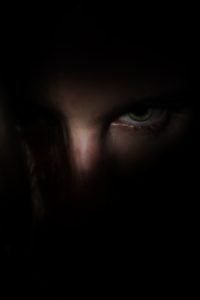
Photo by Peter Forster on Unsplash
On the other hand, how much exposure is too much? How can we avoid being seen by the shooter at the concert, in church or in the movie theater? We seem to be gradually becoming more and more captive to the Matrix, which makes us increasingly vulnerable to identity theft, technological sabotage and cyber-based terrorism.
I sometimes feel I carry protecting my privacy too far. I can’t say I regret not being on Facebook and other social media, as I’ve yet to hear about anything there that I need. On the other hand, not having a cell phone in today’s world creates a lot of problems for me. My personal issues with being seen are in the context of much wider social issues about exposure and safety. I don’t have any answers for the wider social problems. I wish I did.
For myself, though, it’s clear I need to address some of my subconscious beliefs about what will inevitably happen if I am seen. I’ve also developed a thicker skin about being criticized and judged. At this point in my life I’m really not much interested in the criticism and judgement of others. What interests me is how I feel about myself. My list of terrors about what happens if I’m seen is decades out of date, and I’ve already survived those consequences many times over. More of the same is boring rather than terrifying.
I’m stuck with my orange vest for several more weeks, and that’s OK. I’ve come to terms with it. In fact, I’m grateful to it, because it exposed some old wounds that needed attention. I’m stepping into plain sight In many ways in my life, this blog being one of the most prominent and challenging. Now I’ll practice walking this land in plain sight as well.
All content on this site ©2017
Jennifer Rose
except where otherwise noted
by Jenny Rose | Oct 12, 2017 | A Flourishing Woman, The Journey
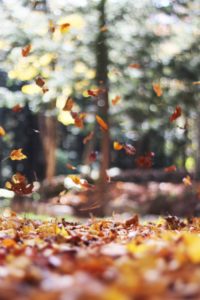
Photo by Autumn Mott on Unsplash
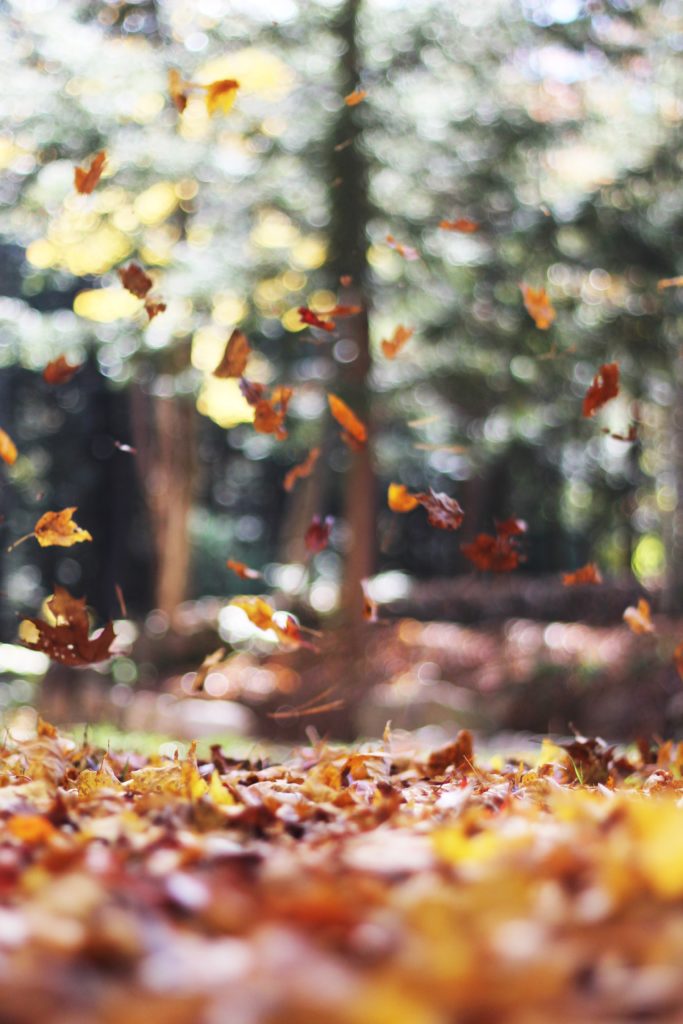
I love autumn, and autumn in New England is particularly poignantly beautiful. The leaves, oh the leaves! It’s as though the trees release their passion in one final gasp of ecstasy before their long sleep. The colors stun the senses with their beauty; it’s almost too much to absorb. Yet the trees’ splendor is fleeting. Inexorably, the leaves fall like golden tears, like blazing sparks, and as they fall the greatest power of all is revealed: The true shape of things.
The green and fiery sea of the forest and fields recedes. Lichen-covered rocks bare themselves. Trees stand or lean in bony beauty, gnarled and hollow, smooth and upright, each species clad in its own color and texture, but now the colors are russet and ivory, shades of brown and grey touched with black. Thorns and stems become semi-transparent cover for winter-colored birds and animals.
The bare forest is everything it is and nothing it is not.
I, too, am becoming reduced to my essential self. Confusion, guilt and shame are loosening their hold on me and drifting away, and I make a resting place for them in my writing. I look back in my memory and, for the first time, begin to see the true shape of things. All the words that weighed me down and kept me small, all the gaslighting and controlling, all the lies and distortions, are responding to some miraculous internal seasonal shift and slant of light. I am bursting into triumphant understanding, and then letting go, letting all that does not serve me fall away. My true shape emerges, and it’s strong and clear-seeing and wise. It always was.
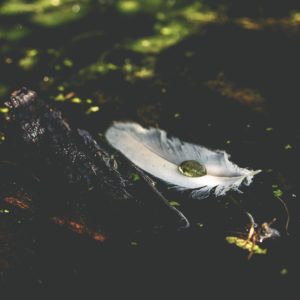
Photo by Erik Stine on Unsplash
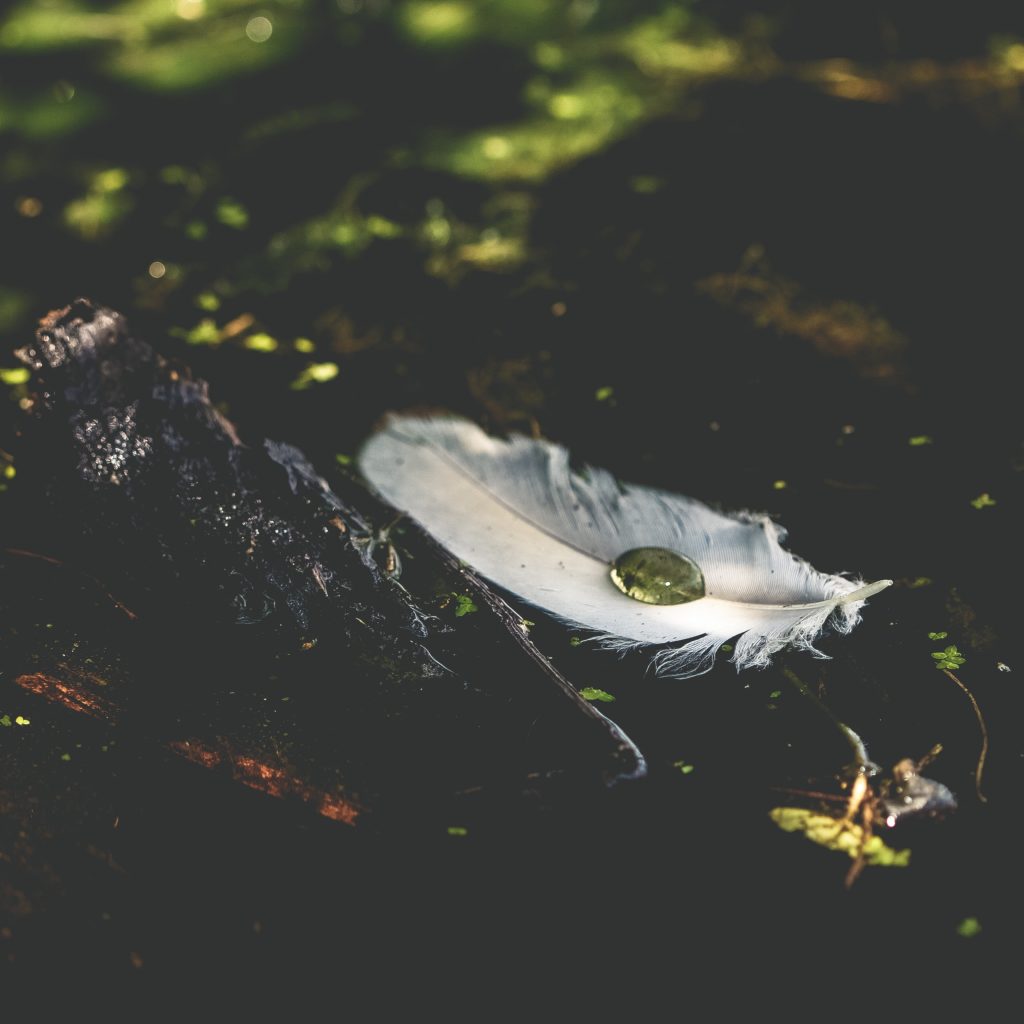
Now I begin to see the true shape of things. Now begins a season without pretense, unencumbered by expectations. Now the lineaments of my feelings lie bare. The landscape of my life becomes stark and uncomplicated, a walk through winter woods where a feather is a feather, a quill a quill and a swatch of fur on a thorn exactly what it is, not more, not less, not something else entirely. I reclaim the dignity of my own perception, intuition and experience.
It does not surprise me that traditionally this is the time of year when the veil between the worlds thins, ghosts walk, legends come to life, ancestors are honored, and we acknowledge that which haunts us. I do not fear my ghosts. Indeed, they’re old friends and companions. My bogeymen were flesh and blood concealed beneath dazzling costumes of false power, fearful only as long as their true shape was hidden from me.
Some fear the fading light, endings and truth. Some prefer the riot of distraction and confusion. Some refuse to see or know the true shape of things. My own courage is not strengthened by distraction, no matter how beautiful or seductive. My courage is a thing of unadorned simplicity, spare and clean as bone.
The leaves fall, ravishing, rapturous. At last, the true shape of things emerges from the blaze, pure and indestructible, and I embrace it like a lover.
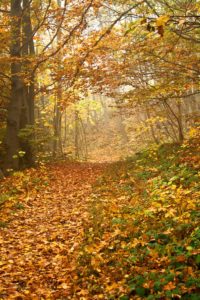
Photo by Vanessa von Wieding on Unsplash
All content on this site ©2017
Jennifer Rose
except where otherwise noted
by Jenny Rose | Oct 5, 2017 | Emotional Intelligence, Feelings, Love
A few weeks ago I wrote about romance and in that post I confessed that at this point in my life I’m not sure what love actually is. A strange admission from a reasonably intelligent, well-educated, middle-aged broad with two marriages and two children in her history.
Writing that post enabled me to clearly separate romance from love; though I suppose love might include a little romance from time to time. I’m convinced romance is not synonymous with love, however. I began to make a mental list of what love is not, as I often approach things from the back door first. Love is not a synonym for:
- Romance
- Sex
- Slavery
- Control
- Possession
- Obsession
- A suicide pact
- Abuse
- Fear
- Duty
- Obligation
- Enabling
- Obedience
All right. So what is love? My Randall House Collegiate Dictionary says it’s “a profoundly tender, passionate affection for a person” or “a feeling of warm personal attachment or deep affection.” This definition doesn’t satisfy me at all. My rewrite is that love is a feeling of warm, tender connection and deep affection. I don’t think love is always passionate and I don’t like the word attachment. If anything, love implies to me an attitude of nonattachment.
But what about unrequited love? What about failed love or withdrawn love or love as a weapon or a tool? What about the inability to accept love, or feeling unloved though being told we are? What about those who make us feel our love is ugly, twisted, shameful or inadequate?
I’m always playing with words in my head. This week it’s “What is love?” and “What is a crone? and “What are the differences between compassion, empathy and sympathy?” I lie down with those inquiries and wake up with them. I turn them over while I shower, cook bacon, wash dishes, take my morning walk, practice Tai Chi and drive to town. I’m constantly scribbling notes.
I gave a neighbor a lift this morning and asked him to talk to me about compassion, sympathy and empathy. Poor man. He didn’t know what to make of me.
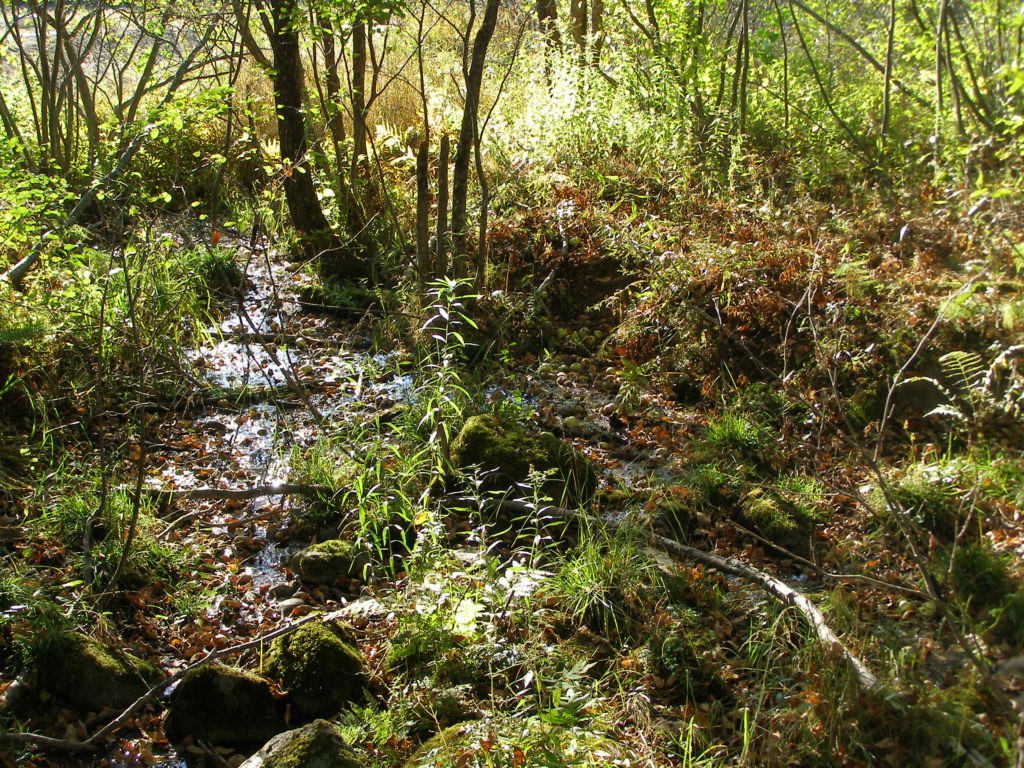
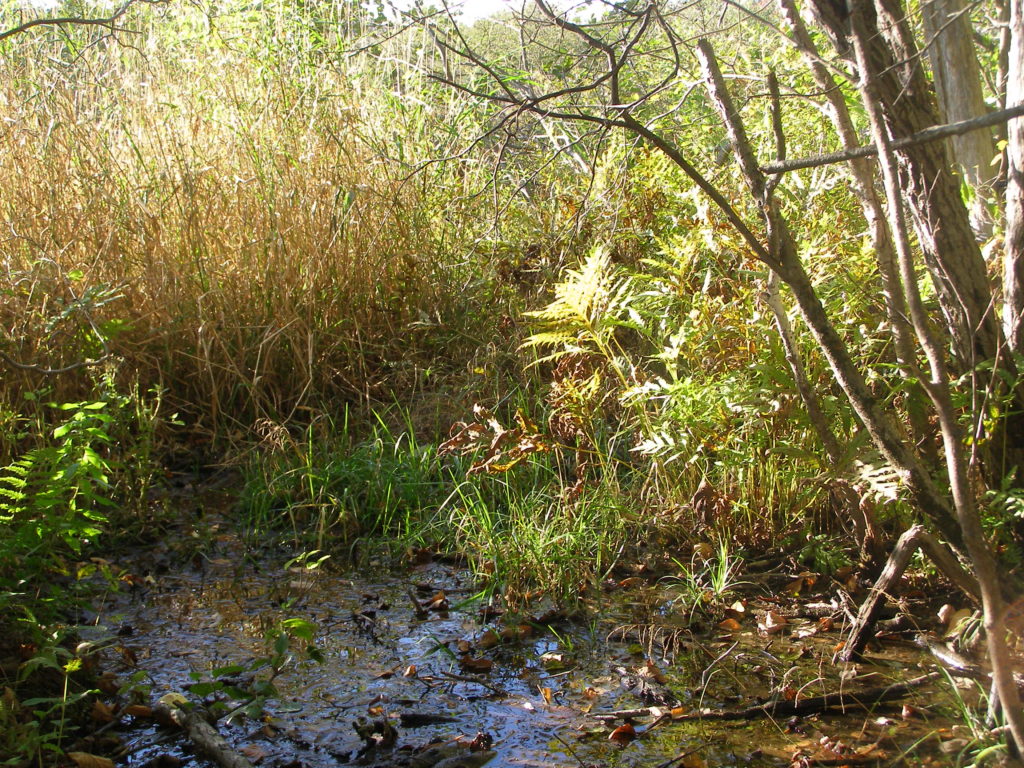
Yesterday, during my frosty morning walk, I dove into a stand of staghorn sumac below the barn and went to visit the spring. This is a daylight spring seeping out of the hill on which the barn and house stand. A long time ago, someone dug a well there, and at one time a pump and tank were installed, along with a system of black plastic outdoor lines to carry water to and from the barn, the garden, and down through the woods to, presumably, crops in the fields below. All the equipment is many decades old now, fallen over and covered with leaves and moss. The well is protected by a round cement cap, much too heavy for me to lift alone (drat!).
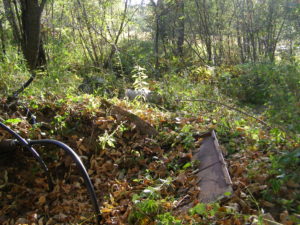
Spring
This spot is hidden in a thick tangle of vine, briar and trees. We rarely go in there, though it’s in close proximity to the barn.
It’s fall and it’s been dry, but the drainage where the spring emerges is clearly marked by rocks and moss. The ground underfoot felt soft, and when I brushed away the leaves I found moist earth. A yard or two below that is mud, and then a trickle of water and then, at the bottom of the hill, a quiet film of water, barely moving, reflecting the tree-laced sky. Right now It’s full of apples dropped from an apple tree that grows alongside it.
As I slipped and slid, tripping over vines and getting scratched by hawthorn and raspberry bushes, feeling the velvety moss coating the rocks and stepping cautiously on rotting wood, it occurred to me that love is like this spring.
I’ve always thought of love as an action verb, something I do to another in exchange for receiving the same. I thought I knew what I meant when I used the word, though I was never challenged to define it exactly. For me it’s been a catch-all term, synonymous with dozens of other, more specific actions: Want, need, desire, honor, trust, respect, care about, listen to, defend, make excuses for, enable, protect, support, believe in, etc., etc.
But what if love is just being? What if it has no object, but just is?
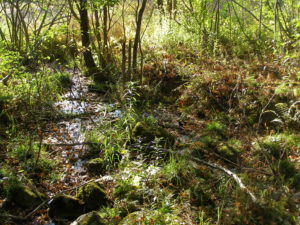
Spring
This little spring is absolutely true to itself. Water drains off the hillside above us and carves a path through the earth and rock until it emerges and runs down the surface at the foot of the hill. We pay no attention to it whatsoever. It’s reliable, predictable and faithful, but not because anyone is looking. Its unobtrusive, quiet presence has created a lush pocket of life, a complex system of plants, fungi, animals and insects, but ten yards away on the open hillside it’s invisible.
What if I make a choice to allow my feeling of love to run through my life in the same way the spring runs through and over the ground? What if I carry within me a wellspring, a hidden cleft, moist, fertile, filled with life, rich in sensuality, simply because it’s an expression of self? If others find their way to it, sit a while, bathe, drink, and allow it to nourish and refresh them, they’re welcome. If others can’t see it, or don’t value it, or dislike the perfume of rotting wood and leaves or the feel of plush moss under their bare foot, it’s nothing to do with me. Not everyone chooses to make their way through raspberry and hawthorn bushes, after all.
What if I don’t need anything in return because I’m giving nothing away? Perhaps the act of love can be a simple state of being, not a totality, not a hurricane of passion and lust, not a romantic fairytale, not a prison and torture chamber, but a spring, a waterway, a shining thread I can share without depletion. Can I allow it to seep quietly up through the roots of my experience, even if no one else ever finds it, wants it, returns it or deems it acceptable?
Our spring is part of a landscape of field and forest, river, pond and stream, rocky hillside and bog. The landscape contains many forms and embraces many systems of life. Birth and death happen on this land. Disease, erosion and flood happen on this land. Prey and predators carry out their sacred dance of balance here. Blood, bone, fur, feather, antler, musk, urine and feces are all here.
I, too, am a complex system of history, memory, belief, thought and feeling. I do not feel love for everyone and everything. My experience of love is that it’s a wild thing; it seeps up where it will and trickles away without warning, taking no account of rules and expectations. I can’t command it and I don’t choose to hold it back. My love doesn’t need anyone’s reception, appreciation, validation or praise.
Love is. I reserve the right to love as I will. I am the keeper of my own wellspring.
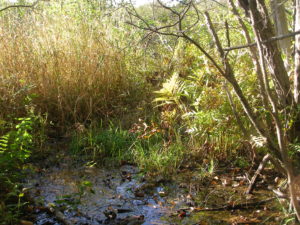
Spring 10/2017
All content on this site ©2017
Jennifer Rose
except where otherwise noted
by Jenny Rose | Sep 7, 2017 | Connection & Community, Emotional Intelligence
I read a blog post a few days ago titled ‘Romance Ruins Real Love’.
The post reminded me of a conversation I had with an old friend some years ago. She said her favorite part of relationship was the first weeks, when everything is romantic anticipation and excitement. I remember how violently I disagreed with that view, though I didn’t say so to my friend at the time.
I never trust romance, because I don’t equate it with love. Even as a child, I was suspicious of princes on white horses. As an adult, I want a relationship that survives the flu, a broken toilet, a week-long power outage, job loss, poverty, a car accident, a road trip, moving house and painting a room together. Anyone can dress up, buy flowers and make a reservation, given adequate time, money and motivation. Anyone can make love with words. Many can show up for a great night between the sheets. Most of life, however, consists of day-to-day challenges, tasks and unexpected stuff that no one can prepare for, and that’s when we find out what we’re made of, as well as what those around us are made of.
Photo by Jan Phoenix on Unsplash
In spite of all that, I hunger for romance in my life. I always have.
I realized this week I couldn’t come up with a succinct definition of romance. I could write lists of what I find romantic, sensual or sexy, but how do those categories overlap into a central core of what romance actually is? As I sat down to begin this post, I grabbed my Random House College Dictionary and was absolutely shocked at what I found.
Romance: A baseless, fanciful story; a love affair.
Wait, what? What about palpitating bosoms and muscled, shirtless heroes and wine and roses and diamonds? What about bikini waxes and lingerie, high heels, flowers, poetry, songs, movies and messages of love via social media? What about sex?
Is the whole world searching desperately for something that’s not even defined as real? I always thought it was real and attainable. I’ve thought of it as a rare phenomenon, a kind of shining miracle that can’t be bought or captured, coming only to certain remarkable, young, beautiful and deserving people.
I’m ashamed to want romance. It’s not for someone like me, someone flawed, broken, aging, unbeautiful and in many ways unlovable (another of my stories). To dream of romance, to yearn for it, is pitiable and pathetic, and I keep such dreams well hidden, releasing them only in my writing.
I notice all of these thoughts and feelings about romance, all the shame, futility and bitterness associated with one word that means a baseless, fanciful story. Wow.
I paused in writing this post and thought about Random House’s definition for a day. I decided the thing I find most disturbing about this definition is it’s purely subjective. Do we each have a unique baseless, fanciful ideal we’re searching for or trying to create? I’ve written about stories before. If my idea of romance is nothing but a baseless, fanciful story inside my head, it’s not about anybody else. It’s only about me. It’s not something I’ll ever discover out in the real world.
No wonder I haven’t been able to find it!
Huh.
If romance is just another of my stories, then it’s pointless to carry shame around because nobody will participate in my ideal. I’m the only one who can be responsible for my story. Nobody else even knows it, unless I tell it, and this is a private story I’m unwilling to reveal. My story of romance is part of who I am, a piece of vivid and passionate authenticity. It’s what I dance with and write with. I need it. It’s an aspect of myself to be nurtured and cherished, not ignored and denied.
Romance is not about them at all. It never has been. It’s about me.

Photo by Ryan Moreno on Unsplash
This is a place I’ve been before, although this time I’ve followed a different road to get here. When I lived alone in my own home in my old life, I became romantically self-reliant, as it were. I was lonely, but I realize now I was probably the most satisfied romantically I’ve ever been. I burned candles and incense. I bought flowers for myself. I took myself to the movies, to breakfast, out for pizza. I took long, luxurious baths with music and essential oils. I bought my favorite sexy underwear and wore it for my own enjoyment. I gave myself weekends away and night walks to watch the moonrise. I danced naked. I bought art cards I loved and mailed them to myself to mark special anniversaries and days.
Then I came to Maine and began life with my partner, and because I had a man in my life again, I gave up romancing myself. I realized my new relationship is deeper and stronger than romance. I no longer feel lonely. Many of my needs are being met now that have never been met before. Life in central Maine in a 100+-year-old falling-down and leaky farmhouse with very little money is not romantic, however, and my partner is a pragmatic Yankee. He’s about as romantic as a rock. He loves me. I don’t want him to be different, and I recognize he is not equipped to satisfy my hunger for romance.
Well, no. But given the above definition, is anyone? Has my search for romance been in vain because what I long for isn’t out there at all, it’s in here? Was it my responsibility all along?
I say again: Huh!
If I decide to be the best romantic partner I’ve ever had, is that hilarious or creepy?
One thing’s for sure. I won’t have to work very hard to be the best romantic partner I’ve ever had!
Wait, I already am the best romantic partner I ever had, I just took some time off. And now I miss me.
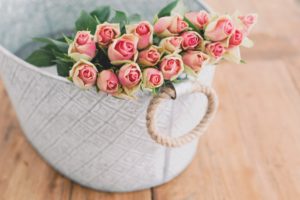
Photo by Roman Kraft on Unsplash
All content on this site ©2017
Jennifer Rose
except where otherwise noted
by Jenny Rose | Aug 24, 2017 | A Flourishing Woman, Self-Love
My partner has trained in Aikido, and he relates hearing the above advice years ago from his teacher. Ever since he repeated it to me, I’ve been turning it over in my mind.
We lately found a Tai Chi teacher and joined a class. I’ve wanted to do Tai Chi for a long time, and it’s every bit as much fun as I always imagined it would be. I practice every day, and part of my practice is meditating on that wonderful piece of subtle Eastern wisdom: Don’t be where the blow lands.
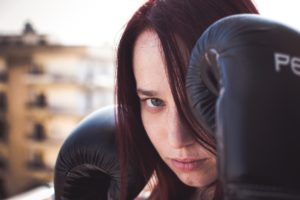
Photo by Jason Blackeye on Unsplash
Tai Chi is a Chinese martial art focusing on energy manipulation, practiced for defense and health. Many of the people in the class we joined are there to address balance and strength. I’m happy to support both my balance and my strength, but I’m learning Tai Chi primarily as a grounding and centering tool.
We’re learning a series of specific slow, repetitive movements that flow into one another. Each movement is called a form, and each form has its own, often poetic name: The bow, the crane, windmills, the lute. Tai Chi emphasizes locating and moving from one’s center, and it’s interesting how difficult I find that.
Learning the forms and stringing them together is no problem for me. It takes a lot of repetition to get arms and legs coordinated and figure out proper positioning, but I like repetition and want to practice. What I notice, though, is how easily I lose my center. I reach or step too far. I find myself up on one toe or another when I’m not supposed to be. I put one foot directly in front of another, like a model on a catwalk, instead of maintaining a more stable, wider-based stance. My ankles are weak and unsteady. If I’m doing one form at a time in isolation, I can tighten my core and be solid, but Tai Chi is flowing movement, albeit slow, and after a few different forms my center is gone.
Losing my balance in this way is a perfect metaphor for the way I’ve lived my life until recently. My energy and attention were always directed outward. I had very little ability to support myself; I relied on external support and I didn’t distinguish toxic inputs from healthy ones. I was too hungry and had too many unmet needs; I took a lot of poisoned bait. Not only did I stand where blows landed and bullets sped, I made a camp there and called it home. I believed I needed those blows and bullets, that they meant love, that it was my responsibility to endure them, and that I deserved them.
We can’t avoid life. Harsh words, verbal attacks, physical violence and unexpected events like fire, flood, riots and sudden public violence are going to happen. Even so, there are ways in which to meet life’s blows with all the grace and elegance of Tai Chi, and as I practice the forms and movements, I think about the skills that allow me to absorb the blow, to flow with it, and to step away from where it landed before it can be repeated.
I’m a big proponent of self-defense and I always carry a knife. I’m not afraid to fight. One day soon I’m going to learn to shoot and buy myself a gun, which I will carry. That kind of self-defense is a separate thing from my practice of Tai Chi. Tai Chi is not about any kind of an aggressor lurking in an alley or a parking lot; it’s about emotional and energetic safety.
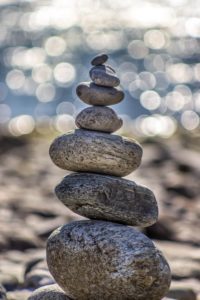
Photo by Deniz Altindas on Unsplash
Tai Chi, along with swimming, dancing, ritual work, walking and writing, is a way to call myself home, back to the center, back to my bones and the source of myself. Maintaining my center absolutely requires my undivided presence. I can’t center properly if I refuse to know all of who I am. I can’t maintain balance if I refuse to love all of who I am. The minute I try to amputate bits and pieces of myself, deny my thoughts and feelings or start tearing myself down in any way, I’m standing (again) where blows are guaranteed to land. When I catch myself justifying; pleading; waiting for external validation; trying to please; choice-making out of fear, denial and self-doubt, I know I’m standing on the shooting range with a target pasted over my heart and head.
I’ve spent too much of my life staggering under loads of other people’s shit, carrying vampires and dragging chains. Confusion, fear, perfectionism, disempowerment and constipated unacknowledged feelings have all kept me standing where the blows land. Arguing with what is has cemented me in the path of bullets. Clarity, self-confidence, making friends with my feelings and reclaiming my power allow me to deflect, block or better absorb the blows that come my way.
I’m intentional about living with the wisdom of choosing not to be where the blow lands. Reclaiming my center and moving mindfully from danger, not only physically but creatively and emotionally, all but eliminates my fear and anxiety. Concentrating on grounding leaves no room for anything but strength and rootedness. The meaning of my life is not out there, in the noise and chaos of what others think, say and do. The meaning of my life is in here, centered within the container of my body, expressed by what I think, say and do.
Photo by Amy Humphries on Unsplash
Now, if you’ll excuse me, I have to go see if I can remember the windmills and the lute from yesterday’s class.
All content on this site ©2017
Jennifer Rose
except where otherwise noted