My partner and I have been watching back episodes of Nova for several weeks now on PBS. Last evening, as we watched “What’s Living In You?” and “Can We Make Life?” I realized that part of why I like the show so much is that it’s filled with people from all over the world who know they don’t know … and they want to know.
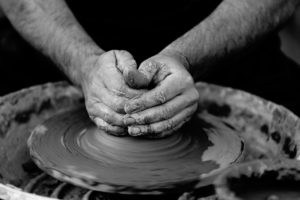
Photo by Frank Okay on Unsplash
This is a direct contrast to some interactions I had this week with people who know … everything. They know what happened; they know everyone’s motivations and secrets; they know exactly what everyone else should think, do and say. They have no interest in anyone else’s point of view or experience. They ask no questions seeking understanding or more information. They don’t have to. They already know, and any information that doesn’t fit their story is an attack, a lie, or a threat.
In these posts I’ve referenced Kathryn Schultz’s book, Being Wrong, a fascinating and funny look at the myriad ways in which we’re all wrong, every day, though some folks seem to feel their lives depend upon winning and being right. Even when forced to admit we’ve been wrong about something, we avoid thinking or talking about it, concentrating instead on all the ways we were, are, and will be right!
We live in a world in which knowing is highly valued. Uncertainty or even, God forbid, admitting or contemplating the vast cosmos of what we don’t know, is seen by some as weakness. I suspect, however, that what’s really going on is simply fear. It makes us uncomfortable to think about how much we don’t know. If we discover things, we might have to make different choices, and most of us don’t want to do that. It’s too much work.
Photo by Jonathan Simcoe on Unsplash
Fear doesn’t empower me, and neither does being right or wrong, or knowing or not knowing, Power is in the inquiry, in the questions, in the curiosity about ourselves, each other and our world. Power is in our ability to learn, unlearn and relearn — also called resilience — as we navigate our lives. We’re all both right and wrong, ignorant and knowledgeable, whether we admit it or not, but not everyone can ask a good question. Not everyone is able to propose an hypothesis and see it through to becoming a theory.
One of my greatest frustrations in life is with people who don’t want to know. What is that? How can anyone choose to be willfully ignorant? I don’t mean we all need to be interested in everything, as though life is one unending mechanistic reductionist set of classes. I mean we all need to be interested … period. In ourselves and the quality of our lives and experience. In others and the qualities of their lives and experiences. In our home, Planet Earth, and how to take care of it. In problem solving and innovation. In relationships and connection. In choices and consequences. In patterns, history and creativity.
Photo by Bryan Minear on Unsplash
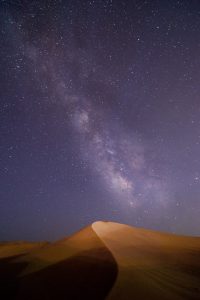
The old map-makers drew maps of the discovered world, labeling the undiscovered areas “Terra incognita” or “Here be dragons.” What is the difference between someone who stays strictly within the confines of what the majority accepts as known and those of us who poke and pry; open forbidden doors, jars and boxes; look through microscopes and telescopes; and sail, ride, walk, stumble or crawl in search of dragons?
It boggles my mind to imagine some people find safety in not knowing, in not understanding. How can we make effective choices if we’re missing information? How can we heal, or learn to do better? How can we break dysfunctional patterns in our behavior? How can we have healthy, authentic relationships with ourselves or anyone else?
The hardest part of this issue for me is how disconnected I feel from people who say they don’t want to know. I think of life as an adventure, and I want playmates. I want to share what I’ve learned and learn more. I want to live the questions. I want to explore, reframe, turn beliefs and ideas inside out and upside down. I want to master new tools and skills. I feel sad when people in my life can’t — or won’t — play with me. It’s hard to feel my curiosity and questions are threatening to others. It silences me, and when I have to be silent, or less than I am, I’m bored.
Photo by frank mckenna on Unsplash
The older I get, the less I realize I know. The older I get, the more willing I am to be wrong. The older I get, the more comfortable and confident I am with my ability to research, read, synthesize, understand, experiment, challenge and learn. I notice how angry that makes some people, and how intolerant some folks are of questions, especially uncomfortable questions.
Terra incognita. What a wonderful phrase. Anything could be there, anything at all. I’ll send you a postcard with a footprint of a dragon.
I’ve been exploring the concept of scapegoating. The information I’ve uncovered so far indicates the idea originates in the Bible, though I won’t be surprised if I discover pre-Christian roots to the practice.
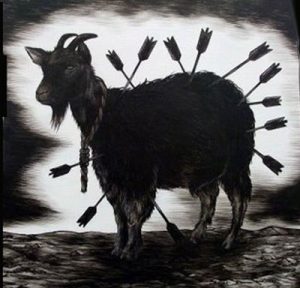
Briefly, in Biblical times, two goats were chosen when the community felt it needed cleansing. One was a sacrificial goat, which was killed to appease the Divine. The other goat was symbolically laden with the so-called “sins” of the people and driven into the desert to die, thus eradicating the sin.
Sigh. What a ridiculous coping mechanism. If only it was that easy! Eradicating real or perceived “sins” by assigning them to innocent animals and then killing them strikes me as immature, cowardly, impotent, and completely ineffective.
As an aside, in my experience those who thunder about the “sins” of others are the most destructive and guilty of all. Just ignore the man behind the curtain!
The role of a scapegoat seems to be essential to human society. We scapegoat individuals and we scapegoat groups. One of the reasons I’m more and more resistant to labels is they support and feed our ability to scapegoat others. Scapegoating is the root of genocide.
Scapegoating is abusive, and it’s a psychological trick, a distraction, a projection and a manipulation. Worst of all, it’s dishonest.
It’s also, frequently, murder, by which I mean the deliberate destruction (or attempted destruction) of an innocent. Ironically, family systems that scapegoat children often choose the most sensitive, empathetic, loving and talented child (often the healthiest family member) and set out to begin a systematic long-term campaign of destruction of that child so others within the family can avoid taking responsibility for their own lives.
Photo by Travis Bozeman on Unsplash
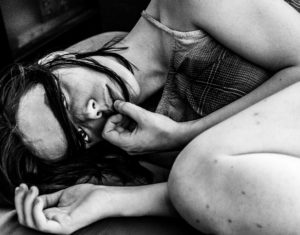
One can spend all day online exploring scapegoating. It’s depressing research. Those who are scapegoated have a horrendous experience of pain, isolation and rejection that frequently leads them into addiction and other self-harming behaviors, and cripples their ability to form healthy relationships, particularly with themselves, and make positive contributions. Many scapegoats do, in fact, go metaphorically out into the desert or wilderness and die.
But not all of them.
Let us not forget that of the two, the scapegoat is the one who survives. The sacrificial goat is out of time and out of choices, but not the scapegoat.
Photo by Jeremy Bishop on Unsplash
What happens when the scapegoat is spit upon, reviled, cursed and turned away, staggering and stumbling under everyone’s unacknowledged shadows, darkness, and feelings? What happens in the lonely black cold of the desert night, in the blazing, thirsty grit of the desert sun?
A long, slow death by inches from despair, isolation, thirst and hunger?
Do scapegoats meet other scapegoats, and if so, do they compare notes and experiences and support one another in surviving and healing, or do they, in their turn, scapegoat those they meet and perpetuate their own misery and damage?
OR do they meet an Angel, or another aspect of the Divine? Perhaps they reclaim and reanimate themselves. Maybe dreams and visions come to them. Maybe a fearsome Hag or an animal guide teaches them to find or create water in the desert. Perhaps a desert mouse or a scorpion appears and relieves the scapegoat of all that does not belong to it, either burying the toxic waste of others in the clean, hot sand of the desert or, better yet, sending the poison back to its source(s).
Perhaps scapegoats meet the Devil in the desert. Do you know the meaning of The Devil card in the Tarot? Authentic experience. Some people fear authentic experience more than anything else in the world, and they’ll do anything to silence, destroy or stifle it. Who is more feared or hated than the Whistle Blower, the One Who Tells Their Truth?
Maybe tribal shaming and exile are in fact a release from prison and a doorway to personal power. Maybe the desert has been waiting to embrace the scapegoat for an eternity, waiting with gifts and spirits and guides, waiting with wisdom, patience and healing.
When we flush the toilet, we don’t expect to see the contents again. Occasionally, something goes wrong and we do see the contents again! Very disconcerting. Imagine being a bearded patriarch with a paunch and a fine embroidered cloak of arrogance and entitlement. The beard hides a weak chin and the paunch hides a frightened, impotent, controlling personality that is unable to be wrong, learn or grow. In order to relieve the chronic stress of maintaining a pseudo self and constant unacknowledged fear, the patriarch symbolically loads a goat with all his unwanted psychological and emotional shadow and darkness (which he has just increased) and drives it away with rocks and blows.
Now imagine the goat returns some time later, strong and broad-shouldered. It dances in the moonlight on stardust hooves outside the city walls. Its thick, silky coat stirs in the desert wind. The twists and spirals of its horns gleam like marble sculpture. Free and unburdened, the scapegoat has become a wild, enduring, sensual creature of primal instinct and power.
The patriarch, by contrast, has become smaller, weaker, and more wretched.
I’ve reached two conclusions about scapegoats and scapegoating.
The first is scapegoating doesn’t work. Not only is it ineffective, it’s weak, and, frankly, I’m embarrassed for those who engage in it. People who scapegoat others are only drawing attention to their own meagre hearts and intellect. They can’t meet their own gaze in the mirror; they prefer to displace and project their self-hatred, fears and feelings onto others.
The second conclusion I’ve reached is the day we are driven into the desert from the gates of our loved ones or our homes as scapegoats may also be the day we are reborn into something fine and powerful, something wild and resilient and enduring.
On the first part of the journey I was looking at all the life There were plants and birds and rocks and things There was sand and hills and rings The first thing I met was a fly with a buzz And the sky with no clouds The heat was hot and the ground was dry But the air was full of sound
I’ve been through the desert on a horse with no name It felt good to be out of the rain In the desert you can remember your name ‘Cause there ain’t no one for to give you no pain La, la …
After two days in the desert sun My skin began to turn red After three days in the desert fun I was looking at a river bed And the story it told of a river that flowed Made me sad to think it was dead
You see I’ve been through the desert on a horse with no name It felt good to be out of the rain In the desert you can remember your name ‘Cause there ain’t no one for to give you no pain La, la …
After nine days I let the horse run free ‘Cause the desert had turned to sea There were plants and birds and rocks and things there was sand and hills and rings The ocean is a desert with it’s life underground And a perfect disguise above Under the cities lies a heart made of ground But the humans will give no love
You see I’ve been through the desert on a horse with no name It felt good to be out of the rain In the desert you can remember your name ‘Cause there ain’t no one for to give you no pain La, la …
One of the powerful lessons our planet has to teach us (if only more would listen!) is the miracle of complex systems. Scientists are beginning to understand our old paradigm of mechanistic reductionism does not honor how intricately and elegantly chemistry, geology, oceanography, paleontology, astrophysics and biology are woven together. Our most challenging and pressing issues are all connected: health and access to healthcare, diet, climate change, overshoot, pollution, education and resource access, to name but a few.
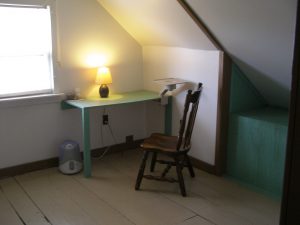
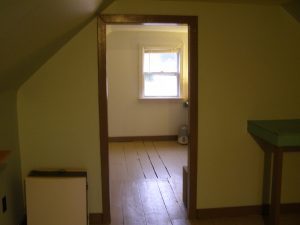
As I write this post, I’m crammed in a corner of my attic office. My partner is building me a bookcase in the middle of the room. There’s sawdust on the rug, piles of books all over the floor, tools and shims and clamps and screws on the floor and file cabinet. We’re chatting about nothing much as I write and he mutters to himself and runs power tools. I pause now and then to look out the window, where a frigid winter wind blows, and to run my eyes lovingly over the books heaped around my feet, waiting patiently for their new accommodations.
Several others have occupied this attic space before me. The house, after all, is almost 200 years old. The horsehair lath and plaster walls, covered with old-fashioned wallpaper; the slanting ceiling; and the wide planks of the floor, painted a light shade of grey-brown, have contained and witnessed many thoughts, feelings, hopes, and dreams.
When I moved in, I adjusted to the space and what was here, not only because I was overwhelmed and homesick for my place in Colorado, but also out of respect for the rooms, the house, and my partner and his memories and history in this place.
Now, nearly five years later, I have rooted firmly into my new life. I no longer feel like a visitor or a temporary roommate. These two adjoining attic rooms know me. I’ve slept here. I’ve pulled Tarot cards, burned candles and incense, cleaned, smudged, written countless words, cried, listened to music, exercised, danced, and nursed illness and injury here.
We humans have a tendency to consider ourselves Masters of the Universe. Between that assumption and the truth, that we are but one species among billions of other forms of life, some of which we remain ignorant of and many of which have lived on this planet millions of years longer than we have, yawns a chasm of ignorance, arrogance and self-destruction.
A study of complexity opens up a wider awareness, however. This space is not truly mine. I’m a temporary occupant, and I care for and about these little rooms, but they were here long before I was and may yet shelter other lives when I am through here. In fact, I wonder if I don’t belong as much to the space as it does to me.
That thought leads me to wondering if I’m shaping worlds, creating characters and writing stories, or if those worlds, characters and stories are shaping, creating and writing me.
We didn’t plan it, but somehow last weekend my partner and I found ourselves up here with tools and a crowbar, disassembling a large counter built by a previous occupant. I didn’t find it useful as anything but a bookshelf, and it took up a lot of space. I was beginning to think about removing it sometime in the future in favor of a couple of bookshelves. The stars unexpectedly aligned perfectly on this snowy, cold weekend, and we rolled up our sleeves and started making a mess.
Tearing out the counter damaged the wall. I spackled and sanded and began to think about paint. I tore a small sample of the old wallpaper out of a corner of the closet and took it to the paint store, where I picked out a buttery cream color (Cottage Cream—I love paint color names!) that toned with the wallpaper.
That’s why, this morning, I’m an island in a sea of books while my partner inches busily around one of my new bookshelves with tools and hardware in the middle of the room. In the adjoining room, the first coat of paint is drying. I’m coming to terms with the fact that I won’t be able to do a final coat before I leave for work. I hate living in chaos. On the other hand, it’s possible my shelves will be ready in time for me to get some of my books off the floor before I leave!
It was tempting to tell myself this morning I couldn’t do any writing in such a mess. Instead, I decided to allow the temporary chaos around me to write this post, to shape this morning, and to mold me in this moment in time. At the same time, we, the current inhabitants of this house, are shaping a more usable and personalized space for me.
We humans are not graceful about being shaped by anyone or anything. We resent and resist. For some reason, we don’t feel as though we should have to deal with disagreement; inconvenience; difficult people, situations or feelings. We’re equally outraged if others complain about the impact of our behavior on them.
I see a different truth. Each individual life on earth is literally shaped by everything around it, both living and what we call nonliving. Our inability to discern a direct superhighway between ourselves and a total stranger on the other side of the world doesn’t diminish the power and reality of our interdependence. It just means we’re terribly and dangerously ignorant.
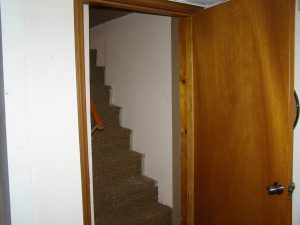
Those who came before me to this attic aerie chose wallpaper, paint, shelves, window coverings, and where to fasten things to the walls. Now I, in my turn, am molding the space to my needs and preferences, but the space itself is not passive. Sunlight, moonlight and draughts move through it in a particular way. The red bricks of the chimney rising through one of the rooms radiates heat. The floor dips, creaks and sways, dictating where I sit, sleep and exercise. The low, slanted ceiling does not accommodate some stretches and dance movements. The narrow, steep stairs limit what I can bring up in terms of furniture.
I am shaped, influenced, limited, challenged, rearranged, smoothed down and roughed up by my two little rooms, just as surely as I’m deconstructing, patching, sanding, painting, scrubbing and reconstructing my physical surroundings. Together, we create my life. We are partners. I am who I am because of my living space, and it is as it is because of me.
My whole life has shaped my writing, and in the last few years my writing has shaped my life. As I weave story and work with characters and other worlds, they enter my dreams and my thoughts. I carry their influence with me as I live. Because of my blog, I ask more questions in the world, am more present with others, and listen more carefully. The discipline of posting weekly demands I find a way through discomfort, change and upheaval, and write anyway. I am not the Princess and the Pea. I can write even if my surroundings are not ideal.
Nobody but me could write my Webbd Wheelseries or create the space I need. Perhaps no other story or living space in the world could have written this moment’s version of me.
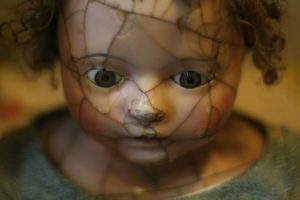
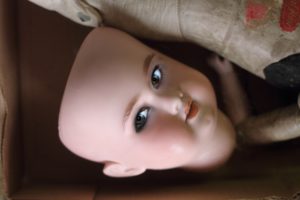
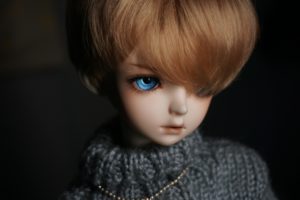
Dolls, like clowns, have a long and powerful history of symbolic meaning for human beings. We think of most dolls now as playthings for children, but dolls have always been much more than toys.
Photo by Aimee Vogelsang on Unsplash
The old word for doll was “poppet,” related to the English word “puppet.” In many cultures, dolls were used for spiritual rituals and magic, and as oracles. They are perhaps most famous as tools of black magic, but were also used for healing, fertility, and romantic and protective spells. From the Far East to Africa to the Americas, dolls have been an important social instrument for centuries.
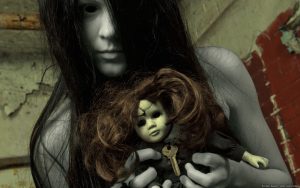
There exist in the world a small handful of haunted dolls, both in museums and collections and for sale on sites like eBay. Several horror movies have been inspired by famous haunted dolls, such as Robert and Annabelle.
As a child I didn’t have dolls, and didn’t want them. A toy doll to mother and care for was not nearly as much fun as a pet, which we had an abundance, and nothing was as lovely a plaything for me as a book. Some things never change.
No, I didn’t have a doll until I was nearly 50 years old, when I decided I needed a very specific kind of doll for a very specific reason. Most traditional dolls were handmade out of whatever materials were available. As a child of the twentieth century, I went shopping online, trusting I would know her when I found her. I already knew her name.
Photo by Gary Bendig on Unsplash
I wanted a new doll resembling myself. I looked at hundreds of dolls, mostly hideous, plastic and cheap, trying to find good old-fashioned rag dolls or soft dolls. There are some, but they’re few and far between. Alas, there are no dolls depicting (ahem!) maturity. Most of them simper, lowering plastic eyelids over improbably shiny blue or brown eyes. They have equally shiny and synthetic hair and frilly clothes. It was a little like shopping for candy in the candy aisle during Halloween. Slick, artificial, patently synthetic color, all sugar and no substance. Certainly, I found no dolls with even one grey hair or crow’s feet around the eyes. I thought about making a dried apple doll, but it was a fleeting thought. For some reason, that wasn’t quite what I wanted.
I persisted until I found a plain rag doll with brown yarn hair tied into two bunches with ribbons and blue eyes. She wore a yellow dress and white felt shoes on primitive club-shaped feet.
I grew up doing all kinds of embroidery, cross stitch and needlework, but I never learned to use a sewing machine or do practical things like make clothing, so I had to ask for help to get more appropriate clothes made. I found a young woman who sewed and asked her to make my doll a pair of denim jeans and some kind of a top. I told her the doll was for a niece of mine who was something of a tomboy and a mountain kid. I didn’t want to admit the doll was mine.
Dolls are commonly used for therapy for adults and children. In my explorations, I’d run across the idea of working with one’s inner child many times, and I knew making a doll to represent oneself is a common therapeutic activity. As I’d never had any meaningful kind of relationship with dolls, this didn’t attract me.
Until it did. I’m not sure exactly why my interest in dolls changed at that particular point in my life. All I can really say is I was suddenly ready to figure out if I could love myself. A doll seemed an obvious way to externalize the parts of me that felt so chronically unloved and unwanted. Beyond that, I really didn’t think. I just felt the need, and obeyed it.
When the clothes were ready (jeans, a T-shirt and a zippered sweatshirt), I dressed the doll and cut her brown yarn hair short. After spending most of my life with long hair, I’d recently cut mine, more as an act of rebellion and self-mutilation than anything else.
Photo by Rain Wu on Unsplash
I cut the doll’s hair with a mixture of anger, resentment and grief, and a strange thing happened. Instead of looking at her with loathing, I had the completely unexpected and spontaneous thought that the short hair was cute. It wasn’t ugly. It didn’t make her look like an old hag, used up, dried up, sexless and powerless. That’s what I saw when I looked in the mirror at myself, but when I looked at the doll I saw something else entirely. As a child I had begged to be allowed to have long hair. I was eventually allowed to, when I was old enough to care for it. This was reasonable, as my hair is thick, curly and unruly, to put it mildly. For years, though, as a slim, short-haired, active child in the same tough jeans my brother wore, I was taken for a boy.
Somehow, looking down at that helpless rag doll and the short ends of yarn scattered around her, it seemed I was looking at a long-vanished version of myself, and I didn’t hate her. She wasn’t loathsome. She merely had short hair. I’d meant to hurt her, even mutilate her, but her innocence turned a hostile act into a reluctant feeling of wanting to protect her from any who would seek to hurt her, including myself.
This was a powerful moment. It was so powerful I doubted myself. What would people say if they knew I’d bought myself a doll and lied about it in order to get the clothes I wanted for her? What would they think of me? What did it say about me, these feelings of self-hatred mixed up with an uneasy need to protect? Protect the doll from me? Protect the doll from others? Protect myself?
I was confused, embarrassed and compelled. I kept the doll with me as I moved around my little log cabin, not to handle, but just to look at. Occasionally, I talked to her, in the same way I talked to the cat I belonged to at the time.
Then, one day, something distressed me. I was trying to calm down and think more clearly, and I saw the doll, sitting propped on a table. I picked her up and held her against my shoulder, patting her back and swaying on my feet in the age-old motions of comforting a baby. I had worked for years with chronic and terminally ill children and their families as a young woman and then raised two kids of my own. I love and understand children, and the familiarity of holding one again made me weep.
I was also instantly comforted, as though I myself was being held in spite of my age and ugliness. I’ve been aware all my life of the longing to be safe, secure and loved in someone’s arms, a longing I rarely admit, always endeavor to bury deep, and feel much shame about. Something about holding the doll assuaged that longing. In a strange sort of way, I was holding myself, or at least some part of myself.
I can’t explain the neurophysiological effect of being able to hold and comfort my doll. Perhaps a neurologist or a good psychiatrist could. What I do know is it’s been enormously and unexpectedly healing. The gnawing need for nonsexual physical reassurance and affection has been something I’ve learned to live with, never revealing it or expecting to have this need met. If I could not find it as a young, reasonably attractive woman, I’ll surely never find it now. I can’t hold myself, but I can hold my doll. I don’t always treat myself with unconditional love, but I can give it to my doll. In fact, I’m incapable of giving her anything else. I’ve always found it much, much easier to love others than myself. Loving others is a beautiful way to live, but it’s not always reciprocated or even recognized for what it is, and much of the love I’ve given has walked away from me, never to return. With the doll, somehow my love comes back into my own starving skin and heart.
Photo by freestocks.org on Unsplash
I’ve had the doll for about six years now. I’ve turned to her in times of fear, insomnia, emotional pain, panic attacks and PTSD. I’ve wept with her (and perhaps for her), rocked her, kissed her, practiced Havening with her, snuggled her and slept with her in my arms. Until now, I’ve kept her presence in my life a secret from all but one person. She’s been more useful to me than any psychological therapy or pharmaceuticals I’ve ever tried, with the single exception of emotional intelligence coaching.
I’m writing this post now because I thought it would be fun for Halloween, haunted dolls being a thing in our culture. As I write, however, I’m slightly sobered. I’m not prepared to debate whether haunted dolls or haunted anything else are “real.” The belief in such things is what fascinates me, along with the history of such objects, investigation into this kind of phenomena, and the way it captures our imaginations. What I will say is if an object or person can be haunted or possessed, I would assume intense energy or emotion is associated with such possession.
It’s not hard for me to understand why dolls, like clowns, have so captured our imaginations. I’m quite certain my doll is the most intimate object in my life. I would never want to see her in another’s hands. God forbid she ever takes it into her head to talk about my demons and vulnerabilities. I don’t mind if she wants to move around in my attic space, though, or even look out the windows, as other haunted dolls are alleged to have done.
I’m in the middle of a conversation with a friend, who is a writer, about “good” and “bad.” Good and bad what, you ask? Good and bad writing. Good and bad singing. Good and bad cooking.
Photo by Ben White on Unsplash
The subject caught my attention because it evokes strong feelings, but I’ve been struggling for several days now to begin exploring it in writing with any kind of coherence. It seems ridiculously complicated, which is interesting and makes me even more determined to tackle it.
Sometimes the only thing I can do is start peeling the onion and see what happens, so here goes.
“Good” and “bad” are subjective descriptors. According to Oxford Online Dictionary, good is variously defined as “to be desired or approved of,” and “giving pleasure, enjoyable or satisfying.” Bad is “of poor quality or a low standard,” “not such as to be hoped for or desired; unpleasant or unwelcome.”
It seems to me “good” and “bad” are like “success.” Either we retain our power and define them for ourselves, in spite of external pressure, expectations, criticism or judgment, or we allow others to tell us what “good” and “bad” are. In the case of creative expression, like writing, singing and cooking, it’s impossible to please all the people all the time. Sometimes it’s impossible to please anyone.
Is that a goal of an artist, to please others? Certainly, up to a point. If I can’t interest an agent in my writing, it’s unlikely I’ll be published. If my writing is not deemed marketable, no agent will take me on.
Is marketable the same as “good?” Is popular the same as “good?”
Photo by Syd Wachs on Unsplash
Emphatically, no. I’ve read bestsellers I thought were trash. I’m absolutely certain great writing exists that will never be discovered by the world. Some of my favorite authors are heavily criticized as being poor writers.
It seems to me “good” and “bad” boil down to opinion or preference. It might be an educated opinion, a well-respected opinion, or just a I-know-nothing-about-art-but-I-know-what-I-like opinion, but an opinion, even a majority opinion, is not a universal law.
Creative artists work from a mix of skills and inspiration. Some artists have the resources and access to become formally trained in the use of writing skills, musical skills or culinary skills, especially if they recognize their interest and/or aptitude for a particular artistic expression early in their lives.
Photo by Senjuti Kundu on Unsplash
Many others, including myself, may lack the resources, access or interest in such formal education and training, or may come to their art later in life. These artists are frequently autodidacts (self-taught people) who simply practice their art, whatever it is, because they must. Their creations may or may not be as refined and elegant as those who obtain years of education and training, but they feel a passion or obsession for artistic expression that won’t be denied.
This mix of skill and inspiration is part of what makes the whole issue of “good” and “bad” so complicated. Skill is the ability to do something well. The definition implies someone decides what doing well means. Who decides that? Am I in charge of that, as the reader, concert-goer or diner, or are the writer, singer and chef the ones who define their artistic expression as well done?
As we create art, what are we focused on? Do we want to earn a living? Are we focused on competition — do we want to be number one? Are we determined to be famous? Rich? Successful? Influential? Professional? Validated? Perhaps, on the other hand, we have no expectation of living by our art, but artistic expression is a private joy, a sacred healing, an exercise in authenticity that keeps us rooted and grounded. Art is our prayer, our act of gratitude and hope, an expression of love for those around us, our love letter to life.
Photo by Brandon Wilson on Unsplash
As we consume art (read, listen, eat), what are we focused on? Perhaps we are collectors who are intent on investment and monetary value. Perhaps we love art because it inspires us; opens our hearts, minds and imaginations; or helps us manage our feelings. Maybe we’re avid readers, lovers of music, or lovers of fine cuisine. We may think of ourselves as “professional” or “successful” artists and thus feel qualified to judge and compare the work of others.
Calling a piece of writing, a song or a meal “good” or “bad” strictly in terms of a demonstration of skill, however, leaves out the heart and soul of creativity. Passion, inspiration and obsession cannot be taught. We might enjoy and admire the skill underpinning a technically perfect book or song or meal, but we’re not robots. Compelling art is not made from skill alone.
Photo by Quino Al on Unsplash
Art, at its best, breaks us open. It haunts us. It companions us. It provokes, challenges, explores, dares, admits, stuns, shocks, amuses, comforts, excites and enlarges us. “Good” and “bad” are far too unsophisticated and limited to describe the central power of creative expression. The skill of the artist might add to that power, but skill without the animating spirit of passion is merely a well-learned series of maneuvers.
What is art worth? What is the value of joy, of authenticity, of artistic expression reflecting a piece of our soul? Art, for me, is about an expression of human experience, inherently valuable, even sacred, in its truth and vulnerability. I’m not qualified to judge another’s expression of experience. I wouldn’t presume to do so. I wouldn’t dare.
In the end, I can only circle back around to my own power, my own intentions and integrity, and my own limitations. I’m not a formally trained writer. As a creator, I’m compelled to create. I know it’s part of what I’m here to do. It’s humbling and gratifying when others find value in my work, but even when I have no indication of that, I value it.
Writing provides me with a vehicle for managing feelings, deep healing, a bridge for connection, and an irresistible and fascinating personal challenge. How can I increase my skill? What can I learn? How can I become a better writer with every blog post and every page of my manuscript? How can I increase my confidence, courage and authenticity through writing? What’s the best I can contribute?
I don’t frame my creative work as “good” or “bad.” I do think about how to make it better. To that end, I gladly solicit and receive feedback from others, and several people in my life have made huge contributions to my skill, but at the end of the day I consider my own opinion of its value first, and I take neither praise nor criticism personally.
To create art is to be fully present. A piece of art is an invitation to be intimate with the artist and ourselves, an invitation to increase our empathy, respect and compassion, to reach out and clasp the experience of another human being.
Photo by David Hofmann on Unsplash
I’ve written before about the cultural pressure to make ourselves small in a myriad of ways. How many natural artists (every child) have been criticized, shamed, derided or otherwise amputated from their artistic expression, particularly if it’s in any way sensual? How many people walk around with soul hunger to create poetry; to dance, to make music and sing songs; to be artists, but deny themselves because they don’t think they’re good enough? How many people have made a creative offering or expression and been rejected, mocked or dismissed?
I believe if we want a better, healthier culture, those who want to play with words must play with words, those who want to play with paint must play with paint, every shower must have a singer, every piece of music a dancer, and every instrument an explorer.
Skill matters, depending on the artist’s intention and the audience’s perception. I suppose we can describe our perceptions of skills as “good” or “bad,” although I think we could come up with less subjective standards of measurement and recognize skill level as only a part of artistic expression.
Websites store cookies to enhance functionality and personalise your experience. You can manage your preferences, but blocking some cookies may impact site performance and services.
Essential cookies enable basic functions and are necessary for the proper function of the website.
Name
Description
Duration
Cookie Preferences
This cookie is used to store the user's cookie consent preferences.
30 days
These cookies are needed for adding comments on this website.
Name
Description
Duration
comment_author
Used to track the user across multiple sessions.
Session
comment_author_email
Used to track the user across multiple sessions.
Session
comment_author_url
Used to track the user across multiple sessions.
Session
Statistics cookies collect information anonymously. This information helps us understand how visitors use our website.
Google Analytics is a powerful tool that tracks and analyzes website traffic for informed marketing decisions.
ID used to identify users for 24 hours after last activity
24 hours
_gat
Used to monitor number of Google Analytics server requests when using Google Tag Manager
1 minute
_gac_
Contains information related to marketing campaigns of the user. These are shared with Google AdWords / Google Ads when the Google Ads and Google Analytics accounts are linked together.
90 days
__utma
ID used to identify users and sessions
2 years after last activity
__utmt
Used to monitor number of Google Analytics server requests
10 minutes
__utmb
Used to distinguish new sessions and visits. This cookie is set when the GA.js javascript library is loaded and there is no existing __utmb cookie. The cookie is updated every time data is sent to the Google Analytics server.
30 minutes after last activity
__utmc
Used only with old Urchin versions of Google Analytics and not with GA.js. Was used to distinguish between new sessions and visits at the end of a session.
End of session (browser)
__utmz
Contains information about the traffic source or campaign that directed user to the website. The cookie is set when the GA.js javascript is loaded and updated when data is sent to the Google Anaytics server
6 months after last activity
__utmv
Contains custom information set by the web developer via the _setCustomVar method in Google Analytics. This cookie is updated every time new data is sent to the Google Analytics server.
2 years after last activity
__utmx
Used to determine whether a user is included in an A / B or Multivariate test.
18 months
_ga
ID used to identify users
2 years
_gali
Used by Google Analytics to determine which links on a page are being clicked