Like so many clichés, “Oh, no, not another ‘growth’ opportunity!” is obnoxious, in large part because it’s true.
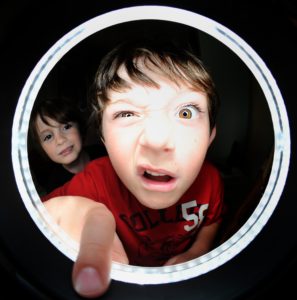
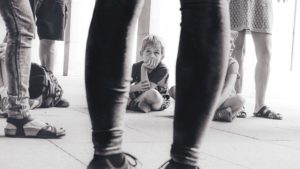
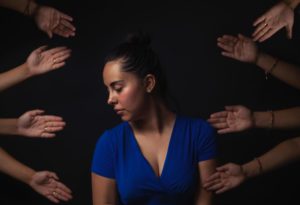
Photo by Frank Mckenna on Unsplash
Opportunity, or a set of circumstances that make it possible to do something (Oxford Online Dictionary), does not guarantee a positive outcome, and is most definitely a gift with strings attached.
I would go so far as to say the greatest opportunities are likely to be hidden under paralyzing layers of fear, dread, and pain.
Opportunity demands responsibility. No wonder we so often avoid it! It takes a determined effort to excavate opportunity, an effort requiring time, honesty, and dealing with our emotions, defenses, habits and denial.
“Opportunity is missed by most people because it is dressed in overalls and looks like work.” Thomas Edison
Hence, the cliché. Growth is frequently uncomfortable and expensive.
I suspect every one of us has a secret list in our heads of events and possibilities we simply cannot face. Usually, we feel that way because we’ve already lived through them and they were so traumatic we’re determined to never go there again. In essence, we’re afraid of ghosts. We think we’ll die if we have to face another loss, another attack, another rejection or another battle, forgetting we’ve obviously survived the first time(s), and thus are older and wiser.
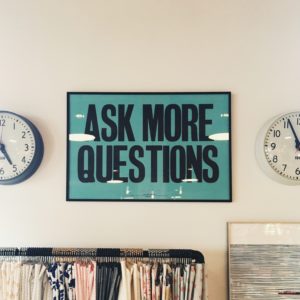
Photo by Talles Alves on Unsplash
What to do when we fear we’ll have to revisit some traumatic setting or situation? Freeze? Fight? Flee?
Probably all of those, in one form or another. Yet there is another choice. It’s not an easy choice, but it’s an option.
Reframe. Reframe. Reframe.
Setting aside for a moment our history, our memories, our stories and scripts about what did happen and what will surely happen again, setting aside our fear, rage and pain, wiping the blood out of our eyes, taking a deep breath and searching for opportunity is the work of heroes. Such a choice feeds our power, rather than diminishing it.
If we can catch even a glimpse, a whisper, a rumor of opportunity, the next step is to identify what we might do with the circumstances we dread most. What is that dread about? What has not healed?
What, in fact, do we need, and how do we turn the circumstances we most fear and wish to avoid into an opportunity for hope, healing, closure, forgiveness, letting go, or whatever it is we need to do?
Now, there’s a mighty question.
Some things in life are inevitable. We can kick and scream, deny and avoid, distract and pretend, but we know some things are inevitable. I’d rather figure out how to think about inevitabilities before they occur. I can’t think when I’m shaking with dread. Dread is a dead end. It fills my mind with a dull roar, it overwhelms my senses, and it hangs out with despair, depression, powerlessness, futility and a lot of other bad actors I don’t want to have anything to do with.
Dread makes me want to run like a panicked rabbit. Opportunity embraces me like a mother.
It is possible to insist our emotions, like fear and dread, sit quietly on a bench (with beer, bubble gum and baseball cards to keep them occupied) while we interview Opportunity. It takes some practice and self-discipline, but we can succeed in feeling our feelings and setting overwhelming emotion to the side unless we’re being actively hurt in real time.
Here are some interview questions for Opportunity:
Jiddu Krishnamurti said, “It is no measure of health to be well-adjusted to a profoundly sick society.”
I first heard that quote five years ago. It gave me comfort, because it allowed the possibility that my feeling of isolation and alienation at the time was a normal response. The problem, I find, with taking too much responsibility is one stops excavating interpersonal challenges. Instead, we assume it’s all our fault because we know we’re broken. This attitude effectively blocks further inquiry into what the people around us are up to. If we can be taught or manipulated into believing we’re the core of the problem in social interaction, our shame and guilt give those around us a free pass to behave however they like and treat us however they wish. No matter what happens, they can count on us to blame ourselves.
A friend of mine recently pointed out a lot of social media buzz about normalizing obesity. As I am not on social media, I did some research into memes and articles about this issue, and everything I saw made me think of the Krishnamurti quote.
Here again I see sloppy language. Almost every source agrees carrying too much weight on our frame is unhealthy. Unhealthy, as in bad for one’s health. Not ugly, stupid, lazy, lacking self-control, or a whole host of other slurs, taunts and unkind criticisms many overweight people have endured their whole lives.
Obesity is unhealthy. The fact that we have so many people struggling with obesity in this country doesn’t change unhealthy to healthy because it’s so common. A growing population of obese people signals a profoundly unhealthy society. Normal, as in usual, typical or expected, does not imply useful, healthy, functional or positive.
Is normal a goal, or is it merely a cop-out? Is normal something we aspire to because it makes us bigger, or is it something we have to make ourselves smaller in order to fit into? Who gets to decide what is usual, typical or expected? What are the consequences of choosing not to be usual, typical or expected?
Photo by whoislimos on Unsplash
I can answer that one. Consequences include tribal shaming, deplatforming, silencing and other violent, destructive and coercive responses.
Normal is one of those words we define ourselves. Normal describes something not aberrant or abnormal. Abnormal is the absence of normal. That distinction can be useful, but in a limited way. Conflating normality with Good and abnormality or different with Bad (or vice versa) is mindless, black-and-white groupthink, the kind of ideology driving genocide, religious persecution and racism.
Our culture and context help us define normal, but if our society is profoundly sick, to be well-adjusted and “normal” within it is to be profoundly sick.
This is particularly true when I look at money. I’m noticing an ever-widening gap between money and value in my own life and in the lives around me. Until recently, I thought of all resource as money, and a life without some magical amount of money I never defined and could never access would be a safe, successful life.
Photo by Evan Kirby on Unsplash
But money is only one kind of resource, and for me it’s the weakest kind. This thinking is definitely not normal by our cultural standards, but I believe it’s becoming more common. Minimalism is a growing trend, and those of us who explore and practice it are very clear about the relative value of money, time, contribution, experience, relationships, creativity, relaxation and joy. If earning money burns up all our other resources, we can’t replace them. Money won’t buy them back for us. A tree, an afternoon in the sun, a lap full of a child, the arms of a friend, the ability to lend someone a helping hand, are all beyond the power of money.
I don’t say money is bad or useless. I am dismayed, however, at what a God we’ve made out of it in this culture. During my lifetime the middle class has disappeared and the chasm between those very few who have significant financial resource and the billions of us who don’t seems likely to tear the planet apart.
A lot of sad people out there think money is power. It’s not. Our power is in our intelligence, our hearts, and our souls, not in our bank accounts. We have to make ourselves increasingly small and, ironically, impoverished, in order to adjust well to our deteriorating and unsustainable capitalist consumer culture.
In this house, we’re frequently in need of money to pay bills, buy groceries, keep up with car costs, buy a new pair of swim goggles, and buy a new fan for the furnace (our old one is beginning to sound like an airplane falling out of the sky when it kicks on). Most of the time, we don’t have money when we want it, but we manage to have what we need when it’s essential.
I used to feel terrified, ashamed, and like a failure because of my lack of financial resource. My relationship with money ruled my life. My hunger for more was never satisfied. When I had more I caught up with all my expenses and then I was broke again. It was a game I could never win.
I see now it’s a gameno one ever wins, yet we all go on compulsively playing it, chasing the lie that enough money will provide us with love, success, healing, healthy relationships, confidence, power, and a sense of purpose and meaning. We’re so busy playing the game we have no time to recognize or welcome into our lives the things that do have the power to give us what we want.
Ultimately, accumulating money for its own sake is an expression of impotence. What’s more sterile and pointless than a lot of digits sitting in an account? The tool of money is useless unless we put it to work. If (when) the economy crashes, a piece of paper with our account information on it will be of less use than toilet paper.
Photo by Gabriel Jimenez on Unsplash
What will matter is our ability to form loving, compassionate connections with others and our willingness to collaborate sustainably with Planet Earth. Our ability to both teach and learn will be important. Our skills and integrity will be important. Our laughter and creativity will be essential. If we can translate whatever financial resource we have into these things, we’ve made good use of our money. We’ve invested in sustainability and resilience, real resource for real life.
Frequent readers know how much I enjoy playing with frames. If we feel rebellious, noncompliant, alienated and crazy, perhaps the problem is not us at all. Perhaps the problem is we’re trying to fit into a profoundly sick society, and the fact that we can’t means we’re retaining some measure of health, even in the face of tremendous social pressure.
Those rebellious, noncompliant, alienated and I-feel-crazy ones are the people I’m writing for. Those are my people. Their courage, compassion and generosity are the wind beneath my wings. Our shared truths, tears, scars, love and broken places shape a womb where a healthier life for all can be nurtured.
I ran into a great question a few weeks ago: “What gives you courage?” I’ve been thinking about it ever since.
Courage, the ability to do something frightening or having strength in spite of pain or grief, is not the absence of fear. If we have no fear we have no need of courage.
Photo by Stefano Pollio on Unsplash
Fear, in my experience, is multifaceted. My most private fears are about my own wholeness and worth. Then, there’s the fear of external forces, like a coward with a gun in the supermarket; the judgement or criticism of a loved one; or a personal loss, injury or illness.
Yet another kind of fear is one I suspect many of us feel right now, a sort of ill-defined psychic shadow, a general feeling of insecurity about the state of our world and the future. I try not to give it too much attention, but it’s always there, like a thin cloud between me and the sun. I know the only place I have power is right here, right now, in this moment, and I’m glad I’m typing at the keyboard rather than staring out the window and wondering what tragedy or catastrophe will be brought to my attention next and where it will all end.
Photo by NASA on Unsplash
Is that a kind of courage, staying intentional in the moment and managing our own power?
Perhaps.
So, what keeps us going in times like these, in spite of our fear?
Oddly, the first thing I thought of was a poem I read as a teenager. All these years I’ve kept it and thought about the wagon wheel that did not break, the faithful dog, the innocent child. I’ve long forgotten where I came across it and I don’t know who wrote it.
Journal Note Long Ago
Crossing the wilderness or the sea I take with me nobody who is afraid nor do I want with me the memory of a man or woman who is afraid.
I am afraid enough myself now—there are shadows and ghosts enough now—in the meshes of my corpuscles—and so I must not ask others to go.
I keep the memory of a dog who was never afraid, a wagon whose wheels lasted, a child who had not lived long enough to know the meaning of the words Yesterday and Tomorrow.
The second thing that comes to mind about the source of my own courage also seems peculiar, but on second thought it might be a way of talking about faith. If and when I am able to identify The Right Thing To Do in any circumstance, fear ceases to have any power over me. I certainly feel it, and sometimes it seems I’ll be ground into oblivion by it, but as long as I’ve breath and a pulse I will do what I believe is right, come what may.
This is a trait fanatics and zealots of every stripe share with me, a fact which makes me pause and shudder. There is a difference, though, between a suicide bomber or the aforesaid coward with a gun and me. I don’t pretend to know what’s right for others, only myself. I’m not interested in having power over other people, forcing my ideology on those around me or taking out my frustrations on others.
My sense of The Right Thing To Do always involves my integrity and intuition, and is not weakened by the judgements and criticisms of those around me. My integrity and intuition are my own. Only I can maintain them. Without them, I am nothing.
When people talk about faith, I generally think of religion, which can be a staunch support for courage as well as a powerful motivator. However, most religions I’m familiar with require submission to a so-called higher authority, either human and/or sacred text (the author of which is frequently unclear and the original of which was written in a language and context I’m unfamiliar with). Many good people build their lives on a bedrock of religious faith and are sustained by it. That is not my way. I will not sacrifice my personal power to an external authority.
Photo by Lilly Rum on Unsplash
Information and learning give me courage. Literacy and curiosity are gateways to understanding, compassion and revelation. The beauty and complexity of our world and our universe, the remarkable experience of being human, the persistence of life, the perspective of history, the indomitable creativity of the human spirit — all these inspire me and give me courage.
My study and practice of minimalism has given me courage. The more objects and distractions I peel away from my space, time and energy, the stronger and more peaceful I become. Serenity, it turns out, has everything to do with living with less stuff, needing less money and concentrating on the undistracted and undiluted abundance of each moment. I don’t need nearly as much as I thought I did. Peace, joy, clarity and courage immediately flower in the space freed from stuff. I have what I need. I am what I need.
Photo by Nick Grappone on Unsplash
And that brings me to the last big ingredient in my particular recipe for courage. Learning to know, love and trust myself has given me courage. Part of this has to do with the gifts of aging. I’ve done a lot, seen a lot, made a lot of mistakes and collected a lot of scars. Every day I learn a little more and heal a little more. I have allowed my experience in life to expand my compassion, empathy, intuition, wisdom and ability to love. I’m a resilient, adaptable survivor, and I know, no matter what happens, I’ll do my best to my last breath.
A poem. The Right Thing To Do. Information and learning. Minimalism. Self-regard. Mix well.
Sometimes the inside of my own head astonishes me. It’s amazing how much of our internal framework is undetected bullshit that runs our lives. For example, this is a belief I’ve always accepted without ever thinking about it:
I get what I deserve I deserve what I get
I have it, therefore I deserve it
I deserve it because I have it.
You have not got it therefore you do not deserve it
You do not deserve it because you have not got it
You have not got it because you do not deserve it
You do not deserve it therefore you have not got it. —R.D. Laing, Knots
This piece of nonsense masquerades as a Universal Law, and I believed it!
So, what does it mean to deserve something?
Interestingly, the word “deserve” comes from the Latin word “deservire,” meaning “serve well or zealously” (Oxford online dictionary). Serve as in servant? Serve as in slave?
Serve, as in somebody else has the power to judge the value of our service, regardless of how we evaluate it?
Now, there’s a slippery slope of disempowerment!
The more I mull this over, the clearer it is to me that being judged as deserving or undeserving is a human construct. It’s not real. It collapses when I try to examine it. Do we really believe we get exactly what we deserve? Children are starving because they deserve to? People die of cancer because they deserve it? One percent of the population has most of the financial resource because they deserve it and the rest of us don’t?
No. I don’t believe that.
Photo by Luca Bravo on Unsplash
My reading of current complex systems science (please see my Resources page) teaches me life is defined by living. Life wants to live, be it a bacterium, a fern, a woodpecker, or a human being. Life is persistent, adaptive, and depends on the passing on of genetic material and energy gradients. Life is solely occupied with meeting its needs for life, and most successful life teams up with other kinds of life in complex systems.
There is no deserve in all that. There is no implicit guarantee of rights or resource. Successful life often leads to population overshoot, at which point the successful species uses up its resource and predators of the overshoot population increase their population to take advantage of the abundant food and energy supply.
Photo by Manuel Barroso Parejo on Unsplash
I did nothing to deserve the circumstances of my birth as a white female in the United States. I’m no more or less deserving of life than a mycelium spore. If I die of some kind of drug-resistant organism, my death is nothing more or less than the inevitable consequence of my species being in overshoot.
We humans spend a lot of time fighting with one another, as any overcrowded population will. There’s current buzz about hate, oppression, immigration and white supremacy. My own view is that all those issues are not the root of the matter, but distractions. The real issue is our unconscious and false sense of ourselves as human supremacists, superior to the sacred cycles and processes of life and death. Most of us believe, behave, and act as though our needs are more important than the needs of other human beings, and certainly more important than the needs of all the other countless and magnificent forms of life with whom we inhabit this planet.
Photo by Seth Macey on Unsplash
We will discover — we are discovering — we cannot stand alone, however. In fact, most life on the planet can do much better without us than we can do without it.
Life and death are the context in which all our experience is embedded. We’ve only begun to identify some of the laws governing the way they work together. We’re only now realizing how interdependent all forms of life are, even as we actively destroy other species we depend upon for food and water.
As human beings, we have needs. If our needs don’t get met, we die. This is so for every form of life. We either live as part of a sustainable complex system or we die as a species. As individuals, we are born and live because of those who have died before us, and our inevitable death gives life to those who come after us. It’s really very simple. Debating whether we ourselves or any other form of life is deserving or not is an idiotic waste of time and energy.
The concept of deserving is one more piece of mental clutter, along with pleasing others and arguing with what is, I’m ready to let go. For years I’ve hurt myself with it; it’s limited me and been a heavy burden to carry. Without it I feel lighter, freer, and I notice an increased sense of reverence and gratitude for my life and all the life around me. I am not supreme. I’m a child, a student, and one small life among many others, all of which have equal value to my own and much to share and teach, if I can set my human arrogance aside long enough to listen.
As Loren Eisley writes in All the Strange Hours: “Life, life for the purposes of life, and is that then so small?”
The word “respect” is jumping up and down in my life this week, hand thrust in the air, saying “me, me, me!”
Photo by Cristina Gottardi on Unsplash
This post started with more from R. D. Laing’s book, Knots:
“A son should respect his father. He should not have to be taught to respect his father. It is something that is natural.
It is the duty of children to respect their parents. And it is the duty of parents to teach their children to respect them, by setting a good example.
Parents who do not set their children a good example don’t deserve respect.“
As usual, I have thoughts and questions. ‘Should’ is a word I shun. It implies arguing with what is. Who says a son (or any child) should respect his father? I believe this rule has its roots in the Bible and/or other spiritual traditions. Does that mean it can’t be questioned? (This is a trick question. If you say no, I will immediately start questioning it!)
Is respect ever a given? Do we (must we) “naturally” respect others? Are we born knowing how to respect others? Are we born knowing how to respect ourselves, or do we learn by watching those around us? (For more on parenting and respect, here’s the perspective of parenting expert and author of Connection Parenting, Pam Leo.)
What’s a “good example,” and who gets to define it?
What the heck does respect mean, anyway?
According to Oxford online dictionary, the meaning of respect includes “a feeling of deep admiration for someone or something elicted by their abilities, qualities, or achievements” as well as “due regard for the feelings, wishes, rights, or traditions of others.”
Aha! Two distinct meanings.
Photo by Emma Backer on Unsplash
Across both digital and face-to-face human interaction, I see a troubling pattern of boundary loss and deliberate blurring of terms such as respect. It seems suddenly we are expected to blindly respect, in the sense of deeply admire, everyone, no matter their words or actions. Worse than that, we’re supposed to agree with the ideologies and beliefs of others. Respect and agreement have come to mean the same thing. If we don’t agree with someone’s thoughts, feelings and beliefs, we’re haters and bigots. We have no respect.
Newsflash: Agreement and respect are not the same thing. They are not mutually exclusive, but they have different meanings. They may appear together. They can and do exist independent of one another.
Additionally, disagreement is not hate and is no measure of compassion, which can be fully present with either agreement or disagreement.
I found a perfect explanation of this in the Wiki entry for conflation:
“In an alternate illustrative example, respect is used both in the sense of “recognise a right” and “have high regard for”. We can recognise someone’s right to the opinion the United Nations is secretly controlled by alien lizards on the moon, without holding this idea in high regard. But conflation of these two different concepts leads to the notion that all ideological ideas should be treated with respect, rather than just the right to hold these ideas.”
I can understand the desperate search for some kind of certainty in life, some kind of code-breaking formula to help us make sense of everything from relationships to global change. I also understand many people are so busy trying to survive and cope with their day-to-day lives that discussions, explorations and distinctions of the kind I’m preoccupied with have no meaning. The world is full of people who take the attitude of TLDR (too long; didn’t read). It’s so much easier to attach to a meme or belief system along the lines of they’re for me or against me.
Photo by Cristian Newman on Unsplash
Unfortunately, reality is a lot more complicated than that and life is not black and white. Nothing is certain. People change. New information appears. We’re frequently trying to unlearn. In spite of how much we want to be right, much of the time we’re wrong. Refusing to take in any new information for fear it will threaten our safe place to stand will not keep us in control or protect us. What it will do is wither our critical thinking skills, our curiosity and our appreciation of others.
I endeavor to treat everyone respectfully, by which I mean I have space for people to believe what they believe. In general, I am successful in this intention. That being said, I view respect similarly to tolerance, as a peace treaty. Nobody likes to be attacked, and I’m no exception to that. I don’t attack others, but I will defend myself. I don’t think we’re all automatically entitled to respect, and I certainly don’t think I am. I’m also perfectly prepared for others to disagree with me on any given subject. That doesn’t mean (to me) we can’t have a respectful conversation about the issue we disagree upon, and it doesn’t mean I excise people from my life who hold different beliefs than I do.
I also recognize there are people in the world who intend to silence all disagreement and demand respect from everyone without giving it. This is cluster B behavior, and it’s about power and control over others. This population in particular seeks to conflate things like respect and agreement, using malicious and often ridiculous labels and jargon, threats, punishment and violence to silence and intimidate others. This behavior is called coercion. Some people say they want respect, but what they’re really after is agreement. Respect alone does not satisfy them.
I was once confronted by an extremely unpleasant woman who demanded to know if I am pro-choice or pro-life. It wasn’t her business, but I had no wish to escalate her drama, so I answered her truthfully and quietly: “Both.”
She immediately became both abusive and threatening, demanding I answer one way or another and telling me I couldn’t be both.
Excuse me? I can and am both. I said above I can understand why people adhere to black-and-white thinking, but I will not have it forced upon me. I don’t agree with such thinking or trust it, and I refuse to employ it. I was willing to respect her right to an either/or ideology, but I pushed back when she tried to force it on me.
Ironically, I find myself to be The Enemy, even among loved ones, because I disagree with some current ideologies, or I refuse to take a polarized stance. As I am one of the least judgmental and most respectful (in the sense of “due regard for the feelings, wishes, rights, or traditions of others,”) people I know, this is a bitter twist, and the injustice of it hurts. Reciprocity is nice, if you can get it.
Which brings me to the last aspect of respect I’ve been thinking about, which probably should be first, if I wrote this essay in order of importance.
What about self-respect?
Who teaches us to respect ourselves, or is that innate or “natural?” If it’s taught, do we learn best if the adults around us model self-respect and support us in giving it to ourselves? If it’s innate, can the adults around us damage our self-respect or force us to choose between respecting ourselves and respecting them? If we have little or no self-respect, are we greatly compelled to persuade or coerce others to support our beliefs? What brings us more satisfaction, respecting ourselves or feeling respected by others? Can the respect of others ever replace our self-respect?
As usual, I have more questions than answers, but I can say two things with confidence:
Respect and agreement are not the same thing.
I have no power to make others respect me, but I have complete power over whether I respect myself.
Websites store cookies to enhance functionality and personalise your experience. You can manage your preferences, but blocking some cookies may impact site performance and services.
Essential cookies enable basic functions and are necessary for the proper function of the website.
Name
Description
Duration
Cookie Preferences
This cookie is used to store the user's cookie consent preferences.
30 days
These cookies are needed for adding comments on this website.
Name
Description
Duration
comment_author
Used to track the user across multiple sessions.
Session
comment_author_email
Used to track the user across multiple sessions.
Session
comment_author_url
Used to track the user across multiple sessions.
Session
Statistics cookies collect information anonymously. This information helps us understand how visitors use our website.
Google Analytics is a powerful tool that tracks and analyzes website traffic for informed marketing decisions.
ID used to identify users for 24 hours after last activity
24 hours
_gat
Used to monitor number of Google Analytics server requests when using Google Tag Manager
1 minute
_gac_
Contains information related to marketing campaigns of the user. These are shared with Google AdWords / Google Ads when the Google Ads and Google Analytics accounts are linked together.
90 days
__utma
ID used to identify users and sessions
2 years after last activity
__utmt
Used to monitor number of Google Analytics server requests
10 minutes
__utmb
Used to distinguish new sessions and visits. This cookie is set when the GA.js javascript library is loaded and there is no existing __utmb cookie. The cookie is updated every time data is sent to the Google Analytics server.
30 minutes after last activity
__utmc
Used only with old Urchin versions of Google Analytics and not with GA.js. Was used to distinguish between new sessions and visits at the end of a session.
End of session (browser)
__utmz
Contains information about the traffic source or campaign that directed user to the website. The cookie is set when the GA.js javascript is loaded and updated when data is sent to the Google Anaytics server
6 months after last activity
__utmv
Contains custom information set by the web developer via the _setCustomVar method in Google Analytics. This cookie is updated every time new data is sent to the Google Analytics server.
2 years after last activity
__utmx
Used to determine whether a user is included in an A / B or Multivariate test.
18 months
_ga
ID used to identify users
2 years
_gali
Used by Google Analytics to determine which links on a page are being clicked