I don’t like commercial television and rarely watch it, but I caught a muted ad one morning this week from the corner of my eye that intrigued me. I saw Passiton.org on the screen and looked it up.
Photo by Hian Oliveira on Unsplash
I encourage you to go explore this site for yourself. It’s a treasure trove of beautiful videos, billboards, articles, and stories about real people. It’s positive, optimistic, and heartfelt. One of the videos, titled Caring and set to lyrics by Bryan Adams, particularly touched me.
For some time, as I go about my life, I’ve thought about the practice of love. It’s a hard subject to write about because I don’t have good language, but it’s the idea that loving and caring for the people I come into contact with is a kind of substitute for loving my, well, loved ones.
I told you the language was inadequate!
Sometimes our loved ones are dead or otherwise unavailable for a healthy relationship, or unable to accept or reciprocate our love for them. I’ve suffered decades of emotional pain over my inability to successfully communicate my love to some of the people in my life. I realize now love is a two-way street. Some of us, and I count myself among them, have a hard time accepting or receiving love, no matter how well it’s communicated.
Let’s just say the basic communication and reciprocity of love isn’t always there. We call this unrequited love, or “skinny” love. When I search the Internet, however, romantic unrequited love is the only topic I can find useful information on, and that’s not what I’m thinking about.
Photo by Helena Lopes on Unsplash
I have many times wondered, bitterly, what the point is of having such a loving heart, if the people I care about most are unable to receive my love.
Since I began my current job working in a rehab pool facility three years ago, I’ve been vividly aware that making positive contributions to others is in some ways a substitute for my inability to share love with the people to whom I cannot make this contribution, for whatever reason.
Sometimes I imagine a cosmic balance of giving love to others. If we’re unable to reach our closest connections with our love, we can give it to someone who is able to benefit from it. We may be no more than an acquaintance or professional in their lives, but love is love, and most of us recognize it when it’s extended, though we may not be skilled at accepting it with grace.
Perhaps, at the same time, my loved ones are receiving love they can accept and recognize from someone. Someone who substitutes for me.
When I say love, I’m not thinking about a single idea. I think of love as a container for many things: tolerance, respect, compassion, kindness, patience, presence, service.
Photo by juan pablo rodriguez on Unsplash
This is not a new idea. Stephen Stills famously sang about it in “Love the One You’re With,” and Bryan Adams sings about it in video above, which opened me up to the feeling of unrequited love, the grief and anguish of it, and this substitution method of easing its pain.
I won’t amputate my ability and willingness to love, even if it’s unwanted or unwelcome in the places I most want to practice it. What I can do is step sideways, turn aside, and share it with those I come in contact with, those who can benefit from it, those who will receive it. In this way, my love becomes an offering to my loved ones, my community, myself, and the world. Everything I do, I do for you, for them, for myself. For all of us.
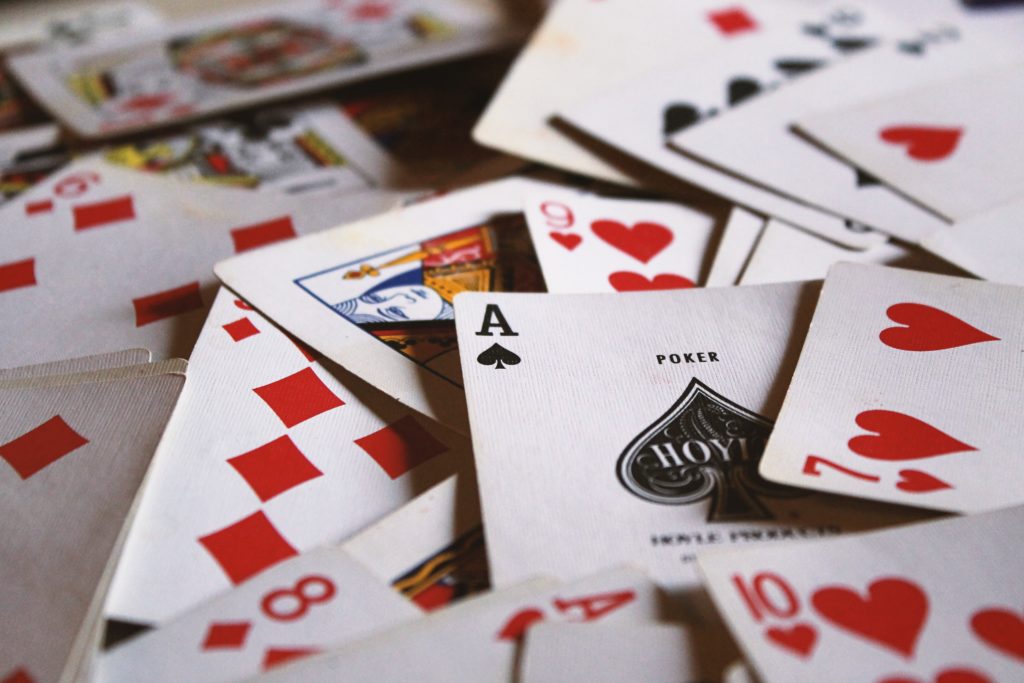
I love solitaire. I find it infinitely soothing. Of course, there’s a line between soothing and numbing, just as there is with any activity. As long as I mindfully use a game or two as a tool rather than being used by it, it’s one of my favorite wait-I-need-to-think-about-this or catch-my-breath techniques.
Photo by Jack Hamilton on Unsplash
The thing about solitaire, whether we play the old-fashioned way with a deck of cards, or online, is each game is different because we shuffle the cards.
We shuffle the cards.
We make choices as we play, so we have some control, but the shuffle is random. Always the same cards, but in different positions every time.
Sometimes we win. Sometimes the cards don’t fall right, or we make mistakes, or both, and we lose.
One of the unexpected results of working with holistic decision-making is it’s forcing me to reshuffle my cards.
Each of my relationships is a card. My job-for-a-paycheck is one, and exercise, and sleeping, and eating. My Be Still Now time is a card. All the ordinary household tasks and activities of daily living have a card. My time is a card, and my energy another. Each piece of my life can be represented by a card.
When I don’t shuffle the deck, I keep laying out the cards in the same old way, in the same old order, and experiencing the same old frustrations and challenges.
Photo by frank mckenna on Unsplash
Holistic decision-making demands a fresh look at what I’m trying to manage and why, as well as an assessment of my personal deck of cards, including priorities, resources, and sustainability. In looking at my life from an unaccustomed vantage point, through the filter of Allan Savory’s model, I see previously unconscious choices and patterns that are not in line with my current intentions.
The cards haven’t quite fallen right, or I’ve made mistakes, or both. My deck is too large and I need to discard, or too small and I need to add some cards. I’ve dealt less important cards on top of essential ones.
So I’m reshuffling my cards and exploring new layouts.
I can’t do everything. I want to. I think I should. I can’t.
Everything and everyone can’t be a priority. Some of my time and energy investments have provided little or no return. In some ways my life hasn’t been reflecting the truth of my heart.
So I’m reshuffling my cards.
Photo by Geetanjal Khanna on Unsplash
I could refuse to reshuffle. Eventually, life will force a reshuffle, maybe in painful and unexpected ways. I could wait for that. On the other hand, I can face my fears, be willing to cut my losses, tell the truth (at least to myself), and let go of what’s no longer serving me.
I choose to reshuffle.
Not enough time/space/energy for what’s really important? Exhausted and overwhelmed?
This week I’m moving on with a holistic business writing plan, based on Allan Savory’s Holistic Management. See the first posts here and here.
Photo by Bryan Minear on Unsplash
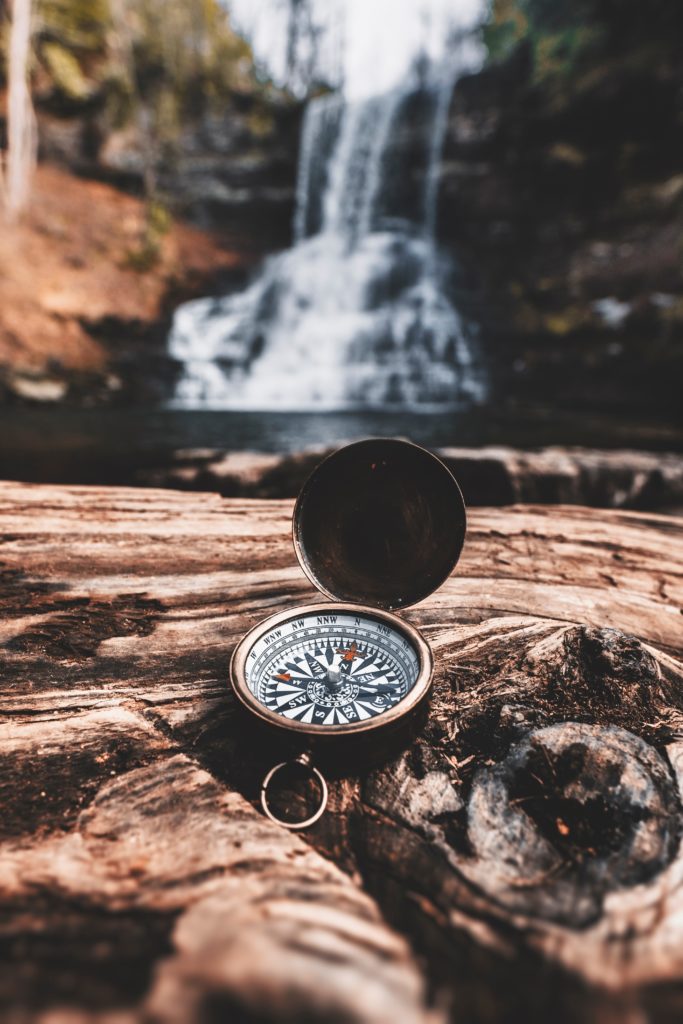
Whatever our situation, if we want to change it, we need a map from the place we are now to where we want to be at some future point in time. What this means is we have to move beyond our unhappiness with the way things are now and think about how we’d like them to become.
This point in the process requires a further commitment. We’ve all spent time spinning our wheels and feeling stuck. When I do that, I’m sucking the juice out of my grievances and resentments instead of letting go of the rind and moving forward. Eventually, I get bored with myself, stop focusing on the fact that I don’t like how my life is working, and think about what would work better.
It seems easy, but getting unstuck requires more effort and courage than staying stuck. Stuck is familiar. Getting unstuck means … who knows? Maybe we’ll fail. Maybe things will be required of us we don’t think we can deliver. Maybe we’ll wind up in an even deeper, muddier, icier ditch than we’re in now. Maybe we resist dreaming (my hand is raised). Maybe we’re quite sure we were born to be stuck, and we’ll betray our family or tribe if we dare to do better than they told us we could.
I have all kinds of reasons for staying stuck. Some I’m conscious of, and some I probably haven’t identified yet. They’re still lurking under the bed somewhere.
Photo by Viktor Forgacs on Unsplash
We might decide we don’t want to change things, after all, at least not using this model. It’s too much work. It’s too overwhelming. We can’t see the point in all these “holistic” complications. Taking on life in neat little reductionistic pieces is a lot easier. We don’t want to think about this stuff or ask ourselves hard questions.
I, however, am determined to continue, so my next step is to think about defining my holistic context with a statement of purpose, what quality of life I want, and how I intend my future resource base to look.
A statement of purpose is just that, one statement exactly describing our goal. Obviously, this requires some forward thinking, as opposed to sulking about our present undesirable circumstances.
(I’m reminded of a saying I once heard: If you’re in hell, don’t stop!)
It’s easy to obsess over what’s not working. We’ve probably been doing it for a long time. Thinking about what would work better is kind of a refreshing change, for me, anyway. Coming up with a one-sentence statement of purpose sounds easy, but that’s deceptive. I began with one word: security. I want to build some security for my future.
Great, but what does that mean, exactly? Security is pretty vague. I thought about it, journaled, made notes and lists, and gradually shaped a statement of purpose that felt true.
With that out of the way, I turned to thinking about what quality of life means to me. It means security, to begin with. This feels like a good sign – harmony between my statement of purpose and the quality of life I want to achieve.
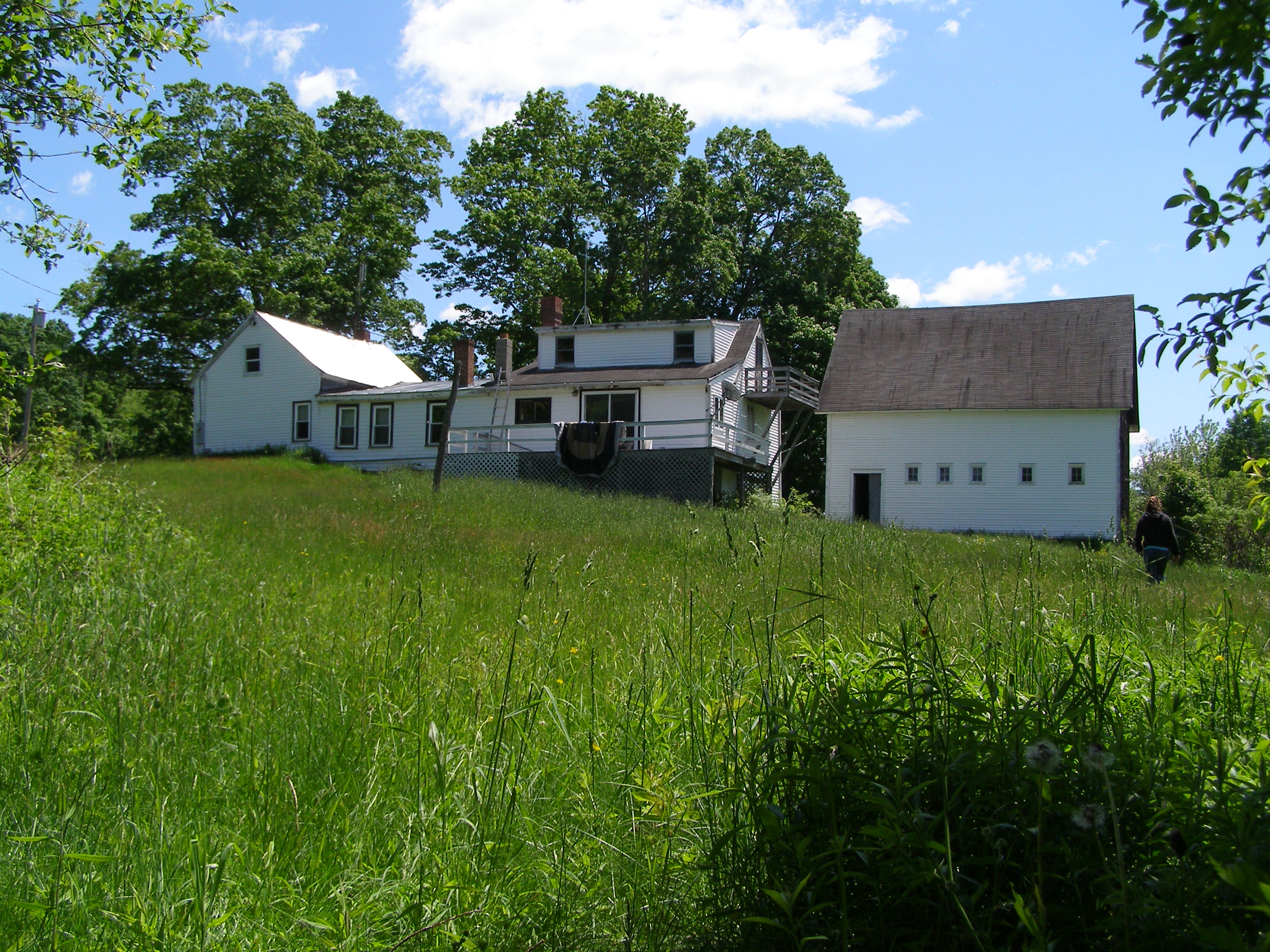
Maine Farmhouse and Barn
At this point, I can mine my grievances for information. I’d like a roof that doesn’t leak. Check. I’d like a house that isn’t slowly tilting on its cracked foundation, mouseless cupboards, a better floorplan, a lot less stuff. Check, check, check and check.
Of course, I want to be able to afford a more secure place to live. Financial security. I also want to shape a sustainable life, which means investing in less gas and oil (heating fuel) dependency and having a more energy-efficient home, among other things.
Quality of life, however, depends on more than our housing situation. This is a holistic plan; we must look at a wider picture than we’re used to. I need healthy relationships for quality of life. I need to be able to make a meaningful (to me) contribution to others. I need to be creative. I want to be physically, emotionally, and mentally healthy. I need privacy and quiet in which to recharge and write.
I made lots of lists, allowing myself to fantasize without worrying about what I deserve, what I can afford, and all the rest. The result is a final list of what quality of life means to me, and what I mean by a sustainable life.
Lastly, and this is one of the unique aspects of this framework, is defining what we want our future resource base to look like. We must consider possible present actions through the filter of the future.
For example, if we want to clear land of unwanted plants (called weeds) in order to make a garden, one option is to douse it with weed killer. That might or might not destroy all the weeds in the short term, but it certainly degrades the soil, which will need intensive rehab and reclamation to become healthy and productive again. We’ve just killed our garden.
I’m not managing a ranch or farm, but thinking about the future still applies to me. If I want a future financial resource base that’s healthy and gives me financial security, taking out a big loan to fix our roof is a foolish choice. Not only does it further destabilize my present inadequate financial resources, it locks me into future debt. Fixing the roof would keep the water out, but the rest of the house is no longer sustainable in the long term. Much better to find another way to achieve and invest in a more sustainable housing situation.
Thinking about how the decisions we make now affect the future is one of the biggest weaknesses in how we plan, individually and as businesses. We’re impulsive, we’re impatient, and we’re more concerned with our present challenges and problems and our bottom line than we are with whatever might happen in the future. We clear cut part of our land to pay bills. We poison our dandelions because the neighbors object to them. We pick up leaves in the fall so our yards look neater. All those actions ripple into the future in destructive and unexpected ways, but we rarely stop to weigh the possible or probable consequences.
We’re in permanent reactive mode rather than being proactive and taking time to plan holistically. We set ourselves up for one unexpected problem after another, one unforeseen consequence after another. Our plans and policies fail, and we’re not sure why and don’t know how to fix them.
Photo by Deniz Altindas on Unsplash
These two first steps, defining the whole we want to manage and defining the holistic context, present and future, force us to clarify and focus not only on the problem, but on the tapestry into which the problem is woven. We are not leaping to a solution for a problem we’ve only glimpsed from the corner of our eye.
In other words, we allow ourselves time to correctly define our problem.
This process also gives us a chance to make observations, identify resources, and gather information, which can redefine or erase perceived problems. If we have the good fortune to be responsible for a piece of land, raking, digging, tilling, removing rotting wood, using herbicides and fertilizers, and limiting diversity of plants and insects are not only unnecessarily expensive, they’re actions that will impoverish and degrade our future resource base.
This is what I learned as I struggled with my health. My problem wasn’t autoimmune disease. My problem was my diet. When I fixed that, the autoimmune symptoms disappeared.
Working to define a holistic context as part of management doesn’t satisfy my desire to find and implement a solution NOW. Even as I resent the time I’m giving this process, though, I’m conscious this is a more complete way to problem solve, a more thoughtful way, a more intelligent way. So I’m holding my horses and taking a step at a time, fascinated, in spite of my impatience, by the elegance of managing my life and goals with this new tool.
So, here’s a question. What does a happy person look like? Out in the world, how do we pick out the happy ones from the sad ones? Do we look happy to other people?
This morning my partner and I sat in the sun at the breakfast table after we finished eating. We eat in front of a big window with a southern exposure. Outside the window is our bird feeder station. I had a mug of hot tea between my palms. Our big brown tabby, Oz, was stretched out on the table in the sun within touching distance, should we care to pay homage to his gleaming coat and superior self. After a luxurious stretch, during which he lengthened by six inches, his paw was in close proximity to my water. It was a coincidence, entirely innocent. Ozzy would never dream of knocking over a drink. He was merely sunbathing.
I was warm and had a stomach full of good food. I felt peaceful and content. Happy. I sat with my eyes closed and my hand on my water glass, soaking up the sun and the silent, relaxed presence of my two companions.
Izzy & Ozzy; Fall, 2020
In those moments I was consciously happy. I was not laughing, talking, taking a selfie, dressed up, made up, or sitting in an elegant, expensive home. One of the panes of glass in that window is broken from snow sliding off the roof. The table we eat at used to be a workshop table and is stained, scarred, and pitted.
One of my best friends, who is also a reader of this blog, remarked a couple of days ago that happy doesn’t look the same on everyone.
How true.
I’ve written about pseudo self before, our propensity to build a careful façade to display to the world. Everything about advertising and many aspects of social media set us up to believe toxic mimics for happiness are the real thing.
Even I, who don’t watch TV and am not on social media, couldn’t have defined happiness before I started reading Authentic Happiness by Martin Seligman, Ph.D., and writing this series. I knew what happiness was supposed to look like, though. It’s bright and colorful. Attractive, animated, healthy-looking, well-groomed people smile and laugh. Every relationship is obviously loving, tender, exciting. Animals and children are adorable. Food, diamonds, cars, and clothing are gorgeous and enticing.
Except the “happiness” displayed on our screens is like the romance displayed on our screens. It’s not real. It’s a seductive, carefully created fantasy, unattainable and unrealistic. It’s for-profit entertainment and manipulation. It’s a laugh track.
The ingredients of happiness are not on a screen. Or in a mirror. Or in a closet, basement, attic, garage, store, or storage unit.
We experience different intensities of feelings, and we differ in our ability and willingness to express those feelings. Someone who feels ecstatic happiness may indeed demonstrate ecstasy, but not necessarily. Some feel deeply and intensely, but do not communicate their experience to onlookers. A person who communicates rapture may not be any happier than one who expresses harmony and relaxation.
On the other hand, and social media teaches us this, some people work very hard on a happy façade but are in truth deeply unhappy.
My own experience of happiness is frequently subtle. Peace and contentment are dove grey, not neon orange.
Are we losing our ability to see and value the subtleties in life, the understated, the quiet, the neutral colors, the silence and spaces between action, stimulation, events and possessions?
Have we forgotten happiness can be found in a few humble, unextraordinary, unrecorded minutes in the sun at a scarred table with loved ones after breakfast?
If we asked the people in our lives about their perception of happiness — their own and ours — what would they say? Is there a gap between our own experience of happiness and the way others perceive us? If so, why? Is the confusion in our expression or their perception? When we long for those we love to be happy, what do we mean?
Happiness is not one size fits all. It doesn’t look the same, sound the same or feel the same for everyone. Before we decide we ourselves or others are unhappy, it’s useful to remember that. Perhaps we’re happier than we realize, even though our lives don’t look like a movie or a popular and carefully created Facebook or Instagram account.
Yellow Boots
Here in Maine we occasionally have long days of rain mixed with snow, especially this time of year. The sky is dark and sodden, pressing all the light out of the day. It’s foggy, icy, cold and wet. I have a pair of rubber-ducky yellow boots I wear on such days. They’re ridiculously bright and cheerful. I wore them into work recently, and one of my coworkers remarked on them. I told him I love them because they make me smile.
He said they made him smile, too. And he did.
My yellow boots give me happiness, and I even get to share it.
I’ve struggled all my life with confusion about the difference between enabling and love. Most of us think of enabling in the context of addiction, and we’re familiar with the idea that helping an addict avoid the consequences of their addiction is not, in the long run, useful.
It’s a pretty clear idea in theory. In practice, however, it’s a whole different story.
Enabling, denying, or allowing destructive patterns of behavior to continue extends far beyond the issue of addiction. Compassionate, loving people who sincerely want to help and support others wind up enabling all kinds of toxic behavior with the best intentions in the world, or completely unconsciously.
Photo by Milada Vigerova on Unsplash
That’s the problem. Enabling can look and feel so much like love. Choosing not to enable can look and feel so much like rejection, selfishness, or even hate.
I’ve spent years of my life enabling toxic behavior in the name of love, duty, and loyalty. I’ve truly believed with enough modeling and patience I could heal the destructive behavior of others. For most of my life I’ve lived with the delusional belief my unconditional love is enough to keep my loved ones happy and healthy.
I only wish I had that much power.
Choosing not to enable or deny is heartbreaking. It’s a choice I’ve made, and I feel daily anguish over it, even as I know in my heart I’m doing the right thing for myself and those I love.
Those of us who are intimately familiar with patterns of addiction and toxic behavior know the unrelenting pressure from well-meaning but clueless onlookers to excuse and/or rescue loved ones from the consequences of their choices.
People who expect or demand to be enabled do everything they can to keep the dynamic alive. Remember those who punish us for our boundaries are the ones who gain the most from their absence. One of the important patterns that helps identify relationships in which enabling is taking place is when we make any kind of excuse for a pattern of destructive behavior. So-and-so is not loved. Nobody has ever understood them (but us). They’ve had various kinds of trauma. The world is against them. Nothing ever works out for them. They’re disenfranchised and alienated. They’re suffering and nobody cares. They have no one to turn to. They can’t afford to get help.
Photo by Ian Espinosa on Unsplash
Solving or covering up someone else’s problems is very different from empowering them. We empower when we teach skills, share resources or give someone tools that support them in solving their own challenges. The difficulty is someone stuck in a chronic pattern of destructive behavior doesn’t always want this kind of power. Resources, tools and skills are of no use if we aren’t prepared to take responsibility for our troubles, and it’s so much easier and more comfortable to deny or blame someone or something else for our destructive patterns and their consequences.
Unfortunately, the emotional dynamics of enabling are hard to fully understand until and unless we’ve experienced them for ourselves. I want to protect loved ones from going through the pain and damage that occurs to relationships when toxic behavior is present. I never want them to feel as torn apart as I have. I want them to use the resources and tools I can offer and learn from my mistakes.
Again, I only wish I had that much power.
As a lifelong caregiver, I’ve abdicated rescuing myself in favor of rescuing others. This is the shadow side of caregiving. Enabling others, entering into an unspoken agreement to work harder on their problems and lives than they do, is a dead end that keeps us nicely distracted from coming to terms with our own challenges. Even worse are relationships based on an unwritten agreement to mutually enable one another’s dysfunction.
Another part of why we choose to enable can be to help soothe our own anxiety. We don’t want to be in conflict with those we love. We don’t want to lose relationships dear to us. We don’t want to deal with a lot of trauma and drama. It’s easier and quicker just to write another check to help out one more time because our family member or friend can’t stay employed due to their substance abuse. It’s easier to manage their lives ourselves than watch them muddle along without clean socks and food in the fridge or listen to their constant complaining.
You’re an enabler if you’re asking why they keep doing it. Ask instead why you keep allowing it. As long as you allow it, they’ll probably do it. They’ve got no motivation to do anything else.
Enabling is painful, stressful, and will burn us out. It might take a long time, but eventually it will eat us up and drain us dry. It may feel like love, or duty, or loyalty, but it isn’t. It’s destructive for everyone involved.
For me, one of the most insidious aspects of enabling is keeping secrets. I’m not talking about protecting personal privacy or keeping confidences. I mean pretending not to notice that Brent is high again on the job, or looking the other way when a loved one drives home drunk from the bar. The biggest reasons I’ve kept secrets are shame (I must be a terrible person if someone I’m closely connected to is in such trouble), loyalty, and my effort to protect others.
You’d think I’d learn.
Keeping secrets implies tolerance, and it allows destructive patterns to continue and worsen. Every single time we pretend not to see, cover up or make excuses, we’re making the inevitable crash worse for everyone involved. Another reason I’ve kept secrets is for fear of no one believing me, or being told I’m overreacting (which masks their own denial). It’s easier to just avoid the whole issue and say nothing. Then everyone is more comfortable. Everyone except me. All that unsaid feeling and horror becomes a stone I carry in my heart, mute, but agonizing.
Photo by yatharth roy vibhakar on Unsplash
As counterintuitive and inadequate as it seems, the best thing we can do for loved ones struggling with toxic patterns of behavior, including addiction, is care for ourselves and stay firmly rooted in our own lives. If our offers of skills, tools and/or resources are rejected, we have no further power in the lives of others. We can only meet our own needs and solve our own problems, even if it means we must walk away from relationships in order to save ourselves.
Not everyone will understand or support us in refusing to enable, particularly the person we’ve been enabling. However, making the choice to live another day in our own lives means we can continue to be available to appropriately love and support someone when they’re ready for it, and at the very least provides a model of empowerment and self-responsibility.
Enabling is not love. It may seem like the easiest choice, but love requires much more than easy choices.
Websites store cookies to enhance functionality and personalise your experience. You can manage your preferences, but blocking some cookies may impact site performance and services.
Essential cookies enable basic functions and are necessary for the proper function of the website.
Name
Description
Duration
Cookie Preferences
This cookie is used to store the user's cookie consent preferences.
30 days
These cookies are needed for adding comments on this website.
Name
Description
Duration
comment_author
Used to track the user across multiple sessions.
Session
comment_author_email
Used to track the user across multiple sessions.
Session
comment_author_url
Used to track the user across multiple sessions.
Session
Statistics cookies collect information anonymously. This information helps us understand how visitors use our website.
Google Analytics is a powerful tool that tracks and analyzes website traffic for informed marketing decisions.
ID used to identify users for 24 hours after last activity
24 hours
_gat
Used to monitor number of Google Analytics server requests when using Google Tag Manager
1 minute
_gac_
Contains information related to marketing campaigns of the user. These are shared with Google AdWords / Google Ads when the Google Ads and Google Analytics accounts are linked together.
90 days
__utma
ID used to identify users and sessions
2 years after last activity
__utmt
Used to monitor number of Google Analytics server requests
10 minutes
__utmb
Used to distinguish new sessions and visits. This cookie is set when the GA.js javascript library is loaded and there is no existing __utmb cookie. The cookie is updated every time data is sent to the Google Analytics server.
30 minutes after last activity
__utmc
Used only with old Urchin versions of Google Analytics and not with GA.js. Was used to distinguish between new sessions and visits at the end of a session.
End of session (browser)
__utmz
Contains information about the traffic source or campaign that directed user to the website. The cookie is set when the GA.js javascript is loaded and updated when data is sent to the Google Anaytics server
6 months after last activity
__utmv
Contains custom information set by the web developer via the _setCustomVar method in Google Analytics. This cookie is updated every time new data is sent to the Google Analytics server.
2 years after last activity
__utmx
Used to determine whether a user is included in an A / B or Multivariate test.
18 months
_ga
ID used to identify users
2 years
_gali
Used by Google Analytics to determine which links on a page are being clicked