by Jenny Rose | Nov 1, 2018 | Connection & Community, Emotional Intelligence
What does it mean to make a home? I wonder if it means something different to everyone, or if we have a common vision.
All my adult life homemaking has been a top priority, not so much for myself, but for others. Creating home has been my labor of love and one of my greatest contributions to relationship. Few things give me as much satisfaction as establishing a place of peace, beauty, security and clean, well-ordered efficiency in which to relax, play, share life and be intimate. In the past I didn’t count the cost in emotional labor, physical labor, time or energy. I didn’t expect reciprocity. I only wanted to be allowed to make the offering of a home.
It never occurred to me the enormous gift of creating a home would be largely invisible and mostly unappreciated.
My disillusionment was gradual. I realized one day cleaning the bathroom meant nothing to those I was sharing it with. It gave me a lot of satisfaction, but was rarely even noticed by others. That was the first time I grasped I wasn’t going to get thanked or validated for cleaning. If I wanted to clean, I needed to make sure I was doing it for myself and have no expectations that anyone else would pay attention.
I was on my own with the cleaning thing.
I was also on my own in evaluating a new home for ease of maintenance and housekeeping as well as suitability for pets and kids. I was the one who thought about clotheslines and their proximity to laundry facilities; flooring in entryways, bathrooms and kitchens; and outside and inside wood storage for the woodstove. I was the one who thought about how to deal with trash and recycling and where to put the litter box and store the dog food.
Not every woman is a natural homemaker. I think many perform as such because nobody else will and the culture expects it of them. I’ve always loved that kind of work, even knowing it’s unpaid and undervalued in the larger world. I assumed, in my innocence, that homemaking was an investment in a healthy and happy family, and that was the only payback I needed.
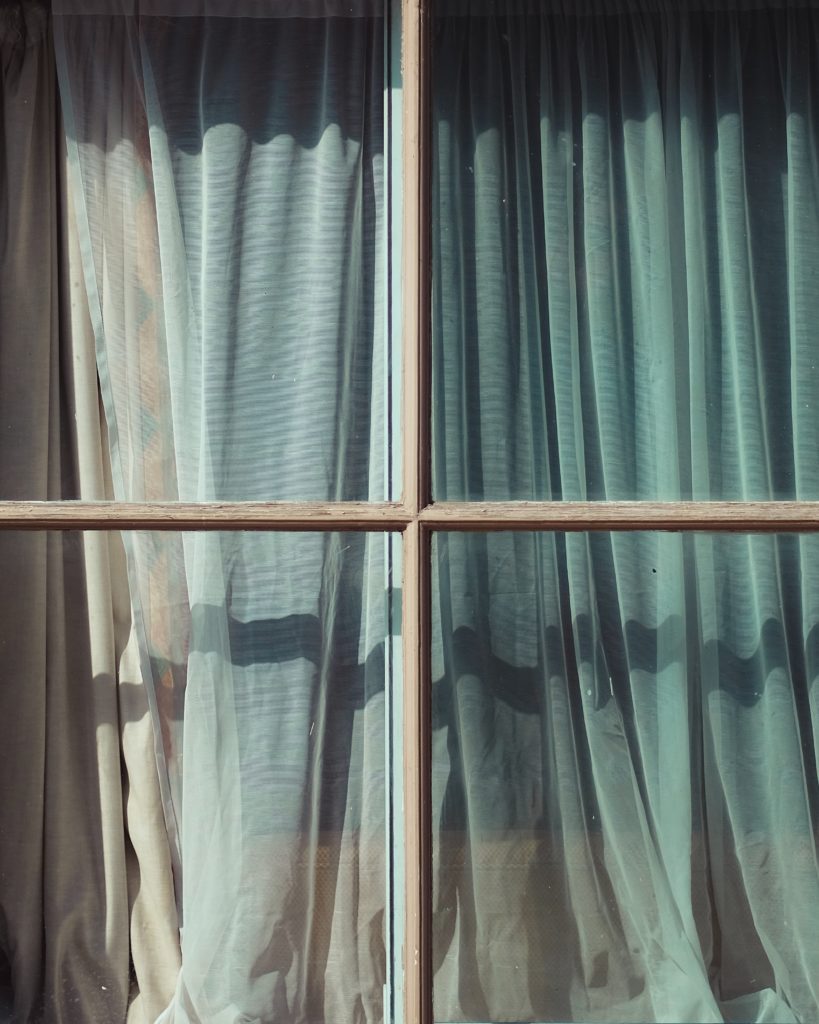
Photo by Mar Newhall on Unsplash
The thing about being young is we can’t imagine how decades of unappreciated and invisible work and support grind us down and polish a thick shell of cynicism. It turns out I did want some degree of appreciation and acknowledgement from my family for making a home. I couldn’t pull off the perfect wife/mother/housekeeping role with a clean white apron and endlessly abundant nurture, energy, patience, organization and efficiency with no return. I especially couldn’t do it while working outside the home, going to school and single parenting.
Fulfilling cultural expectations turned out not to be very fulfilling, after all.
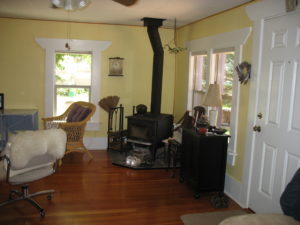 Eventually I found myself alone. Children grown and gone, a file folder labeled ‘Divorce’, and freedom to make a home solely for myself at last. Complete and total control. Bliss! I had a wonderful time giving myself exactly the kind of home I’d always dreamed of. All my efforts were on my own behalf. I didn’t care what anyone else thought and I didn’t need anyone to appreciate the home I made for myself. Housekeeping was uncomplicated, easy and filled with joy.
I concluded homemaking wasn’t, after all, a gift, a talent or an adequate offering. It didn’t translate as a declaration of love, support and commitment. My loved ones didn’t value my contribution. It was a meaningless use of my time and energy and put me in the vulnerable position of looking for validation and appreciation from others.
I felt like a fool, and it made me bitter. I promised myself never again would I try to make a home for anyone but myself.
I never imagined, even as a teenager, anyone would make a home for me. I wasn’t that naïve!

Photo by Vanessa von Wieding on Unsplash
Here in the tarnished and somber season of late fall and lengthening nights an amazing thing has happened.
I noticed it when I began coming home in the dark after work. My partner leaves lights on for me so I can easily negotiate backing into the driveway and navigate the steep cellar stairs. When I open the door at the top of the steps and enter the kitchen, the dishes are done. The house is warm and the wood stove glowing in the living room. The cat is fed. The kitchen smells of beef stew, chicken soup or baking.
Home. My home, but this time not created solely by me for someone else. This home is a collaboration, and it’s incomplete without me. I’m not invisible. My presence has worth. After all these years, all the meals and baking, all the housework and candles and welcoming lights in windows, the clean clothes, the fresh beds, the cared-for animals, the countless cords of wood for various stoves, all that invisible and unnoticed love, I’m reaping a late harvest.
Someone makes a home for me now, and waits for me to return, not to maintain it but to be part of it.
At the end of my workday, I’m actually at the end of my workday. I don’t have to unload the car, fumble my way into a dark house, turn on lights, get the woodstove going, make a meal, take care of pets and/or kids and/or adults, shut curtains and lock doors. My partner doesn’t meet me at the door with roses, wine and sweet talk. He gives me far more enduring and authentic gifts of a place and relationship to come home to. I discover those offerings are every bit as worthy as I imagined when I was a newly-married 21-year-old. All my work over the years was real. It was valuable. It was loving and important. It was a beautiful contribution. The fact that no one noticed or appreciated the home I made for them did not, after all, define the value of my intention.
I suppose it’s just one of life’s little ironies that now, at this late date when I’ve completely given up expectations and fantasies that others will perceive homemaking as an expression of love worthy of acknowledgement, someone in my life finally gives back to me what I’ve given in such abundance to others.
It’s a late harvest, but well worth the wait.
Photo by Craig Whitehead on Unsplash
All content on this site ©2018
Jennifer Rose
except where otherwise noted
by Jenny Rose | Oct 25, 2018 | A Flourishing Woman, Spirit
The last time my job necessitated driving in the dark, I was a young married woman. I worked afternoons and evenings in a hospital in a large city and drove home on well-lit highways and city streets after the chaos of evening rush hour. I never left the hospital after dark without Security, who saw me safely to my car.

Photo by Peter Forster on Unsplash
As a child I was terrified of the dark. I was a fearful child in general and the dark was the culmination of every nameless horror, imagined and real. Somewhere in the years of early motherhood when I became a single parent my fear of the dark vanished and it became my friend — a place of peace, rest and privacy. It shielded me from critical eyes and harsh words.
If no one could see me or find me, they wouldn’t discover what a failure I was.
After some years of friendship the dark became my lover, and I adorned it with candlelight, welcomed starlight onto my pillow and delighted in night walks. I feel strangely at one with the pale, musky blur of the skunk; the large clumsy rustling and noisy chewing of the bear eating windfall apples and the kingly owls conversing solemnly overhead. The warmly-lit world inside where people talk, laugh, and live their lives is another universe and I a wild, aloof creature, silent and unseen under the grandeur of the night sky.

Photo by Jeremy Thomas on Unsplash
Miracles happen in the dark.
Now I’m driving in the dark again, slipping through the folds and creases of the hills, passing over the river and gliding under the half-naked trees. The small city’s lights glow dimly, behind me if I’m going home after closing the pool, ahead of me if I’m coming in early to open it. The pavement undulates and curves, unfolding under my headlights. Lit windows give me intimate glimpses of people moving around in kitchens and living rooms, sipping from a cup, glancing at a TV screen. Other drivers are out, too, strung loosely along the road. Oncoming headlights force my gaze to the shoulder, scanning for hapless porcupines, impulsive deer or careless pedestrians.
Last night, an almost perfect Hunter’s Moon rose over a stubbled field where corn grew a few weeks ago, lighting a black and white vista of fields and scattered trees. It hung low, gleaming through bare branches, silvering my right shoulder as it saw me home. As I backed into the driveway to park under the friendly light at the apex of the barn roof, moonlight flooded in my windshield as though embracing me before I opened the cellar door and stepped inside the house, no longer half fey and wild but my usual civilized and responsible self.
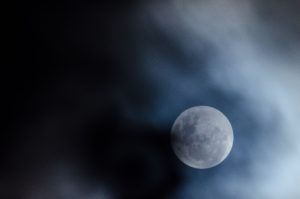
Photo by Linda Xu on Unsplash
This morning, snow and leaves whirled in my headlights and my tires hissed on the wet road. The trees hunched, dark indistinct shapes, and the river was invisible as I crossed the bridge. I opened the car window for the pleasure of the wet snowflakes on my face, the damp autumn smell and the cold lash of dark air on my cheeks. I might have been the only living human being in the world. For a moment I wished it was so. I might have been going anywhere or nowhere through the darkness, the snow and the leaves. It seemed perfectly possible to stop the car and abandon it, to fling myself into the arms of the landscape and disappear into wood, stone, hair and bone.
Yet ahead lay the swimming pool, waiting in the humid darkness of its building for lights to discover it, for people to measure and balance its chemicals, for computer screens to come to life, for the daily schedule to be printed and the showers to be run to prime the hot water. In the town ahead were therapy patients, members of the early water aerobics class and crack-of-dawn lap swimmers. I drive through the dark for them.
So I shook off the wistful feeling that there are other ways to live, deeper, older and more magical, shut the car window and drove on, through the waking town under the dim dawn sky, heavy with downy snow, and stepped into the humid warmth and sound of the swimming pool, blue and white and brightly lit. The darkness and I parted for a time, but it has a piece of me I can give to no one and nothing else. The dark is a lover unlike any other.
I will always return to it.

Photo by Miranda Wipperfurth on Unsplash
All content on this site ©2018
Jennifer Rose
except where otherwise noted
by Jenny Rose | Oct 18, 2018 | Connection & Community, Emotional Intelligence, Shadows
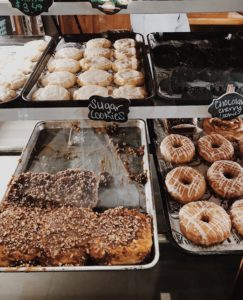 I first heard about toxic mimics as I learned emotional intelligence. The term comes from radical environmentalist author and speaker Derrick Jensen. A toxic mimic is a destructive action, behavior or thing pretending to fill a primary human need. Rape is a toxic mimic for healthy, consensual sex. Sugar is a toxic mimic for food. Addiction is a toxic mimic for managing feelings. A job might be a toxic mimic for contribution. Pseudo self is a toxic mimic for authenticity. Some would argue that social media is a toxic mimic for connection.
I believe our modern culture here in the United States, at this moment, rests on an edifice of toxic mimics. People who create, design and sell toxic mimics have a simple agenda: Profit and power. We, the consumers and choice makers, the common people, if you will, happily hand over our power in exchange for the shiny; the new and improved; the seductive promise of success, wealth and love; and the popular. Toxic mimics give us the relief of distraction, instant gratification and the promise of an identity. They help us regulate our mood and feelings.
Toxic mimics have such power over us now that a majority of us (maybe) have voluntarily given management of our country to toxic mimics for human beings.

Photo by Patrick Brinksma on Unsplash
What are the strongest human motivators? Fear? Love? Hate? I could also make a case for denial, but that might be too inextricably bound up with fear to separate. Toxic mimics are deliberately designed and marketed to appeal to the things that drive us at our deepest levels. They are engineered to target our greatest vulnerabilities. They seek to hook us, permanently, helplessly and hopelessly, and they’re so powerful they kill many, many people. Witness the power of nicotine, for example. Toxic mimics promise to fill our lives with everything we want and provide us an identity, but when we employ them we feel emptier than ever. Because we are conditioned to believe buying a product or service will make us feel better, we buy as much as we can as fast as we can, which necessitates a continuous stream of money, a resource that has become one of the most powerful Gods we’ve ever worshipped. Money, one might say, is a toxic mimic for God, or Gods, or whatever word you like to use to communicate the divine.
The deepest irony in this situation is we are the ones who perpetuate the power of toxic mimics. We willfully and intentionally participate. We create demand and gobble up supply. We continue to support advertising, algorithms and the handful of powerful companies who monitor our lives and mine us for information in order to sell us yet more toxic mimics. We applaud and admire what we call “progress”, “growth” and a “healthy economy.”

Photo by Ev on Unsplash
A healthy economy. Healthy for who, I wonder. Healthy for the global system? Healthy for those of us living paycheck to paycheck? Healthy for the children who are victims (yes, I mean victims) of anti-vaxxers? Healthy for people who have no financial resource and thus cannot participate in the latest technology? In a country filled with disbonded children and broken families; rising antibiotic-resistant organisms, including STDs; rising illnesses like typhus which are perfectly preventable with vaccination; astronomical housing costs forcing employed professionals to live out of their cars; broken healthcare and public education systems and a population of obese, metabolically disordered, pharma-dependent, addicted, lonely, suicidal people, we have a so-called healthy economy.
Oh, good. I’m so proud to be an American.
It’s a lie. There’s nothing healthy about what’s happening now, but we’re so stupefied, so numbed, so habituated, that we no longer recognize lies when we hear them. We can’t afford to, because to recognize one means to recognize others, and if the whole thing is based on lies, we’re too afraid to know it. Much easier to cash the insurance check and rebuild, for the third or fourth time, in the same place than take responsibility for facing the effects, long predicted, of climate change.
Of course, insurance companies are not going to continue to subsidize climate change because it destroys their profits, so that might catch our attention — eventually.
 In the meantime, we bend our heads over our handheld, shiny, talking, distracting and instantly gratifying techno-screens or settle down in front of our larger screens and surround sound systems and let the advertising and brainwashing wash over us. We call this life. Isn’t it grand? Isn’t it beautiful? Aren’t you happy?
A toxic mimic is a promise that never delivers. Sometimes we do it to ourselves. Sometimes we allow others to convince us of the necessity, morality and rightness of our toxic mimics. We’re told they will make us safe. They will make us successful. They will make us healthy and popular, beautiful and beloved. We’re told we have a perfect right to have what we want. We long to believe it. We buy, and then we don’t feel successful or beautiful, so we buy some more. We start giving away our power. We begin to hide our unhappiness. After all, toxic mimics are working for everybody else, aren’t they? Everyone on our favorite social media platform is doing just fine. We conclude there’s something wrong, broken and irredeemably ugly about us. It’s too shameful to admit or talk about. We take even more smiling selfies and post them.
Meanwhile, we elevate and empower not the humanitarians, the natural leaders, the ecologists, the visionary scientists, the emotionally intelligent, the critical thinkers and those who understand complexity and systems, but those who have wealth. Money, that amoral symbol made of paper and metal, is the God we’ve agreed is the most powerful and the most admirable. It’s not so, of course, but we make it so with our belief and our participation. We are driven by our fear of losing economically. We’re evidently prepared to follow the promise of economic power straight to Hell.
Fear is the most powerful hallmark of a toxic mimic. Fear of losing power. Fear of being wrong. Fear of consequences, justice and having to take responsibility. Fear of experiencing our feelings. Fear makes our lives, intellect and hearts smaller, not larger. Toxic mimics don’t meet our needs. They momentarily satisfy, perhaps, our cravings and addictions, our need for stimulation and gratification and our desire for distraction. Ultimately, however, toxic mimics dehumanize us, stop our critical thinking, retard our judgement, destroy our health, disable us from healthy connections and encourage us to hide our authenticity. Toxic mimics feed our rigidity, our ideology, our fear and paranoia, and actively attack our physical and mental health.
Are your needs being met? If you don’t know what your needs are, here’s a needs inventory to look at.
If that question made you cry, or your heart shouted “NO!”, make a list of all your makeup, your clothes, your car(s), your tech, your toys and the other stuff you recognize as part of your identity. Don’t forget your accounts, subscriptions and financial assets.
All that, and your needs are not being met?
Huh. Interesting, isn’t it?
All content on this site ©2018
Jennifer Rose
except where otherwise noted
by Jenny Rose | Oct 11, 2018 | Contribution, Emotional Intelligence
When I went through emotional intelligence training, I learned about three basic human needs: Contribution, connection and authenticity. If these primary needs are not adequately met, our lives don’t work well. I’ve written about my wary relationship with my own needs before. As I explore emotional intelligence, I’m struck by the simplicity of the three basic needs, the paradoxical complexity of each one, and the unique ways, often unconsciously, we each approach getting these needs met. I also notice the way these needs are inextricably woven into each other.
In these first couple of weeks of a new job, it’s been necessary to build a new schedule, which felt overwhelming until I remembered the three basic needs. I’m a creature of habit and I quickly stop assessing how I spend my time once I have a workable schedule. I engage with activities I’m accustomed to engage with and that’s that.

Photo by John Salvino on Unsplash
When I trained as a medical transcriptionist and started working from home, I was motivated by the necessity of earning a living and managing my then-teenage sons as a single mother. Medical transcription was a perfect solution. Gradually, without me really noticing, I allowed the job to become a prison. The boys grew up and moved out. I was promoted twice, but never earned a comfortable living. The job came with intense pressure that triggered my stress and perfectionism. It was isolating. It was difficult physically and keyboarding began to give me overuse injury.
I depended on my inadequate paycheck. It was the only income I had.
I was stuck.
I was aware during the last couple of years I worked as a transcriptionist that the job was no longer meeting any of my needs, aside from the paycheck, but a paycheck is kind of essential. In fact, in my mind it was the essential priority in my life, and I labored away in spite of migraine headaches and increasing pain in my upper extremities and shoulders until the day came when I could no longer keyboard without sobbing and I developed a frozen shoulder. I couldn’t take off my shirt without feeling faint from pain.

Photo by freddie marriage on Unsplash
The hardest thing about that job was not the poor pay, but feeling my contribution didn’t matter. The medical professionals were dictating into a piece of equipment and rarely, if ever, considered the human being trying to transcribe their dictation, unless it was to complain and criticize errors. The company I worked for is a huge global conglomerate on the cutting edge of speech recognition technology and a whole host of other businesses. I was nameless and faceless. All training and in-services were done remotely. Management had a high turnover. Changes happened without notice, like getting transferred to a new book of business. Overtime, when needed, was mandatory. Transcriptionists were expected to work 24/7 and weekend shifts were required.
Many people can type quickly and accurately. It’s mostly a matter of practice. I was a pair of hands and ears racing the clock, along with hundreds of others like me, both here and overseas. The job wanted no authenticity from me or anyone else. It’s a job for robots.

Photo by Edu Lauton on Unsplash
I am not a robot.
I’ve been seeking a new job because I want to start earning income again, but this time I promised myself I wouldn’t take a job that didn’t feel meaningful to me, and I knew exactly what I meant by meaningful. A meaningful job is not about the paycheck. Yes, obviously, I need money in today’s world. Not a lot, but some. Enough to justify my time, travel and commitment. However, the work I do in exchange for a paycheck of any size is only meaningful if it makes a positive difference in the lives of others. I don’t want to be paid for being a robot impersonator. I want to be paid because I contribute something wanted or needed out of my own authenticity.
Working as a member of a team in order to keep people safe, assist patients in rehabilitation, and teaching swimming feels meaningful and allows me to work from the heart. In my little corner of the world I can be part of something healthy and healing for myself and others.
As an ex-people-pleaser, I endeavored for most of my life to make a positive difference in the lives of my family and immediate connections. I worked as hard as I could at it, and making a meaningful contribution was my top priority. In spite of all my efforts, I failed. In fact, it seemed the harder I tried the more obnoxious I was to those around me. Naturally, I concluded that I was nothing. I had nothing to offer that anyone wanted. It would be better for everyone if I disappeared and relieved them of the burden of my presence.
Two important things I’ve learned from those years are people pleasing doesn’t work, and some people are determined never to be pleased. I learned to define for myself what a “good” job is. I began to seek paid work I enjoyed as much as volunteer work and kept my focus on the feeling of making a positive contribution.

Photo by Cristian Newman on Unsplash
I see and hear a lot of discussion about the increasing problems of loneliness and depression, and I suspect many of those affected feel unable to make a meaningful, authentic contribution in their families and/or communities. Somewhere along the way we decided a paycheck is more important than the quality of our contribution, but ultimately, as human beings, no paycheck is an adequate substitute for feeling our contribution matters. Our culture does not necessarily reward authentic contribution. We like our infallible robots and good soldiers, those who do and say exactly what they’re programmed to do and say. Loose cannons like me are a problem nobody wants in the classroom or the boardroom.
I’m sorry I believed for so long I had nothing to contribute. It made me miserable and was the root of many destructive choices. Now I believe we all have a great deal to offer, and someone out there needs exactly what we can contribute. What would the world be like if every man, woman and child truly felt they had something unique to give that made a positive difference in just one other life? What if contributing and receiving contributions were not tied to money? What if we all woke up in the morning knowing the world is a better place because of our presence?
What would it take to make that a reality for everyone?
I’m fortunate to have found a way to make an authentic, meaningful contribution combined with a paycheck. Not everyone is able to do that. But everyone is able to do something. Plant a tree. Walk dogs living in animal shelters. Visit hospital patients. Assist in schools, day care facilities or retirement homes. Volunteer to answer a hotline. Buy a cup of coffee for a homeless person. Teach literacy.
Someone out there needs what we can give. Someone is waiting for us. All we have to do is go find them.
Photo by Chris Ensey on Unsplash
All content on this site ©2018
Jennifer Rose
except where otherwise noted
by Jenny Rose | Oct 4, 2018 | A Flourishing Woman, The Journey

Photo by Aaron Burden on Unsplash
It’s autumn in central Maine, and the leaves are falling. Sometimes they flutter in the arms of a sly little wind under a crisp blue sky, skittering across the road in front of the car, turning me into a more cautious driver than usual because they look so much like a squirrel or chipmunk. Other days they’re torn from the trees by rain and heavy, tropical air under low grey clouds, misty at their trailing hems.
So many leaves in so many shades of copper, bronze, orange, red and yellow. A sodden chaos of leaves underfoot in the rain and an airy whirlwind of them on dry, bright days. It’s as though the trees have been holding their breath all summer and now they relax and exhale, releasing the tension of production, growth and photosynthesis, easing themselves from yesterday’s clothing and burdens, shaking and stretching in naked freedom and settling down with a sleepy grunt for winter.
Bits of the world, leaves, songs
scatter in painted light.
The days
break. –Carol Frost
The past hours, days, weeks and months litter the ground, trodden, damp and fading. Their stories, whispered to the wind, of nest and hollow; bird, insect and animal; stars and rain and dew and the secret underground life of root, soil and mycelium, are lost. From their bodies new stories for the next cycle and generation of life will green and grow.
Photo by Vanessa von Wieding on Unsplash
I envy the trees their grace and patience. They know how to let go. They turn change into glory. They understand surrender to the fading light and changing tilt of the planet.
I, on the other hand, am not so graceful. Starting a part-time job, even doing something I love and am familiar with, has me wild-eyed and overwhelmed. My carefully constructed and comfortable routine is in pieces. I can’t turn the calendar page and fill in my accustomed schedule. Horrors! Now the days ahead are as naked as the bared trees, allowing me time to reconsider the true shape of things. I think of periods of change as bone time. I can’t see the bones of my life when the calendar is predictable and lists guide me through the day. Habit and routine are powerful, and after a time I stop noticing if I’m staying in balance, managing my time and taking care of my needs well. It’s only in these periods when all my schedules, lists and calendar pages are so many leaves of paper tossed onto the floor that I see the bones again.
To inventory our bones is to let go of possessions, distractions, noise, activity, thoughts, beliefs, habits and behaviors and ask ourselves what our true shape is. What are the deepest pieces of our body and soul? What is necessary in order to express our highest purpose? What destroys our time, energy and joy, and what liberates them?
Can we let go of what’s no longer useful? Can we give it to the wind, to the air, to the frost and rain and snow? Can we give it willingly, freely, with grace and beauty?
Yes, I can let things go.
But grace and beauty are noticeably absent just now!
Still, the trees in this season comfort me and show me the way. They’re not worried about next month, next week or tomorrow. They don’t seem to mind change. They release yesterday’s leaves with careless abandon and show their bones proudly to the sky. They know who they are and they take what they need without apology or shame. They rest in the security of the endlessly turning cycles and seasons.
I don’t think I’ll ever achieve their wisdom or serenity.
On the other hand, I know something about my own bones because life gives most of us more than one chance to begin again, and I’ve had lots of practice. I know shortly I’ll be back in a steady, effective, predictable routine that accommodates my new job as well as my current needs and priorities.
wind tugs leaves away
my hat begs to follow
guide me wind the way
you’re lost i’ll be lost — Kim Robert Stafford
Life is change, and change is life. Old conditions give way to new conditions, and the process is always happening, no matter how stuck or helpless we feel. Chaos comes, picks us up by the scruff of the neck, gives us a good shake, and we find ourselves flung into something new, which will in turn gradually fade away.
Leaves fall. Light wanes. We are lost, torn away from what’s familiar, and then the way ahead opens before us and we’re found again.
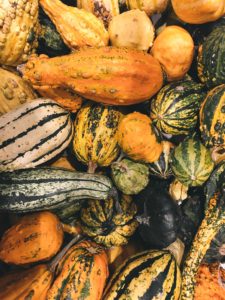
Photo by Brigitte Tohm on Unsplash
All content on this site ©2018
Jennifer Rose
except where otherwise noted
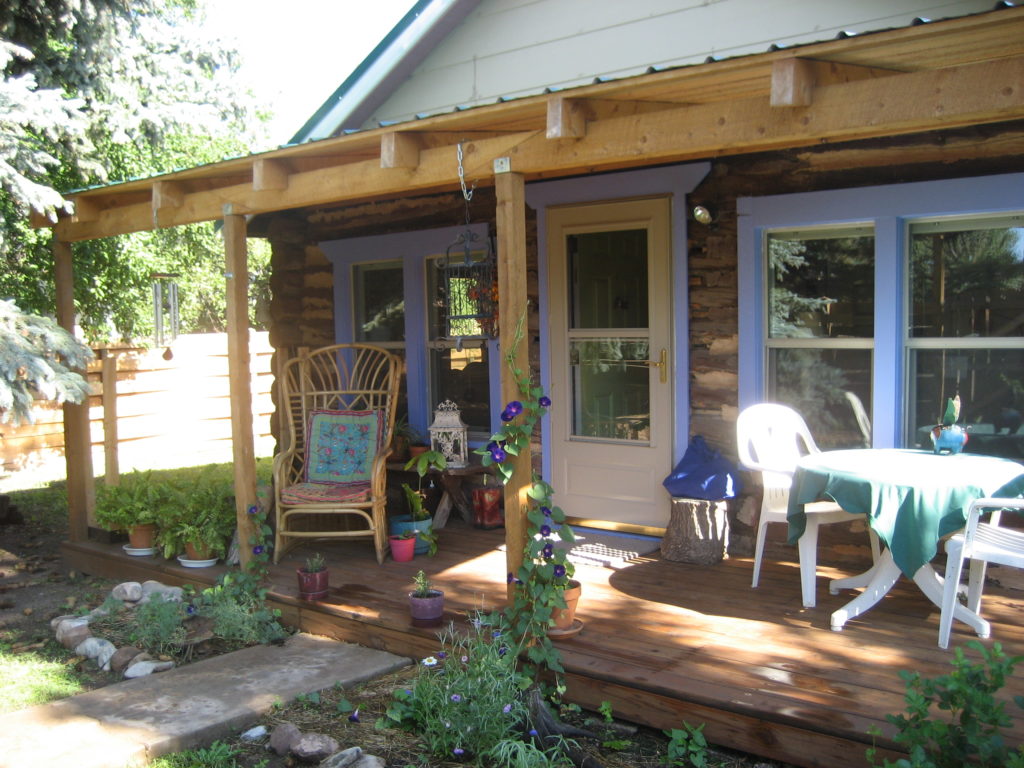
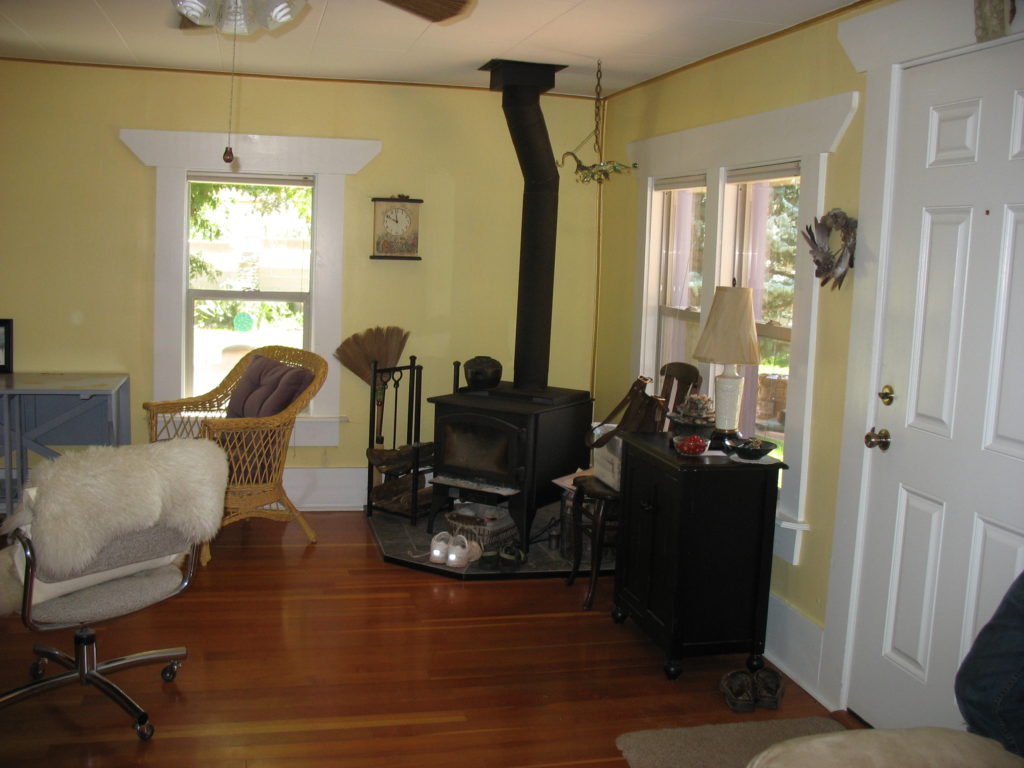 Eventually I found myself alone. Children grown and gone, a file folder labeled ‘Divorce’, and freedom to make a home solely for myself at last. Complete and total control. Bliss! I had a wonderful time giving myself exactly the kind of home I’d always dreamed of. All my efforts were on my own behalf. I didn’t care what anyone else thought and I didn’t need anyone to appreciate the home I made for myself. Housekeeping was uncomplicated, easy and filled with joy.