I’ve been exploring the concept of scapegoating. The information I’ve uncovered so far indicates the idea originates in the Bible, though I won’t be surprised if I discover pre-Christian roots to the practice.
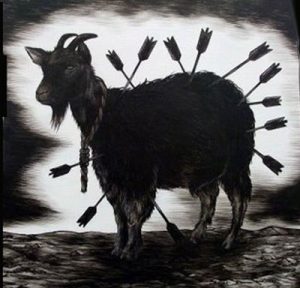
Briefly, in Biblical times, two goats were chosen when the community felt it needed cleansing. One was a sacrificial goat, which was killed to appease the Divine. The other goat was symbolically laden with the so-called “sins” of the people and driven into the desert to die, thus eradicating the sin.
Sigh. What a ridiculous coping mechanism. If only it was that easy! Eradicating real or perceived “sins” by assigning them to innocent animals and then killing them strikes me as immature, cowardly, impotent, and completely ineffective.
As an aside, in my experience those who thunder about the “sins” of others are the most destructive and guilty of all. Just ignore the man behind the curtain!
The role of a scapegoat seems to be essential to human society. We scapegoat individuals and we scapegoat groups. One of the reasons I’m more and more resistant to labels is they support and feed our ability to scapegoat others. Scapegoating is the root of genocide.
Scapegoating is abusive, and it’s a psychological trick, a distraction, a projection and a manipulation. Worst of all, it’s dishonest.
It’s also, frequently, murder, by which I mean the deliberate destruction (or attempted destruction) of an innocent. Ironically, family systems that scapegoat children often choose the most sensitive, empathetic, loving and talented child (often the healthiest family member) and set out to begin a systematic long-term campaign of destruction of that child so others within the family can avoid taking responsibility for their own lives.
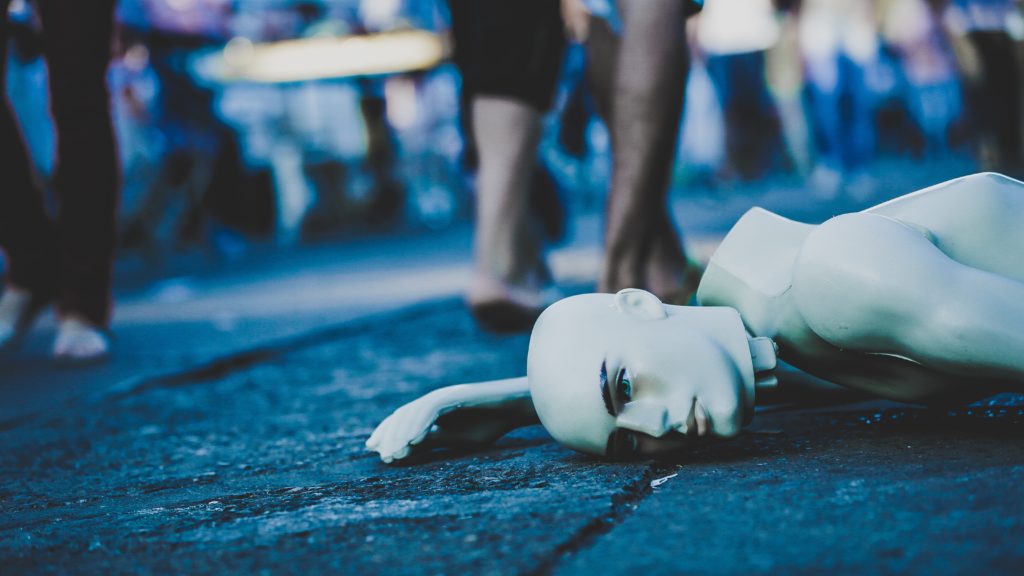
Photo by Travis Bozeman on Unsplash
One can spend all day online exploring scapegoating. It’s depressing research. Those who are scapegoated have a horrendous experience of pain, isolation and rejection that frequently leads them into addiction and other self-harming behaviors, and cripples their ability to form healthy relationships, particularly with themselves, and make positive contributions. Many scapegoats do, in fact, go metaphorically out into the desert or wilderness and die.
But not all of them.
Let us not forget that of the two, the scapegoat is the one who survives. The sacrificial goat is out of time and out of choices, but not the scapegoat.
Photo by Jeremy Bishop on Unsplash
What happens when the scapegoat is spit upon, reviled, cursed and turned away, staggering and stumbling under everyone’s unacknowledged shadows, darkness, and feelings? What happens in the lonely black cold of the desert night, in the blazing, thirsty grit of the desert sun?
A long, slow death by inches from despair, isolation, thirst and hunger?
Do scapegoats meet other scapegoats, and if so, do they compare notes and experiences and support one another in surviving and healing, or do they, in their turn, scapegoat those they meet and perpetuate their own misery and damage?
OR do they meet an Angel, or another aspect of the Divine? Perhaps they reclaim and reanimate themselves. Maybe dreams and visions come to them. Maybe a fearsome Hag or an animal guide teaches them to find or create water in the desert. Perhaps a desert mouse or a scorpion appears and relieves the scapegoat of all that does not belong to it, either burying the toxic waste of others in the clean, hot sand of the desert or, better yet, sending the poison back to its source(s).
Perhaps scapegoats meet the Devil in the desert. Do you know the meaning of The Devil card in the Tarot? Authentic experience. Some people fear authentic experience more than anything else in the world, and they’ll do anything to silence, destroy or stifle it. Who is more feared or hated than the Whistle Blower, the One Who Tells Their Truth?
Maybe tribal shaming and exile are in fact a release from prison and a doorway to personal power. Maybe the desert has been waiting to embrace the scapegoat for an eternity, waiting with gifts and spirits and guides, waiting with wisdom, patience and healing.
When we flush the toilet, we don’t expect to see the contents again. Occasionally, something goes wrong and we do see the contents again! Very disconcerting. Imagine being a bearded patriarch with a paunch and a fine embroidered cloak of arrogance and entitlement. The beard hides a weak chin and the paunch hides a frightened, impotent, controlling personality that is unable to be wrong, learn or grow. In order to relieve the chronic stress of maintaining a pseudo self and constant unacknowledged fear, the patriarch symbolically loads a goat with all his unwanted psychological and emotional shadow and darkness (which he has just increased) and drives it away with rocks and blows.
Now imagine the goat returns some time later, strong and broad-shouldered. It dances in the moonlight on stardust hooves outside the city walls. Its thick, silky coat stirs in the desert wind. The twists and spirals of its horns gleam like marble sculpture. Free and unburdened, the scapegoat has become a wild, enduring, sensual creature of primal instinct and power.
The patriarch, by contrast, has become smaller, weaker, and more wretched.
I’ve reached two conclusions about scapegoats and scapegoating.
The first is scapegoating doesn’t work. Not only is it ineffective, it’s weak, and, frankly, I’m embarrassed for those who engage in it. People who scapegoat others are only drawing attention to their own meagre hearts and intellect. They can’t meet their own gaze in the mirror; they prefer to displace and project their self-hatred, fears and feelings onto others.
The second conclusion I’ve reached is the day we are driven into the desert from the gates of our loved ones or our homes as scapegoats may also be the day we are reborn into something fine and powerful, something wild and resilient and enduring.
On the first part of the journey I was looking at all the life There were plants and birds and rocks and things There was sand and hills and rings The first thing I met was a fly with a buzz And the sky with no clouds The heat was hot and the ground was dry But the air was full of sound
I’ve been through the desert on a horse with no name It felt good to be out of the rain In the desert you can remember your name ‘Cause there ain’t no one for to give you no pain La, la …
After two days in the desert sun My skin began to turn red After three days in the desert fun I was looking at a river bed And the story it told of a river that flowed Made me sad to think it was dead
You see I’ve been through the desert on a horse with no name It felt good to be out of the rain In the desert you can remember your name ‘Cause there ain’t no one for to give you no pain La, la …
After nine days I let the horse run free ‘Cause the desert had turned to sea There were plants and birds and rocks and things there was sand and hills and rings The ocean is a desert with it’s life underground And a perfect disguise above Under the cities lies a heart made of ground But the humans will give no love
You see I’ve been through the desert on a horse with no name It felt good to be out of the rain In the desert you can remember your name ‘Cause there ain’t no one for to give you no pain La, la …
In the last 24 hours I’ve had an Aha! moment representing one of the biggest breakthroughs of my life.
I’ve always defined myself as a failure. This morning, before 7:00 a.m., I became a success. Just like that, in one blinding moment of epiphany. I lay there giggling to myself like an idiot. I’ve been doing that all day, in fact.
Standing in the shower, I had another staggering revelation. I suddenly realized when and why I created the identity of being a failure in the first place. It happened when I was very young, before I had the language or ability to understand or explain what I was up to. All I had at that age was my heart, intuition and empathy.
Photo by Mike Wilson on Unsplash
We had a troubled family system. Bad and scary things happened that I could not understand. My childish reasoning was failing to please was Bad. Pleasing was Good. If I chose failing to please, if I flaunted it, if I accepted it, I would be Bad and others could be Good, and therefore loved and safe.
Of course, I didn’t think of it in any kind of logical or adult sense. What I did have, however, was a great ability to love that even then was unconditional, deep and tender. I loved, do you understand? Only that. Just love and the willingness to do whatever it took to protect my loved ones.
Photo by John Salvino on Unsplash
In those dim years of childhood I embraced being a failure and forged the bars that were to keep me in that prison for 50 years. Failing to please was Bad and terribly painful, but I was comforted by the abilities of others to please and therefore be loved. I believed becoming a lightning rod for displeasure shielded them.
As an adult, I had two children of my own and made exactly the same choice. I endeavored to shield and protect them from physical and psychological harm, no matter what it took. They could not understand, and I could not explain my choices to onlookers because I was protecting so many different people on different levels. I could not tell the truth. There was too much at risk and the truth was too damaging to all of us. I was afraid of the repercussions on those I was trying to shield.
My sense of failure was reinforced at every turn. I was told in words how disappointing and inadequate I was, but far more powerfully, I understood it from nonverbal communication and from the choices of those around me. Once again, I comforted myself with the knowledge I was doing the best thing for those I loved with my whole heart. I didn’t much care what happened to me if my loved ones could only be protected and happy. One day they would understand not only my choices, but the depth of my love.
The years rolled by. The children grew up and suddenly were adults. They expressed confusion and a sense of loss because of some of my parenting choices. I explained, confident of their understanding.
I realize now my explanations sounded ridiculous, but not because I failed.
I had a lifelong reputation for being dramatic and hypersensitive, which effectively erased my credibility within the family. I had no intention of burdening my sons with old family dynamics and problems existing long before they were born. I didn’t want to hurt or betray anyone. I didn’t want the boys to have torn loyalties or make them feel they had to choose sides.
Photo by Jason Rosewell on Unsplash
Anything I could say, calmly, neutrally and without emotion, wasn’t even loud enough to get their attention. Trying to convey the real truth of my experience would have sounded (I imagined) hysterical and unhinged or, even worse, made them feel they had to take care of me. Come what may, I was never going to ask my children to parent me.
They could intellectually understand my explanation about the choices I made as a parent, but they couldn’t emotionally understand, exactly the outcome I worked for all those years! To them, it just sounded like Mom, talking too much, being embarrassingly emotional and making a big deal about nothing. (She does that.)
Do you see the exquisite irony? My explanations sounded ridiculous because I had succeeded in shielding them so well they had no idea what I was talking about. That was the flip. I didn’t fail at all. I succeeded.
Can you hear the Gods laughing? I can.
When I realized the unintended consequences of my maternal protection, it certainly caught my attention, along with changing my relationship with my kids in deeply painful (for all of us), and, I fear, permanent ways. I have never known such grief, but privately I chalked it all up to another failure of mine and a grief I deserved.
My failure label stayed firmly in place, as solid a part of my identity as my blue eyes or wild hair. It never occurred to me I could take it off.
Until yesterday. Yesterday, another loved one I have protected made it clear to me how successful I’ve been in protecting him as well. My stoicism, my unrelenting commitment to healing and understanding, my fierce independence, and most of all my love and unwillingness to be disloyal or reveal unwelcome truths that might upset others have been so successful the truth of my experience sounds like hysterical, made-up, unkind, exaggerated nonsense.
It was the kids all over again.
This time, though, I finally got it. I finally understood I have succeeded, not failed, in everything I wanted to do out of love for others. Every single thing! I have failed to please, yes. I’ve failed the expectations of others. I’ve failed to be perfect. I’ve failed to keep the family glued together. I’ve failed in trying to force others to be happy and healthy. I’ve failed, most miserably of all, at protecting others from themselves. But none of those failures are real. None of those things were my job or within my power in the first place. They were impossibilities, not failures.
On the other hand, I have succeeded at failing! I did manage to attract negative attention so others were at less risk. I did carry and sometimes express the emotional burdens of those around me who couldn’t deal with their emotions. The role I chose as a scapegoat did, in a fucked-up kind of way, help keep the family functional enough that we all survived. My “failures” made others look more successful by contrast. My willingness to be the problem child, the dramatic one, helped keep my loved ones out of the line of fire, at least a little bit.
Photo by juan pablo rodriguez on Unsplash
As a parent, I succeeded. I raised two sons. They are not perfect. I made mistakes. They have baggage to unpack like all the rest of us. Their wounds, however, are different than mine. They were not hurt in the same ways I was. I successfully shielded them from the bombs and grenades that shattered me. I believe they know they are loved and worthy, and that I am proud of them.
What I’m most proud of is my success at loving. Just that. Loving myself and loving others. Nowhere along the way have I lost my ability and willingness to love, absolutely, completely and unconditionally. I love my family of origin. I love my children. I see now we don’t always get it back, the unconditional love, respect and loyalty we lavish on others. That’s okay. Invisible love, refused love, unrecognized love and unreciprocated love is still love. It’s The Right Thing To Do. It’s the only thing to do. It’s the best I have to give.
As for myself, I feel reborn. I am not a failure. I have never been a failure. I have succeeded in loving and doing my best against all odds. I accept others may not understand my actions and choices or believe in my love, but that’s their failure, not mine.
This day has revealed to me every ten minutes or so I call myself a failure, no matter what I’m doing. For the first time in my life, I’ve paused to examine all those so-called failures and discovered . . . nothing. My identity as a failure is nothing more than a mindless habit. It’s my automatic apologetic response when I cook the bacon too long, don’t properly anticipate my partner’s wishes, want to go to bed early, am standing in the way (nobody ever stands in my way — it’s always me in the wrong place!) or blow off doing an hour of exercise.
I have successfully mastered the art of failure. Bored now. I’m going to go be successful.
One of the most important distinctions I’ve ever learned is the difference between thoughts and feelings. Sadly, I didn’t learn it in public school or higher education. I didn’t learn it from my family. I didn’t learn it from my culture. I didn’t learn it, in fact, until I was 50 years old.
Photo by whoislimos on Unsplash
What I understand now is ignorance of the difference between thoughts and feelings effectively cripples us in every area of our lives. Our misunderstanding, fear and confusion about thoughts and feelings lie like a Gordian knot in the center of our psyches, inhibiting authenticity, clear communication, a satisfying professional life, and healthy relationships. Our experience becomes a murky pond, breeding anxiety, fear and isolation.
To be human is to have feelings. It’s unavoidable. Some feelings are pleasant, and some are not. As very young children, we take our cues from others and label some feelings “good” and others “bad.” That is the starting point of our confusion, because “good” and “bad” describe thoughts about our feelings rather than the feelings themselves.
Feelings 101: Mad, sad, glad, scared and ashamed. This is a short list of basic human emotions we all experience. Our feelings occur far faster than we can use logic, reason or language. Most of us recognize these core emotions in ourselves and others, though we often deny that recognition because of our thoughts about them. For example, many women of my generation have been taught that anger is unattractive and “bad.” Men are discouraged from feeling or expressing sadness. From our earliest childhood, we are taught how to think about our feelings, rather than how to identify and express them appropriately.
As a result of all this thinking, we suppress, distort, deny, and try to amputate our feelings rather than welcoming, exploring, experiencing, and discharging them in a way that hurts neither ourselves nor others.
If we don’t properly manage our feelings and allow them to pass through our bodies and our consciousness the way clouds pass through the sky, they become locked in place, festering and putrefying and eventually tearing us apart, both emotionally and physically.
Now I think of emotions as data, neither positive nor negative. What we choose to do with our feelings is where the trouble begins, but the feelings themselves are neutral pieces of information indicating the degree to which our needs are met or not met. Our marvelous brains are evolved to collect specifics and details such as thoughts and feelings and organize them into some kind of coherence in order to facilitate life. Glad is not better than mad. Sad and scared are not necessarily negative experiences to be avoided.
Photo by Nicole Mason on Unsplash
I vividly remember receiving my second divorce decree in the mail. I sat at the kitchen table, looking down at those official papers, feeling a kind of numb despair, mixed with relief.
I reviewed what seemed to me a lifetime of failure. I believed I’d failed my parents repeatedly, my brother, my kids, and both men I’d married. I’d dropped out of college. I was always struggling with money. All I’d ever done was work as hard as I knew how, and it seemed to me the harder I worked, the more I failed. I must truly be ugly and broken. It was no wonder nobody could love me. That I could feel even a little relief just showed how hateful I was. I should be thoroughly ashamed of myself. I deserved to be alone.
Now look back at those last two paragraphs. The first one is two sentences long and identifies numb despair and relief, which are feelings. The second paragraph isn’t about my feelings at all. It’s about my thoughts about my feelings. My stories. My expectations. My beliefs. The second paragraph is about depression, the way I framed my past, and my inability to either accept or forgive myself. I offered myself no compassion or kindness that afternoon. I did not congratulate myself for having successfully exited an abusive marriage. I hated myself for my furtive but honest feeling of relief.
I don’t know about you, but the inside of my head is much better reflected in the second paragraph than in the first, and I would have, at that time, told you those were my feelings. They weren’t, though. They were merely my thoughts about my feelings.
I’m convinced feelings are not what hurt us. In fact, they help us. When I feel mad now, I immediately ask myself if I’m experiencing or witnessing a boundary violation. Nearly always, the answer is yes. The emotion we call anger is helping me, giving me valuable information, pointing at something I need to deal with. That mad feeling is righteous and rightful, and it motivates action, hopefully appropriate and effective action.
Appropriate and effective action brings me to the most important aspect of learning emotional intelligence. It turns out our thoughts and feelings, no matter how passionately we experience them, may not reflect reality.
Photo by Aimee Vogelsang on Unsplash
In other words, we can’t believe everything we think and feel. Or, rather, we can believe in our experience, but not necessarily our interpretation of our experience, and this means we frequently do not make appropriate and effective choices.
Managing our feelings requires we take responsibility for them.
As an example, many people walk around with PTSD triggers in their brains. I am one of those people. Now and then, specific circumstances trigger my panic, but that trigger is about me, not anyone else. I don’t expect the world to accommodate my PTSD. I don’t blame others when I get triggered. I feel the panic and all the other wretched symptoms, and those feelings are physiologically real. I’m not making them up. Yet I know what I’m experiencing is not real trauma in the moment, but a memory, a ghost, an echo of an old hurt.
Our thoughts can also lead us astray. We all have convictions, opinions and beliefs, but, and I can’t emphasize this enough, we can be wrong. In fact, we frequently are wrong. We misunderstand. We assume. We deny and distort. Our logic is flawed or we are ignorant of important pieces of information. We don’t think critically or for ourselves. We make up stories in our head, tell them to ourselves until we believe them, make choices as though our stories are true, and wonder why our relationships are disrupted and our lives don’t work well.
So, what to do?
Photo by Jordan Whitt on Unsplash
First, we need to go back to that 101 list of feelings and start recognizing, naming and accepting them when they come up for us. Where do we feel those core emotions in our bodies? What do we notice about our experience when we’re feeling mad, sad, glad, scared or ashamed? How do we manage the feeling? How is our coping style working for us? What happens if we sit down and hold an emotion in our laps without feeling compelled to take action, simply allowing it to ebb and flow through us? Who in our lives allows us to feel what we feel, and who doesn’t?
Secondly, we need to stop blaming anyone (or everyone) around us for our emotional experience. If we find ourselves in relationship with people who consistently make us feel angry, sad, exhausted and valueless, we need to take responsibility for exiting those relationships. We are not powerless. Chronic difficult feelings are asking for help, but we need to think clearly and carefully about the choices we make in order to help ourselves. Trying to feel better at the expense of someone else’s well-being is not appropriate. Self-destructing is not effective. It’s up to us to respond to our own emotional experience with kindness, acceptance and support.
Lastly, we need to monitor our thoughts, and challenge them frequently. I am constantly overhearing myself mindlessly repeating old beliefs and conclusions and saying, “Wait, is that true?” Nine times out of ten, it’s not true, or it only might be true. Another tactic I use now is to open my mouth and check out my perception. I live with a person I trust. If an interaction between us results in difficult feelings for me, I circle back around and talk about it, frequently finding out in the process my thoughts and feelings have once again been skewed by old scars. I have misunderstood, or imperfectly understood, and leapt to mistaken conclusions and assumptions.
Photo by Jonathan Simcoe on Unsplash
Talking it over with someone we trust, someone who won’t gaslight us. What a concept.
Thoughts and feelings flow through our lives, sometimes in a destructive torrent and sometimes in a slow, life-giving trickle. They arise within us, are of us, and are our responsibility. Thoughts and feelings are two distinct pieces of data, and they do not necessarily reflect reality. We are not entitled to have them validated by the world. Our thought-and-feeling experience is not more important or true than anyone else’s.
I will not be a slave to my thoughts and feelings, or those of anyone else. My emotions are my friends and guides rather than my enemies or masters. They are not a matter of shame. I don’t believe everything they tell me about reality, but they do help me understand the places in which I can heal and grow, and they are part of my decision-making process.
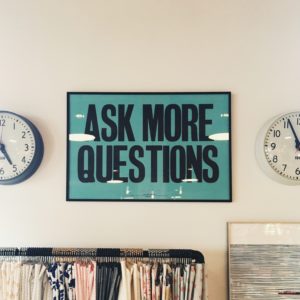
When I came to Maine in 2015, I had a short list of goals. One of them was to learn everything I could about relationship and connection. I had so many questions. Why did I feel I’d failed practically every relationship I’d ever had? What was different about the ones that did work well? If I was bad, ugly, unlovable and unworthy, why was that? Was it something I could fix? Or was that a false belief, and if so, where did it come from?
Why did it seem so impossible to find the kind of relationships I had always wanted to have with others?
All my life I’ve struggled with these questions.
I realize now all of us struggle with these questions, at least at some point and to some degree. It’s called being human.
Relationship is a skill, and most of us don’t have great models for how to do it appropriately and effectively. Relating well to others is messy because being human is messy. I learned, and believe, healthy connection is a primary human need and driver of behavior. I also learned to build and maintain better boundaries and separate what I have power over (myself) from places where I have no power (what others say, believe, think and do).
Over the last years, my partner and I have continued to be fascinated by the way in which we humans interact with each other as parents, family, partners, coworkers and members of the community. We observe ourselves and others and read with interest current research and insight into all the ways humans connect and disconnect, motivate and manipulate, perpetrate acts of violence and hate, build community and parent.
I’m an information junkie on some subjects, so I enjoy all this learning. I don’t want the information so I can speak learnedly or advise or persuade others. I’m not interested in labeling, judging, feeding my fear or getting bogged down in an empathy swamp. I have no ambition to be an expert in anything but my own life.
Photo by Bewakoof.com Official on Unsplash
What I want to do is see myself and others clearly. I want to understand what I don’t understand. I want to learn how to keep myself safe and meet my needs for connection.
I want to take better care of myself.
My partner and I sat in the sun this morning, watching the birds at the feeders and newly-wakened insects buzz around the rotting wood of the porch looking for summer quarters. I picked up paper and pen and we jotted down a list of things to look for when considering a relationship. I titled the list Rules of Engagement, but then crossed it off and retitled it Questions Before Engagement.
Demonstrate the desire to cooperate and connect (power-with) or win and be right (power-over)? (Carmine Leo)
Consistently treat themselves and others with respect and kindness in action and word?
Speak in either/or black/white terms, or do they appreciate shades of grey?
Employ blame and shame tactics or take responsibility for their own choices? If they take responsibility, do they take too much responsibility (a sign of weak boundaries)?
Employ DARVO tactics: Deny, attack, reverse victim and offender? Does he/she see him/herself as a victim?
Communicate clearly, honestly and consistently, or avoid responsibility (“I forgot”), gaslight, give inconsistent or mixed messages and refuse to answer questions?
Demonstrate consistency between what they say and what they do? Keep their word to self and others? (Chronic lateness, for example, is a red flag).
Leave you feeling good about yourself or as though you’re hopelessly bad and wrong and/or completely drained?
Have boundaries (even if messy) and respect yours (even if messy)?
Present themselves as a whole, healthy, independent person with something to contribute or are they needy and dependent and looking for someone to nurture or “fix” them? (Co-dependency is not a healthy relationship!)
Demonstrate a full range of feelings and appropriate expression and management of those feelings? Is their life one long drama and trauma? Do they flip abruptly from rage to affection and back again? Are they emotionally available?
Demonstrate flexibility, curiosity and the willingness to learn?
Provide an equal and reciprocal level of commitment, time and energy to the relationship that you do? (Carmine Leo) Are you doing CPR on a long-dead connection all by yourself? If so, why?
Last but not least: What does your intuition say? Do you feel safe with this person, physically, sexually, creatively, emotionally, financially? Listen/feel for a yes or a no and don’t second guess or negotiate a no! Extricate yourself and move on.
The strength in recognizing these questions and their answers does not derive from judging or labeling others. The power is in our own ability to navigate intelligently through the world of people we all live in. I myself have communicated poorly, been codependent, been self-destructive, made myself small, and had poor boundaries. I’ve also worked hard to learn to be more effective and heal. Now and then we’re all inflexible, or disrespectful, or unkind.
Photo by Toa Heftiba on Unsplash
Perfectionism is a black hole I refuse to get sucked into and certainly don’t expect from others. We need and form all kinds of relationships in life with all kinds of people. Certain behaviors from a colleague or roommate might be acceptable; the same behavior from a lover could be a deal breaker. There is no one size fits all in terms of relationship. We have to figure it out for ourselves.
We all have good days and bad days. This list is intended to specify red flags that might occur intermittently or consistently across time. A pattern of red flags is a sign to go carefully and stay present and aware with our interactions. There are millions of well-meaning people in the world. There are also millions of narcissists, borderline and other Cluster B personality-disordered people, psychopaths, sociopaths and other predators and vampires. It’s up to us to figure out how to spot them and avoid or free ourselves from them. Failure to do so wastes our time, energy and love.
Identity is everywhere. Identity theft, identity politics, job applications, and social media profiles confront us at every turn. We are constantly being commanded to prove our identity, not only formally, as in logging on to our bank accounts, but socially, in order to justify our existence, our beliefs and our values.
Technology has created new challenges in the way we talk about, understand and shape our identity. AI is no longer a piece of science fiction, and evidence grows regarding websites, social media trolls and other online entities that successfully manipulate, divide and interfere with social discourse, information and opinion.
We are woefully easy targets.
Photo by Roderico Y. Díaz on Unsplash
Merriam-Webster online defines identity as “sameness in all that constitutes the objective reality of a thing; the distinguishing character or personality of an individual.” The online Free Dictionary says identity is “the set of characteristics by which a person or thing is definitively recognizable or known; the awareness that an individual or group has of being a distinct, persisting entity.”
Objective reality. The term objective means “(of a person or their judgment) not influenced by personal feelings or opinions in considering and representing facts.” (Oxford Dictionary; emphasis mine.) This means a purple-polka-dotted snake cannot claim the identity of a green-striped zebra, no matter how indignantly and vociferously it insists it feels like one. Personality disorders are recognized as such because those who suffer from them are not always dealing with objective reality. A purple-polka-dotted snake who wants to be a green-striped zebra is divided tragically from itself and others, not only other purple-polka-dotted snakes, but all others, because it persists in trying to behave and be accepted as something it’s not, ultimately self-destructing.
Photo by Quino Al on Unsplash”
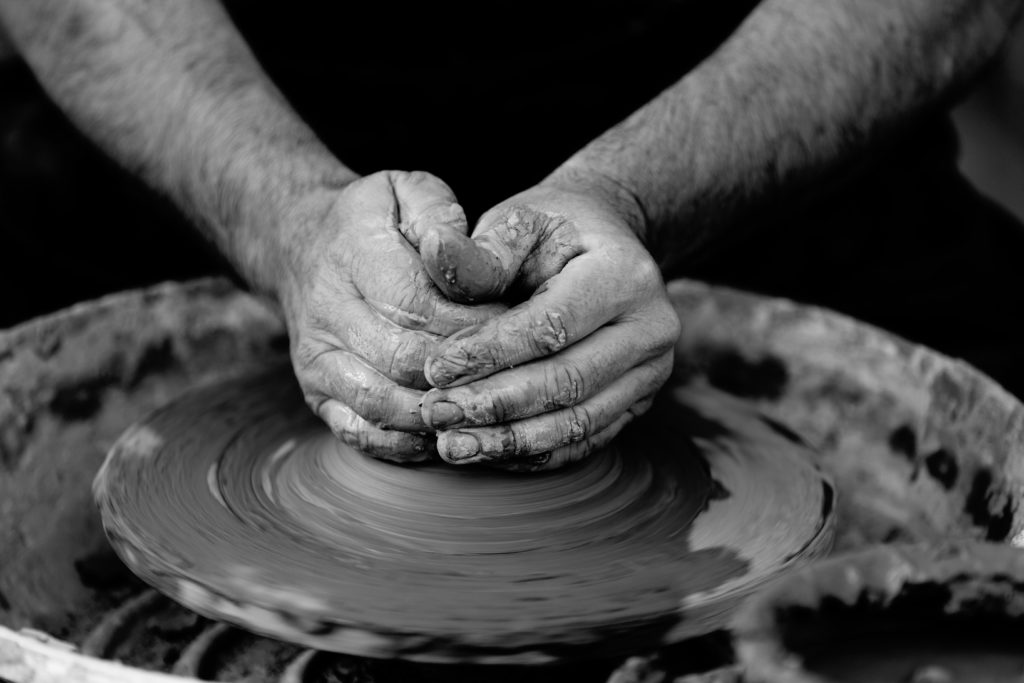
I’ve written before about labels, denial, arguing with what is and pseudo self, all of which ideas intersect with identity. Have you watched a potter at work with clay on a wheel? As they shape a vessel, one hand works inside and one outside. Identity is like that. The tribe we’re born into gives us our earliest sense of identity, and we take our cues from them. If our tribe is critical and we feel unaccepted and unloved, we internalize those voices and viewpoints and give them power in our psyche to mold our identity. At the same time, we go out into the world and our schools, jobs, communities, places of worship and other organizations identify us from the outside.
Years ago I worked with a group of gifted and talented middle and high school students as a school librarian. None of them fit in terribly well with their classmates. A young man I was very fond of was quite lonely, as well as being brilliant, and he said one day he was nothing but the “fat boy.” He was sixteen years old, and seemed resigned to carrying the identity of “fat boy” to the end of his life. I told him, entirely sincerely, that I never thought of him as the “fat boy.” He was obese. Obviously, I noticed. But to me he was a funny, interesting, curious, compassionate, vulnerable human being. His weight concerned me because of the social stigma and quality of his health, but I never thought of him as the “fat boy.”
He could see that I was telling him the truth. I haven’t any idea what happened to him or what he’s been doing all these years, but I’ve always hoped he remembered there was an adult in his life who saw beyond the limitations of “fat boy” and recognized other pieces of his identity and potential. I hope he learned at some point that he didn’t have to settle for a life defined by his weight.
Photo by Edu Lauton on Unsplash
Over the years of my lifetime, more and more people seem to never mature past teenage identity. We build websites, profiles and a social media presence, desperately trying to sell a successful identity for attention, true love, power or money. We are so compulsive about taking selfies that we die doing it. There’s an explosion of people seeking plastic surgery in order to match their digitally-altered pictures. We have the technology to alter hair color, eye color and physical characteristics, and we’re saturated with digitally-altered images on media that keep us firmly convinced we’re unattractive and imperfect as we are. At the same time, we socially reinforce and perpetuate ridiculous gender, racial and ethnic roles, limitations and expectations.
Perfect strangers insist on imposing labels on us, or try to bully us into choosing one label over another. It’s an either-or black-and-white world, and new labels proliferate like maggots in road kill, creating ever-increasing lines of division and arenas for conflict.
Photo by Chris Barbalis on Unsplash
We are in such a hurry, we’re so overstimulated and anxious to not be left behind and to be validated, we’ve forgotten the simplicity of identity, and we’ve forgotten we don’t owe the world a public explanation or justification of our identity. Having a Facebook or Tinder profile does not constitute an identity. Having feelings and opinions about who we are is not an identity. Our carefully constructed pseudo self is not an identity. Our identity is not maintained and created by what others think, feel or say about us. Identity is not an endpoint, but a journey. Healthy identity is flexible. It adapts and changes as we live our lives. We are not who we wish we were, who we are afraid we are or necessarily who we think we are. We are not exactly who we were yesterday or who we’ll be tomorrow. We’re certainly not necessarily what others tell us we are, or must be, although objective reality always trumps our internal fantasies.
Our identity, like our power, is ours alone. We need not sell it or give it away, and it cannot be stolen from us. On the other hand, we must take responsibility for our own self-sabotage and mental disorders if we seek a healthy identity.
Healthy identity is complex and multi-dimensional. I’ve been daughter, sister, wife and mother, and I’m much more than any of those single roles. I’ve worked several jobs over my lifetime, but I’m more than any of those jobs. I have a physical identity in terms of vital statistics, Caucasian skin, blue eyes and female biology, but none of those markers identify me as completely as the fact that I’m a human being. A healthy identity also accommodates shadows, scars, less-than-useful coping mechanisms and behavior patterns.
My wish simply is to live my life as fully as I can. In both our work and our leisure, I think, we should be so employed. And in our time this means that we must save ourselves from the products that we are asked to buy in order, ultimately, to replace ourselves.” Wendell Berry, The Art of the Commonplace: The Agrarian Essays
Tech allows us to create superficial fantasies of bright colors and pleasurable images, but those worlds are empty and brittle, like an enticing piece of candy that melts in a minute on our tongue and leaves nothing but the taste of sugar and artificial flavor. We cannot judge identity by houses, gardens, cars, vacations, pets, children, selfies, clothing, jobs or partners. Our possessions, our pictures and our memorabilia are not our identity. Somewhere, under all that stuff, behind all those pictures of success and happiness, apart from our fear and unwillingness to come to terms with our objective reality and our denial, lies the powerful, complex, fascinating, valuable person we really are, and that person longs to be identified and welcomed into life. That person longs to give and receive love, make a valued contribution and live authentically.
I’m interested in the way people self-define and introduce themselves. It always points to either what we ourselves feel is the largest part of our identity or what we think others will value or connect with most readily. This is what lies beneath every dating profile. What do we imagine prospective partners will be most attracted to? What’s the perfect thing to say which will limit unwanted matches and encourage those we imagine might provide whatever we’re looking for? How can we optimize the algorithm and make it work for us?
Sometimes I walk away from meeting a new person feeling overwhelmed and deafened by all the ways they labeled themselves but with no sense of the real human being I just interacted with. Instead of an easy, exploratory, getting-to-know-one-another conversation, I was bludgeoned with political jargon and identifiers, patronized and gratuitously instructed out of some kind of claimed expertise. It feels aggressive, weak and demanding. This is who I am and you will recognize my status, authority and identity! If you don’t apply one of my proud labels to yourself, you should. All the best people do. In any event, my labels are better than yours.
Our identity is not for others, but for ourselves. We’re the ones who need to know who we are, experience our feelings and monitor our thoughts. We’re the ones in charge of our dignity, our sexuality and our choices. We’re the ones responsible for our own integrity. As my hair greys and my fertility wanes, I become more and more physically invisible in the world. At the same time, I’ve never been as strong, as resilient, as wise and as compassionate as I am now. I’ve never loved so well. I’ve never felt so whole or comfortable in my own skin. I have no social media accounts and no cell phone. I don’t use any kind of apps, dating or otherwise. My identity is strong and dynamic, and it’s not for sale or on display. In fact, I’ve always felt being invisible is a great advantage. People who attract no attention are invariably underestimated and overlooked, especially aging female people.
At the end of the day, a life well lived is about being who we are, objective reality included, because everyone else is taken. Fantasy is fun, but real life is where all the juice is.
My daily crime.
“I look like vanilla pudding so nobody knows that on the inside I am spider soup.” Andrea Portes, Anatomy of a Misfit
Websites store cookies to enhance functionality and personalise your experience. You can manage your preferences, but blocking some cookies may impact site performance and services.
Essential cookies enable basic functions and are necessary for the proper function of the website.
Name
Description
Duration
Cookie Preferences
This cookie is used to store the user's cookie consent preferences.
30 days
These cookies are needed for adding comments on this website.
Name
Description
Duration
comment_author
Used to track the user across multiple sessions.
Session
comment_author_email
Used to track the user across multiple sessions.
Session
comment_author_url
Used to track the user across multiple sessions.
Session
Statistics cookies collect information anonymously. This information helps us understand how visitors use our website.
Google Analytics is a powerful tool that tracks and analyzes website traffic for informed marketing decisions.
ID used to identify users for 24 hours after last activity
24 hours
_gat
Used to monitor number of Google Analytics server requests when using Google Tag Manager
1 minute
_gac_
Contains information related to marketing campaigns of the user. These are shared with Google AdWords / Google Ads when the Google Ads and Google Analytics accounts are linked together.
90 days
__utma
ID used to identify users and sessions
2 years after last activity
__utmt
Used to monitor number of Google Analytics server requests
10 minutes
__utmb
Used to distinguish new sessions and visits. This cookie is set when the GA.js javascript library is loaded and there is no existing __utmb cookie. The cookie is updated every time data is sent to the Google Analytics server.
30 minutes after last activity
__utmc
Used only with old Urchin versions of Google Analytics and not with GA.js. Was used to distinguish between new sessions and visits at the end of a session.
End of session (browser)
__utmz
Contains information about the traffic source or campaign that directed user to the website. The cookie is set when the GA.js javascript is loaded and updated when data is sent to the Google Anaytics server
6 months after last activity
__utmv
Contains custom information set by the web developer via the _setCustomVar method in Google Analytics. This cookie is updated every time new data is sent to the Google Analytics server.
2 years after last activity
__utmx
Used to determine whether a user is included in an A / B or Multivariate test.
18 months
_ga
ID used to identify users
2 years
_gali
Used by Google Analytics to determine which links on a page are being clicked