The seed for this post was a piece of writing by Dr. Sharon Blackie about the protective nature of thorny plants. This is a subject I’ve researched, not just as a gardener but also because of my fascination with folklore and tradition. I’ve written previously about brambles being a deterrent to vampires.
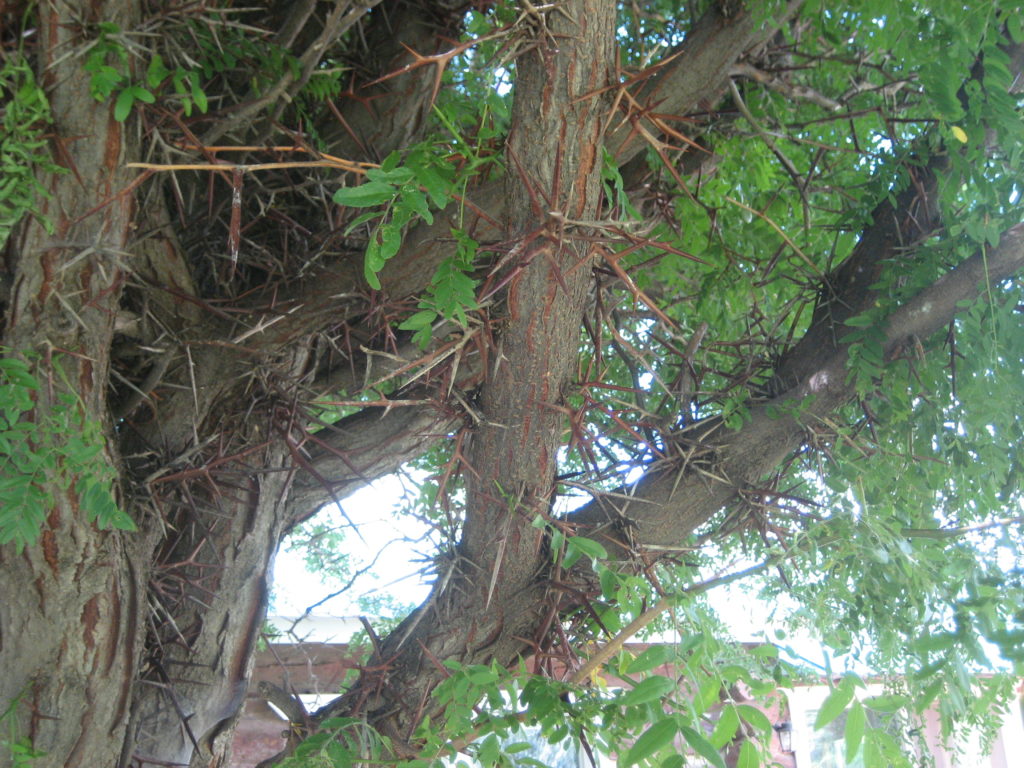
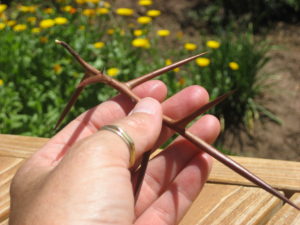
Reading Blackie’s musings on thorns reminded me of a honey locust tree I lived with in my old place in Colorado. It was covered with long, sharp thorns that punctured tires and easily passed through soft-soled shoes and sandals. It stood just off my porch, giving generous shade in the summer. I hung bird feeders in it, touched it, talked to it and moved respectfully and mindfully under and around it. The thorns contained some kind of irritant, and a scratch or stab from one of them resulted in several days of painful swelling.
The tree commanded attention, not only because of the fabulous covering of thorns and its harsh beauty, but also because it was the neighborhood tenement for birds. During the summer I often expected to see the whole tree rise into the air and fly away, powered by what seemed like hundreds of birds mating, nesting, hatching, quarreling, singing and living their lives among its thorny branches.
Honey Locust Tree
I loved that tree. It was one of the hardest things to leave when I came to Maine. Several people, including the people from whom I bought the house, advised me to cut it down. The thorns were destructive and dangerous. It was ugly, a nuisance.
I was fiercely protective of the tree, seeing in it what I wanted for myself, the ability to self-protect and still be beautiful and nurturing to others. Since I’ve left that place I’ve often thought of the locust and wondered if the new owners have cut it down. I hope not. If so, I don’t want to know.
I came to Maine and learned about needs. Then, in the course of writing my books, I researched thorny plants and learned thorns are in fact modified leaves, roots, stems or buds, and plants evolved them in order to protect themselves from being eaten.
Some plants evolved with thorns in order to protect themselves from being eaten. In order to survive. No plant evolved thorns in order to scratch, sting or pierce you or me specifically. The adaptation of thorns is about the needs of the living being we call a honey locust, a bramble, a hawthorn or a rose. Self-protection is about the life form employing it, not anyone else.
Photo by Andrey Grinkevich on Unsplash
This seems to me an important distinction, and a metaphor for human choice and behavior. When I came to Maine I believed it was my job to protect everyone around me. Self-protection, however, was absolutely taboo. Any attempt to have boundaries, say no, speak my truth or move from the place the blow was going to land was severely punished. As I learned emotional intelligence and my priorities began to move from caring for and pleasing others to caring for and pleasing myself, I felt threatened and disliked from every side. I allowed myself to be made to feel destructive, dangerous and ugly.
Just like my beloved locust tree.
Sometimes it’s hard to understand why people make the choices they make. This is particularly difficult in the case of close relationships. In fact, it can be difficult to understand our own behavior and motivation. We humans are quick to make what others do about ourselves, to exercise our outrage, be critical and judgmental and disempower those who we feel threaten our beliefs, our position, our power to choose. Most of the time, though, the people around us are doing exactly what we’re doing ourselves. They’re simply trying to meet their own needs.
It always comes back to some kind of a need. When I became aware of my own needs, I quickly understood nearly every choice I’ve ever made had been motivated by trying to stay safe. For a long time I was trying to get loved in order to stay safe, but it didn’t work and I’ve shifted now to the true bottom line.
Honey Locust Thorn
I need to protect myself.
That’s pretty clear and simple. I am not confused or ashamed about it. The difficulty arises as I interact (or choose not to) with others. That simple, clear bottom line gets buried under emotion; my stories and assumptions about myself and others; my eagerness to be understood; my hope to be validated and supported; and my justification, explanation, shame and guilt as others react to my choices for self-protection.
I don’t think most of us have trouble understanding and recognizing the core drivers for human beings. We want to be loved, accepted and seen as we really are. We want healthy relationships. Some people want money and power. Some seek control. We want to protect ourselves and others, as well as maintain autonomy and freedom of choice. We may not agree with the priorities of those around us, but they’re not foreign to us.
The methods we use to meet our needs are where the trouble begins. I know from personal experience pleasing people and having no boundaries leads to neither love nor safety, but it took me decades to discover that, decades during which I strove desperately to earn love and achieve security using those methods without success. To an outside view, I can understand why now I seem like a different person, hard, uncaring, unloving, selfish and disloyal.
This is terribly ironic, as no one knows of our private anguish and suffering as we strive to grow, heal and change, unless we reveal it, and I work hard to never reveal mine, not necessarily because I want to shut people out or hide things, but because I am trying to stay safe, and bitter past experience has taught me revealing my soft underbelly is dangerous.
Because I realize my own methods for meeting my needs are frequently problematic and inefficient as well as inscrutable to others, I’m able to have more space for others and the choices they make. Life protects itself. Life wants to go on living. Sometimes the strategies we use to achieve those goals hurt others, and sometimes they hurt ourselves, but in a world so full of people it’s bound to be a confusing mess. This is a perfect frame for the current debate around vaccines. Both sides are trying to protect against perceived threats to self, others and freedom of choice. There isn’t going to be an easy answer.
I wish I could be like the locust tree that graced my old life. It hid nothing, apologized for nothing, stood tall and shapely and branching, and protected itself as well as sheltered all kinds of life. To my eyes it was beautiful beyond words, a powerful teacher, a being I reverenced. I accidentally trod and knelt on its thorns more than once, but I did not blame the tree. I would not have allowed it to be cut down.
Photo by Anastasia Zhenina on Unsplash
Locust, bramble, rose, hawthorn, holly and blackthorn. Thorns and prickles and spines. Fruit, flower and healing herb. Haven and shelter for insects, birds, small rodents and reptiles.
Life that cannot protect itself will not survive. Yet sometimes the price of self-protection is so high I wonder if it’s worth survival. It’s not so very hard to cut down a tree, if its thorns offend us. It’s not so very hard to destroy a human being, either, if their efforts to meet their own needs offend us.
I never would have guessed at the pain involved in committing to protect myself. It never occurred to me I would feel forced to choose between my love and care for others and my own needs. I still don’t understand why that should be so, but it feels as though it is.
I hold in my heart the memory of my locust tree, and how the inability of some to appreciate its beauty made it seem even more precious and powerful. Fierce, unapologetic self-protection and abundant life. The memory comforts and inspires me. I want to grow up to be like that.
I recently read an essay about honoring our past from one of the minimalism blogs I follow. I moved on to other things without saving it, but it continued to echo in my mind and I realized it held a deeper meaning for me than I first recognized. Of course, now I can’t find it again! Still, the blog is well worth exploring.
As I embrace minimalism , I spend time every day consciously assessing not only my internal clutter but also the objects around me. I’ve moved things around, put things away to see how my space or life felt without them, and let go of many objects and ideas.
Photo by Dan Gold on Unsplash
We carry a lot of our past around with us. One belief I’ve carried all my life is that it’s disloyal and even hateful to change, to grow, to yearn for more or to leave jobs, relationships or places. That belief (Who taught me that? Why do I believe that? Is that true?) has caused a lot of pain in my life. It’s made me fearful, ashamed and inauthentic. It’s encouraged me to be much less than I am.
The essay I read proposes almost the opposite idea. The author expresses deep gratitude for her past experience and the people who influenced her, and she honors them by going forward into the future.
What a disconcerting idea! At the same time I recognize some kind of truth in it, a truth I don’t discern in my own beliefs about honoring the past.
As a mother, I want to see both my sons being bigger than I am. That doesn’t mean I want to see them with more to have and to do. I want them to have more to be.
Photo by Bill Williams on Unsplash
I want them to fly free, the memory of our time together and the strength of my love and our connection the wind beneath their wings taking them onward and upward.
Yet I don’t give myself the same permission. I’m not sure I’ve ever taken a big step forward in my own growth, health and understanding without feeling it’s at the expense of someone else’s happiness and well-being. It always seems wrong — a betrayal, an abandonment or a rejection.
When it comes down to a choice between my own needs and the needs and demands of others. I never seem to be able to accommodate both myself and those around me. Until very recently, I’ve inevitably chosen to meet the needs of others rather than my own.
Today is built on all our yesterdays. If I lived in an empty room with nothing in it, my past would still have shaped today. I’d still remember my personal history, my family, my children, old friends and places, beloved animals, old activities and interests. Past loves and influences wouldn’t disappear from my life without my things. Forgotten or remembered, my past would still be with me and within me.
I can’t live in the past, though, any more than I can in the future. I can only live now.
I love this attic workspace, but one day I’ll leave it, as I left my beloved little home in Colorado four and a half years ago. It’s not the lack of love, respect or gratitude moving me into the future. It’s the ebb and flow of my life, the call of possibility, the itch of curiosity. My future self calls out to me, holding out her hands in encouragement, and I must answer the call.
Maybe our cultural obsession with things is about fear, or greed, or numbness or nostalgia. Maybe it’s about all those and others, too. I don’t know. But the idea that the best way to honor the past is to be fully in the present and consent to move ahead into the future seems blessedly simple, uncomplicated and unencumbered.
I’ve always longed for security. I’ve longed for relationships that don’t change, love and tenderness I can count on, the ability to give and receive promises and vows that never break.
I’ve also longed to be wild and free, to live a life that feels real and true, to be with others who both give and receive unconditional love and don’t seek power over those around them.
Objects will give me neither security nor freedom. Today I have a few favorite things I wear, use or live with. Some are new favorites and some are old favorites, handed down from my family.
Everything else is just stuff that’s here. I don’t really notice it unless I think about it, but I don’t need all these things and they’re weighing me down. A year from now my current favorites might no longer serve and I’ll let them go in turn.
As I write about it, this process sounds healthy, normal and natural. As I do it, guilt and shame tear at me. It seems to me that even growing up was hurtful; a deliberate betrayal and abandonment of my family. The least I can do is hang on to all the objects inherited or gifted by earlier generations.
But why? Does hanging on to such things really demonstrate love, respect or gratitude? Would my great-great grandmother expect me to cherish and care for something that belonged to her but has no meaning for me? If she did expect it, are her expectations more important than my wants and desires? Would she want me to make my life a shrine to her memory or go forward into my own life and follow my own path? What honors the memory of our ancestors the best?
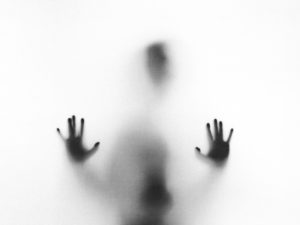
Honoring the past by moving toward the future. Could it be that clean and easy? Could it be that elegant? If I live a life of meaning and purpose that does not include reverence for every object, tradition and idea I was brought up with or exposed to, are the ghosts of my past pleased or will they turn away and disown me?
Maybe it doesn’t matter. I know what I need to do.
I haven’t very often met a problem in life I couldn’t solve. I have moments of bewilderment, of course, but I generally am able to figure out what’s not working and how to fix it. At times the fix is so difficult I delay, avoid, deny and procrastinate until I’m forced to take the action I knew I was going to have to take from the beginning. Such delays frequently make everything worse, but sometimes it takes me a while to do what I know must be done.
Photo by Alessio Lin on Unsplash
Now and then, however, I find myself completely stymied. There seems no solution, no detour, no fix within my power.
Being self-sufficient and self-reliant, when this happens I feel panicked and despairing. It usually does not occur to me to ask for help. I’m more likely to withdraw and try to figure out what the hell to do privately.
I’m in the habit of making daily notes, a kind of abbreviated journal. I do keep a journal as well, but my daily notes are in the form of a brief list, noting things like exercise, working hours, what I’m reading, what’s in my attention, and little snippets of observations from the day. I also note any creative inspirations.
It occurred to me this morning, as I walked down through a soggy field to the brimming river bordering our property, that it might be time to accept some problems have no solution, at least not at the moment we want them. I remembered Rainer Maria Rilke, one of my favorite poets, writing about living the question.
“…I would like to beg you dear Sir, as well as I can, to have patience with everything unresolved in your heart and to try to love the questions themselves as if they were locked rooms or books written in a very foreign language. Don’t search for the answers, which could not be given to you now, because you would not be able to live them. And the point is to live everything. Live the questions now. Perhaps then, someday far in the future, you will gradually, without even noticing it, live your way into the answer.” Rainer Maria Rilke, 1903 in Letters to a Young Poet.
As I make and review my daily notes, I have a lot of judgement about how I spent my time. I often feel I’ve wasted my day or not produced enough. I’ve always concentrated on doing and having rather than being, and I’m hard on myself when I don’t see activities in my daily notes I was taught to define as “useful.”
Photo by Ben White on Unsplash
I wondered, while I was walking, what would happen if I wrote at least one question in my daily notes about my activity and stopped judging the way I spend every single second. Can I faithfully record my daily experience without judging it either positively or negatively?
Can I note my current unsolvable problem clearly, simply, honestly and neutrally, state my feelings about it, and formulate a great question? For example, if I’m binging on my favorite numbing activity, instead of beating myself up over it can I make a note about doing it and ask myself about the feelings I’m trying to numb?
It takes a kind of mental strength to live peacefully with questions, to pause and hold them in our laps and refrain from desperately seeking answers. I have several times been connected to people who disliked and resisted questions. That always catches my attention. I think of questions as a tool for opening up lost or hidden feelings and thoughts. In fact, as I grow older I’m beginning to value questions more than answers, even though questions contain the most tension. Maybe an answer or solution, after all, is not the goal.
Photo by Ludde Lorentz on Unsplash
Judgement feels good because it relieves my tension, but judgement is limiting and small. It weakens power and reduces possibility. Questions keep everything wide open and foster curiosity and flexible thinking. Judgement is black and white.
I assume that all problems have a fix and all questions have an answer. That might be true. On the other hand, maybe some problems feel unsolvable because they are, or what I need to work with is my perception. Maybe what I call a problem is in fact a gift I haven’t yet unwrapped properly.
Unanswered questions and insolvable problems. I don’t like the way they feel. I’ve always resisted giving them time, space and attention. That hasn’t worked particularly well, and I’m ready to try something new. We seem to be much better at judgement than questions in this culture right now, a trend that is both divisive and dangerous. There are questions aplenty, but it’s increasingly difficult to tell truth from lies, and many times the questions themselves are not honest, but merely tools for labeling and judging.
For now, I’m practicing asking an honest question and living without an answer.
I recently read an article from The Minimalists titled “Prepared to Walk Away.” The Minimalists is a blog about simplifying all aspects of our lives by reducing our physical, mental and technological clutter. For most who embrace this way of living, the first challenge is to declutter. The flip side of decluttering is mindful acquisition, and that’s the part of the essay that really caught my attention.
Some people think of minimalism as something practiced by wealthy elites who live in large, white, coldly antiseptic, ultra-modern spaces. It’s trendy right now to declutter and organize, an interesting push back against the relentless consumerism of the twentieth century. I hate clutter and love to be organized, but that isn’t what most attracts me to the practice of minimalism.
What I have my eye on are the intangibles in life, the stories, beliefs and habits accompanying us through our days. How and why do we acquire such things? How much of the acquisition is conscious rather than unconscious, and how heavily are we influenced by the people around us and their stories, beliefs and habits?
It seems to me the vast majority of our mental clutter is carelessly acquired or thrust upon us as an obligation. We humans are powerful in our ability to absorb influence, and we’re fatally prone to addiction. Our consumer culture has exploited these weaknesses mercilessly, from alcohol, sugar and cigarettes to video games, social media and the Internet. The media grooms us from childhood to be mindless recipients of stimulation to buy, to believe and to comply.
Critical thinking is unfashionable, to say the least. I look around me and see shriveled attention spans. Fewer and fewer people seem to respect or even recognize peer-reviewed, verifiable, fact-based science from the idiotic and ignorant ravings of malcontents, manipulators and madmen who peddle hatred, bigotry and misinformation to the masses from television, radio, the internet and social media.
Thus, we’re positioned, mouths agape, eyes reflecting the sparkle and shine of baubles and distractions, minds numb, stumbling through life with one eye on some kind of a screen at all times, while words and assertions assault us from every direction from thousands of gaping mouths and talking heads and millions of busy fingers.
Mindfulness? You’re kidding. Who has the time, quiet and space to even think about what mindfulness means, let alone practice it? How many people feel that the only way they can face their life is to avoid mindfulness at all costs?
Decluttering a closet is one thing. Can we sort through our ideas and habits and discard what’s unattractive, outgrown, outdated or worn out? It’s agonizing to consider a piece of clothing, especially a costly one that seemed like such an exciting deal when we got it, and realize we don’t wear it, don’t like it or it doesn’t go with anything else we wear. We’ve invested money in that item. It’s in good shape and of good quality. We can’t just discard it. What a waste! We’ll never get our investment back out of it.
Photo by Patrick Brinksma on Unsplash
Ideas, habits and beliefs are even harder to walk away from. We might not have spent money in acquiring them, but they tie us to our tribe, our workplace, our church, our family and our community. They influence our favorite social media platforms, our news and radio purveyors and our identities. Our addictions cement us into communities of other addicts, or at least into communities which enable our addictions.
We know everything about holding on: holding on to power; holding on to identity; holding on to our beliefs; holding on to stuff, either because we want to or someone else expects us to; holding on to grievance, outrage and fear. What we don’t seem to understand is how holding on locks us into place. We can’t grow. We refuse to learn. Fear has killed our natural curiosity and drive to explore.
On the other hand, a willingness to discard any object or intangible in our lives, if necessary, means we consent to grow, change, learn and be flexible and resilient.
Mindful acquisition is a conscious activity, an agreement we make with ourselves to buy that new item or explore a new idea or relationship, fully prepared to walk away if the item, idea or relationship become, at any time, a detriment rather than an asset.
It’s easy to think about objects in terms of money. Beliefs and habits are less concrete, yet our habits cost us far, far more than what we lose when we discard an expensive coat we just don’t wear. Talk to anyone who has tried to be in relationship with a workaholic or a substance, screen or gamer addict about the cost of our behavior. Money is, after all, only a symbol of value we agree to use. Our intangible clutter costs us relationships, connection, our health and sometimes our lives.
At first look, it seems being willing to walk away from relationships weakens our ability to connect. In fact, I think in the long run it strengthens healthy bonds. If I know both I and the other party are prepared to walk away, I’m responsible for making a choice, over and over again, to stay, nurture and invest in a healthy connection — for both of us.
Photo by Cameron Kirby on Unsplash
Practicing mindful acquisition requires me to pay close attention to the thoughts, beliefs, ideas and habits I give time and energy to or consider adopting. Do they increase my power and joy or diminish it? How does my mental and emotional clutter interact with my relationships and ability to communicate and contribute? How do these intangibles affect my heath and energy?
The irritating thing about personal power management is that it takes work and mindfulness. We can’t stay asleep at the wheel. Sure, reclaiming our stolen, lost or dormant power is a rush, but then we have to be responsible for our needs, priorities and choices, choices about what enters our lives and choices about what we discard or walk away from.
Our lives are limited. At 55, I’m beginning to feel the edges. I want to minimize my clutter, from items to intangibles. I want to let light and space into my home and serenity and clarity into my head and heart. I want to feel the flow of energy in the form of money, love and creativity without distraction.
I’m currently reading The Intuitive Way by Penney Peirce. Various notes and bookmarks remind me I’ve started it before, but I didn’t finish it. I picked it up again because I’m also reading The Gift of Fear by Gavin de Becker (for the second time), and he talks about how important intuition is in our ability to avoid danger.
I’ve always been interested in intuition. What is it? How does it work? I know from personal experience it’s a real kind of perception or knowing, but I also know many people view it as “woo” and scientifically unprovable. I’ve frequently been met with fury and denial when I voiced an intuition about someone’s state of mind or behavior. Certainly I might be wrong, but then why all the fuss?
As I began writing this post I explored Peirce’s website for a few minutes. I listened to an interview and read a couple of her posts. Yes, it looks rather New Age and “woo” to me.
On the other hand, that doesn’t mean she’s wrong!
As a matter of fact, science is catching up to what we call intuition. Scientists and researchers like Paul Ekman, who recognized how important fleeting micro expressions and body language are, have begun to assemble the neurological pieces of the process of intuition. Experts in their own fields like de Becker are revisiting the importance of intuition to our resilience and survival.
Photo by João Silas on Unsplash
In any event, I picked up The Intuitive Way again to see if it was something I wanted to work with and explore or pass on to the library for donation. I’m glad I did. I’m uninterested in debating whether intuition is real or a worthy subject for study, but I’m very much interested in any tools which might assist me in healing and living a more joyful life and/or shaping my creativity. The book is filled with provocative writing exercises. I remember now it takes me ten minutes to read a chapter and ten days to play with all the exercises.
When I learned emotional intelligence I was introduced to the work of Byron Katie. Her great question is: Who are you without your story? Peirce’s book asks the same question in a slightly different way, providing exercises challenging the reader to replace fearful, limiting beliefs with those that are loving and life-enhancing.
Photo by Stefano Pollio on Unsplash
Who am I without my story? What a wonderful, important question. What a game changer. It’s like asking ourselves who we are if we stand bodiless in some infinite but undefined space with no memories, no objects around us, and no other context. If we’re not a name; an age; a family member; a job; an ethnicity and tribe; a set of beliefs, experiences, memories and stories, then who the hell are we?
My mind boggles, and the artist in me salivates. So much of my self-identity is bound up with stories about my life and experience, and many of those stories are small, hard, stony things about breaking, severing, smashing, exile and futility.
I have fantasies about who I’d like to be and how I’d like to feel, of course. They’re fantasies, though, not the real story. I know the difference.
Photo by Nyana Stoica on Unsplash
But do I?
We write our stories from our feelings and experiences, many of which occurred in childhood. Do children necessarily see a wide picture? Are they able to understand all the behavior and choices of the adults around them? Are they able to process their feelings and separate them from their thoughts about their feelings?
I doubt it. I certainly wasn’t able to.
As we grow up, we have opportunities to compare our stories with those of our siblings, or others who inhabited our childish world, and we notice our stories aren’t the only ones in the mix. Everyone has a story, and they aren’t the same one. A word or event burned in my brain might be something no one else even remembers.
Photo by Cristina Gottardi on Unsplash
Stories are slippery things, powerful as an anaconda and just as hard to pin down.
All that being so, how would it be to simply erase the limiting parts of my story ,to find the file, open it, hit “delete” and then empty the trash of all the feelings, conclusions and thoughts my story carried? No more story. Just a clean space …
… In which to write a new story!
As a storyteller, I’m fascinated by all the creation stories from around the globe. As a writer, I’ve even written a couple of my own. I’ve never considered writing a story about my own creation before, though. After all, I already know all about the story of my first ten years. I’ve been telling it to myself for decades. It’s shaped me profoundly.
But would a different story have shaped me differently?
Would a different story shape me differently now?
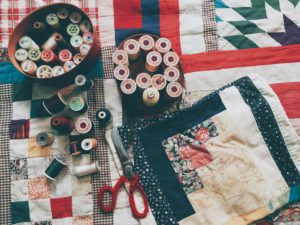
I don’t suggest we deny or bury our feelings and memories. I’ve never found that particularly useful. I think of my story as an old-fashioned quilt, carefully pieced together out of all kinds of scraps of feelings, memories and experiences from which I formed conclusions and beliefs over my lifetime.
Photo by Dinh Pham on Unsplash
I can lift that quilt out of the cedar chest of my psyche, unfold it, hang it on a clothesline in the sun and spring breeze and examine it. Which pieces make me feel stained, frayed, torn or damaged? Which pieces are vibrant, vivid, gorgeously colored and textured?
After the quilt has aired, I can unpick stitches and remove the pieces that hurt, distort or limit me, replacing them with scraps that make me feel happy, confident and loving. I can rewrite some of those childhood monsters and villains, understanding now people are complex and we don’t always know their motives or secrets. I can consider painful pieces of my story from the view of another character in it instead of from my own narrow perspective. As I unpick stitches and loosen up my old story quilt, I can think about forgiveness, gratitude and being wrong, and revel in stitching new patterns and colors into it.
Rewriting our story, like reworking a quilt, takes time. Writing our original story took time. Events happened in our lives. We had feelings and experiences. We had thoughts about our feelings and experiences. We came to certain conclusions about who we are, who others are and how life works. We wove a story and told it to ourselves over and over again, until we believed it completely and it became unconscious. We carry our story with us into the world and it influences every choice and action.
The thing about story is it’s limited and limiting. It can never catch all of reality, even in a single moment. If we understand this and work to bring our personal stories back into consciousness, we become aware of all the ways our stories hurt and/or help us. They can limit and paralyze us or inspire us with courage and confidence. It’s all up to us, because we are the authors of our own stories. We have the power to rewrite.
Many cling to their stories as though they were a matter of life and death, not to mention identity. I’ve noticed some people with miserable stories cling the hardest. I can only conclude for some, even the most wretched and harrowing story provides some kind of a payoff for the one holding it. Such a person doesn’t want to rewrite their story, in spite of how ineffective or painful it may seem to be.
I choose not to be run by my story. I can do, be and contribute more than parts of my old story say I can. I don’t want to validate and reinforce outdated conclusions that made me fearful and small. I don’t want to continually irritate and open up old wounds.
I refuse to be a victim, especially not a victim of myself!
So I’m rewriting and revising my own creation story from before the beginning, when two cells joined and created the miracle of my life. From those two cells came the complex human being I am, and a complex human being contains and creates many different kinds of stories with many different feelings, experiences and thoughts.
Websites store cookies to enhance functionality and personalise your experience. You can manage your preferences, but blocking some cookies may impact site performance and services.
Essential cookies enable basic functions and are necessary for the proper function of the website.
Name
Description
Duration
Cookie Preferences
This cookie is used to store the user's cookie consent preferences.
30 days
These cookies are needed for adding comments on this website.
Name
Description
Duration
comment_author
Used to track the user across multiple sessions.
Session
comment_author_email
Used to track the user across multiple sessions.
Session
comment_author_url
Used to track the user across multiple sessions.
Session
Statistics cookies collect information anonymously. This information helps us understand how visitors use our website.
Google Analytics is a powerful tool that tracks and analyzes website traffic for informed marketing decisions.
ID used to identify users for 24 hours after last activity
24 hours
_gat
Used to monitor number of Google Analytics server requests when using Google Tag Manager
1 minute
_gac_
Contains information related to marketing campaigns of the user. These are shared with Google AdWords / Google Ads when the Google Ads and Google Analytics accounts are linked together.
90 days
__utma
ID used to identify users and sessions
2 years after last activity
__utmt
Used to monitor number of Google Analytics server requests
10 minutes
__utmb
Used to distinguish new sessions and visits. This cookie is set when the GA.js javascript library is loaded and there is no existing __utmb cookie. The cookie is updated every time data is sent to the Google Analytics server.
30 minutes after last activity
__utmc
Used only with old Urchin versions of Google Analytics and not with GA.js. Was used to distinguish between new sessions and visits at the end of a session.
End of session (browser)
__utmz
Contains information about the traffic source or campaign that directed user to the website. The cookie is set when the GA.js javascript is loaded and updated when data is sent to the Google Anaytics server
6 months after last activity
__utmv
Contains custom information set by the web developer via the _setCustomVar method in Google Analytics. This cookie is updated every time new data is sent to the Google Analytics server.
2 years after last activity
__utmx
Used to determine whether a user is included in an A / B or Multivariate test.
18 months
_ga
ID used to identify users
2 years
_gali
Used by Google Analytics to determine which links on a page are being clicked